Want to reduce your home’s utility bills and its carbon footprint? Switch your heating and cooling system to a heat pump!
This energy-efficient system provides up to three times more heat than the energy they use. They also can reduce electricity use for heating by about 50 percent compared to electric furnaces or electric baseboard heaters, according to Energy Saver.
Plus, with the recent passage of the Inflation Reduction Act, you can actually get money back when you install one.
Right now, you can receive a $300 tax credit for purchasing efficient heating and cooling equipment. And beginning in 2023, all households will be eligible for rebates up to $4,000, while low-income households could receive up to $8,000 for home efficiency. (For the tax credit program, the incentives apply to equipment installed on Jan. 1, 2023, or later.)
Read on to learn more and determine if this energy-efficient HVAC system is right for you.
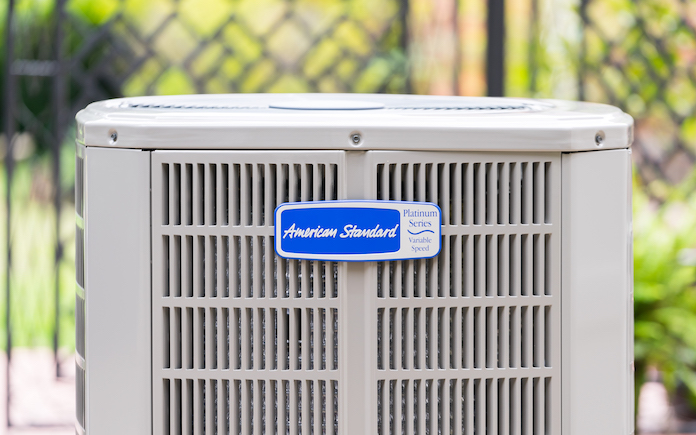
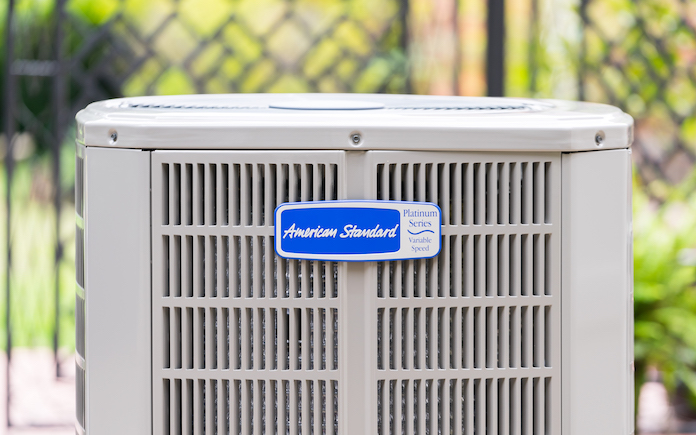
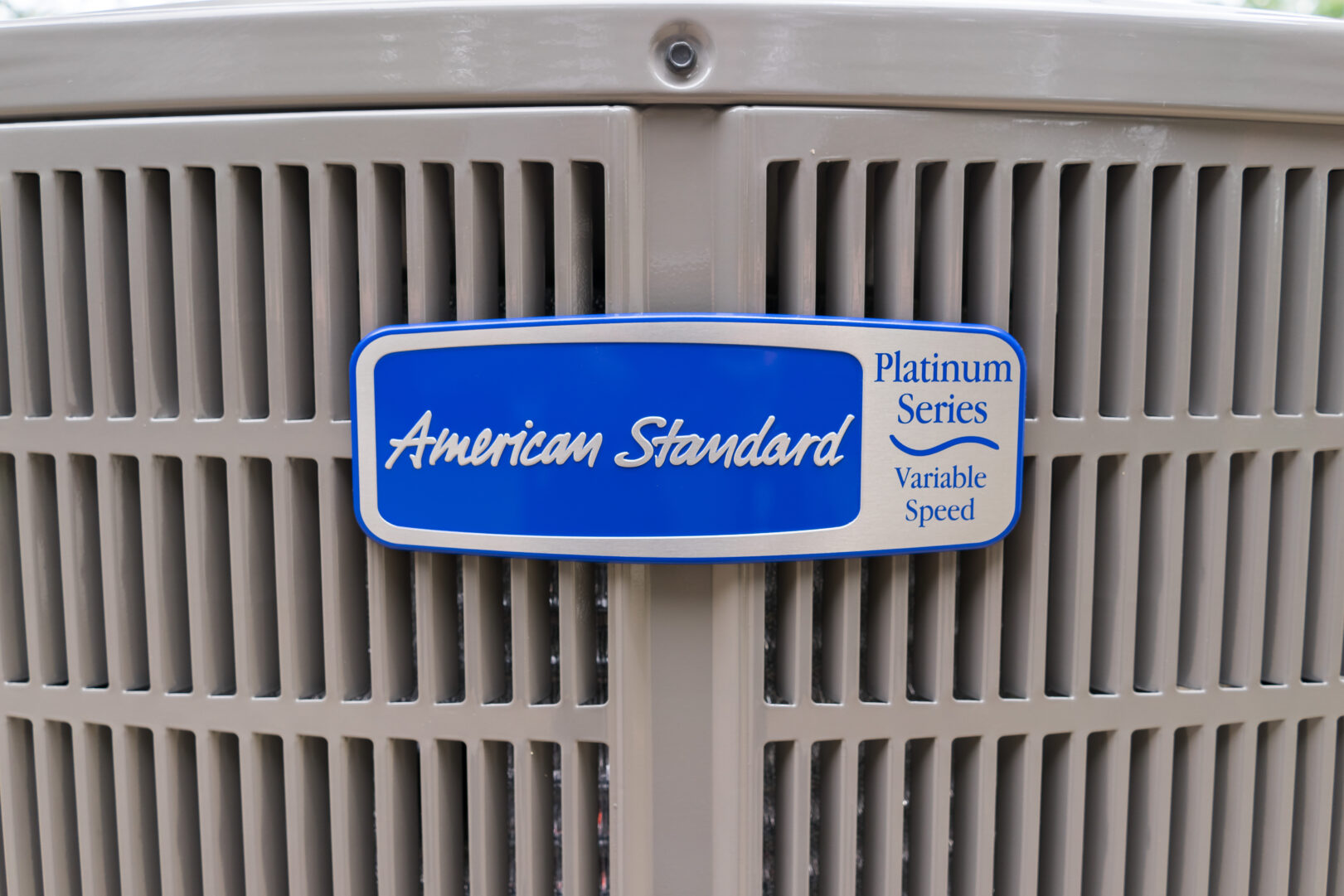
Platinum 19 Low Profile Variable Speed Heat Pump close up on logo
What is a Heat Pump?
Don’t let the name fool you — heat pumps both heat and cool your home.
This HVAC system heats your home by collecting heat from the air, water, or ground outside and concentrating it for use inside. It does double duty as a central air conditioner by collecting the heat inside your house and pumping it outside.
During the heating season, a heat pump moves heat from the cool outdoors into your warm house. Then, during the cooling season, it moves heat from your house into the outdoors.
Because these systems transfer heat rather than generate heat, they can efficiently provide comfortable temperatures for your home.
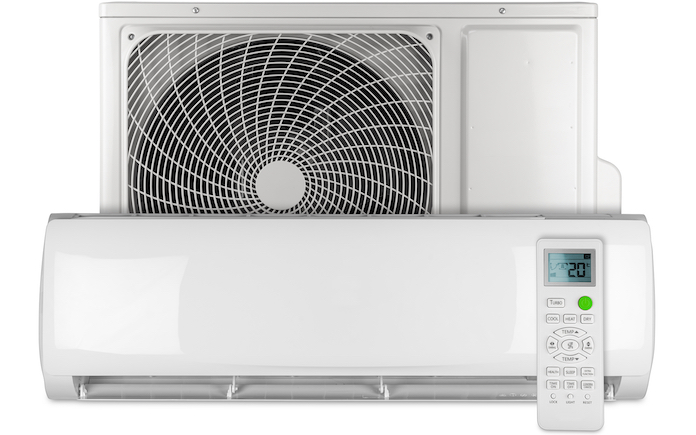
A ductless mini-split system heats and cools a small space. (Deposit Photos)
Types of Heat Pumps
The three main types of heat pumps are air-to-air, geothermal and water source, according to Energy Saver.
Air-to-Air
Air-source heat pumps transfer heat between your house and the outside air. These are the most common type and can be used in all climates. There are also cold-climate air-source heatpumps designed specifically for cold climates.
Ductless mini-split systems are air-source heat pumps that can be installed in homes or additions without ducts. They’re small and offer flexibility for zoning or heating and cooling individual rooms.
Geothermal
Geothermal (or ground source) heat pumps transfer heat between your house and the ground or a nearby water source. Because they move heat that already exists in the ground, they are among the most energy-efficient and comfortable heating and cooling technologies available.
Water Source
Absorption heat pumps are driven by a heat source such as natural gas, propane, solar-heated water, or geothermal-heated water. They usually only make sense in homes without an electricity source.
If you live in an area with below-freezing temperatures in the winter, a heat pump alone will not be enough to keep you comfortable. (Willoxpix, Getty Images Signature)
How Do I Know If My Home Needs a Heat Pump?
Every home and homeowner has unique needs, but generally, a heat pump is right for you if your winters are mild — rarely dipping below freezing. For instance, it’s ideal for a climate like the Southeast, which has mild winters.
Also, if you live in an area with low electric rates, then you’re a prime candidate for one.
What’s the Difference Between a Heat Pump and a Furnace?
A furnace converts fuel (either gas or oil) into heat that’s then delivered throughout your home.
Heat pumps, on the other hand, don’t burn fuel like a furnace — they run on electricity and circulate outside air to warm your home during the winter.
And because they don’t have to be matched with a separate heating or cooling system, they can be a less expensive option over time.
Pairing a heat pump with a gas furnace capitalizes on both systems’ strengths. (3 Echoes Content Studio/AdobeStock)
What Are the Benefits of Hybrid Heating?
One of the best ways to improve a heat pump’s efficiency is to pair it with a gas furnace. This dual-fuel system is also called hybrid heating. Here’s how it works:
During milder temperatures, the heat pump operates because it’s more efficient. As the outdoor temperature gets colder, the system will automatically switch over to the gas furnace.
This switching back and forth means the most efficient heating method is always used, which in turn saves on your utility bills.
American Standard’s heat pumps run at lower speeds for longer periods than conventional systems. They have reduced noise and result in lower electricity bills. (American Standard Heating and Air Conditioning)
American Standard heat pumps operate quietly, have customizable heating and humidity controls, and they offer a variety of models to best suit your needs.
If efficiency is your top priority, then you’ll want the AccuComfort Platinum 20 Variable Speed. It comes with AccuComfort technology that allows the multi-stage heating and cooling system to consistently adjust to run at a more efficient speed to maintain your personal level of comfort. Plus, with up to 20.00 SEER and 10HSPF, it’s both efficient and quiet.
Is noise your main concern? The AccuComfort Platinum 19 Low Profile is American Standard’s most efficient and quiet to date. It’s specially designed to meet the noise requirements of some cities and is perfect for installations near bedrooms and outdoor living spaces.
Learn more about these heat pump models and discover more options at americanstandardair.com.
Pairing a heat pump with a gas furnace capitalizes on both systems’ strengths. (3 Echoes Content Studio/AdobeStock)
What is Hybrid Heating?
Essentially, hybrid heating gives you the best of both worlds, pairing an electric heat pump with a gas furnace to efficiently control your home’s climate during every season.
During hot summer weather, the heat pump works like a central air conditioner, transferring hot air out of your home.
In moderately cold temperatures during the spring and fall, a heat pump provides adequate and cost-effective heating. However, as outdoor temperatures dip further, the average heat pump decreases in heating capacity and efficiency.
When temperatures get below 40, the gas furnace takes over to quickly heat the house.
The system is designed to automatically switch between the heat pump and furnace, depending on your home’s temperature conditions. Allowing your home to heat up or cool down without you having to do a thing.
With a system that chooses the optimal heating type — electric or gas — you save energy and maintain home comfort.
And because each component only works when conditions are ideal for it to operate, hybrid systems have a longer life expectancy — from 20 to 25 years.
A dual-fuel heat pump switches between a furnace and heat pump, saving you energy, time and money. (Maksim Shchur, Getty Images)
Dual-Fuel Heat Pump Energy Savings
A hybrid heating system saves you energy, time and money because it can switch between a furnace and heat pump to efficiently warm your home.
You don’t need a furnace, which produces heat, in hot temperatures, and a heat pump works overtime in extremely cold temperatures.
Instead of letting a regular heat pump do extra work in the winter, a dual-fuel system lets the furnace do the heavy lifting. This means the heat pump isn’t using unnecessary energy.
On the flip side, a heat pump can warm your home more efficiently than a furnace when it’s just cool — typically above 40 degrees — outside.
All this switching between functions doesn’t only save energy — it also saves time and money. By allowing the best device to heat or cool your home at the best time, a dual-fuel system gets your home to the desired temperature faster.
A dual-fuel heat pump system coupled with a smart thermostat, like American Standard’s AccuLink Platinum 1050 Control, can save you even more on utility bills. Program it to optimize which fuel to use based on your electric utility rate. (They never run at the same time.)
And, of course, a smart thermostat allows you to control your heating from anywhere as well as to set energy-saving heating schedules — ensuring cozy comfort no matter what the weather’s like outside.
Dual-fuel heat pumps are best for places that experience varying temperatures. (DAKphoto, Getty Images)
Is a Dual-Fuel Heat Pump Right for You?
If you live in an area that sees temperatures at both ends of the spectrum, a dual-fuel heat pump system may be for you.
A furnace only heats, so if you live through changing climates, you’ll need to invest in another HVAC system to meet your needs.
And while heat pumps both heat and cool your home, they have to work overtime at extremely low temperatures, which isn’t always the most cost or energy-effective solution.
Dual fuel heat pumps take the best qualities of both systems to tackle whatever climate you may wake up to.
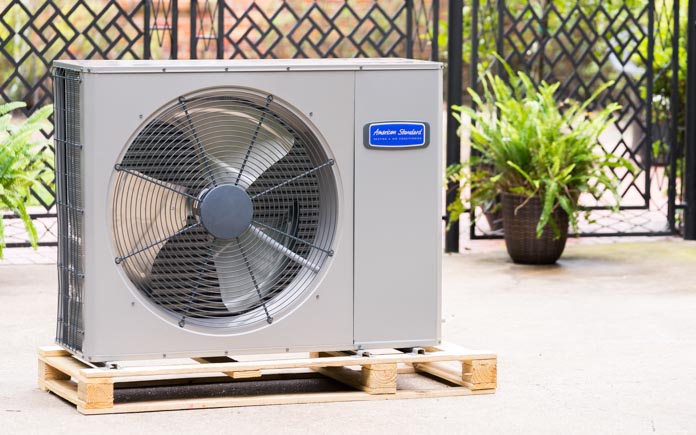
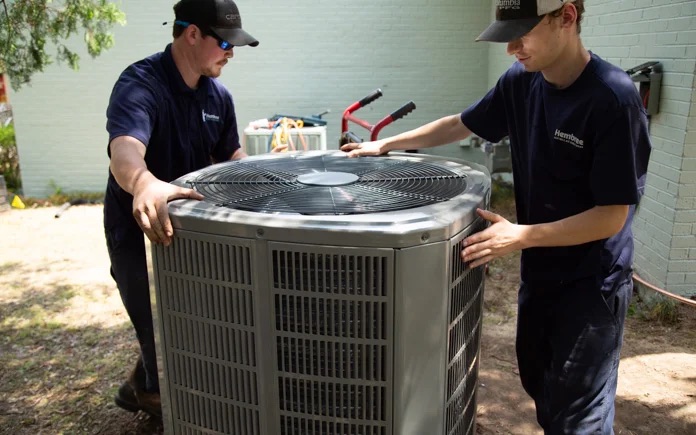
You can create a dual-heat pump system in your home by pairing a heat pump like this one with a furnace or installing a single unit with both components. (3 Echoes Content Studio)
Dual-Fuel Heat Pump System Installation
If you’re interested in dual heating, there are two basic options:
• Installing a split system with separate heat pump and furnace components. A heat pump and furnace can be paired to create a dual-fuel or hybrid system. Not all HVAC systems are created equal. Some are louder than others, and some operate on full blast, reach the desired temperature and immediately cut off — meaning you can expect a lot of warm and cold cycles in your home. American Standard Heating and Air Conditioning’s AccuComfort Platinum 20 Heat Pump has variable speeds that provide even heating throughout the home. Coupled with a high-performing furnace like American Standard’s Platinum 95 Gas Furnace, this dual-fuel system will thoroughly and efficiently heat your home throughout winter.
Caulking seals cracks, gaps and joints gives bathtubs, baseboards, trim, and molding a polished look. But if you can’t apply the caulk neatly, the messy lines will be all anyone sees. Here’s a quick tip and how to apply caulk neatly.
Cut your caulk tip at a 45-degree angle like you normally would do when opening a new tube of caulk. This angle is perfect for the tip to nest inside the corner of whatever piece you need to be caulked.
Now, here’s the Simple Solution:
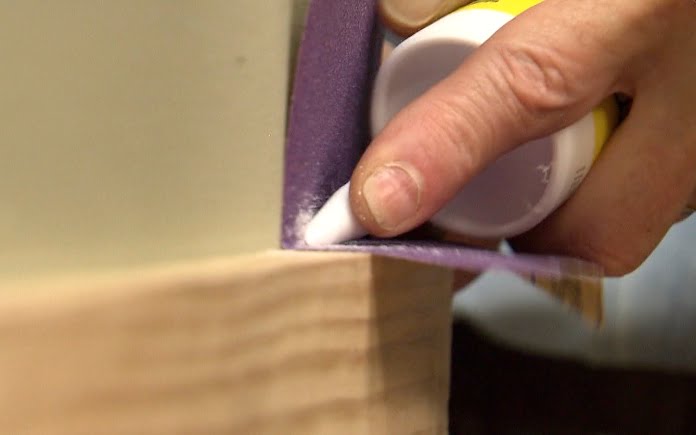
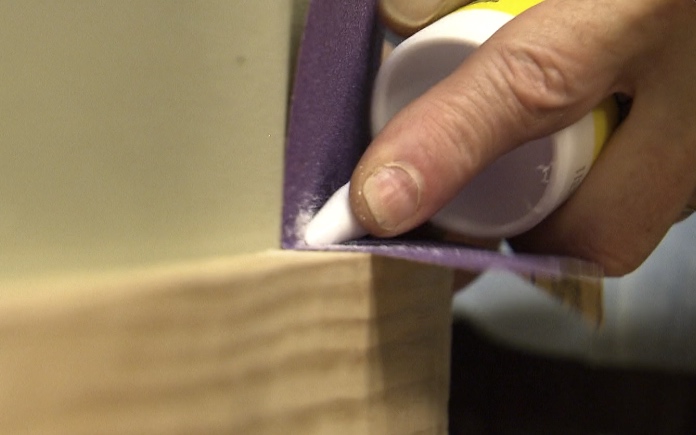
Sanding the caulk tube tip inside the wood joint alters the angle to fit perfectly in the joint. (3 Echoes Content Studio)
Fold a piece of 120-grit sandpaper in half and crease it very tightly.
Place it in the corner of the 90-degree joint that you’re going to be caulking.
Take the tip and rub it back and forth right against the sandpaper.
Sanding the tip down alters the angle so that it fits perfectly into that 90-degree joint. If you look closely at it, you’ll see that the tip is not just cut at 45 degrees, but it’s also beveled back at 90 degrees, so it’s going to fit perfectly into that joint.
Now, just draw the caulk with nice steady even pressure all the way across the joint and you get a nice neat bead with no wasted caulk. The remaining piece of the tip will act like a putty knife – forcing the caulking deep into the crack – as the tip passes over it.
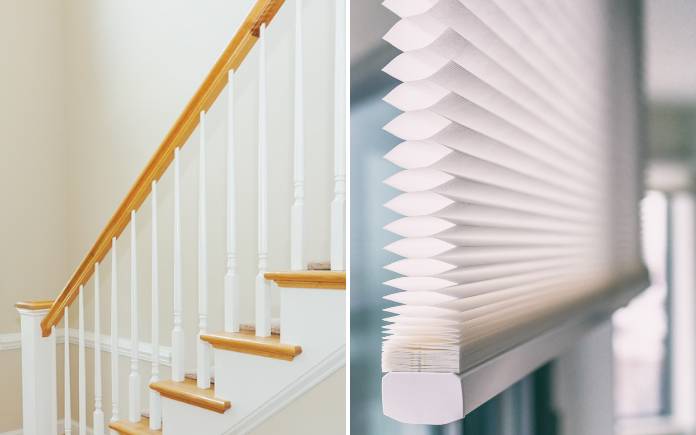
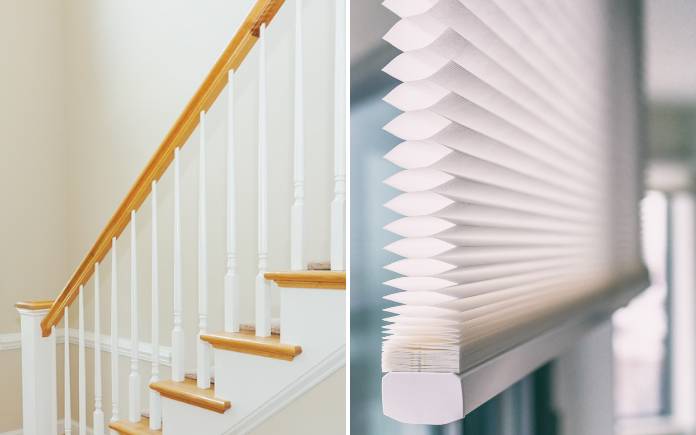
This week, hear a tip for replacing stair spindles and learn how to clean fabric blinds. (EricVega, Getty Images Signature/Adobe Stock)
Hour 1
Learn a fix for squeaky floors, plus how to clean fabric blinds and whirlpool jets.
Fix for Squeaky Floors
(Eduardocruzphoto, Getty Images)
Ryan’s noisy floors in his Illinois home are becoming a problem for his wife, who’s an RN who works nights and sleeps during the day.
“Almost everywhere you step it’s creaking and squeaking, and it carries throughout the house,” he says.
He wants to know if there’s a solution to fix the floors without removing them. The floors are fairly new floating luxury vinyl plank installed over a fully finished basement with a drop ceiling.
The squeaking sound is a result of friction, materials rubbing together. The mystery is whether the sound is coming from the floor or the subfloor underneath.
We suspect the squeaking is coming from the space where the subfloor meets the floor joists. Whenever putting down a new floor, always screw down the subfloor to prevent this squeaking.
The good news is Ryan has access to the subfloor from below.
To fix this, go into the basement and have someone walk on the floor above so you can see where the squeaking is coming from. Then, take a wooden shim, smear some wood glue on it, and tap it into the joint between the top of the joist and the underside of the plywood subfloor.
Don’t drive the shim in because it will raise the floor. Just tap it in enough to fill the space so the plywood doesn’t bounce up and down.
Try this in one or two places to see if it works. You’ll know almost immediately.
How to Clean Fabric Blinds
(Adobe Stock)
Marjorie in Pennsylvania has several custom-made fabric blinds in her home that need cleaning.
She asks, “Is there an easy, safe way to clean these blinds? They were very expensive and I don’t want to ruin them.”
We know it’s a pain to take them down, but the best way to clean them is to take them down and soak them in a bathtub. Use a mixture of warm water, oxygen bleach and Woolite. Oxygen bleach won’t bleach out the color.
Lightly scrub them with a soft bristle brush and hang them up to dry, preferably outside so the sun can help with the drying process. They’ll drain a lot of water before they’re finally dry.
If you can’t take them down, spray them with rug and upholstery cleaner. Spray it on, let it dry, then vacuum the blinds.
How to Clean Whirlpool Jets
(amriphoto, Getty Images Signature)
Every time Stephanie in Indiana turns on the jets in her Whirlpool tub, black stuff comes out.
“I have tried everything. I’ve tried vinegar, bleach, and blowing out the jets so they are empty, but nothing works. What would you recommend?” she asks.
These whirlpool jets are probably on a closed-loop system, which means that they won’t drain out completely when it’s turned off. As a result, the water stays in the loops in the line, and mildew will grow because it’s dark and wet in there.
Try this method to clean them:
Fill the tub with hot water (the hottest you can possibly get) two inches above the highest jet
Add a half gallon of distilled white vinegar
Run the jets at the highest speed for 15-20 minutes. This circulates the vinegar water through the jets
Drain the tub, then refill it with cold water (no vinegar)
Run the jets for another 10-15 minutes
Depending on how much built-up mildew is in the jets, you might need to repeat this process two or three times.
If this doesn’t work, call the manufacturer and see if they have a commercial product that they recommend.
Hour 2
Listen to a never-before-heard Simple Solution, a tip for replacing stair spindles and more.
Simple Solution for Catching Wood Chips
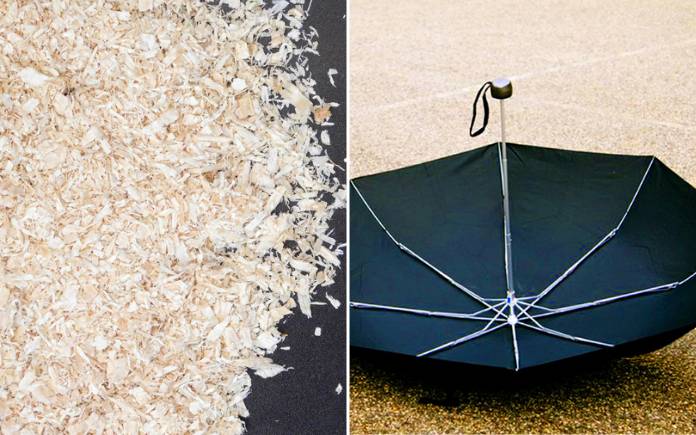
When drilling large holes, hang an umbrella upside down to catch the wood chips. (Marco Livolsi/photopal, Getty Images)
Trent in Vermont is running a new electrical cable across his basement, a total distance of nearly 40 feet. That means drilling more than two dozen 5/8-inch-diameter holes through the exposed floor joists in the basement ceiling.
“Do you guys have a simple solution for catching all the wood chips? If not, it’s going to be a real pain to clean up”
Of course, you can use a drop cloth to catch the wood chips, but you still run the risk of those wood chips spreading everywhere when moving it across the 40-foot span. You can also have someone follow you with the shop vac as you drill.
But what if you’re working alone? Here’s Joe’s Simple Solution:
Hang a small travel umbrella upside down from the joist that you’re drilling into. Secure it to the joist with a cable staple, nail or screw, so it’s directly below where you’re drilling.
The umbrella will catch the wood chips as you’re drilling, and you can easily dump the chips once the umbrella is full.
Replacing Stair Spindles
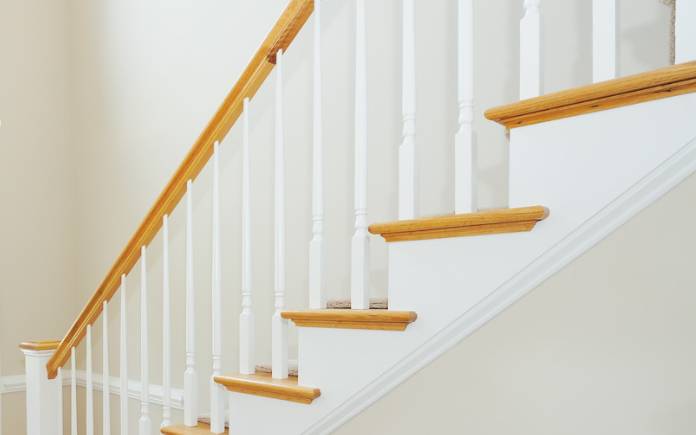
If the dowel joints are tight and you use the right interior glue, you don’t have to use finish nails to secure spindles. (EricVega, Getty Images Signature)
Sal from New Jersey is updating the stairs in his house to get rid of the carpeted treads and dated spindles.
“I’ve got new oak treads in place and the handrails are next. My question is about the spindles. They’re dowelled at the top and bottom so I assume they should be glued, but do I need to reinforce that with finish nails too?” he asks.
Some people do Sal, but if the dowel joints are tight and you use the right interior glue, you shouldn’t have to.
The advantage to using glue only is that there are no nail holes to fill so I would recommend using Titebond Original Wood Glue. This stuff quickly builds a bond stronger than the wood itself.
Squirt a little into the holes in the rail and treads, then use a small brush to spread some around on the dowel ends of each spindle. When you get 15 or 20 spindles glued into the handrail and the oak treads, the whole rail system will be super strong and you won’t have to fill nail holes or touch up paint.
Best New Products
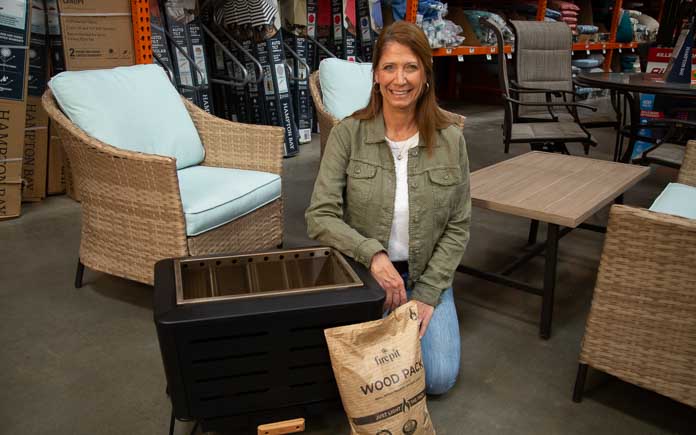
Gather around a fire on any outing with Tiki’s new portable fire pit. It’s designed to fit in smaller spaces, plus it emits less smoke! Learn more >>
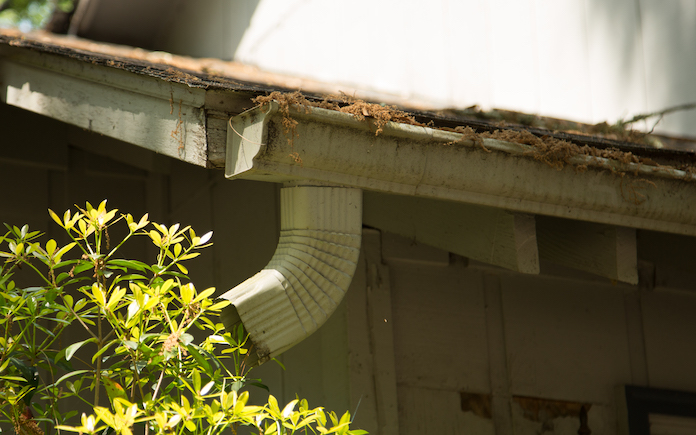
Save Fascia Board — If the wood fascia boards on your house are experiencing blistered paint, water staining or rot, it’s usually because rainwater running off the roof is dripping behind the gutters.
Fix this by slipping a 3/8-inch-thick by 3/4-inch-wide strip of PT wood, or better yet, a strip of composite or plastic lumber behind the existing metal drip edge. That will kick out the drip edge and divert rainwater into the gutter, not down the face of fascia.
Because lemons are acidic, they can kill bacteria, mold and germs. (Tina Hsu, corelens)
Clean and Disinfect Cutting Boards — Cut a lemon in half crosswise, and sprinkle coarse Kosher salt onto the cutting board. Then, use the cut side of the lemon to scrub the salt into the cutting board.
Scrub for 2-3 minutes, adding more salt, if necessary. Wipe the board clean and let it dry overnight.
If it’s a wooden cutting board, treat it with food-grade mineral oil (not vegetable oil) or butcher-block oil made specifically for wood.
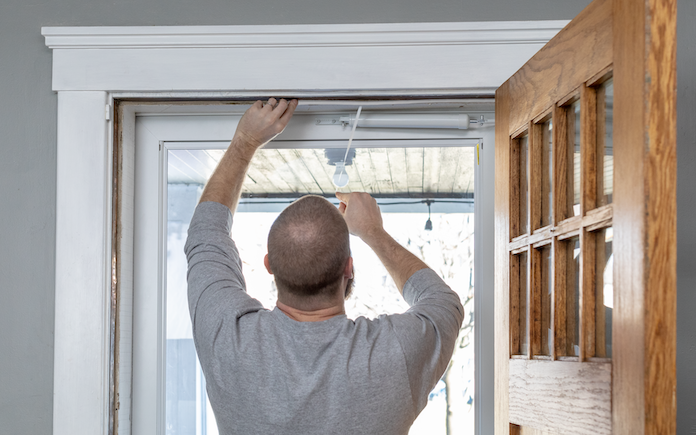
Weatherstripping adds a barrier between outside air and indoor living space, helping to block drafts that lead to high heating costs. (Duck® Brand)
One of the quickest energy- and money-saving tasks you can do is weatherstrip your windows and doors.
Weatherstripping is a piece of rubber, foam, metal or other material used to seal the edges of a door or window to prevent outside air from entering.
Air leaks around window and door edges are a leading cause of high energy costs in your home. By sealing uncontrolled air leaks, you can save 10-20 percent on your heating and cooling bills, according to the U.S. Department of Energy.
Not sure if you need to weatherstrip? Try this test for air tightness: On a windy day, carefully hold a lit incense stick or a smoke pen next to your windows and doors. If the smoke stream travels horizontally, then you need to apply some weatherstripping.
Weatherizing your home is an easy and affordable DIY project. Here are three prime spots for air leaks and how to weatherstrip them.
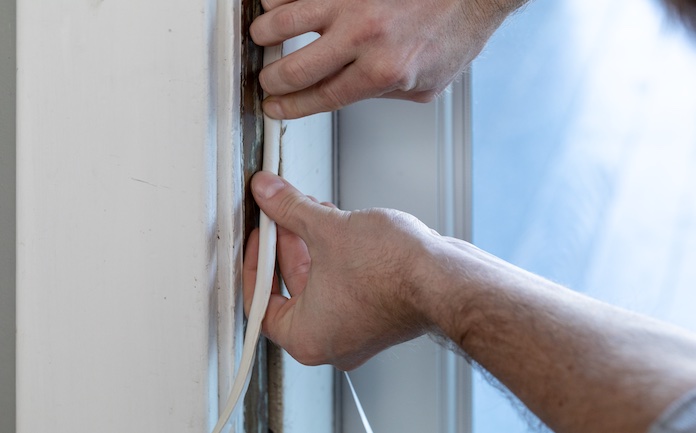
Foam weatherstripping conforms to the cracks and gaps in a window frame. (Duck® Brand)
1. Windows
During cold winter months, windows become a prime spot for energy loss.
Gaps around wooden window frames are more noticeable in the winter because of thermal expansion. Basically, warmer temperatures make wood swell, and cooler temperatures cause wood to contract.
Fortunately, you don’t have to replace your windows to make them more energy-efficient in the winter.
Duck® Brand Weatherstrip Sealsaremade of self-adhesive foam for an easy install. Just remove dirt and dust from the project area, measure the space, cut the product to size, remove the protective backing and press the seal into place.
For added assurance, especially in colder climates, consider Duck® Brand Heavy-Duty Weatherstrip Seals. They’re guaranteed to not crack in temperatures as low as -40 degrees Fahrenheit.
Best of all, weatherstripping works year-round, not just to prevent drafts, but also to block dust, pollen and insects from invading your home.
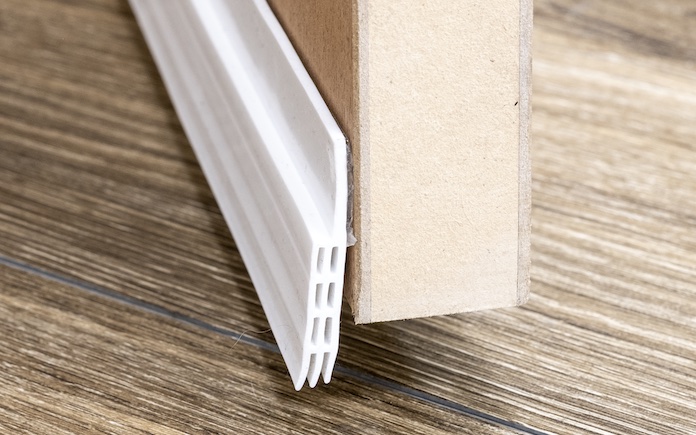
Weatherstrip under doors to block out drafts, pests and outside noise. (Duck® Brand)
2. Doors
Doors are one of the most common sources of leaks and drafts, so it’s important to weatherstrip around their frames just like windows. However, a door’s bottom is a particularly vulnerable spot.
Gaps between a door and floor not only increase drafts but also create a perfect entrance for dirt and pests to penetrate your home.
While inside, look under your entry doors — if the sun shines through, they need bottom seals.
Duck® Brand’s Double Draft Seal is a foam insert you cut to size and secure in place with patented straps. It’s removable, renter-friendly, and works for interior and exterior doors.
The seal won’t slide off or stick to doors, and it won’t damage them. It works with most flooring types, and the fabric cover is machine washable — so you can block drafts in style.
The durable rubber material blocks out drafts, dirt and pests, plus helps reduce noise that enters your home. And because it’s peel-and-stick, it won’t damage your door.
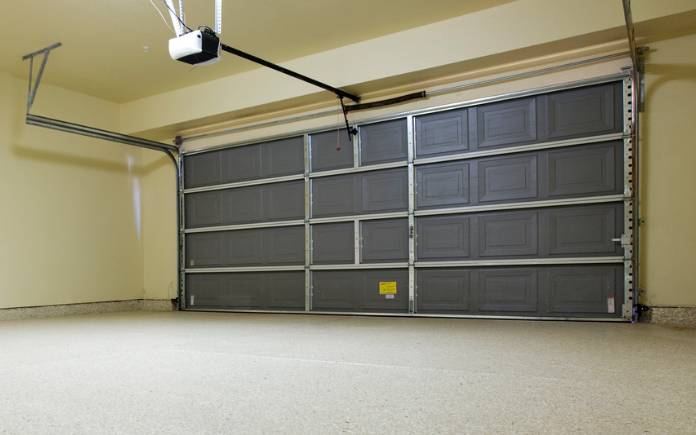
A garage door seal blocks out pests and dirt, so your garage stays cleaner. (slobo, Getty Images Signature)
3. Garage Doors
Now that we’ve talked about applying weatherstipping to your windows and doors, let’s talk about a spot in your home that’s often overlooked when weatherizing — the garage door.
Although a garage isn’t technically a living space — unless it doubles as a man cave — it still needs to be sealed off to block out damaging pests and precipitation.
For example, if water enters your garage, it could damage the floor and possibly seep into the rest of your home.
Most garage doors already have a seal, but over time, wind, water, dirt and pests can deteriorate it. If your garage door is working well, then replacing the seal is an easy DIY job.
Duck® Brand’s Garage Door Bottom Seal is designed to create an airtight seal under garage doors that also keeps dirt and insects out during warmer months. Because it’s made with heavy-duty rubber, it won’t freeze or crack, no matter what the season brings.
Weatherstripping around windows and doors is just one of the many methods to make your home more energy-efficient.
Duck® Brand offers a variety of products to weatherstrip your home to help save energy and money.