How to Use Biomorphic Forms & Patterns in Your Home Decor

How to Use Biomorphic Forms & Patterns in Your Home Decor

Biomorphic forms and patterns used in the Design by Nature Collection by Front for Moroso

This week for my Pinterest TV episode, I am talking about how you can take inspiration from organic shapes and natural patterns and incorporate this into your home decor. In biophilic design terms, these would be referred to as natural analogues.

Natural Analogues

Natural analogues are organic, non-living and indirect evocations of nature. For example, these could be the objects, materials, colours, shapes, and patterns found in nature being turned into artwork, ornaments, furniture, décor or textiles in our homes and public spaces.

In my last Pinterest TV episode, we looked at biophilic design materials which are basically natural materials such as wood, cork, rattan, seagrass, stone, bamboo, and linen. We looked at how these materials can be used, without being too processed or altered, to create an indirect material connection to nature.

In the latest Pinterest TV episode and in this post, I would like to look at ways that we can use biomorphic forms and patterns in our home interior design to further enhance that indirect connection to nature. This may mean taking inspiration from stones, shells, feathers and leaves etc and creating representational artwork, furniture, lighting and architectural features with a more organic feel to them rather than taking inspiration from geometric shapes and hard lines.

Biomorphic Forms & Patterns

Biomorphic Forms and Patterns are basically symbolic references to contoured, patterned, textured or numerical arrangements that we see in nature. The objective is to use design elements within the built environment that allow users to make connections to nature. We want to use biomorphic forms and patterns in a way that creates a more visually preferred environment that enhances cognitive performance while helping reduce stress. A space that uses biomorphic forms and patterns well will feel interesting and comfortable. It will capture and hold your attention and will likely make you feel quite contemplative.

Science has suggested that incorporating biomorphic forms and patterns into the built environment will help to reduce stress levels. This is probably due to the fact that it causes us to shift our focus and concentrate more. We know that humans have a visual preference for organic shapes and natural patterns, but the scientific case to explain why has not yet been fully explored.

The Golden Ratio

The Golden Ratio, also known as the Fibonacci Series, appears to be a fundamental characteristic of the Universe and has intrigued scientists, mathematicians, artists and designers for centuries. This simple numerical pattern where each number is the sum of the two numbers that precede it (0, 1, 1, 2, 3, 5, 8, 13, 21, 34, 55 etc) can be seen in nature from the micro-scale to the macro-scale. Flower petals, seed heads and pine cones to tree branches, seashells, hurricanes and entire galaxies seem to align with the golden ratio.

Examples of Biomorphic Forms & Patterns

Pebbles

You never see hard lines and right angles in nature. In nature, everything is softer and more organic. Stones and pebbles are rounded and smooth. We are seeing this influence coming through strongly in interior design trends now. There is a huge move towards organic shapes and soft curves that mimic those we see in nature. Furniture in particular is becoming strongly influenced by organic shapes as we are seeing a lot of curved furniture pieces right now.

Curve Appeal‘ is one of the big interior design trends featured in Pinterest Predicts for 2022 with searches for curved sofas, walls, bars and kitchen islands all seeing major increases this year.

SOURCE LIST

  • Pebble Pendant Light from Dyke & Dean
  • Pebble Rubble Sofa by Front for Moroso
  • Wool Rug Shape Cream from Benuta
  • Village at Home Shore Pebble Table Lamp in Taupe from Leekes

Barnacles

Barnacles are sticky little crustaceans related to crabs, lobsters, and shrimps. They live on sturdy and often moving objects such as rocks, pilings, and buoys, boat and ship hulls and even whales. They secrete a fast-curing cement that is among the most powerful natural glues known to man. They feed on microscopic organisms in the sea and they are now inspiring our homewares.

The texture and the shape are probably a big part of the appeal when it comes to taking inspiration from barnacles. We are seeing ceramics such as bowls and vases with a surface similar to that of barnacles as well as lighting that mimics these natural little creatures.

SOURCE LIST

Shells

Shells, and the Golden Ratio that they display, have been inspiring our architecture and interiors for thousands of years and now we are seeing a strong visual trend in interior design for shell-inspired homewares. Many of the items we are seeing now merely recreate the look of shells either in 3D or 2D form.

But when biomorphic forms and patterns are used to maximum effect we see products designed to leverage the golden ratio and the spiralling of shells. We are seeing this now in lighting, furniture and architectural details like staircases.

SOURCE LIST

Sand Dunes

I have noticed recently a big move towards taking inspiration from sand dunes and the rippled patterns that we see in the sand created by wind or water. There are lots of interior products at the moment using the striations as inspiration. We’re seeing rugs and carpets incorporating extra texture due to the ridges that are cut into the pile. We’re seeing the inspiration appear on wallcoverings and in artwork. It’s there in ceramics and even in furniture.

This is my absolute favourite mood board that I pulled together and I think that it also illustrates really nicely the trend we are seeing towards the desert decor trend that is currently en route into our homes as we speak. This trend focuses on comforting colours such as warm terracottas, spicey ochre shades, and burnt oranges along with umber and soft shades of brown. This is accompanied by texture in fabrics and furnishings and these soft undulating ripples that we are seeing here.

SOURCE LIST

Mossy Landscapes

On the other end of the spectrum from the dry and arid desert decor trend that we are seeing is homeware and interiors that are taking inspiration from mossy landscape and green forest environments. Curved furniture that looks like moss-covered rocks is making an appearance as well as rugs that are highly textured and shaggy and aim to replicate and mimic multitude of shades of green that can be found in nature.

We are also seeing moss playing a large role in the creation of living walls which can be a great way to create a visual and material connection to nature as well as a non-visual connection as moss is a wonderfully tactile natural material.

SOURCE LIST

  • Contemporary Rug Moss Collection from Loom Rugs
  • Design by Nature Collection by Front for Moroso
  • Libra Luna Occasional Chair in Boucle Hunter Green from Beaumonde
  • Pebble Rubble Seating by Front for Moroso

Wood Grain

We talked about using wood as a natural material in our interiors and I mentioned how it is more effective if we can use it in an unprocessed state. the reason for this is because when we leave it raw we can really see the wood grain and the natural ring patterns in the wood.

We are seeing furniture with a more organic finish now such as tables with a live or living edge. this is to give it that softer more organic feel because as we said there are no straight lines in nature.

The concentric circles of tree rings are making more of an appearance in our interiors lately and we can see below that this pattern is showing up on furniture, flooring and wallcoverings.

SOURCE LIST

Sea Urchins

Another bit of sealife that is inspiring our home decor is the sea urchin. These spiny, globular little creatures live on the seabed and inhabit every depth zone.

Again their appeal is probably in their organic shape but also the texture that it can bring into the home. So we are seeing sea urchin-inspired accessories such as vases and simple motifs along with lighting and even door pulls.

SOURCE LIST

Leaves

Leaves are actually a staple when it comes to interiors inspiration. I don’t think that botanical prints and patterns ever go out of style. It is just such an easy way bring nature into the built environment and the benefits are just undisputable.

What makes leaves so special is the fractal patterns that we can identify. A fractal is a pattern of nature that repeats at different scales. We can find examples of this in the forest when we look at ferns, trees, roots, leaves, and the fungal mycelium.

SOURCE LIST

Honeycomb

And our final example today is honeycomb. Hexagons burst onto the interiors scene a few years ago and were everywhere from wall and floor tiles to interior accessories, soft furnishings, door hardware and everything in between.

They aren’t as strong a trend as they were but this is another example of how nature and natural patterns can be used to inspire our home environments and bring us all the mental and physical health and well being benefits associated with biophilic design.

SOURCE LIST

  • Rebel Wool Hexagon Rug from Dunelm (affiliate)
  • Rialta Geometric Cushion in Ochre from Lux Deco

There are so many benefits that can be reaped from including biomorphic forms and patterns in a space from reduced stress levels to increased feelings of well-being and improved levels of productivity.

Chase the Rainy Days Away with this DIY Painted Umbrella (With Video!)

Chase the Rainy Days Away with this DIY Painted Umbrella (With Video!)

How to turn your boring umbrella into a work of art

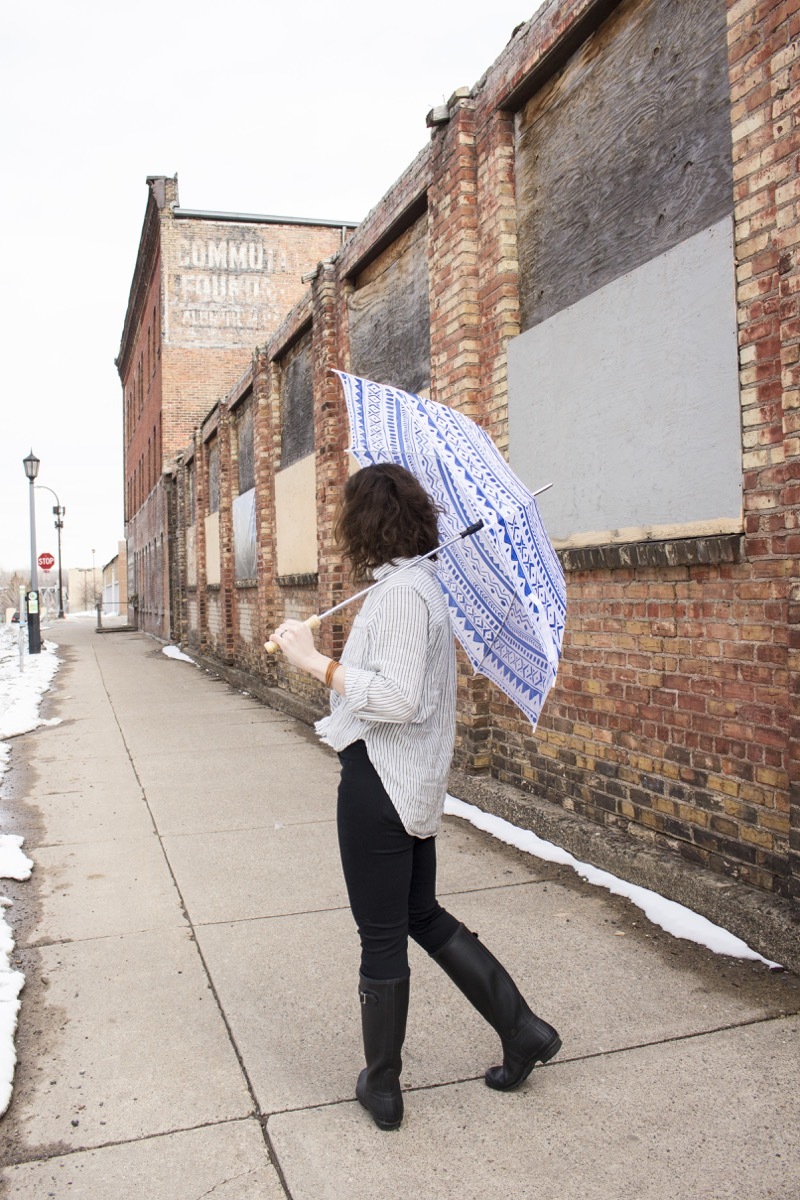
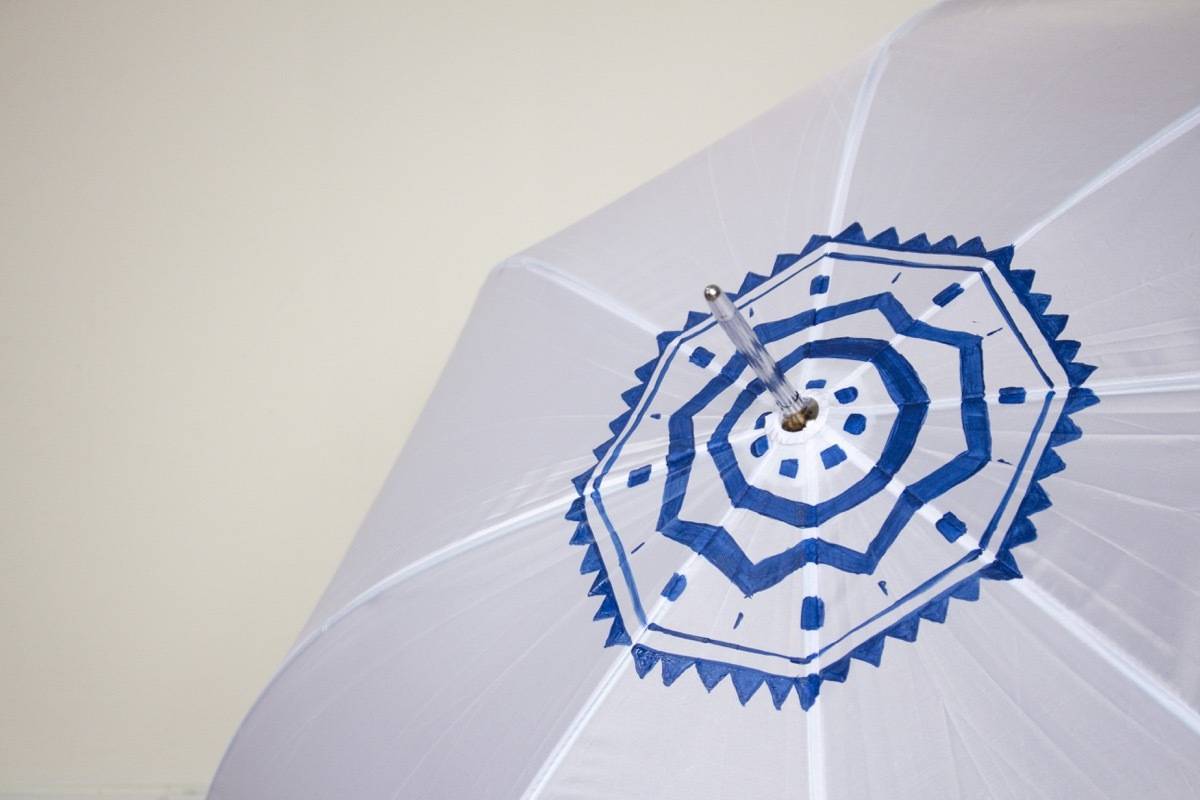
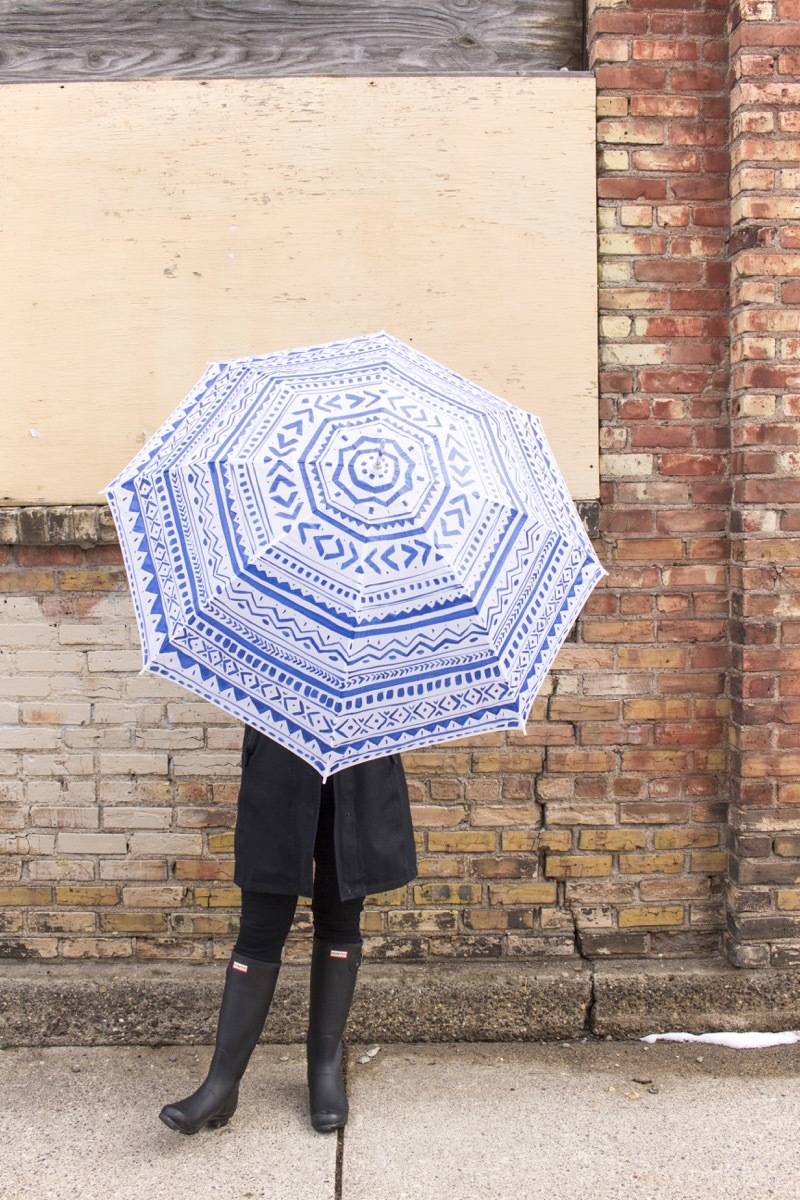
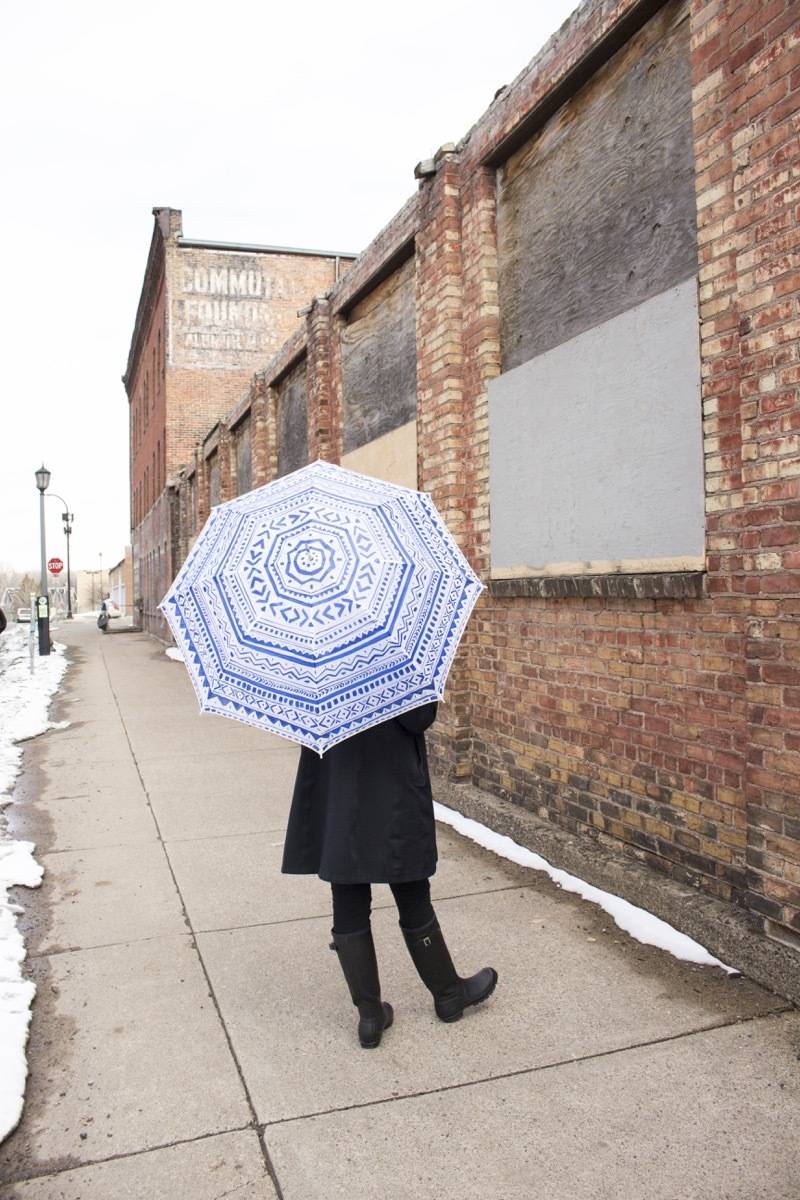
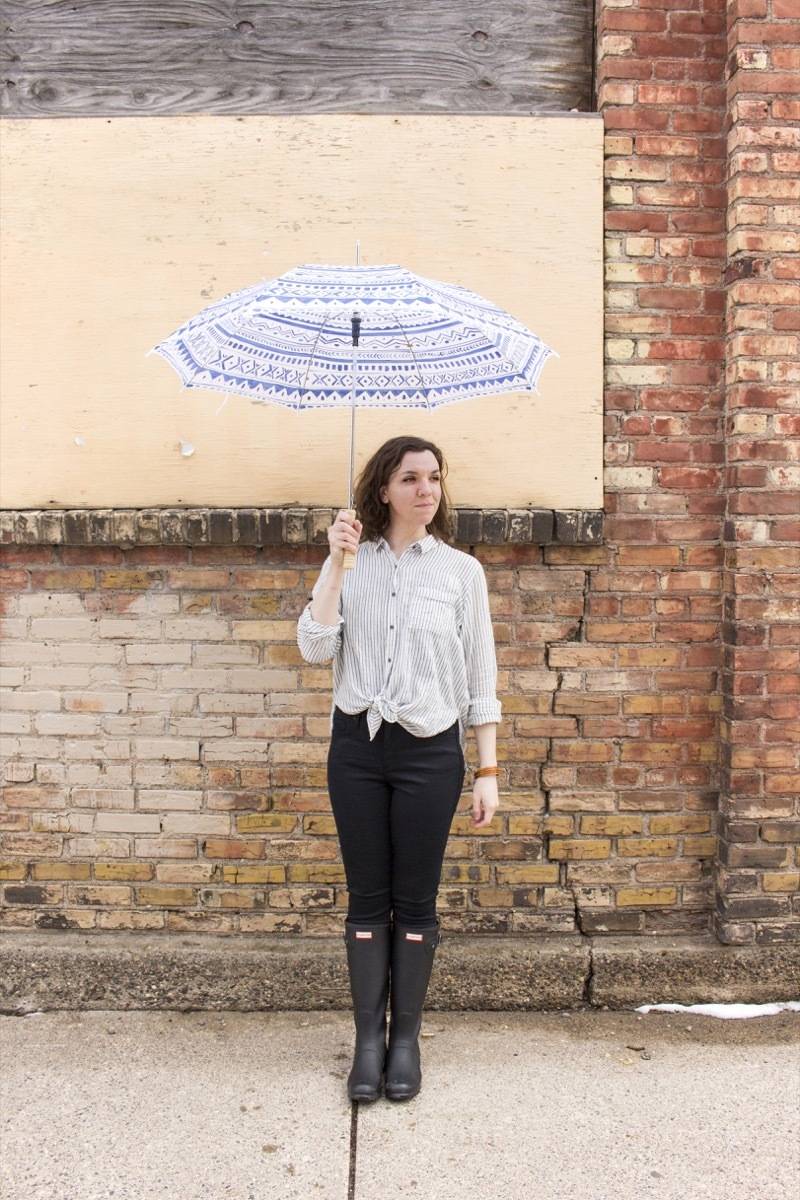
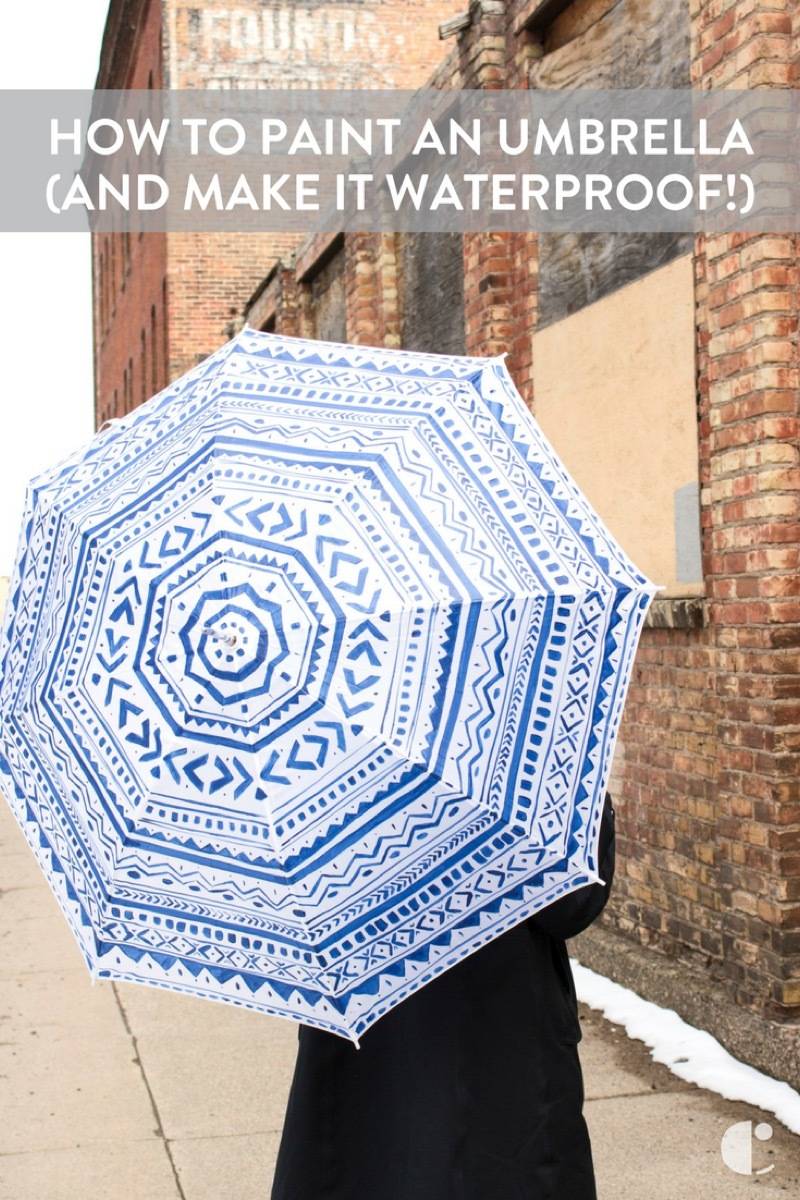
Do you remember this joke?: April showers bring May flowers, what do May flowers bring? The answer is “pilgrims” for those of you skipped the third grade. Cue eye roll. Anyway – we are headed right into the rainy season as March comes to a close and winter is finally releasing its chilly, chilly grasp. It’s finally time to break out the umbrellas and rain boots! Keep reading to see how to make your rain gear more personal by DIY-ing this painted umbrella (P.S. it’s totally waterproof, too!).       

[embedded content]

Watch the video to see painting in action, and keep reading for all the details! 

Materials

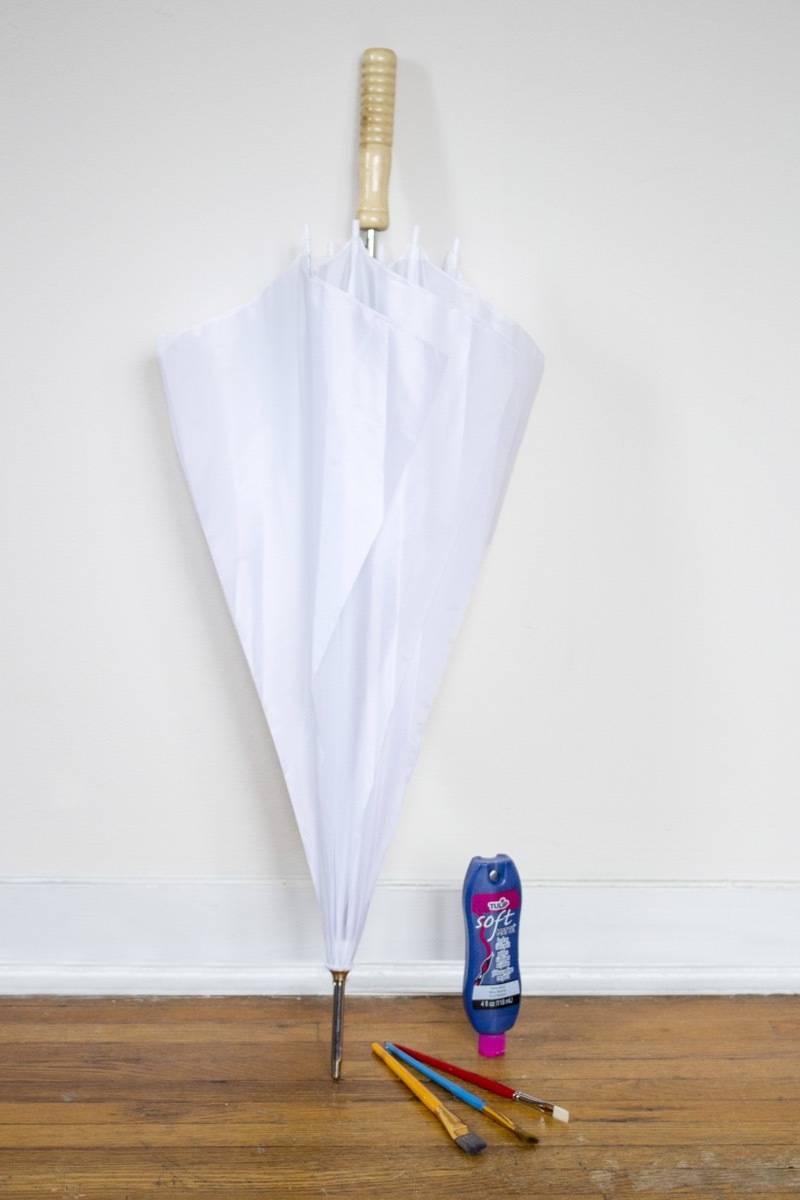
A white umbrella is leaning against a white wall near other items.

Step

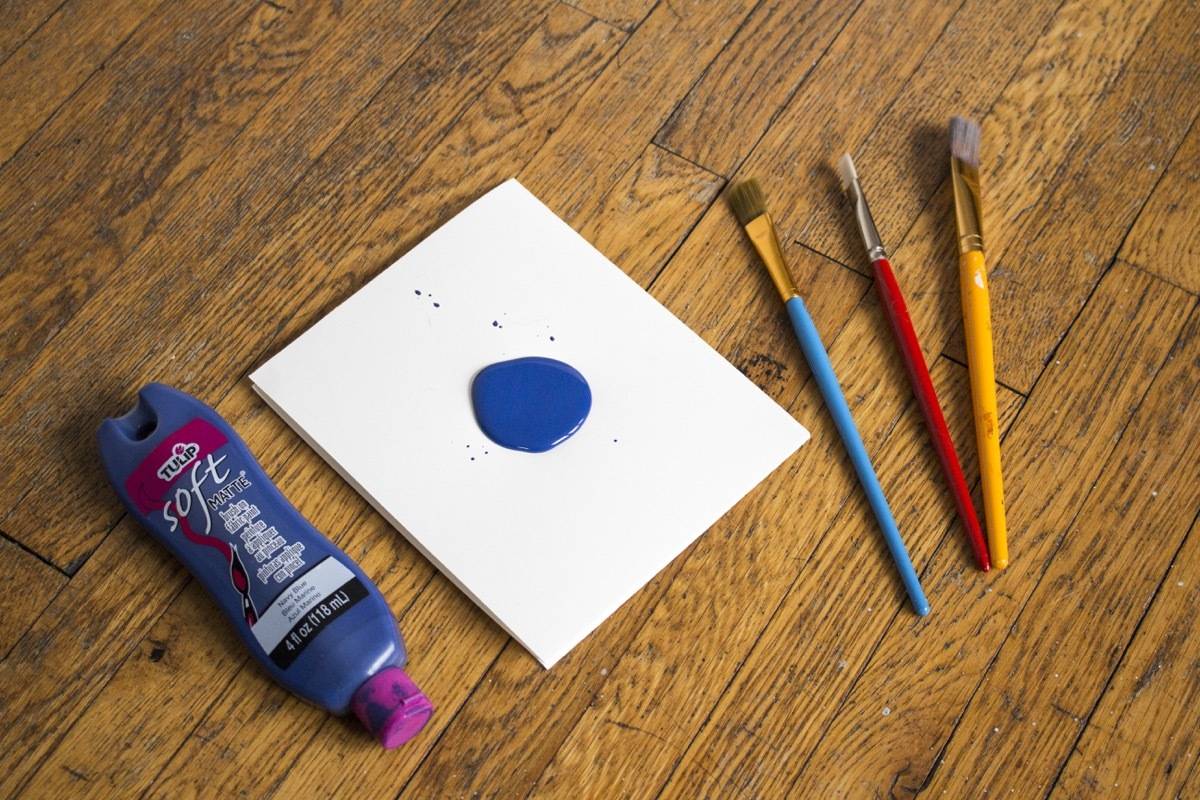
A white paper with blue paint is sitting next to the tube of paint and three paint brushes.

This specific type of paint is the key to the waterproof aspect of this project! Make sure to use a fabric paint that requires washing after application (per the instructions on the bottle). To prep for painting, get a scrap piece of paper or a disposable plate to use as a palette.

Step

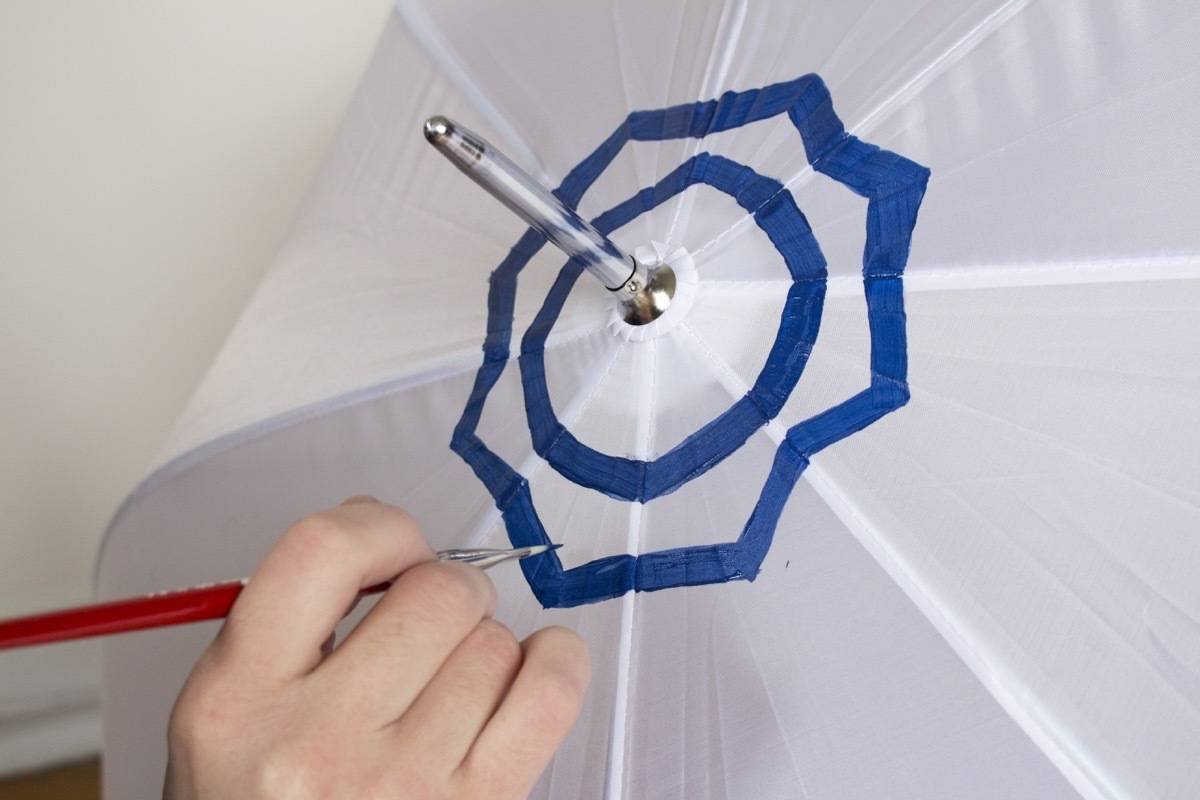
A person's hand painting on the top of an open umbrella.

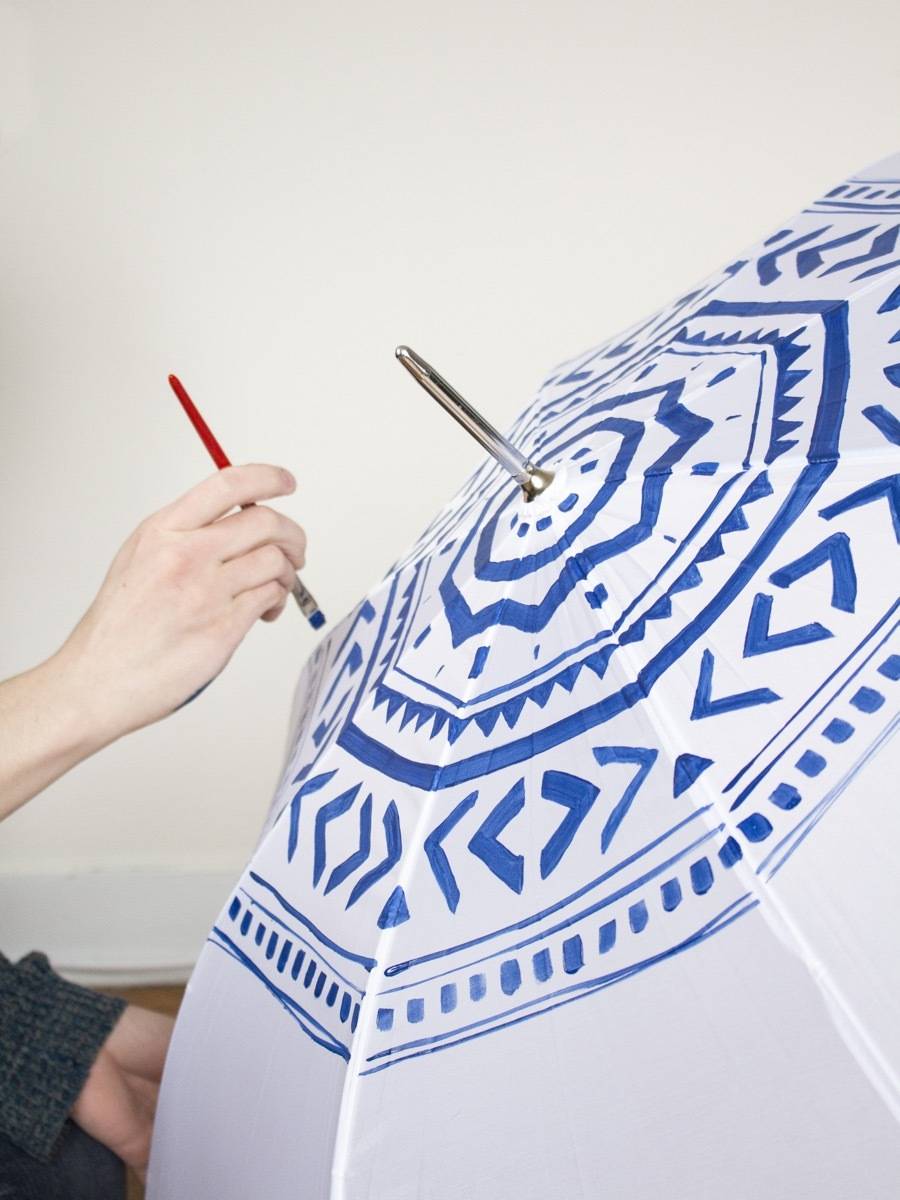
Now to start painting! Open the umbrella, and start in the middle. Begin with something easy, like a circle. Paint one panel at a time. Keep your designs simple. 

A blue design is visible on the end of a white umbrella.

Step

A person draws a blue design on an umbrella.

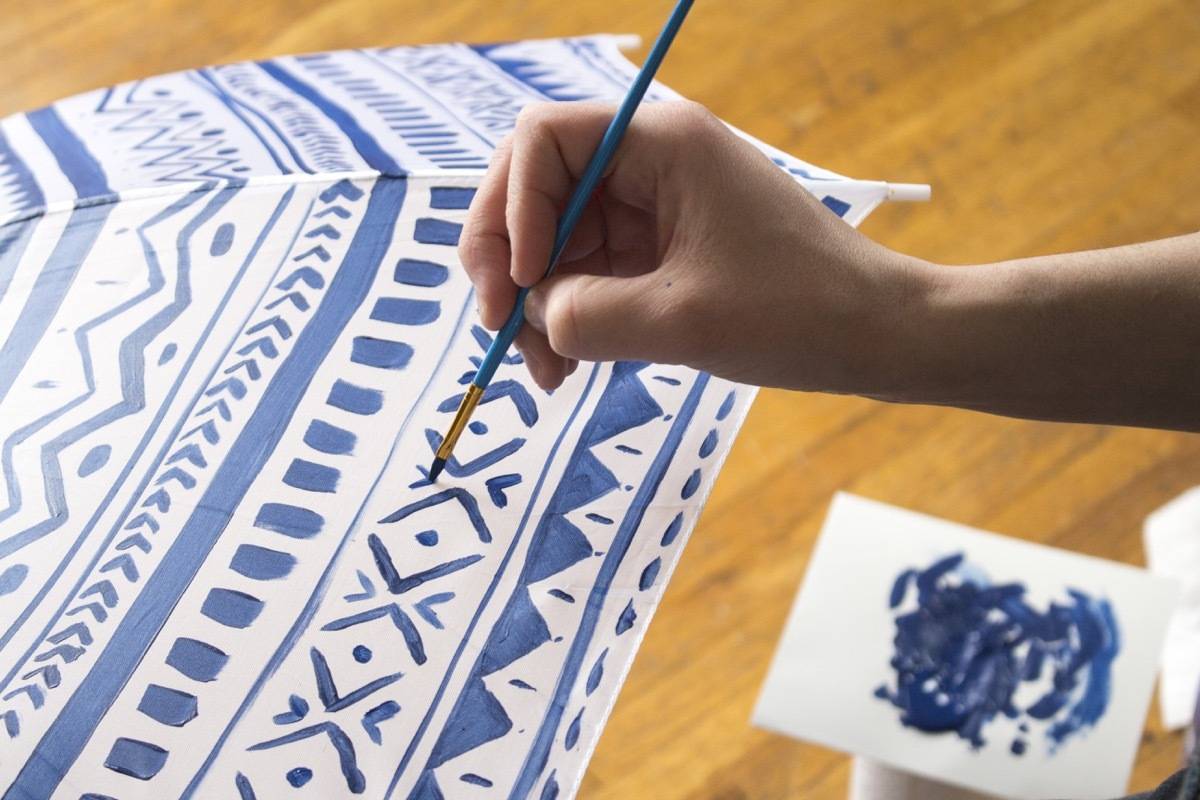
Put a podcast on, and keep working until you have an entirely painted umbrella. Try not to be heavy-handed – using less paint on your brush looks better than more paint. Use simple patterns, like triangle, lines, dashes, and zig-zags.  

A person has used a brush with blue paint to paint on a white surface.

When your painted umbrella is complete, leave it open to dry overnight. Wash brushes with dish soap. Done!


How to paint an umbrella (it's waterproof!)

Transform a boring umbrella into an indigo blue beauty!

Tutorial for a painted indigo umbrella

How to transform a boring umbrella using waterproof paint

How to paint a (waterproof!) umbrella

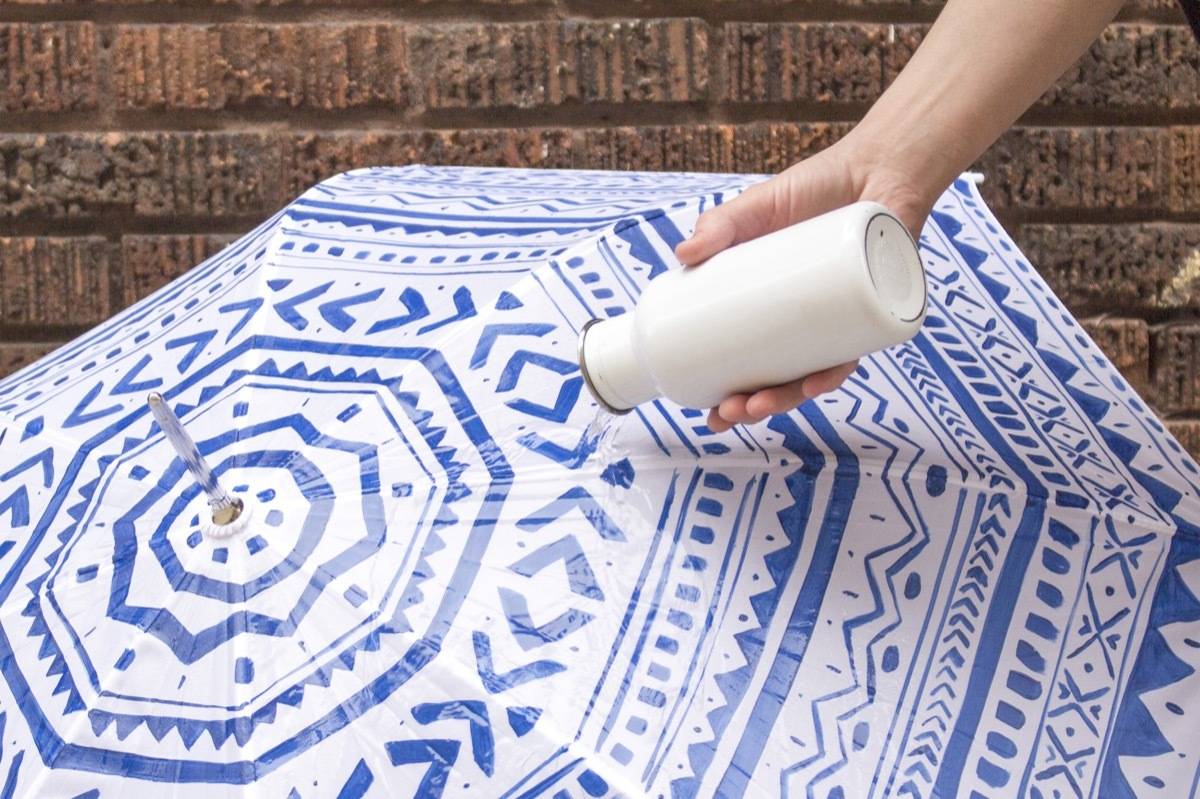
Since the fabric paint is built to be washed, you don’t need to worry about the paint running!  

Make This! Indigo Painted Umbrella
Share this DIY on Pinterest!

There’s just a little bit of snow left on the ground here in the Twin Cities, but hopefully a few days of springtime rain will kick it all out of town. Happy spring!

This Home Has Wallpaper Used in a Way You’ve Never Seen Before

This Home Has Wallpaper Used in a Way You’ve Never Seen Before

We independently select these products—if you buy from one of our links, we may earn a commission.

Name: Shea Keating, husband Rich Lamiroult, and two girls: Billie Ever and Seeda Honey, along with Charlie the rescue pup and Georgie a rescue cat
Location: Sag Harbor, New York
Size: Just under 2000 square feet
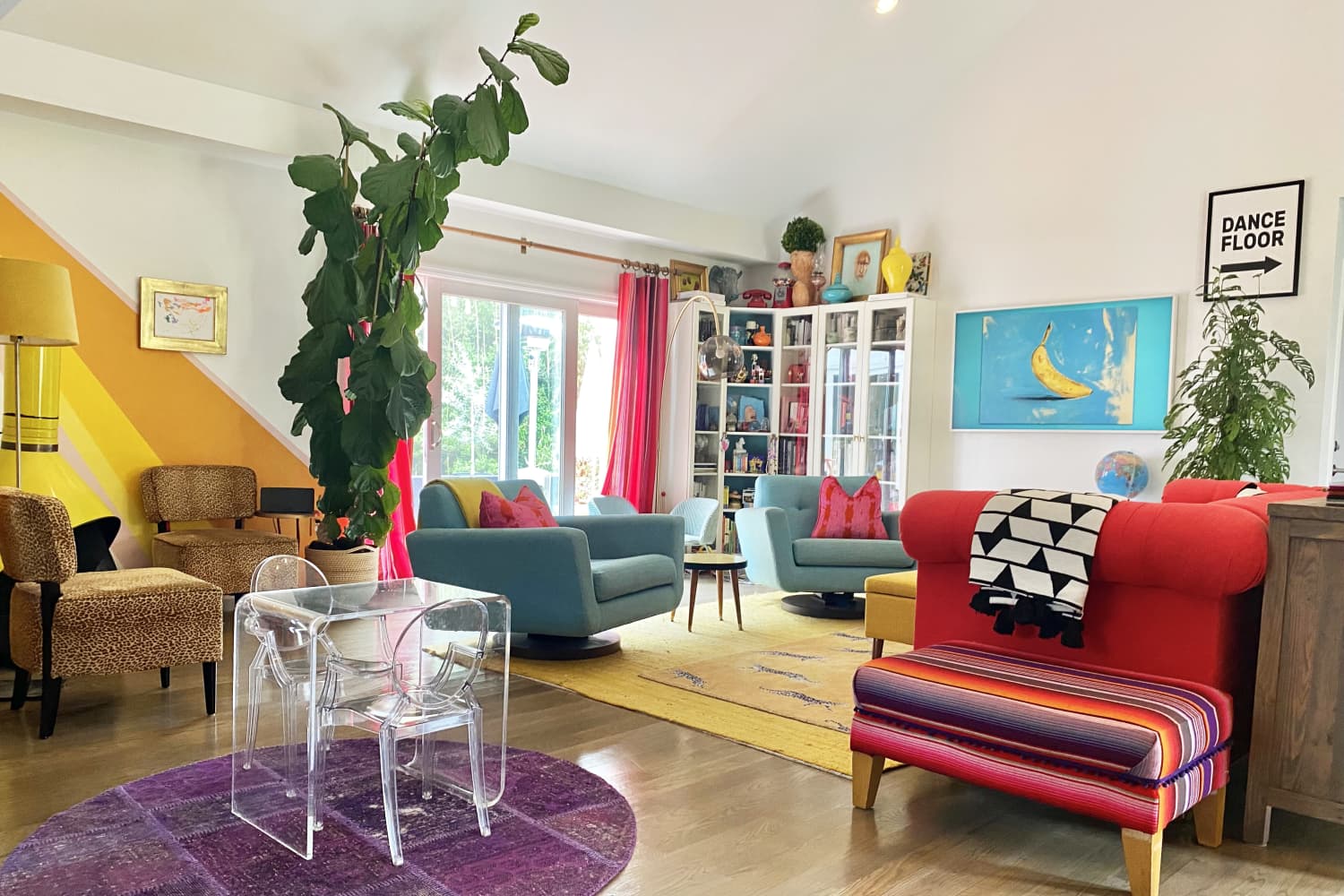
Type of Home: It’s a weird modern ranch — I’ve dubbed it the funky Ranch
Years lived in: 4 years, owned

We were lucky enough to be able to build our house on a subdivided lot and right next to my family’s house. My dad, who is no longer with us, used to say we would have a compound — his dream is now a reality. For budget sake (and timing — I was pregnant with our first child during the process) we chose a modular option. The timing really wasn’t that expedited unfortunately; we moved in when our first daughter Billie was almost a year and a half!

One of the main requirements for us was an open floor plan and a kitchen/dining area that would house my grandmother’s 11-foot dairy farm table from the 1950s. It’s an heirloom for our whole extended family and we all feel very lucky to keep making memories around it while remembering all the old ones. The modular option let us do just that: we opened a wall between the living room and kitchen area and the table fits perfectly.

Sag Harbor is where I grew up from the age of 12 and it’s just a really beautiful spot. We do a lot of dancing in our house — my husband is a musician and our two girls love to sing and groove; we have a weekly Friday night dance party. And we even installed a working disco ball and lights to make it shine in the corridor — because why not?! The house is just fun, open and colorful — but it’s also warm and homey. All the things in it either have meaning for us and our history, or are just really cool design wise — it’s very eclectic and I’m constantly adding or tweaking the decor.

Apartment Therapy Survey:

My Style: Eclectic, Colorful, Fun, Mismatched

Inspiration: I find inspiration in a lot of places, but a lot of it just comes from things I’ve always liked from childhood on — those things haven’t really changed: Color, pattern, lips, glitter, hearts, art, the “Wizard of Oz” (you know Dorothy was a redhead right?)

Favorite Element: So hard to say; I really love something about almost every room, but the living area/kitchen is the place we spend the most time — and its just so conducive for living and cheerful.

The other spot is the girls room, all anchored around a vintage Pendleton blanket I bought on our honeymoon. The room started as cutouts of pictures on my house plans — and then got brought to life when we finally moved in — and it just evolved from there. The glitter wall is beyond magic and it really can’t be captured in photos no matter how hard I try! It’s such a special space and I hope my girls remember it as a sanctuary and the place they could be anything as they get older.

Biggest Challenge: BUDGET. I have expensive taste and was eyeing so many big ticket items to fill this house I couldn’t wait for. I was very particular and did not compromise for certain things such as the Anthropologie chesterfield  couch, but the ABC Home overdyed rug… well that I probably will never be able to have, and that’s okay — I’ve worked around it. Some stuff is vintage, some stuff is hand-me-downs, but for me it’s all how it comes together and the pairing.

Proudest DIY: Hmmm, well up until recently I would have said my custom “too shea” lip wallpaper that I purchased and installed from Spoonflower. But recently I was inspired by a wallpaper that I’d been loving but the scale was just off for the space I was thinking (our cathedral ceiling living room wall that houses a “Let’s Stay Home” Sign, which funny enough I purchased PRE PANDEMIC less than three months before!) So instead of settling for the wrong scale, I took to the wall with paint and did a hand painted mural in the same color way and feel (it’s all brushstrokes). I’m really pleased with how it came out and it all came together very quickly — probably a total of three and a half hours for all layers.

Biggest Indulgence: Probably the couch. It’s the chesterfield sofa from Anthropologie in an beautiful orange-y red. I HAD TO HAVE IT. It paired with the console unit behind it were probably the two items I was set on as they separated the foyer from the living area. 100% worth every penny — I love that thing every time I see it.  Other than that, the three chandeliers that hang over my heirloom farm table were a splurge but again so worth it. Lighting is important — if I had my way the [recessed lighting] would never go on!

Is there something unique about your home or the way you use it? Hmm, well the lit spinning disco ball and “dance floor” is probably a bit unique, although disco balls are popping up in home decor all the time now and man that just makes me so happy. Our newest addition is the Preway vintage fireplace. I’ve always known the space in that corner would have a gas stove but it took us this long to get it in place, so the main living room has always had swivel chairs opposite the couch with the design that the space could be used for viewing the TV, checking out the backyard through the 8-foot sliding doors, socializing with people in the kitchen, or swiveling to see the crackling fire in the cozy corner.

What are your favorite products you have bought for your home and why? I am a rug fanatic — I mean I would just keep buying and layering them. I got a beautiful runner from Etsy for my kitchen that tied the blue walls and magenta chairs together perfectly. But rugs don’t have to be expensive (I say to remind myself I can live without that ABC home overdyed beauty from 2016). I have found some of my favorites on websites like Overstock or Wayfair. Rugs are a great way to add color that can be changed. I have seasonal rugs — like one that comes out for winter and the other for spring in the space between the kitchen and living room where my kids Lucite table and chairs are set up — they can help divide a space and change the feel in an instant.

Please describe any helpful, inspiring, brilliant, or just plain useful small space maximizing and/or organizing tips you have: Everything does have its place. My best piece of advice would be for kids toys — invest in clear containers and a cabinet that can hide them! We also have the clear containers for our pantry, although that takes daily clean up to keep it tidy with tiny hands in and out all day.

Finally, what’s your absolute best home secret or decorating advice? FIND STUFF YOU LOVE AND SURROUND YOURSELF WITH IT — your home should be the most uplifting, relaxing space — it’s where you can be authentically you 100% of the time. To do that I think we all need to let ourselves show more.

This house tour’s responses were edited for length and clarity.

This UK Home Has a Tropical Pattern-Clashing Hallway & a Home Office in a Closet

This UK Home Has a Tropical Pattern-Clashing Hallway & a Home Office in a Closet

Name: Victoria Shipp, partner, and pug, Biskit
Location: Birmingham, United Kingdom
Type of home: House
Size: About 840 square feet
Years lived in: 8 months, owned

Tell us a little (or a lot) about your home and the people who live there: After living in a rented flat for seven years, I was dying to finally own a home of my own. I was lucky to have such a relaxed landlord who let me paint and decorate my previous home, but I was quickly running out of room and had so many ideas running through my head.

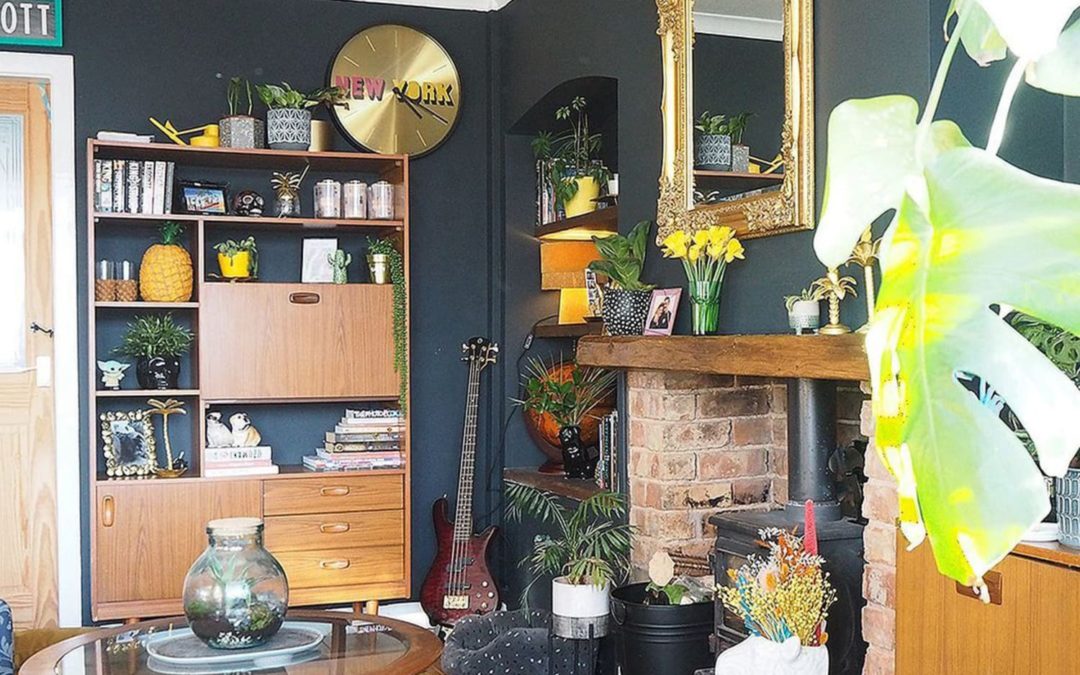
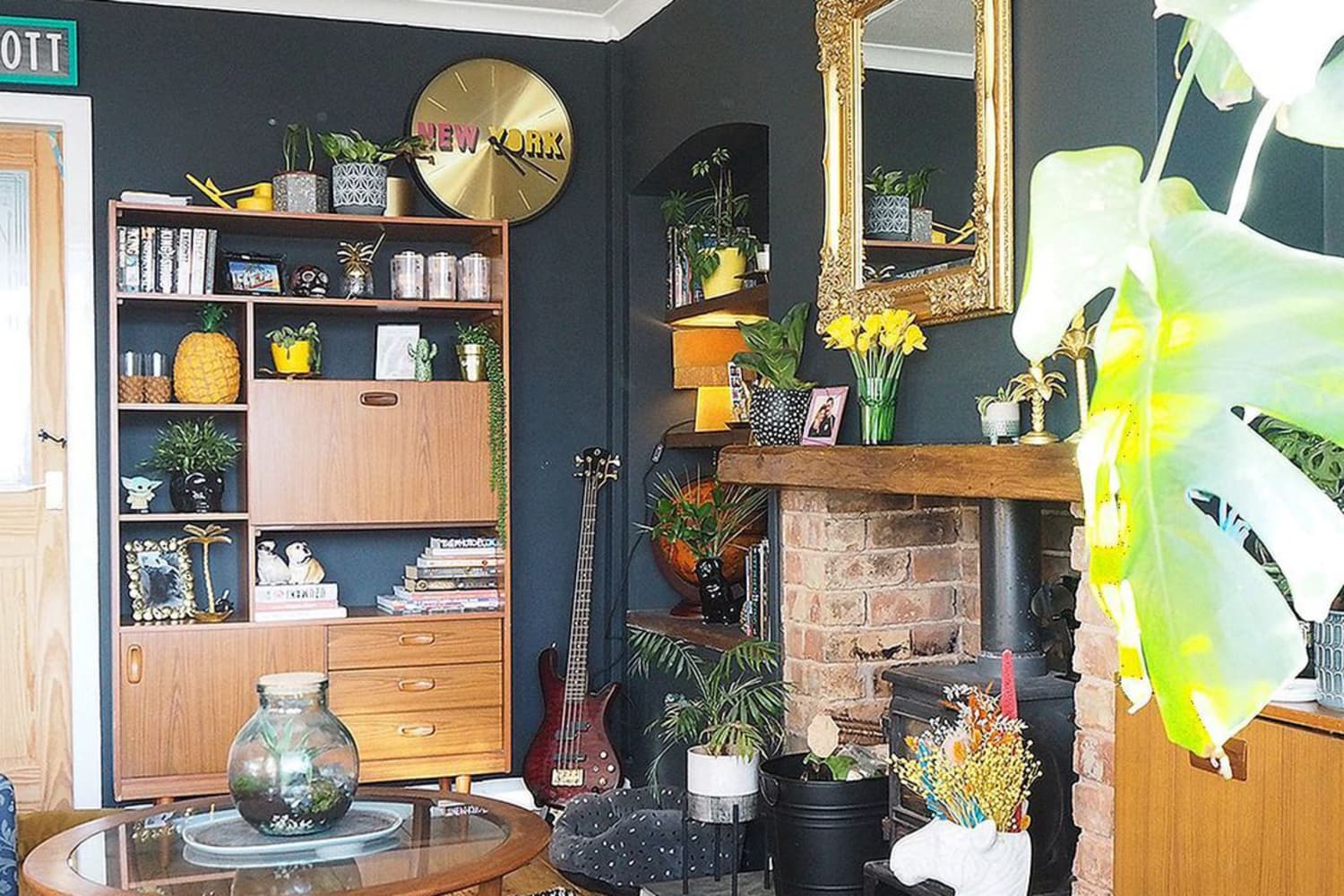
I live with my fiancé who, thankfully, is very easygoing and lets me crack on with my bold ideas and home decor choices. Luckily he has similar taste — or just loves me too much to say anything! We did have two gorgeous pug boys, but unfortunately lost one recently, so we’re readjusting to being a family of three now. We’re constantly fighting a never-ending battle of pug hair (if you know, you know!) and hiding dog toys. I feel my home is a perfect mix of dark interiors, bold colors, and a tropical kitsch paradise.

We recently made the move from the North of Birmingham, to the South, to a really up-and-coming area, which was recently voted by Conde Nast Traveller as one of the “coolest neighborhoods in the UK.” As much as that has inflated house prices, I think we were lucky to secure our modest two-bedroom 1930s terrace on a leafy road. The house was a beige and boring home when we first moved in eight months ago. It was lacking any personality but also had some gorgeous features that made me fall in love with it. I am the most impatient person ever, so I quickly got to work bringing my ideas to life.

I know what I like, and I try not to be sucked into trends. I am very particular when it comes to patterns and designs, and also a very impulsive person. I make design decisions quickly, but I know my own mind, and I know what’s going to be something I will always love and appreciate. I have always been drawn to dark colous (emo forever) and also contrasted with bold pattern and bright colors. I know my taste isn’t for everyone, but my home decor is for me.

I am decorating on a budget and often upcycle items and have collected a lot of items from car boots, charity shops, vintage shops, and even furniture people have dumped. I love to give old furniture a new lease of life, and one of my favourite items in my home is a Schrieber sideboard I got for £20 from a charity shop.

I can remember where I got everything from, even if it was 10-plus years ago. I created mood boards for each room before I even moved in, and am constantly updating them as I have new ideas. I have pineapples in every room, I have plants everywhere, and I love that all aspects of my personality is spread across this house. I have tried to allow all rooms to flow but also introduce different colors into each room. We have a long way to go yet, but I’m very proud of what we’ve achieved so far. Although this isn’t our “forever home,” I am quietly confident that it will forever hold a piece of my heart…

What is your favorite room and why? My favorite room is definitely the living room. Although this room can be quite dark in the winter, I decided to go dark in here. Don’t be afraid to go dark. It’s only paint, and you can always re-paint it in the future if your ideas change! I feel the dark colors make all of the accessories pop, and I love the yellow accents in this room.

My curated gallery wall is pride of place above the green velvet sofa, and I have plenty of storage and places to display my never-ending collection of decorative items (or junk as my partner calls it!). I never envisioned having a log burner, but this fireplace has become the heart of the house. It’s so cost-effective during winter, and gives this room a rustic feel. I also turned the cupboard under the stairs into a home office. Because of Covid, I found myself working from home germanely and needed a space to work. It’s perfectly tucked away, but also in the heart of the home. I built the desk myself for under £20. This space could have become the ‘Monica Cupboard,’ but I utilized the space and now have the perfect cosy nook for home working.

Describe your home’s style in 5 words or less: Eclectic kitsch dark tropical paradise.

What’s the last thing you bought (or found!) for your home? This summer we’ve been slowly trying to refresh the garden. To be honest, we have no idea what we’re doing when it comes to outside space, so this is a learning curve. We inherited a huge covered lean-to, which I’ve been trying to inject some personality into.

Any advice for creating a home you love? You do you! It’s your home, you spend every day here, so make it your own sanctuary. You don’t need to follow trends or do what everyone else is doing. Go wild with colours, buy that ugly piece of furniture, clash colours and prints, but just do what ever makes you happy and what you love.

This submission’s responses and photos were edited for length/size and clarity.

A Formerly Beige UK Home Got a Major Transformation During Lockdown

A Formerly Beige UK Home Got a Major Transformation During Lockdown

We independently select these products—if you buy from one of our links, we may earn a commission.

Name: Rich O’Gorman
Location: Birmingham, UK
Size (in square feet): 1000 square feet
Years Lived In: 1 year, owned

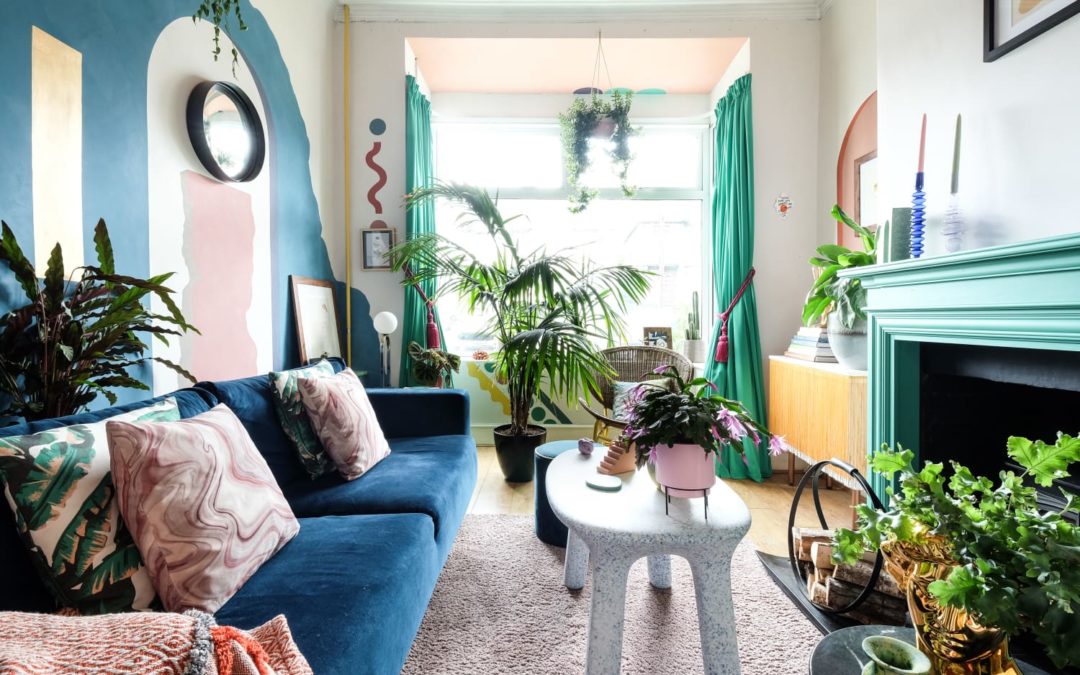
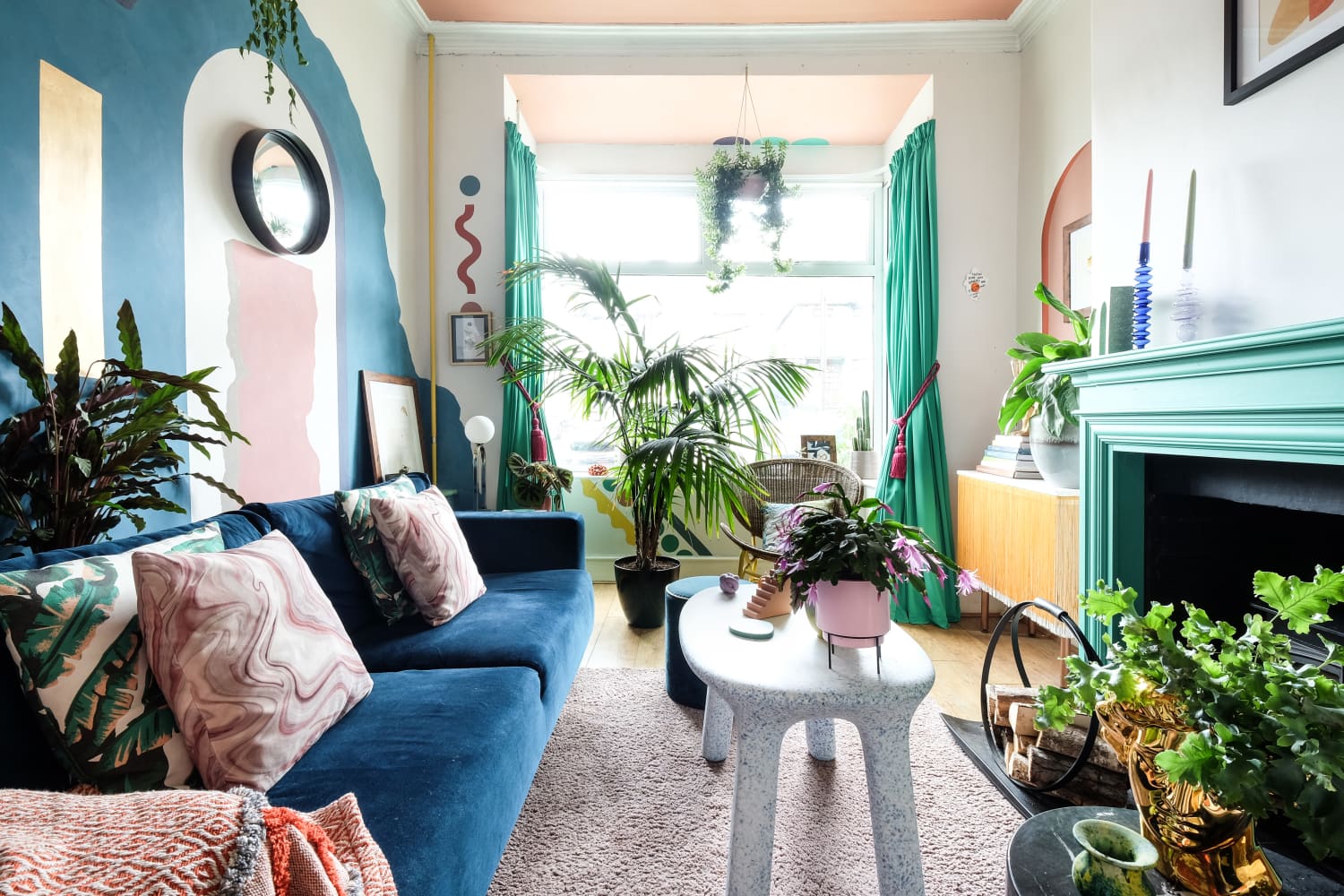
Rich O’Gorman lives in Erdington in Birmingham, in a two-bedroom Victorian home he bought only a year ago. “It’s just outside the city center and has some gorgeous parks, beautiful Victorian houses, and it’s definitely up and coming,” describes Rich of his new neighborhood. Having purchased his home during the pandemic, he, unfortunately, lost his job during this time, too. With lockdown in place and nowhere to go, Rich turned his focus into his house and transformed it into a colorful space, and started documenting on Instagram, which has now turned into a full-time gig. 

“You know how they always say you’ll find something when you’re least expecting it? I went to view this house on a whim and as soon as I opened the door, I fell in love. I immediately felt at home and knew I needed to bring some color to the beige walls!” Rich writes. So with a few buckets of paint and some paintbrushes, Rich did exactly that and used the walls as blank canvases, turning them into these fun, bright, and colorful murals. “There’s nothing more joyful than walking into a bright, colorful room and people are denying themselves that!” writes Rich. “I think people are worried about getting it wrong or it looking silly, but homes should be fun and reflect your personality!”

Apartment Therapy Survey:

My Style: I describe my style as retro futurism; it’s a term used in fashion for designers like Prada and Louis Vuitton but I feel like it rings true in Househomo — lots of retro color palettes and textures with bold, unexpected color choices!

Inspiration: I am inspired by fashion (Prada and Louis V always and forever!), the amazing work of Peter Tarka, Mr. Buckley Interiors, and artists like El Dibujo, Printed Goods. I try to absorb as much inspiration as I can before designing and try and emulate them ALL in my work, which is probably why there’s always so many shapes and colors!

Favorite Element: My favourite element is the pineapple light in my hallway; it was a housewarming gift from my grandma but also a low-key dig as I have a pineapple tattoo that she loves to rip me for.

Biggest Challenge: The biggest challenge was probably the bathroom; I’ve never plumbed anything before but I was determined to do everything myself, including tiling the floor, a bespoke sink cabinet, and new tapware, but a handful of YouTube videos and a couple of glasses of wine later, Shazam! 

Proudest DIY: My favourite DIY is the fringe table in the living room; it was an old piece of marble hearth that I added legs to and later added fringe, which gives it an amazing texture and movement!

Biggest indulgence: The biggest indulgence is the furry chair I’m sat on, by far the most expensive item in the house but no question it was completely worth it! It’s a well-known styling trick but high low styling — having one expensive piece surrounded by less expensive pieces elevates the whole space!

Is there something unique about your home or the way you use it? I think it’s probably unique in its use of colour; I’m not sure the neighbours even know about the colourful wonderland inside.

What are your favorite products you have bought for your home and why? Definitely the dining room table and chairs! As the dining room is quite large, I wanted something to fill the space in an opulent, shapey way and they have given the room such a clean aesthetic (from which I’ve gone crazy with color and shape). The chairs were actually old boardroom chairs (think chrome and black leather) which I spray painted gold and recovered in shades of velvet; I think they cost just under £50 for all 6!

I’ve redecorated the dining room twice since moving in; it was the first room I painted when I moved in and as my aesthetic grew it no longer felt right, so now it’s a full vibe and I can’t WAIT to have friends over for dinner parties!

Please describe any helpful, inspiring, brilliant, or just plain useful small space maximizing and/or organizing tips you have: I’m actually the worst for organization; I never think about practicality or storage. Luckily I have a basement for collecting! But maybe my best tip is to look at the designs from DOIY; most of their homeware serve as multi-purpose and they look STUNNING in the process, so a great way to double up.

What most people get wrong about using color in their home: Being afraid of it; there’s nothing more joyful than walking into a bright, colorful room and people are denying themselves that! I think people are worried about getting it wrong or it looking silly, but homes should be fun and reflect your personality!

What are the biggest tricks/secrets to using color in decor? Go big or go homo; try pairing bold colors together, work through the whole color wheel (even if you think they won’t work, it might surprise you!). Try and go for a color story of four to five colors; a warm pink, a cooler blue/green, and a surprise orange and red, even if they’re just accents like cushions and tchotchkes, but the more you lean into color, the more rewarding it is! 

What’s your favorite wall paint color of all time: It has to be “Fleurie” from Craig & Rose; it’s the color on my fireplace in the living room and the jumping-off point for this whole color maximalist journey I’m on; I owe it a lot! 

Finally, what’s your absolute best home secret or decorating advice? PLANTS! They bring a space to life, they add depth to murals, and they add natural texture (and they give you oxygen, too!)

This house tour’s responses were edited for length and clarity.

Viv Yapp

Photographer

Designer/maker based in Bristol.
I make handcrafted homeware with Jesmonite, an eco-resin.
www.vivyapp.com

Follow Viv