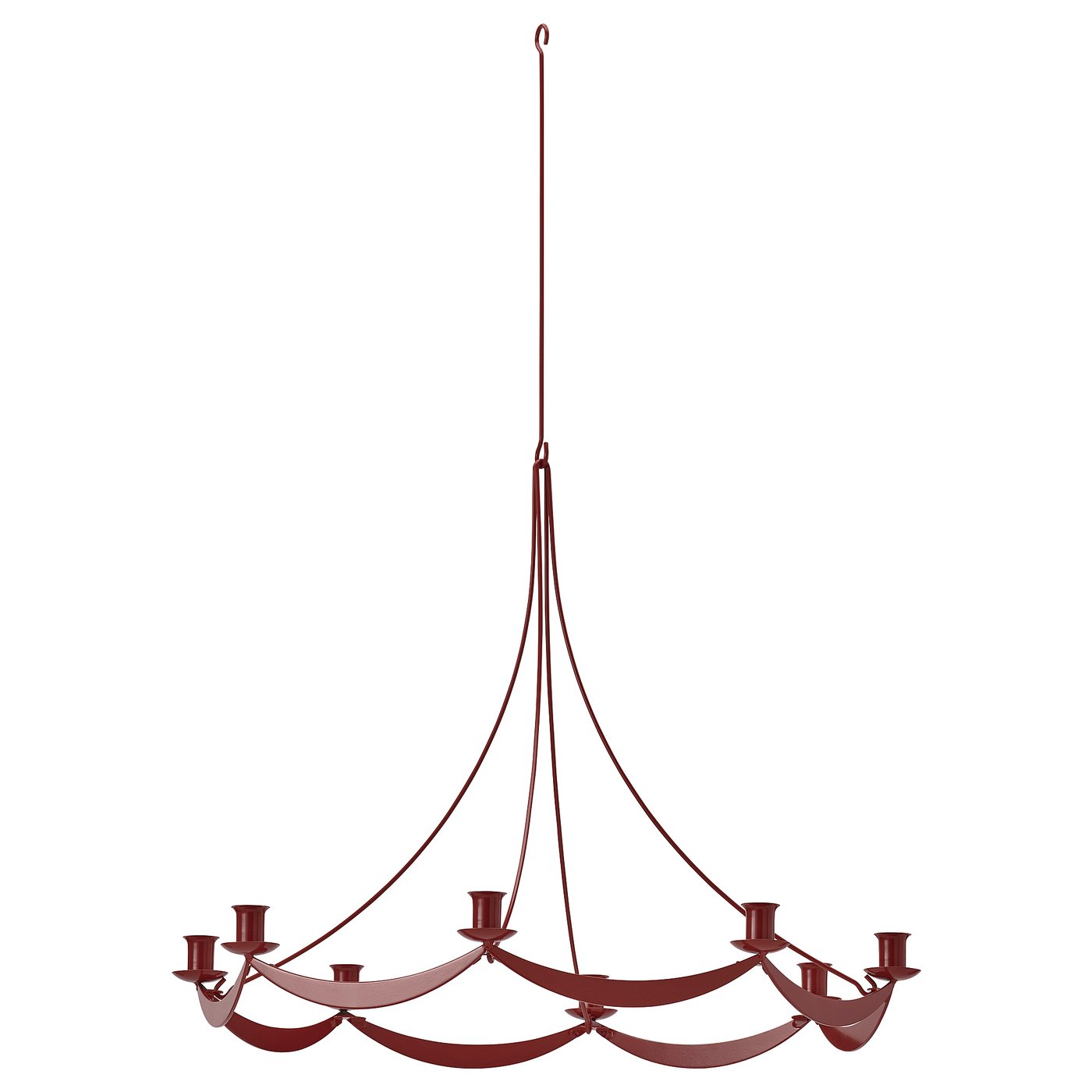
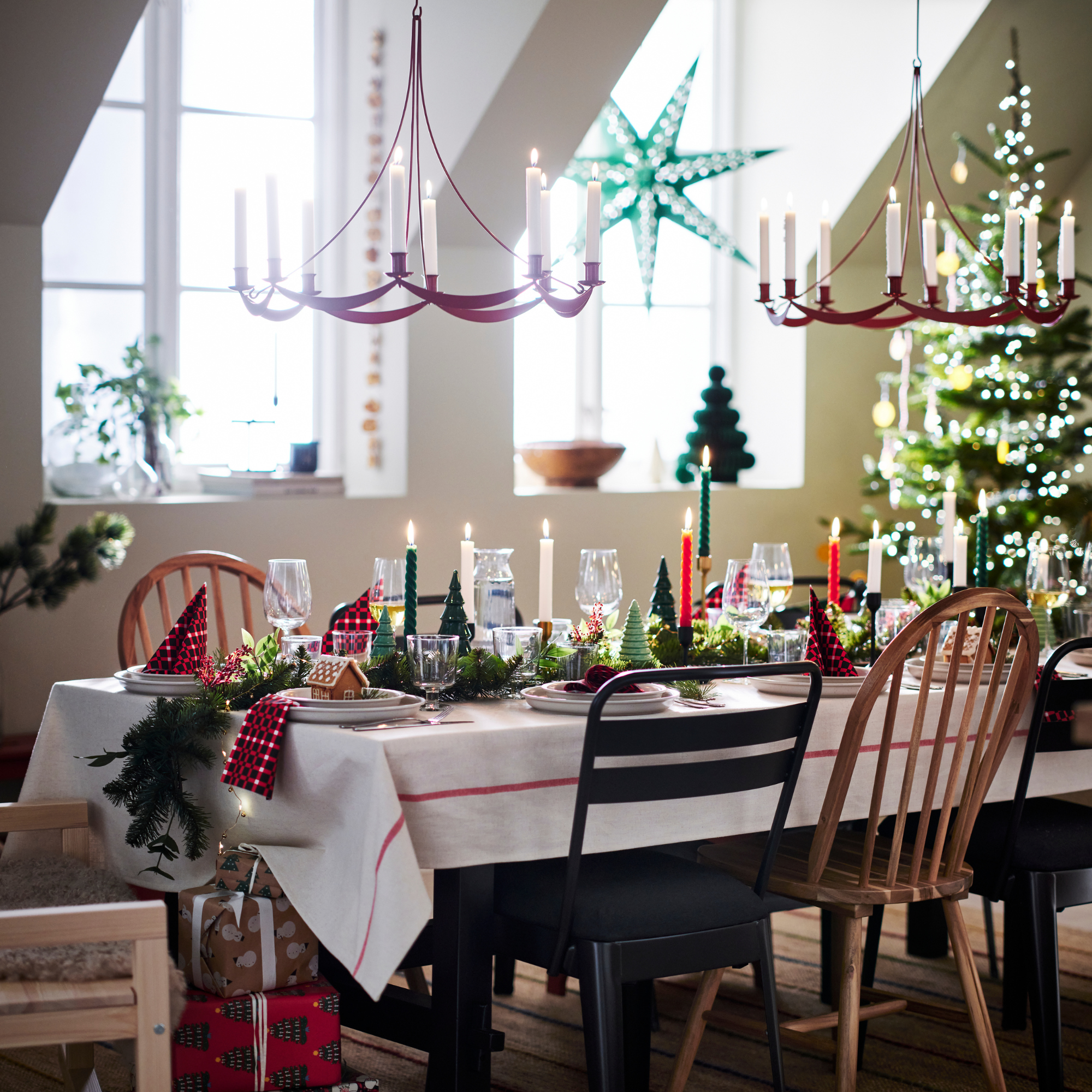
If you’re already thinking about the upcoming festive season, and specifically how to decorate your house beautifully on a budget, IKEA is one step ahead of you. With much of their festive collection already available to shop, their lighting options have caught our eye, in particular the VINTERFINT Chandelier.
This year, IKEA’s Christmas lighting is bold, bright, and packed with red tones. The brand’s sell-out paper stars have returned to the lineup, but it is the addition of products like the VINTERFINT Chandelier that I think will be a big hit with shoppers this year.
I’m not ashamed to sing the Swedish retailer’s praises when it comes to their Christmas decor. Frequently inspired by Scandi traditions, IKEA is a master of the traditional festive look. Not to mention that many of their designs are small-space friendly, too. From the cult VINTERFINT peg tree to their most recent LED STRÅLA Christmas tree, IKEA is one of the best places for small-home dwellers to shop for festive decor.
Practicalities aside, I was immediately drawn to the VINTERFINT Chandelier because it offers opulent grandeur at a budget price. Created from steel and drenched in a rich, festive red colourway, this chandelier can hold eight candles at a time. If you want a traditional, flickering glow over your Christmas dinner, this is the piece to shop.
(Image credit: IKEA)
IKEA also says that it is easy to wipe clean, and its compact design makes it easy to store after the big day. Although I’d be tempted to whip it out every time I host for a dramatic, yet whimsical effect.
Sign up to our newsletter for style inspiration, real homes, project and garden advice and shopping know-how
Designer Matilda Lindstam Nilsson.
(Image credit: Future / Kezia Reynolds)
‘I grew up in a house in the middle of the forest, surrounded by wild and magical nature. Christmas was celebrated traditionally, and this inspired me when designing my products in the VINTERFINT and STRÅLA collections,’ said Matilda.
‘I wanted to convey a genuine sense of craftsmanship where wooden elements create a natural connection to the forest. I also wanted to celebrate the warmth of Christmas with a modern twist. The result is products that combine nostalgia, tradition and a big dose of joy.’
If you love this cosy lighting idea, I’ve found a few more to help you feel inspired for the big day.
M&S
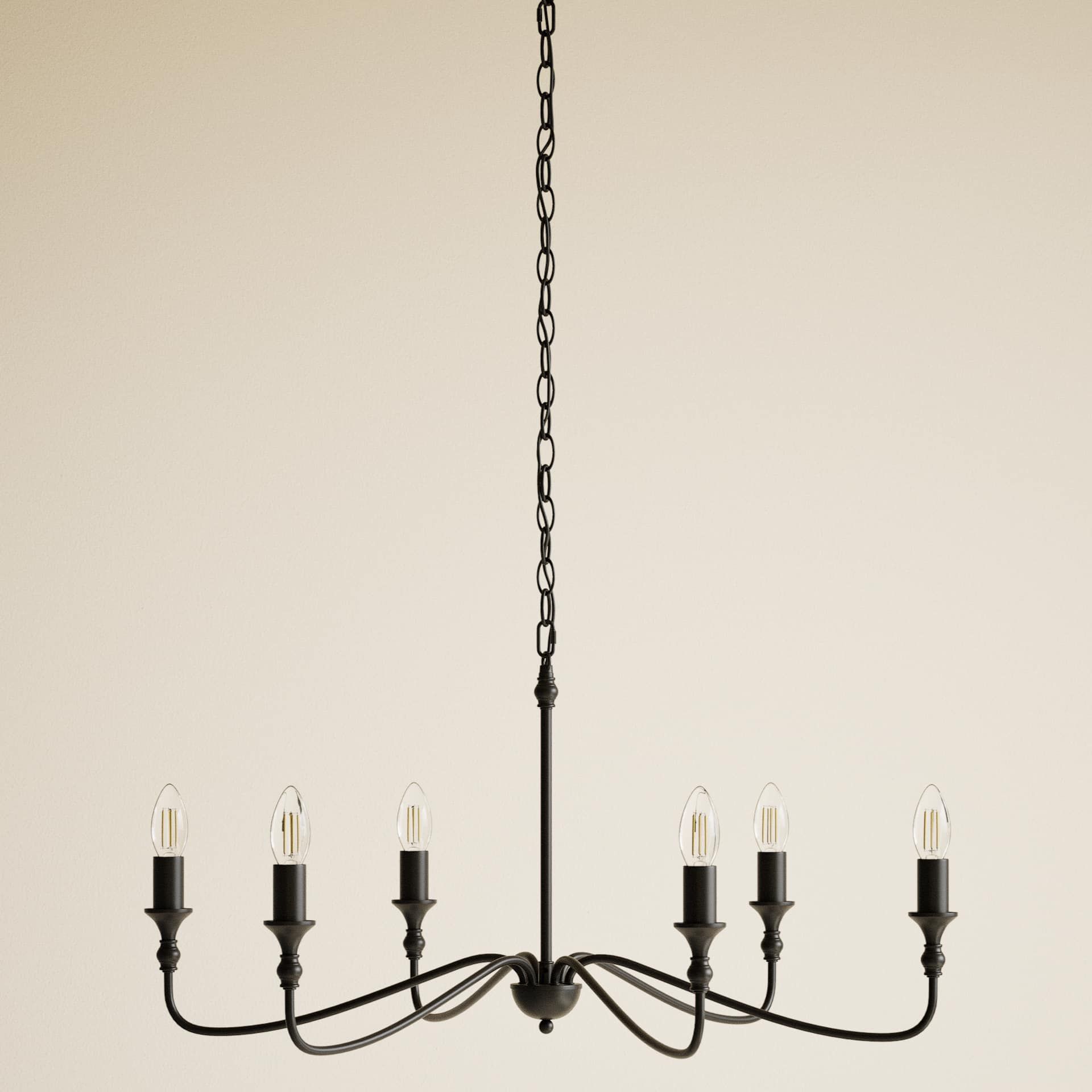
Metal 6 Arm Chandelier
<aside data-article-category="all-rooms" data-block-layout="hero" data-block-type="featured-product" data-editorial-currency="GBP" data-editorial-price="129" data-hawk-json="{"product":{"variants":{"Default":{"image":{"copyright":"","height":2496,"id":"JR9k6baT5kA2Rio6H5Zrsd","mimeType":"image\/jpeg","mos":"https:\/\/cdn.mos.cms.futurecdn.net\/v2\/t:0,l:0,cw:1920,ch:1920,q:80\/JR9k6baT5kA2Rio6H5Zrsd.jpg","role":"","width":1920,"credit":"M&S","alt":"Metal 6 Arm Chandelier","caption":"","crop":{"label":"1:1","left":0,"top":0,"cropWidth":1920,"cropHeight":1920,"quality":80}},"strapline":"
This stunning metal chandelier uses bulbs, so you don't have to worry about the potential fire risk of candles.","brand":"M&S","name":"Metal 6 Arm Chandelier","urlStyle":"","retailer":"","layout":"hero","linkText":"","noFollow":true,"noAffiliateTracking":false,"promoLabel":"","price":129,"salePrice":null,"currency":"GBP","linkLayout":"text","sponsored":false,"hawkProductNameMatchedCode":"","review":{"cons":[],"id":"","name":"","pros":[],"rating":0,"strapline":"","url":""},"id":"","externalId":"9398d3cfa9f1176ba18017ec9d7618c2147ba718","lastCheckedPriceDate":"","link":{"url":"https:\/\/www.awin1.com\/awclick.php?awinmid=1402&awinaffid=103504&clickref=hawk-custom-tracking&p=https%3A%2F%2Fwww.marksandspencer.com%2Fmetal-6-arm-chandelier%2Fp%2Fhbp60898154","merchantName":"Marks and Spencer UK","merchantId":1042,"merchantNetwork":"AW","merchantUrl":"marksandspencer.com"}}}}}” data-link=”https://www.awin1.com/awclick.php?awinmid=1402&awinaffid=103504&clickref=hawk-custom-tracking&p=https%3A%2F%2Fwww.marksandspencer.com%2Fmetal-6-arm-chandelier%2Fp%2Fhbp60898154″ data-link-merchant=”Marks and Spencer UK” data-merchant-id=”1042″ data-merchant-name=”Marks and Spencer UK” data-merchant-network=”AW” data-merchant-url=”marksandspencer.com” data-model-brand=”M&S” data-model-name=”M&S Metal 6 Arm Chandelier” data-name=”Product Block merchantlink widget” data-render-type=”fte” data-show-fallback=”button” data-widget-type=”merchantlink” class=”ecom-root”>
This stunning metal chandelier uses bulbs, so you don’t have to worry about the potential fire risk of candles.
Next
Red/Green Artifical Christmas Hanging Wreath with Bows
<aside data-article-category="all-rooms" data-block-layout="hero" data-block-type="featured-product" data-editorial-currency="GBP" data-editorial-merchant-name="£50 at Next" data-hawk-json="{"product":{"variants":{"Default":{"image":{"copyright":"","height":1000,"id":"suK9eic723SZXEqXHRCum8","mimeType":"image\/png","mos":"https:\/\/cdn.mos.cms.futurecdn.net\/v2\/t:60,l:0,cw:750,ch:750,q:80\/suK9eic723SZXEqXHRCum8.png","role":"","width":750,"credit":"Next","alt":"Next, Red\/Green Artifical Christmas Hanging Wreath with Bows","caption":"","crop":{"label":"1:1","left":0,"top":60,"cropWidth":750,"cropHeight":750,"quality":80}},"strapline":"
If candles are out of the question for you, then this stunning wreath is a beautiful alternative. Simply hang above your dining table for a whimsical finish.","brand":"Next","name":"Red\/Green Artifical Christmas Hanging Wreath with Bows","urlStyle":"","layout":"hero","noFollow":true,"noAffiliateTracking":false,"promoLabel":"","price":null,"salePrice":null,"currency":"GBP","linkLayout":"text","sponsored":false,"hawkProductNameMatchedCode":"","review":{"cons":[],"id":"","name":"","pros":[],"rating":0,"strapline":"","url":""},"id":"","lastCheckedPriceDate":"","link":{"url":"https:\/\/click.linksynergy.com\/deeplink?id=kXQk6%2AivFEQ&mid=53096&u1=hawk-custom-tracking&murl=https%3A%2F%2Fwww.next.co.uk%2Fstyle%2Fsv059823%2Fy38433%3F","linkText":"\u00a350 at Next","editorialMerchantName":"\u00a350 at Next","merchantName":"Next UK","merchantId":491232,"merchantNetwork":"LSfutureusLlc","merchantUrl":"next.co.uk"}}}}}” data-link=”https://click.linksynergy.com/deeplink?id=kXQk6%2AivFEQ&mid=53096&u1=hawk-custom-tracking&murl=https%3A%2F%2Fwww.next.co.uk%2Fstyle%2Fsv059823%2Fy38433%3F” data-link-merchant=”Next UK” data-link-text=”£50 at Next” data-merchant-id=”491232″ data-merchant-name=”Next UK” data-merchant-network=”LSfutureusLlc” data-merchant-url=”next.co.uk” data-model-brand=”Next” data-model-name=”Next Red/Green Artifical Christmas Hanging Wreath with Bows” data-name=”Product Block merchantlink widget” data-render-type=”fte” data-show-fallback=”button” data-widget-type=”merchantlink” class=”ecom-root”>
If candles are out of the question for you, then this stunning wreath is a beautiful alternative. Simply hang above your dining table for a whimsical finish.
Dunelm
10 Floating Led Candles
If you want to add a little extra drama to your Christmas decor this year, this festive chandelier makes it so easy.
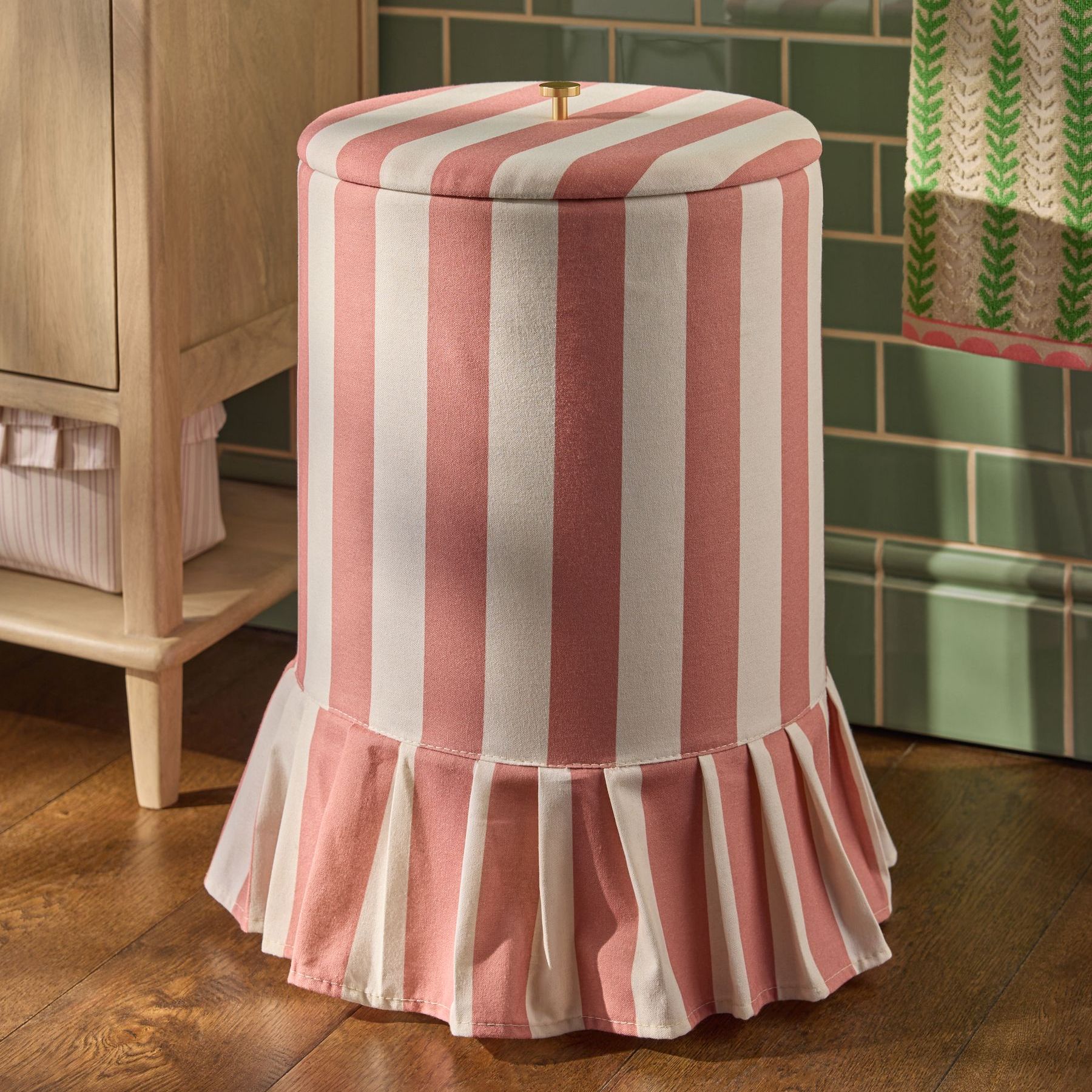
Laundry hampers are a practical household buy that I usually want to find ways to hide rather than show off. Let’s face it, an overflowing laundry basket doesn’t add anything to a bedroom or bathroom scheme! However, Next’s latest design has completely changed my mind.
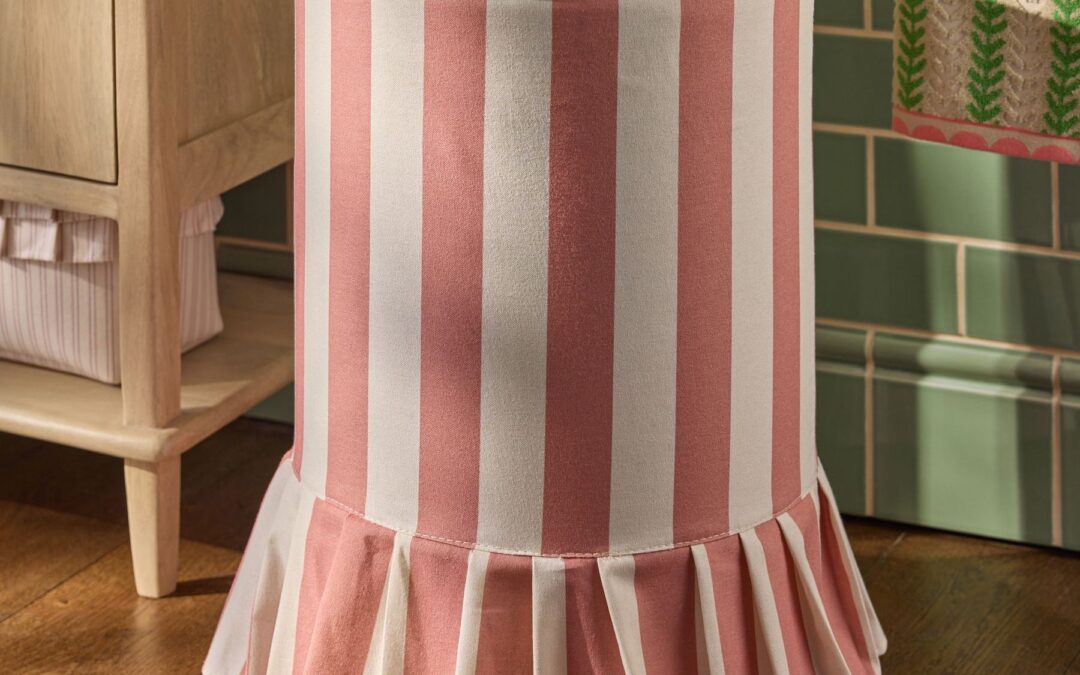
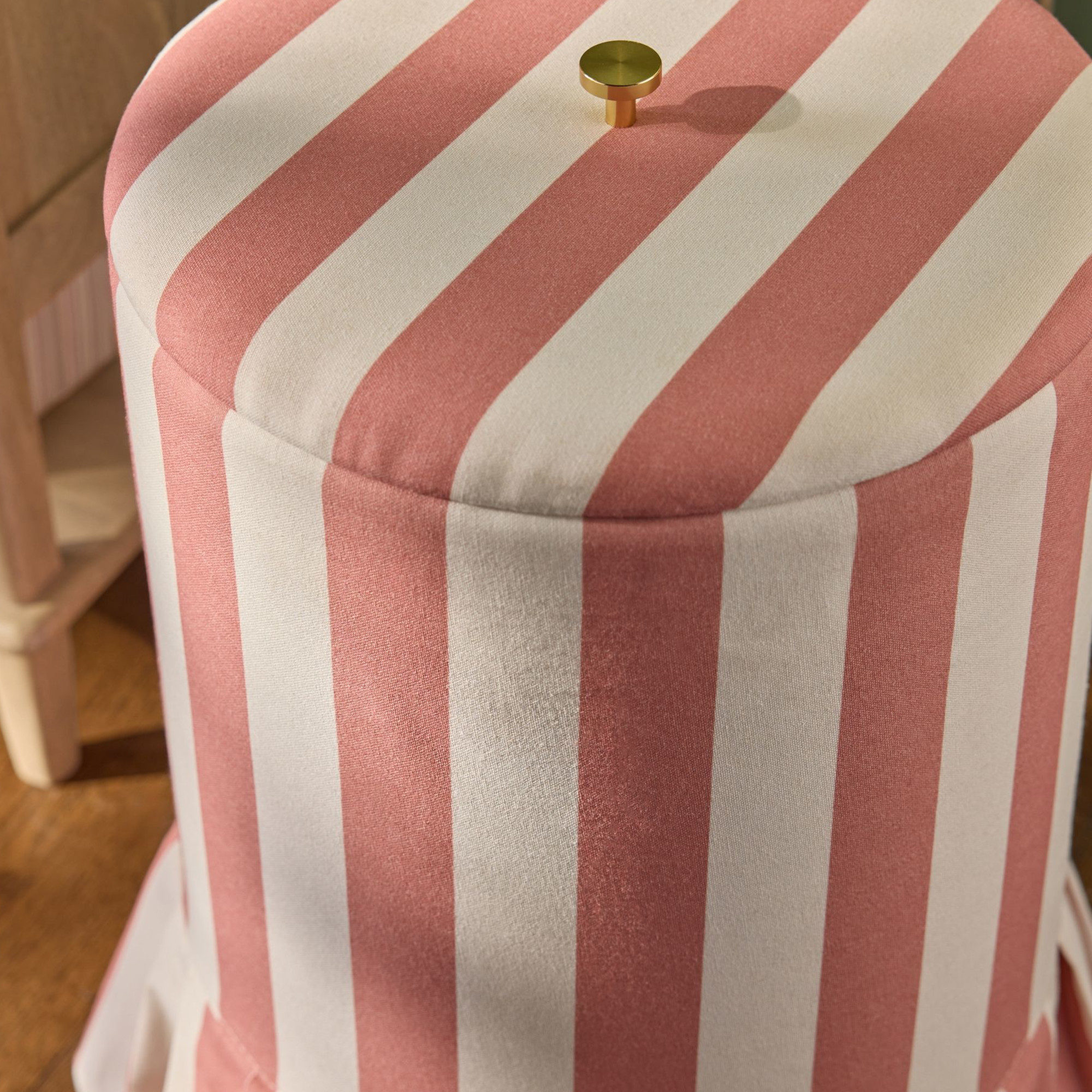
With its structured shape, pink and white stripe upholstery and pretty brass-effect handle on the lid, it looks far more like a chic upholstered stool or a decorative storage solution than somewhere to stash dirty socks. It’s the perfect home buy, and here’s why.
Latest Videos FromIdeal Home
Next
Pink Stripe Hamper
Stripes have been everywhere in interiors recently, and I love how Next has used them to turn something as ordinary as a laundry hamper into a feature you might actually want on display, which is especially useful if you have a lack of storage space to contend with in a bedroom or bathroom.
The upholstered finish makes it feel much more like a piece of furniture, while the brass-effect handle is a small detail that seems to make it look considerably more expensive.
And it isn’t all style over substance either. At 55cm high and 35cm wide and deep, it gives you a decent amount og space for clothes without taking up an enormous amount of floor space, which is useful if you have a small bathroom or bedroom. It’s also surprisingly lightweight, so you could carry it up and down stairs easily.
(Image credit: Next)
What really sold it to me was that there’s no reason you have to use it for laundry. It looks so much like an upholstered storage stool that I could see it working in any room as a secret clutter buster.
Sign up to our newsletter for style inspiration, real homes, project and garden advice and shopping know-how
It could be filled with throws and blankets in the living room, used to stash toys in a playroom or to hide random clutter when you’ve got someone popping over in 10 minutes. I’ve actually been using it in my daughter’s bedroom, where her cuddly toy collection is out of control.
(Image credit: Future/Jenny McFarlane)
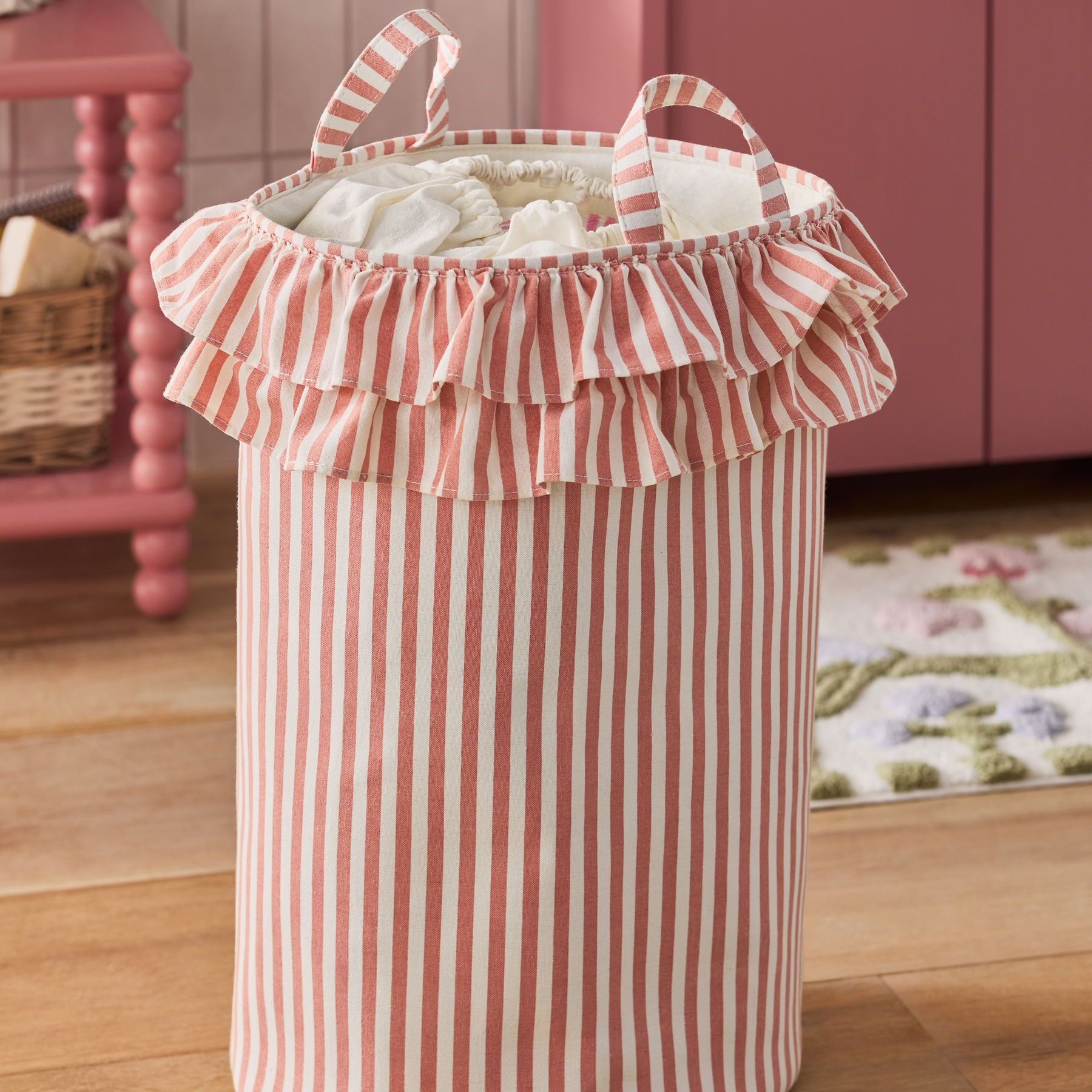
There’s also a striped laundry bag option that’s a little more budget-friendly if you prefer a flexible style, but for me, the structured hamper is the standout. Its furniture-like design means you could move it around the house and give it a completely different purpose.
At £65, it’s not the most budget-friendly hamper you can buy. I’d probably opt for something a little more affordable if you think you’ll most likely hide it in a cupboard. If, like me, though, you love a bit of practical, pretty-looking storage that contributes to the room rather than detracting from it, the price feels a little more worth it.
Shop pretty laundry basket alternatives
Next
Pink Stripe Bag Frill Laundry Bag
Argos Home
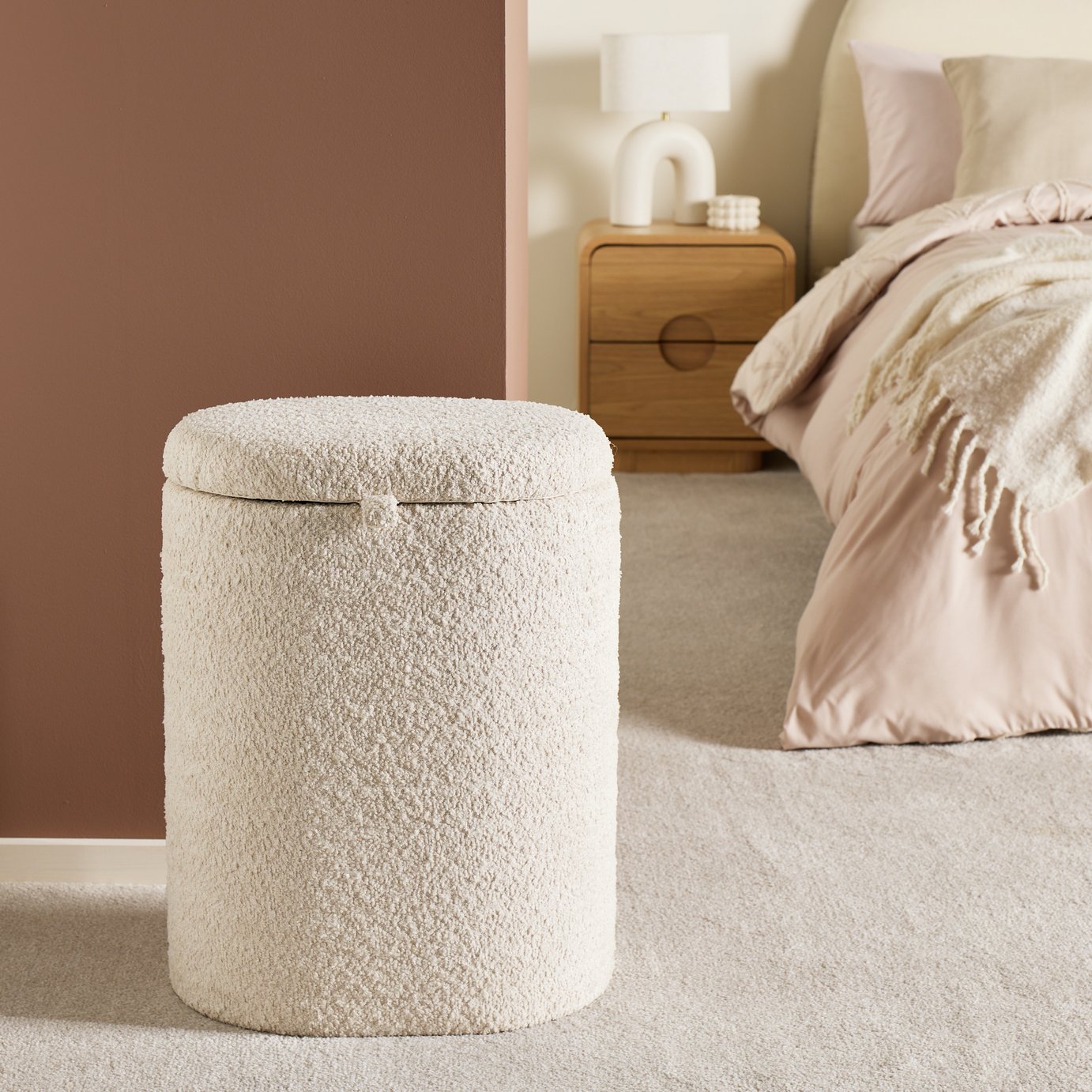
60l Boucle Laundry Basket With Hinged Lid – Cream
Joseph Joseph
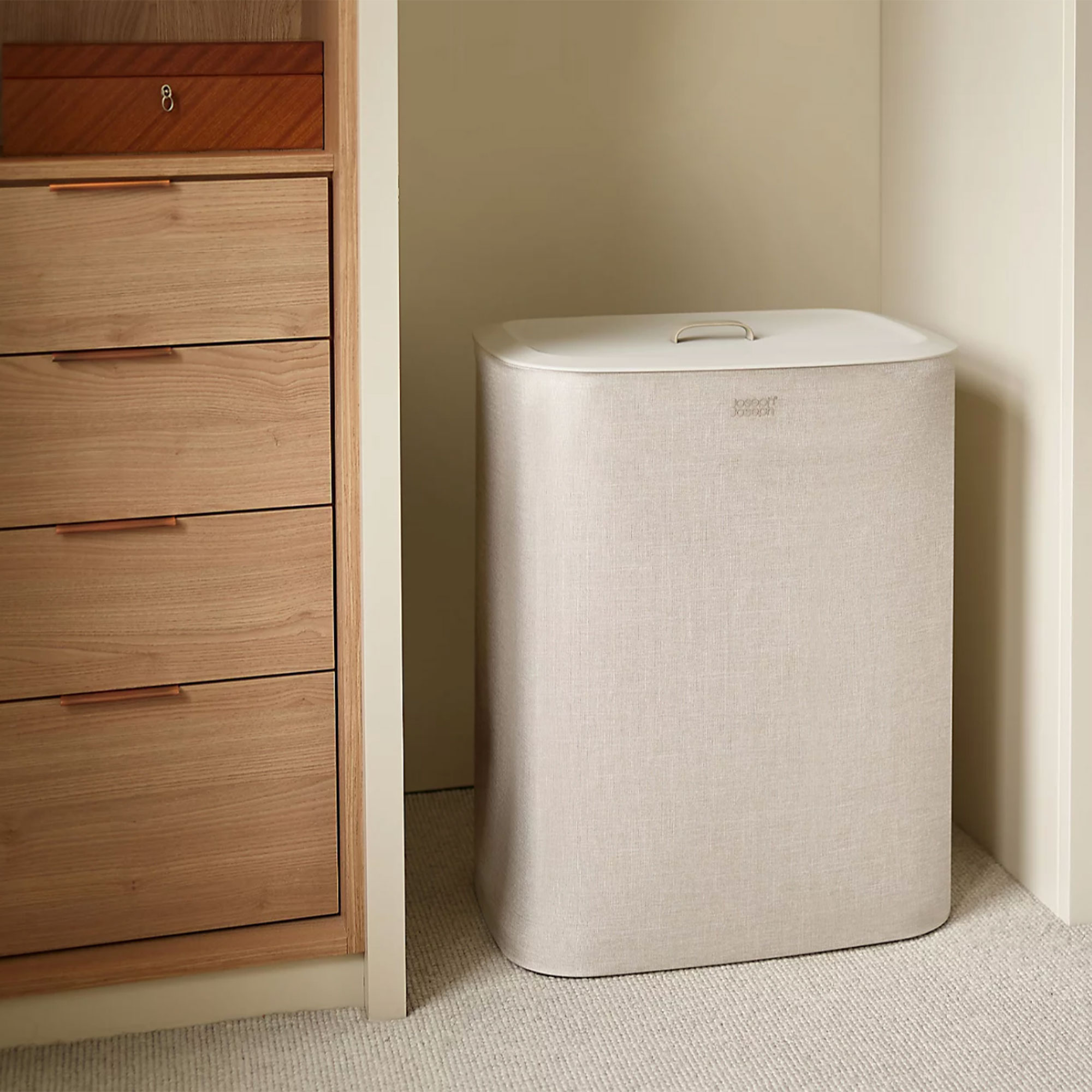
Tota 90-Litre Laundry Separation Basket With Lid, 2 Removable Washing Bags With Handles – Ecru
Whether you want to use it to conceal a week’s worth of washing, your child’s toy collection, blankets in the landing or random living room storage idea for clutter, this is the laundry hamper I am happy to have hiding in plain sight.
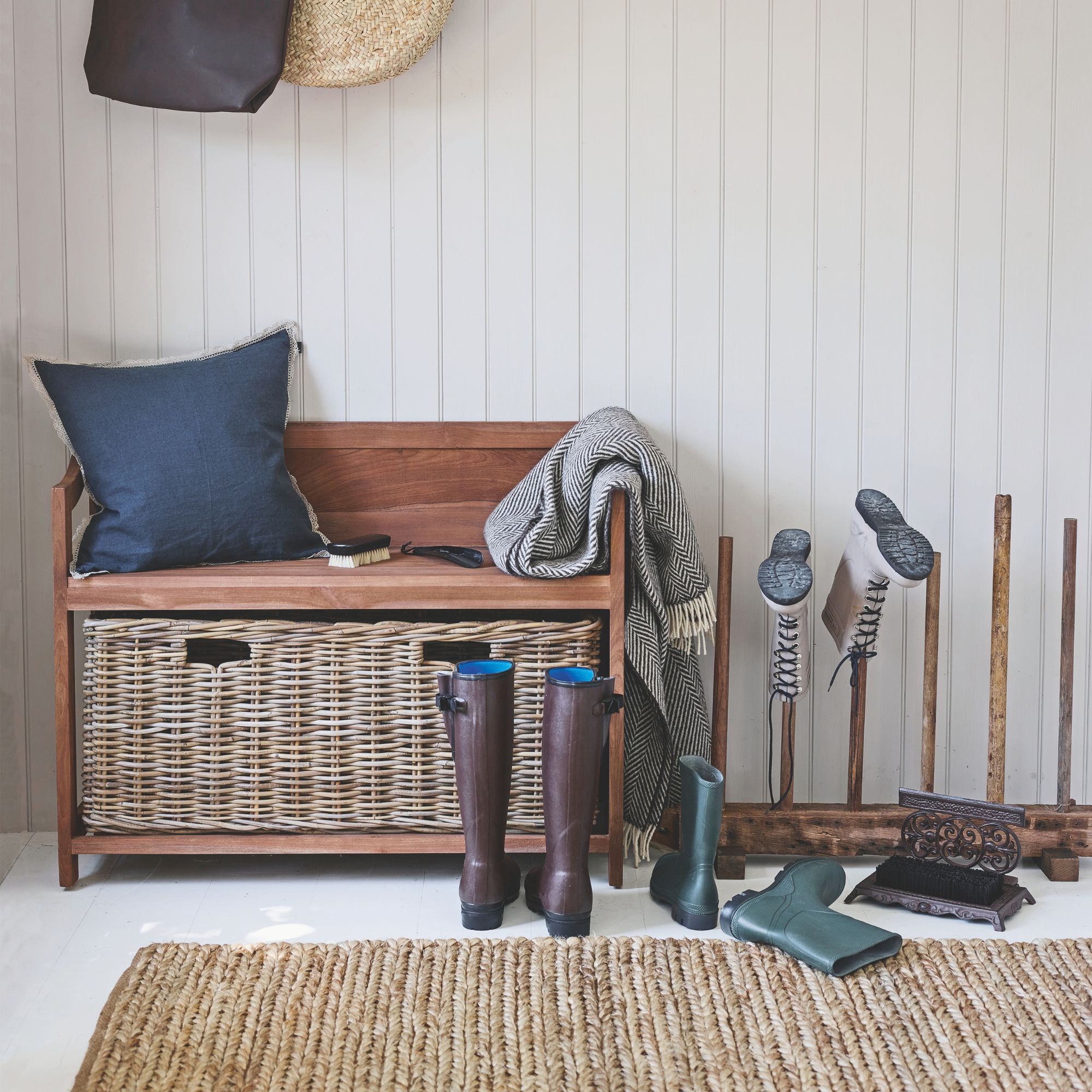
Yes, right now I’m on a mission to autumn-proof my narrow hallway, as muddy shoes, wet coats, and messy bags have left my entryway feeling (and looking) worse for wear. And although I’ve already enlisted shoe storage ideas for smaller spaces to organise my muddy shoes, my coats still don’t have a proper home.
That’s why I’ve decided it’s time to stop flinging my jackets and coats over the bannister and invest in a proper storage solution that’ll keep coats tidy and give them space to dry. Not only does this Argos coat rack fit the bill, but it also comes with bonus storage every small hallway needs.
Latest Videos FromIdeal Home
Argos Home
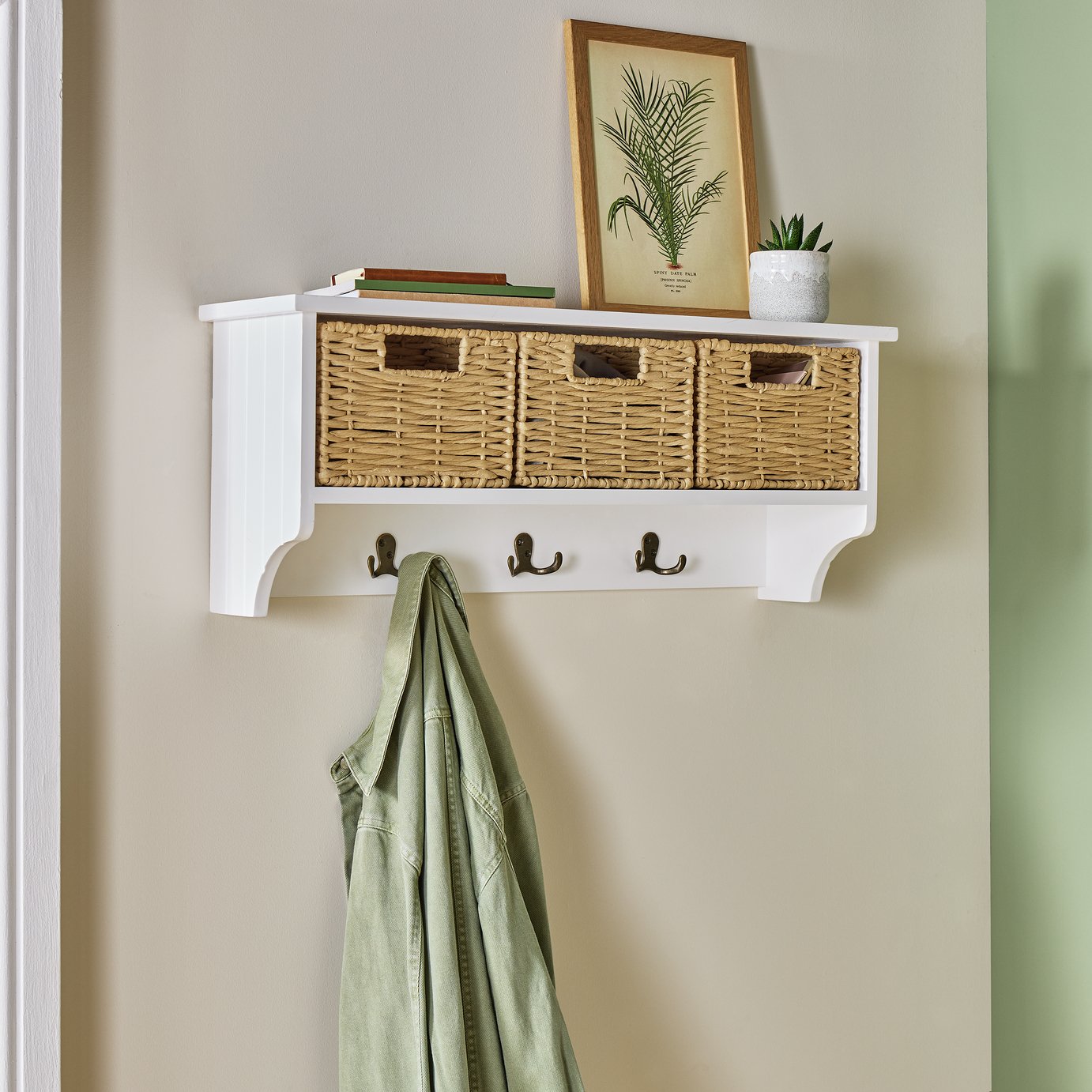
Hallway Wall Shelf & Coat Rack with Storage Boxes
<aside data-article-category="house-manual" data-block-layout="horizontal" data-block-type="featured-product" data-editorial-currency="GBP" data-editorial-price="52" data-hawk-json="{"product":{"variants":{"Default":{"image":{"copyright":"","height":1382,"id":"6VoUBe8oYerMDw4PbtPkoP","mimeType":"image\/jpeg","mos":"https:\/\/cdn.mos.cms.futurecdn.net\/6VoUBe8oYerMDw4PbtPkoP.jpg","role":"","width":1382,"credit":"Argos Home","alt":"Argos Home Hallway Wall Shelf & Coat Rack With Storage Boxes","caption":""},"strapline":"
Thanks to the Argos Big Red Event, you can now get an extra 20% off this coat rack with the code COSY20. Just be warned: this event ends on 13 October 2026.
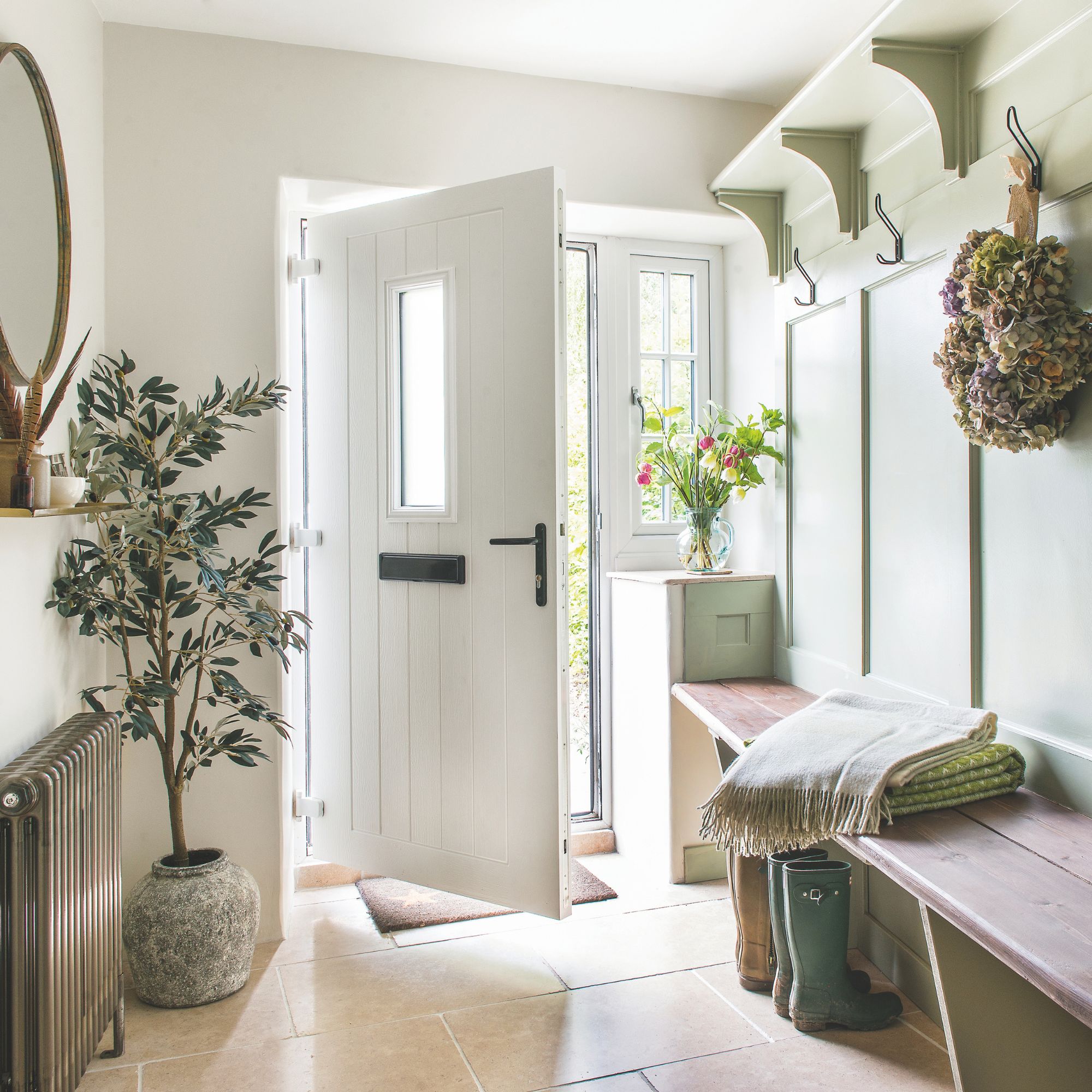
As far as coat racks go, the Argos Hallway Wall Shelf & Coat Rack is definitely one of the prettier options on the market. Especially when you consider that old-school freestanding coat racks aren’t always feasible in a small hallway with limited floor space, and drill-in coat hooks rarely offer anything besides practicality.
But this one strikes a happy medium: cosy yet convenient, with a wall-mounted design that helps you create order in a small room by using vertical space. This means you’re not encroaching on the walkway, but still adding storage that becomes even more important during the autumn and winter months.
(Image credit: Future PLC/Colin Poole)
The three double hooks technically offer space for six coats or bags – more than enough for every member of the family to have one each – but there’s nothing stopping you from layering them and adding more if you need to.
Just remember that if you want to keep the coats dry and prevent damp in your home, it’s best to organise your coat hooks properly and give them some breathing space.
Sign up to our newsletter for style inspiration, real homes, project and garden advice and shopping know-how
But the pièce de résistance, in my eyes, is that this coat rack also comes with oodles of extra storage space, thanks to the three included storage boxes and the shelf above. This means you can store everything from your car keys to your post, hats, scarves, and other essentials, and use the top shelf for the all-important decor.
(Image credit: Future PLC)
In my home, these storage boxes will work perfectly to store my dog’s leads, harnesses and poo bags so they don’t clutter up the rest of the house – and they’re always right by the door so I can grab my coat and doggy essentials just as I’m leaving.
And since many of the best storage baskets cost up to £30 individually, having them included with this coat rack is music to my ears. Plus, the beauty of a rack with hooks like this is that you can also use it in various rooms of the house.
Admittedly, its natural place is in the hallway, but you could also use it to hang towels and dressing gowns to organise a bathroom, or even in a bedroom for extra storage.
But if you need hallway storage and this isn’t quite what you’re after, I’ve popped some alternatives below, too.
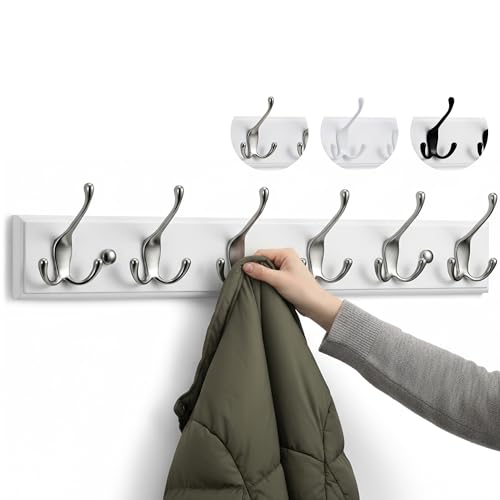
While it might not be the most aesthetically pleasing coat rack, this one is a no-frills option that gets the job done. With six triple hooks (technically adding up to 18), it offers function over form. ","brand":"LARHN","name":"White Wall-Mounted Coat Rack – 6 Hooks","urlStyle":"","retailer":"","layout":"hero","linkText":"","noFollow":true,"noAffiliateTracking":false,"promoLabel":"","price":24.99,"salePrice":19.99,"currency":"GBP","linkLayout":"text","sponsored":false,"hawkProductNameMatchedCode":"","review":{"cons":[],"id":"","name":"","pros":[],"rating":0,"strapline":"","url":""},"id":"","externalId":"ea475e1b7d181147a174098f47fd34a164328fa5","lastCheckedPriceDate":"","link":{"url":"https:\/\/target.georiot.com\/Proxy.ashx?tsid=107653&GR_URL=https%3A%2F%2Famazon.co.uk%2FLARHN-Wall-Mounted-Coat-Rack-Matt-Nickel%2Fdp%2FB09LYXTVLP%2F%3Fth%3D1%26tag%3Dftr-idealhome-gb-21%26ascsubtag%3Dhawk-custom-tracking-21","merchantName":"Amazon UK","merchantId":1027,"merchantNetwork":"Amazonuk","merchantUrl":"amazon.co.uk"}}}}}” data-link=”https://target.georiot.com/Proxy.ashx?tsid=107653&GR_URL=https%3A%2F%2Famazon.co.uk%2FLARHN-Wall-Mounted-Coat-Rack-Matt-Nickel%2Fdp%2FB09LYXTVLP%2F%3Fth%3D1%26tag%3Dftr-idealhome-gb-21%26ascsubtag%3Dhawk-custom-tracking-21″ data-link-merchant=”Amazon UK” data-merchant-id=”1027″ data-merchant-name=”Amazon UK” data-merchant-network=”Amazonuk” data-merchant-url=”amazon.co.uk” data-model-brand=”LARHN” data-model-name=”LARHN White Wall-Mounted Coat Rack – 6 Hooks” data-name=”Product Block merchantlink widget” data-render-type=”fte” data-show-fallback=”button” data-widget-type=”merchantlink” class=”ecom-root”>
While it might not be the most aesthetically pleasing coat rack, this one is a no-frills option that gets the job done. With six triple hooks (technically adding up to 18), it offers function over form.
Argos
Living and Home 4 Tier Shoe Rack with Coat Hanger
<aside data-article-category="house-manual" data-block-layout="hero" data-block-type="featured-product" data-editorial-currency="GBP" data-editorial-price="10" data-hawk-json="{"product":{"variants":{"Default":{"image":{"copyright":"","height":2000,"id":"Ci6TZZhSqTXiYGMeebVHTL","mimeType":"image\/jpeg","mos":"https:\/\/cdn.mos.cms.futurecdn.net\/Ci6TZZhSqTXiYGMeebVHTL.jpg","role":"","width":2000,"credit":"Argos","alt":"Argos, Living and Home 4 Tier Shoe Rack with Coat Hanger","caption":""},"strapline":"
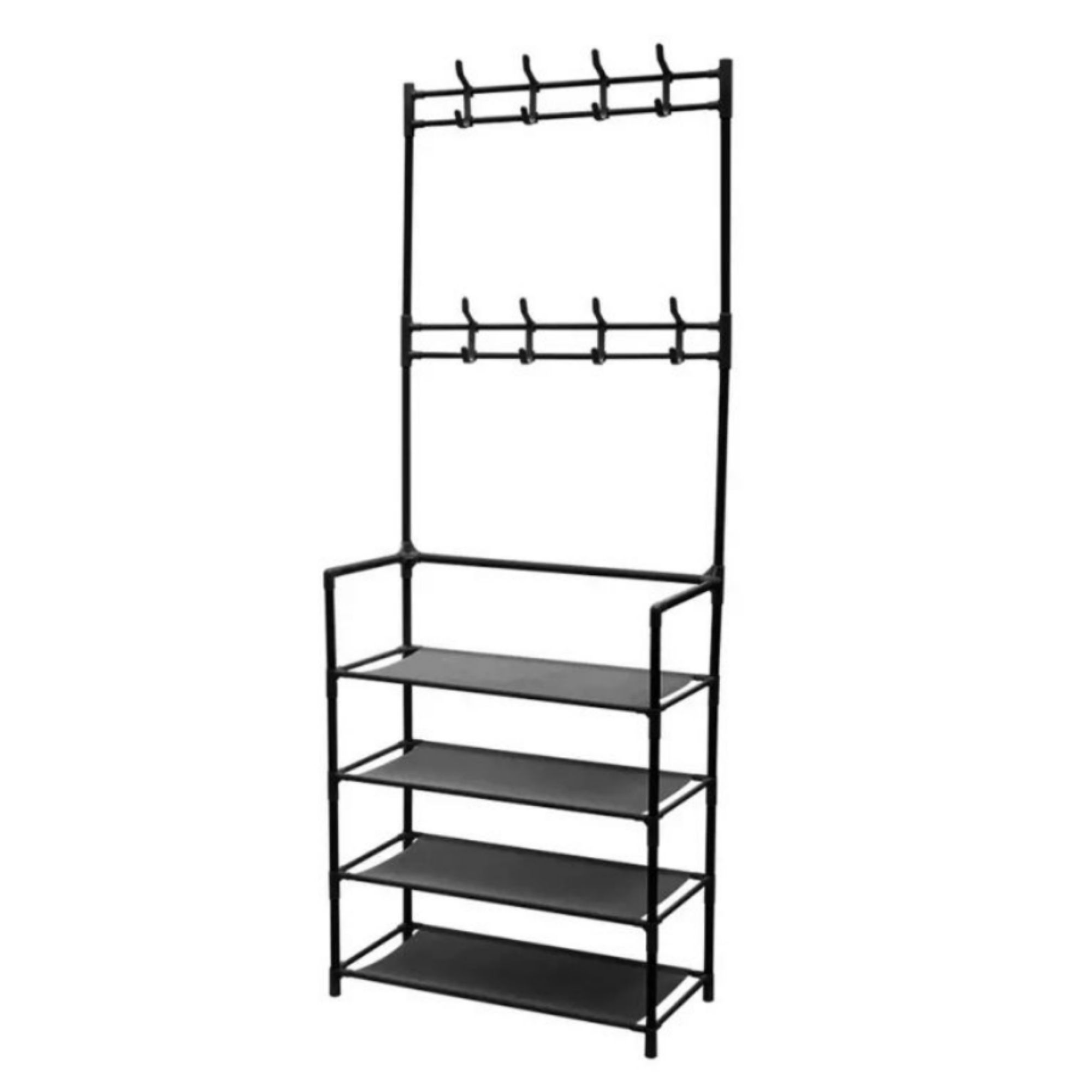
If you're on a tighter budget, this shoe and coat rack-combo is just \u00a310 and offers four shelves for shoes and eight double hooks for coats and bags. It's nothing fancy, but its a 2-in-1 solution if you're struggling with shoe clutter, too. ","brand":"Argos","name":"Living and Home 4 Tier Shoe Rack with Coat Hanger","urlStyle":"","retailer":"","layout":"hero","noFollow":true,"noAffiliateTracking":false,"promoLabel":"","price":10,"salePrice":null,"currency":"GBP","linkLayout":"text","sponsored":false,"hawkProductNameMatchedCode":"","review":{"cons":[],"id":"","name":"","pros":[],"rating":0,"strapline":"","url":""},"id":"","lastCheckedPriceDate":"","link":{"url":"https:\/\/www.anrdoezrs.net\/click-100624752-15618761?sid=hawk-custom-tracking&url=https:\/\/www.argos.co.uk\/product\/twkyecma","linkText":"\u00a310 at Argos","merchantName":"Argos","merchantId":535,"merchantNetwork":"CJ","merchantUrl":"argos.co.uk"}}}}}” data-link=”https://www.anrdoezrs.net/click-100624752-15618761?sid=hawk-custom-tracking&url=https://www.argos.co.uk/product/twkyecma” data-link-merchant=”Argos” data-link-text=”£10 at Argos” data-merchant-id=”535″ data-merchant-name=”Argos” data-merchant-network=”CJ” data-merchant-url=”argos.co.uk” data-model-brand=”Argos” data-model-name=”Argos Living and Home 4 Tier Shoe Rack with Coat Hanger” data-name=”Product Block merchantlink widget” data-render-type=”fte” data-show-fallback=”button” data-widget-type=”merchantlink” class=”ecom-root”>
If you’re on a tighter budget, this shoe and coat rack-combo is just £10 and offers four shelves for shoes and eight double hooks for coats and bags. It’s nothing fancy, but its a 2-in-1 solution if you’re struggling with shoe clutter, too.
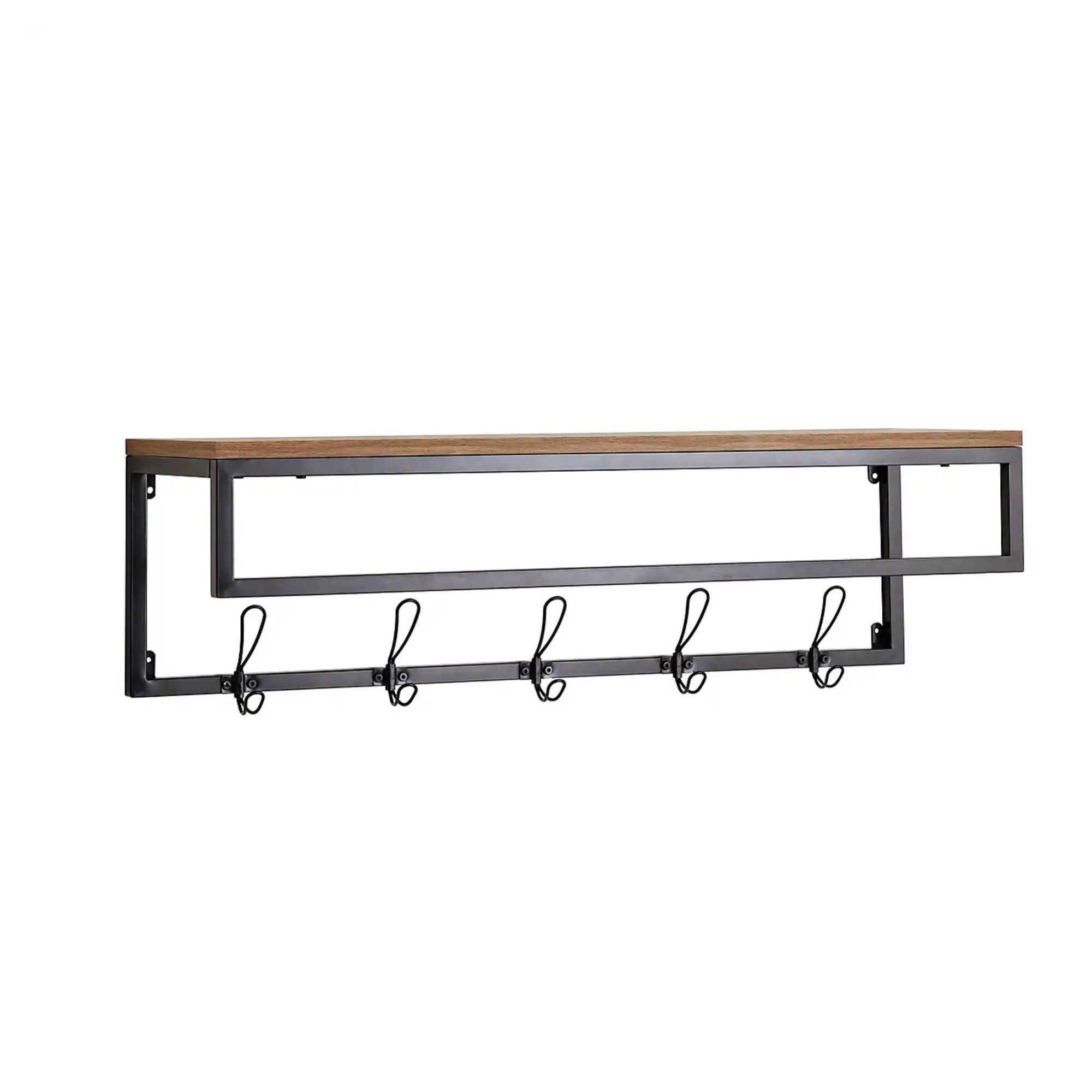
This Dunelm coat rack also comes with a shelf for your essentials or hallway decor, but still boasts five double hooks and a pine finish to add that extra zhuzh to your hallway. ","brand":"Dunelm","name":"Fulton Wall Shelf With Hooks Pine","urlStyle":"","retailer":"","layout":"hero","linkText":"","noFollow":true,"noAffiliateTracking":false,"promoLabel":"","price":40,"salePrice":null,"currency":"GBP","linkLayout":"text","sponsored":false,"hawkProductNameMatchedCode":"","review":{"cons":[],"id":"","name":"","pros":[],"rating":0,"strapline":"","url":""},"id":"","externalId":"1d8d6aba7a713b894cef9cea21835cd5e8de5a47","lastCheckedPriceDate":"","link":{"url":"https:\/\/www.prf.hn\/click\/camref:1011l5dAX6\/pubref:hawk-custom-tracking\/destination:https%3A%2F%2Fwww.dunelm.com%2Fproduct%2Ffulton-wall-shelf-with-hooks-pine-1000204732","merchantName":"Dunelm","merchantId":579677,"merchantNetwork":"PHG","merchantUrl":"dunelm.com"}}}}}” data-link=”https://www.prf.hn/click/camref:1011l5dAX6/pubref:hawk-custom-tracking/destination:https%3A%2F%2Fwww.dunelm.com%2Fproduct%2Ffulton-wall-shelf-with-hooks-pine-1000204732″ data-link-merchant=”Dunelm” data-merchant-id=”579677″ data-merchant-name=”Dunelm” data-merchant-network=”PHG” data-merchant-url=”dunelm.com” data-model-brand=”Dunelm” data-model-name=”Dunelm Fulton Wall Shelf With Hooks Pine” data-name=”Product Block merchantlink widget” data-render-type=”fte” data-show-fallback=”button” data-widget-type=”merchantlink” class=”ecom-root”>
This Dunelm coat rack also comes with a shelf for your essentials or hallway decor, but still boasts five double hooks and a pine finish to add that extra zhuzh to your hallway.
So, don’t let your coats clutter your hallway this autumn!
If you want a thriving, healthy garden for 2027, garden experts have revealed five uses for old clippings that will help your garden ideas flourish now and in the future.
Latest Videos FromIdeal Home
1. Make leaf mould
When pruning shrubs in October, you’ll probably have a load of leaves within your clippings. The same can be said for pruning trees and hedges this month. So, instead of discarding your leaves, turn them into leaf mould for next year. Leaf mould, AKA gardeners’ gold, is a brilliant (and free) soil conditioner.
(Image credit: Getty Images)
‘You can use fallen or clipped leaves in your garden to make leaf mould,’ says Richard Barker, horticultural expert and commercial director of LBS Horticulture.
‘Gather the leaves from deciduous plants and stuff them into a black bin bag. Punch air and drainage holes in the bag, loosely tie the top and then leave the contents to rot for a year in a hidden area of your garden. Finished leaf mould should be dark, soft and crumbly, and can be used as garden mulch or mixed with compost when planting.’
2. Chop and drop onto your borders
If you want to feed your borders and beds over winter, the answer is literally between your pruning shears. Your clippings can help improve your soil’s structure in time for spring next year.
Sign up to our newsletter for style inspiration, real homes, project and garden advice and shopping know-how
(Image credit: Future PLC/ Colin Poole)
‘The ‘chop and drop’ method is a favourite of mine for herbaceous borders. Instead of carting away spent stems and foliage after cutting back perennials, simply chop them into smaller pieces with shears and drop them onto the soil surface,’ says Melissa Quinney, gardening expert at Cabin Master.
‘They’ll break down naturally over winter, feeding the soil and providing a habitat for beneficial insects. It’s the ultimate low-effort, no-waste approach, and it saves you a trip to the compost heap.’
3. Help wildlife
We’re huge advocates for wildlife gardens here at Ideal Home, and if you’re stuck for ideas on how to use your old clippings, they can have a few beneficial uses for garden wildlife.
(Image credit: Getty Images)
‘Wildlife in your garden can use clippings for several things,’ begins Richard. ‘Insects can overwinter in grass piles or the hollow stems of trimmed branches. As the clippings break down, they attract decomposers like fungi and earthworms. These will, in turn, act as a food source for other animals.’
4. Add to your compost heap
If you’re not already making compost in your garden, take this as your sign to do so, as it is a perfect location to dispose of clippings, whilst benefiting your garden at the same time.
(Image credit: Getty Images)
‘Most garden clippings (soft stems, spent flowers, vegetable peelings, and grass cuttings) can go straight into the compost bin, where they’ll break down into a rich, dark compost that feeds your garden for free,’ says Melissa.
‘Just avoid adding perennial weeds, diseased material, or anything that’s gone to seed, as these can cause problems later. Turning the heap occasionally and keeping it moist will speed up the process, and you’ll have a steady supply of homemade compost ready to use next spring.’
5. Use for mulching
Last, but certainly not least, your garden clippings can be used to make mulch. The term mulching refers to the practice of laying organic matter around your plants. This can help regulate their temperature (especially helpful in winter), suppress weeds and improve the quality of your soil.
(Image credit: Getty Images)
‘Garden clippings can be used as a thin layer of mulch around the base of plants. Fresh, wet grass clippings should not be packed thickly over the crowns of plants, as the wet layer of grass can turn slimy, block air and cause plant stems to rot,’ says Richard.
What you need
Burgon & Ball
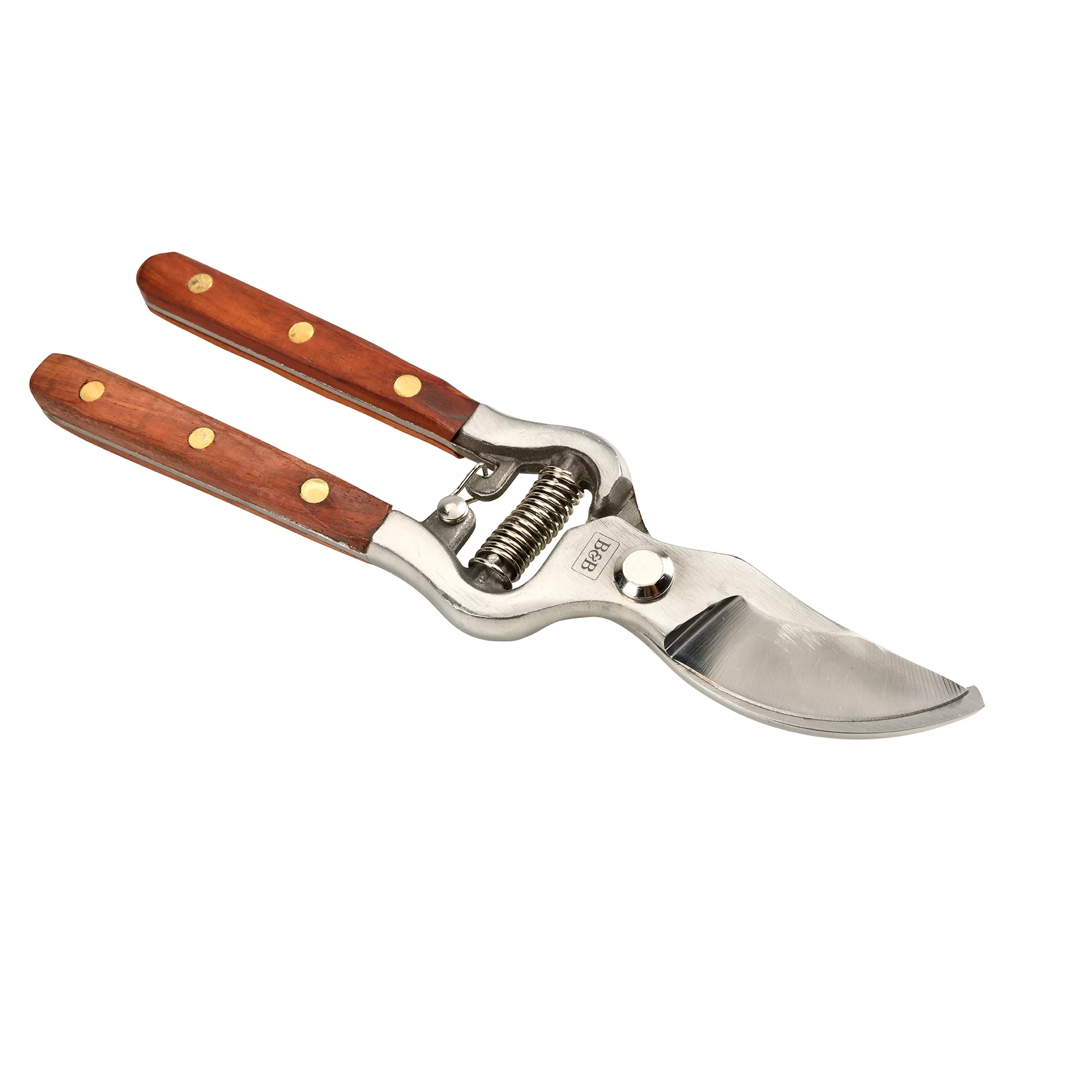
Burgon & Ball Dark Wood Bypass Secateurs (l) 25mm X (w) 52mm
Magnusson
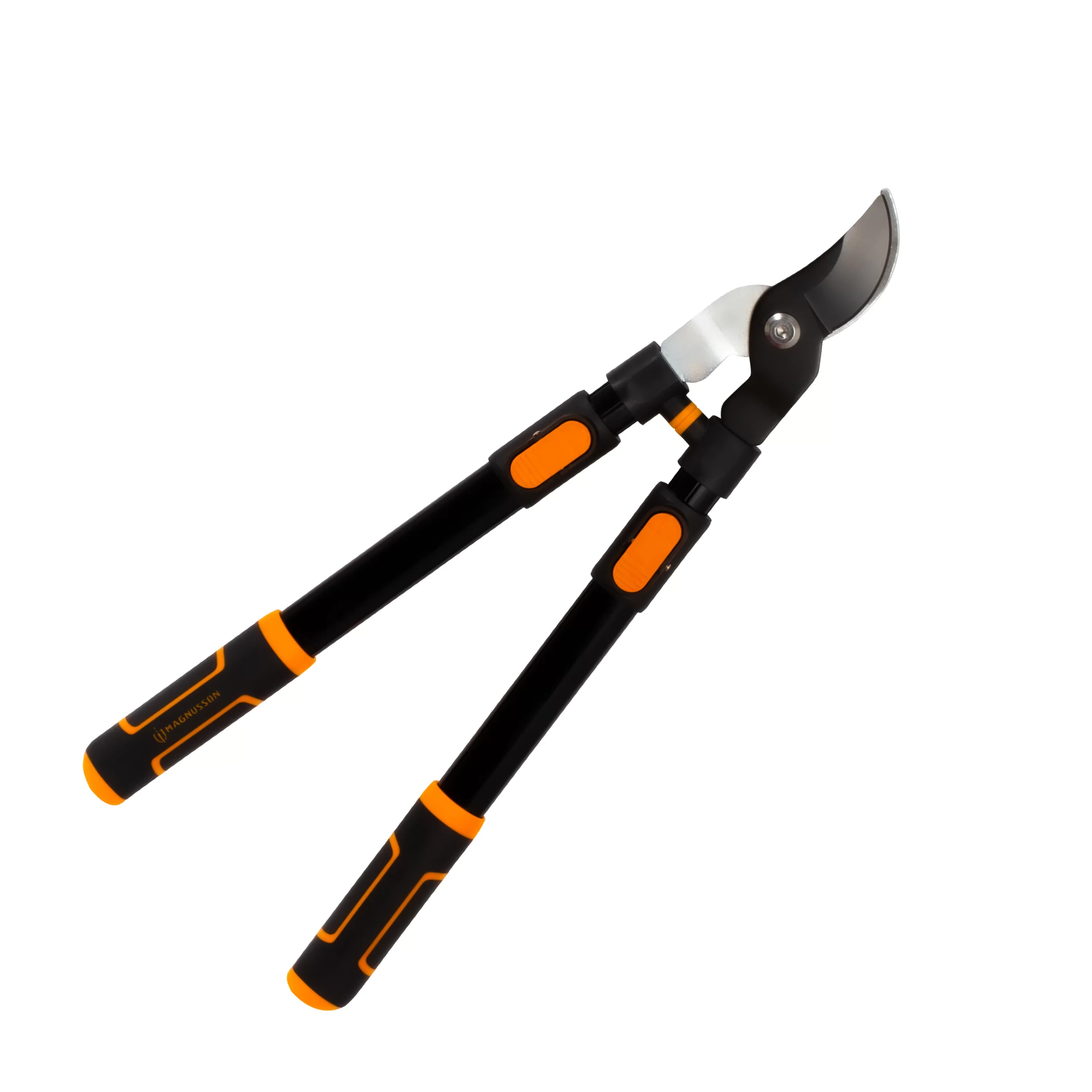
Magnusson Bypass Telescopic Loppers 84.5cm
sackmaker
Garden Waste Bags
While clippings may seem like waste, they’re actually gold for your garden. And these five ways to reuse clippings in your garden will all help contribute to a healthier ecosystem.
The M&S x Kelly Hoppen collection has quietly dropped more products to the range, adding pops of red to Kelly’s typical monochrome style; these latest home buys are an ideal mix of sultry and cosy.
Since it launched just two years ago in 2024, the M&S X Kelly Hoppen collaboration has fast become one of M&S’s most iconic collections. Setting her own home decor trends, the interior designer is well known for her love of neutrals, taupe and an ‘East meets West’ aesthetic.
Having dropped new lighting ideas, soft furnishings and fragrances for the autumn and winter months, I’ve trawled through Kelly’s new designs to bring you my six favourite pieces that not only embody Kelly’s signature style, but will make your home more stylish and cosy, too.
Latest Videos FromIdeal Home
(Image credit: M&S x Kelly Hoppen)
‘This collection is all about creating homes that feel beautifully considered yet effortlessly comfortable. We have introduced new colours, patterns and sculptural pieces that bring freshness to the range, whilst remaining true to the timeless aesthetic and balanced design principles that define my work. I love creating collections that help people transform their spaces with ease, and this season offers more opportunities than ever to achieve that look,’ said Kelly Hoppen CBE.
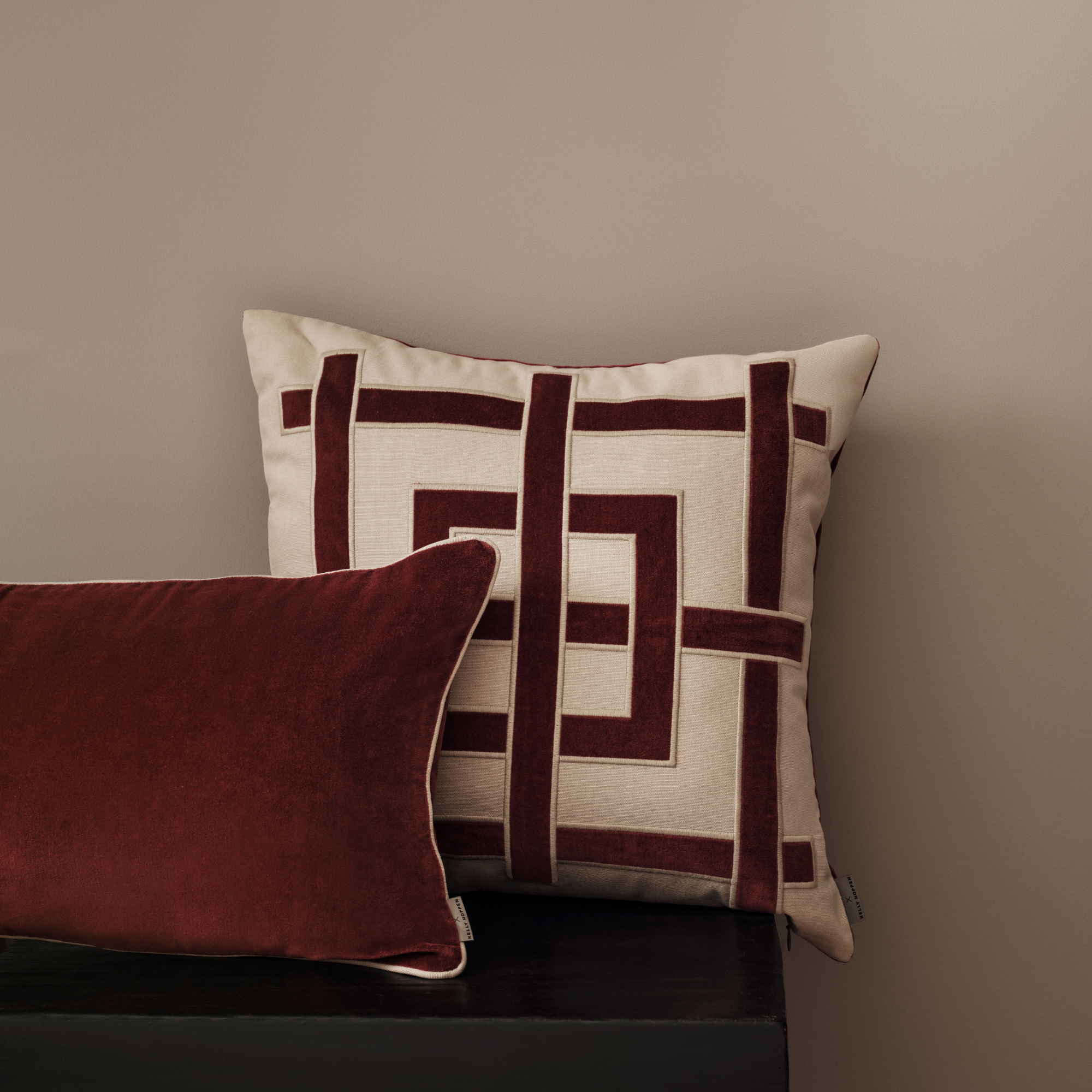
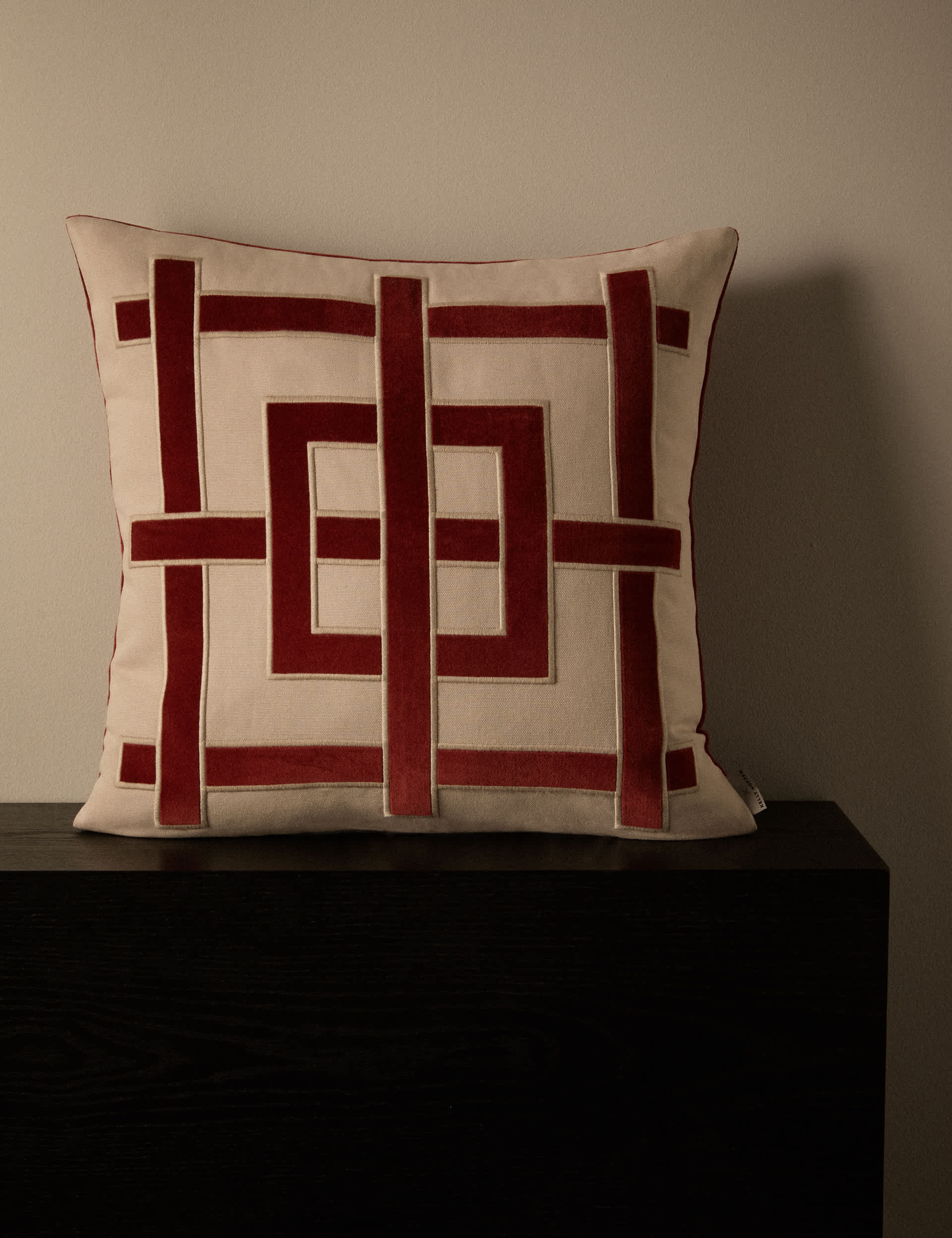
And I have to agree this is what Kelly has achieved. Red has been a hugely popular colour trend for the past few years, largely because it is a warm and comforting shade, perfect for making your home feel cosier on autumn nights. Products such as Pure Cotton Geometric Appliqué Cushion (£35) retain Kelly’s love of sharp lines and creamy neutrals, whilst introducing a pop of rich red to your living room ideas.
This latest collection is perfect for anyone looking to introduce colour to a neutral colour palette, but doesn’t want to get carried away. If you love cosy colour, but prefer a neutral home for a calming set-up, these are my top picks.
Bear in mind that this collection is already starting to sell out. The iconic leopard print bolster cushion has sold out for a second time, and the stunning glazed red vase has sold out, too. So, be quick if you want to get your hands on one.
Sign up to our newsletter for style inspiration, real homes, project and garden advice and shopping know-how
M&S X Kelly Hoppen
Pure Cotton Geometric Appliqué Cushion
<aside data-article-category="all-rooms" data-block-layout="hero" data-block-type="featured-product" data-editorial-currency="GBP" data-editorial-price="35" data-hawk-json="{"product":{"variants":{"Default":{"image":{"copyright":"","height":2496,"id":"7iDCEf5kEAqSJq3Bve4eDU","mimeType":"image\/jpeg","mos":"https:\/\/cdn.mos.cms.futurecdn.net\/7iDCEf5kEAqSJq3Bve4eDU.jpg","role":"","width":1920,"credit":"M&S X Kelly Hoppen","alt":"Pure Cotton Geometric Appliqu\u00e9 Cushion","caption":""},"strapline":"
This statement cushion is my favourite piece from the new collection. I love its sleek, geometric lines which contrasts beautifully with its warm red and cream colourway.","brand":"M&S X Kelly Hoppen","name":"Pure Cotton Geometric Appliqu\u00e9 Cushion","urlStyle":"","retailer":"","layout":"hero","linkText":"","noFollow":true,"noAffiliateTracking":false,"promoLabel":"","price":35,"salePrice":null,"currency":"GBP","linkLayout":"text","sponsored":false,"hawkProductNameMatchedCode":"","review":{"cons":[],"id":"","name":"","pros":[],"rating":0,"strapline":"","url":""},"id":"","externalId":"79d3dd9cf06de9f49ccb546f3ae28e4be060e31a","lastCheckedPriceDate":"","link":{"url":"https:\/\/www.awin1.com\/awclick.php?awinmid=1402&awinaffid=103504&clickref=hawk-custom-tracking&p=https%3A%2F%2Fwww.marksandspencer.com%2Fpure-cotton-geometric-appliqu-cushion%2Fp%2Fhbp61231121","merchantName":"Marks and Spencer UK","merchantId":1042,"merchantNetwork":"AW","merchantUrl":"marksandspencer.com"}}}}}” data-link=”https://www.awin1.com/awclick.php?awinmid=1402&awinaffid=103504&clickref=hawk-custom-tracking&p=https%3A%2F%2Fwww.marksandspencer.com%2Fpure-cotton-geometric-appliqu-cushion%2Fp%2Fhbp61231121″ data-link-merchant=”Marks and Spencer UK” data-merchant-id=”1042″ data-merchant-name=”Marks and Spencer UK” data-merchant-network=”AW” data-merchant-url=”marksandspencer.com” data-model-brand=”M&S X Kelly Hoppen” data-model-name=”M&S X Kelly Hoppen Pure Cotton Geometric Appliqué Cushion” data-name=”Product Block merchantlink widget” data-render-type=”fte” data-show-fallback=”button” data-widget-type=”merchantlink” class=”ecom-root”>
This statement cushion is my favourite piece from the new collection. I love its sleek, geometric lines which contrasts beautifully with its warm red and cream colourway.
M&S X Kelly Hoppen
Kelly Hoppen Metal and Glass Dome Lamp
<aside data-article-category="all-rooms" data-block-layout="hero" data-block-type="featured-product" data-editorial-currency="GBP" data-editorial-price="90" data-hawk-json="{"product":{"variants":{"Default":{"image":{"copyright":"","height":2496,"id":"AZ27E4nA8uPY2PG27zhHAU","mimeType":"image\/jpeg","mos":"https:\/\/cdn.mos.cms.futurecdn.net\/AZ27E4nA8uPY2PG27zhHAU.jpg","role":"","width":1920,"credit":"M&S X Kelly Hoppen","alt":"Kelly Hoppen Metal and Glass Dome Lamp","caption":""},"strapline":"
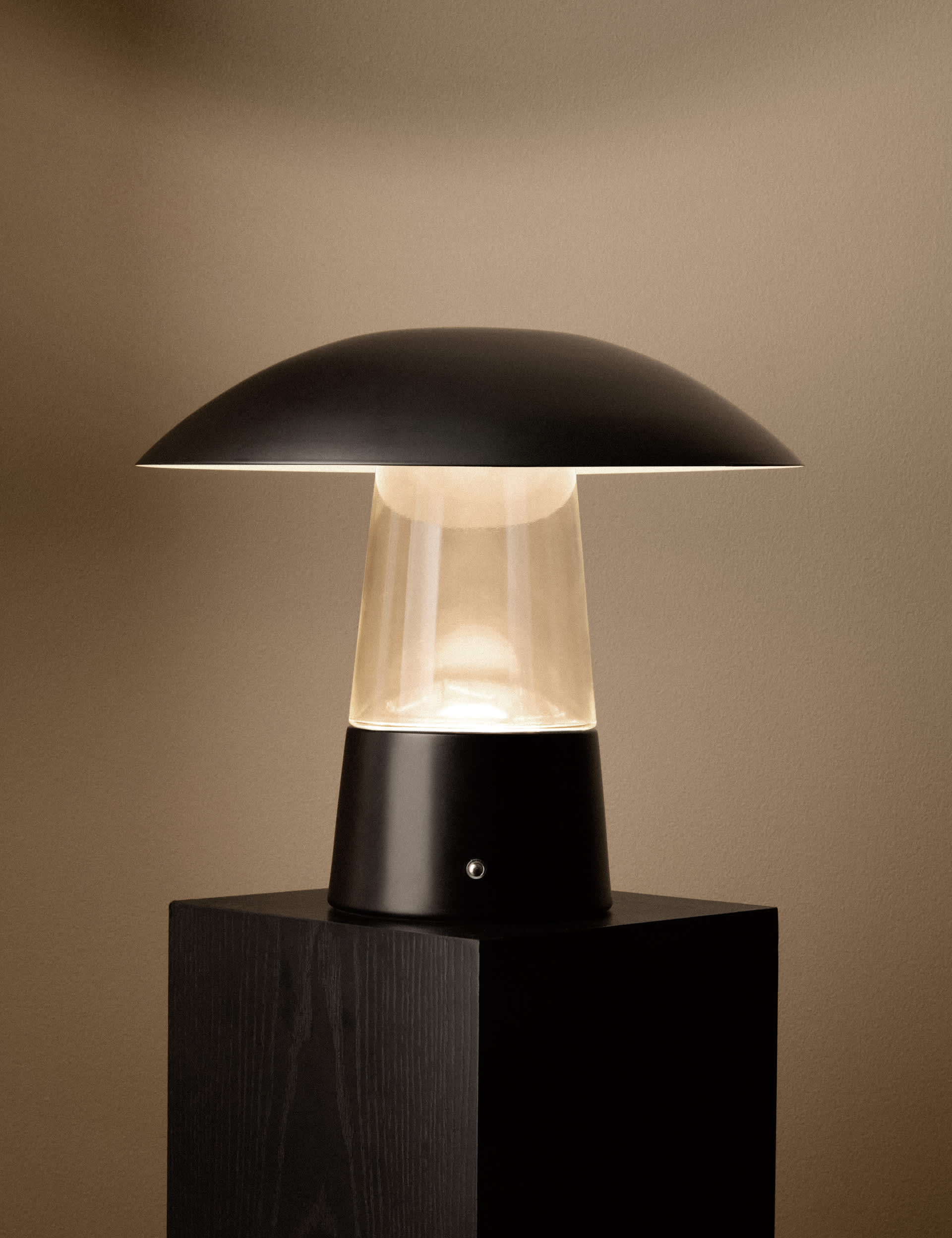
This statement, furturistic lamp is made from sleek black metal and clear glass to create the minimalist lighting option of our dreams. Despite its clear, almost stark lines, it still produces a cosy glow.","brand":"M&S X Kelly Hoppen","name":"Kelly Hoppen Metal and Glass Dome Lamp","urlStyle":"","retailer":"","layout":"hero","linkText":"","noFollow":true,"noAffiliateTracking":false,"promoLabel":"","price":90,"salePrice":null,"currency":"GBP","linkLayout":"text","sponsored":false,"hawkProductNameMatchedCode":"","review":{"cons":[],"id":"","name":"","pros":[],"rating":0,"strapline":"","url":""},"id":"","externalId":"9a9be709fb1594010d81b8b06e87b902074a8bbb","lastCheckedPriceDate":"","link":{"url":"https:\/\/www.awin1.com\/awclick.php?awinmid=1402&awinaffid=103504&clickref=hawk-custom-tracking&p=https%3A%2F%2Fwww.marksandspencer.com%2Fkelly-hoppen-metal-and-glass-dome-lamp%2Fp%2Fhbp61232173","merchantName":"Marks and Spencer UK","merchantId":1042,"merchantNetwork":"AW","merchantUrl":"marksandspencer.com"}}}}}” data-link=”https://www.awin1.com/awclick.php?awinmid=1402&awinaffid=103504&clickref=hawk-custom-tracking&p=https%3A%2F%2Fwww.marksandspencer.com%2Fkelly-hoppen-metal-and-glass-dome-lamp%2Fp%2Fhbp61232173″ data-link-merchant=”Marks and Spencer UK” data-merchant-id=”1042″ data-merchant-name=”Marks and Spencer UK” data-merchant-network=”AW” data-merchant-url=”marksandspencer.com” data-model-brand=”M&S X Kelly Hoppen” data-model-name=”M&S X Kelly Hoppen Kelly Hoppen Metal and Glass Dome Lamp” data-name=”Product Block merchantlink widget” data-render-type=”fte” data-show-fallback=”button” data-widget-type=”merchantlink” class=”ecom-root”>
This statement, furturistic lamp is made from sleek black metal and clear glass to create the minimalist lighting option of our dreams. Despite its clear, almost stark lines, it still produces a cosy glow.
M&S X Kelly Hoppen
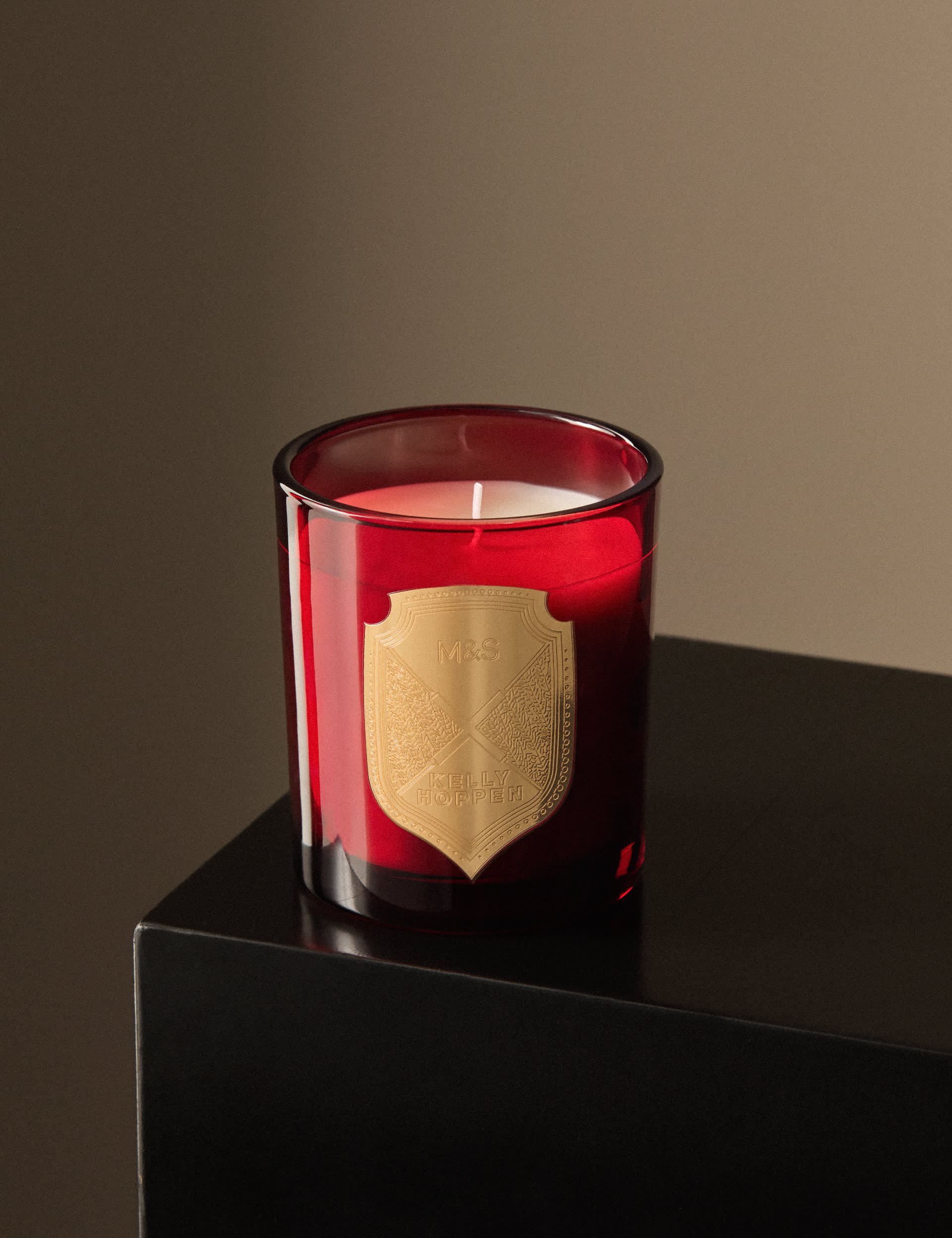
The Christmas Joy Fragrance Candle
<aside data-article-category="all-rooms" data-block-layout="hero" data-block-type="featured-product" data-editorial-currency="GBP" data-editorial-price="25" data-hawk-json="{"product":{"variants":{"Default":{"image":{"copyright":"","height":2496,"id":"cnc4oby5xsuXzoeacrdi5U","mimeType":"image\/jpeg","mos":"https:\/\/cdn.mos.cms.futurecdn.net\/cnc4oby5xsuXzoeacrdi5U.jpg","role":"","width":1920,"credit":"M&S X Kelly Hoppen","alt":"The Christmas Joy Fragrance Candle","caption":""},"strapline":"
The Christmas Joy Candle is back for 2026! Held in a stylish red and gold vessel, this candle smells of mandarin, clove and cinnamon as well as pine needles, maple tree, balsam fir, cedarwood and sandalwood.\u00a0It's a woody scent and will burn for 40 hours.","brand":"M&S X Kelly Hoppen","name":"The Christmas Joy Fragrance Candle","urlStyle":"","retailer":"","layout":"hero","linkText":"","noFollow":true,"noAffiliateTracking":false,"promoLabel":"","price":25,"salePrice":null,"currency":"GBP","linkLayout":"text","sponsored":false,"hawkProductNameMatchedCode":"","review":{"cons":[],"id":"","name":"","pros":[],"rating":0,"strapline":"","url":""},"id":"","externalId":"6bd97fbdef85e3eee1e974160cf2b8112ddfd6f0","lastCheckedPriceDate":"","link":{"url":"https:\/\/www.awin1.com\/awclick.php?awinmid=1402&awinaffid=103504&clickref=hawk-custom-tracking&p=https%3A%2F%2Fwww.marksandspencer.com%2Fpremium-christmas-joy-small-jar-candle%2Fp%2Fhbp61223412","merchantName":"Marks and Spencer UK","merchantId":1042,"merchantNetwork":"AW","merchantUrl":"marksandspencer.com"}}}}}” data-link=”https://www.awin1.com/awclick.php?awinmid=1402&awinaffid=103504&clickref=hawk-custom-tracking&p=https%3A%2F%2Fwww.marksandspencer.com%2Fpremium-christmas-joy-small-jar-candle%2Fp%2Fhbp61223412″ data-link-merchant=”Marks and Spencer UK” data-merchant-id=”1042″ data-merchant-name=”Marks and Spencer UK” data-merchant-network=”AW” data-merchant-url=”marksandspencer.com” data-model-brand=”M&S X Kelly Hoppen” data-model-name=”M&S X Kelly Hoppen The Christmas Joy Fragrance Candle” data-name=”Product Block merchantlink widget” data-render-type=”fte” data-show-fallback=”button” data-widget-type=”merchantlink” class=”ecom-root”>
The Christmas Joy Candle is back for 2026! Held in a stylish red and gold vessel, this candle smells of mandarin, clove and cinnamon as well as pine needles, maple tree, balsam fir, cedarwood and sandalwood. It’s a woody scent and will burn for 40 hours.
M&S X Kelly Hoppen
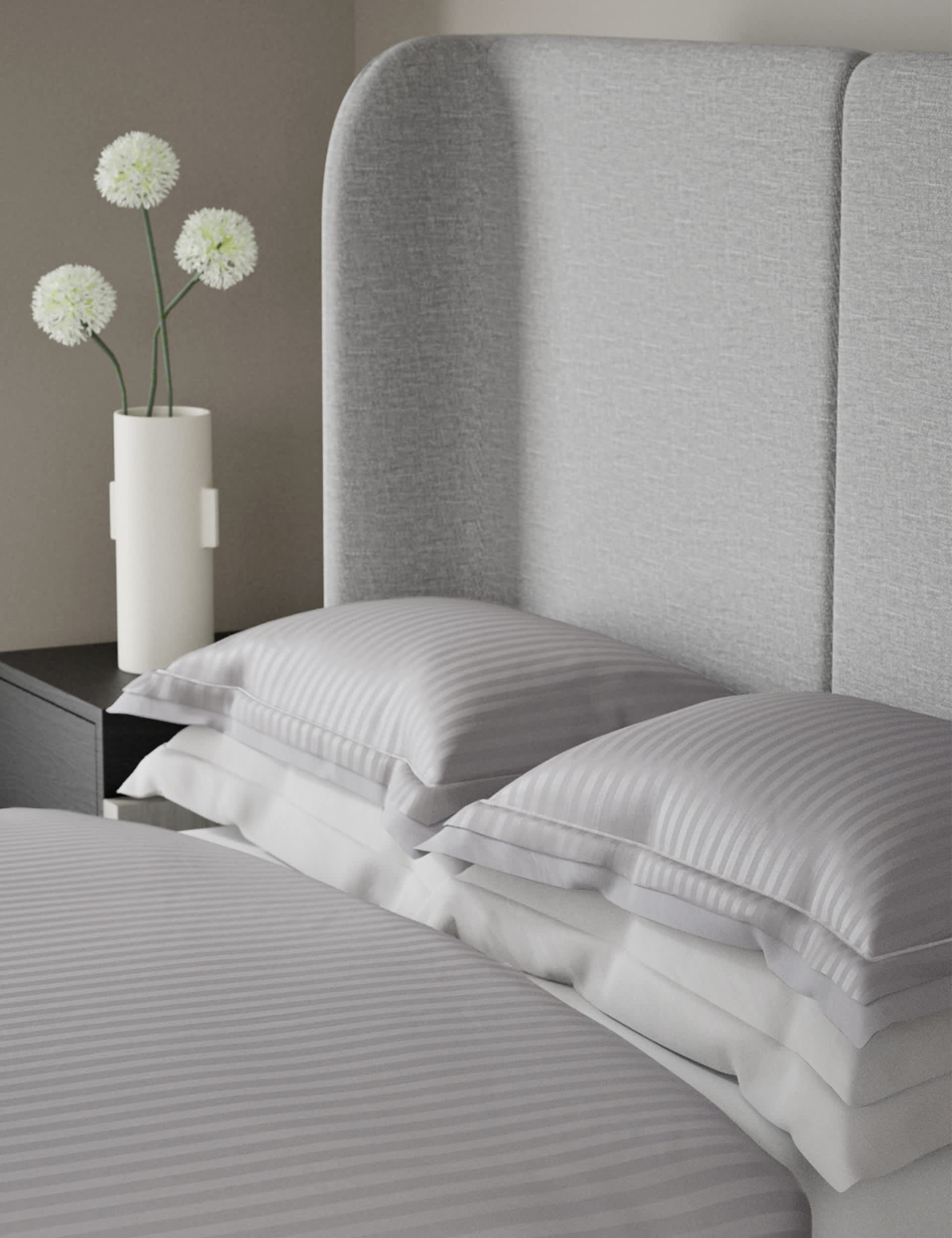
Pure Cotton Satin Striped Bedding Set
<aside data-article-category="all-rooms" data-block-layout="hero" data-block-type="featured-product" data-editorial-currency="GBP" data-editorial-price="105" data-hawk-json="{"product":{"variants":{"Default":{"image":{"copyright":"","height":2496,"id":"QSQ7Fvq9qGEJghwCQ6ryzT","mimeType":"image\/jpeg","mos":"https:\/\/cdn.mos.cms.futurecdn.net\/QSQ7Fvq9qGEJghwCQ6ryzT.jpg","role":"","width":1920,"credit":"M&S X Kelly Hoppen","alt":"Pure Cotton Satin Striped Bedding Set","caption":""},"strapline":"
This bedding set reminds of a chic, boutique hotel. Its soft grey doesn't feel too cold, instead it screams quiet luxury.","brand":"M&S X Kelly Hoppen","name":"Pure Cotton Satin Striped Bedding Set","urlStyle":"","retailer":"","layout":"hero","linkText":"","noFollow":true,"noAffiliateTracking":false,"promoLabel":"","price":105,"salePrice":null,"currency":"GBP","linkLayout":"text","sponsored":false,"hawkProductNameMatchedCode":"","review":{"cons":[],"id":"","name":"","pros":[],"rating":0,"strapline":"","url":""},"id":"","externalId":"b5465b59a43fcb8da8b9e8682c349c1baa2ab0be","lastCheckedPriceDate":"","link":{"url":"https:\/\/www.awin1.com\/awclick.php?awinmid=1402&awinaffid=103504&clickref=hawk-custom-tracking&p=https%3A%2F%2Fwww.marksandspencer.com%2Fpure-cotton-satin-striped-bedding-set%2Fp%2Fhbp60783253","merchantName":"Marks and Spencer UK","merchantId":1042,"merchantNetwork":"AW","merchantUrl":"marksandspencer.com"}}}}}” data-link=”https://www.awin1.com/awclick.php?awinmid=1402&awinaffid=103504&clickref=hawk-custom-tracking&p=https%3A%2F%2Fwww.marksandspencer.com%2Fpure-cotton-satin-striped-bedding-set%2Fp%2Fhbp60783253″ data-link-merchant=”Marks and Spencer UK” data-merchant-id=”1042″ data-merchant-name=”Marks and Spencer UK” data-merchant-network=”AW” data-merchant-url=”marksandspencer.com” data-model-brand=”M&S X Kelly Hoppen” data-model-name=”M&S X Kelly Hoppen Pure Cotton Satin Striped Bedding Set” data-name=”Product Block merchantlink widget” data-render-type=”fte” data-show-fallback=”button” data-widget-type=”merchantlink” class=”ecom-root”>
This bedding set reminds of a chic, boutique hotel. Its soft grey doesn’t feel too cold, instead it screams quiet luxury.
M&S X Kelly Hoppen
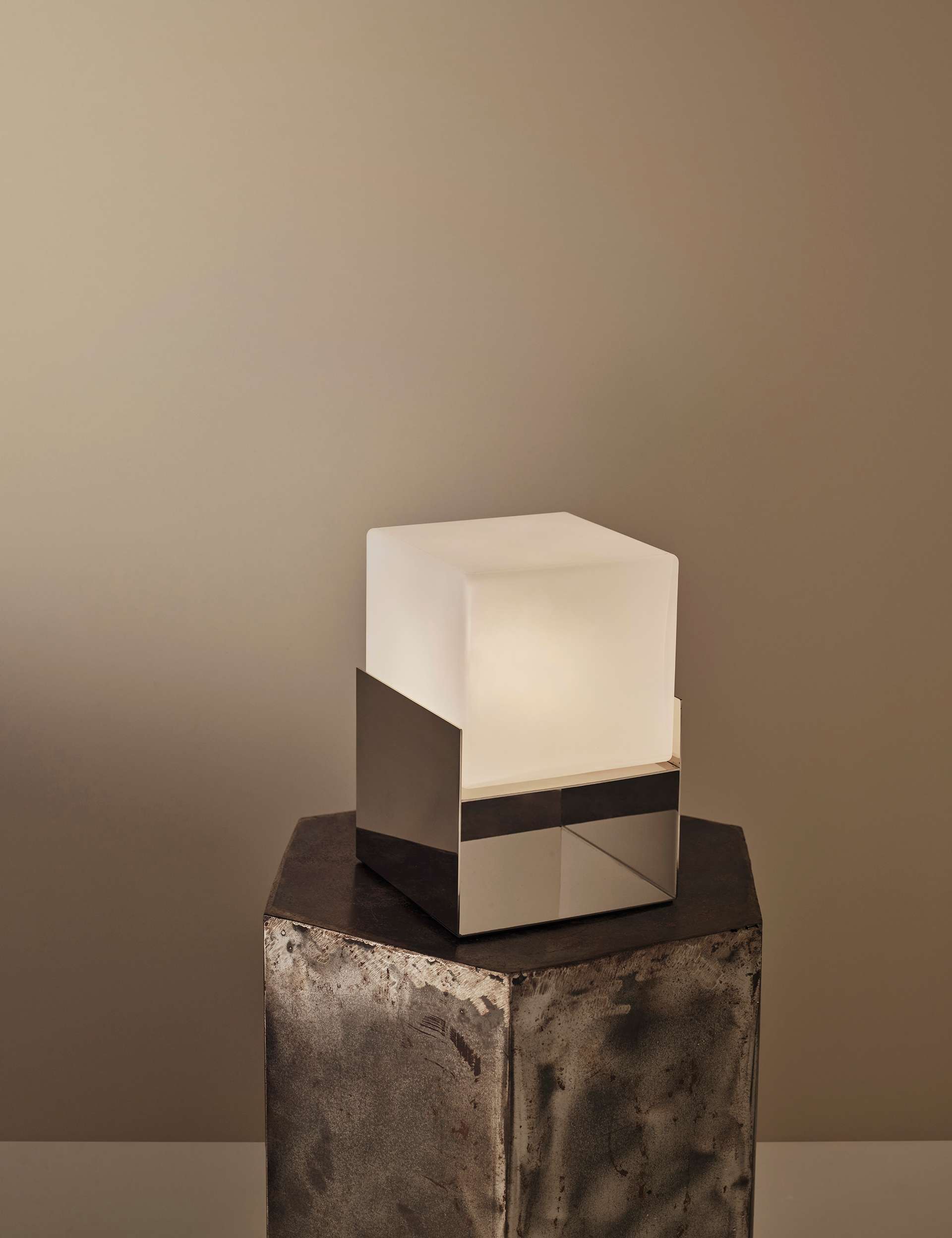
Kelly Hoppen Rechargeable Square Glass Lamp
<aside data-article-category="all-rooms" data-block-layout="hero" data-block-type="featured-product" data-editorial-currency="GBP" data-editorial-price="70" data-hawk-json="{"product":{"variants":{"Default":{"image":{"copyright":"","height":2496,"id":"h6efEdYox8wGTxt6Q45VtT","mimeType":"image\/jpeg","mos":"https:\/\/cdn.mos.cms.futurecdn.net\/h6efEdYox8wGTxt6Q45VtT.jpg","role":"","width":1920,"credit":"M&S X Kelly Hoppen","alt":"Kelly Hoppen Rechargeable Square Glass Lamp","caption":""},"strapline":"
Kelly's new lighting options are fabulous, and this rechargable lamp is proof. Its cubed shade and polished chrome metal base gives is the perfect minimalist finishing touch for any room.","brand":"M&S X Kelly Hoppen","name":"Kelly Hoppen Rechargeable Square Glass Lamp","urlStyle":"","retailer":"","layout":"hero","linkText":"","noFollow":true,"noAffiliateTracking":false,"promoLabel":"","price":70,"salePrice":null,"currency":"GBP","linkLayout":"text","sponsored":false,"hawkProductNameMatchedCode":"","review":{"cons":[],"id":"","name":"","pros":[],"rating":0,"strapline":"","url":""},"id":"","externalId":"bae1fa11c653104441a7abef7e1f06e21e0bc1e5","lastCheckedPriceDate":"","link":{"url":"https:\/\/www.awin1.com\/awclick.php?awinmid=1402&awinaffid=103504&clickref=hawk-custom-tracking&p=https%3A%2F%2Fwww.marksandspencer.com%2Fkelly-hoppen-rechargeable-square-glass-lamp%2Fp%2Fhbp61232176","merchantName":"Marks and Spencer UK","merchantId":1042,"merchantNetwork":"AW","merchantUrl":"marksandspencer.com"}}}}}” data-link=”https://www.awin1.com/awclick.php?awinmid=1402&awinaffid=103504&clickref=hawk-custom-tracking&p=https%3A%2F%2Fwww.marksandspencer.com%2Fkelly-hoppen-rechargeable-square-glass-lamp%2Fp%2Fhbp61232176″ data-link-merchant=”Marks and Spencer UK” data-merchant-id=”1042″ data-merchant-name=”Marks and Spencer UK” data-merchant-network=”AW” data-merchant-url=”marksandspencer.com” data-model-brand=”M&S X Kelly Hoppen” data-model-name=”M&S X Kelly Hoppen Kelly Hoppen Rechargeable Square Glass Lamp” data-name=”Product Block merchantlink widget” data-render-type=”fte” data-show-fallback=”button” data-widget-type=”merchantlink” class=”ecom-root”>
Kelly’s new lighting options are fabulous, and this rechargable lamp is proof. Its cubed shade and polished chrome metal base gives is the perfect minimalist finishing touch for any room.
M&S X Kelly Hoppen
Pure Cotton Piped Bolster Cushion
<aside data-article-category="all-rooms" data-block-layout="hero" data-block-type="featured-product" data-editorial-currency="GBP" data-editorial-price="25" data-hawk-json="{"product":{"variants":{"Default":{"image":{"copyright":"","height":2496,"id":"JcdJgGTk5PmgiJnaWsCFwT","mimeType":"image\/jpeg","mos":"https:\/\/cdn.mos.cms.futurecdn.net\/JcdJgGTk5PmgiJnaWsCFwT.jpg","role":"","width":1920,"credit":"M&S X Kelly Hoppen","alt":"Pure Cotton Piped Bolster Cushion","caption":""},"strapline":"
It may be simple in design, but I think this bolster cushion is perfect for the cosy season. I love its rich, red colourway, and its pure cotton material will be lovely and soft to the touch.","brand":"M&S X Kelly Hoppen","name":"Pure Cotton Piped Bolster Cushion","urlStyle":"","retailer":"","layout":"hero","linkText":"","noFollow":true,"noAffiliateTracking":false,"promoLabel":"","price":25,"salePrice":null,"currency":"GBP","linkLayout":"text","sponsored":false,"hawkProductNameMatchedCode":"","review":{"cons":[],"id":"","name":"","pros":[],"rating":0,"strapline":"","url":""},"id":"","externalId":"5cf784b284ba4ab686b8f8f7c2bae1d01ab4a096","lastCheckedPriceDate":"","link":{"url":"https:\/\/www.awin1.com\/awclick.php?awinmid=1402&awinaffid=103504&clickref=hawk-custom-tracking&p=https%3A%2F%2Fwww.marksandspencer.com%2Fpure-cotton-piped-bolster-cushion%2Fp%2Fhbp61231450","merchantName":"Marks and Spencer UK","merchantId":1042,"merchantNetwork":"AW","merchantUrl":"marksandspencer.com"}}}}}” data-link=”https://www.awin1.com/awclick.php?awinmid=1402&awinaffid=103504&clickref=hawk-custom-tracking&p=https%3A%2F%2Fwww.marksandspencer.com%2Fpure-cotton-piped-bolster-cushion%2Fp%2Fhbp61231450″ data-link-merchant=”Marks and Spencer UK” data-merchant-id=”1042″ data-merchant-name=”Marks and Spencer UK” data-merchant-network=”AW” data-merchant-url=”marksandspencer.com” data-model-brand=”M&S X Kelly Hoppen” data-model-name=”M&S X Kelly Hoppen Pure Cotton Piped Bolster Cushion” data-name=”Product Block merchantlink widget” data-render-type=”fte” data-show-fallback=”button” data-widget-type=”merchantlink” class=”ecom-root”>
It may be simple in design, but I think this bolster cushion is perfect for the cosy season. I love its rich, red colourway, and its pure cotton material will be lovely and soft to the touch.
Forgive me for being a little crass, but do your neighbours stink? And I mean, really stink?
If you’re nodding your head, do you know what legal rights you have if bad smells are coming from your neighbour’s property, do you know what legal rights you have?
Bad smells are never pleasant, and if they’re coming from your neighbour’s home, it can feel inescapable, too. So, I spoke to legal experts about when smells become a nuisance, and what you can do if said bad smells are affecting your day-to-day life.
Can you complain about bad smells coming from your neighbour’s property?
I’ll admit I’m unfortunately speaking from experience. Having lived in a flat where one of my neighbours was particularly stinky, I was never sure if I could complain or not. Despite the fact that I was practically holding my breath every time I walked past their door, it felt rude to say anything – and I wasn’t sure if it was the sort of thing that warranted a complaint anyway.
However, it turns out you can complain to your landlord or even council about bad smells. But there are a few considerations to take into account.
(Image credit: Future PLC/ David Giles)
‘The specific ‘smell’ category of statutory nuisance under the Environmental Protection Act 1990 applies only to industrial, trade or business premises, not private homes. The council can still act under other categories that do apply to homes: fumes or gases emitted from a private dwelling; premises in a state prejudicial to health or a nuisance; accumulations or deposits that are prejudicial to health or a nuisance; and animals kept in a place or manner that is prejudicial to health or a nuisance,’ explains Yulia Barnes, managing partner of Barnes Law.
Sign up to our newsletter for style inspiration, real homes, project and garden advice and shopping know-how
‘If your neighbour is a tenant, complaining to their landlord can be very effective. Most tenancy agreements contain nuisance clauses, giving the landlord leverage to require the problem to be addressed. Social housing landlords also have their own anti-social behaviour procedures. Where a rented home has serious damp, mould or sanitation problems, the council can also inspect it and take enforcement action against the landlord under the Housing Act 2004. When you complain, explain what steps you have already taken, such as speaking to your neighbour, and share your smell diary.
‘If the council decides not to act, you can bring a statutory nuisance complaint directly to the magistrates’ court yourself, or make a civil claim in private nuisance for an injunction or damages. Take legal advice before starting either route.’
What smells can you complain about?
There’s no list of the sort of stink you can complain about, but there are some scents that are worthy of complaint. You should also be keeping a diary if you notice poor smells, recording what they smelt like and when you smelt them.
‘The council can potentially take action if the smell is considered a statutory nuisance. This may apply to persistent or serious odours caused by things such as waste, animals, smoke, or poor conditions. The council can investigate the complaint and, if necessary, require the person responsible to take steps to reduce or stop the smell,’ says Jack Malnick, founder of Sell House Fast.
(Image credit: Future PLC/ Simon Whitmore)
It has to be considered a statutory nuisance for the council to uphold your complaint. But renters can complain to their landlord about other smells.
‘If you own or rent your home, you may be able to bring your own civil claim for private nuisance. The test is whether the smell substantially and unreasonably interferes with your use or enjoyment of your home, considering the character of the area and the frequency and intensity of the smell. A fleeting whiff is unlikely to qualify; a persistent, overpowering odour that stops you opening windows or enjoying your garden may well do so,’ says Yulia.
‘Cooking smells will rarely meet either threshold unless extreme and persistent. One exception is where a home is used to run a food business, such as an unregistered commercial kitchen. The property may then count as business premises, bringing the smell within the council’s statutory nuisance powers.’
How to speak your neighbour about bad smells
Of course, the last thing you want to do is fall out with your neighbour, and before you lodge a complaint, the right course of action is to have an open conversation about the smells. I know this can be awkward, so I asked our experts exactly how we should go about this conversation.
‘As with all neighbour problems, the best way to resolve them is to start by speaking to your neighbour in person, politely and calmly. The owner may not be aware of any issue due to what people often call ‘nose blindness’, or they could be working their way to sorting it, so it is best to approach the conversation politely,’ says Jack.
(Image credit: Future PLC/ Oliver Gordon)
Julia also says it’s worth trying to work out what the bad smells are, such as bad drains, before speaking to your neighbour.
If the smell seems to come from drains, bear in mind that shared sewers are usually the responsibility of your local water company, which you can contact directly,’ she says.
‘If talking does not help, contact your council’s environmental health team. Under the Environmental Protection Act 1990, councils must take reasonably practicable steps to investigate statutory nuisance complaints from people living in their area. Also check your lease or title deeds for nuisance clauses or covenants. If you share a landlord with your neighbour, you will usually need to ask the landlord or management company to enforce these terms, and some leases require you to cover the costs.
‘Freehold covenants can sometimes be enforced between neighbours, but only where you have the benefit of the covenant, so take advice. If the smell affects your health, see your GP and keep a record of symptoms.’
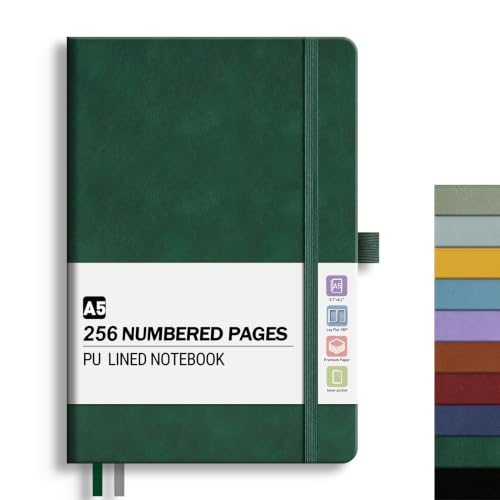
If you're struggling with bad smells coming from your neighbour's house, the first thing to do is start keeping a smell diary. Record the dates, times and descriptions of the bad odours.","brand":"PrimEpoch","name":"Primepoch Notebook A5 Lined With 256 Pages Thick Journal, Sticky Notes","urlStyle":"","retailer":"","layout":"horizontal","linkText":"","noFollow":true,"noAffiliateTracking":false,"promoLabel":"","price":6.99,"salePrice":null,"currency":"GBP","linkLayout":"text","sponsored":false,"hawkProductNameMatchedCode":"","review":{"cons":[],"id":"","name":"","pros":[],"rating":0,"strapline":"","url":""},"id":"","externalId":"ba982a6c9374f73c9ebb1781b42cd128c3ef8271","lastCheckedPriceDate":"","link":{"url":"https:\/\/target.georiot.com\/Proxy.ashx?tsid=107653&GR_URL=https%3A%2F%2Famazon.co.uk%2FPrimEpoch-Notebook-Lined-Journal-Sticky%2Fdp%2FB0H999RWQS%2Fref%3Dsr_1_3_sspa%3Ftag%3Dftr-idealhome-gb-21%26ascsubtag%3Dhawk-custom-tracking-21","merchantName":"Amazon UK","merchantId":1027,"merchantNetwork":"Amazonuk","merchantUrl":"amazon.co.uk"}}}}}” data-link=”https://target.georiot.com/Proxy.ashx?tsid=107653&GR_URL=https%3A%2F%2Famazon.co.uk%2FPrimEpoch-Notebook-Lined-Journal-Sticky%2Fdp%2FB0H999RWQS%2Fref%3Dsr_1_3_sspa%3Ftag%3Dftr-idealhome-gb-21%26ascsubtag%3Dhawk-custom-tracking-21″ data-link-merchant=”Amazon UK” data-merchant-id=”1027″ data-merchant-name=”Amazon UK” data-merchant-network=”Amazonuk” data-merchant-url=”amazon.co.uk” data-model-brand=”PrimEpoch” data-model-name=”PrimEpoch Primepoch Notebook A5 Lined With 256 Pages Thick Journal, Sticky Notes” data-name=”Horizontal Product Block merchantlink widget” data-render-type=”fte” data-show-fallback=”button” data-widget-type=”merchantlink” class=”ecom-root”>
If you’re struggling with bad smells coming from your neighbour’s house, the first thing to do is start keeping a smell diary. Record the dates, times and descriptions of the bad odours.
Bad smells are both awkward to talk about and unpleasant to encounter. But if you stay calm and speak to your neighbours, it should be easy to resolve.