by Furnishly | Oct 15, 2026 | Design Inspiration, DIY, Style
We
independently select these products—if you buy from one of our links, we may earn a commission. All prices were accurate at the time of publishing.
When I read this Apartment Therapy story last year about hinge heads, decorative toppers for your door hinges, I was smitten. Tiny camouflaged secrets hidden around my home? Little whimsical surprises where you’d least expect them? Sign me up.
I didn’t buy any right away, but I couldn’t stop thinking about them. Now that it’s fall, I started, as I usually do, to think of ways to make my family’s home just a little bit cozier, which goes hand in hand with ways to make our days more whimsical in my mind. So as I began feathering my nest for the cooler weather, I thought of the hinge heads, and I decided to finally try them out.
What Are Hinge Heads, aka Decorative Toppers?
Hinge heads are tiny pieces of decor placed atop your door hinges, meant to add a bit of whimsy in an often overlooked space. You can find ready-made ones online, like this adorable set on Etsy. Or, you can even make your own using a little trinket, a dot of hot glue, and a tiny magnet (if your hinges aren’t magnetic, you could use a small piece of sticky tack instead).
How I Made My Own Hinge Heads
I decided to take the DIY route and began thinking of ways I could make my own hinge heads. I thought about making tiny clay figures so that I could make whatever I wanted, but I wanted that “dopamine decor” hit sooner than a trip to Michaels (and a whole new set of craft supplies) and many polymer clay tutorials later.
Next, I looked into buying sets of mini game pieces, since I’d seen people spray-painting Monopoly game pieces, but I couldn’t find exactly what I was looking for. I looked into woodland fairy garden sets, and I felt closer — adorable, whimsical, but still not quite right.
That’s when I had the brilliant idea to look at dollhouse accessories, which I have always pined after but never had the occasion to have any of my own. I spent way too long searching on Amazon and thinking about what I’d like to try for my hinge toppers. I considered lanterns and desserts before finally adding a tiny gumball machine, some flowers in glass vases, and a set of playful cats to my cart.
I also bought small magnets and ended up using some adhesive magnet tape I already had instead of hot glue. It took me about 20 seconds to cut a piece of magnet tape to shape and stick it on the bottom of the dollhouse pieces.
Why I Love This Whimsical Decor
Then came the fun part of sprinkling them around the house. I ended up putting a smug kitten on a hinge in my girls’ room, the gumball machine in the bonus room, and a flower vase in my husband’s and my bedroom. Now comes the excitement of waiting for my kids and guests to discover them. Already, it’s made our home feel so much more whimsical — and for just a few minutes and a handful of dollars.
by Furnishly | Oct 15, 2026 | Design Inspiration, Style
They Played with the Design Rules in Their Own Kitchen
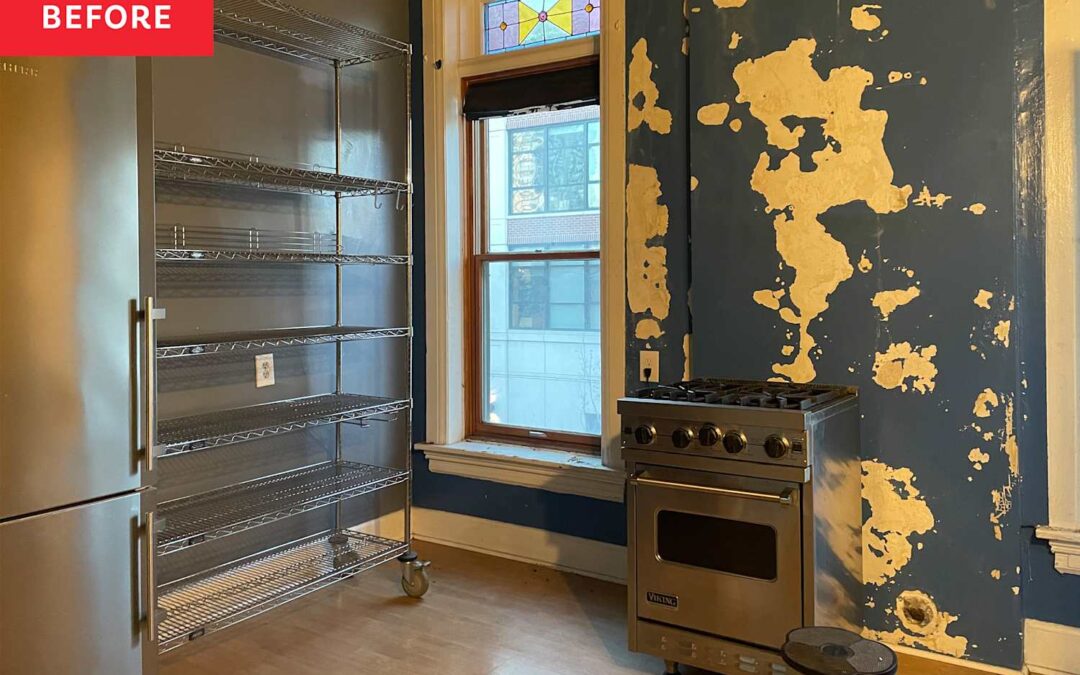
Because the kitchen had major water damage, Sharon and Peter removed all the laminate flooring and replaced it with wood. “What could have been simply a repair became an opportunity to rethink how the kitchen could work, and, more importantly, how it could feel,” Sharon notes.
Because the couple reconfigured the layout, the gas line had to be relocated too. But it also meant that Sharon and Peter could “play with the rules” in their own kitchen. Instead of hiding everything behind traditional cabinetry, they designed the space to put “storage, objects, appliances, and collections on display,” Sharon explains. This created “a space that is open, warm, personal, and a little playful.”
The storage solutions Sharon and Peter decided to use were custom units from Modernica because of the aesthetic and function. “Their distinctive dimpled doors and exposed construction bring a graphic, architectural quality to the room and a sense of play to the modernist vocabulary,” Sharon describes.
Because the ready-made pieces are customizable, the couple used the Modernica units to create a large island, sink workstation, and “an open system for storage, preparation, and display,” Sharon says. “Vintage china, glassware, cookware, and everyday objects become part of the composition — meant to be seen, reached for, and enjoyed.”

by Furnishly | Oct 15, 2026 | Design Inspiration, Style
We
independently select these products—if you buy from one of our links, we may earn a commission. All prices were accurate at the time of publishing.
Launching online and in stores today, the collaboration is the couple’s first with Anthropologie Home. Artful shoppers are sure to find something for their own homes — or the perfect gift for anyone on their list who enjoys music, hosting, or simply admiring a beautiful object.
What Is the Anthropologie Home x Suleika Jaouad and Jon Batiste Collection?
With almost 50 different products available, the collection is fairly large, focuses on a warm palette of jewel tones, and spans the categories of tabletop, decor, furniture, and entertaining. Inspired by Jaouad and Batiste’s Brooklyn home (where the campaign imagery you see here was shot) as well as their individual creative hobbies, cultural backgrounds, and love of hosting, the pieces feel super personal but are also universal in many ways, thanks to the inclusion of items like glassware, plates, and even holiday ornaments.“It’s rare to collaborate with artists who are so deeply connected to the creative process,” said John Murphy, executive creative director of Anthropologie Home, in a press release about the line. “Suleika and Jon brought such a distinct point of view to every detail, and we wanted the campaign to capture that same sense of warmth and curiosity.”
Some items, like the gorgeous Willoughby Chair, feature Jaouad’s original artwork, while others reflect her Tunisian heritage. Batiste’s composing chops are represented in the musical motifs you’ll find throughout the collection, and his own handwritten affirmations appear on the plates. A custom record player feels like the perfect conversation starter, and a few key textiles round out the cozy meets maximalist cool vibes of the full assortment. “We wanted to create objects that felt personal to us and told a story, but that could be integrated into someone else’s life and become part of their own rituals,” said the couple, also in a press release. “The designs were inspired by our shared visual vocabulary — the colors and patterns of Tunisia, the soul and saturated hues of New Orleans, and the deep blues and greens of the natural world.”
What to Shop from the Anthropologie Home x Suleika Jaouad and Jon Batiste Collection?
You’re going to want to check out this collection ASAP, as Anthro’s holiday offerings often sell out long before the holiday season is officially underway. Prices start at $16 for ornaments and top out at $1,698 for the upholstered chair featuring Jaouad’s art. These are the pieces I couldn’t take my eyes off of, but, again, the full collection is worth a look for sure.
by Furnishly | Oct 3, 2026 | Design Inspiration, DIY, Style
I’m originally from a small beach town in West Michigan, but I moved to NYC for college where I got my BS in Fashion Media from LIM College. Brooklyn is now my permanent home, where I love exploring celiac-friendly cafes or bakeries, and I’m constantly reading and bringing my…read more
by Furnishly | Sep 19, 2026 | Design Inspiration, Style
It doubles as a colorful work of art. READ MORE…
by Furnishly | Sep 14, 2026 | Design Inspiration, DIY, Style
Lydia Mack is a freelance writer and author of the book “I Put Pants On for This.” Her work has been published by VICE, HelloGiggles, On Our Moon, and more. She has been a sweatpants loyalist and homebody since before it was cool, and frequently forgets that she just made a cup…read more