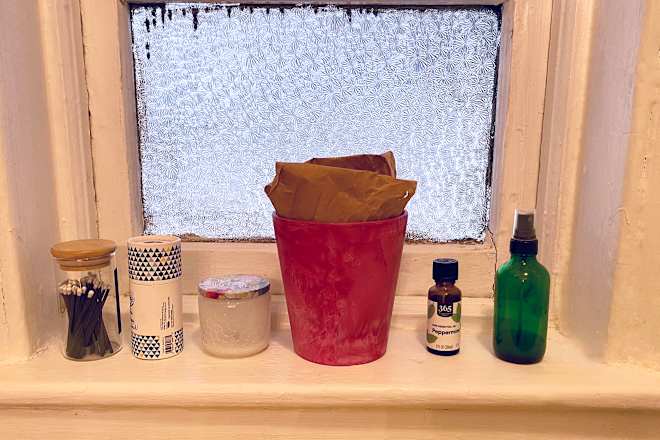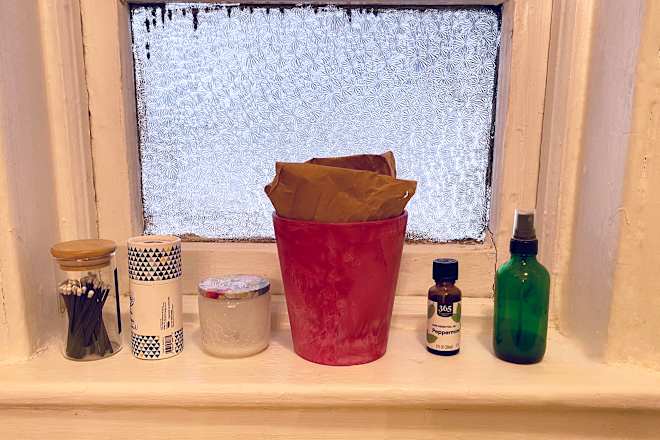
Why You Should Put a Compost Bin in Your Bathroom (It’s Brilliant!)
I waste so much less now. READ MORE…
2-Day Shipping on most products. Shop Now!

I waste so much less now. READ MORE…

Lorelai Gilmore would be so proud.
READ MORE…

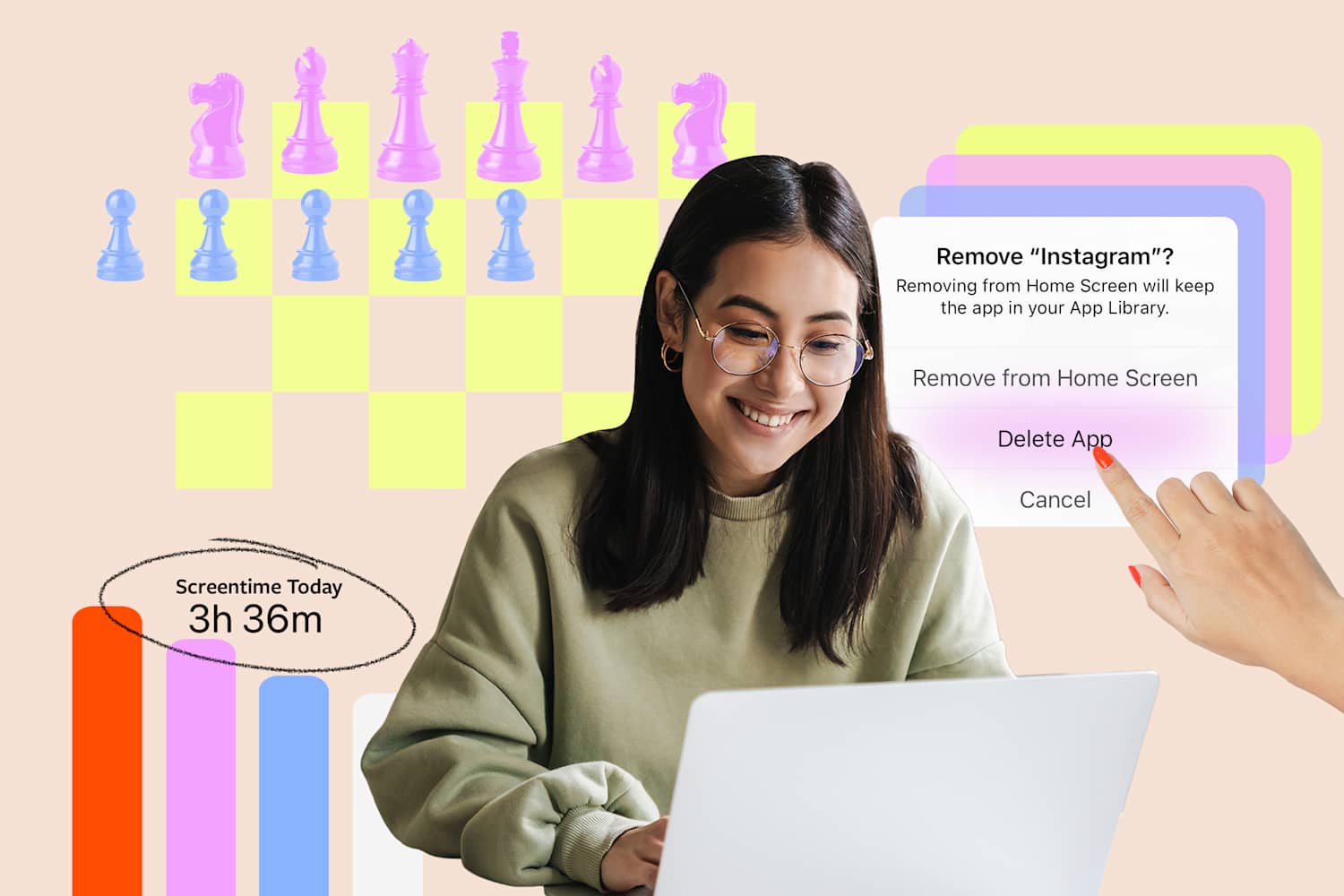
For years, I’d spend several hours a day scrolling through social media on my phone — while lying in my bed, watching TV, commuting on the subway, waiting in supermarket lines, and pretty much any other chance I could. This ritual was negatively affecting my mental health, and I’d often experience feelings of jealousy, anxiety, inadequacy, and, most of all, depression. (And once I’d feel depressed, I’d crave a distraction, which created an endless cycle of scrolling.) This isn’t a far-off notion either, as studies have shown there’s a link between doomscrolling and anxiety, stress, and depression.
Because of how negatively this was affecting me, I’d take temporary social media breaks while on vacations (which always felt amazing) to allow me to fully disconnect and enjoy my trip. But about 10 months ago I decided to take a more drastic approach. I deleted my most addictive social media apps — TikTok, Instagram, Facebook, and X (formerly known as Twitter) — from my iPhone entirely. Deleting social media from my phone for almost a year was not without its challenges, but doing so has been such a benefit to my mental health. Here’s how I made it work for me.
It’s been 10 months without social media on my phone, and I’ve benefited in a number of ways: I feel noticeably less depressed; my sleep has improved because I’m not doomscrolling right before bed; and I have more time to spend on hobbies, reading, and even other phone apps that don’t make me feel so bad.
I’m no expert, but from my experience I learned that the best way to make this work is to be gentle on yourself when you feel the need to check social media (whether on the computer or temporarily downloading an app). I had to access social media for work purposes, and going completely cold turkey and deleting apps permanently felt intimidating (and frankly unsustainable in the long run). Below are five tips that have helped me keep off the apps for almost a year.
Research shows that spending time on social media releases dopamine (and the levels tend to plunge when you sign off, which is part of what makes opening those apps so appealing), so I knew I wanted to put some apps on my phone that could scratch the itch of playing around on my phone — without the troubling side effects I experience from social media. My favorite alternative apps are as follows:
It’s now second nature to always throw a book in my bag so I have something to keep me occupied other than my phone when I’m on the subway or in waiting rooms.
I’ve picked up new crafts and hobbies, including sewing, watercolor painting, drawing, and playing chess. When I’m home and have the urge to scroll, I try to reach for one of these activities instead.
Occasionally, I re-download Instagram and delete it right after I’ve done whatever posting I need to do. This approach has come in handy plenty at work, and a handful of times for personal reasons. A recent example is when Taylor Swift announced her engagement on Instagram — that was a can’t-miss day on the app if I ever saw one!
My social media dependency was at its worst when I was on my phone, so I still check it on the computer occasionally. When I open Instagram, Facebook, TikTok, or X on my laptop, I usually get bored within a few minutes and close it. The scroll just isn’t as satisfying on desktop as it is on mobile, so whenever I want to peruse social media on my computer I don’t give myself a hard time.
Over the past 10 months, I’ve used the time that I used to spend scrolling social media on my phone to do so many other things: read tons of books (and log them on Goodreads), upcycle a few pieces of clothing with my sewing machine, and practice a lot chess. According to my stats on the Chess.com app, I’ve played 1,482 games in the past year, and my ratings (although still meager) have gone up in the three main game categories.
Compared to the many hours I used to spend scrolling through phone apps that left me feeling bad, my screen time has gone way down in the past year (the Peacock app skews the data a bit, because I fall asleep listening to sitcoms from Peacock every night, with my phone face down). Deleting social media from my phone has been great for my sleep, self-esteem, mood, and overall mental health, and I can’t see myself going back to my old routine anytime soon.
If you (or someone you know) are struggling with mental health and need support, visit one of the following websites below or call any of their helplines:
Kristen is a Washington, D.C.-based freelance writer and homebody. She specializes in home and lifestyle content, and loves helping others live their best lives at home and beyond. Romanticizing her life since 1987, you can probably find her sipping on iced coffee, crushing a Crossfit workout, designing her next dream space, or blasting Taylor Swift.
We independently select these products—if you buy from one of our links, we may earn a commission. All prices were accurate at the time of publishing.
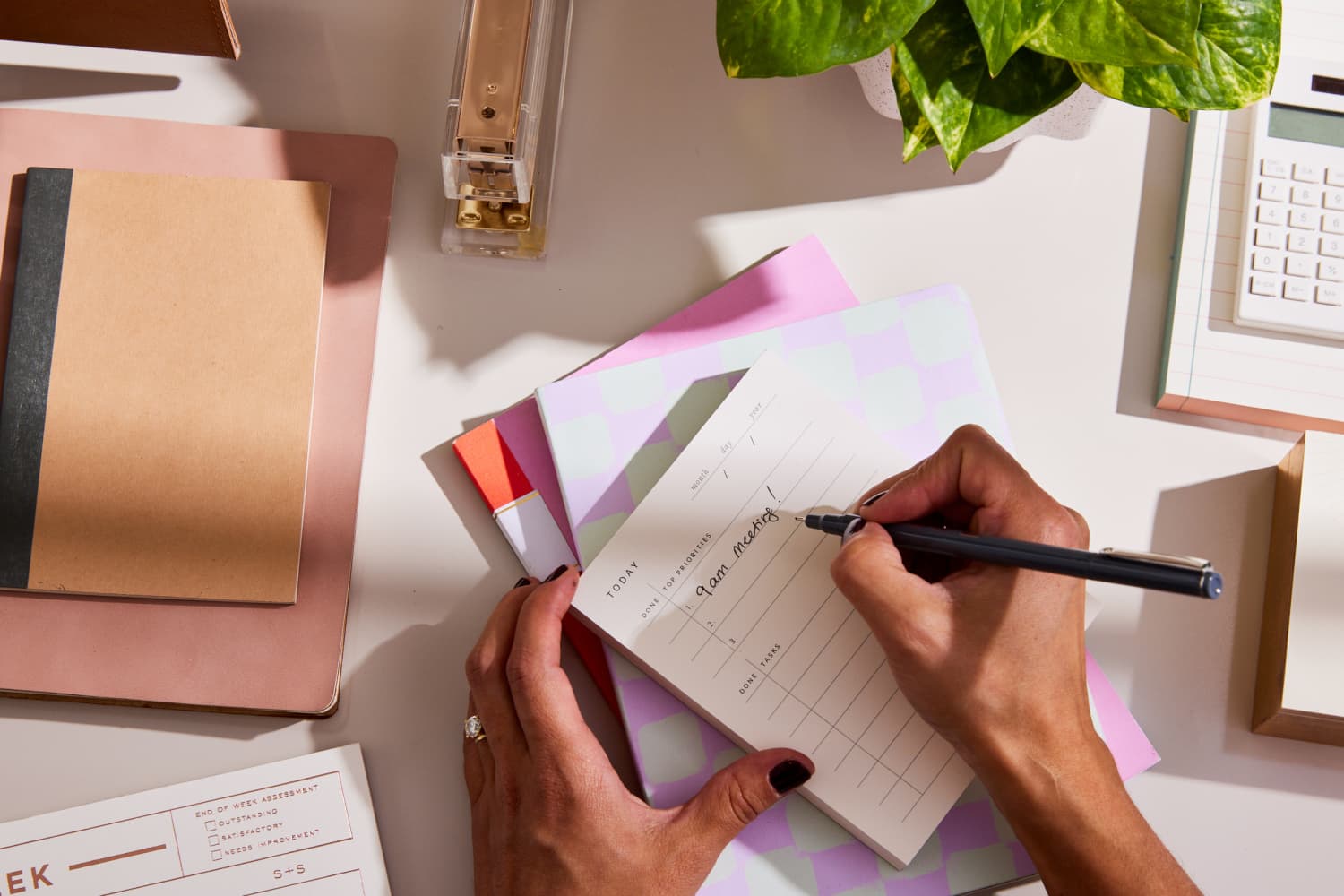
It’s so easy to procrastinate when your to-do list gets too long. Even if you’re somewhat motivated to tackle one of your tasks, the sinking feeling of overwhelm lingers. The good news is there’s a way to stop this cycle even before it begins: The key is to break all tasks into smaller, approachable bite-sized steps so the anxiety doesn’t prevent you from getting started.
James Clear of “Atomic Habits” fame calls this philosophy “the 2-minute rule,” which essentially means that if you can complete a task within 120 seconds, you should tackle it now instead of waiting until later.
For more content like this follow
I’ve used this philosophy in my professional and personal life, and I’ve also included it in some of my self-care goals. Here’s how I use the two-minute rule in my life.
When I first discovered this rule, I combined all the tasks on my to-lists on one piece of paper to get a visual of everything I had to do. I noticed three different realms — personal, professional, and self-care — and decided on the three most important tasks within those categories.
I wanted to make a better effort to connect with my friends and family. It wasn’t always feasible to talk on the phone or meet for lunch or dinner, but it would take less than two minutes to text or send an email to my sister or one of my childhood friends. A simple, “Hey I just want to check in to see how you were doing,” wasn’t a heavy lift. In less than two minutes, I reached out to at least three to four people I hadn’t talked to for some time.
In my professional life, I hated waking up to a full email inbox. I decided to use two minutes to go through my messages and respond to two to three easy emails. The responses usually required a couple of sentences or less and as a result, my inbox was a little less all-consuming than the day before. I used this technique for at least a few minutes every single day. After a week of trying the two-minute rule with my inbox, the feeling of overwhelm became less intense and I actually replied to several emails throughout the day.
I am always looking to improve my self-care regimen. Because my work involves hours at the computer, I tried different tactics to be less sedentary. I started doing kettlebell swings for two minutes after a few hours at my desk. At the end of the day, I’d completed at least 50 or more swings and had taken several short breaks to stand up and move around for a minute (or two).
When I decided to take on the two-minute rule, I started with habits I could easily incorporate in my daily life: drinking water, folding a few pieces of laundry, straightening a part of the house that wasn’t too messy, unloading the dishwasher, and similar to-dos. I found the best way to use this rule successfully is to take on quick tasks, not a huge project. For instance, I couldn’t read an entire book in two minutes, but if I wanted to read more, I could get a few pages into a new novel. The same applied to other, loftier goals like meditating. I started with two-minute increments of meditation throughout the day and by the end of a week, I found that I’d sat in silence for at least 15 to 20 minutes in seven days.
Once I started taking the time to carve out two-minute moments, I found myself building on those short time blocks and those habits became a natural part of my day. The key is to find the goal you want to accomplish and break it into a small series of tasks you can actually do in two minutes.
Initially, I dismissed how “productive” I would be with the two-minute rule. But after working on several habits over several weeks, these micro-moments added up and led to less overwhelm. I wasn’t spending hours doing a task because I had budgeted my time throughout the week. In a surprising twist, my to-do list became shorter and I found myself crossing more things off the list. Committing to the process by focusing on the “tiniest” parts of my habit and not worrying about the end goal gave me a whole new perspective on my to-do list.
In order to measure my productivity, I kept a chart of my progress. I listed the task and the minutes I spent on it each day, and at the end of the week I’d tally my time total. Tracking my progress visually became a motivator. In some instances, I did more than what the two-minute rule required, but I understood it was the natural progression of having a routine and implementing a ritual. Working on these small steps helped me make a lifestyle change by turning my overwhelm into action and approaching my goals with a different perspective. Crossing lots of tasks off my to-do list was just an added bonus.