This week, Artie McGowan, master plumber and owner of Colony Plumbing in Mobile, Ala., joins me to provide solutions to some of the most common plumbing problems, like low water pressure and clogged drains.
He’s a long-time friend of mine who’s also done hundreds of jobs for my construction company.
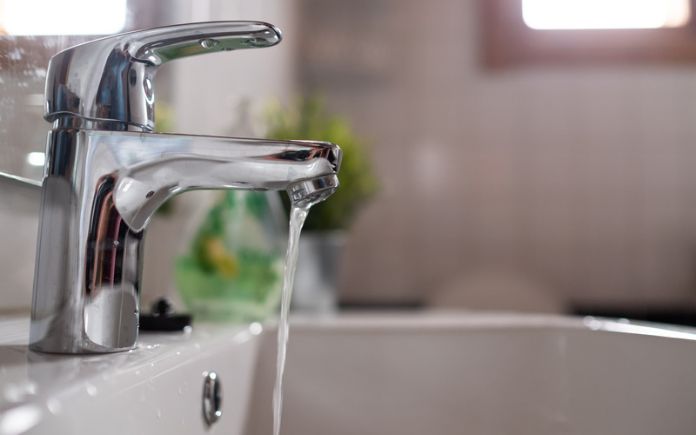
Increasing the water pressure on a sink faucet might be as simple as cleaning the aerator. (Koldunova_Anna, Getty Images)
Low Water Pressure
If a homeowner is experiencing low water pressure, what would be the likely cause?
Artie: Well sometimes, it might just be that ol’ cousin Earl parked his truck over your water meter and squished the line. But more often than not it’s something else.
First, take a look at where the problem is. In the kitchen bathroom sink or lavatory, sometimes debris comes up through the water and gets into the faucet aerator to slow it down or almost clog it.
Some houses are a bit more complicated and have a water pressure-reducing valve that comes right off the meter. When it does, it goes bad over the years. It’s best to let a professional repair this because most of the time it has to be replaced.
If you need to replace a 3/4-inch supply line, is there any advantage to stepping that up to a 1-inch line?
Artie: The best thing to do is to increase it. This will give you a little bit more velocity at the faucet.
When the water’s running through, let’s say if you run it through a small half-inch line, once the fixture starts delivering that water, the pressure drops really quickly.
The larger pipe you have, the more volume of water you have. It’s less likely to drop in pressure, especially if it’s a long run to the house.
What would you say is the right PSI going to a house?
Artie: The optimal water pressure I prefer is 75 PSI on a three-quarter line. Most city water is about that PSI, some of it is in the 60s and 50s, depending on how new the system is.
On wells, most of the time it’s about 45 PSI, but you can increase it. A well has a pressure holding tank, so you can have a little bit lower pressure at the pump, but that tank will keep it up.
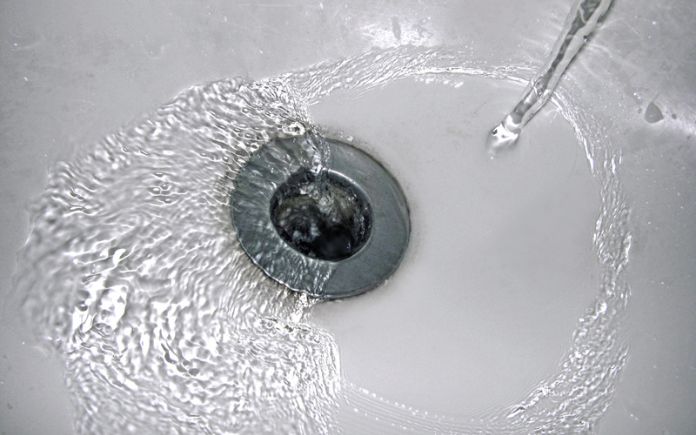
Occasionally, sinks clog, and when that happens, you don’t need to call a handyman or plumber to fix the problem. (laymul, Getty Images)
Slow Draining
We get a lot of questions about how to fix a slow-draining sink or tub. What is the common cause?
Artie: If you run the water and it backs up immediately, the clog is between the top of the sink and the bottom of the trap. It’s more likely hair catching on a trip lever that operates the pop-up valve. Easily fix this by removing the pop-up valve and pulling the hair out with needle-nose pliers.
But, if you run the water and it takes about 30 seconds for it to fill up, the problem is down the line in the drain. It could be five, six, or 10 feet away from where you are. If that’s the case, you use a liquid drain cleaner with high sulfuric acid content. You can easily find this type because it’s packaged double — in a bottle and also in a bag.
Follow the directions, and wear the proper safety equipment, like glasses and gloves. You should let it sit in the drain for about 30 minutes.
If it doesn’t work, then call a professional to route it out with an auger.
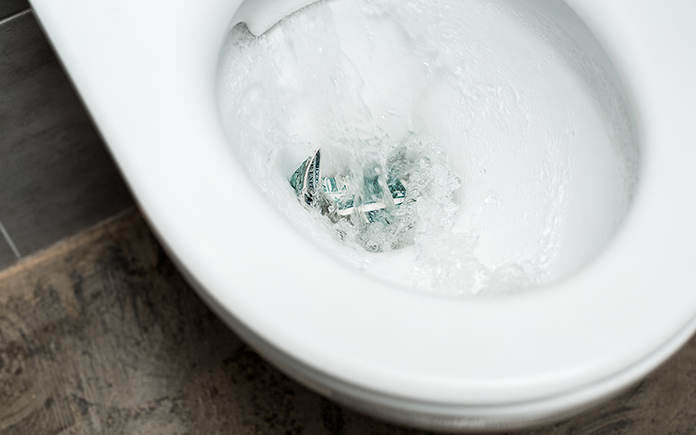
A running toilet wastes a lot of water and costs you a lot of cash. (DepositPhotos)
Running Toilet
Another common question we receive is that their toilet seems to be constantly running. What’s the cause/solution for that?
Artie: This means there’s a problem with the flush valve, the apparatus that holds the flapper.
Most times, you need to replace the flapper, but sometimes it could be a crack in the flush valve and water is finding its way into the bowl.
You can do the food coloring test to check for leaks. Then, you know the problem is in the flush valve and flapper area.
There are many products out there that make flapper replacement easy. For instance, Fluidmaster’s 502 PerforMAX Water-Saving, Adjustable Flapper offers a customized flush. To use it, you just have to turn the dial left for more water per flush, or right for less, depending on your needs.
The good thing about plumbing today is that it’s become so user-friendly because of products like Fluidmaster’s. I use their flappers, fill valves and flush valves often because I’ve had so much success with them.
Simple lifestyle changes can conserve water, one of our most precious resources, and save money. (aristotoo, Getty Images Signature)
Water conservation is fast becoming a priority for many homeowners.
The Environmental Protection Agency estimates that leaks account for 9,400 gallons of water wasted each year. That’s about the amount of water needed to wash more than 300 loads of laundry.
Whether your reason for conserving water is mandated because of a drought or to combat high utility bills, adopt these simple water-saving measures to dramatically cut your home’s water usage.
Here are the 5 hot spots to tackle.
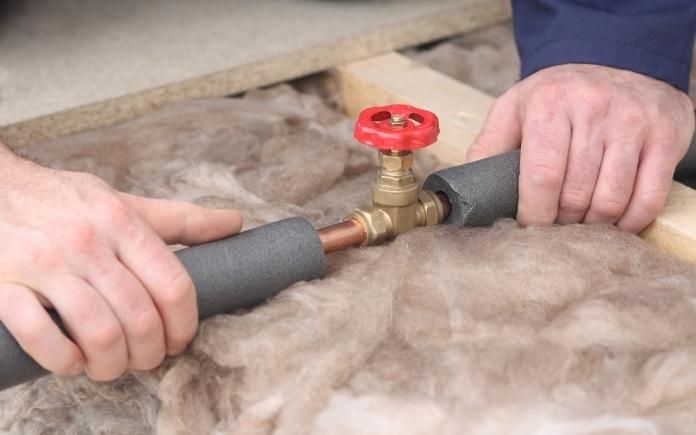
Insulating water pipes with foam helps water heat up faster, so you waste less time waiting for hot water. (nsj-images, Getty Images Signature)
1. Home Infrastructure and Appliances
To conserve more water in your home, start at the source.
First, check for leaks in the pipes. A visual inspection can quickly reveal any problems that need repairs.
In addition, read your water meter when no water is being used, then look at it again after a few hours to see if the gauge has changed.
Fixing the leak could be as simple as replacing a faucet washer, or you may discover a more serious problem such as an unseen leak in a pipe.
Here’s a win-win solution: Installing foam insulation on hot water pipes saves both water and energy by providing hot water faster and keeping it hot longer. This reduces the water wasted from running the tap to heat it up.
Finally, when replacing appliances like dishwashers or washing machines, look for models that have earned the U.S. government’s Energy Star rating, certifying they use less water and energy.
Plumbing fixtures such as faucets and toilets that carry the Environmental Protection Agency WaterSense label use, on average, 20 percent less water than conventional fixtures.
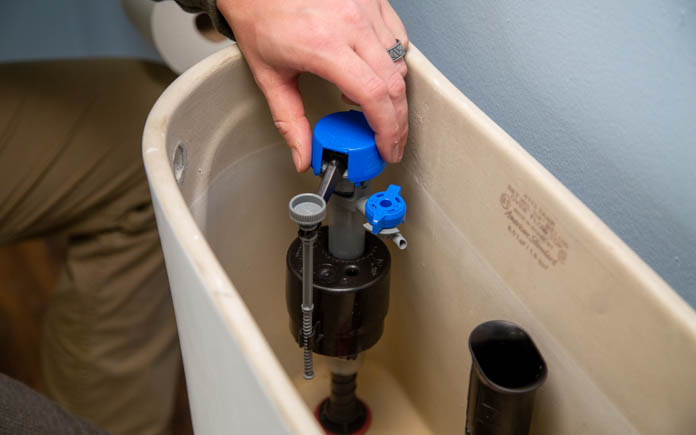
Fluidmaster’s 400H Toilet Fill Valve fixes a constantly running, noisy or slow-filling toilet and is one of the quietest fill valves available. (3 Echoes Content Studio)
2. Your Bathrooms
Toilets are the largest users of water in the home — but some of them are more efficient than others. Look on the bottom of the tank lid, or inside the tank wall, to find the date your toilet was manufactured. Toilets made before 1993 use two to three times the water of new ones.
If you have an older model, consider replacing it with a new low-flush or a dual-flush toilet that can use as little as 1 gallon per flush for maximum water conservation.
If replacing a toilet isn’t in your budget, add a few inches of gravel or sand to a plastic soft drink bottle, fill it with water, screw on the cap, and put it in the tank away from the float and flapper. The increased volume from the bottle reduces the amount of water in the tank, so less is used per flush.
If you notice your toilet refilling periodically when it hasn’t been flushed, it’s a sure sign your toilet has a leak. These leaks can waste thousands of gallons of water if not repaired.
A constantly running toilet, weak or incomplete flushing and a slow-filling tank aren’t just frustrating — they can also increase your water usage.
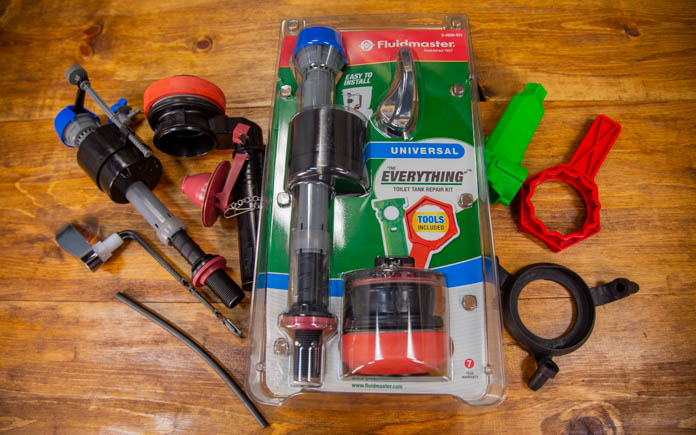
The DIY-friendly kit comes with a toilet fill valve, flush valve with stainless-steel bolts, Tank-To-Bowl Gasket and color-coded tools for the fastest installation possible and, if necessary, a complete tank rebuild. It eliminates the need for extra trips to the store for an unknown part or tool — and that saves time, money and frustration.
To conserve more water, change up your hygiene routine. Reducing time spent in the shower can save 2 to 5 gallons of water per minute, or GPM. Installing a water-saving showerhead will prevent thousands of gallons a year from going down the drain.
To see if you need a new showerhead, put a 5-gallon bucket in the shower and turn on the water. If it fills in less than two minutes, consider replacing the showerhead with a water-saving model that uses two GPM or less.
Finally, leaving the faucet running while you shave or brush your teeth wastes water. Turn the water off while you brush and fill the sink to rinse your razor.
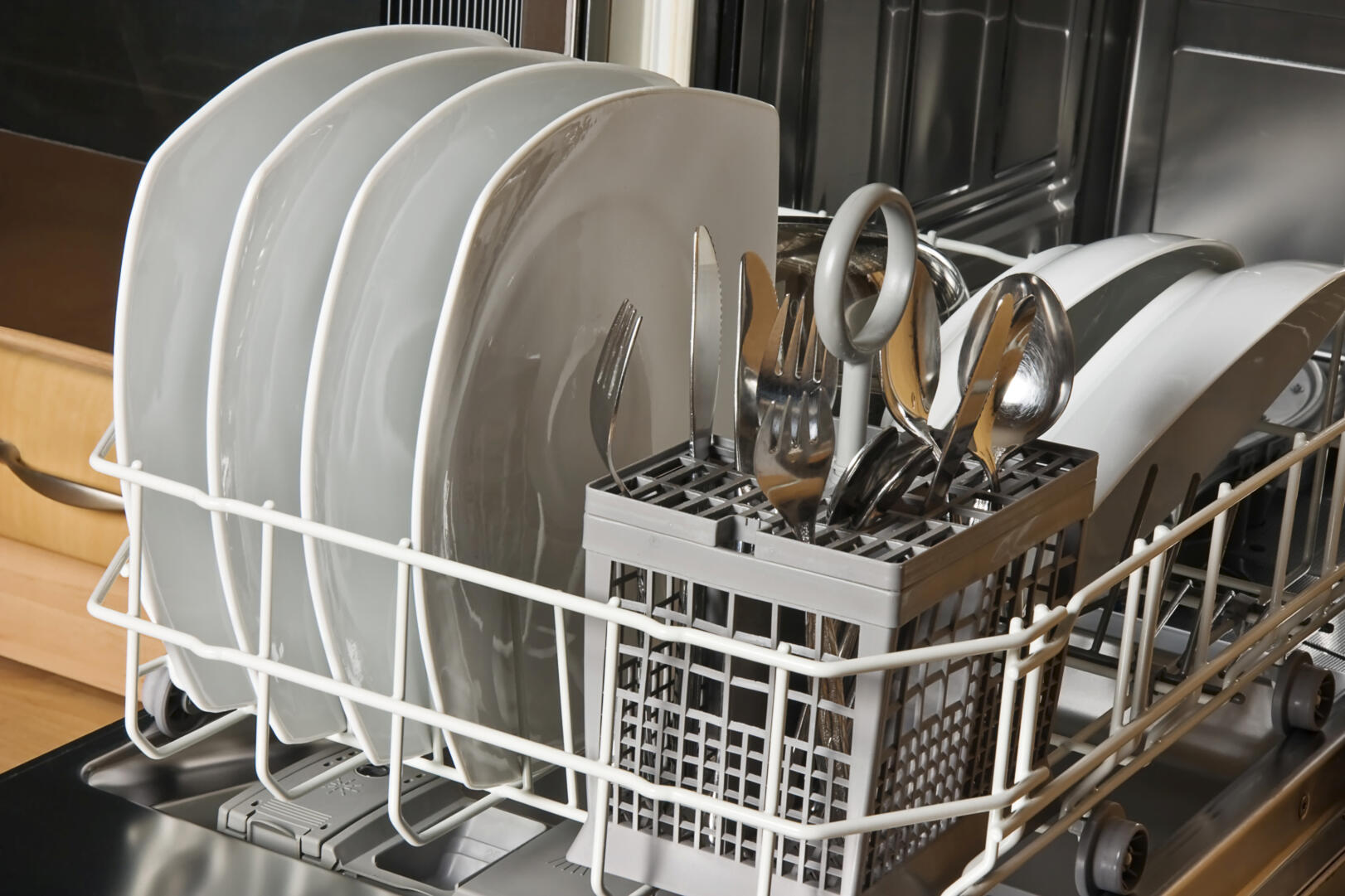
Only running a dishwasher when it’s full can save nearly 320 gallons of water annually. (Irina Drazowa-Fischer, Getty Images)
3. The Kitchen
A few changes in the kitchen can significantly cut down your water usage. For instance, thaw frozen food in the refrigerator overnight instead of using a running tap of hot water — it’s not necessary.
When used properly, a dishwasher uses less water than hand-washing. Run your dishwasher only when it’s full and use water-saving settings for more efficiency. Doing this saves the average family nearly 320 gallons of water annually.
If you hand-wash, fill one side of a double sink with soapy water for washing and the other with clean water for rinsing. Letting your faucet run for five minutes while washing dishes can waste 10 gallons of water.
Also, install low-flow aerators on faucets — these reduce water flow to one gallon per minute or less.
Finally, do you drink a lot of tap water? If so, don’t keep the water running until it cools off for drinking. Instead, fill a pitcher or bottle and keep it in the fridge.
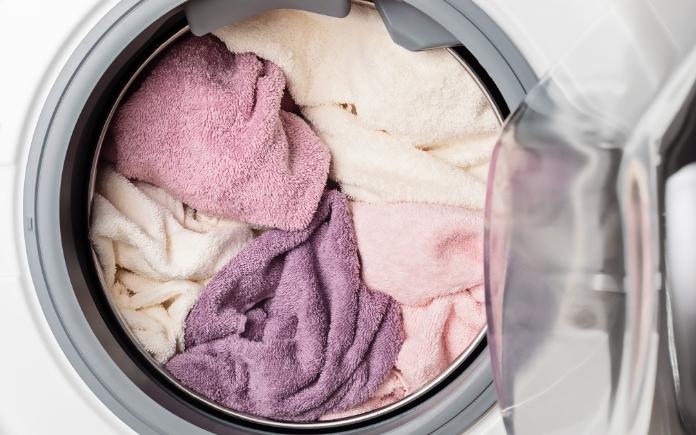
Don’t do laundry until you have enough clothes for a full load. (Oksana Vejus via Canva)
4. Your Laundry Room
Washing clothes accounts for the second-largest water use in the home. Put off doing laundry for the sake of water conservation.
Only run the washer with a full load of clothes and use the shortest cycle for lightly soiled clothing. And if you really want to reduce water use, avoid the permanent press cycle, which uses up to 5 gallons more water per load.
While washing clothes in cold water saves energy by reducing water heating, it uses the same amount of water as warm or hot settings.
Every year, we waste billions of gallons of water to keep our lawns and gardens green. Much of this water is lost due to overwatering, evaporation, poor sprinkler design or lack of maintenance.
Use a drip irrigation system or a soaker hose to reduce water use. These methods deliver water slowly and directly to the plant’s roots, and much less water is lost to evaporation.
If you have a programmable irrigation system, install a rain sensor. It will interrupt the program cycle when it rains, so you won’t overwater your lawn.
Better yet, start at the ground level to keep your water use at a minimum. Choose native and drought-tolerant plants to create a water-smart landscape that’s beautiful and efficient.
Here are some other water conservation options for the yard:
Sweep driveways, sidewalks and steps rather than hosing them down.
Wash the car with water from a bucket, or consider using a commercial car wash that recycles water.
If you have a pool, use a cover to reduce evaporation when it’s not in use.
Following these water-saving tips can reduce household water use by 30 percent or more.
Start simple by changing wasteful habits and fixing leaks, then move up to installing water-saving fixtures and appliances.
Not only will it save money, but you’ll also reduce the needless drain on one of our most precious resources.
Water conservation is fast becoming a priority for many homeowners.
The Environmental Protection Agency estimates that leaks account for 9,400 gallons of water wasted each year. That’s about the amount of water needed to wash more than 300 loads of laundry.
Whether your reason for conserving water is mandated because of a drought or to combat high utility bills, adopt these simple water-saving measures to dramatically cut your home’s water usage.
Here are the 5 hot spots to tackle.
Insulating water pipes with foam helps water heat up faster, so you waste less time waiting for hot water. (nsj-images, Getty Images Signature)
1. Check Fixtures and Appliances
To conserve more water in your home, start at the source.
First, check for leaks in the pipes. A visual inspection can quickly reveal any problems that need repairs.
In addition, read your water meter when no water is being used, then look at it again after a few hours to see if the gauge has changed.
Fixing the leak could be as simple as replacing a faucet washer, or you may discover a more serious problem such as an unseen leak in a pipe.
Here’s a win-win solution: Installing foam insulation on hot water pipes saves both water and energy by providing hot water faster and keeping it hot longer. This reduces the water wasted from running the tap to heat it up.
Finally, when replacing appliances like dishwashers or washing machines, look for models that have earned the U.S. government’s Energy Star rating, certifying they use less water and energy.
Plumbing fixtures such as faucets and toilets that carry the Environmental Protection Agency WaterSense label use, on average, 20 percent less water than conventional fixtures.
Fluidmaster’s 400H Toilet Fill Valve fixes a constantly running, noisy or slow-filling toilet and is one of the quietest fill valves available. (3 Echoes Content Studio)
2. Improve Your Toilets
Toilets are the largest users of water in the home — but some of them are more efficient than others. Look on the bottom of the tank lid, or inside the tank wall, to find the date your toilet was manufactured. Toilets made before 1993 use two to three times the water of new ones.
If you have an older model, consider replacing it with a new low-flush or a dual-flush toilet that can use as little as 1 gallon per flush for maximum water conservation.
If replacing a toilet isn’t in your budget, add a few inches of gravel or sand to a plastic soft drink bottle, fill it with water, screw on the cap, and put it in the tank away from the float and flapper. The increased volume from the bottle reduces the amount of water in the tank, so less is used per flush.
If you notice your toilet refilling periodically when it hasn’t been flushed, it’s a sure sign your toilet has a leak. These leaks can waste thousands of gallons of water if not repaired.
A constantly running toilet, weak or incomplete flushing and a slow-filling tank aren’t just frustrating — they can also increase your water usage.
The DIY-friendly kit comes with a toilet fill valve, flush valve with stainless-steel bolts, Tank-To-Bowl Gasket and color-coded tools for the fastest installation possible and, if necessary, a complete tank rebuild. It eliminates the need for extra trips to the store for an unknown part or tool — and that saves time, money and frustration.
To conserve more water, change up your hygiene routine. Reducing time spent in the shower can save 2 to 5 gallons of water per minute, or GPM. Installing a water-saving showerhead will prevent thousands of gallons a year from going down the drain.
To see if you need a new showerhead, put a 5-gallon bucket in the shower and turn on the water. If it fills in less than two minutes, consider replacing the showerhead with a water-saving model that uses two GPM or less.
Finally, leaving the faucet running while you shave or brush your teeth wastes water. Turn the water off while you brush and fill the sink to rinse your razor.
Only running a dishwasher when it’s full can save nearly 320 gallons of water annually. (Irina Drazowa-Fischer, Getty Images)
3. Make Changes in the Kitchen
A few changes in the kitchen can significantly cut down your water usage. For instance, thaw frozen food in the refrigerator overnight instead of using a running tap of hot water — it’s not necessary.
When used properly, a dishwasher uses less water than hand-washing. Run your dishwasher only when it’s full and use water-saving settings for more efficiency. Doing this saves the average family nearly 320 gallons of water annually.
If you hand-wash, fill one side of a double sink with soapy water for washing and the other with clean water for rinsing. Letting your faucet run for five minutes while washing dishes can waste 10 gallons of water.
Also, install low-flow aerators on faucets — these reduce water flow to one gallon per minute or less.
Finally, do you drink a lot of tap water? If so, don’t keep the water running until it cools off for drinking. Instead, fill a pitcher or bottle and keep it in the fridge.
Don’t do laundry until you have enough clothes for a full load. (Oksana Vejus via Canva)
4. Adjust Your Laundry Room Routine
Washing clothes accounts for the second-largest water use in the home. Put off doing laundry for the sake of water conservation.
Only run the washer with a full load of clothes and use the shortest cycle for lightly soiled clothing. And if you really want to reduce water use, avoid the permanent press cycle, which uses up to 5 gallons more water per load.
While washing clothes in cold water saves energy by reducing water heating, it uses the same amount of water as warm or hot settings.
Every year, we waste billions of gallons of water to keep our lawns and gardens green. Much of this water is lost due to overwatering, evaporation, poor sprinkler design or lack of maintenance.
Use a drip irrigation system or a soaker hose to reduce water use. These methods deliver water slowly and directly to the plant’s roots, and much less water is lost to evaporation.
If you have a programmable irrigation system, install a rain sensor. It will interrupt the program cycle when it rains, so you won’t overwater your lawn.
Better yet, start at the ground level to keep your water use at a minimum. Choose native and drought-tolerant plants to create a water-smart landscape that’s beautiful and efficient.
Here are some other water conservation options for the yard:
Sweep driveways, sidewalks and steps rather than hosing them down.
Wash the car with water from a bucket, or consider using a commercial car wash that recycles water.
If you have a pool, use a cover to reduce evaporation when it’s not in use.
Following these water-saving tips can reduce household water use by 30 percent or more.
Start simple by changing wasteful habits and fixing leaks, then move up to installing water-saving fixtures and appliances.
Not only will it save money, but you’ll also reduce the needless drain on one of our most precious resources.
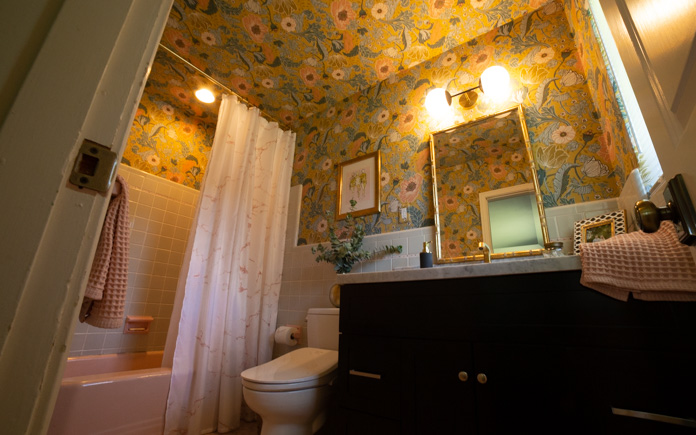
This week, we’re creating a grandmillenial-style bathroom by incorporating modern elements to Chelsea’s mid-century main bathroom.
Chelsea plans to do a primary bathroom addition in the future, so for now, we’re updating this bathroom to accommodate her and her husband, Brandon, while keeping in mind its future use for her daughters.
For this reason, we’re keeping the pink bathtub and tile but introducing some new elements that will tie in well to this grandmillenial-style bathroom.
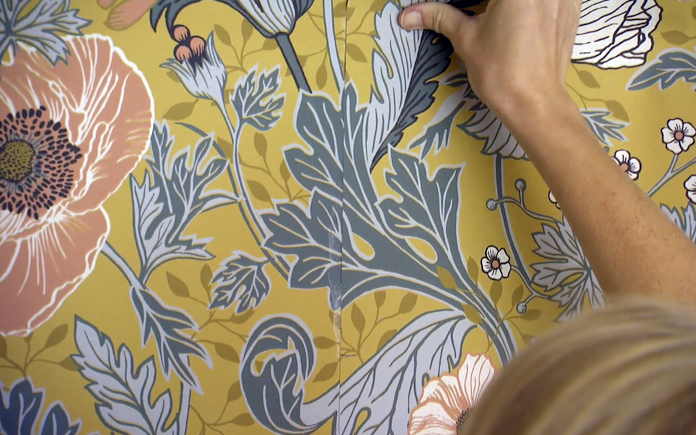
This granny-chic wallpaper pattern is perfect for this grandmillenial style bathroom. (3 Echoes Content Studio)
Hang Wallpaper
When Chelsea first moved into her home, she removed dated the wallpaper in the bathroom. And now, we’ve come full circle and are applying a new, modern-printed paper that will complement the bathroom’s retro elements and complete this bathroom’s modern grandmillenial design.
We’re encasing this bathroom with literal wall-to-wall wallpaper, including the ceiling. This will give this future girl’s bathroom a jewelry-box feel.
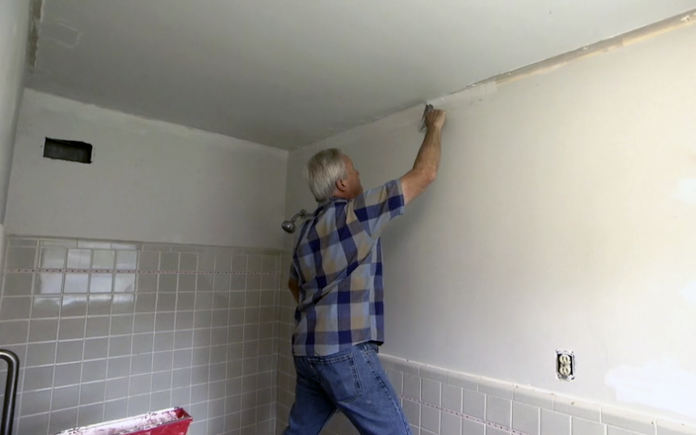
Patching the wall where the ceiling trim once was gives us an even surface for our wallpaper. (3 Echoes Content Studio)
First, we remove the ceiling trim so our wallpaper runs seamlessly onto the ceiling. To fill the spots behind the trim, we apply drywall mud with a putty knife to fill in the gaps left behind.
Next, we clean the ceiling and walls with a mold killer so we have a fresh slate for the new wallpaper.
Then, we hang the wallpaper. Here’s a step-by-step guide (link) on how to do it.
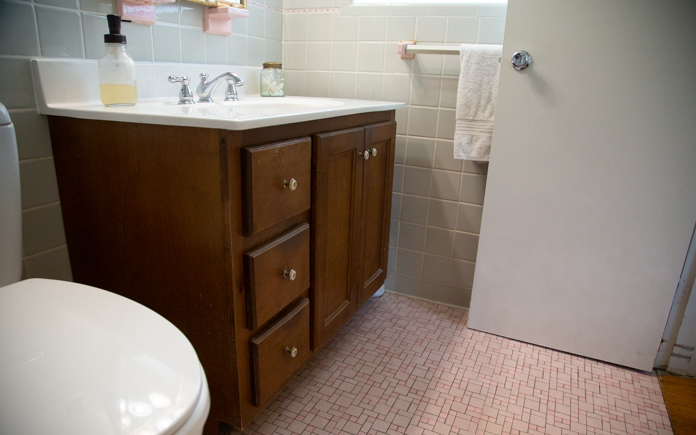
Encasing the bathroom with wallpaper creat a jewelry box feel. (3 Echoes Content Studio)This outdated vanity offers little storage space and stands out in a bad way. (3 Echoes Content Studio)
Replace Vanity
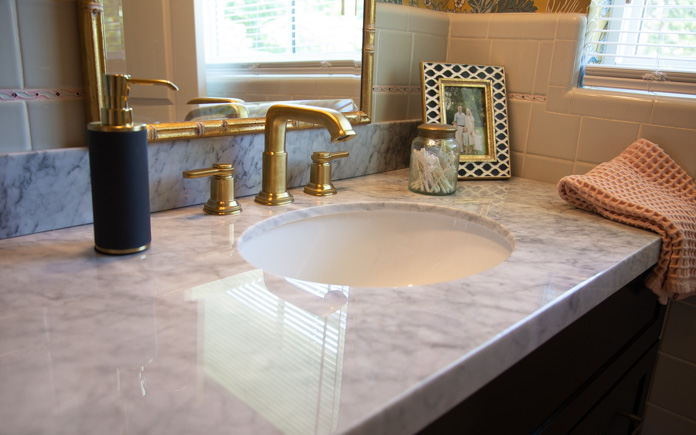
This vanity isn’t original to the house, so it looks out of place in this bathroom. Plus, it’s a little too short and narrow. So we’re replacing it with a more functional, modern one that still works with our grandmillenial style.
To replace the vanity, we remove the toiletries stored inside and disconnect the sink plumbing. This old vanity wasn’t connected to the wall, so a firm tug is all that’s needed to detach it.
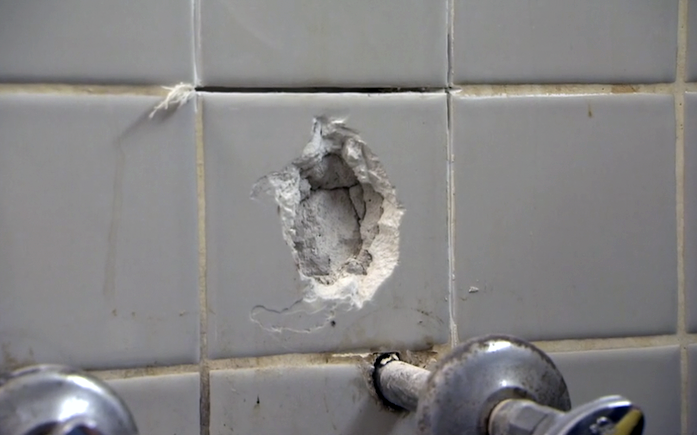
The wall tile fused to the wall underneath, making it impossible to remove whole pieces. (3 Echoes Content Studio)
Before we install the new vanity, we try to salvage some of the wall tiles behind it to use for replacement tiles on the wall behind the ceramic towel holder. Unfortunately, the tile is not coming off in one whole piece.
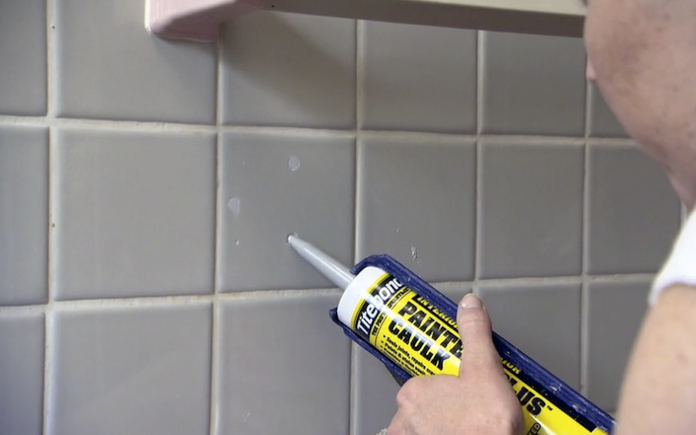
Grey painter’s caulk camouflages the holes left behind from the grab bar. (3 Echoes Content Studio)
We’re disappointed we can’t remove the towel bar, but when in the end, it’s still functional. The metal grab bars, however, can be removed. We remove the screws and fill the holes with grey caulk that’s a near match to the tile color.
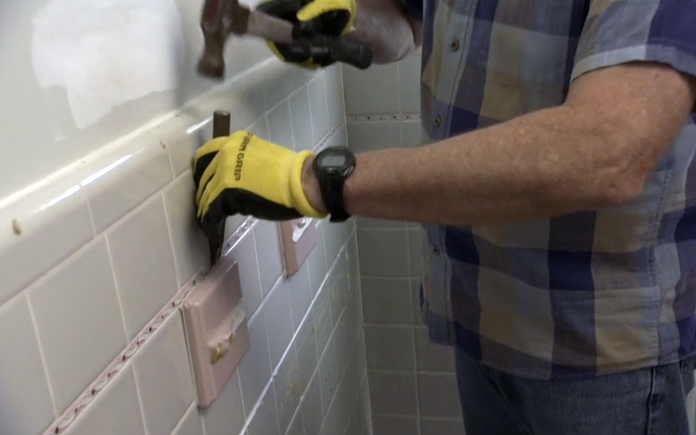
A chisel and hammer easily knock off these ceramic holders so we have a flush surface for our vanity mirror. (3 Echoes Content Studio)
We knock off the ceramic soap and toothbrush holders above the sink so the mirror can lay flush above the vanity.
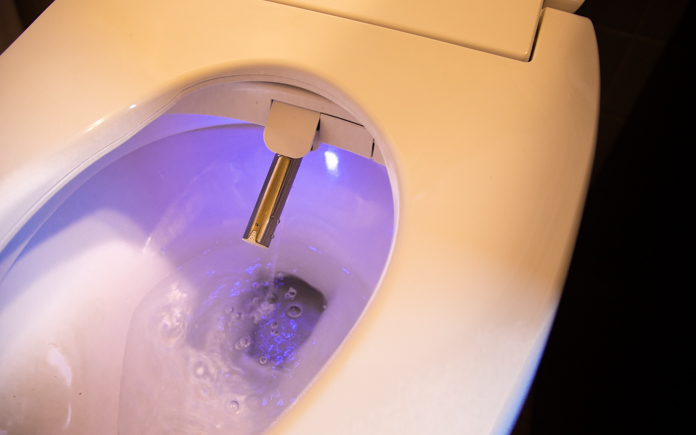
The toilet in the bathroom is the only thing that’s been updated this century, so we keep it. However, to add some extra pizzazz, we install a bidet.
This page contains affiliate links. If you purchase a product from these links, we will earn a small commission at no additional cost to you.
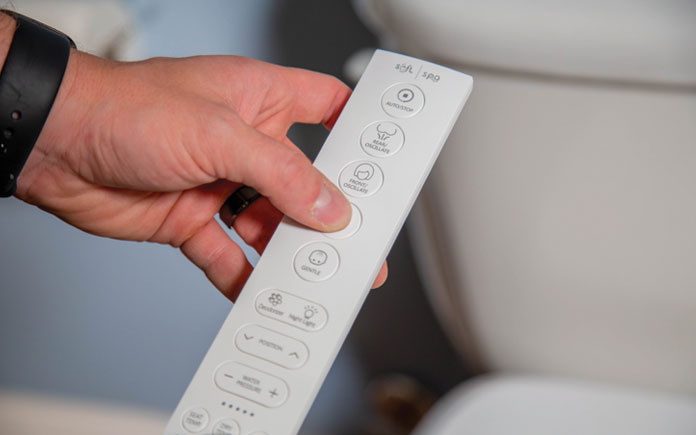
We chose theFluidmaster Soft Spa Electronic Bidet Toilet Seat. It features an integrated water heater, adjustable water pressure and wand positioning, as well as a heated seat and warm air-dryer. Plus, it has a remote, so you can face forward to use it, instead of reaching behind to make adjustments.
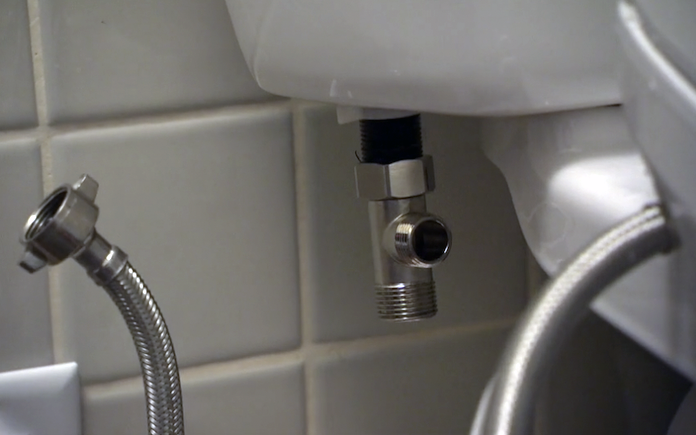
A T-valve connects to the existing water line that supplies the water to your bidet toilet seat. (3 Echoes Content Studio)
The bidet requires a water line, so we shut off the water at the toilet to install a T-valve so both the toilet and the seat can get water from the same source.
Chelsea and Brandon’s bathroom is 65 years old. At that age, there’s some baggage like the pink tub and the lack of ventilation.
The vanity was newer than that, but it really didn’t fit the style of the room and it lacked character.
But now, the room is overflowing with character and grandmillenial style. The wraparound wallpaper not only creates the jewelry box feel that Chelsea was after it also makes the pink tub look intentional.
The vent fan makes the space more functional, and the larger vanity makes it easier to use. Plus, its black finish complements the room style, and the new bidet toilet seat elevates the whole room to a spa-like experience.
In the 17th century, French furniture makers invented the bidet, a common bathroom fixture in the Arab World, southern Europe and West Africa. Though North Americans have resisted the innovation, more U.S. residents have embraced it, particularly during nationwide toilet paper shortages.
Now, bidets have evolved from emergency personal hygiene alternatives to just one more feature in a luxurious bathroom.
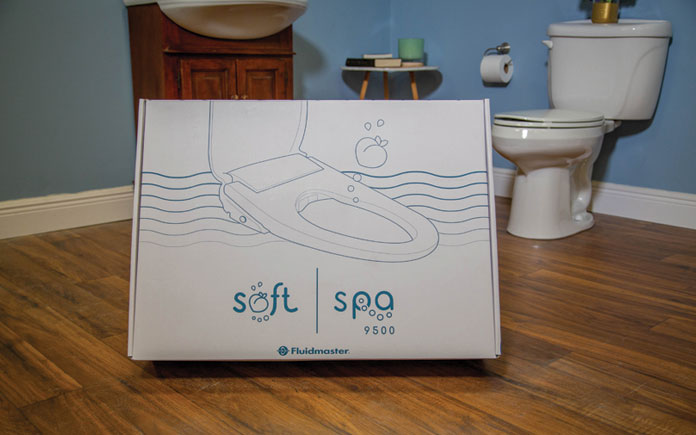
Some bidets — such as Fluidmaster’s Soft Spa 9500 — come with remote controls, providing easy access to personal hygiene.
What is a Bidet?
A bidet’s primary purpose is personal hygiene. While most people use dry toilet paper, a bidet offers a wet alternative.
Bidets can be freestanding, separate fixtures; toilet seat replacements with jets; or handheld attachments that spray water.
Regardless of the type of fixture, each has the same function: to provide the best personal cleansing experience.
Bidets also have environmental benefits, reducing the need for toilet paper and stress on forests. In fact, North Americans annually use 36.5 billion rolls of toilet paper, so switching from dry to wet cleaning methods could save 15 million trees, according to Scientific American.
Retrofitting a toilet with a bidet seat is a space-saving alternative to installing a separate, freestanding fixture.
It offers more luxury than a traditional bidet, without the hassle of replacing your toilet.
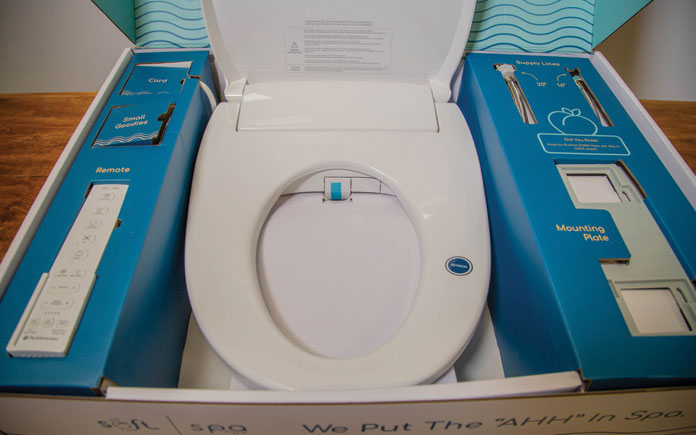
The Soft Spa features adjustable water pressure, wand positioning and temperature, as well as a heated seat and warm air-dryer. It even includes a remote control and easy-to-follow instructions.
Fluidmaster’s Soft Spa 9500 comes with everything to replace your toilet seat with one that doubles as a bidet.
If you’re new to bidets, no problem. Soft Spa’s Gentle mode is perfect for even the most sensitive users.
And if you’re worried about the maintenance involved, a self-cleaning wand saves you from extra work and guarantees a superior clean.
So, you can lounge in luxury, and save on elbow grease!
You would think that something you use every day would get regular maintenance to ensure its optimal performance.
But in the case of the toilet, most of the time, you’d be wrong.
People take toilets for granted. But our friends at Fluidmaster want to help you transform this lowly fixture by upgrading your toilet technology.
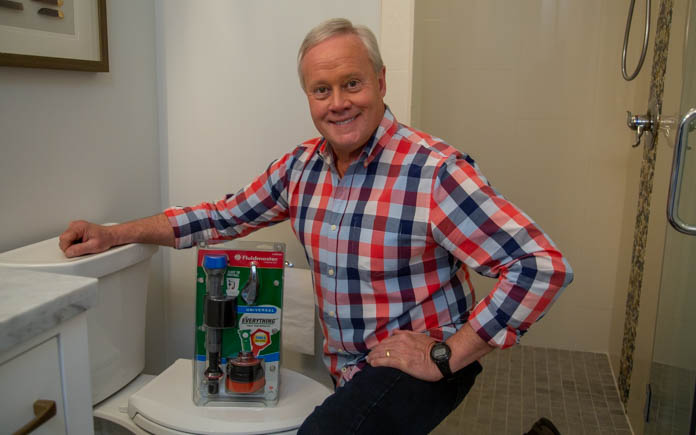
Because you spend a lot of time there, you need the toilet to work properly. So Fluidmaster developed the Everything Toilet Tank Repair Kitfor the most complete solution to quickly repair your toilet.
Whether your toilet leaks, makes noises or constantly runs, you can solve the problem with this kit. It includes a fill valve, adjustable flush valve, tank-to-bowl gasket, adjustable flapper dial, color-coded tools and stainless steel hardware.
The kit is designed to work with every toilet type; it comes with step-by-step instructions and installation tools.
That way, your toilet is ready whenever you need it!