While no one can fully predict what the future will hold, interior designers do have a pretty good sense of what to expect when it comes to the kitchen trends you’ll see in 2022. It is, after all, only 21 days away! On that note, I spoke with 12 pros who shared what you can expect to see making major waves next year, which might be timely if you’re considering a full renovation or DIY project to zhuzh up your space. There’s plenty of good news coming your way if you’re a color lover — particularly if you can’t resist shades of green!
1. Mesh cabinet doors (and other English influences)
“[Mesh cabinet doors] are a beautiful and modern alternative to the traditional glass doors that you see in more formal kitchens. They bring in a completely different texture to the kitchen palette and are a welcomed surprise. With different levels of openness, they can either hide the cabinet interiors or highlight them. This is something we’ll be proposing to our clients this year for sure!” —Designer Heather DiSabella of Heather DiSabella Design in Washington, D.C.
“As in other areas of interior design, we are seeing English influences, such as metal mesh glass front cabinets, cupboard latches, exposed hinges, and cremone bolts.” —Designer Kerri Pilchik of Kerri Pilchik Design in Ridgewood, New Jersey
“Clients are moving away from the all-white kitchen, or, if requesting a white kitchen, they’re wanting to add interest by incorporating unexpected details that make the space uniquely their own. For our Brooklyn Heights project, the client was not ready to embark on a full renovation, and so we opted to glam up and refresh the space by installing a Gaultier wallpaper as an accent wall. It visually fills the space in a much grander way, especially since it’s viewed from nearly all angles in the pre-war apartment.” —Designer Isabella Patrick of Isabella Patrick Interior Design in New York City
3. Antique kitchen islands
“Sometimes kitchens have odd shapes that won’t fit a standard kitchen island, so a workaround that looks amazing and is also incredibly functional is to use a cool piece of antique furniture, such as a rectory table, which is higher than a standard table. The table should be about counter-height, but if you can’t find a table that works, you can install locking casters to raise the height. This provides a space that can be that can be used for extra food prep as well as pull-up seating. Using a table instead of a solid island also has the added benefit of adding a sense of airiness to the space.” —Designer Amy Sklar of Amy Sklar Design in Los Angeles
4. Open shelving — or a solo, super-long open shelf
“Open shelving in kitchens is not necessarily a new trend, but it’s one that still offers some advantages, especially in smaller spaces. My kitchen is super-tiny and had super-ugly upper cabinets. Removing the hulking soffits and uppers opened up the space dramatically. Bonus: I can easily access stuff, and it gives me an opportunity to display my prettiest tableware. We know the jury is still out on this trend, but removing my upper cabinets and installing open shelves was an effective — and relatively inexpensive — solution for me.” —Designer Casey Stallings of Lime Tree Homein St. Louis, Missouri
“Recently, people have been opting for one continuous shelf on a main wall. It’s a very minimalistic, clean look, but the design boundaries one can push with this can make for a beautiful kitchen.” —Designer Ashley Danielle Hunte of Style Meets Strategy in Boston
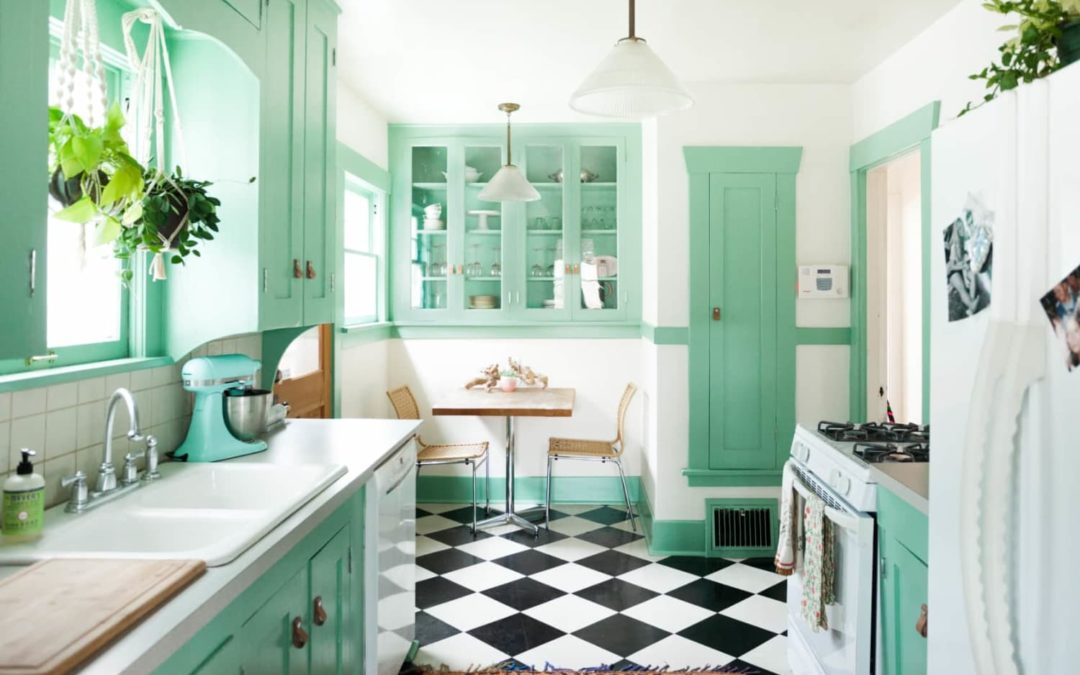
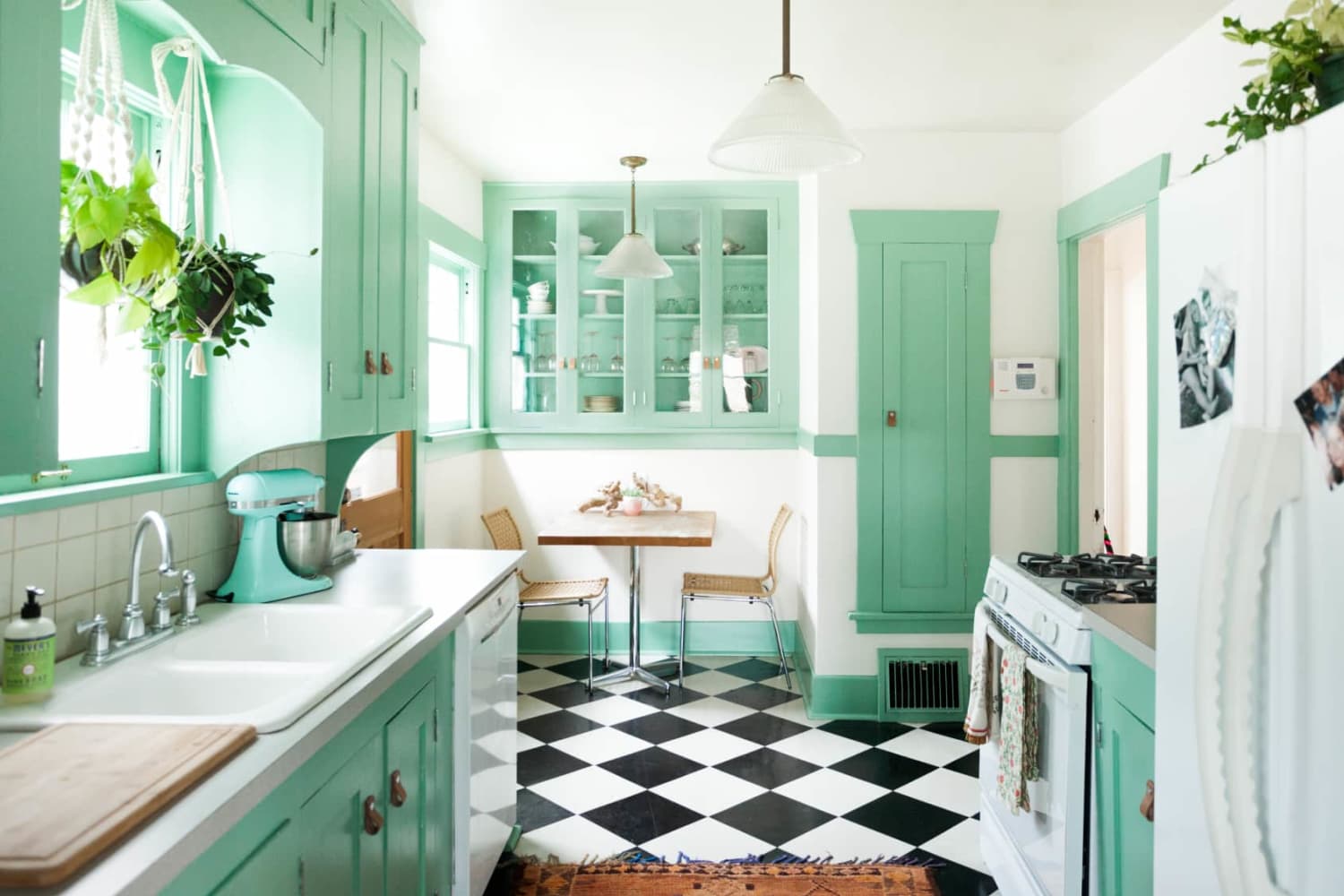
“Green will be a top choice for kitchen designers in 2022. It’s definitely not a fad and is here to stay, especially with it being named color of the year!” —Designer Ashley Colombo of Ashley Colombo Interiors in Chicago
“Maximizing any room’s functionality — especially a kitchen — is key. I’m a huge fan of working an appliance garage into kitchen designs to keep clutter at bay. I also love the idea of a pull-out counter to add more workspace when needed.” —Designer Elaine Burns of Pistachio Interiors in New York City
7. Little to no cabinet hardware
“I definitely see that in contemporary designs there’s a move to little or no cabinet hardware. Instead, we see tab pulls that are barely visible or notches in the side of doors as finger pulls. This look lends itself more to the organic and post-modern kitchen aesthetic, so as to not have too much of a metallic appearance that could interfere with the organic nature. If there’s hardware that’s visible, it’s trending toward a flat black, iron, or brushed steel look.” — Designer Jodi Janzen of Janzen Design in San Francisco
8. Sleek, minimalist surfaces and lighting
“We’re seeing fewer hanging pendants over islands — clients are gravitating toward a more clean, modern look of just recessed lights. And no outlets on the backsplash [is also a trend]. We are now installing plugs below the upper cabinets so that the backsplash is uninterrupted.” —Designers Sharon Falcher and Sherica Maynard of Interior Design by S&S in Atlanta
“After volumes of white kitchens hit the stage over the past few years, clients are requesting a more personal identity in their kitchen space. The kitchen is the fulcrum of the family home and should better reflect the personality of the residents and their unique settings and lifestyles.” —Designer Patti Hoech of Patrician Design in Albuquerque, New Mexico
“White kitchens are safe, but if you like color, then embrace it! I love a dusty green or blue kitchen! I think it immediately creates ‘wow factor,’ and deep hues give a classic feel that never feels overly trendy.” —Designer Kate Lester of Kate Lester Interiors in Los Angeles
10. Mixing metals, countertop materials, and cabinet colors
“Today, kitchens have become much more of a ‘living room’ kind of space with exotic marble counter tops, bespoke cabinetry, artisan-made lighting, and plumbing fixtures in ‘living’ finishes that patina over time like a fine Chippendale high chest… there is a penchant for mixing metals. An unlacquered, brass gooseneck faucet looks beautiful next to steel hanging shelves or steel-framed doors. Mixing up different counter tops is also a trend we’re likely to see more of. A perimeter countertop in one stone and an island countertop in another. A kitchen island in a completely different color can be a beautiful way to punctuate the center of the room.” —Designer Elizabeth Kannan of Elizabeth Kannan Interior Design in Bethesda, Maryland
We independently select these products—if you buy from one of our links, we may earn a commission.
There are a few must-haves when it comes to hosting: a relaxing playlist, a versatile menu, a good bottle of wine, and — my favorite part — ample candlelight. There’s just something about that soft glow that seamlessly sets the mood for an epic event — not to mention dinner by candlelight is a great way to hide the fact that you didn’t have time to clean up the living room before company showed up.
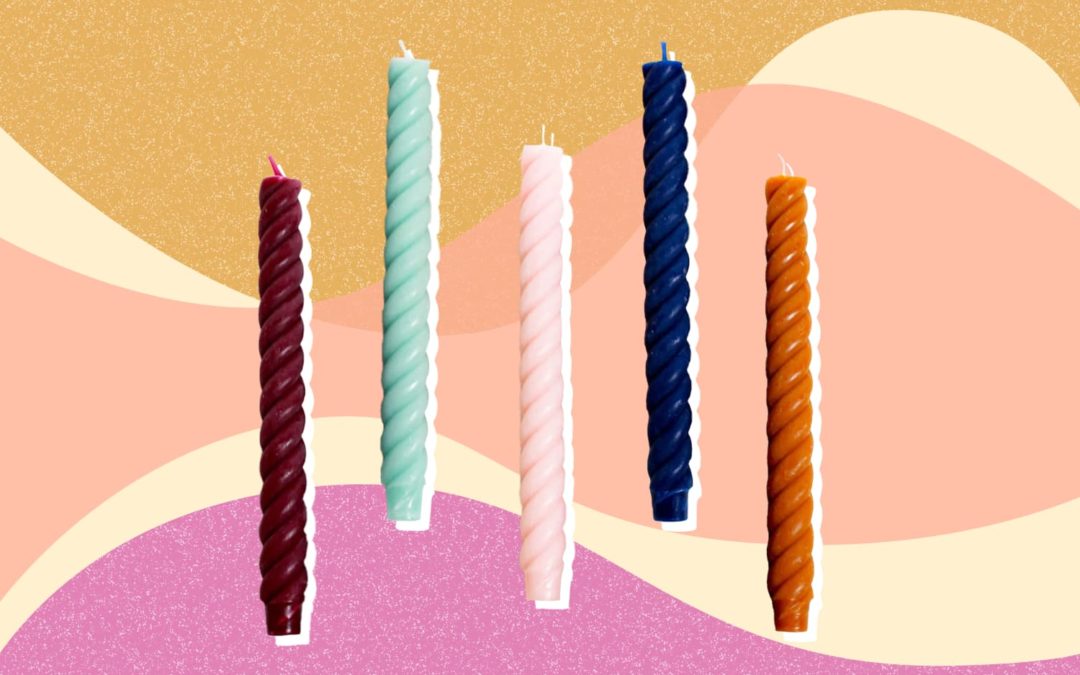
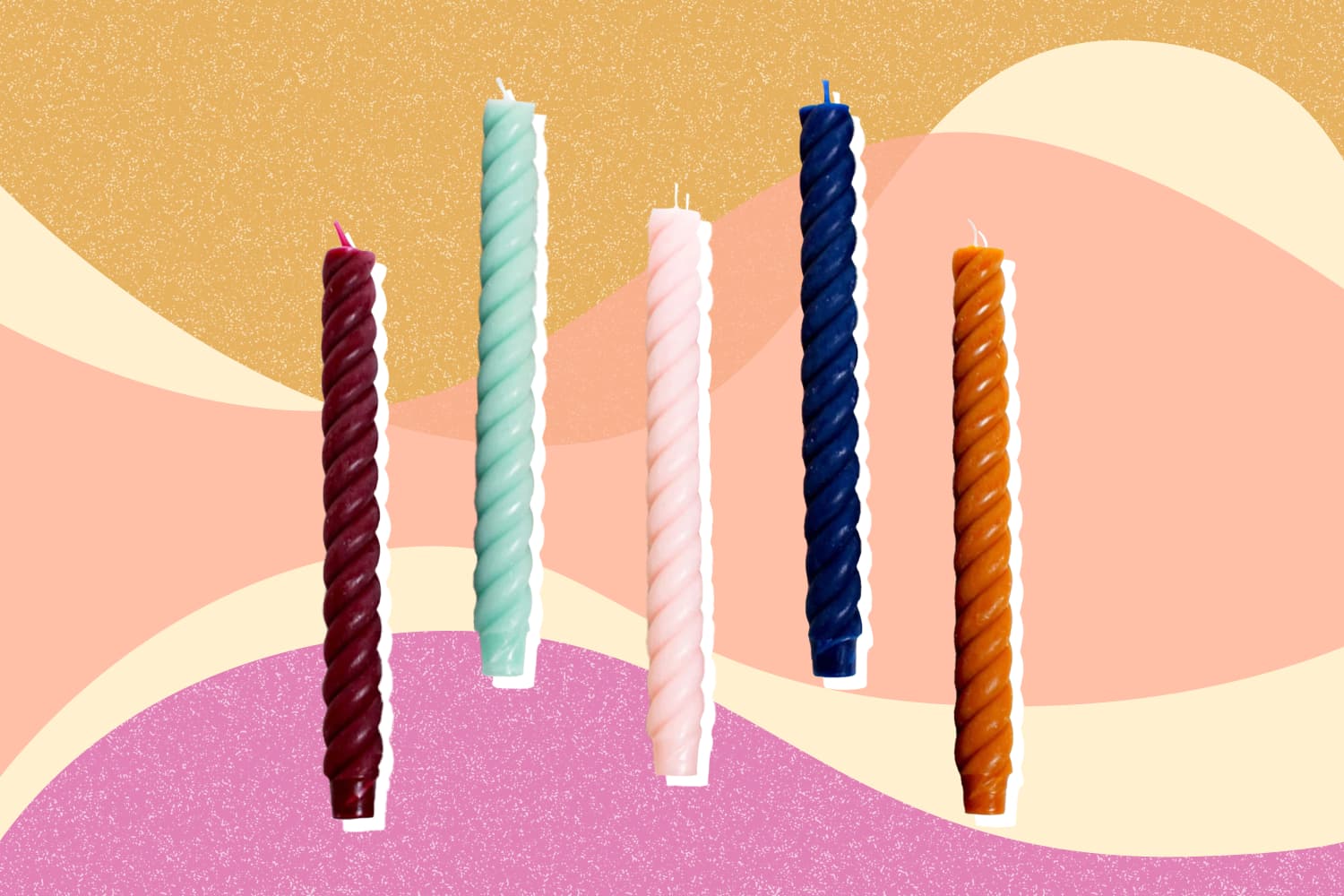
Traditionally, most tablescapes are decked out with tapered candles or pillar candles, and while both of those options are stunning, there’s a new kid on the block that I’m pretty excited about: twisty candles.
Basically, they’re exactly like they sound — candle forms that take the traditional taper candle shape and, well, give it a twist for a fresh shape that’s subtle, yet eye-catching. They’re a great way to add one more layer of personality to your party tablescape or enliven your console table or open shelving with an added bit of personality. The best part? They’re everywhere these days (trend alert!), so you should have no problem finding a color or shape that suits your style. (They’re a great candle gift, too!) Check out some of our favorites below.
Laura Fenton is the author of The Little Book of Living Small. She writes about home design and sustainability, and is a regular contributor to Apartment Therapy. Her work has been published in Better Homes & Gardens, Eater, New York Magazine, and Real Simple.
We independently select these products—if you buy from one of our links, we may earn a commission.
There’s just something about drip candles. Maybe it’s the way the wax spills over the holder, making you feel like you’re in an old Parisian cafe before the time of electricity. Maybe it’s the way those drops bead and pool messily, when you’re blissfully unaware of how the hours have flown, reconnecting over a meal with a friend. Maybe it’s the way warm candlelight makes you drop your voice and speak in hushed tones, like you’re in a revered place or have a secret to tell that you don’t want anyone else to hear. Plain and simple, drip taper candles create a vibe; at their core, they’re really a series of visual paradoxes: at once eclectic yet super-traditional, predictable yet spontaneous, and sculptural yet pliant. For these reasons — and just the preoccupation with anything but basic candles these days — they’re coming back in a big way once again. But they actually have somewhat surprising and humble beginnings.
Drip candles never “went out of style” per se; maybe you ‘90s kids out there remember them from the dELiA*s catalogue or Spencer’s like-novelty stores at the mall, and the groovy twists and turns of colorful, dripping tapers in wine bottles were 1970s tabletop fixtures, too. Purposefully drippy tapers are just becoming mainstream and marketable again, and they’re moving off the dining table in some cases and onto mantels and smaller side tables. Urban Outfitters sells a rainbow set (as seen below), Candle Stock has a 25-pack to help you start a “candle mountain,” and you can even snatch up a pair at your local Hobby Lobby. On the luxe end of the market, Diptyque sells a very limited-edition, drip-inspired candleholder collection, with pieces crafted out of solid bronze by artist Osanna Visconti.
Obviously, candles have dripped for centuries, whether in old stone cathedrals, historic temples, or early Victorian houses. The “drip” of the past though wasn’t so much an aesthetic choice but a function of a given candle’s wax and wick composition, and all taper candles, to some extent, do drip. These days though, “the drip” can be a very conscious choice and usually means the wax used has a lower melting point so it burns faster, resulting in drips that hardens into “waxicles” that will collect in a holder or bottle.
So when, exactly, did drippy candles become a style? Apparently, it all started with Italian restaurants, Chianti wine, and something of a happy accident. “The trend of using the bottle as a candle holder first came about during WWII, when Italy was struggling as a war-torn country, and its people turned hardship into functionality,” says Lorena Betanzo, who works for Santa Margherita wines in the United States. “It was more economical to repurpose a wine bottle as a candle holder not to mention there was an extreme scarcity of resources.” Like other nations in the late 1930s and 1940s, Italy was on strict rations to funnel all its resources into the war effort, and since most civilians didn’t have access to common products anymore, they became creative with their limited materials. Italian restaurant owners took a look at the empty Chianti bottles in their kitchens and had an idea. They could easily repurpose them into candle holders, and thanks to the bottle’s broad base and straw basket, the wax wouldn’t pool on the table.
The unique design of Chianti bottles dates as far back as the 14th century. “The design was cultivated through a manufacturing mishap that took place during ancient glass blowing crafting, where a misshaped bottle was accidentally formed, creating a vessel that could not stand upright,” says Betanzo. “In efforts to correct this, glassmakers created a straw basket to keep the bottles upright during transportation.” The Chianti bottle was then cheekily named “fare fiasco,” which roughly translates to “screw up.” Leave it to the Italians, often heralded for their innovation in the arts, to turn a “fiasco” into a design moment.
But how exactly did drippy candles become the candle of choice in Italian restaurant Chianti bottles? Some think it might have been a bottom-dollar choice. “Drip candles are also economical because they are designed to burn completely down,” says Betanzo. Others believe it also could have been something of an aesthetic decision already deeply rooted in Italian culture. “Some might also argue that drip candles are inspired by Italian monasteries, and keeping their faith is a core piece of their culture,” Betanzo shares.
Whatever the reason for their use, deliberately drippy candles likely then made their way stateside upon the return of the G.I.s posted in Southern Italy during the war. In between fighting Mussolini, these American soldiers ate pasta, marveled at the taste of herbs native to Sicily, and maybe even drank Chianti. When they came home to the ticker tape parades celebrating the end of the war, they brought cultural learnings back from their time abroad. Many Italian American soldiers brought recipes back home to their family restaurants and helped make Italian food popular across the U.S. Before the war, if one didn’t live near an Italian American hub like Boston or New York City, one didn’t eat Italian food. The war changed that, and with the boom of oregano and pizza, drip candles in Chianti bottles followed. “For many GI’s, Chianti was the first introduction to European wine, and after the war, many of the servicemen craved the meals they experienced abroad,” Betanzo says.“These traditions were also brought over to the U.S. from the influx of Italians who emigrated post-war and settled in the country. They opened restaurants and bistros that highlighted the romanticized Italian culture — implementing the Chianti candle holder as a staple when it came to decor and lighting.”
If you want the same melted look of an old school Italian restaurant tableau, then it’s best to buy tapers described as “drip candles” specifically (if you want the more psychedelic, late 1960s or early 1970s look shown just above, shop for drip candles with a “rainbow” or “color” label on them). “Otherwise, standard candles are produced to stay neater with minimal drips,” says Darcy Miller, author, entertaining expert, and owner of Darcy Miller Designs. “Drip candles will melt into drips on their own. Over time, as the candle melts, the drips get more layered.” You can also DIY a drippy look from regular tapers, though the process can be a bit messy. “As the candle is melting, carefully lift the candle or candle holder it’s in, and angle it to about 45 degrees so that the wax drips down the side,” Miller explains. “Then do the same around the entire candle, creating drips all around so that the wax melts down the sides rather than just settling on top.” Regardless of how you achieve your drip, remember to always be safe when dealing with an open flame (particularly one that’s designed to burn quickly and pretty much all the way down to the wick).
Miller thinks drip candles might be having a moment again because of the pandemic. “People are spending more time at home, and candlelight makes a familiar space feel more special, making dinner feel like an event,” she says. “Opening a nice bottle of red wine and lighting a candle signals that you’re not just eating a meal — you’re enjoying an occasion.” On top of that, with their “waxicles,” drip candles have a unique look and are relatively inexpensive. “People are always looking for new decor ideas that are easy, affordable, and can be made with things you have around the house,” she explains. Plus, whether you put these tapers into candle holders that can accommodate the drips or opt to set them in a finished bottle of Chianti or otherwise, seeing your drippy table centerpiece just might make you smile. “The wax-covered bottle is like a memory candle, a souvenir of the fun evenings you spent in its glow,” says Miller.
Ultimately, drip candles can help set a romantic mood, make any moment just a little more special, and provide a little bit of mesmerizing “entertainment” as you watch the drama of dripping wax unfold to become a statement-making piece of decor in a simple bottle or candle holder. Find me a person that doesn’t want those three things and on the cheap to boot!
Marlen is a writer first, vintage hoarder second, and donut fiend third. If you have a passion for finding the best taco joints in Chicago or want to talk about Doris Day movies, then she thinks an afternoon coffee date is in order.
No one can predict what the future will hold, but designers do have a pretty strong sense of what to expect when it comes to trends that will be making waves in living rooms come 2022. I spoke with nine design pros, who each chimed in regarding the looks and techniques you’ll definitely want to consider incorporating for an on-trend living space next year.
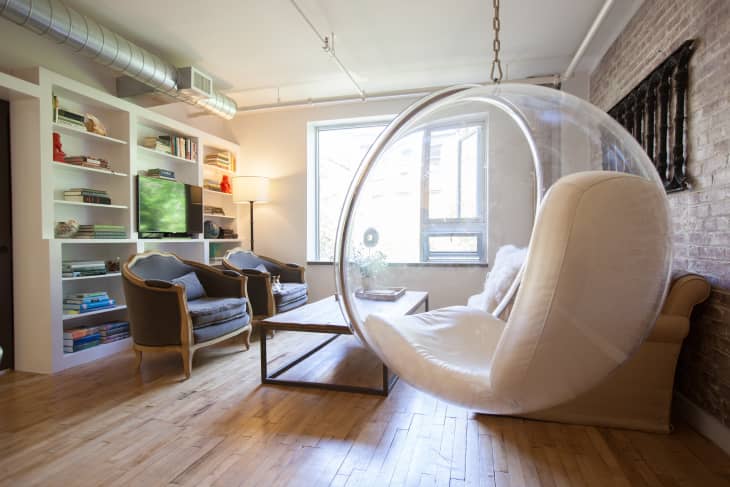
Curvy and organic-shaped furniture
“I think this is a natural evolution from the current mid-century modern revival trend that introduced us to iconic sinuous pieces such as Jacobsen’s Egg Chair. We are now going to see Vladimir Kagan-inspired curvilinear sofas.” —Designer Charles Almonte, founder of Charles Almonte Architecture and Interior Design in Silver Spring, Maryland
Multifunctional, airy spaces
“There’s been so much focus on health and well-being that I think our homes will continue to reflect that in the use of natural materials, plants — and, generally [designing] light and airy spaces. And, because we’ve been home more than ever before, multifunctional spaces are key to handling the myriad of activities we do at home these days.” —Designer Maryline Damour, principal at Damour Drake LLC in Kingston, New York
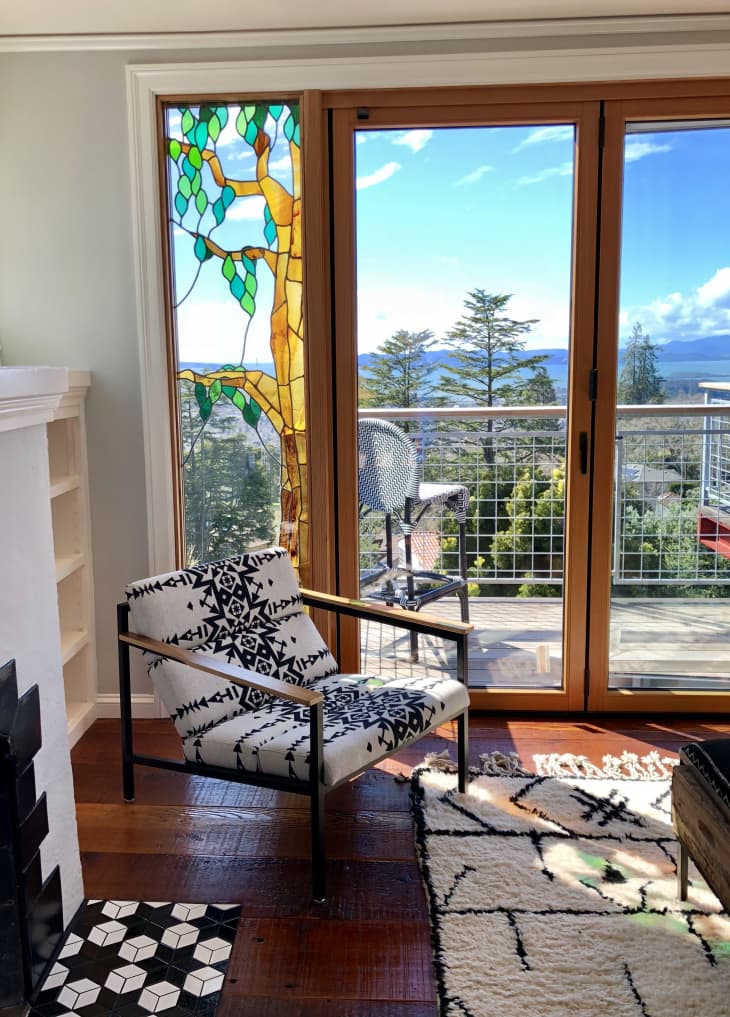
Bringing the outdoors in with natural touches
“After being cooped up in our homes during the pandemic, I think we will see more of the ‘bringing the outdoors in’ concept. Large living room doors, windows, or panoramic doors will be a consideration for interior architects.” —Designer Charles Almonte