Need ideas to turn your boring bathroom into a spa? These simple changes can transform any bathroom from a routine stop to a serene sanctuary!
If you can, allow just natural light in your bathroom. (Poravute, Getty Images)
1. Get the Right Lighting
Our first spa bathroom idea is one of the easiest, adds ambiance and can make a drastic difference: Change up the lighting!
If possible, only let natural light in, but if your bathroom lacks enough windows to do that, replace bulbs with a softer white tone for a more relaxing feel.
For a more far-out spa experience, try blue lighting. A preliminary study from PLOS ONE journal found that blue lighting accelerates post-stress relaxation faster than traditional white lighting.
For a more subdued look, light a few candles. Pick unscented candles purely for the lighting or find a fragrant one that relaxes you.
Find your inner peace with the right playlist. (yipengge, Getty Images Signature)
2. Add Some Soothing Tunes
Listening to music can lower your heart rate, improve your sense of well-being and even reduce burnout, according to PsychCentral. That’s why setting the tone is No. 2 on our spa bathroom ideas list.
Most professional spas lean toward music inspired by nature to put their clients at ease. Others play classical tunes heavy on string instruments.
However, this is your bathroom, so choose whatever music helps you unwind! Play your tunes on a Bluetooth speaker or put on some headphones for a secret retreat.
Inhale pleasant aromas and exhale any stress. (matka_Wariatka, Getty Images)
3. Infuse the Air With Essential Oils
Aromatherapy has been used for centuries to improve physical and mental well-being. The practice dates back to ancient Egyptians burning incense made from aromatic woods, herbs and spices.
Many people view having a spa day as a healing experience, so essential oils — naturally — make it on our list of spa bathroom ideas.
There are dozens of essential oils but these are the ones you’ll want for a destressing spa day, according to Healthline:
Get an oil diffuser and take in a deep breath. You’ll instantly feel like you’re at a professional spa.
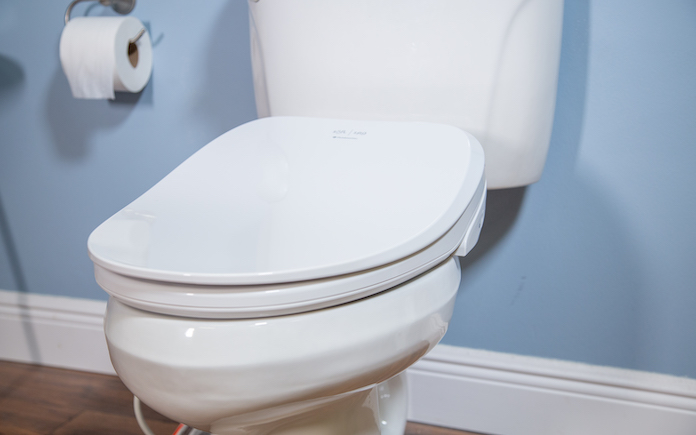
Fluidmaster’s Soft Spa Electronic Bidet Toilet Seat can be retrofitted to any toilet seat, so you don’t have to buy a new toilet. (3 Echoes Content Studio)
4. Get Bathroom Bliss With a Bidet
Want to up your self-care routine and pamper yourself every day? No spa bathroom ideas list would be complete without this one: install a bidet!
Soft Spa features an integrated water heater, adjustable water pressure and wand positioning, as well as a heated seat and warm air-dryer.
You can even personalize your pampering with different pressure settings. Gentle mode, with low water pressure, is available for users with sensitive skin.
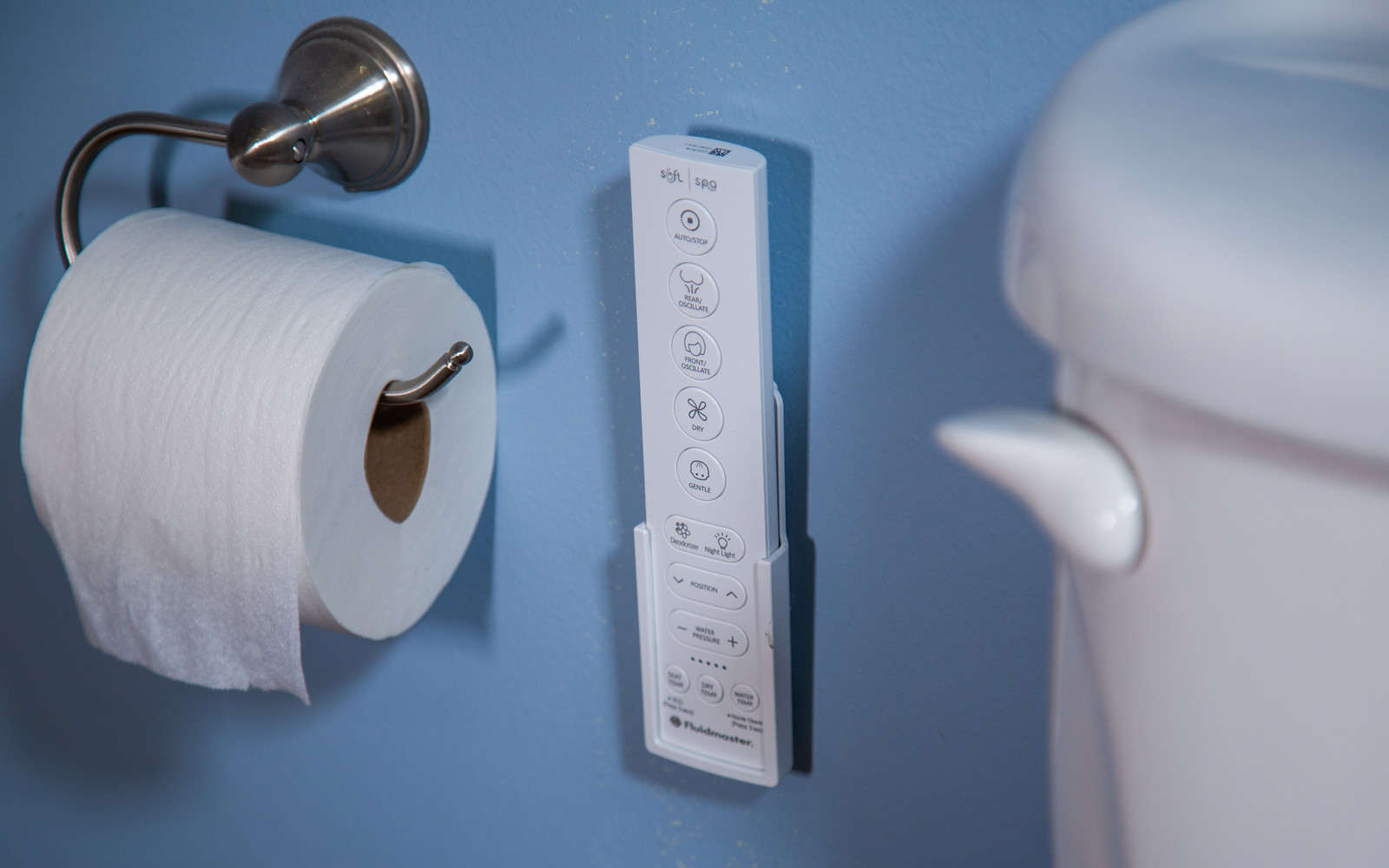
Old-fashioned bidets require users to straddle them or reach behind for adjustments. Fluidmaster’s Soft Spa has a remote control for added comfort and convenience. (3 Echoes Content Studio)
Best of all, this bidet makes self-care smart. Its included remote is a game-changer for people who use freestanding bidets with water controls on the back.
Old fixtures — which some people still use — require users to straddle and face the controls, or reach behind to make adjustments. In fact, bidet is French for “pony,” referring to this common position.
Conversely, Soft Spa’s remote control allows you to face ahead, providing greater comfort and freedom, so you can lounge in luxury.
A new showerhead can make all the difference each morning. (nikkytok, Getty Images)
Want to create the ultimate steam room experience? Upgrade your shower!
No, you don’t have to replace the surround or do anything too pricey. Just replace your showerhead for an at-home luxury spa experience every day.
Find a high-pressure showerhead to help ease tense muscles, or try this two-in-one shower head that will make you feel like you’re rinsing in a rainforest.
Continue that rainforest shower feeling when you step out of the shower by laying down a bamboo floor mat. These mats look luxurious and feel great underfoot.
Lastly, swap out your regular bathroom towels and dry off with a softer, higher-quality towel. Towels with a high thread count are plush, durable and absorbent.
Want to share your ideas for turning a bathroom into a spa? Comment below and be sure to share this article with friends!
With help from our friends at The Home Depot, we’ve compiled this list of timely chores to keep your house clean and comfortable.
Listen to this special-edition Today’s Homeowner Podcast, and follow along below, to learn all about the top summer home maintenance projects!
Changing the air conditioner filter makes your AC work better to keep you cooler. (3 Echoes Content Studio)
1. Change AC & Heating System Filters
Regularly changing your HVAC system’s filters is important because a dirty filter will slow down and strain your system. It should take about two to three minutes to take out your old filter and put in a new one.
Also, once your filter is out, go ahead and vacuum the cavity in case of dust build-up.
Your AC drain line can get blocked with mold and mildew, causing its pan to overflow. Flush it with bleach twice during the summer, when it’s working at its hardest.
3. Check for Loose Railings or Damage on Wooden Decks
Changing weather can take a toll on your deck. Nails and screws can loosen during the temperature change and splinters can pop up once the heat rises.
Inspect and repair any damage to your deck so you can have some safe fun in the sun. Top it off with a coat of sealer to keep it protected all summer long.
Check for any loose parts or rot (if it’s wood). If you have cushions, be sure to wash them. In addition, if your cushions get wet from rain, be sure to hang them out to dry on a sunny day to avoid mold.
If you do this on a regular basis, it makes it a lot easier to keep everything clean.
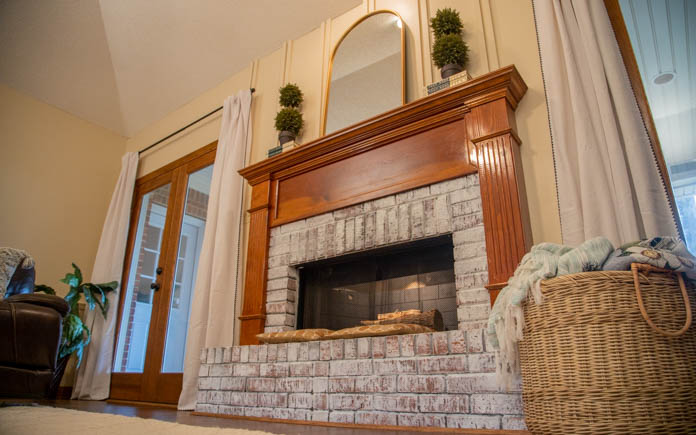
Your fireplace will be ready for winter if you have it inspected this summer. (3 Echoes Content Studio)
7. Have Chimney Inspected & Cleaned
Now’s a great time to have a professional inspect your fireplace and chimney because you aren’t using them during the summer.
Plus, you’ll have more time for repairs if needed.
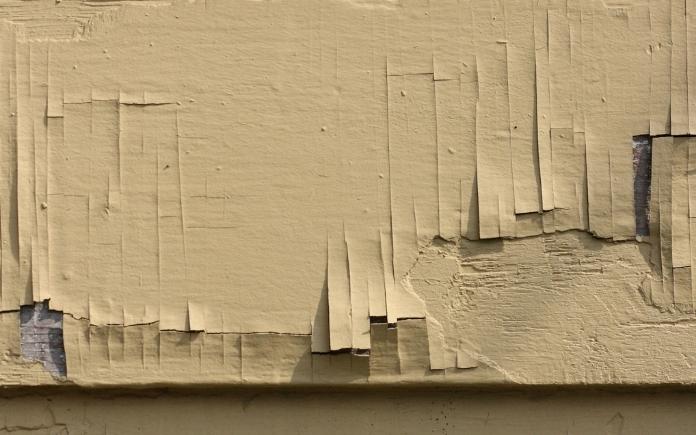
Scrape off peeling paint and put on a fresh coat for an exterior refresh. (mehampson, Getty Images)
8. Scrape Loose Paint from Siding & Trim
Boost your home’s curb appeal by freshening up siding. Scrape away any loose paint, sand if needed, then prime and paint on a fresh coat.
If it’s an older paint, be sure to test it for lead as a precaution.
Mix 1 teaspoon of baby shampoo to 1 gallon of water, or 1-1/2 cups of vinegar to 1 gallon of water, and wipe windows down with newspaper for a streak-free shine.
Involve family members and tag-team to speed things up! Have one person clean the windows inside while another cleans the outside.
Finally, summer blooms are burgeoning! Now is the perfect time to pull any weeds from garden beds and prevent further weed growth by adding 2 to 3 inches of mulch.
Listen to this special-edition Today’s Homeowner Podcast for more summer home maintenance tips!
It’s important to get the best insurance possible with 100% coverage.(DepositPhotos)
Just as there are different home styles, insurers offer a menu of different policies. For the majority of single-family homeowners, the most appropriate policy is the HO-3, sometimes called the Special Form. It insures all major perils, except flood, earthquake, war, and nuclear accident.
You’ll need deep coverage, up to and including 100% of your home’s replacement cost. By insuring at, say, 90%, you’re gambling that you won’t suffer a complete loss. To be safe, always insure at 100%. Research on some insurance companies and compare their insurance services and rates to choose the best deal. If you own a mobile home, there are companies that you can contact to find a great deal on a Mobile Home Insurance Plan.
Insurers generally cover a home’s contents between 50% and 75% of the home’s value. Make a list of your home’s contents for a more accurate estimate of your needs. That way, you’ll have a written record if you need to file a claim. The industry-sponsored Insurance Information Institute provides useful instructions on how to put together an inventory.
You’ll also have to pick a deductible, which is the amount you will pay before the insurance kicks in. Remember, the higher the deductible, the lower your premium will be.
Here are some tips to help you make the right choices about homeowners insurance.
If your home is damaged, insurance could pay to get it fixed, even if the cost is more than the home’s original value.
Buy the guarantees
Traditional guaranteed replacement cost coverage promises to pay whatever it takes to rebuild your home, even if it costs more than the original limits you purchased. That’s crucial in the event that labor and building costs balloon after a major disaster. In many states, large insurers may cap the guarantee at 120% to 125% of purchased limits. Several preferred carriers offer even higher coverage. Speak to your insurance agent for more information. Also, ask for replacement cost coverage for your home’s contents. Without it, you’ll end up with the depreciated value of any object that’s damaged or stolen.
Extra coverage can come in handy when you least expect it to.
Get these types of important coverage, too:
–Inflation guard: This option annually increases your coverage at the rate of local building-cost inflation.
–Ordinance-and-law coverage: This rider, which covers the costs of bringing your home into compliance with current building codes, is a must if your home is more than a few years old.
–Limit your liability: Your homeowners policy protects against lawsuits for accidents that happen on your property. It also covers you if your dog bites someone. You might also consider adding an umbrella policy, which provides additional coverage over and above your regular homeowners liability limits.
Good insurance policies will come in handy if your home is hit with a natural disaster such as a hurricane or tornado(DepositPhotos)
Consider these options:
–Displacement: Your homeowners policy also provides for living expenses if you need to secure other housing while your home is being repaired or rebuilt.
–Other structures: Replacement of structures such as garages, detached covered porches or patios, and sheds.
–Medical Coverage: Provides coverage for medical expenses if someone is injured on your property.
–Home business coverage: Business property worth more than $2,500 isn’t covered by a homeowners policy, so buy a separate policy — also known as a rider — to fill the gap. Business liability coverage must be purchased separately, too.
–Riders for valuables: A standard policy provides minimal coverage for antiques, collectibles, furs, silver, jewels, cameras, computers, musical instruments, and firearms. For these, you may need additional or separate coverage. Again, speak with your insurance agent about the proper coverage for your specific needs.
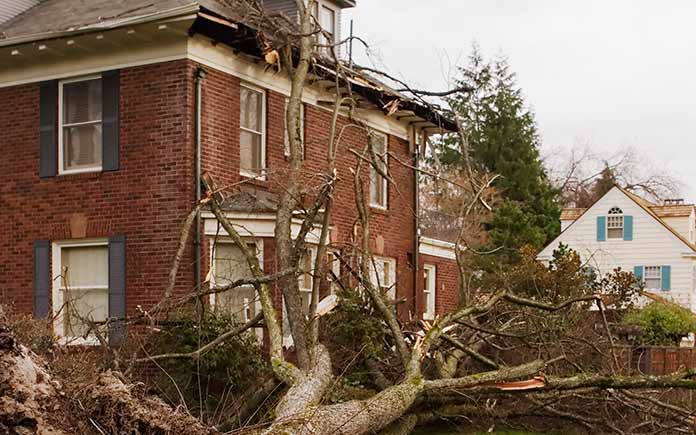
Tree branches can fall on your roof during a storm, and when that happens, it’s important to take fast action to prevent more damage. (DepositPhotos)
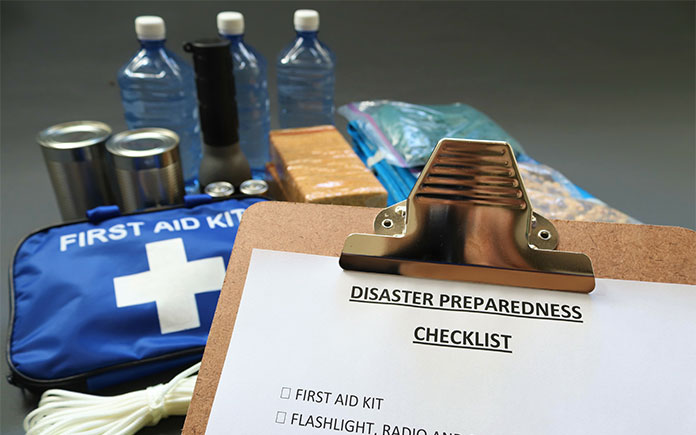
In recent years, the number of homes that actually have put together a basic “survival kit” of some sort – with water, food, candles, extra batteries, etc. – has soared. So have the sales of residential backup generators, all in the interest of one’s being self-sufficient for a limited period of time after a natural disaster strikes and isolates its victims.
But these measures pale next to the new and emerging drive now underway to seriously prepare one’s home – well in advance – for all sorts of “heavy weather” that is sure to come.
Residential storm damage begins with strong winds that attack the integrity of roofing, windows and both entry and garage doors. As winds increase, and driving rain is added to the equation, building products begin to fail and pervasive water begins to make its way in.
Still stronger winds, say as in a category three, four or five hurricane with winds ranging from 111 to 155-plus mph rip away exterior products. Adding flying debris to the equation and homes are left seriously exposed, damaged and vulnerable to major devastation and its occupants at risk.
But just like in the movies, when things are looking most foreboding, the cavalry always charges in “to save the day” – and America’s building products manufacturers are now responding with an ever-increasing array of ways and means for homeowners to defend themselves (and their homes) against the wrath of natural disasters.
A house with a fortified roof
Leading the Charge
All types of residential “heavy-weather” storm products are seeing a dramatic increase in both acceptance and usage. These range from a variety of inventive window covering products to complete interior “fortified storm safe rooms” lined with the very same material used in bullet-proof vests.
New storm-oriented products also include specially-designed nails and fasteners with “hurricane-strength” holding power; stronger and more impact-resistant wood sheathing and tougher exterior siding products; and a number of do-it-yourself, easy-to-install kits that strengthen existing garage doors against being blown-in by severe winds.
Yet, of the many protective measures now being offered to homeowners, those that covered and protected window openings were an early and instinctive choice and were initially most popular – and to this day, many inventive “cover-up” systems are still being engineered and introduced almost daily.
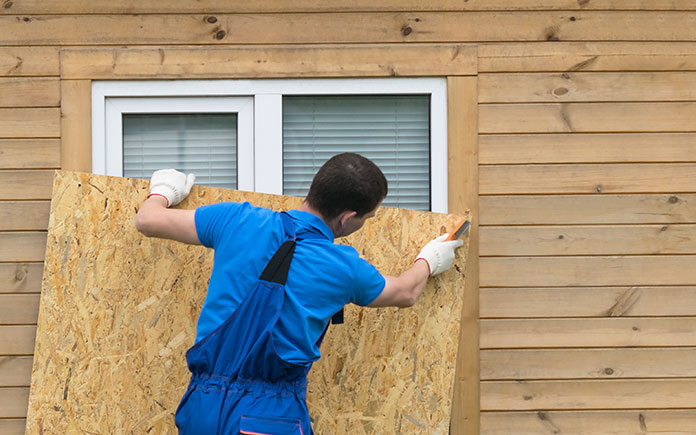
These range from “quick-install” protective covers (either heavy solid sheets or clear “see-through” tough hybrid plastics) to “shutters” of all types – up to and including motorized roll-up metal units, with rain and/or high wind sensors, that go (or roll) into action to protect windows, whether or not the owner is home. However, all of these window “covering” products are simply alternatives to the purchase and installation of numerous sheets of plywood, which is often in short supply in last-minute or short-notice situations. Rather today, homeowners and building product manufacturers alike are thinking way beyond simply “boarding-up” when heavy weather threatens. They are now investing in real “built-in” everyday protection – that not only offers peace of mind for one’s home and family, but in many cases also offers insurance benefits and energy-efficiency too.
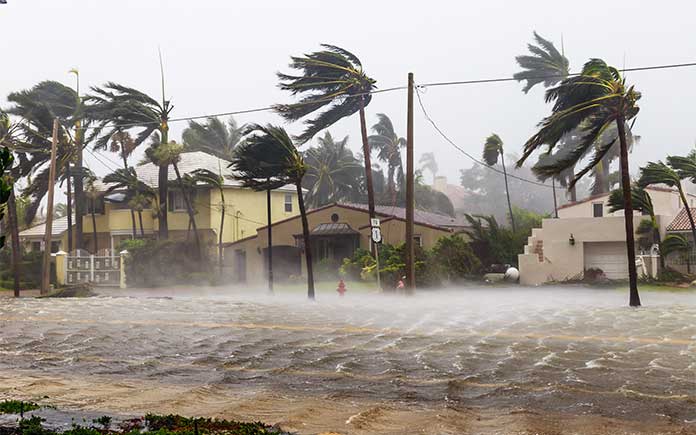
Hurricanes can cause extreme home damage.
Strengthening the Exterior Envelope
Today, a number of truly “storm-resistant” products are being offered to fend off intrusive heavy weather. They start with much tougher roofing products, which stay in place during severe winds. A strong, durable roof is a home’s first line of defense during a major storm or hurricane. The majority of storm related damage is not caused by actual structural failure, but rather by water being driven in – which, in turn, can and often does lead to serious mold problems.
Next is the drive to toughen-up –– rather than cover up — the number one weak-spot in every home: fragile windows. A variety of impact-resistant glass configurations are now available with combinations of various protective materials and technologies, such as one pane of tempered glass and one pane of impact-resistant laminated glass. A durable inner layer, sandwiched between pieces of the laminated glass, prevents the glass from being shattered by flying debris — much like car windshields. The glass may fracture but it will not break out of its frame.
In addition to “impact-resistant” double-strength tempered and laminated glass, tougher and better engineered window frames and sashes are being offered –with strong seals to keep nasty weather out – and upgrade hardware that, when all put together, makes once highly-vulnerable conventional windows now a good defense against whatever Mother Nature decides to throw your way.
Entry and patio doors have also been vastly upgraded and engineered to better fend off severe weather. Added protection and new storm-resistant features now include composite materials such as fiberglass that adds strength, impact-resistance and eliminates wood rot; numerous design and engineering improvements that create a better and stronger seal between the door and frame to reduce all air, wind and water penetration; stronger “sweep” designs to better seal the bottom of the door; tougher upgraded hardware and more of it; and durable impact-resistant glass (as noted earlier for windows).
These new “heavy weather resistant” windows and doors can stand-up to the fiercest storms and will protect a home and its contents from damage and those inside from possible injury. In fact, some of these new storm-resistant products have even caught the attention of the National Association of Mold Inspectors and are NAMI-certified, tested and approved as “mold fighters” – an important seal of approval.
Whether it’s in response to global warming or simply better TV news coverage, America’s homeowners are truly on a personal “storm watch.” Today, rather than being resigned to repeated “boarding-up and cleaning up,” homeowners are instead actively “gearing-up” with an exciting array of specially designed “always in place” heavy weather products, engineered with built-in durability and true storm resistance for greater peace of mind. And every day, America’s homeowners are becoming better prepared, more self-sufficient and better protected.
Are you and your home ready to weather the next big storm?
According to Webster’s Dictionary, insurance is defined as “coverage by contract whereby one party undertakes to indemnify or guarantee another against loss by a specified contingency or peril.” In Webster’s definition, the first party is usually an insurance company and the second party is you, your family or business.
In simple terms, insurance is designed to assist an individual, family or business in recovering from an unexpected loss. You can buy insurance for almost anything – medical, life, disability, automobile, business liability, fire and theft, worker’s compensation, homeowners (including condominium owners), and renters to name a few. For the purposes of this column, we will focus on insurance for your home.
As you will soon learn, simply having a homeowner’s insurance policy isn’t enough.
Contrary to what many believe, an insurance policy isn’t a “cure all.” Unfortunately, many people become aware of this when they are most in need of help – after a crisis such as a fire, flood, earthquake or tornado. Thus, there is no time like the present to review your insurance policy to determine if you have the proper coverage.
Wildfires can destroy homes fast, but there are ways to minimize the damage.
Coverage is the term that is used to determine to what extent you will be compensated in the event of a loss.
For example, if you are like most people and your home were to burn to the ground from a fire, you might expect your insurance company to pay for the construction of a new home and to replace all of the furniture and personal property that was lost in the fire. Not so fast! That’s not the way it works. Depending upon the type of policy, its coverage and dollar limits, you may find that you are, as they say, up a creek without a paddle.
How much coverage is enough?
A better question would be how much are you willing to sacrifice? If the answer is nothing, as it should be, your coverage should provide you with full replacement of your loss. Pennywise consumers will often compromise coverage in an effort to save money. Unfortunately, the savings of a few hundred dollars a year can result in the loss of tens or hundreds of thousands of dollars when it comes time to pick up the pieces.
Tree branches can fall on your roof during a storm, and when that happens, it’s important to take fast action to prevent more damage. (DepositPhotos)
Not all homeowner’s insurance policies are created equal. Here’s how some of the most common types of policies shake out:
HO-1:Covers the dwelling and contents from 10 types of perils:
Fire and Lightning
Windstorm or Hail
Explosion
Riot or civil commotion
Aircraft
Vehicles (unless it is caused by the insured)
Smoke
Vandalism or malicious mischief
Theft (may have limits)
Volcanic Eruption
HO-8:This is especially for older homes. Covers the dwelling and contents from the same 11 types of perils listed in HO-1, but only for repairs, not for replacement cost. Usually written for homes with historical value that would be impossible to replace.
HO-2:Covers the dwelling and contents from 17 types of perils: the one covered in HO-1 and HO-8 plus
Falling Objects
Weight of Ice, Snow or Sleet
Accidental Discharge or Overflow of Water or Steam
Sudden and Accidental Tearing apart, Cracking, Burning or Bulging
Freezing
Sudden & Accidental damage from Artificially Generated Electric Current
(H01 Policy- Numbers 1 though 10)
HO-3: (Broad Form) Covers the dwelling and contents from the 17 perils listed in HO-2, plus any other peril not specifically excluded in the policy. Standard exclusions are flood, earthquake, war and nuclear accident.
HO-4This is a renters policy. It covers personal property (no dwelling coverage) form the 17 peril types listed in HO-2.
HO-6A condominium owner’s policy that, like the renter’s policy, covers personal property from the 17 peril types listed in HO-2. It is normally the responsibility of the owner’s association to insure the structure (walls, roof, etc.). Be sure to check the master policy for exclusions. You may need to cover the construction and improvements within the outer shell of your building.
Historic homes such as this often require HO-8 insurance policies. (Photo by Scott Evans)
Note that not one of the policy types listed will provide coverage for loss from a flood or earthquake.
This may not be particularly important to you if your home isn’t located in an area that is prone to either one of these disasters. If, on the other hand, your home is at risk to such an event, flood and/or earthquake insurance might be the smartest investment you’ll ever make.
Federal flood insurance, purchased through your insurance agent or company, is the only guaranteed flood insurance coverage available for your home.
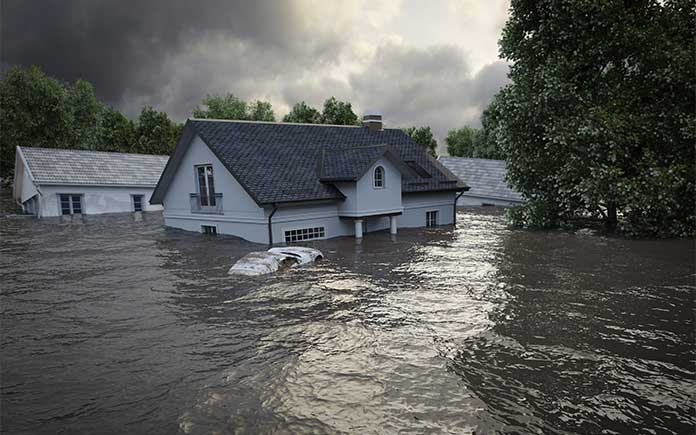
Many people are reluctant to buy flood insurance because they believe that Federal disaster aid, available during and after a flood, will reimburse them for loss. WRONG! Federal Emergency Management Agency (FEMA) disaster aid is only available during Presidentially declared disasters. Moreover, Federal aid may often be in the form of a loan that you must pay back with interest. Flood insurance policies pay claims whether or not a disaster is declared.
When it comes to earthquakes, your best insurance is preparation.
Making sure the foundation is in good shape, the frame is bolted to the foundation, the water heater is strapped and the structure is in good condition is your best defense. Unfortunately, even the best-prepared homes can sustain significant damage. Consequently, if you live in an area where earthquakes are part of the way of life, you may want to look into earthquake insurance. By comparison, earthquake insurance is costly and often comes with a large deductible. Where a standard homeowners policy might have a $500 deductible, the deductible for earthquake insurance can range from 5 to 15%. Using 10% as an example, that would equate to a $20,000 deductible on a $200,000 house. The lower the deductible, the greater the cost of the insurance. Generous discounts are offered where earthquake retrofitting (bolting, strapping, etc.) has been performed.
Which policy best suits your needs?
Your best bet is to enlist the services of a reputable insurance agent who can discuss with you the coverage options available. For example, you can opt for a “replacement cost policy” which means the insurance company will pay the cost of replacing an item (less deductibles) rather than simply offering its depreciated current value.
Hurricane damage
Don’t forget a big part of being prepared for a disaster is ensuring that you have a full inventory of the construction elements of your home and its contents.
Take photos or videotape each room. Pay special attention to details such as appliances, doors, trim, cabinets, flooring, ceiling treatment and other decorative finishes. Also, be sure to open cabinet and closet doors to photograph contents such as dishes, clothing, hinting gear and even your video collection.
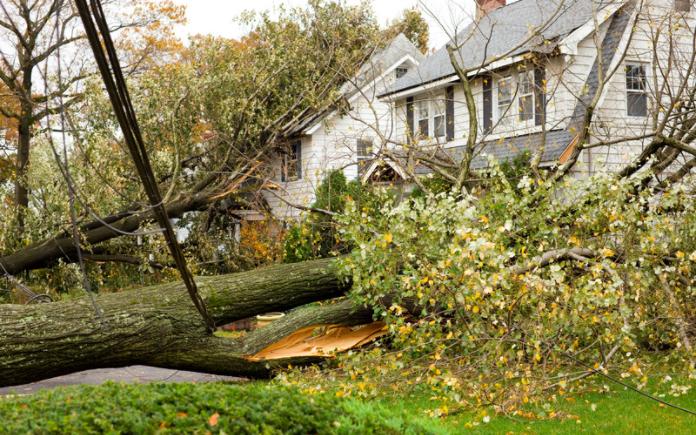
Fallen trees can cause thousands of dollars in damage during natural disasters.
It’s storm season, and as soon as a tornado or hurricane strikes, clean-up begins.
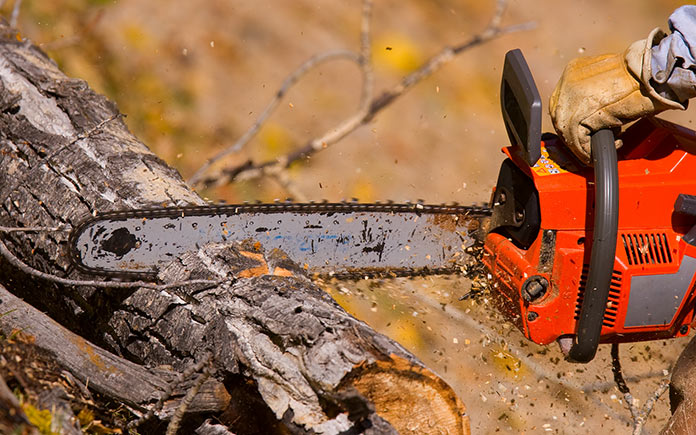
Often, storm clean-up requires participation from volunteers who supplement the work of experts in removing miles of debris. Many are weekend warriors who have never tackled such an immense task – and may never have used a chainsaw in such rigorous circumstances.
Those brave volunteers need some guidance on how to prepare for, use and maintain a chainsaw during intense storm clean-up efforts.
A good chainsaw is the best tool to clean big debris such as limbs and fallen trees.
Jared Abrojena, an Antioch, California-based certified treeworker and certified arborist, addresses the topic in layman’s terms. The 2015 ISA Tree Climbing World Champion, Abrojena is an expert on how to trim and fell trees. He often shares insights from his own experience working with a team of arborists to clean hundreds of fallen trees on the grounds of the Augusta National Golf Club in Georgia, just weeks before the 2013 Masters.
Abrojena’s nine necessary tips – if followed – ensures that the work of brave storm clean-up volunteers is safe and effective. They are:
A worker demonstrates proper safety when using a chainsaw. (DepositPhotos)
Safety first. Take some time to train before getting started. Be sure to read through the owner’s manual for the chainsaw you’ll be using.
Be prepared. This is a catch-all of tips regarding regular chainsaw maintenance and the possession of personal protective equipment (PPE).
Map it out. Assess the full scope of damage, and creating a plan for how to tackle it. The plan should include coordinating with other volunteers, divvying up the work and prioritizing
Know your limitations. Don’t volunteer for a job you’re unprepared for. There will be plenty of work to go around, so only tackle tasks that you are comfortable handling.
Buddy up. No one should trim trees by themselves, given the risk of error or injury. Pair up with another volunteer, but stay a safe distance apart when operating saws.
A good start. A chainsaw is best started on the ground, with the chain brake engaged. Don’t “cut” corners during intense, fast-paced clean-up efforts.
The right cut. To achieve the right cut, use careful pruning practices to relieve tension from a branch or tree limb.
Take it easy. You aren’t Superman, and most mistakes occur when you’re tired. Take frequent rests and stay hydrated.
Pamper your equipment. Ongoing maintenance during storm clean-up is critical, since you’ll be pushing your chainsaw hard. Pause often to clean filters and tighten chains.