This edit is for the second group, because we believe a “tidy” linen setup doesn’t need perfect folds. It just needs smart storage that hides the chaos and still looks good doing it.
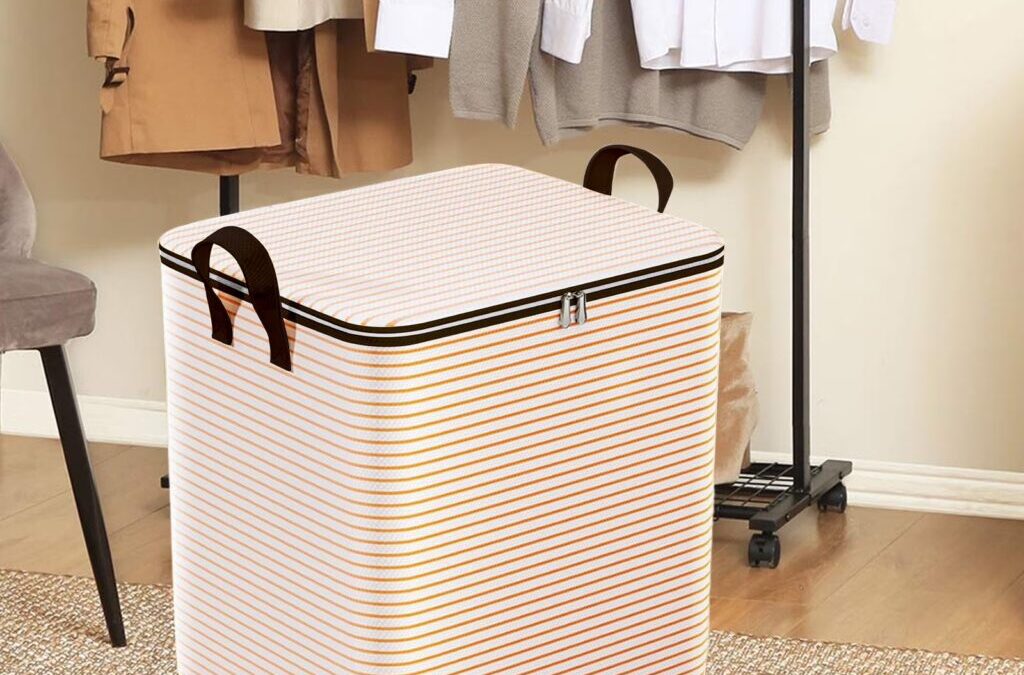
A foldable storage bin is what you grab when things get out of control. Toss in blankets, sheets, random extras… close the lid… done.
Its soft structure fits anywhere, and the handles make it easy to move, so that means you can hide away the entire thing once you’re done filling it up 😉
Everyday essentials need a place to sit, too. Think throws, extra books, bathroom accessories, or random knick-knacks. A lovely set of coil baskets can handle it all. Though they might not “hide” everything, the sculptural shape makes even the mess feel intentional.
No more “Oh my God, I just turned my favorite white T-shirt hot pink,” all because the darks and lights got tossed in together. The sleek laundry separation basket not only hides laundry clutter but also keeps colors sorted, preventing those horrible whoops moments.
The bamboo laundry hamper is a 2-in-1: looks like decor, works like a system. It’s lidded, so the weird odors from unwashed clothes won’t linger, plus the hamper includes two removable fabric bags that can be easily washed. And when you don’t need it, the entire piece folds flat… because even your storage should know when to take up less space.
In my lifelong quest to name everyone’s baby, I’ve posted a few lists of baby girl names and baby boy names, but what about names that defy easy categorization? Gender-neutral or unisex names are growing in popularity, and for lots of good reasons. Many see them as more inclusive, equitable, and adaptable. Some find them modern, cool, or even edgy. The rise in gender-neutral names also makes it easier for parents to use a family name or other sentimental or beloved name, regardless of their baby’s gender.
The “gendering” of names varies by culture, country, and even by generation, meaning some of these names may feel less “neutral” to you. People also bring personal associations to names, like pop culture references and real-life relationships. For example, which celebrity first comes to mind when you read the names Blake, Drew, and Robin? It might be completely different for different people you ask.
Was it Blake Lively or Blake Shelton? Drew Carey or Drew Barrymore? Robin Wright or Robin Williams? This exercise is just a reminder to keep an open mind when searching for a gender-neutral name. Your first instinct may not be everyone else’s!
Most Popular Gender-Neutral Names
We cross-checked the latest top 1000 baby names list for boys & girls to determine which names rankedhighest on BOTH lists. John helped me with this – you know he never met a statistic he didn’t love. So here are the top 20 gender-neutral names, determined by averaging their rankings:
Parker (#97 boys, #104 girls)
Riley (#229 boys, #42 girls)
Avery (#259 boys, #31 girls)
Rowan (#71 boys, #226 girls)
Charlie (#176 boys, #140 girls)
River (#112 boys, #214 girls)
Tatum (#195 boys, #205 girls)
Emerson (#270 boys, #151 girls)
Sawyer (#132 boys, #297 girls)
Logan (#46 boys, #391 girls)
Blake (#265 boys, #210 girls)
Rory (#226 boys, #286 girls)
Eden (#446 boys, #72 girls)
Cameron (#66 boys, #485 girls)
Carter (#45 boys, #507 girls)
Hayden (#154 boys, #401 girls)
Sage (#413 boys, #146 girls)
Angel (#63 boys, #498 girls)
Noah (#2 boys, #561 girls)
Oakley (#401 boys, 157 girls)
Now, you may notice some of the names above ranked significantly higher on one list than the other. For instance, Noah is way up at #2 for boys, but only #561 for girls. So we also looked at which names were most closely ranked across the two lists. These are arguably the “most neutral” of the top 1000 baby names:
Let’s look beyond what’s already popular. One great way to pick a gender-neutral name is to find something unique, since non-traditional names may not have as many pre-existing gender associations. Then again, there are plenty of classic names that have been used for both boys and girls. Here’s a longer list of names to consider:
Adrian
Aiden
Alex
Andy
Angel
Arbor
Archie
Arlo
Ash
Asher
Aspen
Aster
Atlas
Aubrey
August
Avery
Azriel
Bailey
Beck
Bentley
Billie
Blair
Blake
Bowie
Brooklyn
Brooks
Bryce
Cameron
Campbell
Carson
Carter
Casey
Chandler
Channing
Charlie
Collins
Corey / Kori
Cruz
Dallas
Dean / Deane
Denver
Devon
Dorian
Drew
Dylan
Easton
Eden
Elliot
Ellis
Emerson
Ezra
Fallon
Finley
Francis / Frances
Frankie
Gale
Greer
Grey / Gray
Harley
Harlowe
Harper
Hart
Hayden
Holland
Hollis
James
Jayden
Jesse / Jessie
Jett
Johnny / Johnnie
Jordan
Jude
Julian
Juniper
Kai
Keaton
Kelsey
Kendall
Kennedy
Kirby
Kit
Koda
Kyle
Lane
Lennon
Lennox
Logan
London
Luca
Marlow
Max
Merritt
Micah
Miles
Morgan
Murphy
Navy
Noah
Noel
Oakley
Ollie
Palmer
Park
Parker
Peyton
Phoenix
Presley
Quinn
Reagan
Reese
Remy
Ridley
Riley
River
Robbie
Robin
Rory
Rowan
Rumi
Ryan
Sage
Salem
Sawyer
Scout
Seneca
Shawn
Shelby
Shiloh
Skyler
Sloane
Spencer
Sullivan
Sydney
Tanner
Tatum
Taylor
Theo
West
Willow
Wren
Wyatt
Zion
More Naming Resources
To see all of our lists of names – including those split up by gender (and species!) be sure to check out the links below. Because if one thing is for sure, I also want to name your cat and your dog.
For nearly a decade, white walls dominated interior design. They were safe, clean, and endlessly versatile. But over time, something was lost. Spaces began to feel flat, predictable, and disconnected from how people actually want to live. Now, designers are shifting away from stark white interiors and embracing color again,but in a more thoughtful, refined way. Instead of bold, overwhelming palettes, the focus is on muted, earthy, and deeply layered tones that bring warmth and personality into a space. This isn’t about abandoning simplicity. It’s about making it feel human again.
Espresso brown is emerging as a sophisticated alternative to white and grey. It grounds a room instantly, creating a sense of calm and richness that lighter shades often lack. Unlike stark neutrals, it brings warmth without feeling overly decorative. When paired with soft lighting and natural materials, it creates a cocoon-like atmosphere that feels both modern and timeless. This shade works particularly well in living rooms and bedrooms where comfort and depth are key.
Smoky jade sits perfectly between green and grey, making it incredibly versatile. It has enough color to feel intentional but remains muted enough to function like a neutral. This balance allows it to work across different rooms without overwhelming the space. It’s especially effective in areas where you want a calming, collected atmosphere, such as bedrooms or home offices.
Terracotta has become one of the most adaptable colors in modern interiors. Its warmth makes spaces feel inviting, while its earthy undertones keep it grounded. Unlike brighter oranges, terracotta feels natural and easy to live with. It works in living rooms, kitchens, and even bathrooms, adding depth without overpowering the design.
Olive green is being redefined in softer, more sophisticated tones that feel calm rather than heavy. Instead of bright or overly saturated shades, designers are leaning toward versions with grey or brown undertones, which give the color a more natural and elevated feel. This makes it easier to live with while still adding depth to a space. Olive pairs beautifully with wood, stone, and warm metallic accents, creating a balanced environment that feels grounded, modern, and quietly refined without being too bold.
Smoky taupe is emerging as a refined alternative to both stark white and cool gray walls. It sits quietly between beige and gray, but with a warmer, more grounded undertone that feels softer and more livable. Unlike flat neutrals, smoky taupe adapts beautifully to changing light, appearing lighter during the day and deeper, more enveloping in the evening. This makes it ideal for whole-home use, especially in living rooms and bedrooms where comfort matters most. It brings subtle depth without demanding attention, creating spaces that feel calm, cohesive, and thoughtfully designed rather than plain.
Dining rooms are becoming one of the most popular places to experiment with deeper, moodier colors. Instead of bright, open spaces, designers are embracing tones that create a sense of intimacy and focus. Darker walls naturally bring people closer together, making conversations feel more personal and engaging. When paired with warm, layered lighting, the entire room takes on a softer, more inviting glow. This shift transforms dining from a purely functional activity into an experience that feels intentional, relaxed, and memorable.
Interior doors are no longer being ignored,they’re becoming a subtle design opportunity. Painting them in a slightly darker or contrasting tone introduces depth without overwhelming the space. It breaks up large areas of wall color and adds a layer of visual interest that feels thoughtful rather than dramatic. This approach works especially well in homes transitioning away from all-white interiors, offering a low-commitment way to introduce color. It’s a small change, but one that makes the overall space feel more designed and cohesive.
Ceilings are no longer left white by default, and this small shift is making a big impact. Painting the ceiling the same color as the walls creates a seamless, enveloping effect that softens the edges of a room. Instead of stopping your eye at a sharp contrast, the color flows continuously, making the space feel more cohesive and intentional. This technique works especially well with deeper tones, adding drama without feeling overwhelming. It’s a subtle but powerful way to transform how a room is perceived.
Muted mustard tones are becoming a quiet favorite for adding warmth without overwhelming a space. Unlike bright yellows, these deeper, slightly earthy versions feel grounded and sophisticated. They reflect light in a way that keeps rooms feeling warm while still offering personality. Used in living areas or hallways, mustard tones can act as a bridge between neutral and expressive, making them a strong alternative to plain white walls.
Dusty blues are emerging as a softer alternative to stark white walls. Their muted, slightly grey undertones allow them to act almost like a neutral while still introducing gentle color. Unlike brighter blues, they don’t feel cold or overpowering. Instead, they create a calm, relaxed backdrop that works especially well in bedrooms, reading areas, and quiet spaces. This shade brings just enough variation to make a room feel thoughtful, while still maintaining the lightness and simplicity many people love about neutral interiors.
Muted plum tones are an unexpected but increasingly popular choice. These shades bring depth and richness without feeling overly dramatic. When softened with gray undertones, plum becomes a sophisticated neutral rather than a bold statement. It works particularly well in bedrooms and dining spaces where a slightly moody atmosphere is desired.
Oxblood red is emerging as a bold yet surprisingly livable alternative to white walls. Unlike brighter reds, this deep, wine-toned shade feels grounded and sophisticated rather than overwhelming. It works particularly well in dining rooms, libraries, or bedrooms where a slightly moody atmosphere enhances the space. When paired with warm lighting and natural materials, oxblood creates depth and richness without feeling heavy. It’s a color that brings personality into a room while still maintaining a refined, designer-approved look.
Celery green brings a lighter, fresher take on green walls without leaning too bright or playful. It sits comfortably between neutral and color, offering a soft vibrancy that feels natural rather than decorative. This shade works particularly well in kitchens, sunrooms, or casual living areas where a sense of freshness is welcome. When paired with wood and soft textiles, celery green creates a relaxed environment that feels both modern and approachable.
Limewash is becoming one of the most compelling alternatives to plain white walls because it introduces both color and movement at the same time. Unlike flat paint, it creates a soft, layered effect where tones shift gently depending on the light. This makes even neutral shades feel more dynamic and lived-in. Designers are using limewash in warm beiges, soft clays, and muted grays to create spaces that feel calm but never flat. It’s not just a color choice,it’s a way to make walls feel more natural and visually engaging.
Deep charcoal is one of the easiest ways to introduce contrast without committing to full black. It has enough softness to feel livable, yet enough depth to dramatically shift how a room feels. Unlike lighter greys, charcoal adds weight and definition, making furniture and decor stand out more clearly. It works especially well in living rooms, bedrooms, or even home offices where you want a slightly moody, grounded atmosphere.
Blush tones have evolved far beyond their earlier, overly sweet versions. Today’s blush shades are muted, dusty, and grounded with warm undertones that make them feel refined rather than delicate. They act almost like a neutral, adding softness without overwhelming the space. Blush works beautifully in bedrooms, living rooms, and even dining areas when paired with wood, stone, or deeper colors. The result is a room that feels warm, balanced, and quietly elegant without leaning too feminine or overly styled.
Harbor haze blue offers a softer alternative to traditional blues, bringing in color without overwhelming the space. With its subtle gray undertone, it feels muted and atmospheric rather than bright or coastal. This makes it ideal for bedrooms, offices, or quiet living spaces where a calm mood is important. It reflects light gently, creating a soft glow throughout the day. Compared to white walls, it adds personality while still maintaining a sense of openness and ease.
Instead of relying on a single neutral color, designers are layering two complementary tones within the same space. This could mean pairing a soft beige with a slightly deeper taupe, or using subtle variations of the same color across walls and trim. The result is a room that feels more dimensional without introducing bold contrast. This approach moves away from flat white walls and creates a more thoughtful, layered environment that feels intentional and refined.
Wrap Up
The move away from all-white walls isn’t about abandoning simplicity, it’s about adding warmth, depth, and intention. Today’s interiors feel more personal because they use color in subtle, elevated ways that enhance how a space is experienced every day. Even small changes, like shifting to a richer neutral or experimenting with one room, can transform the entire mood of your home. For more inspiration and real-home ideas, explore Home Designing, where thoughtful color, materials, and modern living come together beautifully.
This year, we took our kids to the land of Dolly Parton, aka the Tennessee Smokies, for our recent Spring Break. It was a jam-packed week of family fun, food, and there was even a dusting of snow! There’s SOOOO much to do in this area of Tennessee – you’ve got Pigeon Forge, Gatlinburg, and Great Smoky Mountains National Park all right there. So we thought we’d hit the highlights and share our 7 favorite things that we did there. Why 7? Well, it’s smack dab in the middle of the numbers 9 to 5…
We traveled with another family, so we had 4 adults and 6 kids with us, ranging from ages 11 to 20. So all of these activities are tween and teen approved! We can’t speak specifically to younger kids like toddlers, but I think you’ll see that most of what we’ve listed below would be fun for the whole family.
Why Pigeon Forge & Gatlinburg?
We chose this destination for 2 reasons: (1) Dollywood and (2) there’s TONS of stuff to do in the surrounding area. It’s a little bit like Orlando or Vegas plopped in the middle of the beautiful Appalachian Mountains. Honestly, the sheer number of restaurants and roadside attractions is almost a little overwhelming. But that gave us the confidence that no matter the weather, we could show our families a good time. Plus, we could visit Dollywood, which most of us had never done (I had gone as a kid but nobody else in our party of 10 had ever been).
Since the area is packed with things to do, it’s easy to find activities that meet a variety of interests and energy levels – whether you want thrills, history, nature, games, shopping, or just some over-the-top Southern cooking. We were there in mid-March over a few days of cold weather (the last day, which we spent at Dollywood warmed up). It had been in the 70s the two weeks before we arrived, but we had temps in the 30s and 40s for most of our stay, but it was still really enjoyable
The area can get crowded, especially in the warmer months, and it felt like things were definitely marked up due to everything being pretty tourist-centric, but we expected that (a lot of Florida is like that too). So it didn’t stop us from savoring the wonderfully kitschy atmosphere of the area, and trying lots of things.
Our Top Pigeon Forge & Gatlinburg Activities
If you’re just here for the list, you can see it below. But we’ll explain each in a bit more depth further into this post. We obviously barely scratched the surface of all that there is to do in this region, but this includes many of the top attractions that a lot of lists we read before visiting recommended:
Dollywood
Ober Mountain
Dolly’s Stampede
Cades Cove
Crockett’s & Sloppy Hog
The Island, Alcatraz East, And Mountain Mile (our rainy day activities)
Our Airbnb
1. Dollywood
Dollywood was the whole reason for our trip, and it did not disappoint! I was last at Dollywood in 1999, and I remember my 17-year-old roller-coaster-loving self being underwhelmed. Well, a lot has changed. Keep in mind that our collective 6 kids regularly go on class trips to huge parks like Universal Studios in Orlando, and they all loved the roller coasters. I can safely say that Dollywood was the highlight of everyone’s Smoky Mountain vacation, and all 6 kids reported they’d be happy to go back anytime.
There were so many rides, shows, and uniquely themed sections of the park that we definitely couldn’t squeeze it all into 1 day, but we all hit a bunch of them, and it was remarkable in that almost everyone had a different favorite. In particular, our kids love the Big Bear Mountain coaster (shown below), others swore by Wild Eagle or Thunderhead, and I personally loved Lightning Rod, which took you up the side of a mountain for the first drop! Sherry’s favorite was The Dragonflier where your feet dangle as the coaster speeds and spins.
We also caught a couple of shows, shopped the gift shops, and ate as much cinnamon bread as our stomachs could handle (do NOT sleep on the cinnamon bread – it is delicious). The only downsides were some long lines, both for rides and food, since the week we visited was quite cold and we, along with what seemed like every other tourist, delayed our Dollywood visit for the last day of our trip, when things finally warmed up. Seems a lot of other people had the same idea! Even with the lines, we saw a lot of the park and had a great time.
2. Ober Mountain
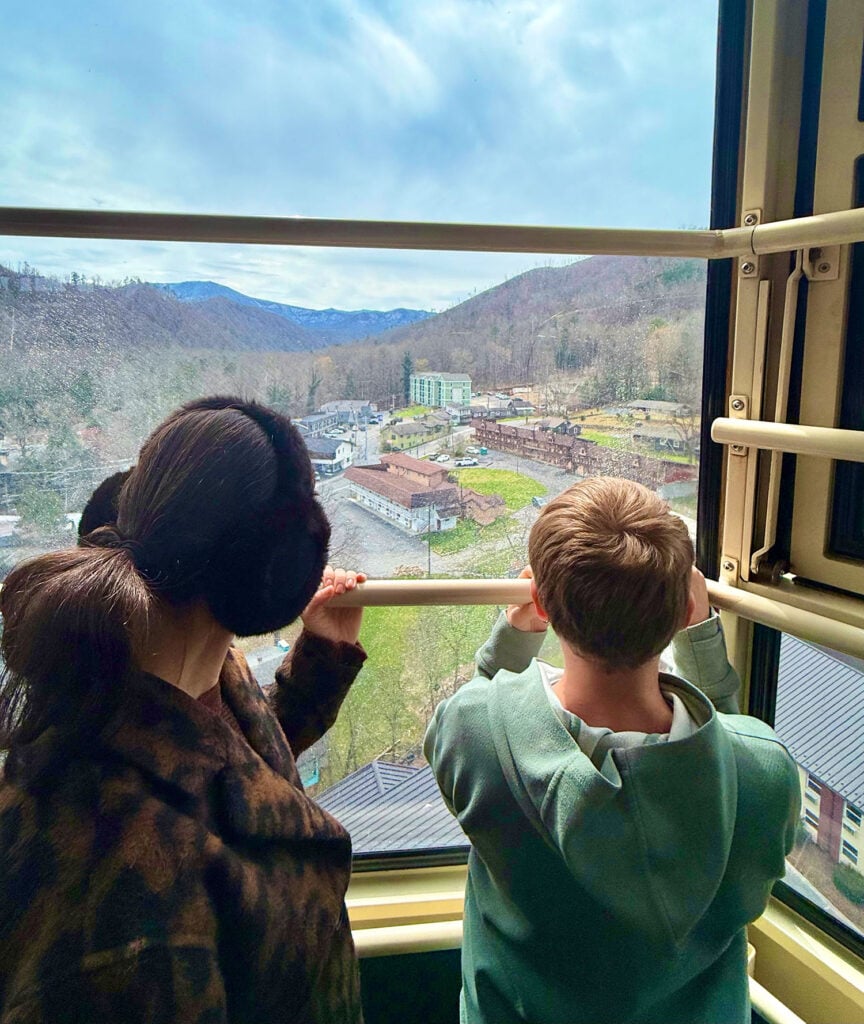
Everyone’s second favorite outing was visiting Ober Mountain in Gatlinburg. It’s an all-season, outdoor amusement park that features everything from skiing & snow tubing to ziplines & mountain coasters, depending on the season. But perhaps the most memorable part of our visit was riding the aerial tramway up to the mountaintop park.
We visited in mid-March, so some of the winter activities (like skiing) were closed, but summer ones (like the “bobsled” course) weren’t open yet. We did the mountain coaster, the ice bumper cars, and talked with some super-friendly rangers at the Wildlife Habitat (that was a highlight for many of us). They explained why these animals weren’t suited for the wild anymore, due to injury, illness, or (in one case) an albino raccoon named Casper who was easy pickings for a predator due to his coloring.
Gatlinburg is actually home to a few mountaintop parks like this (including Anakeesta and SkyPark). They feature everything from swinging bridges, overlook towers, and scenic chair lifts. We chose Ober Mountain because it was the only one that offered a fully enclosed tram to the top on a very cold day. Anakeesta is adding one, but during our visit we would’ve been stuck on a bus. And it was too cold for a chair lift! But we hear great things about Anakeesta too – especially if you’re going when it’s warmer.
3. Dolly’s Stampede Dinner Show
Pigeon Forge offers several themed dinner shows, including Dolly’s Pirate Voyage and the Hatfield & McCoy Dinner Feud. They feature some combination of acrobatics, comedy, storytelling, music, and a multi-course meal. We’ve been to Dolly’s Pirate Voyage show twice before (there is one somewhat close to us in Panama City Beach, FL), so we opted for Dolly’s Stampede.
To be honest, we were a little nervous about the “North vs South” language on the website. But we decided to trust in Dolly and the show turned out to be more Wild West-themed than anything else (there were actual buffalo and so many cool horse tricks – and all the animals are cared for extremely well as Dolly is known to do). The “sides” are just used for goofy competitions (like kids chasing chickens or dads tossing toilet seats like horseshoes) that always seem to end in a friendly tie. Much like Dolly’s real life personality, the show definitely had a unifying message at the end (her pirate show does too, btw).
Many parts of the Stampede are definitely a little campy, but we were legitimately wowed by the equestrian stunts, the very cool and sometimes adorable animals (including a mini highland cow!), and gorged on country cooking. I think we still prefer the Pirate Show – it’s a bit grander overall – but Dolly’s Stampede was definitely one of our favorite evenings.
4. Cades Cove in Great Smoky Mountains National Park
With all of the tourist traps and thrill rides, it’s easy to forget you’re also at the doorstep of America’s most visited National Park: Great Smoky Mountain National Park. And, it’s free to enter! You could easily spend a whole week in the park hiking to waterfalls, enjoying scenic overlooks, and visiting historical sites. But we took a friend’s advice and enjoyed the park via an 11-mile driving loop called Cades Cove.
Not only was this a good fit for a cold morning (hello warm car!) but it allowed us to sample the park at our own pace – pulling off to see a historic homesite or hiking a short trail as interest & energy allowed (which is sometimes hard to juggle with 10 people, including several teens). The dusting of snow that had fallen the night before made it even more beautiful!
Just a heads up that the loop closes to vehicle traffic on Wednesdays (many choose to bike it that day instead) and you may need to arrive early to avoid backups, especially on weekends. We went on a cold Tuesday in March and experienced a few slow spots & crowded pull-offs, so I can only imagine what it’s like in peak season! Oh, and you do have to pay $5 for parking pass if you plan to stop for more than 15 minutes anywhere in the park.
We usually have several restaurants to recommend from our trips, but have only 2 this time (3 if you count the Stampede above). That’s not because the meals were bad everywhere else. It’s because the food was usually so filling & indulgent that we were rarely hungry enough to eat out for dinner. In fact, every night except for The Stampede, we made dinner at home because breakfast and lunch were so filling we couldn’t imagine eating another big meal.
Everyone’s most memorable meal was at Crockett’s Breakfast Camp in Gatlinburg. It’s right down from the Ober Mountain tram station and we’re glad we put up with the 1 hour wait outside – it was WELL WORTH IT. The service was great, the pancakes were huge, and our friend declared it the best corned beef hash she’d ever eaten.
Another surprise favorite was Sloppy Hog’s Burger Joint, which we spotted on our drive to Cades Cove (sort of between Pigeon Forge and Townsend). Truthfully, we only stopped to eat on our way back because the teens had laughed at the name. I ordered the “Sloppy Dripping” (again, because of the name) and it’s one of the best burgers I’ve had in a long time. Think two patties with BBQ pulled pork on top. Mmmmm. And it wasn’t even that sloppy to eat.
Those were definitely the two meals we all talked about most for the rest of the trip. Well, that and the cinnamon bread at Dollywood… which I’m pretty sure counted as a meal at some point.
6. The Island, Alcatraz East, & The Mountain Mile (Our Rainy Day Activities)
Our very first day in Pigeon Forge was cold and rainy, so indoor activities were the move. This area has plenty to choose from – even things like indoor snow tubing – but these were the 3 that our whole group enjoyed:
The Island
While not technically indoors, this walking mall kept our crew busy popping into shops, eating snacks, and browsing rides like a giant skywheel, indoor flight simulator, and more. It’s almost like a mini amusement park! Parking was easy and free, and there was a convenient trolley to bring you right into the center of things.
Alcatraz East Crime Museum
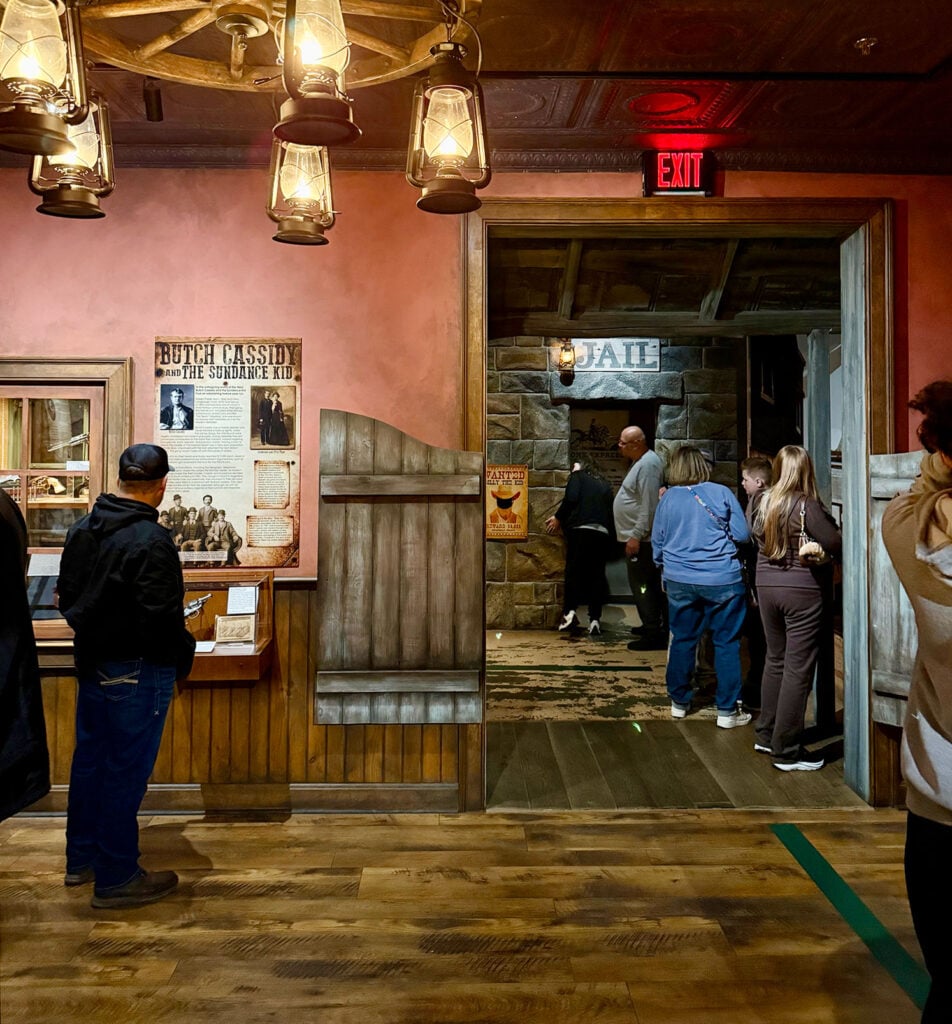
Directly adjacent to The Island was the Crime Museum, which was sort of a Ripley’s Believe It Or Not with a true crime spin, both historical and contemporary. It was pretty interactive (which is always a hit with the kids) and there was everything from rooms about the Salem Witch Trials to displays of infamous cars, like the actual White Bronco from the O.J. chase. It was surprisingly educational and entertaining, including activities about criminal forensics, online safety, and more. Plus we noticed the brown van parked outside, and really liked the payoff about what that was when we walked through the museum and it was revealed.
The Mountain Mile
Similar to The Island (and close to it, as well – that’s its SkyWheel in the background) is another mall-meets-amusement center called The Mountain Mile. We went here a couple of times while our friends charged their Rivian at the EV superchargers, so we saw it in the rain and in clear skies. The kids loved the candy store, the toy store, and there’s even a Downtown Flavortown – which I’d never heard of. It’s like a Dave & Busters (aka: arcade) meets bowling alley wrapped in a Guy Fieri package. What more could you want on a rainy day?
7. Our Airbnb
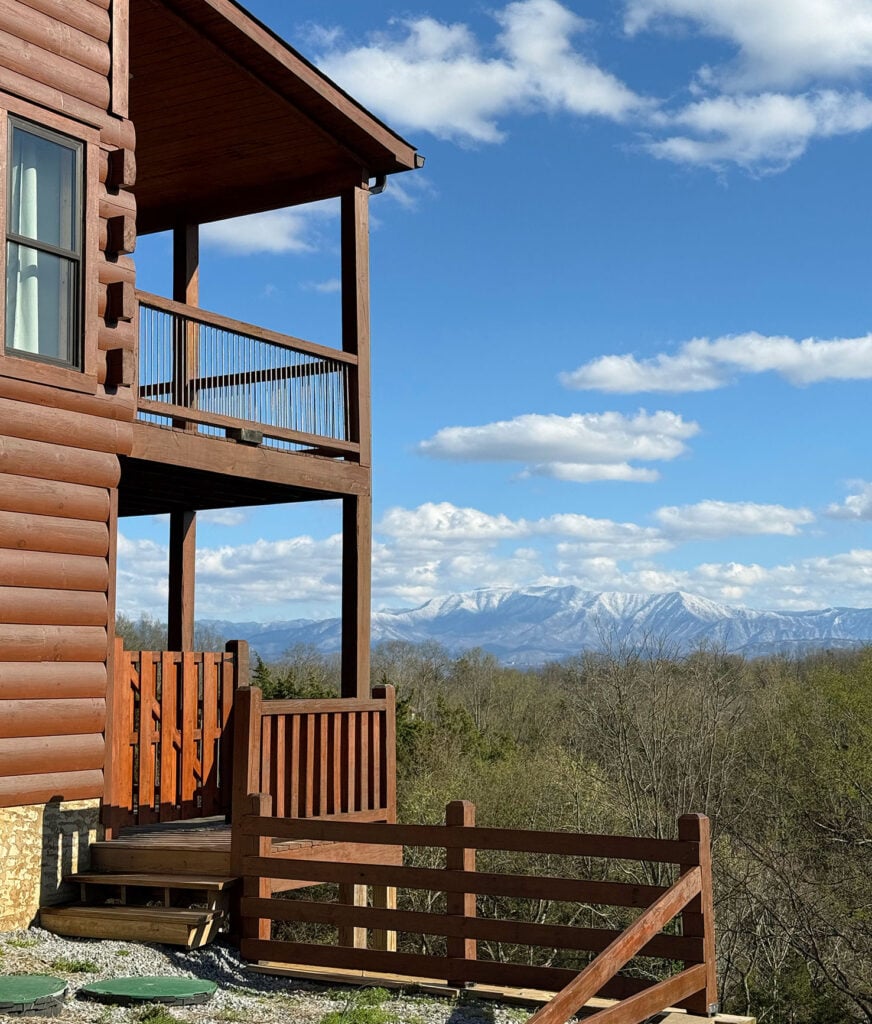
I know the Airbnb we rented isn’t really an “attraction,” but it was a big part of our trip’s success. It fit our group super well, especially with us being two families who wanted to hang out together, but not necessarily be up in each other’s bathroom business. The house also had lots of amenities to keep our kids entertained, especially on our bad weather days. I saw TONS of similar options on Airbnb, so don’t fret if this particular property is booked. It seems things like hot tubs, ping pong tables, theater rooms, and a rustic cabin vibe are common features in this area!
Admittedly, all of the bells and whistles were a little over the top (um, hello indoor mini golf course?). They definitely made the trip memorable, and splitting it with another family kept the cost more manageable. But we mostly appreciated the layout of the house: the kids got to have the downstairs to themselves (with all of the games and the “theater room”) while we adults could enjoy some peace on the main level.
Overall, we all enjoyed being together, playing games, doing puzzles, and blasting Dolly Parton music to pump ourselves up. Oh, and there was a pretty epic rap battle one night amongst the kids.
More Places to Vacation With Kids
If you enjoyed this post, you can check out some of our other family vacation destination posts, which are all linked below!
Discover essential tips and techniques to effectively clean and maintain your wood cutting boards, ensuring they stay durable, hygienic, and beautiful for years to come.
.tasty-pins-banner-container{display:block;margin-bottom:20px;position:relative;width:-moz-fit-content;width:fit-content}.tasty-pins-banner-container a{cursor:pointer;display:flex;font-size:14px;font-weight:700;letter-spacing:1px;line-height:1.8em;text-transform:uppercase}.tasty-pins-banner-container a:hover{opacity:1}.tasty-pins-banner-container .tasty-pins-banner{align-items:center;bottom:0;cursor:pointer;display:flex;justify-content:center;left:0;padding-bottom:1em;padding-top:1em;position:absolute;right:0}.tasty-pins-banner-container .tasty-pins-banner svg{margin-right:4px;width:32px}.tasty-pins-banner-container .tasty-pins-banner span{margin-top:4px}.tasty-pins-banner-container a.tasty-pins-banner{text-decoration:none}.tasty-pins-banner-container a.tasty-pins-banner:hover{opacity:.8}.tasty-pins-banner-container a.tasty-pins-banner-image-link{flex-direction:column}.tasty-pins-banner-container a img{margin-bottom:0}.entry-content .wp-block-image .tasty-pins-banner-container img{margin-bottom:0;padding-bottom:0}#et-boc .et-l div .et_pb_image_wrap .tasty-pins-banner-container .tasty-pins-banner{padding-bottom:1em!important;padding-top:1em;text-decoration:none}#et-boc .et-l div .et_pb_image_wrap .tasty-pins-banner-container a.tasty-pins-banner{cursor:pointer;display:flex;font-size:14px;font-weight:700;line-height:1.8em;text-transform:uppercase}#et-boc .et-l div .et_pb_image_wrap .tasty-pins-banner-container a.tasty-pins-banner span{letter-spacing:2px;margin-top:4px}.et-db #et-boc .et-l .et_pb_module .tasty-pins-banner-container a:not(.wc-forward){padding-bottom:0}
Importance of Cleaning and Maintaining Wood Cutting Boards
Let’s be honest, your wood cutting board has seen some things.
Sunday meal prep, midnight snack sessions, that ambitious sourdough phase. It’s one of the most-used surfaces in your kitchen, and if you’re not caring for it properly, it might not be doing you any favors when it comes to hygiene.
Wood cutting boards are an investment worth protecting. When maintained correctly, they can last for decades, and often get better looking with age.
Ignore them, though, and you’re looking at warped boards, deep cracks, funky odors, and a breeding ground for bacteria.
The good news? Caring for your board is surprisingly simple once you know what to do (and what to avoid).
Why Wood Cutting Boards Require Special Care
Wood is a natural, porous material, which is exactly why it performs so well as a cutting surface, and also why it needs more attention than a plastic board.
Unlike a plastic cutting board, wood has natural antimicrobial properties; bacteria that sink into the grain tend to die off rather than multiply. But that doesn’t mean you can skip cleaning. Wood items also absorb water, oils, and food particles, which means:
Excess moisture can cause warping, cracking, and splitting
Trapped food particles lead to odors and bacterial growth
Harsh cleaners strip the wood’s natural oils, making it dry and brittle
Dishwasher heat and soaking can destroy the board’s structure entirely
Wood cutting boards thrive with gentle, consistent care, not harsh scrubbing or neglect.
Daily Cleaning Tips for Wood Cutting Boards
After every use, your board will need cleaning, but keep it simple:
Wash by hand with warm (not hot) soapy water and a stiff-bristle brush or clean sponge
Clean both sides of the board to prevent uneven moisture absorption, which causes warping
Rinse thoroughly and dry immediately with a clean towel
Stand the board upright or prop it at an angle to allow airflow on both sides; don’t lay it flat on the counter
Never submerge your board in water, and absolutely never put it in the dishwasher, the combination of heat, prolonged moisture, and harsh detergents will cause it to swell, crack, and split, sometimes after just one cycle.
Also, alternate sides when cutting to distribute wear evenly.
Deep Cleaning Methods to Remove Stains and Odors
Even with daily washing, your board will eventually pick up stubborn stains and odors. Here are three tried-and-true methods:
Salt and Lemon Scrub
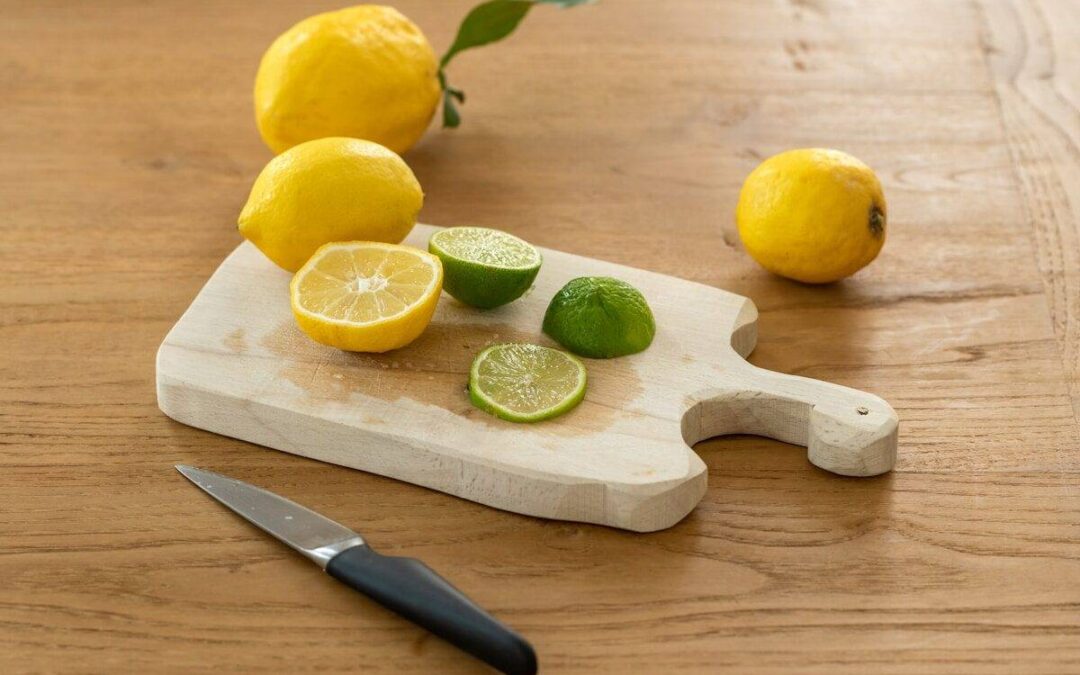
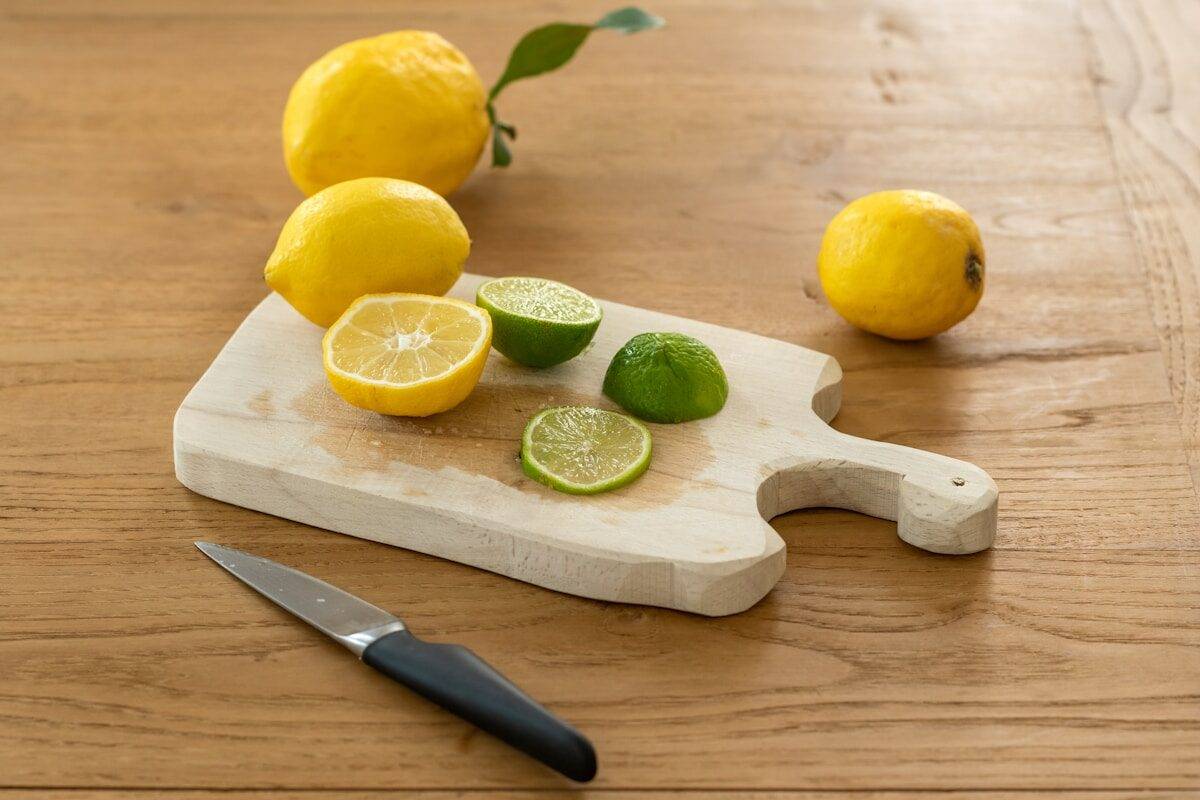
Sprinkle coarse salt over the surface, then scrub in circular motions using the cut side of a lemon half. The salt acts as a mild abrasive while the lemon juice deodorizes and lifts stains. Let the mixture sit for a few minutes, then scrape off and rinse.
Baking Soda Paste
Mix baking soda with just enough water to form a paste, spread the slurry over the stained area, let sit for 5 minutes, then scrub and rinse. It’s a natural deodorizer that’s gentle enough not to damage the wood.
White Vinegar or Hydrogen Peroxide
Spray undiluted white vinegar across the surface, let it sit for a few minutes, then rinse. For food safety after raw meat or poultry, use a 3% hydrogen peroxide spray instead, letting it sit several minutes before rinsing thoroughly.
Go easy on the vinegar. If used too frequently, its acidity can dry out the wood over time.
How to Properly Dry Wood Cutting Boards to Prevent Warping
Drying is arguably the most overlooked step in cutting board care, and it’s where many boards meet an early end. The goal is even, thorough drying with good airflow:
Pat the board dry with a clean dish towel right away after washing
Never lay a wet board flat; moisture gets trapped underneath
Stand it vertically in a dish rack or lean it against the backsplash
Keep it away from direct heat sources like burners or heating vents
When one side of the board dries faster than the other, the board warps into a curve — annoying and a safety hazard. In a humid kitchen, let the board air-dry for several hours to remove residual water, then store it flat.
Regular Maintenance: Oil and Condition Your Cutting Board
If daily cleaning is the baseline, oiling is the upgrade. Think of it like moisturizing — wood dries out over time, and regular oiling replenishes the natural oils that prevent cracking and splitting.
Food-grade mineral oil is the gold standard: affordable, odorless, flavorless, and it won’t go rancid.
Find it at most hardware stores or pharmacies.
Avoid vegetable, olive, or coconut oils; they’ll eventually go rancid inside the wood. Board cream (a blend of mineral oil and beeswax) is also excellent, offering both conditioning and a protective surface seal.
To oil your wooden cutting board, make sure it’s completely clean and dry, then apply a generous layer with a soft cloth, rubbing with the grain.
Let it soak in overnight, then wipe off any excess.
Repeat monthly, or whenever the wood looks dull.
Quick test: sprinkle a few drops of water on the surface — if they bead up, you’re good; if they soak in, it’s time to oil.
Tips to Prevent Cracks and Splits in Wood Cutting Boards
Cracks are the nemesis of a good cutting board. Once they form, they’re tough to reverse and can harbor bacteria.
Avoid thermal shock: don’t place a cold board on a hot stovetop or under a broiler
Never soak: prolonged moisture causes swelling, followed by cracking when it dries
Store in a cool, dry spot with good airflow — not wedged in a tight cabinet
Avoid the dishwasher: the heat and moisture cycle is devastating for wood boards
If you notice hairline cracks forming, act fast: sand the area lightly with fine-grit sandpaper (going with the grain), then immediately apply mineral oil.
Catching cracks early can stop them from deepening.
When to Replace Your Wood Cutting Board
Even the best-maintained board has a lifespan. It’s time for a new one if you notice:
Deep grooves or gouges that can no longer be sanded out
Persistent odors after deep cleaning — bacteria may have penetrated deep into the wood
Severe warping that makes the board unstable
Large cracks or splits running deep into the wood
Mold or dark discoloration that doesn’t respond to cleaning
Minor scratches are normal and can often be sanded smooth. But if the board feels unsafe for food prep, trust your instincts. When shopping for a replacement, look for end-grain or edge-grain hardwood in maple, walnut, or cherry — dense, durable, and gentle on knife edges.
The Ultimate Guide to Properly Clean and Maintain Your Wood Cutting Boards
Discover essential tips and techniques to effectively clean and maintain your wood cutting boards, ensuring they stay durable, hygienic, and beautiful for years to come.
Materials
Stiff-bristled brush or scrubbing sponge
Mild dish soap
Coarse salt (kosher or sea salt)
1 lemon, halved
Baking soda
White vinegar (in a spray bottle)
Hydrogen peroxide, 3% (in a spray bottle)
Clean dish towels or rags
Food-grade mineral oil or board cream
Fine-grit sandpaper (optional)
Instructions
DAILY CLEANING
Rinse with warm water immediately after use
Scrub both sides with soapy water and a stiff brush
Rinse thoroughly and pat dry right away
Stand upright or prop at an angle to air dry — never lay flat while wet
DEEP CLEANING
For stains: Sprinkle coarse salt on the surface and scrub with the cut side of a lemon half. Let sit a few minutes, then rinse.
For odors: Spread a baking soda and water paste over the surface. Let sit 5 minutes, then scrub and rinse.
For sanitizing: Spray undiluted white vinegar, let sit for a few minutes, then rinse. After raw meat, use 3% hydrogen peroxide instead.
OILING & CONDITIONING (Monthly)
Make sure the board is completely clean and dry
Rub food-grade mineral oil generously into the surface with the grain
Let soak overnight, then wipe off any excess
Repeat whenever water stops beading on the surface
CRACK PREVENTION
Oil regularly — dry wood cracks
Never soak or put in the dishwasher
Store in a cool, dry spot with airflow
Sand hairline cracks early, then oil immediately
NEVER DO THESE
Put the board in the dishwasher
Soak in water
Lay flat while wet
Use vegetable, olive, or coconut oil
WHEN TO REPLACE
Replace your board if you see deep gouges that can’t be sanded out, persistent odors after deep cleaning, severe warping, large cracks, or mold that won’t come clean.
Benefits of Proper Care for Longevity and Hygiene
A wood cutting board isn’t just a kitchen tool. It’s a surface you use every single day.
With a simple routine of gentle washing, proper drying, regular oiling, and occasional deep cleaning, your board can stay hygienic, beautiful, and functional for decades.
Proper maintenance also makes your kitchen safer. A clean, well-oiled board with a smooth surface is far less likely to harbor bacteria than a cracked, neglected one.
And once these habits become part of your routine, they take almost no extra effort: wash it after use, dry it standing up, oil it once a month.
Your cutting board has your back at every meal — a little regular care is the least you can do in return.