Budget-Friendly Ways To Make Small Rooms Seem Bigger

Budget-Friendly Ways To Make Small Rooms Seem Bigger

Don’t let a small space or a small budget get you down. You can actually make small rooms feel big with a few creative ideas. Don’t worry, this doesn’t require you to gut everything or buy new furniture. Tricks like intentional furniture placement and bed storage solutions can breathe life into a tiny room, making it feel more spacious. 

As you read, start taking a mental inventory of your space. Are you working with a bedroom, living room, or kitchen? What current furnishings do you have? What shelving or storage do you already own?

Then start to notice as you read which ideas stand out. Start with the easiest changes and see how they make a big impact. 

.tasty-pins-banner-container{display:block;margin-bottom:20px;position:relative;width:-moz-fit-content;width:fit-content}.tasty-pins-banner-container a{cursor:pointer;display:flex;font-size:14px;font-weight:700;letter-spacing:1px;line-height:1.8em;text-transform:uppercase}.tasty-pins-banner-container a:hover{opacity:1}.tasty-pins-banner-container .tasty-pins-banner{align-items:center;bottom:0;cursor:pointer;display:flex;justify-content:center;left:0;padding-bottom:1em;padding-top:1em;position:absolute;right:0}.tasty-pins-banner-container .tasty-pins-banner svg{margin-right:4px;width:32px}.tasty-pins-banner-container .tasty-pins-banner span{margin-top:4px}.tasty-pins-banner-container a.tasty-pins-banner{text-decoration:none}.tasty-pins-banner-container a.tasty-pins-banner:hover{opacity:.8}.tasty-pins-banner-container a.tasty-pins-banner-image-link{flex-direction:column}.tasty-pins-banner-container a img{margin-bottom:0}.entry-content .wp-block-image .tasty-pins-banner-container img{margin-bottom:0;padding-bottom:0}#et-boc .et-l div .et_pb_image_wrap .tasty-pins-banner-container .tasty-pins-banner{padding-bottom:1em!important;padding-top:1em;text-decoration:none}#et-boc .et-l div .et_pb_image_wrap .tasty-pins-banner-container a.tasty-pins-banner{cursor:pointer;display:flex;font-size:14px;font-weight:700;line-height:1.8em;text-transform:uppercase}#et-boc .et-l div .et_pb_image_wrap .tasty-pins-banner-container a.tasty-pins-banner span{letter-spacing:2px;margin-top:4px}.et-db #et-boc .et-l .et_pb_module .tasty-pins-banner-container a:not(.wc-forward){padding-bottom:0}
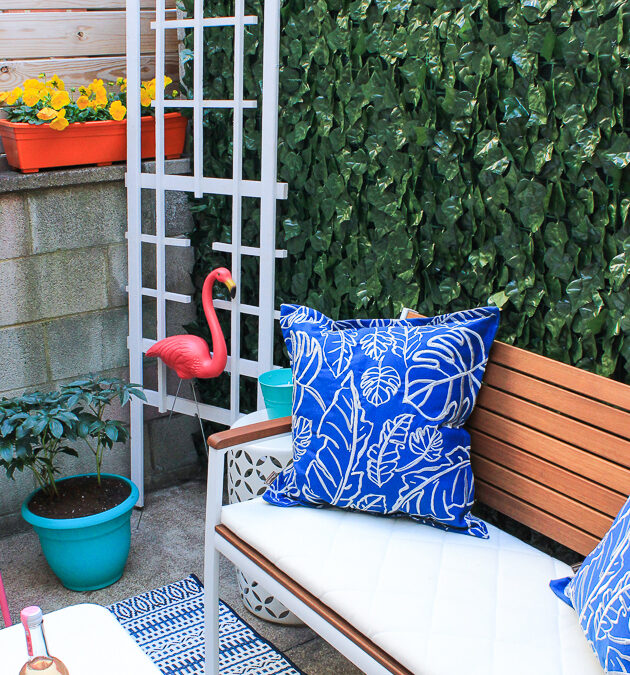
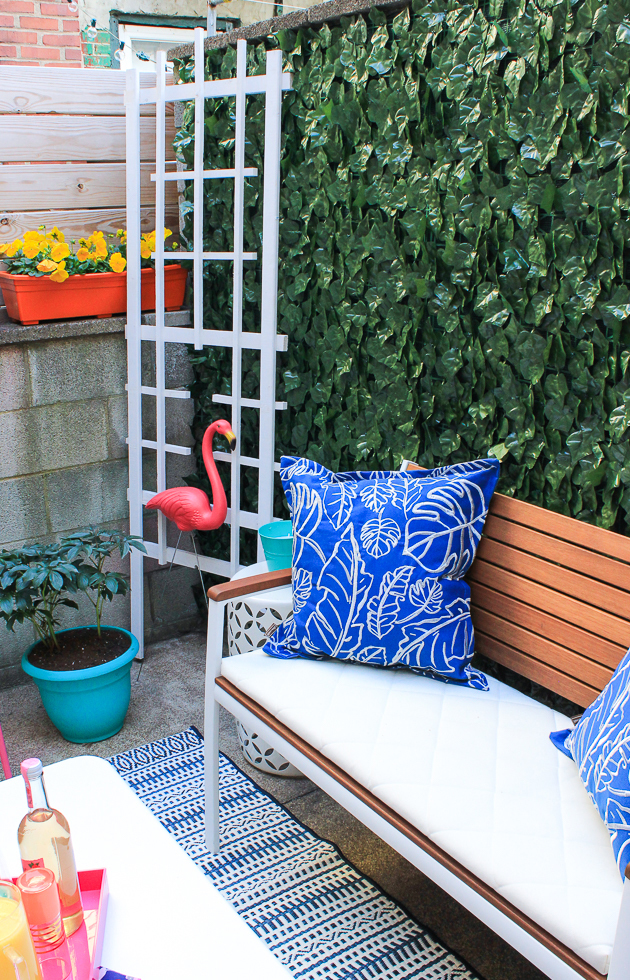
Photo by Albert Vincent Wu

Declutter And Organize

First things first: get rid of the clutter. Having too much stuff can automatically make your space feel cramped.

Even if the room is beautifully decorated, more will not make the space feel merrier – it will actually do the complete opposite (and maybe even trigger some anxiety) if the room is small. So what’s the solution? 

• Keep it or toss it: If you haven’t used an item in six months, donate or toss it. 

• Contain the chaos: Make use of extra baskets and bins to store items that are lying around. 

• Open up the entryway: A messy entryway instantly shrinks your home before you’re even fully inside. This is a great place to start with organization, with simple wall hooks or a slim console table to keep shoes, keys, and other items out of the way.

Use Light, Neutral Colors

Don’t underestimate the power of color. Certain colors can make a room feel tall and wide, while others can make it feel tight and small.

To expand the feel of your space, choose light, neutral tones. Changing the colors of your walls is budget-friendly, and for decor, think of simple swaps like changing pillow covers or duvets.

• Use colors like white, soft grays, and beige: They reflect light and bring in more openness to the space.

• Monochromatic to add seamless flow: Stick to one color family for walls, furniture, and accents.

• Play with subtle patterns: Vertical stripes on curtains or wallpaper to make the ceilings look higher.

Utilize Natural Light

One of the most affordable ways to make small rooms feel bigger is to use natural light.

The more sun you let in, the bigger your room will feel. Natural light can be incorporated by moving furniture around (yep, time for some rearranging magic) or trying these tips: 

• Use light drapes: Dark drapes tend to block light and make the room feel heavy.

• Try sheer curtains or light shades: Not only do they bring in more light, but they still provide much-needed privacy.

• Mirror trick: Time for an experiment! Place a mirror opposite a window and watch the light bounce around the room.

If natural light is limited, you can also use soft lighting, such as sconces and table lamps, for a warm glow.

Hang Mirrors

Mirrors are a small room’s best friend. They’re great for vlogging your really stylish outfit, and also serve as decorative pieces that help expand the feel of a room.

Mirrors reflect light and, depending on the size, can also increase perceived depth and height. 

• Go big: An oversized mirror can make a room feel twice its size.

• Strategic placement: Hang mirrors behind lamps to expand light. Lean tall mirrors against the wall to increase depth.

• Gallery wall twist: Mix mirrored accents with art for a stylish and airy display.

Add Vertical Storage

When you don’t have much floor space to work with, aim high.

By using vertical space to your advantage, you can add more storage without using up too much available space in the room. 

• Tall bookshelves or ladder shelves: Shelving helps to draw the eye up, adding to the height of the space.

• Built-ins: Maximize storage (and clear up free space) by building shelves on walls.

• Hooks and pegboards: These are an organizational dream. Great for kids’ rooms, offices, or kitchens to keep essentials off counters.

You can even consider painting crown moldings lighter than your walls can make ceilings feel higher.

Choose Furniture Wisely

Bulky furniture can eat away at square footage in small spaces. If you are considering any swaps, keep pieces that are slim and sleek and choose the same style for new purchases.

Even playing around with the placement of current pieces can make a big difference.

• Acrylic or glass tables: A great option to keep the visual flow open.

• Loveseats or modular sofas: Go small and skip the oversized couch.

• Console tables: They are typically narrower and offer a more streamlined look.

Use Multi-Functional Pieces

We love one piece that can do multiple things – like allowing you to sit comfortably while also storing your favorite cozy blankets?

A win!

Multi-functional pieces offer built-in storage on top of their intended use, so you’re basically getting two for one. 

• Storage ottomans: Extra seating, hidden storage, and easy to hide (like underneath a coffee table) for extra space. 

• Nesting tables: Easily tuck them away when you don’t need them.

• Sleeper sofas: Perfect for guests.

For a no-to-low buy option, consider adding wicker baskets underneath coffee tables or near couches for chic and quick storage.

Create The Illusion Of Space With Curtains

Curtains are a budget-friendly way to bring in more light into a room. With lighter curtains, you allow more natural light and make the room feel more open. It’s simple and effective.

• Hang rods high: Mount them closer to the ceiling to make the room look taller.

• Go floor-length: Choose curtains that are a little longer than typical to help further elongate the walls.  

• Stick to light fabrics: Sheer or neutral curtains will keep the look airy.

Utilize Under Bed Storage

Your bed isn’t just for sleeping; it’s also the perfect spot for storage. Under your bed is an ideal spot to store linens and other items that you don’t want taking up space in a small room. 

• Rolling bins or drawers: Perfect for shoes and linens.

• Vacuum-sealed bags: These save space and are great for seasonal clothing items. 

• Bed frames with built-in storage: If you plan to upgrade soon, choose a bed with built-in drawers.

Extra Space-Boosting Tips

Although there are several options for making your small room feel larger without spending much money, consider a few additional ideas:

• Tiny bathroom ideas: Consider mirrored cabinets coupled with light colors.

• Layered textures: Rugs, throws, and cushions add depth and style without adding more furniture. 

• Lucite furniture: Transparent pieces are great decor options for an open feel.

If you’re living in a small home or apartment, or one of your spaces is smaller than the others, you don’t have to buy new furniture and overhaul everything to make it look bigger.

To avoid feeling like things are cramped or chaotic, simply try a few of the tips we shared and see what works. It’s all about making smart choices, and starting small: light colors, storage, and creativity go a long way.

So get ready to stretch out, your tiny room just got bigger.

Check out more space-saving solutions:

5 Interior Design Business Mistakes That Could be Costly

5 Interior Design Business Mistakes That Could be Costly

A young female designer or architect sits at her laptop surrounded by colour swatches

When launching your own interiors studio, avoiding common interior design business mistakes can be just as important as choosing the right clients or colour palettes. From reimagining spaces to helping clients feel more at home, the creative potential is huge and so is the opportunity to build a fulfilling career. But while you’re likely pouring

The post 5 Interior Design Business Mistakes That Could be Costly appeared first on The Design Sheppard.

10 Dark Green Color Pairings That Will Infuse Your Home with Organic Beauty

10 Dark Green Color Pairings That Will Infuse Your Home with Organic Beauty

Post Image

Dark green shades bring a delicate balance of drama and tranquility to any space. This sector of the color wheel has become a mainstay of interior design schemes across a range of styles. Hunter, forest, olive, and similar green hues have reigned supreme in the post-pandemic world as well as we’ve learned how soothing and refreshing biophillic design can be. While choosing a dark green for the aesthetic of any room can feel a bit bold, we’ve rounded up 10 clever color combos to infuse a sense of organic elegance, laid-back coziness, or eclectic juxtaposition for whatever look you’re going for. 

For more content like this follow

Post Image

1. Dark Green, Black, White, and Gray

Dark green may be a great choice for those who are fans of neutral color schemes and Scandinavian design but are seeking more visual interest. The living room in this Minneapolis home proves that even a saturated shade of dark green can still act as a neutral. Here, it pairs splendidly with muted, neutral hues.

Post Image

2. Dark Green, White, and Bamboo

White and lighter shades of brown can help balance a deep green, plus they make an excellent color combination for those seeking to bring the outdoors inside. Here, the owner of this adorable Ontario home painted a DIY buffalo check wall in various shades of green. The result is an enlivened dining room for any season and holiday that doesn’t overpower. It’s the perfect complement to any modern farmhouse aesthetic.

Post Image

3. Dark Green and Mustard Yellow

Dark greens are often associated with plant-centric bohemian style. Here, we love how the Wovn Home team paired the color with a mustard yellow for a well-collected look. Textured accents like boucle pillows, a velvet sofa, and dark yellow blooms bring sunshine to dark green walls without stealing the spotlight.

living room with green wallpaper

4. Dark Green, Gray, and Dark Brown

Sarah Malek Barney of Band/Design loves to pair a rich shade of dark green with softer tones. The result is a well-rounded space inspired by the outside world. Additionally, a mix of sumptuous textures and beautiful woods adds to this sitting room’s organic yet elegant vibe. 

“Combining this dark, earthy green paint color with the softer gray tones of the surrounding furnishings gives the room an overall natural look and feel,” says Barney.

Post Image

5. Dark Green and Magenta

Designer Louise Misell created this lovely space to fit the period features of her client’s home while still feeling appropriate for the modern age. A punchy shade of pink, like magenta, makes a serene yet indulgent pairing with a bit of unexpected pizzazz. 

“Using dark green can seem a little scary, but it’s actually very versatile, and always adds a warmth and depth to any room it’s used in,” says Misell. “I chose dark green as it has the effect of embracing us in a cocoon of comfort, almost like the room is giving us a hug. I paired it with quite a punchy pink with touches of blue and peach to add some drama and contrast to the scheme.”

Post Image

6. Dark Green, Cream, and Chocolate Brown 

We love the level of restrained drama in this sitting room by Albion Nord. The space proves that you don’t need multiple patterns or vibrant colors to make a powerful design statement. Plus, leaning towards a chocolate brown hue feels more elevated than pairing dark green with a lighter shade. 

“I tend to avoid anything gray and prefer to use architectural creams or earthy greens,” says Camilla Clarke, the firm’s creative director. “Our favorite hues to use in an interior are muted tones which create calm and soft spaces.”

Post Image

7. Dark Green, Dark Blue, and Yellow

The L.A. home of artist Ben Cuevas features a jewel-toned dark green paired with a saturated dark blue hue and a dusty yellow for a one-of-a-kind space. White walls allow this pairing to shine and keeps the living area from feeling too busy or maximalist. 

Post Image

8. Green, Gold, and Brown

If you’re all about those mid-century vibes, look no further than this Plano, Texas home that is full of green, gold, and brown touches. The owner infuses her love for Parisian and French country style here with antique framed artworks, sculptural pieces, and elegant fabrics that feel equally refined and welcoming. 

A green bedroom with a pink rug, bed, and overhead light

Main bedroom 1

9. Dark Green, Black, and Pale Pink

Color and pattern abound in this Hampshire, U.K. home. The bedroom is no exception and evokes the home’s 1920 roots. The subtle shade of dark green feels more accessible to color newbies while black adds a chic accent color. Lastly, a pale pink rug and bedding lend a touch of femininity. 

Post Image

10. Dark Green, Tomato Red, and Mustard Yellow

“Green hues pack a full yet understated punch,” says Martin Waller, founder of Andrew Martin. “It can transport you to the cool tiled floors of Marrakesh or to the traditional drawing room of a late 18th-century Georgian mansion, and it’s being used more and more in interiors today.”

The Andrew Martin team brings global flair to a gracious sitting room. Dark green paint anchors the room while color, pattern, and texture abound. This pairing feels both modernized and Old World, allowing you to explore and define your personal design aesthetic. 

A Designer Spices Up a Black and White Palette With Pops of Warm Color and Art

A Designer Spices Up a Black and White Palette With Pops of Warm Color and Art

We independently select these products—if you buy from one of our links, we may earn a commission. All prices were accurate at the time of publishing.

Designer Marie Cloud of Indigo Pruitt Design Studio always starts her projects with the why, asking her clients what home means to them. From there, she comes up with a strategy for shaping a space that reflects that vision to intentionally furnish rather than just fill a house. That’s precisely what she did at this home: She turned what was basically a blank slate into a warm, welcoming haven perfect for the family of two that lives there.

For more content like this follow

Prior to starting on the project, the home wasn’t in disrepair — the rooms just needed personality and purpose. “The home didn’t really have any decorative features,” says Cloud. “The walls were the standard off-white and even a weird baby blue in a few rooms — very bizarre. There was furniture but only from a functional standpoint… nothing eye-catching.” Certain areas of the home weren’t really being used for anything so they became catch-alls for random items. The whole space needed an overhaul, and Cloud was up for the challenge.

To kick things off, Cloud sat down with her client, a doctor raising a five-year-old. “She wanted a space that felt like home and that was mature and inspiring,” says Cloud. “From the moment I met her, I was so inspired by all that she took on and how she exuded strength and worked so hard daily. My goal was to create a space that reflected that strength that I saw in her yet still be a place of retreat and recharge after a long work day.” 

Cloud likes to ask prospective clients this simple question: What do you want to feel when you enter a room? “It’s my favorite topic to have with a client, and I spend a lot of time processing over their responses to ensure that my design is not only gorgeous, but it also sparks something within them,” she says.

For this home, the descriptors that came to the forefront were inspiring and uplifting, but still cozy and relaxing. So Cloud set about creating an environment that was just that, first by curating a palette of airy whites and grounding blacks — and then peppering in a mix of warm shades like coral, lilac, green, and cranberry with decorative accents, furnishings, and finishes. 

Artwork, pops of pattern, and paint in particular all play starring roles in the home. “We used all Sherwin-Williams products and colors,” says Cloud. “Each room was strategically selected to create playful contrast with hints of bold saturation.” For example, she had the living area walls coated in Eider White (SW 7014), and it sits perfectly next to the renovated fireplace coated in Black Magic (SW 6991). Cloud also incorporated that same black hue on the ceiling of the “she cave,” which has Modern Gray (SW 7632) walls and centers on a curved channel-back lilac sofa that’s meant for sinking into and relaxing.

The dining room, painted in Worldly Gray (SW 7043), features a warm mix of materials, including a handsome wood table, beaded chandelier, and set of oversized floral prints. The ceiling sports a graphic patterned faux coffered look, while metal chairs amp up the glam factor of the space. 

In the kitchen, Pewter Green (SW 6208) cabinets introduce a little earthiness to the bold, matte black hex tile backsplash. Black and cream square printed wallpaper above the wainscoting in the nearby breakfast nook plays off the tile’s geometry, while the base of the caned table introduces yet another hexagonal shape to the mix.

The bedrooms, in particular, are true respites from the world for each of their respective occupants. In the kid’s room, soft neutrals and sherbet accents create a sweet backdrop for sleeping. Floor cushions stacked in the corner of the room become a cozy book nook when paired with shelf rails that hold favorite reads.

Splitting the work into two phases over the course of about a year, Cloud did encounter some pandemic-related setbacks — from material shortages and increased supply chain lead times to inflation and the a couple COVID-19 exposures and necessary quarantines. Still, everything was completed without any major hiccups. “We were very cautious in our efforts to try to keep everyone safe and not put pressure on ourselves to rush the project given all that we were up against,” says Cloud. “In the end we were able to finish well and finish strong, in the midst of that adversity, with a beautiful result that everyone is proud of.”

Talk about house pride — now decorator and homeowners alike can’t believe how beautiful fans functional the spaces have become. “I love that each room has its own uniqueness and personality, yet all spaces have great chemistry and play so well together,” says Cloud. “The homeowner loves that she has a home that has character and reflects her tenacious and bold personality. More importantly, she is so pleased to have a home that she proudly shares with friends and family.”

5 Things I Learned from Taking an Interior Design Class

5 Things I Learned from Taking an Interior Design Class

When my husband and I were quarantined together in our one-bedroom apartment for the first half of 2020, after my workday ended, I found myself learning Portuguese on Duolingo, watching roller coaster videos on YouTube, and constantly daydreaming about redesigning our entire apartment. I was yearning for a creative outlet, and the thing that felt the most exciting to pursue was interior design. Especially since we were home all day, the itch just wouldn’t go away. I finally decided to enroll in Kelly Robinson’s Where Spirit Meets Space, a 28-day design course, with the intention of transforming our little apartment, one project at a time. And I am so glad I took the plunge. 

For more content like this follow

The course went beyond just design principles and explored the deeper connection we have with our home, ourselves, and the world around us. I did indeed transform our apartment, and the impact on my mood and overall well-being was huge. Here are some of my favorite takeaways from the course, and the one thing I learned not to do.

Mixing colors and textures balances out a space.

In my early 20s, for some reason, I thought dark brown would pair well with just about everything. And while there’s nothing wrong with dark brown, at the time my husband and I had a brown sofa, chair and ottoman, coffee table, dining table, and dining chairs. It was a lot of dark brown. I had no clue how to balance it out. Robinson’s course describes balancing out a space with the five elements: earth, fire, water, metal, and wood. A balanced space will have a mixture of all of these elements, and while they’re not all literal, the quality of each element should be present in some way. Earth can show up as anything made with brick, clay or ceramic, as well as anything earth toned. Fire can be a candle, a salt lamp, or the color red or orange. Metal and wood are self explanatory, and water shows up as the color blue, black, or gray, or materials like glass or mirrors. I love looking at decorative shelves around my home through this lens — if something feels off, I’m usually missing at least one element. 

Bringing nature in makes you feel good.

There’s a reason people tend to vacation places with picturesque landscapes, like beaches or the mountains. Nature is calming, whether you’re watching a sunset or swimming in the ocean. So it makes sense to have natural elements in your home as another way to create calm, and help you feel comfortable and at ease. Decorating with houseplants and flowers is a great way to bring nature inside, and faux counts as well! Even having artwork of natural scenes does the trick, and opening up your windows for fresh air and sunshine is a way to add beauty to a space that doesn’t involve design at all. 

Your outdoor space is an extension of your indoor space.

Prior to taking this course, my small balcony was empty. Then, I learned any outdoor space you have is an extension on your indoor space. I first added solar powered string lights, and the change was immediate. All of a sudden, we could see the soft glow of twinkle lights coming through the window after dark, and it instantly made our space cozier. I eventually added some plants, a small patio set, and an outdoor rug — and it felt like we’d added square footage to our apartment. Mind blown! Even if you don’t spend a ton of time outdoors, notice if you can see your outdoor space from inside your home, and consider anything you could add (or take away!) that would add a little more beauty to your lives inside.

Clear your space before you add to it.

I was definitely in the camp of, “Let’s go buy a bunch of things to create my dream space!” prior to taking the course. But then I learned the very important first step of any project: decluttering. If you don’t take the time to clear the space you want to work on, you can set yourself up for introducing more clutter, and even overspending. You may discover you’ve been hanging on to some things you don’t need anymore, and clearing the clutter away before you dive in can also help you see a room in a whole new way. 

Robinson introduced me to the idea of essentialism, or only having things in your home that are essential to you, your family, your happiness, and your well-being. It’s not necessarily about having less, but more about knowing the value and purpose of every item you choose to keep. This can be quite a process, especially if you’re decluttering, but there is so much to gain when you let go of items you don’t use anymore, or have fallen out of love with. If you’re diving into your own design projects and bringing new pieces into your home, be sure to check in and ask yourself how essential each item is. And yes, decor pieces like art, unique furniture, and tchotchkes can be essential too!

Don’t wait for permission to decorate your home. 

Ironically, the one thing this course taught me to never do is wait for the approval of a third party to design my own space. Following my curiosity, investing in myself and taking this course was the permission slip I didn’t know I needed to start designing and styling my own space. I spent so much time daydreaming and creating mood boards in my mind, but didn’t have the courage to act on any of it because I thought I needed some sort of credential, or a stamp of approval from someone else doing it on a larger scale than I was. The truth is, I didn’t need a permission slip! While I did learn so many valuable things from the course, the biggest thing I learned was to trust my instincts, and to have fun. You don’t need a degree to make your space beautiful, and while I definitely added design and styling tools to my tool belt, I mostly learned to take the pressure off of myself to get things perfect, try new things, and enjoy the process.

This piece is part of Transformation Month, where we’re showing off amazing home makeovers, brilliant tiny tweaks, inspiring before & afters, and so much more. Head on over here to see it all!