4 Very Good Reasons to Declutter a Little More Slowly Next Time
2-Day Shipping on most products. Shop Now!


We independently select these products—if you buy from one of our links, we may earn a commission. All prices were accurate at the time of publishing.
Many a homeowner suffers from Cinderella syndrome. Who hasn’t fantasized about awakening to a whole new landscape extending from the kitchen counters to the bedroom closet, at the wave of a fairy godmother’s wand — or a professional designer’s whim? Everything new and coordinated, everything in its place.
The coziest and most comfortable homes though are often the ones that evolve organically, over time. Maybe they began with hand-me-down furniture or with a few vintage pieces picked up at a flea market. Store-bought items soon join in. In time old pieces learn to live with new finds, like a well-blended family.
Assuming each room is periodically subject to a close edit, gradually they become greater than the sum of their various parts. Call it “Slow Deco.”
A friend with a good eye likes to improve on this scenario through a regular ritual she calls switch-swap-and-swipe. “Think wall art, throw pillows, vases, bowls, and objects,” she says.
Never content to sit still, my friend, Meredith, regularly roams around her Midtown New York apartment, moving things around. Furniture, sure, to the surprise of her nonplused husband, whose feet keep reaching for his favorite ottoman. But often it’s smaller, more mobile items, things like fruit bowls, vases, African fabrics, and artwork.
Meredith began her life as a rearranger with two marble-topped tables gleaned from her grandmother’s Pennsylvania homestead. It was hard to tell what flattered them most: Standing together under a vintage mirror on an antique decorative carpet, or separated and set off by wildly contemporary accessories.
More recently, it was the question of a blank wall in the kitchen, visible from the front door. Leave it a calm white — most of this sky-high apartment is a crisp mix of black and white — or give it a little visual kick with a wallpaper panel featuring a tiger?
It takes time to allow such things to develop and an ability to see old haunts with a fresh eye. I’d been in my own apartment for a long time when Meredith asked if she could “try something.” Next thing I know she’s manhandling a chunky glass-front cabinet I had backed up against a living room wall, wiggling it onto a bath mat and dragging it off down the hall. Bingo: The living room opened up, along with a new sightline. As interior designer Craig Kellogg commented when once contemplating a bulky blond-wood dressing table I like to keep around, “Empty space can be a good thing.”
My style is decorating by default, to borrow a phrase from Natalie Walton, a stylist and the author of a trio of books on home decor. “By default” helps explain my husbanding of a burnished black leather sofa — purchased secondhand in Paris nearly 30 years ago and now oddly hard to let go of — when everyone, Walton especially, would be much happier if I had a low-slung sectional in bone-colored linen.
Walton makes the case for slow and thoughtful decorating in “Still: The Slow Home,” (pictured below) a travelogue of pared-down homes with carefully chosen furnishings in a chaste mix of white, off-white, unstained birch, and unbleached muslin. (And she has four kids.)
Walton sees slow decor as akin to the the SLOW (sustainable local organic) food movement, which shuns Big Macs in favor of a barely bubbling pot of locally raised, organic beef. “We can embrace the slow movement in our homes by being more intentional about how we live,” she says, speaking from her casual-gorgeous home in Byron Bay, New South Wales, Australia. A slow home should be a showcase for “objects that help us connect to our spaces meaningfully,” she says.
“I am a big proponent of having only what you really love and you really need and use,” says Walton, who unsurprisingly teaches a master class in decluttering.
So step back from speed shopping. “In our culture we are constantly adding things,” Walton notes. “It’s never been easier, with online [retailers] and sales. But things used to be added slowly to our homes, and we need to go back to that.”
Walton isn’t the only decorator who favors a leisurely pace. For one thing, “you save time and money,” says Jennifer Riley, an interior designer who specializes in blending old and new. “People can get to the crux of who they are stylistically,” she says, speaking from her home office in San Diego. “You figure out what you really like, which is huge.”
Riley has been redoing her own 1909 Craftsman for nearly three years, layering in antiques with a new sofa from Roger + Chris — her one investment piece — and an end table unearthed at Wayfair. “I encourage people to get out there and see what you like and start experimenting a bit,” she says. In other words: Take your time.
Even among designers in more of a hurry, there’s talk of creating “timeless” spaces, a variation on the slow home theme that is clearly on trend. (I remember when this look was called eclectic.) In an email, Stephani Stein, who runs an interior design practice in Los Angles, defined timeless as “personal and authentic.” “We rely heavily on vintage and custom and strive to incorporate heirloom pieces [clients may] already have,” she says.
Phew! Hope this means I can keep my grandmother’s dinged-up white-wicker sewing stand, which Meredith has been trying to walk to the curb for years.
Then again, Meredith has a striking ability to stay tuned to her surroundings, as if in a lifelong quest to tweak them to perfection. She and her forbearing husband may have moved into their apartment four years ago, but it took until this April for her to disassemble their vintage rosewood dining table and call Goodwill. In came a sleek lacquered number — white, of course.
The last time I dropped by I noticed the white table had already migrated to a new location, her husband’s home office: Seems it was the perfect height for his paperwork.
The rosewood table slid back into its old spot, brightened by a swath of mud cloth that happened to be on hand.
This piece is part of Go Slow Month, where we’re celebrating taking your time, taking a deep breath, and taking a step back from it all. From deliberate design ideas to tips for truly embracing rest, head over here to see it all.
I used to set a New Year’s resolution to read a certain number of books in a year. One year, I very nearly hit my goal to read 26 books, but fell a few short. Mildly stung by the defeat, I doubled my reading goal the following year. I failed spectacularly and wound up reading even fewer than I read the previous year.
I was perplexed. I have always loved to read, and I thought a reading challenge would motivate me to get through the backlog of unread books I had on my shelf. It did just the opposite. Overwhelmed at the thought of finishing a book a week, I reached for my phone to scroll through social media, marveling at the many Bookstagrammers I followed, who seemed to be reading a book a day. I felt jealous, even though I knew the only answer was to pick up a book and read.
How did I manage to turn a beloved pastime into something that made me feel bad about myself?
“When you’re giving yourself permission to sit and enjoy [reading], you are more likely to stay with it as opposed to forcing it in,” says Kristen Krista, success coach and founder of Pennsylvania-based Platypus Strategists. “You’re trying to meet this goal that might not necessarily be serving you.”
Krista encouraged me to remove the words have, should, and need from my inner monologue when it came to books, as in “I have to read,” “I should be reading,” or “I need to read more.” So I did. I granted myself permission to just read. This year, I ditched all attempts at conquering a challenge, and I’m reading more than ever. What’s more? I’m enjoying books now instead of seeing them as boxes to check.
In the morning, I spend about 10 or 15 minutes reading a book while I drink my coffee (which is either tasting better or I’m just enjoying that more, too). I’m trying to be better at taking lunch breaks — I work from home, so lunch typically involves taking a few bites out of dinner leftovers while cleaning up my kitchen. But now, I sit down and eat from an actual plate while I squeeze in a few more minutes of reading time. At night, I put down the phone and pick up a book or my tablet and read a few pages at bedtime, sometimes more if I’m not feeling sleepy. My husband is also an avid reader, so it’s a nice, relaxing way for us to end a long work day.
All told, I’m now reading at least 30 minutes a day without putting any pressure on myself. I’d probably finish books a lot more quickly if I were reading the same book throughout the day, but I’m one of those readers who have three books going at any given time. These days I’m not in a race to get to the last page of any of them. And strangely enough, I’ve actually found that my reading speed has increased. It’s not something I set out to do, but I’ll take it as a happy byproduct of the daily habit I’ve established.
“Reading is such a special thing,” says Krista, noting it doesn’t matter whether you’re picking up a book to learn, imagine, or relax. “If it’s something you take pleasure in and you’re forcing yourself to do it, it counteracts that piece of it you enjoy.”
This is what exactly happened to Erica, an avid reader from New Jersey who runs the Instagram account @therestjustfallsaway. She regularly gets ARCs (advanced reading copies) from independent authors who depend on her and other Bookstagrammers to get the word out about new must-reads. Normally, it’s a dream for her to get the sneak peek of so many wonderful stories. But at one point, it all backfired.
“The more books being sent to me, the less I was enjoying reading because now it was like I was on a schedule [to finish and post about them],” says Erica. She talks about how some books would sit unopened on her shelves for months, some even a couple of years. “It would make me so mad,” she said.
There’s a happy ending to this story, though. Erica got her reading mojo back by branching out. Her favorite genre is romance, but she realized it was time to open up her shelves to more diverse authors. Rather than try to keep up with the ARCs as they rolled in, she once again gave herself permission to be a “mood reader” — if the mood struck her to pick up a certain book and start reading, she would do just that. Her shelves are still full and always will be, but they no longer overwhelm her.
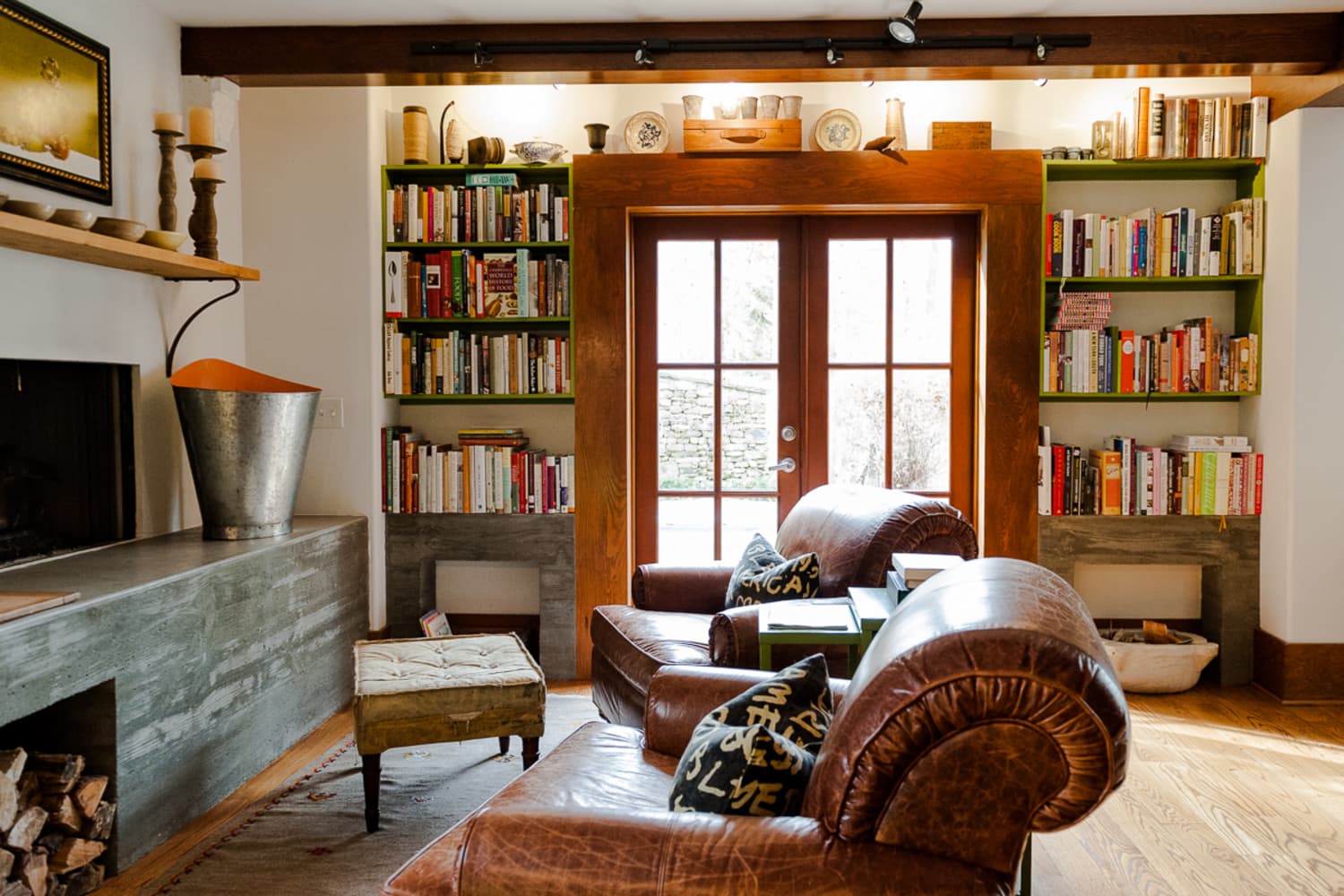
I indulged in some mood reading recently when I received a gift card to one of my favorite independent Brooklyn bookstores, Books Are Magic. I bought a slew of books that I displayed on my shelf when I got home. I stared at my new titles, then looked over at the backlog I had on other shelves. I could have easily guilted myself into picking up one of the books that had been lingering on my shelf, but I was really excited about one of the novels I had chosen. (It was “My Year of Rest and Relaxation” by Ottessa Moshfegh, for the record.) So I grabbed it, sunk into a comfortable chair, and got lost in the pages. It was a blissful experience, and one that I had been sadly denying myself for far too long, all for a reading challenge that was meant to impress … who?
In the end, I realized that the challenge was my way of chasing an accomplishment. I like being able to point to a shelf and say, “Why yes, I have read all those books.” But do you know what I like even more? Having unread books waiting for me. And now that I’ve put the enjoyment and fun back into my reading, they won’t have to wait very long.
This piece is part of Go Slow Month, where we’re celebrating taking your time, taking a deep breath, and taking a step back from it all. From deliberate design ideas to tips for truly embracing rest, head over here to see it all.