Hand’s up if you’ve been asking yourself how to declutter your home this spring! There’s something about spring that stirs up the urge for a refresh. The light changes and we can open the windows a little wider to let fresh air circulate. But we also begin to notice the things that have quietly piled up during winter—cluttered surfaces, overflowing drawers, the hallway that seems to collect everything from school bags to boots. Spring is the time we start to feel the need for a clear out, to make more space, so we can breathe a little easier in our homes.
While the idea of spring decluttering sounds uplifting, the reality often feels overwhelming. I don’t know about you but my life is pretty busy. Even the thought of devoting a whole weekend (or more) to decluttering my home from top to bottom can often be enough to make me quietly close that overstuffed cupboard and walk away, pretending I don’t see it.
This is where a gentler approach is needed. Decluttering doesn’t have to be dramatic or done all at once. It can be slow, steady, and thoughtful—a process that unfolds over time. With a few simple decluttering tips and a mindset shift, we can start to let go of the things that are no longer serving us, and begin to shape a space that feels calmer, lighter and more aligned with how we want to live.
So here are some tips on how to declutter your home without the stress. Whether you’re dipping your toe in with a drawer or two, or ready to embrace a full spring refresh, these spring decluttering tips will help you take that first gentle step.
Before you reach for the storage baskets or begin piling items into charity shop bags, pause for a moment. Decluttering isn’t just about getting rid of things. It’s about making space for what matters. So before you begin, ask yourself: why do I want to declutter?
Maybe you want a home that feels calmer at the end of a long day. Maybe you’re craving more usable space at home for family life, creativity, or simply the ability to breathe a little more easily when you walk through the door. For some, decluttering is about reducing mental load. For others, it’s about creating room to grow into a new season of life.
Taking time to connect with your reason helps the process feel less like a task and more like an act of care. It also makes the decision-making easier when you’re sorting through your things. If you know what you’re creating space for, it becomes clearer what no longer needs to stay.
This simple step of anchoring yourself in why can turn the act of decluttering your home into something far more meaningful than a spring clean. When you start with intention, how to declutter your home becomes less about getting rid of things and more about making space for the life you want to live.
Decluttering your home doesn’t have to mean turning your weekend upside down or emptying every cupboard in a frenzy of decision-making. In fact, the most lasting change often comes from small, steady shifts rather than dramatic overhauls. If the idea of a big spring clear-out feels overwhelming, start smaller and slower.
Begin by choosing just one area to focus on. That could be a single drawer, a kitchen shelf, or the pile of unopened post by the front door. Setting manageable goals is one of the most effective decluttering tips, especially if time is limited or energy is low. You might even find it helpful to set a timer—ten or fifteen minutes is often enough to make a visible difference, and short sessions help you avoid burnout.
Another gentle approach is to move through your home room by room over the course of a week or a month. Keep a basket or box nearby for anything you’re unsure about, so the decision doesn’t hold up your momentum. And don’t forget the power of a reset ritual—opening a window, playing music, or lighting a candle as you begin can help mark this time as something intentional and positive.
These spring decluttering tips aren’t about how fast you can go—they’re about discovering how to declutter your home in a way that feels calm and sustainable.
Once you’ve made a gentle plan, the next step is finding ways to fit decluttering into the rhythm of your everyday life. Because let’s be honest—very few of us have hours to spare, and even fewer have the energy to tackle the entire house in one go.
Instead of waiting for the “perfect” time, try anchoring your decluttering into moments that already exist. Ten minutes while dinner cooks. A quick sweep of the bathroom shelf before your morning shower. Sorting a drawer while catching up on your favourite podcast. These small windows of time are often overlooked, but they’re where real change can begin.
One of the simplest decluttering tips is to keep a donation bag or box out in the open—somewhere visible, easy to reach, and ready for anything you no longer need. This one act makes it easier to let go in the moment rather than putting it off for later.
You don’t need to do everything at once. In fact, the most lasting progress often comes in quiet, consistent steps. This is how to declutter your home without overloading your schedule—one habit, one drawer, one shelf at a time.
A few years ago, a friend introduced me to the Marie Kondo, a professional organiser and declutterer, and I still think about her every time I attempt to declutter my own home. Her approach starts with asking if items spark joy. If not, we should thank them for the joy they once brought and then let them go. If they still spark joy, they can stay. I really like this philosophy of gratitude. Rather than treating decluttering as an exercise in guilt or waste, she invites us to celebrate each item for its contribution. There’s something beautiful about that. It softens the process. It gives you permission to part with things that no longer serve you, without the heaviness of shame.
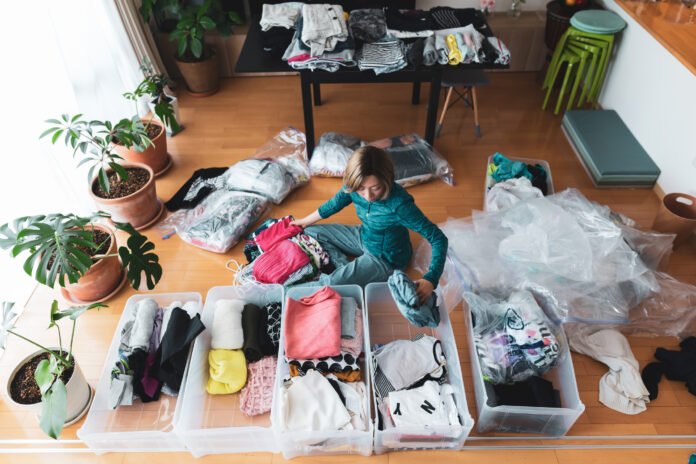
I have mostly used her approach to organising my clothing, especially the art of folding and storing garments vertically so you can see everything at a glance. This approach completely changed how I use my storage. It’s such a simple shift, but it makes daily life easier: no more digging to find what you need, no more forgotten items crumpled at the bottom of the drawer.
The Maris Kondo method is a mindset that turns decluttering your home into something deeper—a quiet ritual of release, grounded in appreciation. And it can apply to more than just clothes. That gift you never used, the book you didn’t finish, the things you’ve outgrown but feel guilty letting go of—they all played a role. And now, you get to choose what stays.
These spring decluttering tips aren’t just about what you organise. They’re about how you feel while doing it—and what energy you carry forward into your newly cleared space.
Once you’ve cleared space and chosen what stays, the next step is making it easy to keep things tidy. The best storage doesn’t just hide clutter—it supports the way you live, making everyday routines simpler and smoother.
Start by thinking about what you reach for regularly. Could it live somewhere more accessible? Are there items you love but rarely see because they’re packed away? Storage should feel intuitive, not like a puzzle. Open baskets, shallow drawers, and clear containers can help you see what you have at a glance, so nothing gets forgotten.
If space is limited, look up and look under to maximise storage space. Vertical storage is a quiet game-changer—wall hooks by the door, floating shelves above a desk, or even hanging rails inside cupboards can free up valuable surface space. Under-bed boxes, ottomans with hidden compartments, and multi-purpose furniture like ottoman beds are also brilliant options when square footage is tight.
And don’t be afraid to get a little creative. An old wooden crate can become a shoe rack. A ceramic bowl might hold keys, receipts or loose bits that tend to wander. Sometimes the most satisfying storage solutions are the ones you already have.
And if you do find there are things you want or need to keep, maybe for sentimental reasons or because you are sure you will need them in the future but you don’t need them taking up space in your home right now. You can consider hiring a storage unit where they can stay safe until needed. Self-storage is a great way to free up space at home without losing your belongings. But don’t use it as an excuse not to do the hard work!
Decluttering your home isn’t just about clearing what’s there—it’s about reshaping the space so it supports you going forward. When you find storage that suits your needs and your style, it becomes easier to stay organised, even when life gets busy.
When your storage supports your habits, it becomes easier to stay organised—and knowing how to declutter your home in a way that suits your lifestyle makes it far more likely to last.
Create Gentle Habits for a Clutter-Free Home
The beauty of a decluttered space isn’t just how it looks—it’s how it feels to live in. But once the initial momentum wears off, it’s easy for clutter to quietly creep back in. Life happens. Clutter piles up. Surfaces become landing zones. The key to maintaining a calm, tidy home is building habits that support it—gently, and without perfection.
Start small. A five-minute evening tidy-up can make all the difference, especially in high-traffic areas like the kitchen or hallway. Create a home for the things that tend to roam—keys, chargers, unread post—and reset them each day. If it helps, tie your habits to something you already do: clear the table before your morning coffee, or straighten the cushions after your favourite evening show.
You could also try the “one in, one out” method—each time something new enters your home, let go of something else. It’s a quiet way to keep things balanced, especially when it comes to clothing, books, or children’s toys.
These aren’t strict rules—they’re gentle rhythms. The kind that support a clutter-free space not through discipline, but through kindness and consistency. Because decluttering your home isn’t a one-off event—it’s an ongoing relationship with the space you’re creating.
A Home That Holds Space for You
Decluttering your home isn’t just about clearing out physical things—it’s about making space for something deeper. A sense of calm. A little more breathing room. The feeling of walking into a space that reflects who you are and how you want to live. A home you love living in.
This process doesn’t need to be fast, flawless or all-consuming. It can be slow. Quiet. Thoughtful. It can happen one drawer at a time, in between the busyness of everyday life. With a few gentle habits and a mindset rooted in intention, learning how to declutter your home becomes less of a one-time task and more of a supportive, lifelong rhythm.
Spring invites us to refresh. So take it one gentle step at a time. You don’t have to do everything. You just have to begin.
I live in a really small home. It’s a small two-bedroom flat and with two tween daughters, we really have to make the most of every square inch. It’s not easy at all and it is getting more difficult with every year that passes as the kids accumulate more stuff. Progress upgrading our flat has been snail-slow because my husband and I have been busy building multiple businesses. But we have learnt a lot along the way. Because most British homes tend to be on the smaller side we need a lot of creativity when it comes to small home ideas. So today, I want to share some advice to help you make impactful upgrades to your small home.
Declutter Your Small Home
When thinking about the upgrades you want to make to your small home that can make the biggest impact and help your home feel more spacious, the best place to start is with a really thorough declutter. Nothing else you do will make much of a difference if you are still trying to cram too much stuff into your small home. It’s time to get ruthless. Get rid of everything you haven’t used in a while and are unlikely to use again. Sell belongings, take the rest to the charity shop and anything that needs binning can go to the local recycling centre. If you find you have a lot of stuff to get rid of, consider hiring a skip to save yourself a lot of hassle. One drop-off, one pick-up, and you’re done. I am dreaming of doing this at the moment. I would love to have a thorough clearout and only hang on to the essentials and things that bring me joy every day!
Maximise Every Inch of Space in Your Small Home
Once you’ve pared everything right back it’s time to look at spacial planning. The layout of your small home will have a huge impact on how spacious it feels. It is totally possible to live in a tiny home that doesn’t feel tiny at all. I had this realisation when my husband and I spent the weekend in a small private spa in North Devon. It was roughly the size of two containers and yet it felt pretty expansive. This was primarily down to the layout, but also the many ways that the owners had used biophilic design in the property. So if your home feels like a collection of tiny, separate boxes, it might be time to rethink the layout.
Old houses love their walls. They divide, they frame, and they hide staircases in weird places. But sometimes, all they do is make life harder. Removing just one wall can open up a space in ways you didn’t expect—turning a kitchen and dining room into a social hub or making a dark hallway disappear into something airy and useful.
Not keen on full demolition? Even switching a traditional door for a pocket version can make a difference and improve the flow in your home by creating more room to move and fewer obstacles.
One thing we have learnt over the years is that it pays to invest in multi-functional furniture. When you live in a small home, everything that you bring in has to work super hard for you to earn its place. Some of the best storage solutions don’t even look like storage. An ottoman bed that lifts to reveal under-bed storage works wonders in our bedroom for storing away bed linen and extra towels as well as spare bags and backpacks. We also have a coffee table in the living room with storage inside for extra blankets and cushions. When it comes to choosing furniture for a small home, multi-functional pieces are well worth the investment.
Use Natural Light to Open up the Space
The internal window in the home office allows natural light to move through this North London terraced house by Cairn Architects | Photography by Peter Landers and Anna Stathaki
One way to make a small home feel larger is to make the most of the natural light that you have available. A dark room shrinks. A bright one expands. Light is magic like that. So make sure that windows are unobstructed. Don’t place furniture that will block natural light from entering the room. Choose window treatments that let the maximum amount of light in during daylight hours and make sure you hang curtains outside of the window frame so that they don’t block out any light when open.
Mirrors can help to bounce natural light around your small home. Place them opposite a window, and all that natural light will be reflected back into the room. They also create the illusion of having another window in the room making it feel double aspect and much more expansive.
Another trick is to switch out solid doors for glass-paned doors and adding in internal windows that let light move throughout your small home uninterrupted. This can allow natural light to illuminate darker, narrower spaces that need brightening.
If your home lacks natural light like mine does, consider how to effectively use artificial light. Layer your lighting by choosing a mixture of overhead lighting, table lamps, wall sconces and LED lighting under shelving and cabinets. This will help your home feel more flexible as you choose the right kind of lighting for a given moment.
Storage is more important than ever in a small home and there are some clever ways to maximise your storage solutions. Having your belongings out on display will only make your small home feel smaller due to the visual clutter. Instead, meticulously curate what you want to have out on show and store everything else away neatly and out of sight.
If you have open shelving units, consider adding small storage boxes so everything is out of sight and streamlined. If you have awkward alcoves, consider creating built-in storage cupboards with doors that keep your belongings out of sight.
If your small floor plan doesn’t leave much room for added storage cabinets, consider using the vertical potential of the walls. The space up near the ceiling is wasted space and can easily be maximised. For example, if you don’t have space for a floor-standing bookcase, install a book shelf about a foot below the ceiling that extends around the room. This keeps your books out of the line of sight but still accessible and makes the most of that unused space.
Create Depth with Colour and Texture in a Small Home
It is very tempting in a small home to stick with white or other very light colours when you decorate. Wisdom tells us that lighter colours reflect light and darker colours absorb it. Whilst this may be true, no amount of white paint is going to make a particularly small home feel as spacious as you’d like. Instead embrace cosier darker colours and give your home some personality.
Texture can bring your home to life and will make a big impact as it will not only make your small home feel cosier but it will also add layers of visual interest and tactility that will tantilise the senses.
If you are lucky enough to have outdoor space make sure you are maximising its potential. Vertical gardens can turn a bare wall into a lush green feature. A foldaway bistro table and chairs mean you can eat outside, even if it’s just a morning coffee. And if your garden connects to your home, matching indoor and outdoor flooring can blur the boundary, making everything feel bigger. Whether you have a large garden like we do, a small courtyard, a narrow balcony or a tiny strip of grass, there is always a way to upgrade it to benefit your small home.
No matter the size of your small home, there are affordable upgrades you can make that can help you to maximise it’s potential, make it feel more spacious and organised. Remember, the best small homes don’t try to pretend they’re bigger. They just use every inch brilliantly.
If you have any tips to add, please share in the comments.
Traditional decluttering wisdom dictates that you have four options when undertaking an out-with-the-old project: to keep, donate, sell, or trash. But the process of downsizing is so much more emotional than that. No, it’s not practical to save everything that’s ever belonged to you, your children, or your late loved ones. But items like birthday cards, shabby stuffed animals, or photographs provide a tangible attachment to the times in our lives that you want to remember.
What gets tossed, what do you keep, and how do you know if those antiques are actually worth something? Sometimes, a massive haul to a secondhand shop or the dumpster lifts a weight off your shoulders. And other times, a hasty purge can lead to regret if you discard items of high monetary, sentimental, or practical value. And the culture of “consume, discard, and repeat” is not a sustainable practice for the health of our planet.
For more content like this follow
Shara Kay, a Certified Professional Organizer and board member of the National Association of Productivity and Organizing (NAPO) Los Angeles chapter, walked me through her process on how to go about downsizing more thoughtfully. She broke down the five instances when you should hold off on kicking your stuff to curb, and how to take a more sustainable approach to decluttering your space. Read on to learn how to get rid of clutter without holding on to regret.
Know the actual worth of so-called collectibles.
If you’ve found yourself in the sensitive position to re-home an entire lifetime’s worth of items from an aging or deceased relative’s estate, you may come across high-value items like fine china, artwork, antiques, jewelry, or collectibles. A professional appraiser can evaluate the items for a fee and suggest an outlet to re-sell, if you’d rather not keep them for yourself. However, Shara says that a free and easy way to begin research on an item’s worth is a search of comparable pieces on eBay or other auction websites.
Make sure sentimental items actually are just that.
Any object that’s passed down from generation to generation can become a family heirloom. Items like jewelry, cookbooks, quilts, journals, and even musical instruments that belonged to your relatives can hold a ton of sentimental value. But not all family members are going to hold these heirlooms in the same regard, and it’s impossible to predict what the younger generations in your family will value. Only keep what has been established as holding family memories.
“You are building a legacy with your belongings, but the more selective you are about what you keep, and the more you share the stories behind the items, the more likely the recipients are going to keep it,” explains Shara.
Give your kids’ old toys a “cooling off” period.
With so much clutter in their playrooms and closets, it can be tempting to chuck anything that your kids haven’t played with in a while. Families might regret tossing too many toys, books, and clothes too soon, though, and children can insist on holding on to toys even if they’re not actively using them. Shara offered her advice on how to minimize all the stress and heartache.
“Place a couple of boxes of old toys out of sight, and if the kids don’t specifically ask for them after three months — or whatever time frame you’ve established — it all gets donated.”
Bonus tip: Shara says this is a great trick for adults as well. Leave the items you’re not sure about in a garage or spare room for a designated “cooling off” period. If you find yourself missing your things, keep them. If you feel lighter living without them, toss!
If it’s broken, see about fixing it.
Did you know that thrift stores are so overwhelmed with donations, only a fraction of donated items end up on their sales floors? Our discarded stuff has also piled up in landfills and on beaches, and microplastics are now part of the ocean’s ecosystems. As people become more interested in sustainability, Shara encourages her clients to reconsider discarding items with small flaws.
Look at those wardrobe pieces you are ready to ditch with a more critical eye: What can go to the tailor or the shoemaker? Would you wear that jacket again if you replaced the broken zipper? This applies to interiors, too. “We bring in the steam cleaners to shampoo upholstery and carpets,” she says. “Suddenly everything looks new again and the clients are so excited about their refreshed space.”
Take stock of what conjures the best memories.
A “memory item” is something that doesn’t have practical value, like a pair of gently worn shoes or a small appliance, but it can’t be replaced. These can be photos, school awards, or the wedding dress you’ll never wear again. Shara advises picking one representative item from each category of personal memorabilia. Instead of holding on to all your school awards, keep the one that was most important to you.
Rather than saving all of your grandfather’s coins or hoarding your grandmother’s scarves, save the one that brings about the best memory. Boxes of old photos can be downsized if you remove the ones that are blurry or faded beyond recognition. Another great space-saver that keeps old memories alive? Bring them to a photo digitizer!
This 20-minute method might help if you feel similarly averse to making so many decisions at one time.
For more content like this follow
Step 1: Choose a space and set your goal
Choosing the space is the easy part: just make it small and manageable. For instance, choose one drawer, not the whole set of drawers. Setting your goal takes more introspection. You must be kind to yourself and acknowledge your limitations. Some possible goal ideas include:
Step 2: Remove everything
This sounds easy because it really is. Take a few disposable shopping bags or used shipping boxes and put everything into the bags (or boxes). Do not overfill the bags. You can remove the items by category if you are feeling extra sharp. Use separate bags for different categories of items. For example: from a pantry shelf, put all the baking goods in bags, then put all the canned goods in a bag. Continue this process until you’ve cleared everything out of your small space.
You’ll have miscellaneous items and that’s fine. Remove them anyway and put them in a “random” bag. The point is to achieve a clean slate. If you have a short attention span, removing items by category is probably not going to work for you. That’s okay, my friend. Remove things without categorizing. Place the bags or boxes on the floor of your area somewhere they are easy to access, but out of the way of your daily activity.
Now you are essentially done with the decluttering part. It’s time to go live your life and see what you need from the bags on the floor in the coming week (or two). When you need something, go shopping from the bags. This method works for a lot of people because it focuses on acquiring instead of letting go. Humans love to get new things which is what got us into the cluttered mess to begin with, but I digress. By shopping your bags of stuff, you only bring things back into your space as you need them and put them back together with like items.
To help yourself stay on track in the first week or so, write your goal or a reminder on a sticky note and mount it where you’ll see it over and over in the decluttered area. “Only things I use every day” or “Would I buy it again if I lost it?” After a few weeks, get rid of the shopping bags and whatever remains in them. Donate the bags or put them out by the curb and move on. Yes, throwing out these bags can feel irresponsible, but taking care of yourself and your mental health is equally important. If finding the exact right place to donate or recycle is keeping you stressed out and living with clutter, just throw it away. Good enough is perfect.
Trust that if you need something, you’ve gotten it out already. Focus on how nice your newly cleared area looks. Maybe find some containers to organize what’s left in your space. You deserve to live in a comfortable space without being stressed out by disorganized clutter!
Give this method a try and be kind to yourself. Be curious about the whole experiment. Wonder about what you’ll go shopping for in your bags and boxes on the floor. I’m guessing you won’t miss much of it at all!
Do you feel like you have too much stuff? You’re not alone:
It’s undeniable: Americans are drowning in stuff. The rise of fast fashion, “fast furniture,” and wasteful habits have all contributed to this problem.
And yet, there are many families in need that cannot afford basic necessities like clothing.
If you want to free yourself from clutter, there’s no time like the present to assess your belongings and break the cycle of overconsumption. You’ll be less stressed, less anxious and can even feel more self-confident. You’ll also be giving back to your community if you donate any items.
If you don’t know where to begin, we’ve got you covered: Start with our room-by-room checklist.
Top Decluttering Tips For Your Home: Room-by-Room Checklist
The first rule of decluttering is: Don’t try to tackle everything all at once. Organizing and decluttering gives you a huge sense of accomplishment, but if you try to take on too much, you’ll just get overwhelmed.
Instead, break up your decluttering mission by room. Then break it down even further. Go one cabinet, drawer or shelf at a time. This is especially true if you have a lot of stuff in your house that needs to be donated, thrown out or reorganized. If you focus on one small section of your home at a time, you’ll have a clear organization plan and ultimately accomplish more.
The bathroom is often overlooked when it comes to organizing, but this room can easily start overflowing with expired, old products. If your bathroom is full of forgotten skincare serums, unused Bath & Body Works gift sets or foundations that aren’t quite your shade, it may be time to reevaluate.
Credit: Kostikova / Getty Images
Additional tips for decluttering the bathroom:
Some makeup and toiletry products expire after a few months, so throw out anything that is past its expiration date. In the future, you can label the date you open makeup products so that you know when they’ve gotten old.
Reassess your bathroom routines and the products you use every few months to avoid overbuying.
To maximize the functionality of your bathroom, keep only the products you use the most out on the counter, and put the rest away in drawers or bins.
The Bedroom
Your bedroom should be your “zen” space. But all too often, it becomes a dumping ground for piles of laundry, empty water cups and artwork you’ve been meaning to hang up for months (or even years). You don’t need to be overwhelmed by the mess — start one step at a time:
Additional tips for decluttering the bedroom:
Tackle a bedroom decluttering project in stages. Organizing your nightstand, dresser and closet separately can prevent an organization project from becoming unruly.
Being selective about which items you want sitting out can make your space feel less cluttered and makes surfaces easier to clean.
Utilizing floating shelves, wall hooks and under-the-bed storage appropriately can help maximize your storage and display space.
The Closet and Clothing
For many people, clothing is the largest source of clutter in the home. An overabundance of clothing can not only overfill your closet and drawers, but spill into other aspects of your life as well. It makes doing laundry, keeping your space organized and just choosing outfits each morning more stressful than necessary.
Credit: AndreyPopov / Getty Images
Additional tips for decluttering the closet:
When going through your closet, have a close friend or family member help you decide what to keep or get rid of. Having someone else there can encourage you to get rid of more items.
When organizing your clothing, take account of what you have. Make a list of any items you actually need. When you’re out shopping for clothes, don’t buy anything new that is not on the list. This makes it easier to stop yourself from buying unnecessary clothing.
If there are items that you haven’t worn much but would like to, hang them up in a prominent place in your closet. You’re more likely to wear something when it’s in your line of sight.
The Kitchen
Although it’s important for every room in your home to work for you, the functionality of your kitchen may be the most important. Who wants to cook in a disorganized, overflowing mess of a kitchen? Once you declutter your kitchen, you’ll be excited to make delicious, home-cooked meals again.
Additional kitchen organization tips:
Store holiday items or other items you use rarely in higher cabinets or away in storage containers.
If you need additional storage space in your kitchen, try using a rolling cart. You can move it out of the way when it’s not in use, and it can make kitchen tools more accessible.
Storing pans, baking sheets and other kitchen tools vertically rather than horizontally can prevent you from pulling everything out when you need to find one item.
The Living Room
The living room is the focal point of your home. When you have guests over, it’s almost guaranteed that they will spend time in the living room. But you want to enjoy the space, too.
That’s why you should use your living room to highlight the items you love the most, and store away items you don’t want to look at. You’ll enjoy relaxing in your living room more, and the items you display can serve as awesome conversation starters.
Additional living room organization tips:
If extra throw pillows and blankets are taking up space in your living room, try putting them in an ottoman with built-in storage.
If your living room tends to be a “catchall” space for random household items, try adding a collection basket for your family to use instead. Rather than immediately throwing items on the floor or tables, they can put things in the basket to be put away in the correct place later.
The perfect time to complete home renovations is after a declutter. New built-in storage, energy-efficient windows, hardwood flooring or simply a new coat of paint can transform your home and make it even more impressive to guests.
What Items Should You Keep, Throw Out or Donate to Charity?
Making decisions about what to keep, give or throw away can be difficult. When going through your stuff, focus first on the purpose each item serves and how it makes you feel. You should predominantly keep things you genuinely enjoy, care about or use.
10 Questions to Ask Yourself When Decluttering and Organizing
When deciding what to keep, throw away or donate, the two most important questions to ask yourself are: Do I love it? Do I use it?
However, the reality is that the sorting process is not always that simple. If you’re having trouble deciding what to keep and what to get rid of, dig a little deeper with these questions:
Do I love this item?
How frequently do I use this item?
Will I use this item in the near future?
Is this item broken?
If so, will I really repair it?
Do I already have an item that serves the same purpose as this?
Will not having this item impact my daily life?
Is this item worth the clutter it’s creating?
Does this item serve who I am today?
Would I buy this item again?
If you’re grappling with the idea of permanently getting rid of items, try setting them aside. Put items you may want to get rid of in a box that you can put away for a couple of months. If you don’t reach for any of those items during that time, take those items to your nearest donation center.
What Items Can You Donate to Charity?
Some items can’t be dropped off at your local Salvation Army, Goodwill Community Foundation or other large charitable organization. These restrictions are often in place due to safety or size guidelines.
That being said, you may still be able to donate certain items elsewhere. For instance, items like eyeglasses, large appliances and medical devices are not accepted by larger organizations. However, there are smaller charities that accept these items specifically.
Things you can donate:
Clothing
Household items and small appliances
Jewelry and accessories
Books
Computers
Furniture
To learn more about what items Goodwill accepts, click here.
Credit: Grace Cary / Getty Images
Things you should only donate at designated charities or locations:
Eyeglasses
Large appliances
Exercise equipment
Old TVs and other large electronics
Stuffed animals and pillows
Hearing aids
Walkers and wheelchairs
Cribs
Other medical or mobility devices
Things you can’t donate:
Old mattresses
Used toiletries, cosmetics or haircare products
Damaged or stained furniture or clothing
Hazardous materials, including medical supplies, weapons or cleaning supplies
4 Charities That Help With Free Donation Pick Up
There are many charities that will pick up your large donation items, free of charge. Here are just a few:
Habitat for Humanity
Habitat for Humanity is a nonprofit organization that aims to make housing more affordable for families all around the world. They help build and improve homes at little or no cost to families in need.
Items that Habitat for Humanity accepts: Appliances, furniture, building materials and household goods
How your donation helps: Donations help with the building and furnishing of affordable housing. Donated furniture and household items are sold at a steep discount in Habitat ReStore locations
How to schedule a donation pick up: Enter your zip code here to find your local Habitat ReStore location. You can contact your store to schedule a pickup of larger items like furniture
Learn more about Habitat for Humanity or get involved at habitat.org.
Goodwill
Goodwill is a nationwide charitable organization that uses donations to fund workforce programs and training. Its mission is to increase opportunities and economic advancement of community members through education and skillset development.
Items that Goodwill accepts: Household items, shoes, furniture, books, small appliances and more
How your donation helps: Donated items are sold in its stores at a steep discount to people in need, and profits fund workforce programs
How to schedule a donation pick up: Find your closest Goodwill store here and call to schedule a pickup for larger items
Learn more about Goodwill or get involved at goodwill.org.
Furniture Bank Network
Furniture Bank is a network of nonprofits, charities and social enterprises that share the mission of providing gently used furniture to families in need at little or no cost.
Items that the Furniture Bank Network accepts: Furniture and vehicles
How your donation helps: Furniture Bank is a community of like-minded organizations that want to help create a better living situation for low-income households
How to schedule a donation pick up: Locate your nearest furniture bank and call to organize a pickup
Learn more about the Furniture Bank Network or get involved at furniturebanks.org.
Out of the Closet
Out of the Closet was founded in the 1990s with the mission of making HIV and AIDS prevention and care more accessible. Today, 96 cents of every dollar its customers spend are donated to the AIDS Healthcare Foundation.
Items that Out of the Closet accepts: Furniture, home goods, kitchenware, appliances, electronics, tools, musical instruments, clothing, shoes, books, estate items, artwork and more
How your donation helps: Out of the Closet funds AIDS Health Foundation’s affordable HIV prevention and healthcare services
How to schedule a donation pickup: Fill out the large item pick-up form on its website to schedule a pickup at your nearest location
Learn more about Out of the Closet or get involved at outofthecloset.org.
Places to Sell Items
There’s nothing wrong with an old-fashioned yard sale. But in the age of technology, you can maximize your earning potential (without sacrificing your Saturday morning) by selling old items online. There are plenty of local thrift and consignment shops that will pay you for clothing and home items, so there’s really nothing stopping you from earning some extra cash.
Credit: OKrasyuk / Getty Images
4 Great Places to Sell Your Stuff Online
It’s never been easier to sell your things online. These sites make it easy to start making money:
Facebook Marketplace: You can sell pretty much anything on Facebook Marketplace. The platform allows you to set the price of each item and decide whether to arrange a pickup with the buyer or opt for shipping. For step-by-step instructions on how to sell items on Facebook Marketplace, click here.
Poshmark: Poshmark is a great app if you’re looking to sell clothes and accessories, especially brand-name pieces. It’s easy to make an account and start posting your unwanted items, and if an item sells, you don’t have to worry about shipping fees. You’ll print out a prepaid shipping label to pack up and ship your package. Poshmark takes a fee for each item that you sell, and there is no option to pick up items locally. Learn more about listing on Poshmark here.
ThredUp: If you don’t want to go to the trouble of individually listing items on Poshmark or another selling app, you can use ThredUp. Once you make an account, you can order a free “Clean Out Kit.” Once you receive the kit in the mail, fill it with your unwanted clothing items and ship it back with the prepaid shipping label. The ThredUp team will sort and list your items, and you’ll make a commission when items sell. Learn more about ThredUp here.
OfferUp: OfferUp is an app that lets you sell almost anything locally. Once you post your item, interested buyers will message you and you’ll agree to a price. Then, you can either ship the item or arrange a pickup in person. The good thing about OfferUp is that you can rate buyers, so untrustworthy buyers will be penalized. Learn how to post on OfferUp here.
Local Consignment Stores
Consignment shops will pay you for items that you don’t want anymore. Large consignment store chains like Plato’s Closet, Once Upon a Child and Uptown Cheapskate will pay you on the spot for trendy, lightly worn clothing.
There are many locally owned consignment shops throughout the U.S., so do your research to find a store that fits your needs.
How to Maintain Your Home After Decluttering
We’ve all been there: you’ve finally taken the time to declutter and organize your home, but just a few weeks later, it feels like you’re wading through piles of junk again. You keep ending up back at square one.
Credit: Kilito Chan / Getty Images
This time, you want to declutter for good. Thankfully, there are simple ways to finally make your space work for you and avoid recurring cleanouts:
Create a functional space: It’s much easier to maintain the organization of a room that is functional for your needs. That means that the items you use the most should be easily accessible, while items you use less frequently can be stored up high or in the back of cabinets and closets. That way, you won’t be digging through items you rarely use just to get to an item you use daily, creating a chaotic mess.
Be mindful of what you’re bringing in: After you declutter, you’ll feel like you have so much more space in your home. But don’t let this tempt you to begin filling the space with new objects and start the cycle all over again. Instead of using your recent declutter to justify buying more stuff, use it as an opportunity to enjoy what you already own. Of course, bringing in some new items is inevitable, so try practicing the “one in, one out” method: Whenever you get a new item, donate or give away an old one.
Use labels: When you’re decluttering and organizing, labels are a great way to categorize your items. Not only will you always remember where things are, but labeling also makes it easier to maintain your newly organized space.
Get your family on board: Chances are, if you live with other people in your home (especially kids), you understand the struggle of painstakingly cleaning and organizing a space just to see it torn up again in a matter of days (or hours, or minutes). Involving your family in the decluttering process and setting expectations can help get your family on board with maintaining a clean space.
Make organizing fun: That being said, if you have kids in your home, they may be resistant to the decluttering and cleaning process. Try making the process as fun as possible: incorporate bright-colored sorting bins, turn on some music or make cleaning and sorting a game. You can also explain to older kids that the items they donate can be used by people in need, so everyone feels good about giving.
Set aside organization time each week: We’d love organizing and decluttering to be a “one and done” deal, but the reality is that even the most organized space requires maintenance. To avoid spending a whole day (or days) decluttering again, set aside time each week for maintenance. It doesn’t have to take long — just 15 minutes goes a long way in preventing items from piling up.
Benefits of Decluttering and Why You Should Donate
It goes without saying that decluttering is good for your peace of mind and donating items helps people in need. Here are just some of the benefits of decluttering:
Furthers the life-cycle of your gently used belongings, which reduces your carbon footprint: Donating items extends the life of your items, and prevents them from ending up in a landfill.
Charitable donations are tax deductible: To learn if your donations are tax-deductible, keep reading here.
Helps provide affordable furniture and clothing to families in need: As we mentioned above, charitable organizations like Habitat for Humanity and Goodwill resell your donations at a very low cost so families in need can afford to furnish their homes.
You get to enjoy your items more: The simple fact is that you cannot enjoy items that are hidden in the back of a closet, under piles of junk or hanging out on the floor. When the items in our house are actually items we actively chose to keep and appreciate, we get to enjoy them more.
Reduces stress and anxiety: A study from the University of Connecticut concluded that removing clutter directly reduced stress and anxiety, and even increased self-confidence. It’s true — don’t you feel better when your surroundings are clean and organized?