Looking for a way to increase the value of your home? Whether you want to enhance your home’s beauty for your long-term enjoyment or boost the value of your home to put it on the market, it’s important to keep curb appeal top of mind.
That’s because first impressions count. Indeed, curb appeal accounts for up to 7% of home value, according to research conducted at the University of Texas at Arlington. It’s also the first thing people see when they visit your home, whether those folks are prospective home buyers or friends and family. During National Curb Appeal Month in August, let this checklist be your guide to beautifying your home’s exterior:
Project #1 – Raise the Roof
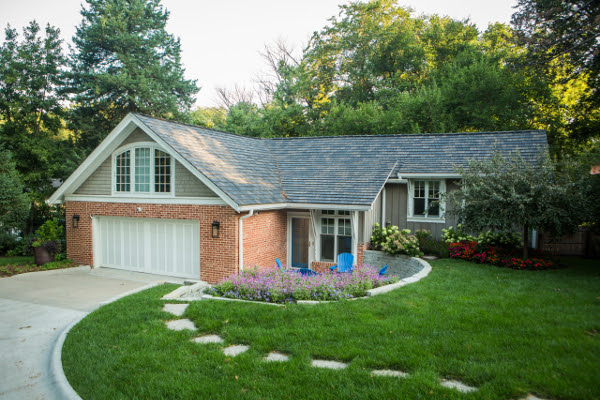
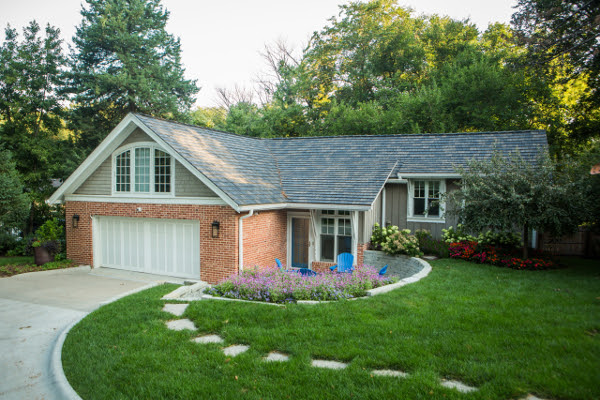
Work your way from top to bottom of your house, taking into consideration that the roof is one of the most prominent features of your home exterior. If it’s time to replace your roof, be sure you’re investing in a product that’s impact- and fire-resistant, as well as resistant to fading, rotting, cracks and insects. The good news is that you don’t need to compromise beauty to get this level of long-term durability. To capture the authentic look of real cedar shake while getting the high-performance benefits of composite materials, consider upgrading with the Select Shake composite tiles from DaVinci Roofscapes, which come in 11 color blends for a finished multi-width look. The brand also offers a Lifetime Limited Warranty, giving you peace of mind.
Project #2 – Beautify your Entry Door
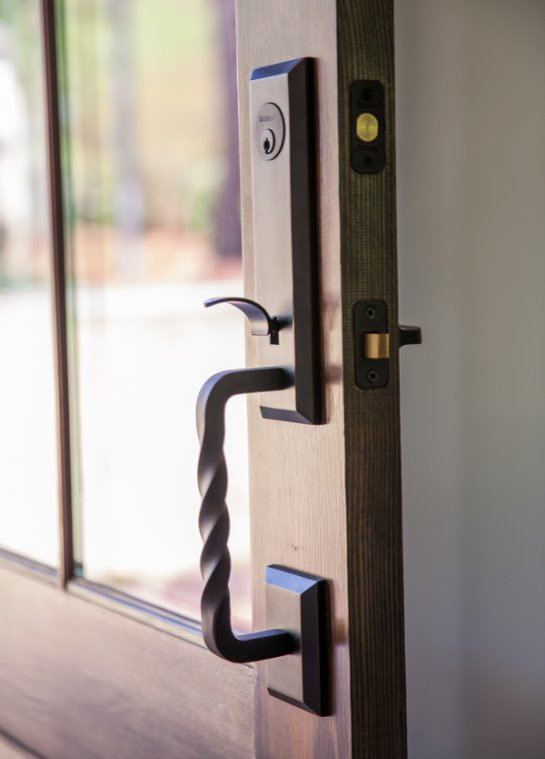
Upgrading your entry door handle is like icing a cake: it adds a special finishing touch to your home and makes a great first impression. Step up your style with Delaney Hardware’s premium Bravura designer collection. Made of solid forged brass, the pieces in this line provide timeless sophistication and craftsmanship that can’t be duplicated. Available in a variety of styles, from an elegant farmhouse design to a sleek modern handle set, you can customize your hardware with one of several finishes: aged bronze, aged pewter, oil rubbed bronze, polished chrome, satin brass, or satin nickel.
Project #3 – Create a Perfect Pathway
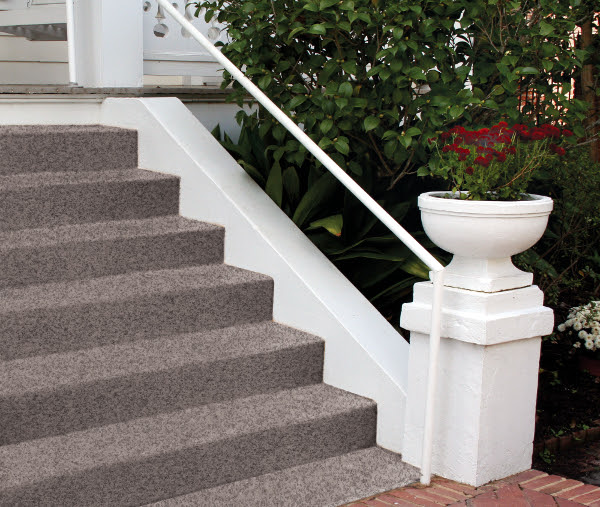
Are your front walkway and steps riddled with hairline cracks and minor flaws, or are they simply drab? Revitalize them completely with a real stone coating. The Terrazzo line from Daich Coatings offers the beauty of real granite in six colors and can be applied to concrete, masonry, linoleum, vinyl and tile surfaces. Tested for water, salt, chemical, impact and abrasion resistance, this long-lasting stone coating is easy to apply, easy to clean and works in any environment. Though it creates a surface that’s naturally slip-resistant, it’s a good idea to apply TracSafe Anti-Slip Sealer on top for added safety in both wet and dry conditions.
Stepping up your curb appeal is simple when you have the right tools on hand. Battery-powered outdoor products enable you to tackle all your routine chores quickly and easily. For tasks ranging from mowing the lawn and trimming bushes to blowing leaves, consider stocking your toolshed with RYOBI Outdoor Products. The 40-volt lineup includes 50 cordless outdoor products that share the same battery. Since they’re battery-powered, the products are quieter and require no mixing of gas and oil, no maintenance, and no-hassle starting, delivering maximum cordless convenience.
In the world of buying and selling homes, there are two words everyone knows: curb appeal. This phrase describes how an initial look at the exterior of your home can make or break a first impression. As part of this, your home’s driveway plays such a crucial role in welcoming people to (or letting them know they should steer clear of) your property.
Two real estate pros explained why there’s one driveway trend you should avoid if you want your home to appeal to practical buyers at first sight.
It’s more than a parking spot.
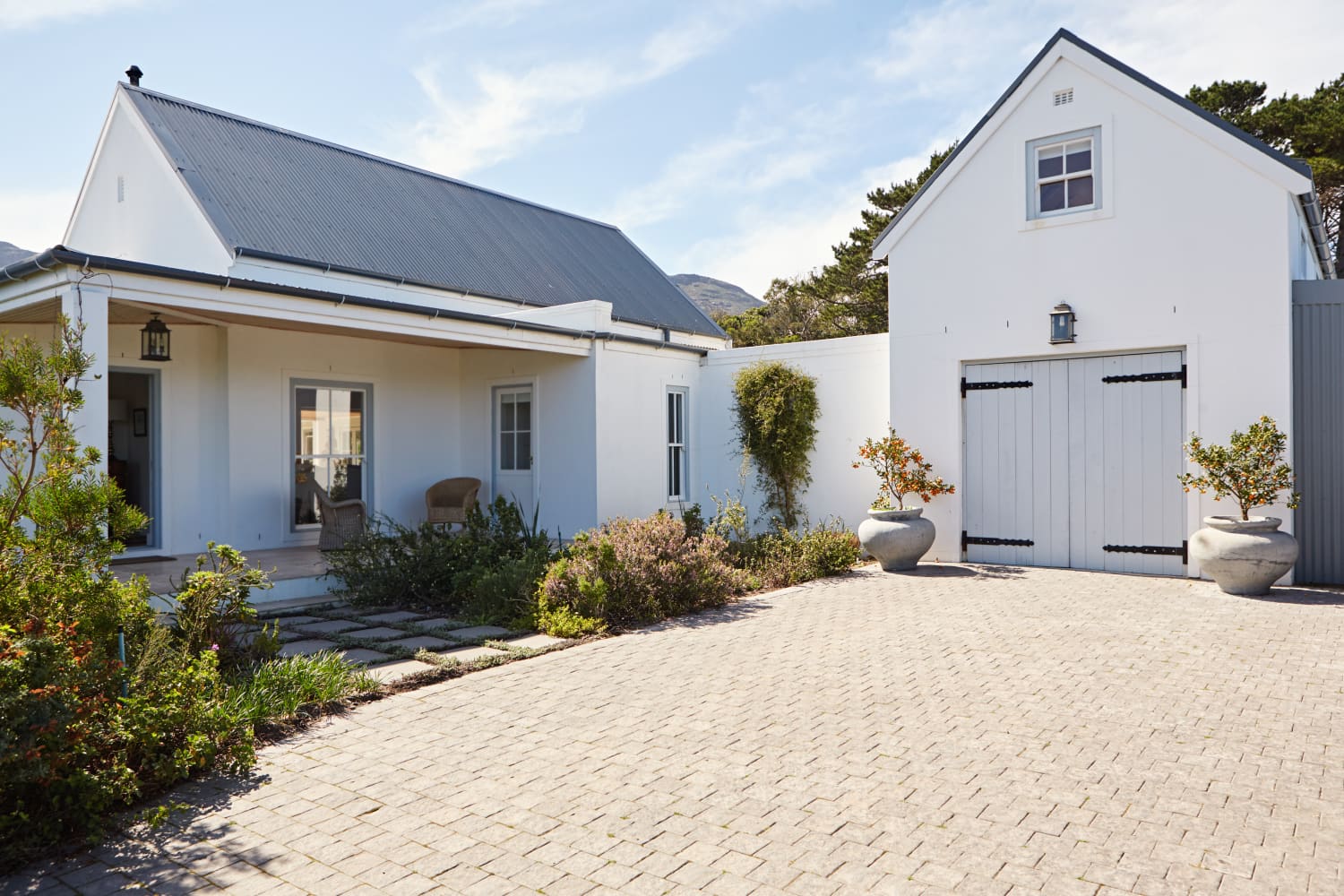
Your driveway can be more than just a place to park your vehicle at the end of the day — sometimes it’s an extension of your home itself. “A driveway builds the initial aesthetic and can accentuate the architecture of any style house,” says Melissa Sofia, Realtor and founder of The Avenue Home Collective. She explains some homeowners add drama and texture to a Colonial home with a brick driveway, or create clean, modern lines leading to a contemporary home with a driveway made of geometric pavers. But you might not always want to go for drama right off the bat.
Paver and bricks are nice, but sometimes problematic.
According to Sofia, those dramatic paver driveways have a heftier price tag than their concrete or asphalt counterparts. “A brick or paver driveway can be two to three times the cost of concrete,” she says. And that doesn’t take their upkeep into consideration: “Paver and brick driveways tend to allow for weeds to grow in and need cleanup weekly, adding to the time and cost for yard work.” In some cases, Sofia says tree roots or settling soil could move bricks or pavers, creating an uneven, mismatched look. This could turn off buyers who are looking for a clean, low-maintenance front yard.
There are also some cold-weather worries.
In the South, where winters are relatively mild, the weekly maintenance required to keep paver driveways neat and weed-free might not be a big deal. But where the snow falls in inches and feet, it’s an entirely different story. “While paver and brick driveways are aesthetically pleasing and water permeable, they can also present some bothersome challenges,” explains Tom Makinney, Jr, founder of the Makinney Group. “For example, in the Midwest or other areas where it snows, many homeowners are leery of brick driveways, because you have to hand-shovel or use a snow blower [rather than plow] during snow storms.”
Winter weather isn’t the only woe.
Makinney says that even in the summer, the toll of caring for your paver driveway pad might be too much. “They can be troublesome in warmer months, too, as you may find yourself leveling, resetting bricks, and killing weeds that grow between [the stones].” This is why many real estate agents advise homeowners who are considering upgrading their driveway to go with a more one-and-done option like concrete or asphalt, which both require more infrequent maintenance and care. Even if you don’t get the same wow factor, there’s certainly plenty of delight to be had in a “set it and forget it” style driveway.
Lauren Wellbank is a freelance writer with more than a decade of experience in the mortgage industry. Her writing has also appeared on HuffPost, Washington Post, Martha Stewart Living, and more. When she’s not writing she can be found spending time with her growing family in the Lehigh Valley area of Pennsylvania.
Sarah is Apartment Therapy’s editorial assistant. She recently completed her MA in journalism at the University of Missouri and has a bachelor’s degree in journalism from Belmont University. Past writing and editing stops include HGTV Magazine, Nashville Arts Magazine, and several outlets local to her hometown, Columbia, Missouri.
Surely every Apartment Therapy reader has heard of the fabulous designer Duarto Feliz… of “The First Wives Club” fame. As the film’s three heroines (depicted by the iconic trio Goldie Hawn, Bette Midler, and Diane Keaton) attempt to escape from a high rise via window washing scaffolding, Feliz distracts the unsuspecting owners with this tried and true fact: “Windows are the eyes of a room… the valance is our eyebrows.” But where does that leave shutters?
In my opinion, shutters are the eyelashes of the home that transform a structure from “just rolled out of bed” to “Madame, your car is here, and Mr. Chalamet is expecting you.” All this pop culture gobbledygook to say: shutters elevate a home’s curb appeal. And the color you choose for those shutters has a massive influence on the overall effect. I spoke with real estate experts to get their take on the best colors to choose for shutters that certainly would be Duarto Feliz-approved.
It’s no big deal to take a favorite color, like bright yellow, and add it to a home’s interior. It’s a different story when considering a home’s exterior palette. Zach Opheim, a Nashville-area real estate agent, sums up the issue, sharing, “Because this is such a personal preference decision, I think most homeowners are wise to go with a color that compliments the home color, a door paint color, or even the gutter color. What we don’t want to see is a super bright contrasting color that doesn’t follow the scheme of the home.”
It can be difficult to navigate pairing exterior, like brick or siding, with accents like shutters and trim. There is never any one option, which Chicago-based Realtor Amy Wu is seeing now in a newly constructed neighborhood. “Currently, I have clients buying new construction and they have decided to go with a beige color to go along with the red-brick exterior,” Wu says. “Their neighbors decided to go with black shutters. The shutter color matches the color of the front door.” Homeowners can meet with experts at home improvement stores or more specialized paint stores and ask for a plethora of options that are most likely to coordinate with the home’s existing materials and aesthetic.
When you’re stuck in a shutter rut and panicking about what step to take, there’s a simple solution: neutrals. San Diego-based Realtor and president of Coastline Real Estate Group Shaylie Gilliland shares, “We always tell our sellers ‘go neutral, go off-white’ with the trim as well because that’s something that universally people are going to like versus the darker takes.” I realize that there are one million versions of “neutral” that are often barely distinguishable from one another except for names like Dove and Pigeon (a peaceful gray versus a nearly identical urban version?), and perhaps that’s the beauty of the neutral solution: simplicity.
Opheim sums it up brilliantly when he says, “All in all, safe is always best if appealing to the masses is the end goal.” You want resale value? A solid fix before listing? A lasting color you can assign the shutters and then forget about for eternity? Neutrals.
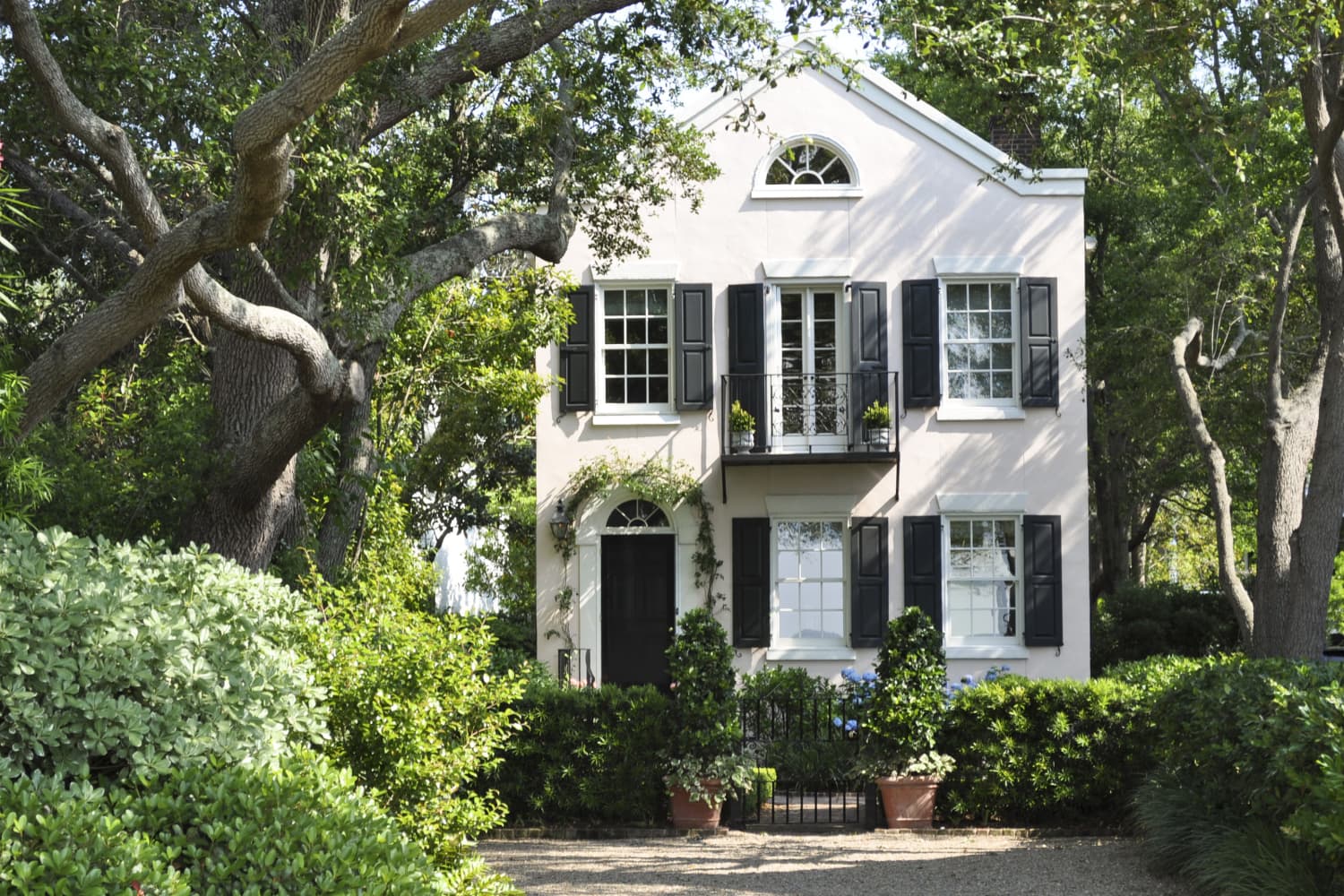
If you’re looking to add a pop of intrigue to a classic home or want to modernize your facade, go dark. “Modern homes have the ability to go dark or bright,” Opheim says. Those considering lighter neutrals can explore some deeper darks for a crisp, sophisticated look. Plus, black is cozy, timeless, and trending. It might feel like a risky commitment, but it’s definitely a risk worth taking.
In addition, depending on the climate, weather patterns, natural foliage in the area, or kids with a propensity for mischief, dark shutters may be easier than lighter colors to keep clean. I don’t know about you, but in My House we love working smarter, not harder — and I guess that includes minimizing shutter maintenance.
What works in Chicago might differ from what works in Albuquerque, which might differ from what works in Boston. For those hoping to accentuate their regional vibe, whether for aesthetic reasons or logistical ones, there are shutter color options to explore. Opheim, who’s shown his fair share of both modern and classic homes in the Nashville area, says, “a historic home may need to stick with a lighter neutral to keep the focus on the home vs. the colors.” This is something to keep in mind for those maintaining the integrity of their home’s historic value.
It’s also critical to remember that shutters exist for a reason, and not simply as a window accessory. Gilliland shares that in her San Diego community, which has a massive condominium population, “With condos it’s a little bit more difficult to capture the natural light, so it’s extremely important to not have dark colors inside of a condo.” Make your shutters work for you.
And frankly, those living in New Orleans can throw this entire article’s advice away. No one wants to saunter along the French Quarter, footlong Hurricane in hand, past neutral shutters! The only neutral thing in the Big Easy should be the neutral ground. Show me the pinks! The oranges! The purples! At the end of the day, your shutters help your windows pop. If you’re mindful of our experts’ advice, you can’t go wrong.
Sarah Magnuson is a Chicago-based, Rockford, Illinois-born and bred writer and comedian. She has bachelor’s degrees in English and Sociology and a master’s degree in Public Service Management. When she’s not interviewing real estate experts or sharing her thoughts on laundry chutes (major proponent), Sarah can be found producing sketch comedy shows and liberating retro artifacts from her parents’ basement.
Megan is a writer and editor who specializes in home upgrades, DIY projects, hacks, and design. Before Apartment Therapy, she was an editor at HGTV Magazine and This Old House Magazine. Megan has a degree in Magazine Journalism from Northwestern University’s Medill School of Journalism. She is a self-taught weighted blanket connoisseur.