It wouldn’t be British summertime without unpredictable weather forecasts. One minute it’s hot and humid, and the next it’s pouring with rain. Not only does this make it difficult to plan summer days out, but it also leaves our home at an increased risk of summer mould.
That’s right, summer mould thrives in moist and humid conditions. So it’s no wonder that many of our homes are set to become a hotspot for mould this summer.
Cuqoo Disposable Dehumidifier for Home 500ml, Pack of 10
Mould thrives in areas of the home that are damp and poorly ventilated. While it’s an issue all year round, mould can become surprisingly present during the summer months. ‘We tend to associate mould with cold, damp winter conditions. But mould is a naturally occurring fungus that’s always present in the air,’ explains Emma Mannion, cleaning expert at Astonish.
‘Mould only becomes visible when it finds the right conditions to grow: moisture, warmth and a suitable surface. During the summer months, higher humidity levels inside the home can provide exactly that,’ she adds.
In fact, humidity is one of the main causes of summer mould. ‘In the summer, excess moisture combined with poor airflow is what causes mould,’ explains Andy Ellis, founder of Vidalux. ‘Although you may have the windows open in the summer, it could be that on really hot and humid days, you’re letting in more moisture rather than reducing it.’
With this in mind, the best dehumidifiers are a no-brainer for reducing the presence of damp and mould within the home. However, they often come with a price. So, I’ve found the next best thing from Amazon – disposable dehumidifiers.
Sign up to our newsletter for style inspiration, real homes, project and garden advice and shopping know-how
(Image credit: Future PLC / Maddie Balcombe)
Disposable dehumidifiers work to absorb moisture in your home, just like electrical dehumidifiers do. But, rather than plugging them in and finding space for the bulky appliance, disposable dehumidifiers can slot seamlessly into your space and still do the job.
Simply place the box in the area of your choice and remove the foil from the top of the box. Then you can leave it to work its magic. Filled with hydrophilic crystals, each dehumidifier absorbs up to 3 times its weight in water as it draws excess moisture from the atmosphere.
At just £9.99 for a pack of 10, you’re free to place multiple dehumidifiers in different spots throughout your home. Or, keep the spare boxes on hand as replacements for when your current dehumidifier fills up. Mine typically last me a month.
(Image credit: Future PLC / Maddie Balcombe)
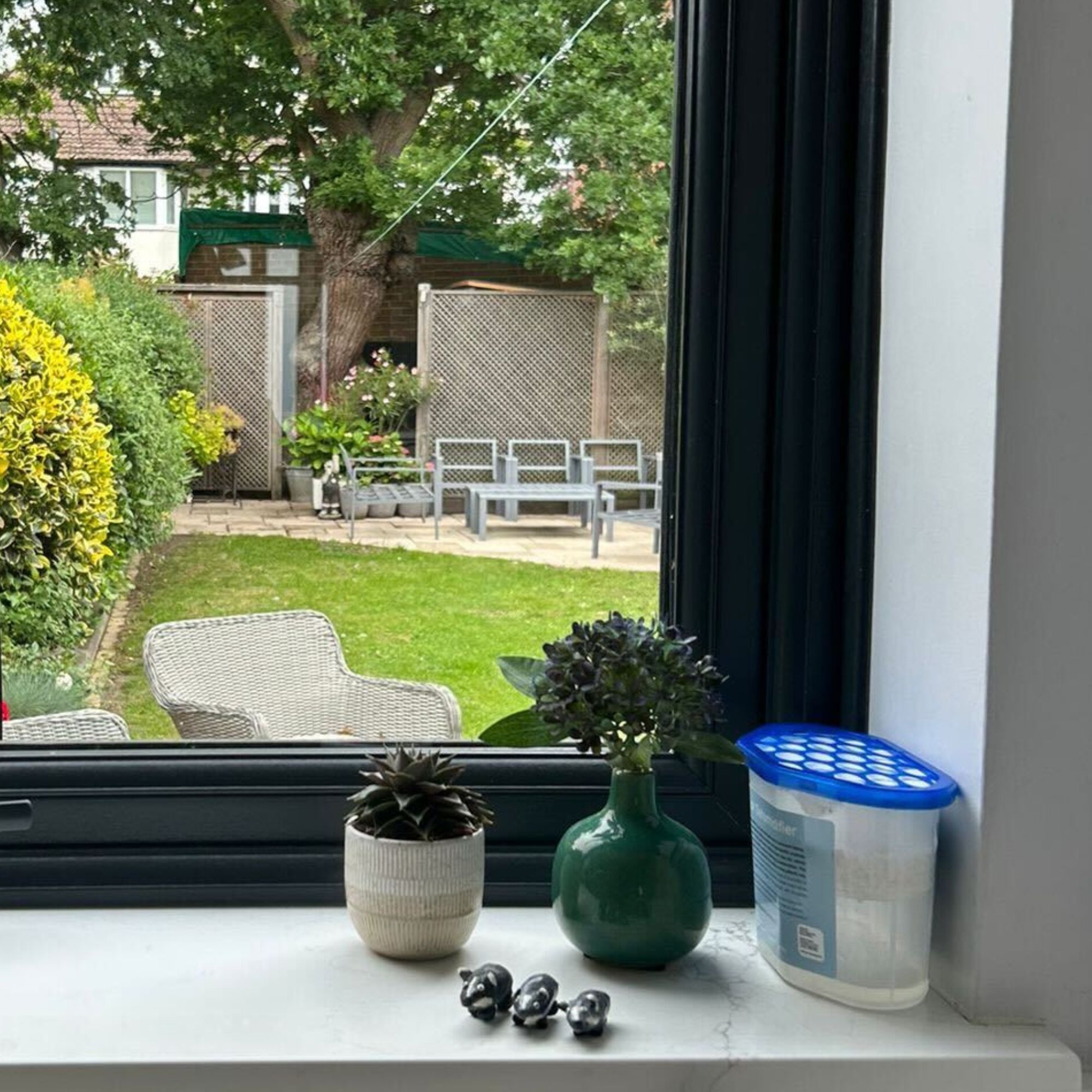
Disposable dehumidifiers come in many forms, like hanging bags or moisture absorbing balls. But I first discovered the handy dehumidifier boxes a few years ago when I was living in university accommodation. I noticed that my clothes were starting to smell a little musty, so I popped one in my wardrobe, and the problem went away in no time, while the box rapidly began to fill with water.
Since then, I’ve used the disposable dehumidifiers regularly in areas that might benefit from them. I have one tucked away by my kitchen window, one in my bedroom and multiple hidden behind plant pots, sofas or bookshelves throughout my home. I love how discreetly the dehumidifiers fit into my space, doing their job without distracting from my decor or style.
Summer mould will be rife in areas that are naturally higher in moisture, so consider placing your boxes here. ‘Everyday activities like cooking, showering and drying clothes indoors all release water vapour, and during warmer weather, the air is able to hold more of that moisture,’ explains Emma.
(Image credit: Future PLC / Maddie Balcombe)
‘Problems start when that humid air has nowhere to go. If it comes into contact with cooler surfaces, for example overnight when temperatures drop, it can form condensation – this leaves surfaces damp enough for mould to grow,’ she adds.
And while these disposable dehumidifiers are a great starting point for reducing the risk of summer mould, they likely won’t be enough on their own to get rid of it altogether. For instance, sometimes larger rooms can benefit from bigger, electrical dehumidifiers.
‘Having a dehumidifier is a great solution for preventing mould, especially in rooms that feel stuffy, bathrooms without good extractor fans, and rooms prone to condensation. But it’s important to note, if you have an existing mould issue, a dehumidifier alone won’t fix the underlying cause of the mould,’ says Andy.
But, if you’re looking for a preventative measure before temperatures rise further, these disposable dehumidifiers will do the job just fine.
Get rid of mould
If mould has already settled on your surfaces, try these products to remove it with ease
Astonish
Specialist Extra Strength Mould & Mildew Stain Blaster Spray
Spontex
Spontex Specialist Sponge Cloths
Dryzone
Dryzone Mould Remover and Prevention Kit
<aside data-block-layout="horizontal" data-block-type="featured-product" data-hawk-json="{"product":{"variants":{"Default":{"image":{"copyright":"","height":2000,"id":"UEREX7ubi3tLNsS4pTdJrQ","mimeType":"image\/jpeg","mos":"https:\/\/cdn.mos.cms.futurecdn.net\/UEREX7ubi3tLNsS4pTdJrQ.jpg","role":"","width":2000,"credit":"Future PLC","alt":"Ideal Home logo on white background","caption":""},"strapline":"
While some ice-cream makers such as the Cuisinart Frost Fusion offer no pre-freezing, they are fairly pricey appliances. Even the Ninja Creami which requires you to freeze the ingredients 24 hours before will set you back £170 at Ninja. What Lidl is offering is an affordable introduction to the world of ice cream makers. Here’s everything you need to know.
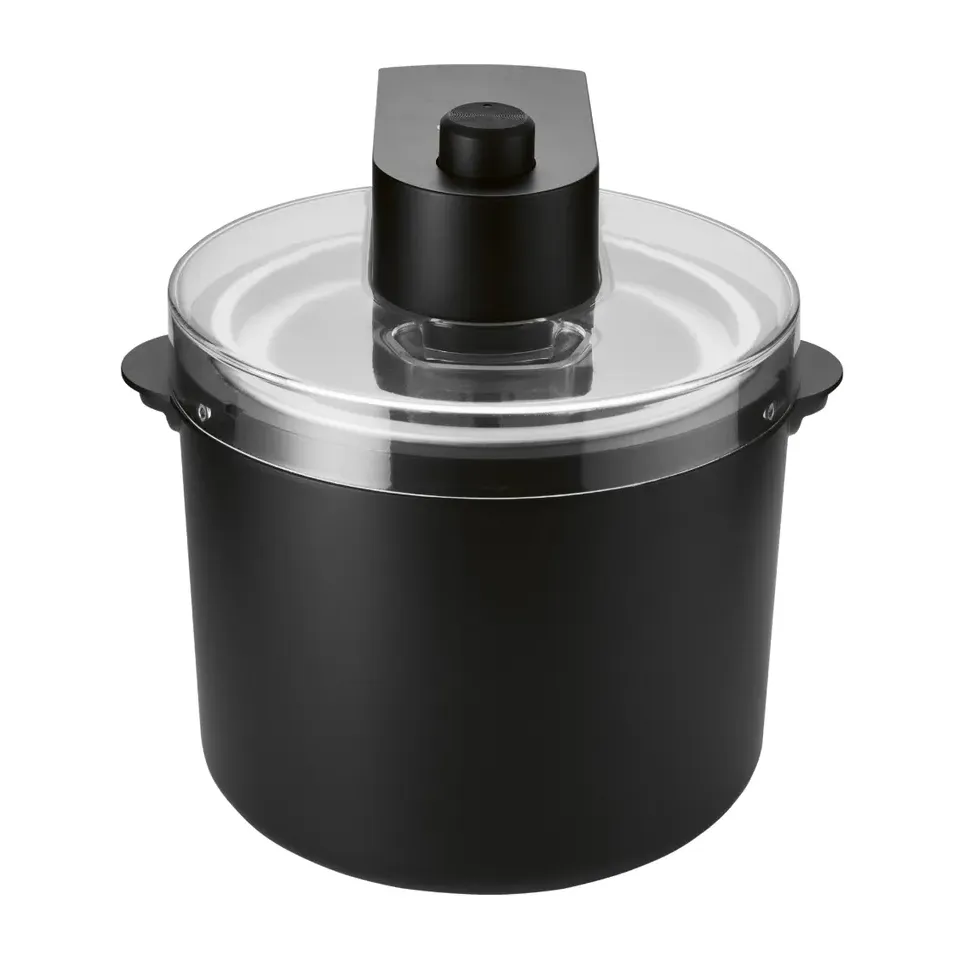
Making 1L of ice cream or sorbet at a time, this is one of the most affordable ice cream maker’s I’ve seen available. Grab yours from the middle ailse from 21 June.","brand":"SILVERCREST","name":"Ice Cream Maker","urlStyle":"","layout":"hero","noFollow":true,"noAffiliateTracking":false,"promoLabel":"","price":14.99,"salePrice":null,"currency":"GBP","linkLayout":"text","sponsored":false,"hawkProductNameMatchedCode":"","review":{"cons":[],"id":"","name":"","pros":[],"rating":0,"strapline":"","url":""},"id":"","externalId":"d3d333ba342fdc7a310cc732c436ae83a36d93a5","lastCheckedPriceDate":"","link":{"url":"https:\/\/www.lidl.co.uk\/p\/silvercrest-ice-cream-maker\/p10049438","linkText":"\u00a314.99 at Lidl","editorialMerchantName":"\u00a314.99 at Lidl","merchantName":"lidl.co.uk"}}}}}” data-link=”https://www.lidl.co.uk/p/silvercrest-ice-cream-maker/p10049438″ data-link-merchant=”lidl.co.uk” data-link-text=”£14.99 at Lidl” data-merchant-name=”lidl.co.uk” data-model-brand=”SILVERCREST” data-model-name=”SILVERCREST Ice Cream Maker” data-name=”Product Block merchantlink widget” data-render-type=”fte” data-show-fallback=”button” data-widget-type=”merchantlink” class=”hawk-root”>
Making 1L of ice cream or sorbet at a time, this is one of the most affordable ice cream maker’s I’ve seen available. Grab yours from the middle ailse from 21 June.
Lakeland Electricals
Lakeland Digital Ice Cream Maker 1.8l
<aside data-block-layout="hero" data-block-type="featured-product" data-editorial-currency="GBP" data-editorial-merchant-name="£44.99 at Lakeland" data-editorial-price="44.99" data-hawk-json="{"product":{"variants":{"Default":{"image":{"copyright":"","height":800,"id":"CeuTneyyq4NKkwab6VC87A","mimeType":"image\/jpeg","mos":"https:\/\/cdn.mos.cms.futurecdn.net\/CeuTneyyq4NKkwab6VC87A.jpg","role":"","width":800,"credit":"Lakeland Electricals","alt":"Lakeland Digital Ice Cream Maker 1.8l","caption":""},"strapline":"
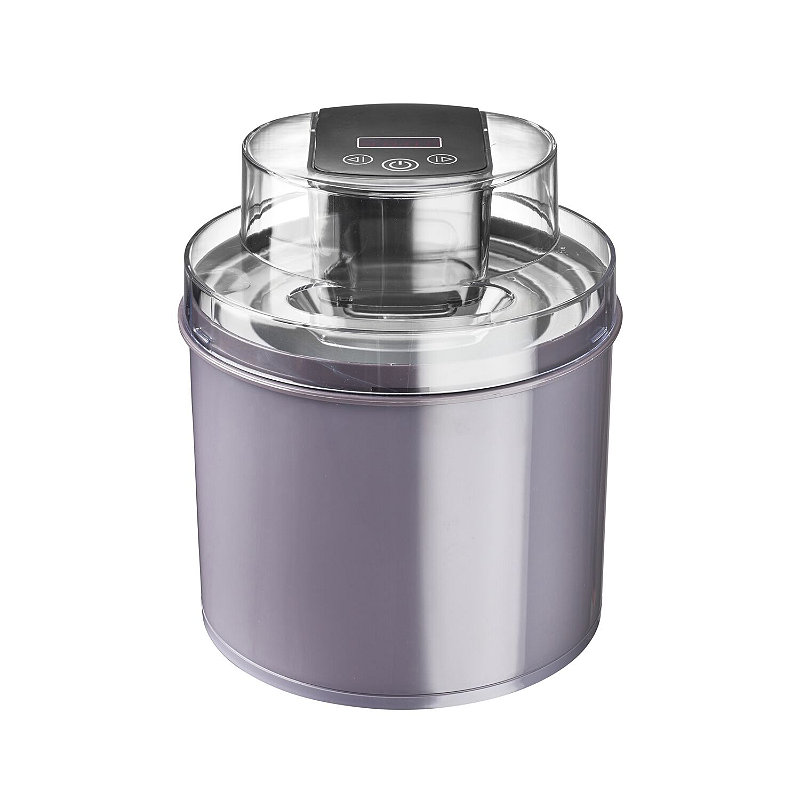
Easy to use, quiet and compact, we loved this ice cream maker when we tried it. Simply pre-freeze for mixture for 12 hours first.","brand":"Lakeland Electricals","name":"Lakeland Digital Ice Cream Maker 1.8l","urlStyle":"","layout":"hero","noFollow":true,"noAffiliateTracking":false,"promoLabel":"","price":44.99,"salePrice":null,"currency":"GBP","linkLayout":"text","sponsored":false,"hawkProductNameMatchedCode":"","review":{"cons":[],"id":"","name":"","pros":[],"rating":0,"strapline":"","url":""},"id":"","externalId":"0469b3690ca49841eaeceab05f2f3fb4d0f08d5c","lastCheckedPriceDate":"","link":{"url":"https:\/\/www.awin1.com\/awclick.php?awinmid=1751&awinaffid=103504&clickref=hawk-custom-tracking&p=https%3A%2F%2Fwww.lakeland.co.uk%2F33037%2Flakeland-digital-ice-cream-maker-18l","linkText":"\u00a344.99 at Lakeland","editorialMerchantName":"\u00a344.99 at Lakeland","merchantName":"Lakeland","merchantId":2595,"merchantNetwork":"AW","merchantUrl":"lakeland.co.uk"}}}}}” data-link=”https://www.awin1.com/awclick.php?awinmid=1751&awinaffid=103504&clickref=hawk-custom-tracking&p=https%3A%2F%2Fwww.lakeland.co.uk%2F33037%2Flakeland-digital-ice-cream-maker-18l” data-link-merchant=”Lakeland” data-link-text=”£44.99 at Lakeland” data-merchant-id=”2595″ data-merchant-name=”Lakeland” data-merchant-network=”AW” data-merchant-url=”lakeland.co.uk” data-model-brand=”Lakeland Electricals” data-model-name=”Lakeland Electricals Lakeland Digital Ice Cream Maker 1.8l” data-name=”Product Block merchantlink widget” data-render-type=”fte” data-show-fallback=”button” data-widget-type=”merchantlink” class=”hawk-root”>
Easy to use, quiet and compact, we loved this ice cream maker when we tried it. Simply pre-freeze for mixture for 12 hours first.
At first glance, the Lidl Silvercrest Ice Cream Maker looks very similar to Lakeland’s digital ice cream maker, which is also one of the most affordable models on the market at £44.99. Landing in stores on Sunday (21 June) is arriving bang on time for the latest heatwave.
The Silvercrest Ice Cream Maker is a small, compact appliance, meaning it will not dominate space on your kitchen worktop. This is ideal for small kitchens, where space is limited, and chunkier appliances such as the cult Ninja Creami take up too much space.
The ice cream maker can make up to one litre of ice cream or sorbet, and comes with a small booklet of recipe suggestions to get you started. To use, simply pre-freeze the bowl, then add your desired ingredients through the opening in the lid. This can even be done when the machine is in use.
(Image credit: Lidl)
The beater and lid can be washed in the dishwasher, making clean up easy, and the ice cream container has practical handles for ease of use. Lidl has not listed the machine’s dimensions. Lakeland’s digital ice cream maker also has a one-litre capacity, and our review found the container took up a larger chunk of their freezer drawer, so you should bear this in mind.
Sign up to our newsletter for style inspiration, real homes, project and garden advice and shopping know-how
To use the ice cream maker, you will need to pre-freeze the included bowl. Again, Lidl hasn’t stated online how long this process will take, but for similar models, this is around 12-hours.
While I haven’t tested Lidl’s ice-cream maker, based on the price, we can expect it to be a fairly basic model. However, I don’t think this is a bad thing for those who want to try out an ice cream maker without spending a fortune.
If you are looking for a superior ice cream maker that has multiple functions here are three more models we’ve tried and tested.
Cuisinart
Cuisinart Frost Fusion®
<aside data-block-layout="hero" data-block-type="featured-product" data-editorial-currency="GBP" data-editorial-merchant-name="Was £299.99, now £199.99 at Amazon" data-editorial-price="199.99" data-editorial-was-price="299.99" data-hawk-json="{"product":{"variants":{"Default":{"image":{"copyright":"","height":500,"id":"hgdiHxAddF9MD57F8hnwX8","mimeType":"image\/jpeg","mos":"https:\/\/cdn.mos.cms.futurecdn.net\/hgdiHxAddF9MD57F8hnwX8.jpg","role":"","width":500,"credit":"Cuisinart","alt":"Cuisinart Frost Fusion\u00ae Makes Fast Frozen Drinks & Soft Serve Ice Cream With 6 Modes. No Ice Needed, Ready in 30 Mins, Self\u2011rinsing, Built to Last With a 3\u2011year Warranty.","caption":""},"strapline":"
Whipping up soft serve in just 30 minutes, this appliance is excellent for the serious dessert chefs amongst us. It has six different functions so can handle any summer hosting needs.","brand":"Cuisinart","name":"Cuisinart Frost Fusion\u00ae ","urlStyle":"","layout":"hero","noFollow":true,"noAffiliateTracking":false,"promoLabel":"","price":299.99,"salePrice":199.99,"currency":"GBP","linkLayout":"text","sponsored":false,"hawkProductNameMatchedCode":"Cuisinart Frost Fusion","review":{"cons":[],"id":"","name":"","pros":[],"rating":0,"strapline":"","url":""},"hawk":{"attributes":{"data-widget-type":"merchantlink","data-model-name":"Cuisinart Frost Fusion"}},"id":"","externalId":"be80a3099ac082173f9db7f56a6fff66407874a6","lastCheckedPriceDate":"","link":{"url":"https:\/\/target.georiot.com\/Proxy.ashx?tsid=107653&GR_URL=https%3A%2F%2Famazon.co.uk%2FCuisinart-Fusion%25C2%25AE-Frozen-self%25E2%2580%2591rinsing-warranty%2Fdp%2FB0GFG24ZCZ%2Fref%3Dasc_df_B0GFG24ZCZ%3Ftag%3Dftr-idealhome-gb-21%26ascsubtag%3Dhawk-custom-tracking-21","linkText":"Was \u00a3299.99, now \u00a3199.99 at Amazon","editorialMerchantName":"Was \u00a3299.99, now \u00a3199.99 at Amazon","merchantName":"Amazon UK","merchantId":1027,"merchantNetwork":"Amazonuk","merchantUrl":"amazon.co.uk"}}}}}” data-link=”https://target.georiot.com/Proxy.ashx?tsid=107653&GR_URL=https%3A%2F%2Famazon.co.uk%2FCuisinart-Fusion%25C2%25AE-Frozen-self%25E2%2580%2591rinsing-warranty%2Fdp%2FB0GFG24ZCZ%2Fref%3Dasc_df_B0GFG24ZCZ%3Ftag%3Dftr-idealhome-gb-21%26ascsubtag%3Dhawk-custom-tracking-21″ data-link-merchant=”Amazon UK” data-link-text=”Was £299.99, now £199.99 at Amazon” data-merchant-id=”1027″ data-merchant-name=”Amazon UK” data-merchant-network=”Amazonuk” data-merchant-url=”amazon.co.uk” data-model-brand=”Cuisinart” data-model-name=”Cuisinart Frost Fusion” data-name=”Product Block merchantlink widget” data-render-type=”editorial” data-show-fallback=”button” data-widget-type=”merchantlink” class=”hawk-root”>
Whipping up soft serve in just 30 minutes, this appliance is excellent for the serious dessert chefs amongst us. It has six different functions so can handle any summer hosting needs.
Ninja
Ninja Creami Ice Cream & Frozen Dessert Maker
<aside data-block-layout="hero" data-block-type="featured-product" data-editorial-currency="GBP" data-editorial-merchant-name="£169.99 at John Lewis" data-editorial-price="169.99" data-hawk-json="{"product":{"variants":{"Default":{"image":{"copyright":"","height":3000,"id":"5cKiPpaHGtHNiG4RDV9vp9","mimeType":"image\/webp","mos":"https:\/\/cdn.mos.cms.futurecdn.net\/v2\/t:580,l:0,cw:2250,ch:2250,q:80\/5cKiPpaHGtHNiG4RDV9vp9.webp","role":"","width":2250,"credit":"Ninja","alt":"Ninja Creami Ice Cream & Frozen Dessert Maker","caption":"","crop":{"top":580,"left":0,"cropWidth":2250,"cropHeight":2250,"quality":80}},"strapline":"
The O.G viral ice cream maker, the Ninja Creami really is good at what it does. You will have to freeze your mixture for 24 hours beforehand, however.","brand":"Ninja","name":"Ninja Creami Ice Cream & Frozen Dessert Maker","urlStyle":"","layout":"hero","noFollow":true,"noAffiliateTracking":false,"promoLabel":"","price":169.99,"salePrice":null,"currency":"GBP","linkLayout":"text","sponsored":false,"hawkProductNameMatchedCode":"Ninja Creami Ice Cream Maker","review":{"cons":[],"id":"","name":"","pros":[],"rating":0,"strapline":"","url":""},"hawk":{"attributes":{"data-widget-type":"merchantlink","data-model-name":"Ninja Creami Ice Cream Maker"}},"id":"","externalId":"dfe6dae83853b0251936ad57b7e7acc0bde135a6","lastCheckedPriceDate":"","link":{"url":"https:\/\/john-lewis-and-partners.pxf.io\/c\/221109\/871855\/12148?subId1=hawk-custom-tracking&sharedId=hawk-prefix&u=https%3A%2F%2Fwww.johnlewis.com%2Fninja-creami-ice-cream-frozen-dessert-maker%2Fp5971776%3F","linkText":"\u00a3169.99 at John Lewis","editorialMerchantName":"\u00a3169.99 at John Lewis","merchantName":"John Lewis","merchantId":179552,"merchantNetwork":"ImpactRad","merchantUrl":"johnlewis.com"}}}}}” data-link=”https://john-lewis-and-partners.pxf.io/c/221109/871855/12148?subId1=hawk-custom-tracking&sharedId=hawk-prefix&u=https%3A%2F%2Fwww.johnlewis.com%2Fninja-creami-ice-cream-frozen-dessert-maker%2Fp5971776%3F” data-link-merchant=”John Lewis” data-link-text=”£169.99 at John Lewis” data-merchant-id=”179552″ data-merchant-name=”John Lewis” data-merchant-network=”ImpactRad” data-merchant-url=”johnlewis.com” data-model-brand=”Ninja” data-model-name=”Ninja Creami Ice Cream Maker” data-name=”Product Block merchantlink widget” data-render-type=”editorial” data-show-fallback=”button” data-widget-type=”merchantlink” class=”hawk-root”>
The O.G viral ice cream maker, the Ninja Creami really is good at what it does. You will have to freeze your mixture for 24 hours beforehand, however.
<aside data-block-layout="hero" data-block-type="featured-product" data-editorial-currency="GBP" data-editorial-merchant-name="Was £350, now £269.99 at Argos" data-hawk-json="{"product":{"variants":{"Default":{"image":{"copyright":"","height":2000,"id":"8VyEasRQCif6KLbrJUSRoK","mimeType":"image\/jpeg","mos":"https:\/\/cdn.mos.cms.futurecdn.net\/8VyEasRQCif6KLbrJUSRoK.jpg","role":"","width":2000,"credit":"Ninja","alt":"Ninja Swirl ","caption":""},"strapline":"
We love the Ninja Swirl. It has a whopping 13 functions, producing ice-cream that tastes like it came straight from the ice cream van.","brand":"Ninja","name":"Ninja CREAMi Scoop & Swirl Soft Serve & Ice Cream Maker","urlStyle":"","layout":"hero","noFollow":true,"noAffiliateTracking":false,"promoLabel":"","price":null,"salePrice":null,"currency":"GBP","linkLayout":"text","sponsored":false,"hawkProductNameMatchedCode":"Ninja Swirl by Creami Soft Serve & Ice Cream Machine","review":{"cons":[],"id":"","name":"","pros":[],"rating":0,"strapline":"","url":""},"hawk":{"attributes":{"data-widget-type":"merchantlink","data-model-name":"Ninja Swirl by Creami Soft Serve & Ice Cream Machine"}},"id":"","lastCheckedPriceDate":"","link":{"url":"https:\/\/www.anrdoezrs.net\/click-100624752-15618761?sid=hawk-custom-tracking&url=https:\/\/www.argos.co.uk\/product\/7694770?","linkText":"Was \u00a3350, now \u00a3269.99 at Argos","editorialMerchantName":"Was \u00a3350, now \u00a3269.99 at Argos","merchantName":"Argos","merchantId":535,"merchantNetwork":"CJ","merchantUrl":"argos.co.uk"}}}}}” data-link=”https://www.anrdoezrs.net/click-100624752-15618761?sid=hawk-custom-tracking&url=https://www.argos.co.uk/product/7694770?” data-link-merchant=”Argos” data-link-text=”Was £350, now £269.99 at Argos” data-merchant-id=”535″ data-merchant-name=”Argos” data-merchant-network=”CJ” data-merchant-url=”argos.co.uk” data-model-brand=”Ninja” data-model-name=”Ninja Swirl by Creami Soft Serve & Ice Cream Machine” data-name=”Product Block merchantlink widget” data-render-type=”editorial” data-show-fallback=”button” data-widget-type=”merchantlink” class=”hawk-root”>
We love the Ninja Swirl. It has a whopping 13 functions, producing ice-cream that tastes like it came straight from the ice cream van.
An ice cream maker is a perfect summer appliance, helping to keep you cool and offer a sweet treat, too. Would you try Lidl’s or have you got your sights set on a higher-end appliance?
Most homeowners worry about obvious problems. A leaking roof. Cracked walls. Flooding after heavy rain. But some of the most expensive damage a home can suffer happens quietly, gradually, and almost completely out of sight.
Termites are one of the clearest examples of this. Small, hidden, and easy to overlook, these insects are capable of causing extensive structural damage before a homeowner even realises there is a problem. By the time visible signs appear, repairs can already be costly and disruptive.
For homeowners in termite-prone regions, understanding how termites behave — and how to spot early warning signs — can make a huge difference.
Why Termites Are So Destructive
Termites munching through wood. https://depositphotos.com/
Unlike many household pests, termites do not simply invade a home looking for scraps of food. They feed on cellulose, the organic material found in wood, paper, cardboard, and many plant products. Unfortunately, that means the structural timber inside a home can become a food source.
What makes termites particularly damaging is the way they work from the inside out. Instead of leaving obvious destruction on the surface, they often hollow timber internally while leaving a thin outer layer intact. A beam, floorboard, or wall stud may look perfectly normal from the outside while being badly weakened underneath.
Because termites typically stay hidden behind walls, under floors, or inside foundations, infestations can continue for months or even years before discovery.
The Types of Termites Found Around Homes
Different regions have different termite species, but the two most commonly discussed in residential properties are subterranean termites and drywood termites.
Subterranean termites usually live underground in large colonies. They build mud tubes to travel safely between soil and timber sources while staying protected from light and dry air. These termites are responsible for a huge amount of structural damage worldwide because colonies can contain hundreds of thousands of insects.
Drywood termites, on the other hand, live directly inside the wood they consume. They do not need contact with soil and can infest roof timbers, furniture, flooring, or wooden framing.
Both types can cause serious damage, but subterranean termites are often considered the more aggressive threat to buildings.
Why Homeowners Often Miss Termite Signs
One reason termite problems become severe is that the warning signs are often subtle.
Homeowners may notice a sticking door or window and assume it is simply caused by humidity. A small crack in paintwork may not seem important. Slightly sagging flooring might be blamed on age. But in some cases, these can all point to hidden termite activity.
Some of the most common warning signs include:
Hollow-sounding timber
Bubbling or peeling paint
Tiny holes in wood surfaces
Mud tubes along walls or foundations
Discarded insect wings near windows
Warped doors or floorboards
Unexplained cracks in walls or ceilings
Soft or crumbling timber
Unfortunately, by the time these symptoms become visible, termites may already have caused extensive hidden damage behind the scenes.
What Attracts Termites to a Home?
Termites are strongly attracted to moisture and accessible timber. Homes with damp conditions often face a higher risk because moisture softens wood and creates a more suitable environment for termite colonies.
Several common household conditions can unintentionally encourage termite activity:
Poor Drainage
Water pooling near foundations can increase moisture levels in surrounding soil, making the area more attractive to subterranean termites.
Leaking Pipes and Gutters
Even small plumbing leaks behind walls or beneath sinks can create damp timber that termites find appealing.
Timber Stored Against the House
Firewood stacks, untreated decking, wooden sleepers, and timber fencing positioned close to exterior walls can act as easy entry points.
Dense Vegetation
Overgrown shrubs and heavy planting around a property can trap moisture and hide early termite activity from view.
Cracks in Foundations
Tiny gaps in concrete slabs or foundations may allow termites to enter unnoticed.
In many cases, it is not a single issue that attracts termites but a combination of conditions that create the perfect environment over time.
How Much Damage Can Termites Cause?
Wooden beam destroyed by termites
The scale of termite damage varies depending on how long an infestation remains undetected. Minor infestations may only affect isolated timber, while severe infestations can compromise major structural elements of a home.
Termites can damage:
Wall framing
Roof timbers
Floor joists
Skirting boards
Wooden flooring
Decking
Built-in cabinetry
Furniture
Fence posts
Window frames
In extreme cases, structural weakening can become dangerous. Floors may sag, ceilings can become unstable, and load-bearing timbers may require replacement.
Repair costs can quickly escalate, especially when walls or flooring need to be removed to access damaged areas.
How Climate and Weather Patterns May Be Increasing Termite Risks
Climate and weather conditions are becoming an increasingly important part of the conversation around termites. In many regions, experts are seeing changing weather patterns create conditions that allow termite populations to thrive more easily than before.
Warmer temperatures can expand the geographic range of certain termite species, allowing colonies to survive in areas that were previously considered too cool. This means some homeowners may now face termite risks in places where the threat was once relatively low.
Wetter weather can also contribute to the problem. Prolonged rainfall, flooding, and high humidity increase moisture levels in soil and timber, creating the damp conditions termites are naturally drawn to. Homes with poor drainage, leaking gutters, or persistent damp patches may become even more vulnerable during extended wet periods.
Milder winters may also help termite colonies survive for longer without the natural population decline colder temperatures once caused. In some climates, termite activity may continue for more of the year, reducing the seasonal slowdown homeowners previously relied on.
For homeowners, this highlights the importance of staying proactive. Even if termites have not traditionally been a major concern in a particular area, changing environmental conditions could increase the likelihood of infestations over time. Regular inspections, moisture control, and good home maintenance are becoming more important than ever.
Why Prevention Matters More Than Treatment
One of the biggest mistakes homeowners make is waiting until visible damage appears before taking action.
Preventative measures are often far more affordable than major repairs later on. Even simple maintenance tasks can help reduce the risk significantly.
Some practical ways to lower termite risk include:
Arrange regular termite inspections in high-risk regions
Many homeowners assume newer properties are automatically protected, but termites can affect homes of almost any age if conditions are suitable.
The Importance of Professional Inspections
Because termites are so skilled at remaining hidden, professional inspections play an important role in early detection.
A trained inspector knows where termites commonly hide and can identify subtle warning signs that homeowners may overlook. In some cases, moisture meters, thermal imaging, or specialised tools may be used to detect hidden infestations behind walls or under flooring.
For people living in termite-prone areas, regular inspections can provide reassurance and help identify problems before they become severe.
This is especially important before buying a property. A home may appear visually sound while concealing significant hidden termite damage.
The Emotional Side of Termite Damage
Beyond the financial cost, termite damage can also be emotionally stressful. A home is often the largest investment people make, and discovering hidden structural problems can feel overwhelming.
Many homeowners describe feeling frustrated that the damage developed silently over time without obvious warning. Others regret dismissing small early signs they did not recognise at the time.
That is why education and awareness matter so much. Understanding the risks allows homeowners to act earlier and make more informed decisions about maintenance and inspections.
Small Pest, Big Consequences
Termites may be tiny, but the damage they cause can be enormous. Their ability to remain hidden while gradually weakening timber structures makes them one of the most destructive household pests in the world.
The good news is that homeowners are not powerless. Paying attention to moisture issues, maintaining the exterior of a property, and arranging regular inspections can all help reduce the likelihood of serious infestations.
Most importantly, homeowners should never ignore subtle warning signs. What appears to be a minor cosmetic issue could actually point to a much larger hidden problem developing beneath the surface.
When it comes to termites, acting early almost always costs less than waiting too long.
If you have a courtyard, a small garden or simply a garden that lacks green space, it can be easy to assume that you won’t be able to attract birds or wildlife. However, I’m pleased to say this is not the case, as experts have revealed five plants you can grow in pots that will attract birds to your outdoor space.
Container planting is one of the best courtyard garden ideas, as well as being an excellent choice for small gardens and patios, as it allows you to fill your garden with plants when you lack border, bed and lawn space.
If you want a thriving wildlife garden, there are ways to adapt small, urban gardens so they are suitable for local birds and other critters. Planting these best plants for birds in pots is one easy way to invite local birds to your garden.
Latest Videos From
1. Sunflower
It’s so easy to grow sunflowers in pots, and not only will they attract local wildlife, but their tall stems and striking yellow heads will give your garden plenty of height and colour.
(Image credit: Getty Images)
‘Sunflowers are a fantastic way to attract birds into your garden. They’re summer personified, and birds love them – win-win! Once the flowers have finished blooming, they produce seeds that birds like finches, sparrows, tits and cardinals love to eat. Leaving the flower heads standing will provide a natural food source and give birds a reason to keep visiting,’ says James Ewens, bird expert at Green Feathers.
‘Sunflowers are surprisingly plant-pot friendly as well. You can actually find dwarf and patio varieties which have been bred specifically for pots, making them ideal for both gardens and terraces! Because they grow quickly and produce large flowers in a single season, sunflowers are a great option for gardeners looking to make an immediate impact while supporting birds.’
Where to buy sunflowers
2. Common Knapweed
Pretty, purple knapweed is frequently a part of the best wildflower garden ideas, with the ability to turn your garden into a beautiful meadow. The good news is that this plant can also be grown in pots, so you can give your courtyard or balcony a bird-friendly upgrade.
Sign up to our newsletter for style inspiration, real homes, project and garden advice and shopping know-how
(Image credit: Getty Images/ Olga Vertel)
‘Don’t underestimate the power of a simple, wild-looking flower. Common Knapweed is a fantastic, long-flowering perennial that’s perfect for a container and a huge hit with the birds. Its purple blooms are loved by pollinators in summer, and its seeds are highly sought-after food sources for Goldfinches,’ says Victoria Parkinson, Garden Expert at Arctic Cabins.
‘A pot of these brings a touch of the wildflower meadow to your patio, providing a super-easy, reliable source of seeds for small birds that is right at their level.’
Where to buy common knapweed
3. Lavender
Not only is lavender one of the best Mediterranean plants for pots, but birds love it, too. You also consider how wonderful it smells in summer – perfect for transforming your outdoor space.
(Image credit: Getty Images)
‘Lavender is a favourite, not only does it look and smell gorgeous, it’s perfect if you have limited space and still want to create a bird-friendly garden. Lavender draws bees, hoverflies and other insects, making it a very pollinator and bird-friendly choice. This will provide generous amounts of food for insect-eating birds like robins, wrens and tits. The dense stems can also provide temporary shelters for smaller birds in harsher weather conditions, so it’s also multi-purposeful,’ says James.
‘Lavender also works miles better in plant pots, as naturally it prefers free-draining conditions and often performs better in pots as opposed to heavy garden soils. Lavender is drought-tolerant, so it’s low maintenance and doesn’t even need much watering. It’s compact, so suitable for patios, small gardens, and even balconies, making it an accessible option even for urban gardens to be bird-friendly.’
Where to buy lavender
4. Teasel
Teasel is one of the best plants for attracting birds to your garden. Its spiky heads will add plenty of structure to your garden, while local birds will love the seeds it produces.
(Image credit: Getty Images/ Andyworks)
‘This impressive biennial is the absolute favourite of Goldfinches, who are drawn to the spiky seed heads. Watching them delicately insert their beaks to extract the seeds is one of autumn’s greatest garden spectacles,’ says Victoria.
‘Teasels adapt brilliantly to containers – their dramatic, spiky silhouette makes a fantastic statement piece, and they are a wonderful way to provide winter interest and food without taking over borders.’
Where to buy teasel
5. Rowan
Not only are rowan trees one of the best trees to plant for autumn colour, but birds can also rely on their winter berries for food when food is scarce during the colder months.
(Image credit: Getty Images/ Ashley Cooper)
‘Rowan trees have long been associated with wildlife-friendly gardening thanks to their clusters of bright cherries that are highly attractive to birds. Bright cherries lure blackbirds and thrushes, and not only are they visually appealing, but they’re also highly nutritious. They’re basically a superfood for birds – an easily digestible form of Vitamin C, antioxidants and energy. Birds especially need energy sources that are easily accessible in summer months, so it’s a great option,’ says James.
‘Although the general assumption is that trees need a large amount of garden space to grow, compact and patio-sized rowan varieties can be grown successfully in a plant pot. This allows gardeners with limited space to enjoy the benefits of a berry-producing tree while also adding dimension and visual interest to their outdoor space.’
Where to buy rowan trees
Not only are these pot-friendly plants great for attracting birds, they will also fill your garden with colour and add structure, too.
When I bought my first home with a garden, I immediately started having visions of summer movie nights outside, and Aldi has finally given me the means of making those dreams a reality with their £50 projector.
This month, Aldi has launched all the kit needed to make an outdoor cinema: a £50 projector and a £60 inflatable movie screen. The launch also comes just in time to get your friends round and watch the World Cup on the big screen without squeezing into an already rammed pub.
Both items are sold separately, but work as a dream team together if you have space for the large inflatable structure. Since I’m working with a small garden, it was the petite £50 projector that caught my eye, a fraction of the price of many other projectors, such as the Aurzen Roku TV Smart Projector, £200 on Amazon.
Latest Videos From
Aldi
Hd Led Projector
Aldi
Inflatable Movie Screen
The small portable projector can fit a screen size from 40 to 130 inches and is powered by Android 11 OS to stream directly from your favourite apps. It has a built-in speaker to deliver sound and promises an easy setup.
It’s a small stand that allows for easy adjustment to cast the image in the right place in your garden; however, you will need to manually adjust the focus. It’s the compact style that won me over, as I can easily move it around my home, from the bedroom to the garden.
Of course, for £50, this projector is going to have some drawbacks compared to more expensive versions, such as the Aurzen Roku TV Smart Projector, £200 on Amazon. This projector isn’t as dinky or neat as Aldi’s, but it is well-reviewed for being simple and easy to use with access to streaming apps like iPlayer and Netflix. It also has auto focus and keystone adjustment, along with a higher resolution than the Aldi projector.
However, if you’re dipping your toe into the world of projectors and plan to use it occasionally, Aldi’s version is a good starting point before upgrading.
Sign up to our newsletter for style inspiration, real homes, project and garden advice and shopping know-how
(Image credit: Aldi)
If you want to complete the experience, Aldi’s inflatable movie screen has already drawn alot of fans. It has a built-in air pump for easy set-up and stands at 8ft tall when inflated. The white screen is attached with velcro to the black structure to create a massive 108-inch screen.
When not in use, the whole screen folds down into a bag not much bigger than a small tent or sleeping bag. Personally, this screen is too large for my garden, and I’d be much more content to use a plain white wall or a hung-up bed sheet. But if you have the space, the inflatable screen will be the centre-piece of any World Cup viewing party.
Alternatives
Unsurprisingly, the projector and outdoor screen are already proving a hit with shoppers. If you’ve not been able to track one down in store, here are three alternatives you can buy online with stellar reviews.
This neat mini projector has an average rating of 4.4 stars on Amazon from over 4,000 reviews. It has a rotatable stand and auto adjusts the image to a rectangle, and in additional to having access to apps including prime video, it can be connected to an ipad or laptop.","brand":"Amazon","name":"TOPTRO Mini Projector 1080P 4K Supported","urlStyle":"","retailer":"","layout":"hero","linkText":"","noFollow":false,"noAffiliateTracking":false,"promoLabel":"","price":69,"salePrice":null,"currency":"GBP","linkLayout":"text","sponsored":false,"hawkProductNameMatchedCode":"","review":{"cons":[],"id":"","name":"","pros":[],"rating":0,"strapline":"","url":""},"id":"","lastCheckedPriceDate":"","link":{"url":"https:\/\/target.georiot.com\/Proxy.ashx?tsid=107653&GR_URL=https%3A%2F%2Famazon.co.uk%2FTOPTRO-Projector-Supported%25E3%2580%2590Android-Adjustable-Projectors%2Fdp%2FB0FJ1Z2ZMR%2Fref%3Dsr_1_7%3Ftag%3Dftr-idealhome-gb-21%26ascsubtag%3Dhawk-custom-tracking-21","merchantName":"Amazon UK","merchantId":1027,"merchantNetwork":"Amazonuk","merchantUrl":"amazon.co.uk"}}}}}” data-link=”https://target.georiot.com/Proxy.ashx?tsid=107653&GR_URL=https%3A%2F%2Famazon.co.uk%2FTOPTRO-Projector-Supported%25E3%2580%2590Android-Adjustable-Projectors%2Fdp%2FB0FJ1Z2ZMR%2Fref%3Dsr_1_7%3Ftag%3Dftr-idealhome-gb-21%26ascsubtag%3Dhawk-custom-tracking-21″ data-link-merchant=”Amazon UK” data-merchant-id=”1027″ data-merchant-name=”Amazon UK” data-merchant-network=”Amazonuk” data-merchant-url=”amazon.co.uk” data-model-brand=”Amazon” data-model-name=”Amazon TOPTRO Mini Projector 1080P 4K Supported” data-name=”Product Block merchantlink widget” data-render-type=”fte” data-show-fallback=”button” data-widget-type=”merchantlink” class=”hawk-root”>
This neat mini projector has an average rating of 4.4 stars on Amazon from over 4,000 reviews. It has a rotatable stand and auto adjusts the image to a rectangle, and in additional to having access to apps including prime video, it can be connected to an ipad or laptop.
Wielio
2026 New Smart Projector Built-In Apps
<aside data-block-layout="hero" data-block-type="featured-product" data-editorial-currency="GBP" data-editorial-price="89.99" data-editorial-was-price="179.99" data-hawk-json="{"product":{"variants":{"Default":{"image":{"copyright":"","height":500,"id":"wy4dXDKyrhHC8p3RuucoJ","mimeType":"image\/jpeg","mos":"https:\/\/cdn.mos.cms.futurecdn.net\/wy4dXDKyrhHC8p3RuucoJ.jpg","role":"","width":500,"credit":"Wielio","alt":"2026 New Smart Projector Built-In Apps, Android 14, Native 1080p 4k Supported Wifi 6 Bluetooth 5.2, 20000 Lumens, Low Fan Noise (","caption":""},"strapline":"
This smart projector has a perfect 5 star rating from over 100 reviews, and is currently reduced by 50% for a short time only. It supports smooth online streaming, one-click wireless screen mirroring for phones or tablets and has built in speaker.","brand":"Wielio","name":"2026 New Smart Projector Built-In Apps","urlStyle":"","retailer":"","layout":"hero","noFollow":true,"noAffiliateTracking":false,"promoLabel":"","price":179.99,"salePrice":89.99,"currency":"GBP","linkLayout":"text","sponsored":false,"hawkProductNameMatchedCode":"","review":{"cons":[],"id":"","name":"","pros":[],"rating":0,"strapline":"","url":""},"id":"","externalId":"abe0caa771393a8aee29b8a9de54cd71ebab0068","lastCheckedPriceDate":"","link":{"url":"https:\/\/target.georiot.com\/Proxy.ashx?tsid=107653&GR_URL=https%3A%2F%2Famazon.co.uk%2FProjector-Built-Android-Supported-Bluetooth%2Fdp%2FB0G6KMTCD1%2Fref%3Dsr_1_4%3Ftag%3Dftr-idealhome-gb-21%26ascsubtag%3Dhawk-custom-tracking-21","linkText":"Was \u00a3179, Now \u00a389","merchantName":"Amazon UK","merchantId":1027,"merchantNetwork":"Amazonuk","merchantUrl":"amazon.co.uk"}}}}}” data-link=”https://target.georiot.com/Proxy.ashx?tsid=107653&GR_URL=https%3A%2F%2Famazon.co.uk%2FProjector-Built-Android-Supported-Bluetooth%2Fdp%2FB0G6KMTCD1%2Fref%3Dsr_1_4%3Ftag%3Dftr-idealhome-gb-21%26ascsubtag%3Dhawk-custom-tracking-21″ data-link-merchant=”Amazon UK” data-link-text=”Was £179, Now £89″ data-merchant-id=”1027″ data-merchant-name=”Amazon UK” data-merchant-network=”Amazonuk” data-merchant-url=”amazon.co.uk” data-model-brand=”Wielio” data-model-name=”Wielio 2026 New Smart Projector Built-In Apps” data-name=”Product Block merchantlink widget” data-render-type=”fte” data-show-fallback=”button” data-widget-type=”merchantlink” class=”hawk-root”>
This smart projector has a perfect 5 star rating from over 100 reviews, and is currently reduced by 50% for a short time only. It supports smooth online streaming, one-click wireless screen mirroring for phones or tablets and has built in speaker.
TOWOND
120 Inch Portable Projection Screen
<aside data-block-layout="hero" data-block-type="featured-product" data-editorial-currency="GBP" data-editorial-price="85.49" data-editorial-was-price="89.99" data-hawk-json="{"product":{"variants":{"Default":{"image":{"copyright":"","height":500,"id":"JqyuRayqDpP3Vc9GkjWLBY","mimeType":"image\/jpeg","mos":"https:\/\/cdn.mos.cms.futurecdn.net\/JqyuRayqDpP3Vc9GkjWLBY.jpg","role":"","width":500,"credit":"TOWOND","alt":"Towond Projector Screen and Stand, 120 Inch Portable Projection Screen Indoor Outdoor Projector Screen 16:9 4k Hd Wrinkle-Free Lightweight Movie Screen With Carry Bag for Backyard Movie Night","caption":""},"strapline":"
This is certainly a little more faffier to set up than Aldi’s outdoor screen, but it will take up less floor space and you wouldn’t need to plug it in to set it up. The screen also has an impressive 4.4 star rating on Amazon from almost 2,000 reviewers. ","brand":"TOWOND","name":"120 Inch Portable Projection Screen","urlStyle":"","retailer":"","layout":"hero","linkText":"","noFollow":false,"noAffiliateTracking":false,"promoLabel":"","price":89.99,"salePrice":85.49,"currency":"GBP","linkLayout":"text","sponsored":false,"hawkProductNameMatchedCode":"","review":{"cons":[],"id":"","name":"","pros":[],"rating":0,"strapline":"","url":""},"id":"","externalId":"d256f4b7433535a5733112803da3502a54e81ae4","lastCheckedPriceDate":"","link":{"url":"https:\/\/target.georiot.com\/Proxy.ashx?tsid=107653&GR_URL=https%3A%2F%2Famazon.co.uk%2FProjector-Screen-Stand-120-Portable%2Fdp%2FB0BGGJ71SX%2Fref%3Dsr_1_1_sspa%3Ftag%3Dftr-idealhome-gb-21%26ascsubtag%3Dhawk-custom-tracking-21","merchantName":"Amazon UK","merchantId":1027,"merchantNetwork":"Amazonuk","merchantUrl":"amazon.co.uk"}}}}}” data-link=”https://target.georiot.com/Proxy.ashx?tsid=107653&GR_URL=https%3A%2F%2Famazon.co.uk%2FProjector-Screen-Stand-120-Portable%2Fdp%2FB0BGGJ71SX%2Fref%3Dsr_1_1_sspa%3Ftag%3Dftr-idealhome-gb-21%26ascsubtag%3Dhawk-custom-tracking-21″ data-link-merchant=”Amazon UK” data-merchant-id=”1027″ data-merchant-name=”Amazon UK” data-merchant-network=”Amazonuk” data-merchant-url=”amazon.co.uk” data-model-brand=”TOWOND” data-model-name=”TOWOND 120 Inch Portable Projection Screen” data-name=”Product Block merchantlink widget” data-render-type=”fte” data-show-fallback=”button” data-widget-type=”merchantlink” class=”hawk-root”>
This is certainly a little more faffier to set up than Aldi’s outdoor screen, but it will take up less floor space and you wouldn’t need to plug it in to set it up. The screen also has an impressive 4.4 star rating on Amazon from almost 2,000 reviewers.
I always thought weeding the lawn was a boring, strenuous task, but then I got my hands on the GARDENA Weed Puller – and it swiftly proved me wrong.
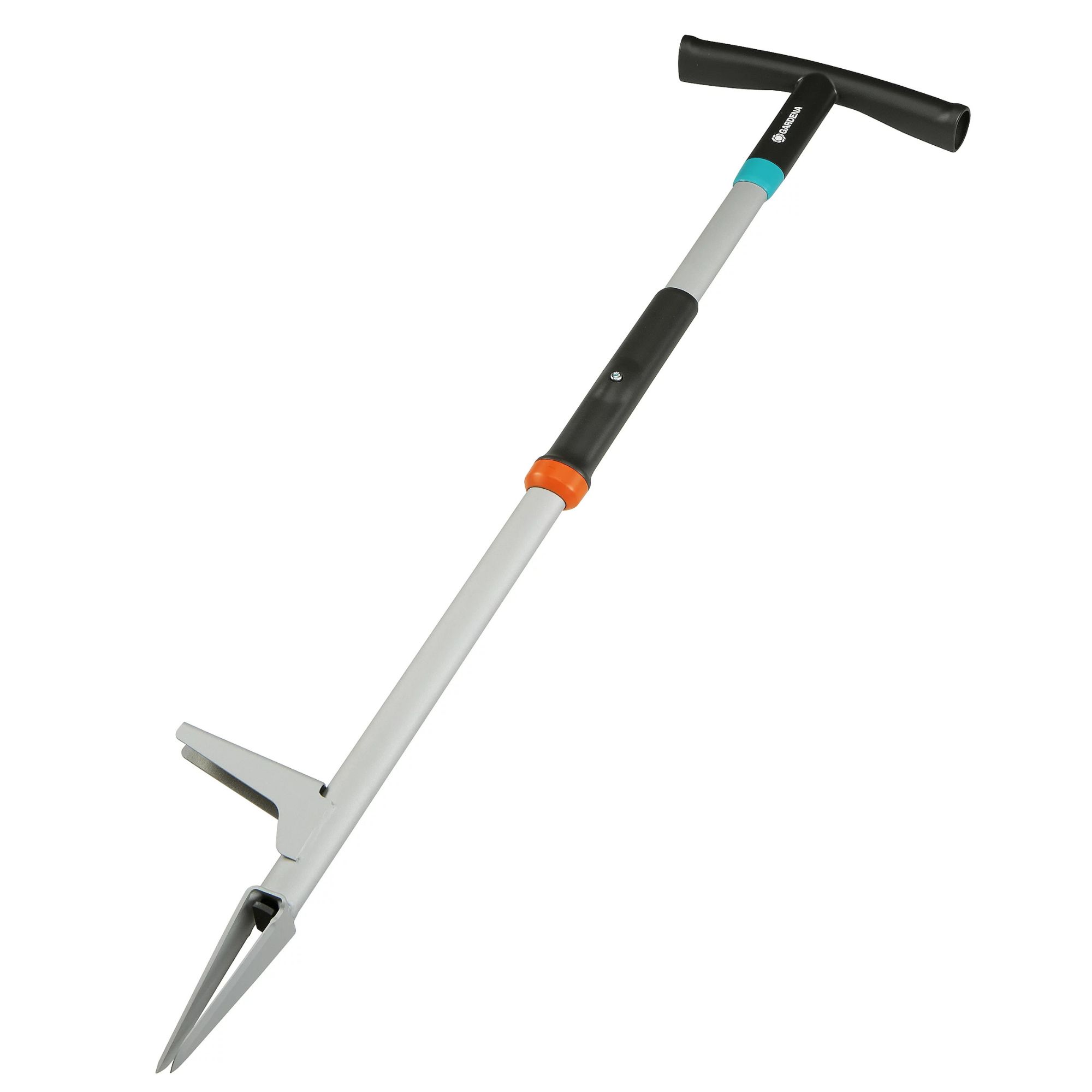
If you’re looking for ways to get rid of weeds in your lawn, I can’t recommend this tool enough. It’s a robust, long-handled weed puller that’s super easy to use, and it targets stubborn, tap-rooted weeds like dandelions right at the root, removing the entire thing in one swoop. At £40 from B&Q, it’s a little pricier than other weed pullers out there, but having tried it in my own garden, I’d absolutely pay more for a durable piece of kit that makes light work of tough weeds.
My lawn was covered in weeds, and it’s really hard and compacted, so I thought it was going to be a long road to tackling them all – but the GARDENA Weed Puller halved the amount of time I expected it to take, and actually made the task really fun.
Latest Videos From
GARDENA
Weed Puller
This weed puller gets my nod of approval for ease of use, durability and excellent, well, weed-pulling ability.
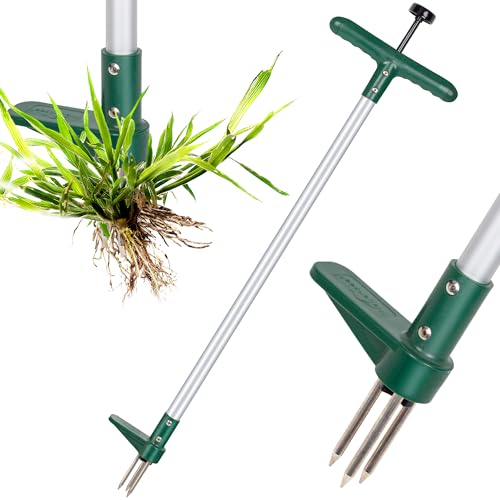
If I had to rank garden tools by ease of use, I think I’d put the GARDENA Weed Puller in S tier. It’s a simple design: long, with a comfortable handle grip on the end, and light enough to use comfortably over longer sessions.
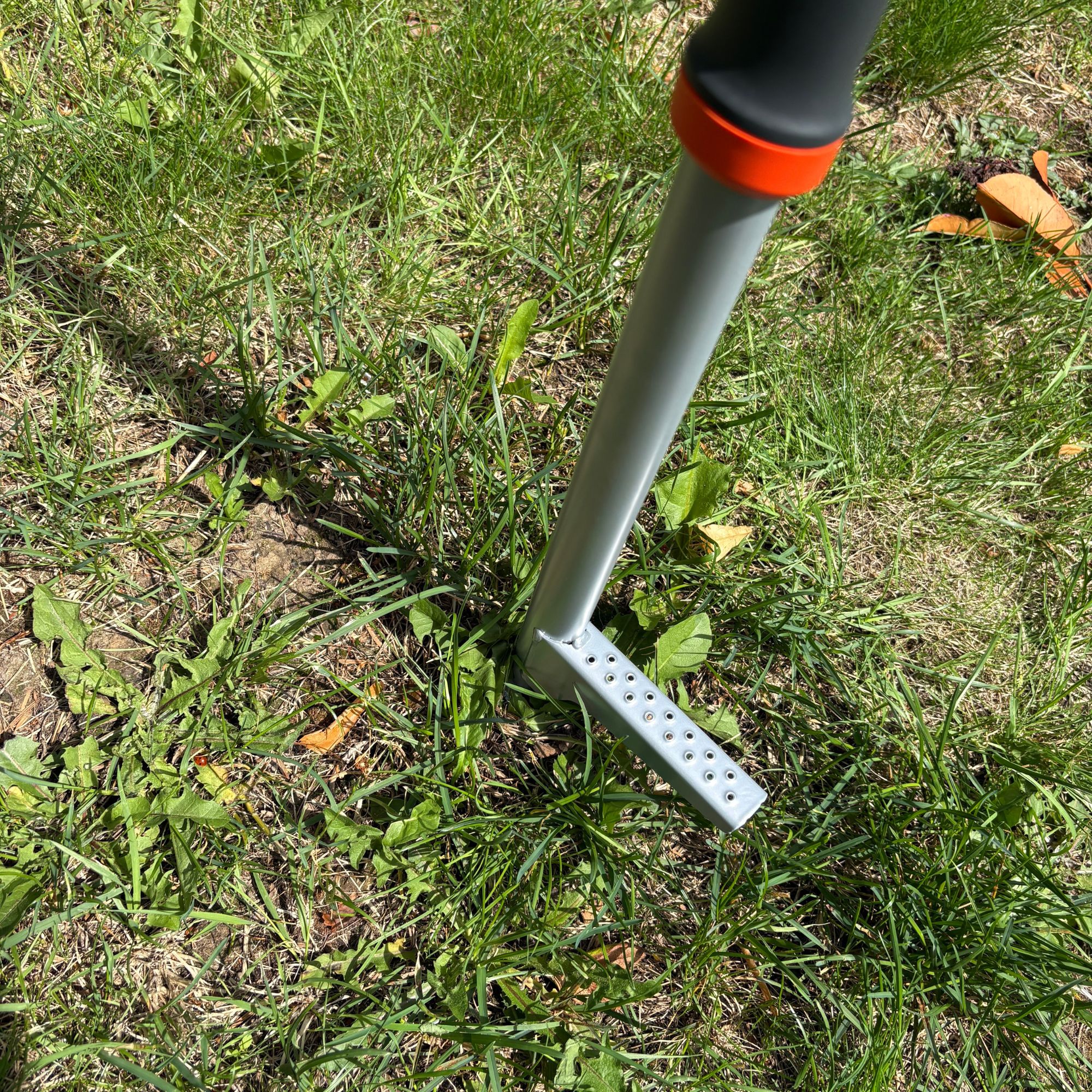
What struck me, though, is that those ‘longer’ weeding sessions weren’t that long at all. The weed puller is really easy to use – you simply push the sharp end of the tool over the centre of the weed, using the footrest to push it in as far as you can, and then twist the handle 180 degrees before pulling the tool (and the weed) out from the lawn. I thought it would be tricky to dig the blades all the way in because my lawn is so dry and in need of revival, but they’re so sharp that it didn’t take nearly as much effort as I expected.
(Image credit: Future PLC / Sophie King)
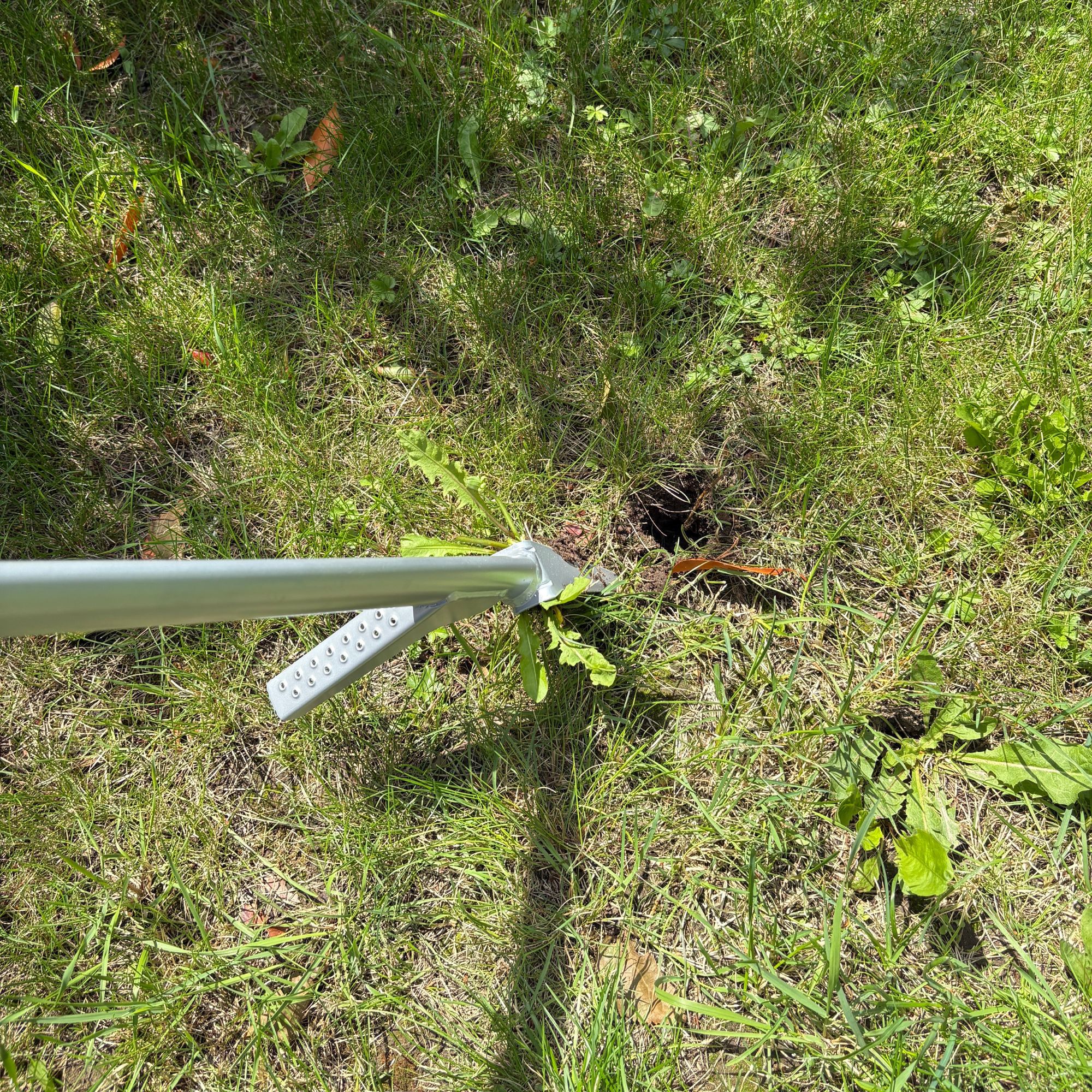
There’s also a built-in ejector mechanism that you simply slide to push and release the weed from the weed puller. It’s so easy to use and allows you to quickly clear each weed before tackling the next.
The GARDENA weed puller successfully retrieved each weed (in its entirety – tap root and all!) 99% of the time. The other 1% was just down to my positioning the weed puller wrong, so it’s a really accurate tool. I had some hugedandelions in my lawn, but it was no more difficult to remove those than the smaller weeds out there. It’s also really satisfying to pull the whole root system out of the soil, rather than pluck the leaves from the surface like other weeding tools tend to do.
Sign up to our newsletter for style inspiration, real homes, project and garden advice and shopping know-how
(Image credit: Future PLC / Sophie King)
The only thing that alarmed me, at first, was the holes the weed puller leaves in its wake. They’re sizeable enough to notice, especially once they’ve removed larger weeds – but I like to think of it as a form of lawn aeration (which my compacted lawn absolutely needs!)
Reviewers agree that the GARDENA Weed Puller ‘makes weeding the lawn so much easier,’ with another noting that it’s ‘an amazing back saver and so efficient and quick.’ One reviewer mentioned that it can ‘get into the hardest soil,’ too, which I can vouch for, because my lawn is dry, hard, and stony in places.
Other weeding tools we rate
Walensee
Weed Puller
Another highly-rated weed puller on Amazon, with a long handle and a 3-claw design.
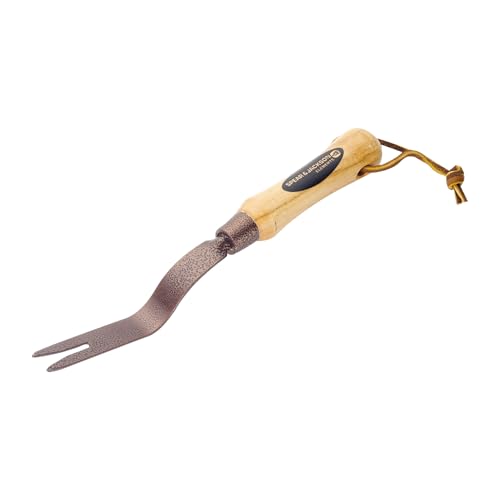
Spear & Jackson
Elements Daisy Grubber
A small hand weeder is ideal for targeting daisies and other smaller weeds.
Jardineer
Weed Puller
You catch the root of the weed manually, levering the claw with your foot, with this tool.
The GARDENA weed puller is well worth the investment if you’re looking for a robust weeding tool that can tackle even the stubbornest weeds in your lawn.
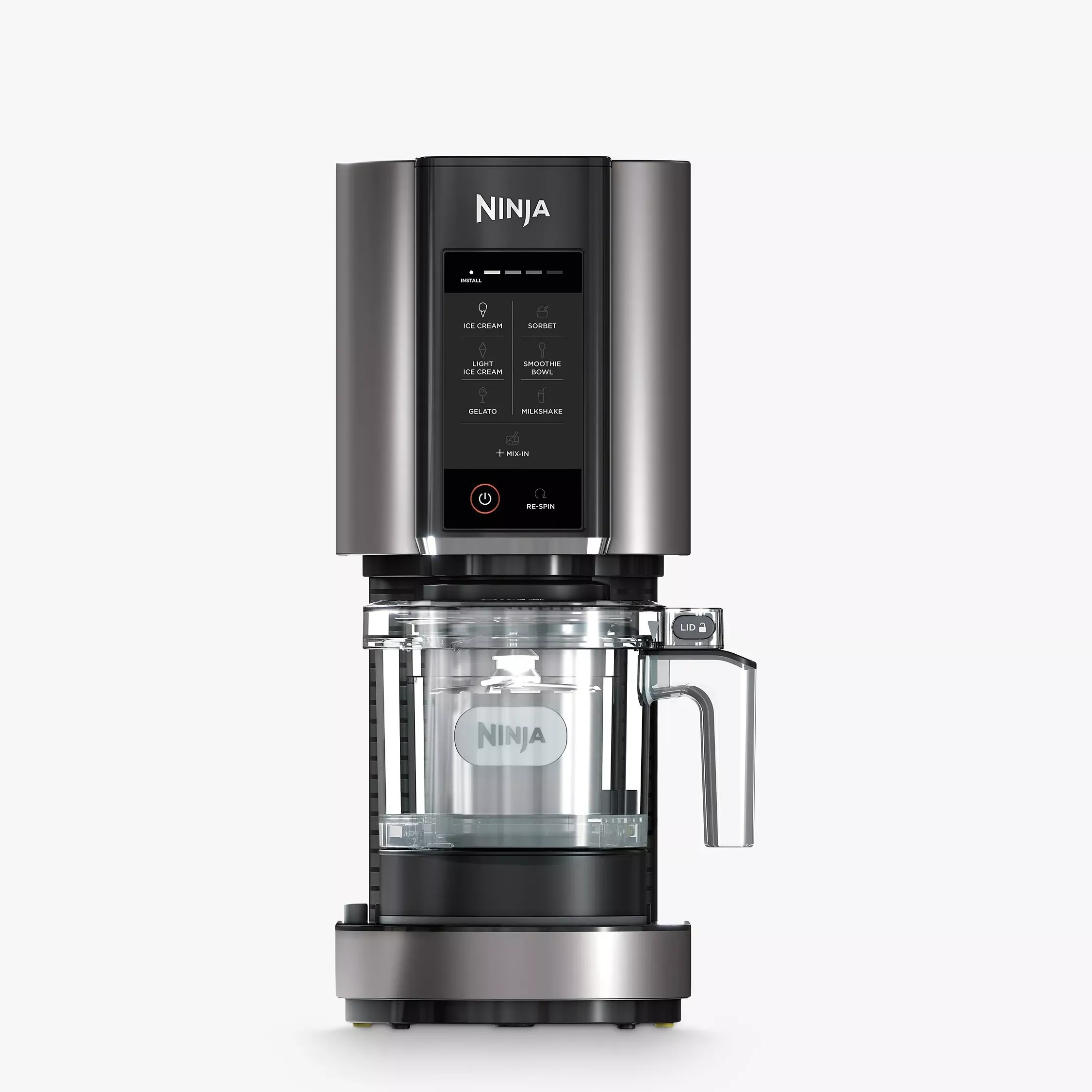
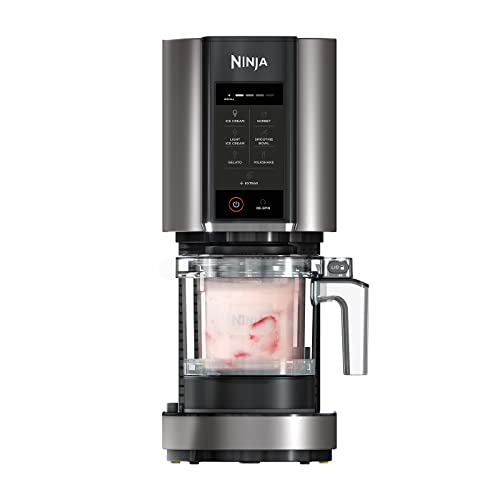
Its design upends what we’ve seen from the most popular ice cream makers of the last few years, including the Ninja Creami (which we’ve reviewed), by adopting build that’s more like a Nutribullet blender than anything else.
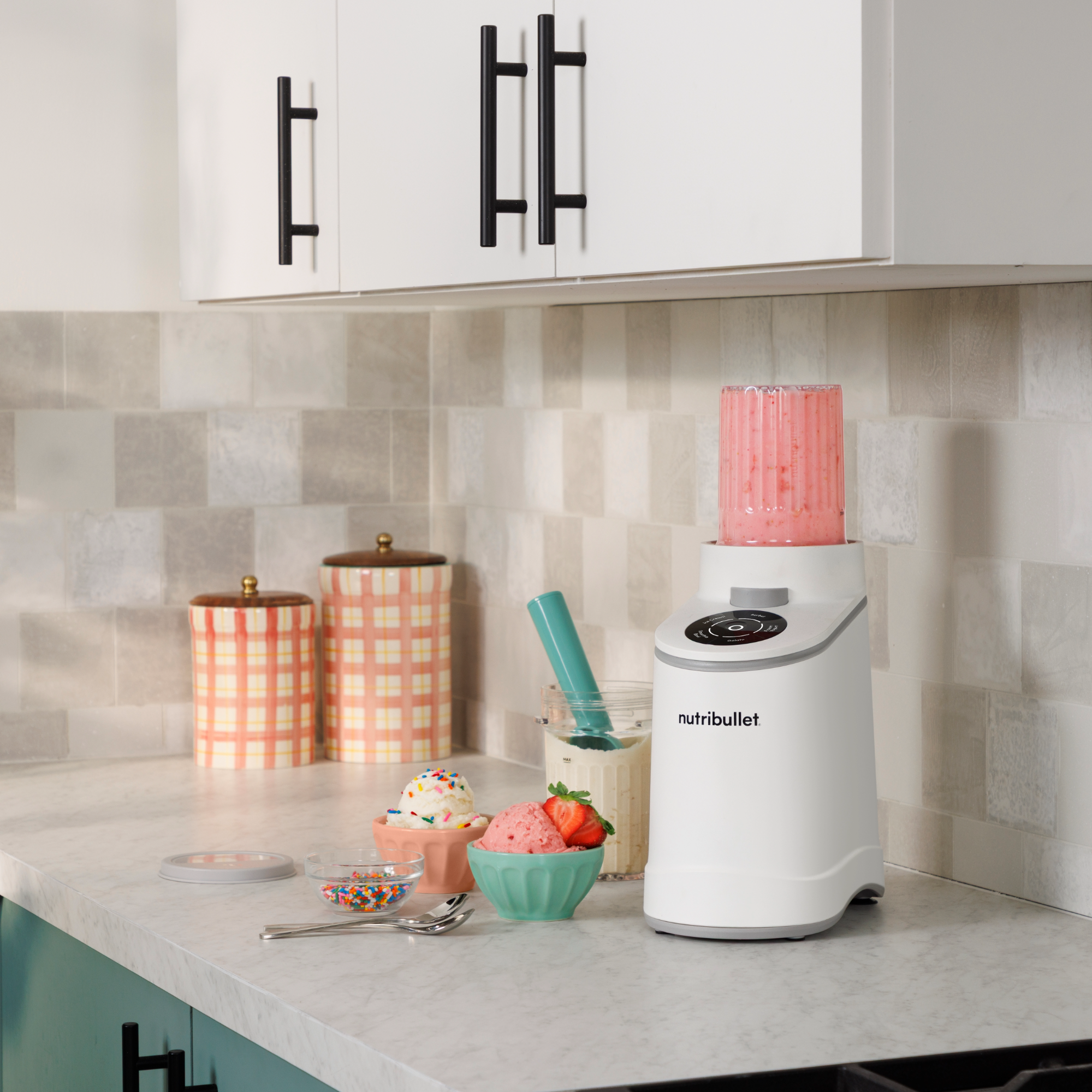
This not only makes the Chill look streamlined and ready to pop into a cupboard when not in use, but also solves what I’d argue is the most pressing problem that Ninja Creami fans have: it’s not an easy machine to clean. Here’s how the Nutribullet Chill aims to solve that.
Latest Videos From
Nutribullet
Chill Ice Cream Maker
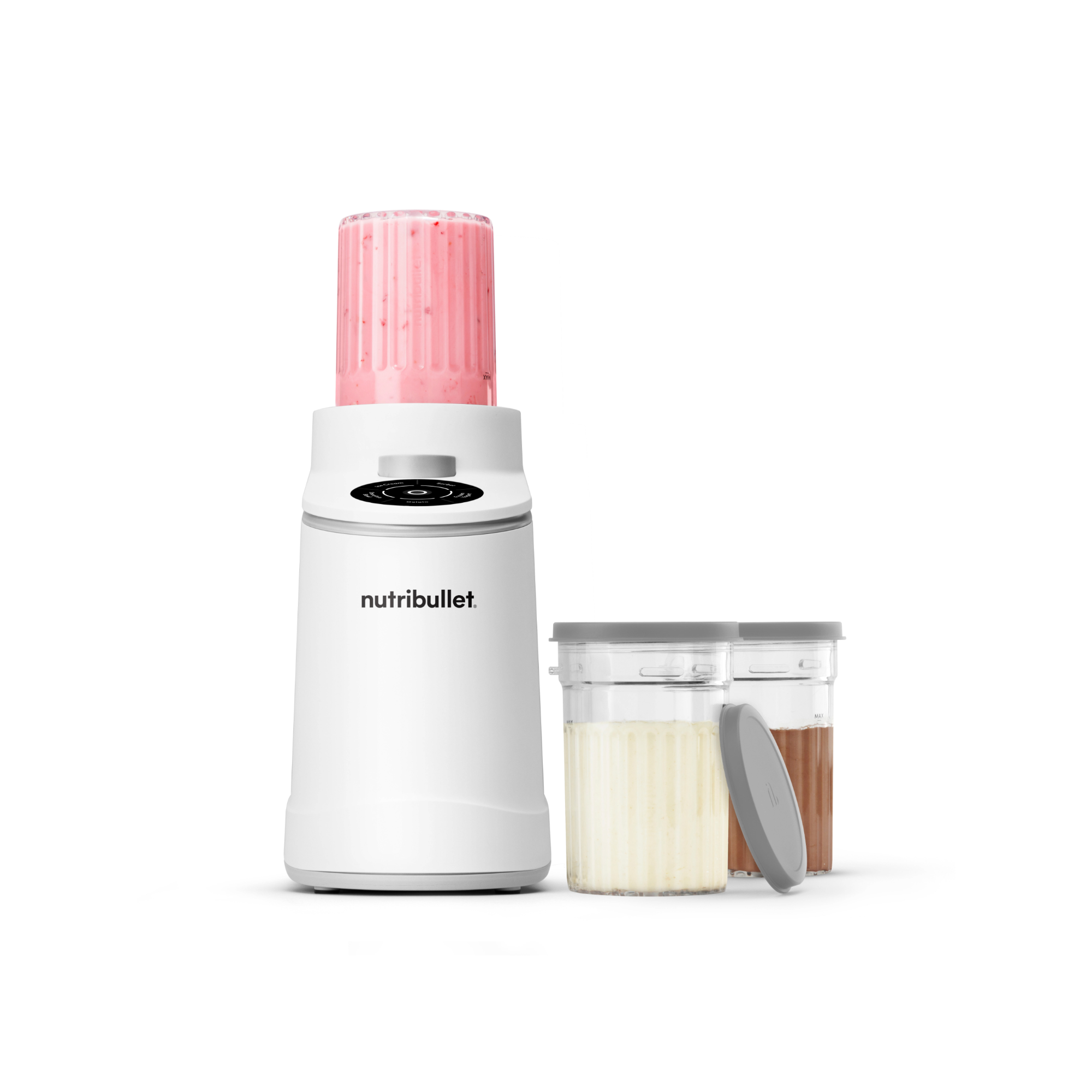
The Nutribullet Chill is kitted out with five settings: Ice Cream, Sorbet, Smoothie Bowl, Frozen Yoghurt & Gelato.
This ice cream maker, like most out there, requires pre-freezing. That means you’ll need to prep your ingredients in the included tubs the night before you want to make ice cream and then freeze them. Most ice cream makers of this type require 24 hours of waiting time unless you want to opt for something like the Cuisinart Frost Fusion, which we recently reviewed, and allows you to make soft serve in under 30 minutes.
Like the ever-popular Ninja Creami, the Chill also uses a rotating blade to cut through your mix and creamify it in order to create a dessert-like consistency. The big difference with the Chill, however, is that the blade is stored within a countertop-friendly base.
(Image credit: Nutribullet)
This is very good news for those looking to save space in their kitchen. The Ninja Creami is, whilst incredibly impressive in its performance, a very difficult appliance to store on a kitchen countertop as it’s very tall. At almost 43 centimetres in height, it didn’t fit under my kitchen cupboards. Compare that to the base of the Chill, which is 27cm tall (without the tub attached) and you can see which would be best if you’re short on worktop space.
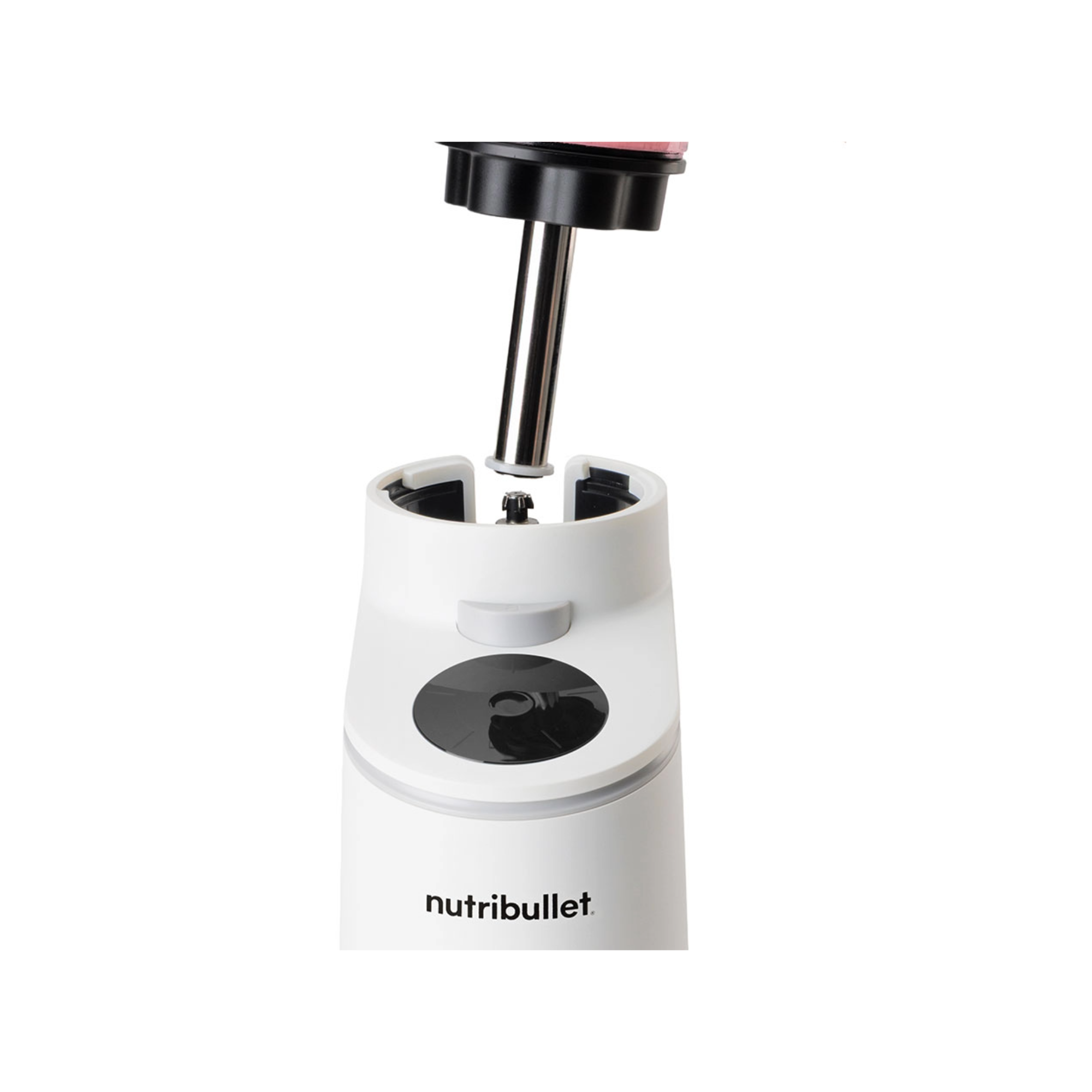
Another issue that long-time fans of the Creami often have is that the blade can be hard to clean, as it’s contained within the upper unit of the appliance. Nutribullet aim to solve this with the Chill by making the blade element totally removable and dishwasher-safe. The parts pop out the top of the base in order to be cleaned, as you can see below.
Sign up to our newsletter for style inspiration, real homes, project and garden advice and shopping know-how
The removable, washable element of the Chill.
(Image credit: nutribullet)
With purchase of the Chill, you’ll receive the appliance itself alongside two 450g tubs and matching lids for whipping up whatever kind of sweet treat you like. As with the Creami, a big part of the allure with this machine is that you have complete control over your ice cream ingredients – a must if you have dietary requirements or you want to make healthier family-friendly puddings.
If I’m being fussy, I would say that I’d love this new Nutribullet to also feature a Slush mode – but appliances that can make ice cream and slush are rarer to find. If that’s exactly what you’re looking for you might want to hold out until the release of the much anticipated Dualit Ice Cream Maker instead.
(Image credit: Nutribullet)
With more hot weather on the way, I can guarantee you that a frozen-treat maker like this will fast become your favourite kitchen appliance if you choose to take the plunge. You’ll get more use out of yours than you’d think!
Alternatives
Cuisinart
Freeze Wand Ice Cream Maker
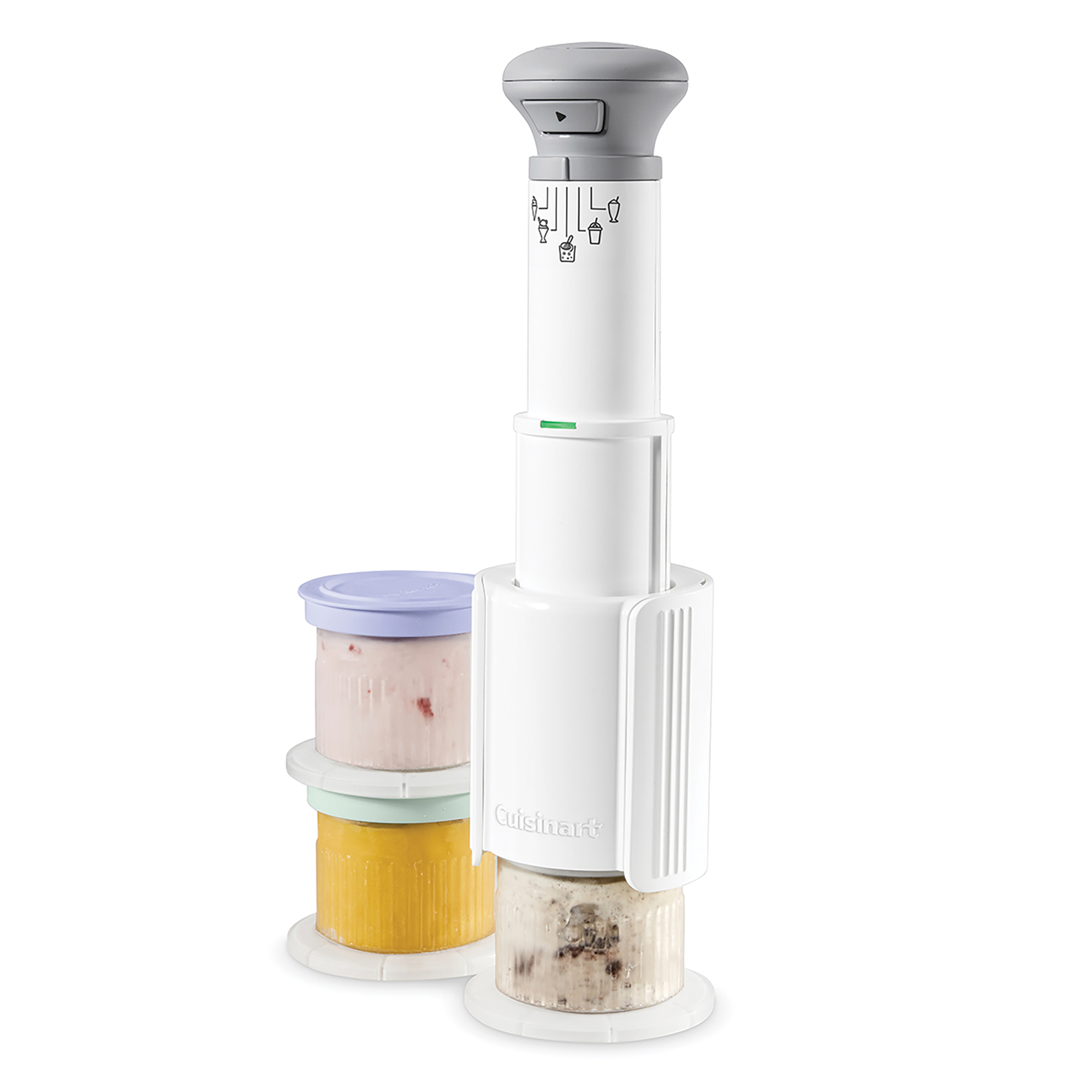
At 41cm tall, this retractable freeze wand is another small space alternative to a traditional ice cream maker, the slim wand coming apart and fitting inside a drawer.
Ninja
Ninja Creami Ice Cream Maker
The OG ice cream maker that kicked off the new generation of ice cream makers. It’s still a staple in many kitchens thanks to it’s impressive results and ease of use.
How early is too early to start celebrating Halloween? 10 years ago, I’m sure the general consensus would have been that it is way too early to start celebrating Halloween pre-October. But times have changed, and George Home’s new ‘Summerween’ collection is proof of that.
This spooky, kooky and downright summery home decor trend hasn’t come out of nowhere, as George Home has reported shoppers are searching for Halloween decor as early as August. In response, they dropped a 36-piece collection you can shop online right now.
I’ll admit, the Ideal Home office is a little less convinced about the Summerween trend. On the one hand, the upcoming Summer Solstice is the perfect excuse to display whimsical decor. On the other hand, spooky decorations in highlighter pink shades aren’t exactly what you’d call classically tasteful. So, I asked interior design experts how to decorate for Summerween tastefully, and this is what they said.
Latest Videos From
Summerween at George Home
George Home
Summerween Boo Stripe Tassel Cushion
George Home
Summerween Stripe Ghost Shaped Cushion
George Home
Cherry Skulls Duvet Set
George Home
Halloween Ghost Supersoft Throw – 150 x 120cm
George Home
Ghoul Party Reversible Duvet Set
George Home
Summerween Beach Towel
As you can see, the George Home Summerween collection is a glitter bomb of bold colour, disco balls and statement prints. It’s perfectly in line with the popular disco pumpkin and Pinkoween trends that have been incredibly popular over the last couple of years.
It’s fun and a little tongue-in-cheek, but not exactly what I would call chic. And while great fun to deck your home out with for a party, it’s not exactly decor I’d want adorning my home every day.
‘New search data shows interest in ‘Summerween’ has surged by 200% in the past month, with a further 50% increase week on week. That shift suggests it’s moving beyond being a bit of an internet in-joke and into something people are actually bringing into their homes,’ says Victoria Robinson, trend expert at Hillarys.
‘From a trend perspective, I think it’s a fun one, but like a lot of social media-led trends, it can easily tip into feeling gimmicky if you go too literal with it. Bright orange pumpkins and heavy Halloween décor can feel out of place in summer if they’re not styled carefully.’
Sign up to our newsletter for style inspiration, real homes, project and garden advice and shopping know-how
How to style the Summerween trend tastefully
According to the experts, the key to tasteful Summerween decor is opting for softer colours and going by the principle that less is more.
A velvet cushion such as this one is a subtle nod to a pumpkin.
(Image credit: Future PLC/ Jeremy Phillips)
‘I enjoy the idea of taking familiar autumnal motifs and reimagining them through a lighter, more playful summer lens. The key is balance. When done well, it feels whimsical and creative rather than kitsch or overly themed,’ says Kunal Trehan, interior designer and founder of Touched Interiors.
‘Swap traditional orange and black for softer combinations such as terracotta, coral, dusty peach, sage green, sand and cream. This creates a more elevated seasonal look. Decorate with woven lanterns, rattan accessories, driftwood, ceramic pumpkins and dried florals rather than plastic decorations. The result feels far more sophisticated.’
‘Texture also plays a big role. Natural materials like linen tablecloths, woven accessories and rustic ceramics help ground the look and stop it from feeling overly themed. You can then layer in gentle nods to Halloween, things like candlelight, atmospheric lighting or understated motifs, rather than anything too costume-like,’ adds Victoria.
‘It works particularly well outdoors. We’re seeing a big shift towards people making better use of their gardens and outdoor spaces, and Summerween lends itself perfectly to that, things like relaxed tablescaping, soft lighting, and layered textiles that create a slightly moody but still summery feel.’
John Lewis
John Lewis Rattan Led Lit Pumpkin Decoration
If you love pumpkins, opt for a more rustic take than the bold oranges and even disco styles we’ve come to expect. The one has tiny LED’s for a subtle glow.
William Morris At Home
Pure Cotton Wild Tulip Bedding Set
This bedding set has a stunning autumnal look, without being explicity Summerween. The orange and blue colours work wonderfully to create a whimsical display.
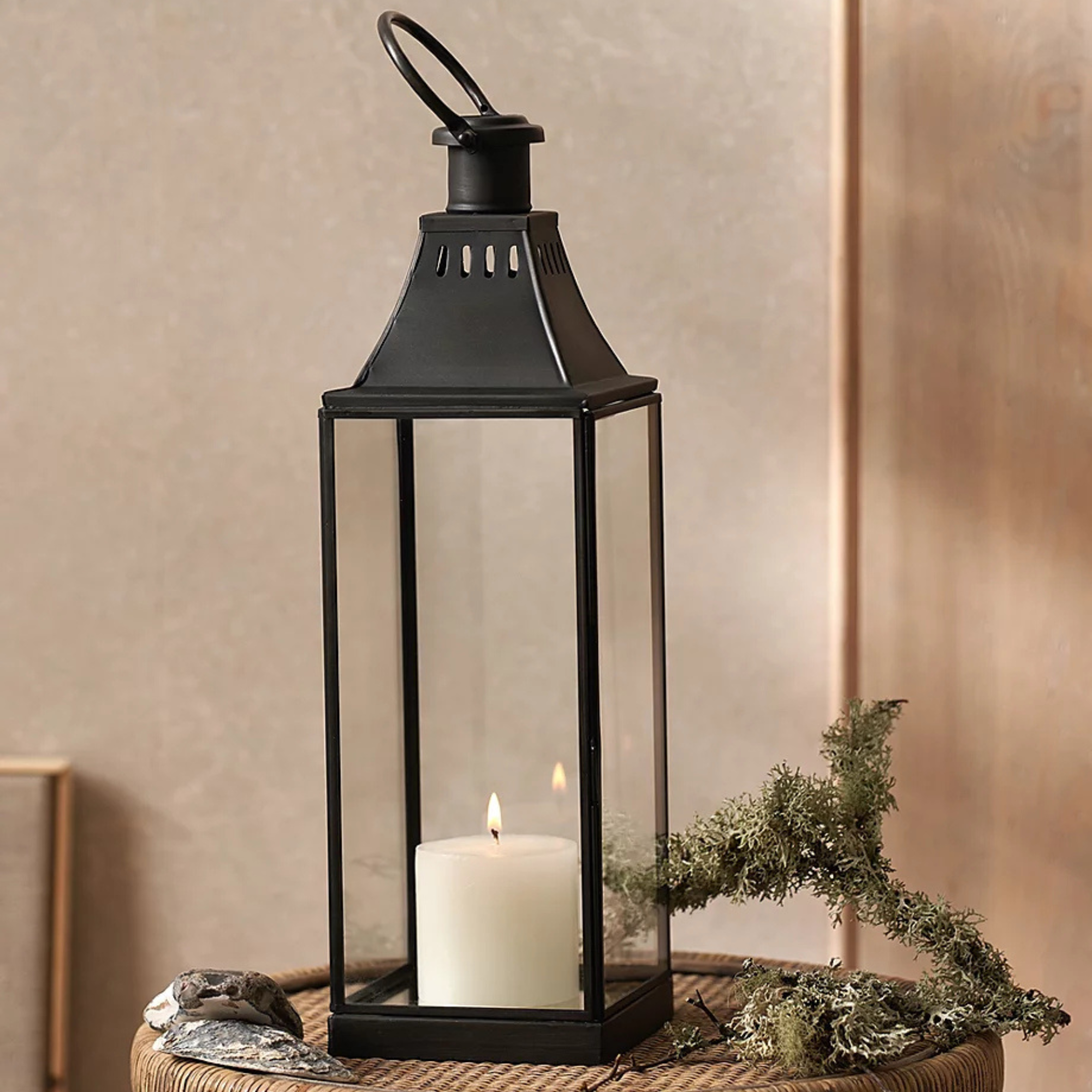
Soft, flickering candlight is one of the simplist and most stylihs ways to nail the trend. This lantern has a gothic edge, whilst remaining subtle enough to blend with your home.
‘The most successful Summerween interiors don’t look like Halloween arrived early. Instead, they capture the mood and magic of the season while remaining stylish, relaxed and appropriate for summer living,’ concludes Kunal.
The choice is yours. Will you go bold with George Home, or opt for something a little more subtle?
If you are thinking about adding a garden room, upgrading an existing one, or simply giving your outdoor space a more considered finish this year, the material choices you make at the specification stage will determine how your project looks in ten years’ time — not just how it looks on the day it is completed.
The UK garden room market has matured considerably over the past five years. The structures available today are significantly better insulated, better built, and better detailed than those of a decade ago. But the exterior materials used to clad and deck these buildings have not always kept pace. Too many garden rooms — even well-built, well-insulated ones — are still being finished with pressure-treated softwood cladding and decking that will need significant maintenance attention within three to five years.
The good news is that the alternatives are more accessible than ever. Here is what to know before you specify.
Why Timber Species Choice Matters More Than You Think
Not all timber decking performs the same. The species, the modification process, and the profile selection all affect how the material performs in a UK garden environment — and the differences between the best and worst options are not marginal.
Pressure-treated softwood — the standard option supplied by most garden room builders — achieves its durability through chemical impregnation with preservative compounds. It works, but it requires annual or biannual retreatment to maintain that protection as the surface coating degrades. Miss one season and the greening starts. Miss two and the boards begin to show genuine structural fatigue at the fixing points.
Siberian larch is naturally durable without chemical treatment — its density and high resin content give it genuine resistance to biological decay that pressure-treated pine achieves only through chemistry. This means lower maintenance, more consistent appearance over time, and no restrictions on how the timber is disposed of at end of life. For a garden room that is going to be used daily as an office or creative studio, the reduced maintenance commitment is a meaningful quality-of-life benefit.
Siberian larch decking is available in smooth and ribbed profiles to suit different design intentions and practical requirements. The full range of Siberian larch decking UK covers both standard AB grade and premium A grade boards, with options from 28x90mm for narrower deck areas to 28x140mm for wider-board contemporary installations.
What Does a Well-Specified Garden Room Actually Cost?
One of the most consistent frustrations in the garden room market is the gap between initial quoted prices and the final cost of a well-finished project. Base structures are often quoted attractively — and then the upgrades start: better insulation, better windows, better cladding, better decking.
Understanding what those upgrades cost at the outset — and why they represent genuine value rather than upselling — makes the specification conversation much more productive. For cladding, the premium between pressure-treated softwood and a naturally durable timber like Siberian larch or ThermoWood is typically in the range of £15 to £30 per square metre supply cost. On a 30m² garden room with 60m² of total cladded area, that represents a difference of £900 to £1,800 at supply — a fraction of the total project cost, but one that determines the maintenance commitment for the next two decades.
Decking costs follow a similar pattern. Siberian larch decking typically costs £55 to £65 per square metre supplied, compared with £25 to £35 for pressure-treated pine. On a 20m² deck, that is a supply cost difference of £400 to £600 — and an elimination of the annual retreatment cost that pressure-treated decking requires throughout its service life.
For a detailed breakdown of all the costs involved in a garden room project — from structure and glazing through cladding, decking, and landscaping — the garden room cladding cost UK 2026 guide provides current supply prices across all the main cladding species and profiles, with practical guidance on calculating quantities and budgeting for the complete external finish.
The Design Decisions That Make the Biggest Difference
Beyond species and profile, the installation details that most affect the long-term appearance and performance of garden room cladding and decking are often the ones that receive the least attention at the design stage.
For cladding, the specification of a ventilated rainscreen system — with a minimum 25mm drained and ventilated cavity between the boards and the wall structure — is non-negotiable for long-term performance. Without adequate ventilation, even naturally durable timber will show accelerated deterioration at fixing points and board ends where moisture accumulates. The cavity adds a small amount to installation cost but extends the effective service life of any cladding species by decades.
For decking, board orientation and drainage are critical. Boards should run away from the building to shed water, with adequate fall across the deck surface and gaps between boards that allow drainage without accumulating debris. End grain sealing at all cut ends is best practice that adds minimal cost but significantly reduces the moisture uptake that causes end-checking and premature decay at the most vulnerable points of any board.
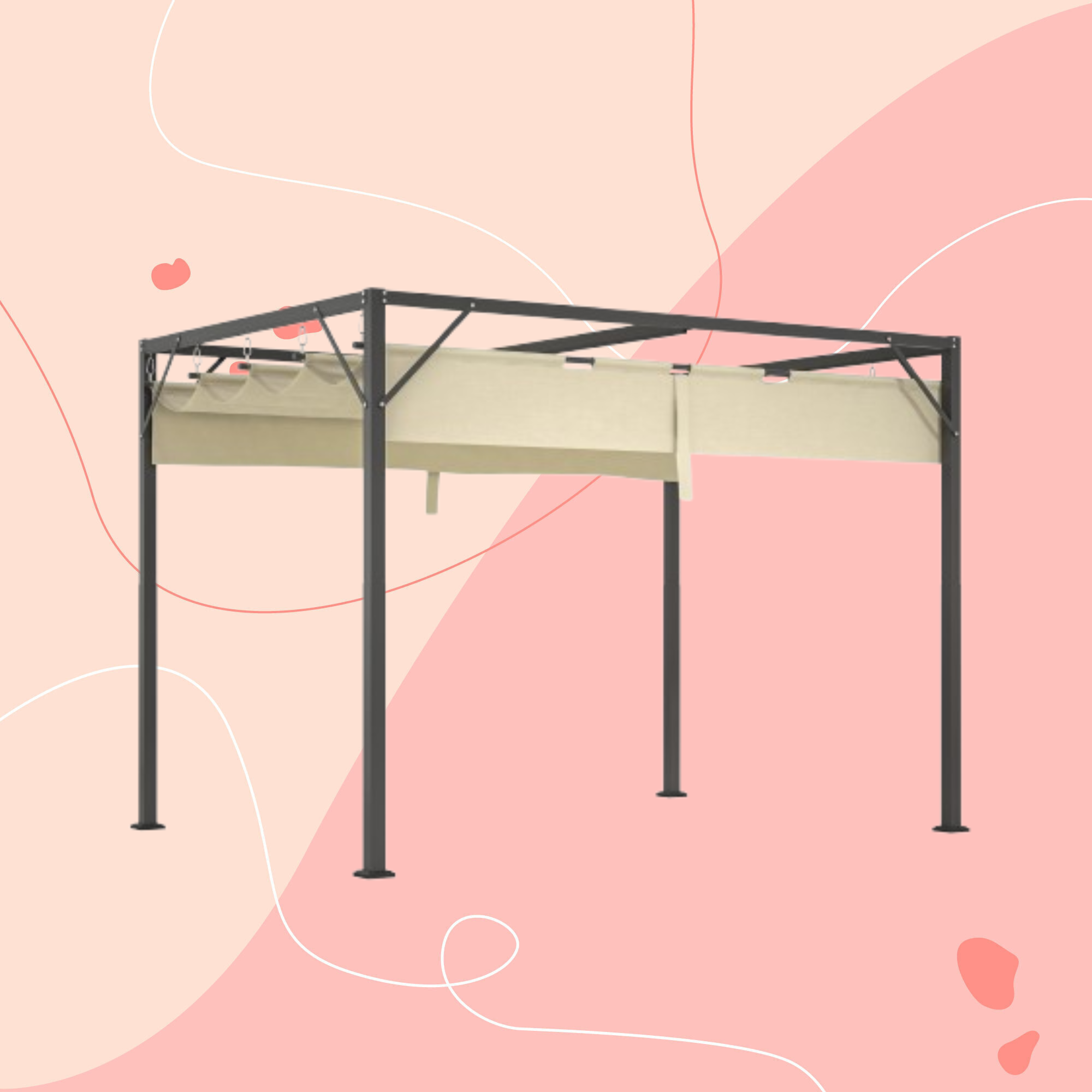
If you’re looking to improve your garden’s hosting capabilities, budget retailer The Range has just dropped a load of stylish new garden shade ideas that are perfect for ‘zoning’ your garden – but it is the Birchtree Metal Pergola that caught my eye. I can’t believe it’s only £162.99.
A pergola is more than just a garden shade idea. While an effective way to combat blazing sunshine and keep you cool, the garden structures can also be used to create a dedicated hosting zone, providing an elevated space to entertain, dine and relax.
Alas, perogolas can be expensive investments. So, when such an affordable option appears on the market, it is worth shouting about. If you’re looking to achieve your pergola ideas on a budget, here’s everything you need to know about The Range’s latest affordable garden buy.
Latest Videos From
The Range
BIRCHTREE Pergola Steel Frame 3x2M PE Canopy Adjust Shade Pergola
<aside data-block-layout="horizontal" data-block-type="featured-product" data-editorial-currency="GBP" data-editorial-merchant-name="£162.99 at The Range" data-hawk-json="{"product":{"variants":{"Default":{"image":{"copyright":"","height":1500,"id":"G958dENRwKuQ3KnFnsbkmD","mimeType":"image\/jpeg","mos":"https:\/\/cdn.mos.cms.futurecdn.net\/G958dENRwKuQ3KnFnsbkmD.jpg","role":"","width":1500,"credit":"The Range","alt":"The Range, BIRCHTREE Pergola Steel Frame 3x2M PE Canopy Adjust Shade Pergola","caption":""},"strapline":"
With an adjustable canopy, this pergola is great for creating garden shade as and when you need it. It’s sleek, stylish and looks way more expensive than it’s \u00a3162.99 price tag.","brand":"The Range","name":"BIRCHTREE Pergola Steel Frame 3x2M PE Canopy Adjust Shade Pergola","urlStyle":"","layout":"horizontal","noFollow":true,"noAffiliateTracking":false,"promoLabel":"","price":null,"salePrice":null,"currency":"GBP","linkLayout":"text","sponsored":false,"hawkProductNameMatchedCode":"","review":{"cons":[],"id":"","name":"","pros":[],"rating":0,"strapline":"","url":""},"id":"","lastCheckedPriceDate":"","link":{"url":"https:\/\/www.awin1.com\/awclick.php?awinmid=5238&awinaffid=103504&clickref=hawk-custom-tracking&p=https%3A%2F%2Fwww.therange.co.uk%2Fgarden%2Fsheds-and-garden-structures%2Fgarden-pavilions-and-pergolas%2Fbirchtree-pergola-steel-frame-3x2m-pe-canopy-adjust-shade-pergola","linkText":"\u00a3162.99 at The Range","editorialMerchantName":"\u00a3162.99 at The Range","merchantName":"The Range","merchantId":7733,"merchantNetwork":"AW","merchantUrl":"therange.co.uk"}}}}}” data-link=”https://www.awin1.com/awclick.php?awinmid=5238&awinaffid=103504&clickref=hawk-custom-tracking&p=https%3A%2F%2Fwww.therange.co.uk%2Fgarden%2Fsheds-and-garden-structures%2Fgarden-pavilions-and-pergolas%2Fbirchtree-pergola-steel-frame-3x2m-pe-canopy-adjust-shade-pergola” data-link-merchant=”The Range” data-link-text=”£162.99 at The Range” data-merchant-id=”7733″ data-merchant-name=”The Range” data-merchant-network=”AW” data-merchant-url=”therange.co.uk” data-model-brand=”The Range” data-model-name=”The Range BIRCHTREE Pergola Steel Frame 3x2M PE Canopy Adjust Shade Pergola” data-name=”Horizontal Product Block merchantlink widget” data-render-type=”fte” data-show-fallback=”button” data-widget-type=”merchantlink” class=”hawk-root”>
With an adjustable canopy, this pergola is great for creating garden shade as and when you need it. It’s sleek, stylish and looks way more expensive than it’s £162.99 price tag.
If you’ve been considering building a pergola, you’ll be aware that it requires a lot of time and effort. You’ll need to consider potential planning permissions, location, material and whether it’s worth shelling out for a professional to fit it for you.
What The Range’s Birchtree pergola offers is a non-permanent, affordable solution to this problem. Just like with the viral IKEA HAMMARÖN pergola, this pergola can be popped up (and taken down) anywhere in your garden. This is ideal for small gardens where you may want the option of shade during summer, and then tidy the pergola away during winter.
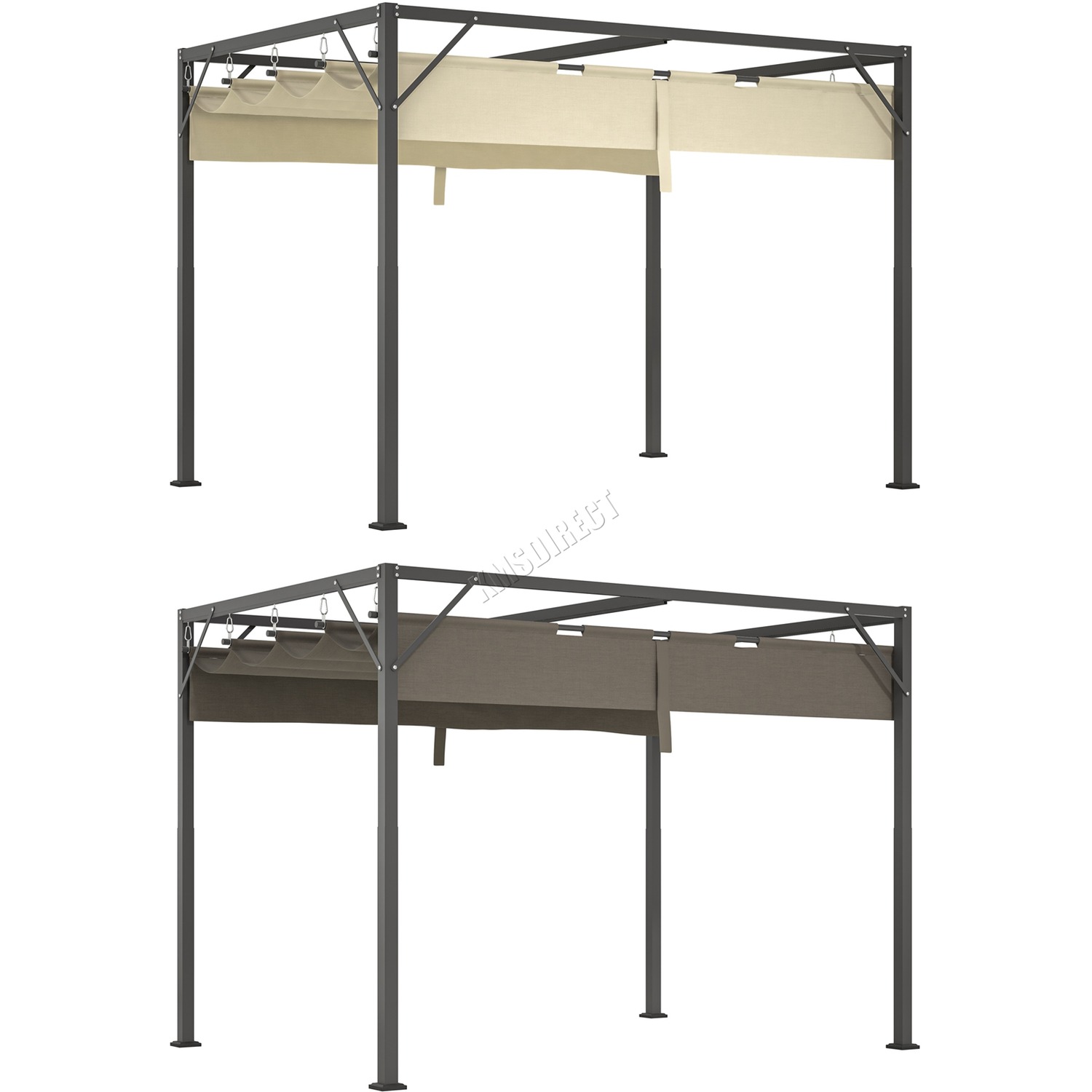
The Birchtree Metal Perola is available in two neutral colourways – grey and beige. Its powder-coated steel frame is not only durable, providing a strong core for long-term use, but it’s unimposing, meaning it won’t dominate your garden.
(Image credit: The Range)
The canopy is 285x200cm, making it a great option for a smaller space, and it is both weather-resistant and UV-resistant, so it can withstand rain, too. However, during windy, adverse conditions, it is advised to take the pergola down.
Sign up to our newsletter for style inspiration, real homes, project and garden advice and shopping know-how
The Range claims this pergola is both easy to assemble and ‘only takes a minute to set wherever you need a shaded area’. They also state it is designed for long-time use.
As the product is so new, it hasn’t received any reviews yet. However, I do think it is an affordable option worth trying. Alternatively, here are a few more affordable options you can shop online (and are rated well).
Outsunny
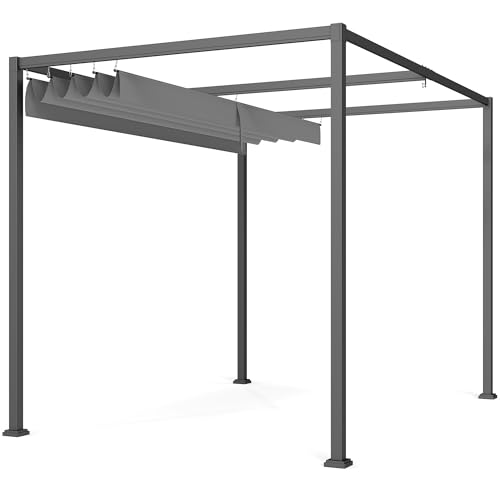
Outsunny 3 X 2m Metal Outdoor Pergola With Retractable Roof,
<aside data-block-layout="hero" data-block-type="featured-product" data-editorial-currency="GBP" data-editorial-merchant-name="£144 at Amazon" data-editorial-price="144" data-hawk-json="{"product":{"variants":{"Default":{"image":{"copyright":"","height":500,"id":"UdyxFvuENKqAw6ipa4Xuhh","mimeType":"image\/jpeg","mos":"https:\/\/cdn.mos.cms.futurecdn.net\/UdyxFvuENKqAw6ipa4Xuhh.jpg","role":"","width":500,"credit":"Outsunny","alt":"Outsunny 3 X 2m Metal Outdoor Pergola With Retractable Roof, Outdoor Gazebo Canopy Shelter With Drainage Holes for Garden, Patio, Lawn, Grey","caption":""},"strapline":"
This Amazon bestseller is more affordable than The Range. It’s the same size, offering a UV-resistant, adjustable canapy.","brand":"Outsunny","name":"Outsunny 3 X 2m Metal Outdoor Pergola With Retractable Roof,","urlStyle":"","layout":"hero","noFollow":true,"noAffiliateTracking":false,"promoLabel":"","price":144,"salePrice":null,"currency":"GBP","linkLayout":"text","sponsored":false,"hawkProductNameMatchedCode":"","review":{"cons":[],"id":"","name":"","pros":[],"rating":0,"strapline":"","url":""},"id":"","externalId":"216a682d0d5bc2e098fee53eb9981017c4c30f16","lastCheckedPriceDate":"","link":{"url":"https:\/\/target.georiot.com\/Proxy.ashx?tsid=107653&GR_URL=https%3A%2F%2Famazon.co.uk%2FOutsunny-Pergola-Gazebo-Shelter-Retractable%2Fdp%2FB08W32SVJ5%3Ftag%3Dftr-idealhome-gb-21%26ascsubtag%3Dhawk-custom-tracking-21","linkText":"\u00a3144 at Amazon","editorialMerchantName":"\u00a3144 at Amazon","merchantName":"Amazon UK","merchantId":1027,"merchantNetwork":"Amazonuk","merchantUrl":"amazon.co.uk"}}}}}” data-link=”https://target.georiot.com/Proxy.ashx?tsid=107653&GR_URL=https%3A%2F%2Famazon.co.uk%2FOutsunny-Pergola-Gazebo-Shelter-Retractable%2Fdp%2FB08W32SVJ5%3Ftag%3Dftr-idealhome-gb-21%26ascsubtag%3Dhawk-custom-tracking-21″ data-link-merchant=”Amazon UK” data-link-text=”£144 at Amazon” data-merchant-id=”1027″ data-merchant-name=”Amazon UK” data-merchant-network=”Amazonuk” data-merchant-url=”amazon.co.uk” data-model-brand=”Outsunny” data-model-name=”Outsunny Outsunny 3 X 2m Metal Outdoor Pergola With Retractable Roof,” data-name=”Product Block merchantlink widget” data-render-type=”fte” data-show-fallback=”button” data-widget-type=”merchantlink” class=”hawk-root”>
This Amazon bestseller is more affordable than The Range. It’s the same size, offering a UV-resistant, adjustable canapy.
Outsunny
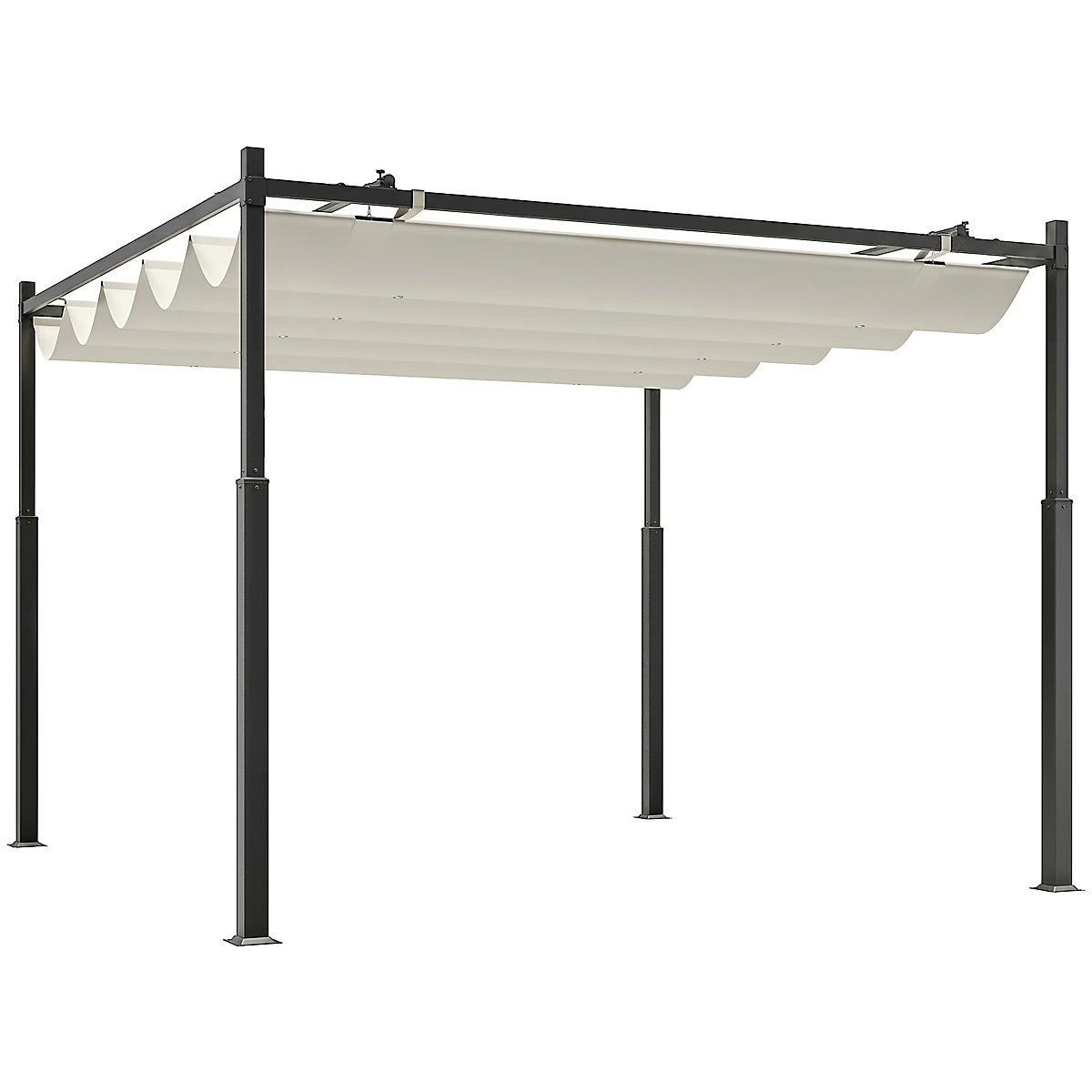
Outsunny 3 x 3(m) Pergola with Retractable Roof, 80mm Metal Column, White
<aside data-block-layout="hero" data-block-type="featured-product" data-editorial-currency="GBP" data-editorial-merchant-name="Was £170.99, now £145.34 at B&Q" data-hawk-json="{"product":{"variants":{"Default":{"image":{"copyright":"","height":1200,"id":"GizysgkPZfxr6py8s9wnW7","mimeType":"image\/webp","mos":"https:\/\/cdn.mos.cms.futurecdn.net\/GizysgkPZfxr6py8s9wnW7.webp","role":"","width":1200,"credit":"Outsunny","alt":"outsunny-3-x-3-m-pergola-with-retractable-roof-80mm-metal-column-white~5063603461789_02c_MP","caption":""},"strapline":"
This pergola is a little larger than The Range’s and combing white material with black metal, looks very stylish. It also has a retractable roof.","brand":"Outsunny","name":"Outsunny 3 x 3(m) Pergola with Retractable Roof, 80mm Metal Column, White","urlStyle":"","layout":"hero","noFollow":true,"noAffiliateTracking":false,"promoLabel":"","price":null,"salePrice":null,"currency":"GBP","linkLayout":"text","sponsored":false,"hawkProductNameMatchedCode":"","review":{"cons":[],"id":"","name":"","pros":[],"rating":0,"strapline":"","url":""},"id":"","lastCheckedPriceDate":"","link":{"url":"https:\/\/diy.pxf.io\/c\/221109\/1632830\/18948?subId1=hawk-custom-tracking&sharedId=hawk-prefix&u=https%3A%2F%2Fwww.diy.com%2Fdepartments%2Foutsunny-3-x-3-m-pergola-with-retractable-roof-80mm-metal-column-white%2F5063603461789_BQ.prd","linkText":"Was \u00a3170.99, now \u00a3145.34 at B&Q","editorialMerchantName":"Was \u00a3170.99, now \u00a3145.34 at B&Q","merchantName":"B&Q","merchantId":299090,"merchantNetwork":"ImpactRad","merchantUrl":"diy.com"}}}}}” data-link=”https://diy.pxf.io/c/221109/1632830/18948?subId1=hawk-custom-tracking&sharedId=hawk-prefix&u=https%3A%2F%2Fwww.diy.com%2Fdepartments%2Foutsunny-3-x-3-m-pergola-with-retractable-roof-80mm-metal-column-white%2F5063603461789_BQ.prd” data-link-merchant=”B&Q” data-link-text=”Was £170.99, now £145.34 at B&Q” data-merchant-id=”299090″ data-merchant-name=”B&Q” data-merchant-network=”ImpactRad” data-merchant-url=”diy.com” data-model-brand=”Outsunny” data-model-name=”Outsunny Outsunny 3 x 3(m) Pergola with Retractable Roof, 80mm Metal Column, White” data-name=”Product Block merchantlink widget” data-render-type=”fte” data-show-fallback=”button” data-widget-type=”merchantlink” class=”hawk-root”>
This pergola is a little larger than The Range’s and combing white material with black metal, looks very stylish. It also has a retractable roof.
Backyard Discovery
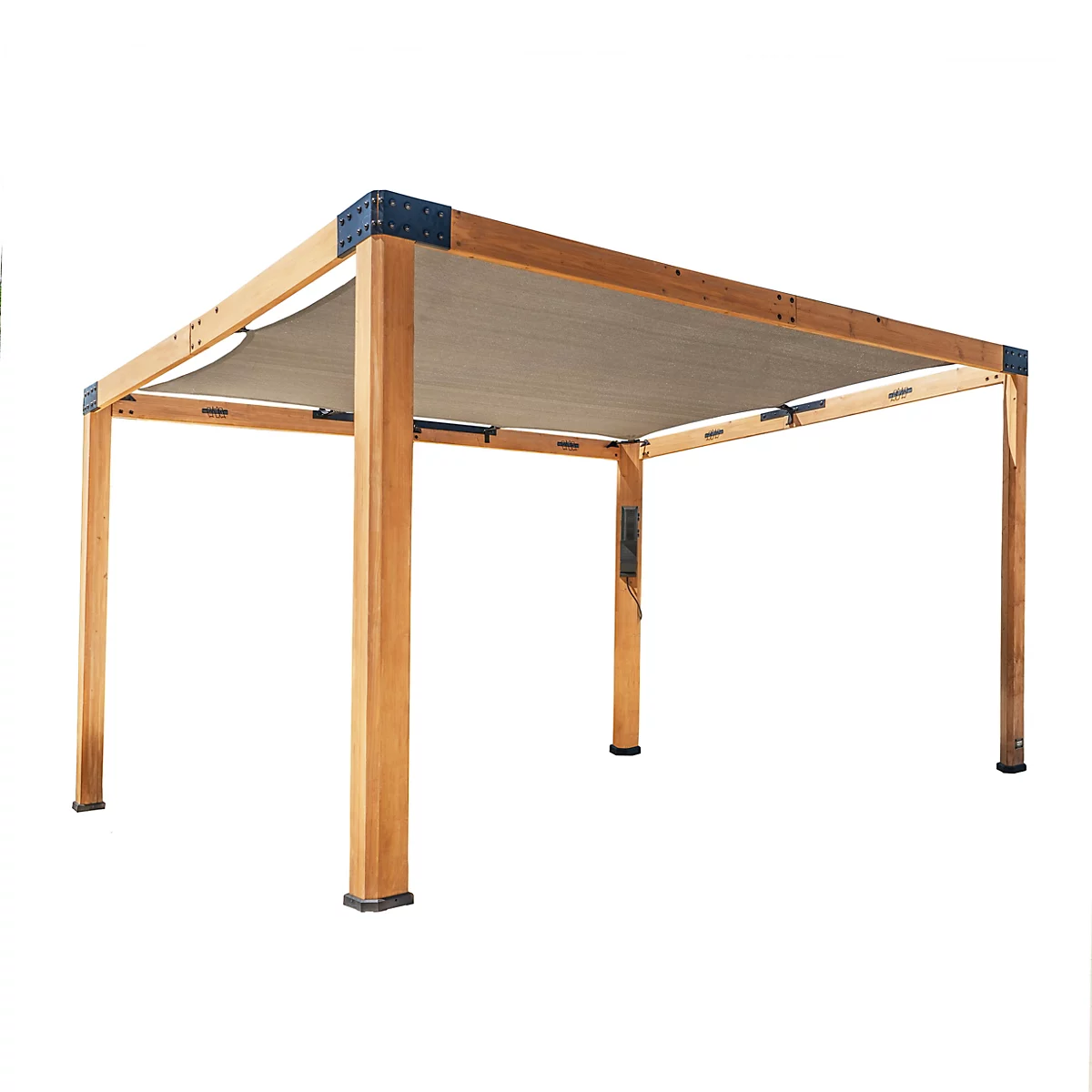
Backyard Discovery Brendan Sail Shade Cedar Wood Outdoor Patio Pergola
<aside data-block-layout="hero" data-block-type="featured-product" data-editorial-currency="GBP" data-editorial-merchant-name="Was £599, now £549 at B&Q" data-hawk-json="{"product":{"variants":{"Default":{"image":{"copyright":"","height":1200,"id":"NNVtCDzwTs6QWTkEnmSBfM","mimeType":"image\/webp","mos":"https:\/\/cdn.mos.cms.futurecdn.net\/NNVtCDzwTs6QWTkEnmSBfM.webp","role":"","width":1200,"credit":"Backyard Discovery ","alt":"Backyard Discovery , Backyard Discovery Brendan Sail Shade Cedar Wood Outdoor Patio Pergola with Canopy and Powerport 3.7m x 3.1m (12ft x 10ft)","caption":""},"strapline":"
If you want that classic wooden pergola look, this is a great choice. It’s water-proof, bloxks up to 90% of UV rays and even comes with 1 USB port and 1 USB-C port, making it perfect for entertainment.","brand":"Backyard Discovery ","name":"Backyard Discovery Brendan Sail Shade Cedar Wood Outdoor Patio Pergola","urlStyle":"","layout":"hero","noFollow":true,"noAffiliateTracking":false,"promoLabel":"","price":null,"salePrice":null,"currency":"GBP","linkLayout":"text","sponsored":false,"hawkProductNameMatchedCode":"","review":{"cons":[],"id":"","name":"","pros":[],"rating":0,"strapline":"","url":""},"id":"","lastCheckedPriceDate":"","link":{"url":"https:\/\/diy.pxf.io\/c\/221109\/1632830\/18948?subId1=hawk-custom-tracking&sharedId=hawk-prefix&u=https%3A%2F%2Fwww.diy.com%2Fdepartments%2Fbackyard-discovery-brendan-sail-shade-cedar-wood-outdoor-patio-pergola-with-canopy-and-powerport-3-7m-x-3-1m-12ft-x-10ft-%2F0752113405042_BQ.prd","linkText":"Was \u00a3599, now \u00a3549 at B&Q","editorialMerchantName":"Was \u00a3599, now \u00a3549 at B&Q","merchantName":"B&Q","merchantId":299090,"merchantNetwork":"ImpactRad","merchantUrl":"diy.com"}}}}}” data-link=”https://diy.pxf.io/c/221109/1632830/18948?subId1=hawk-custom-tracking&sharedId=hawk-prefix&u=https%3A%2F%2Fwww.diy.com%2Fdepartments%2Fbackyard-discovery-brendan-sail-shade-cedar-wood-outdoor-patio-pergola-with-canopy-and-powerport-3-7m-x-3-1m-12ft-x-10ft-%2F0752113405042_BQ.prd” data-link-merchant=”B&Q” data-link-text=”Was £599, now £549 at B&Q” data-merchant-id=”299090″ data-merchant-name=”B&Q” data-merchant-network=”ImpactRad” data-merchant-url=”diy.com” data-model-brand=”Backyard Discovery ” data-model-name=”Backyard Discovery Backyard Discovery Brendan Sail Shade Cedar Wood Outdoor Patio Pergola” data-name=”Product Block merchantlink widget” data-render-type=”fte” data-show-fallback=”button” data-widget-type=”merchantlink” class=”hawk-root”>
If you want that classic wooden pergola look, this is a great choice. It’s water-proof, bloxks up to 90% of UV rays and even comes with 1 USB port and 1 USB-C port, making it perfect for entertainment.
If you’ve been dreaming of a pergola, but don’t have the time or cash flow to build one yourself, The Range’s Birchtree Metal Pergola is an excellent, affordable option. Would you choose it for your garden?