We independently select these products—if you buy from one of our links, we may earn a commission. All prices were accurate at the time of publishing.
When you’re as obsessed with home decor as we are, you take notice when a headline in The New York Times reads “The Lamp That’s Taking Over New York.” As you might expect, the Apartment Therapy team couldn’t read it fast enough, and that’s when we were able to put a name to the table lamps that so many AT staffers had been ogling at outdoor restaurants all over NYC. That’s right, for the past couple of years, Pina Pro Rechargeable LED Table Lamps from Zafferano America have made it possible for alfresco diners to actually see their food on the table — and each other across it — after the sun goes down. Checking all the boxes for what a lamp should be, it’s become a, ahem, fixture at restaurants from SoHo to the Upper East Side. In fact, lots of eateries report that customers love them so much, they literally steal them at the end of the meal!
For more content like this follow
But we have awesome news: You can take home your very own Pina Prowithout breaking the law. We found it for sale at one of our favorite lighting retailers, Lumens, and on Amazon. Slim, sleek, and oh-so-stylish, the LED lamp stands just under a foot tall, with a heavy, 4″ base that keeps it sturdy on the table even when faced with windy weather or clumsy eaters. It’s crafted from diecast aluminum with a super-small polycarbonate shade, so while it is substantial enough to stay in place, it’s not so obtrusive as to intrude on the dining experience. In fact, quite the opposite. A dimmer switch helps set whatever mood you’d like. You can also choose between five different finishes: Dark Gray, Rust, White, Sand, and Black.
Great looks are only the beginning of what makes this petite table lamp so special. According to the article, Joey Campanaro, chef and owner of Little Owl, lauds it for providing both “comfort and utility.” Since it’s wireless and easy to move around, it’s perfect for areas that need some light but don’t have an outlet, whether inside or outdoors. It’s rechargeable, and power lasts up to 13 hours on a full charge. “They are totally user-friendly, they last a really long time, they don’t blow over,” Lauren Miller, director of operations for Mattos Hospitality, told the Times.
New York restaurateurs and sticky-fingered diners aren’t the only ones who are loving this lamp. Lumens customers sing its praises, too. “Easy-to-use lamp spreads diffuse light on my dining table, making dinner time relaxed and romantic,” one commented. Another wrote, “Great light to have cocktails, dinner, or just sit, enjoy the summer and enjoy and drink and read a book. Sometimes I pair them with candles as well. The best find in a long time!!”
The $145 price tag seems a bit high at first, but a top-quality piece doesn’t come cheap. Not convinced? Consider this review: “A use we never planned on was for emergency lighting. Our power went off the other day and having the two lamps provided some needed light.” Certainly sounds worth it to me.
In any home lighting is very important. Not only does it help to create a bright and warm ambience that will bring any space to life, but it will also significantly improve your mood as well. After all who wants to call ‘home’, a dark and depressing space, that feels cramped and gloomy? Regardless of how beautiful your furniture and décor are, poor lighting will not show It off in its best capacity.
Thankfully there are several things you can do it improve the lighting of your home, to make it more inviting and liveable. So, if this is something you need to do, why not employ these tips below?
Add lots of lamps
One of the easiest ways to bring new light into your home is by adding lamps to each room. While practical lighting, of the sort that resides on the ceiling, is obviously very important, you should introduce more ambient lighting in the form of lamps.
The good thing about lamps is that they come in various shapes, styles and sizes. So you should easily be able to find a lamp that enhances the look of your space on sites like ArchiPro.
When light comes from different levels and sources, it enhances an overall sense of warmth. So rather than utilise a standard size in each room, don’t be afraid to mix it up. As this will add more definition to any given space.
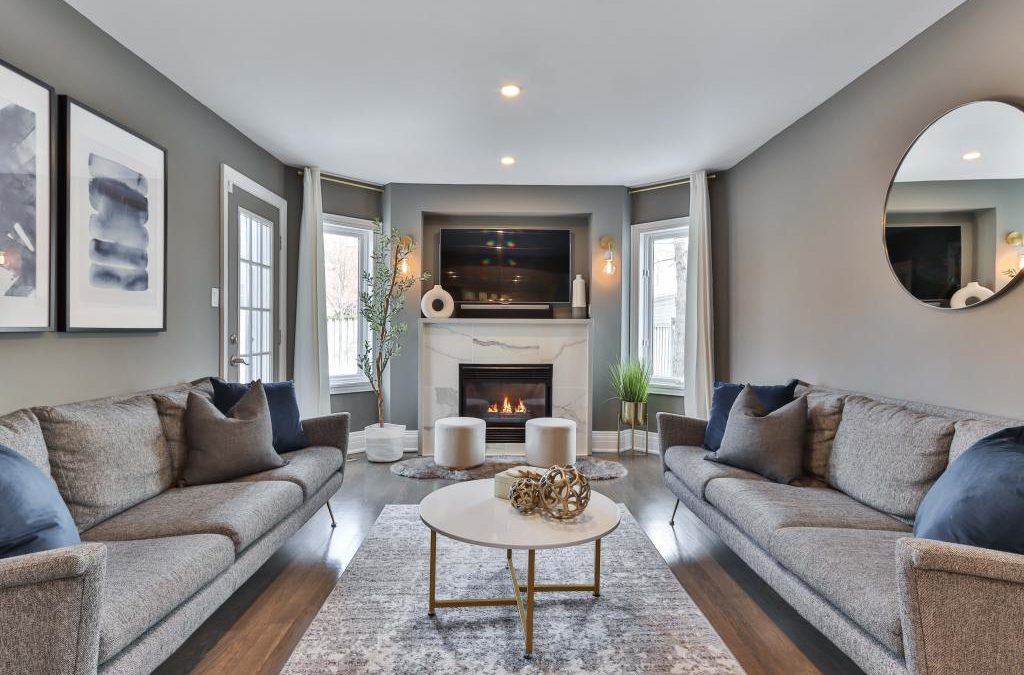
Mirrors are another excellent way to bring light into your home. While also making any room appear larger, placing a mirror opposite or adjacent to a window, will significantly brighten the space.
It does this by harnessing the daylight – no matter how grey the sky might be – and bouncing it round the room. The bigger the mirror, the more light it will bring in. So, get creative with the space you have available to you.
Paint your walls white
Painting your walls white is another really good way to enhance the brightness of a room. Again, it will make the space look larger, as well as cleaner. While also allowing more light to bounce around the room.
If you think white walls will make your place look boring, don’t forget you can always introduce other pops of colours into it, through its furnishings.
Another clever trick to add some more light into your home, is to ensure that your front and back doors have windows on them. This will naturally allow light to flood in from outside and should particularly enhance visibility in hallways.
If you can, try and replace any stock standard doors you might have with French-style ones. As the intricate windowpanes that feature in their designs, will bath the space around it with more brightness.
Employ LED lights
While you might have lights in the ceiling and from lamps dotted about your residence, why not introduce LED lights into your home? This is a terrific way to make your spaces warmer and trendier, especially if you use LED light strips. These strips can be used wherever you want, and they are easy to install and not that expensive either.
So, whether you put them on top of a window, underneath the kitchen island table, on a kitchen cabinet or even on the skirting board of the hallway, it allows you to get funky with your design, whilst providing your space with more illumination.
LED light bulbs are also significantly more energy efficient than regular incandescent bulbs. So, you could well end up saving both money and energy on your electricity bill.
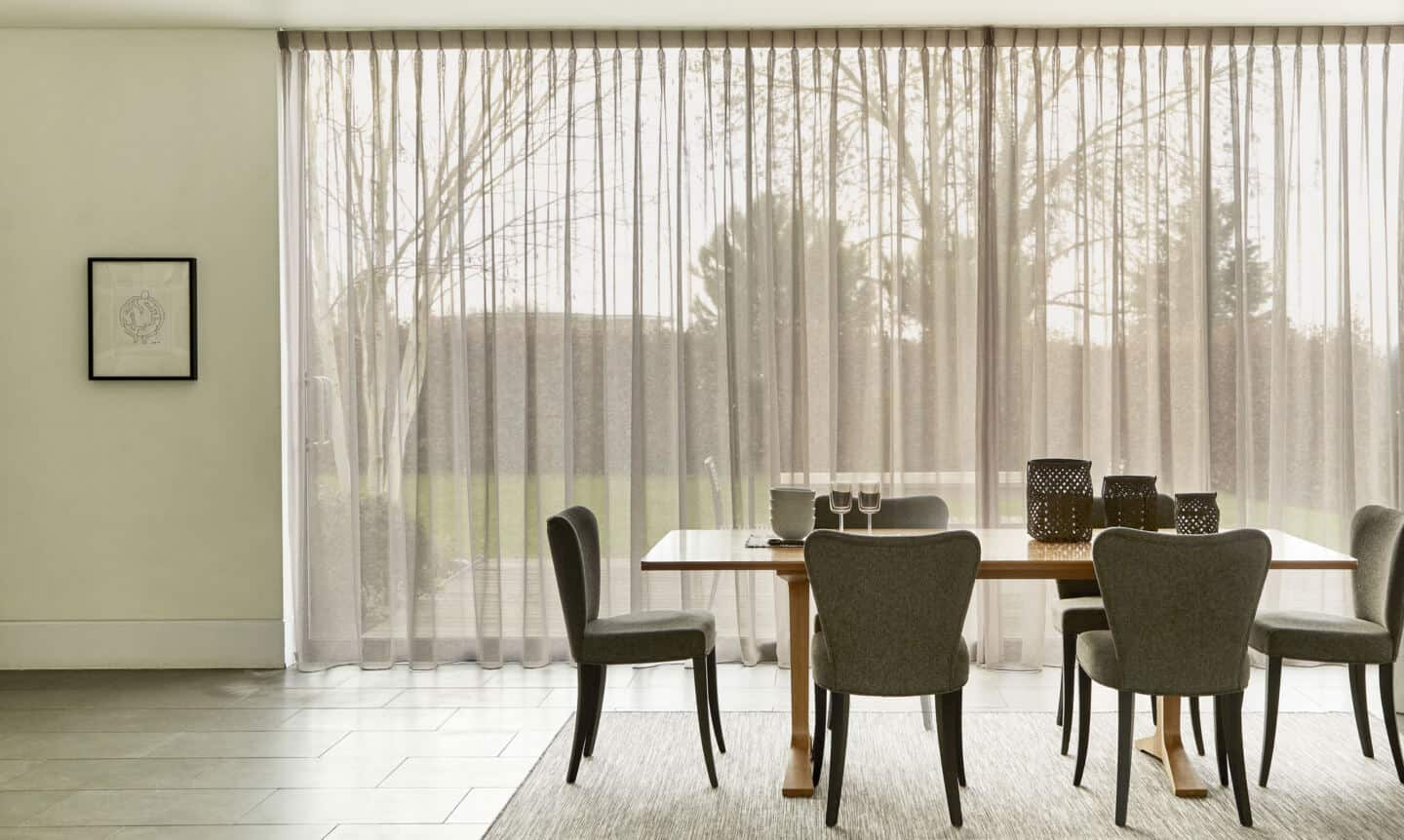
In the same way as you can get one-way mirrors, you can also buy light see-through curtains, which are essentially one way as well. By this, we mean you can buy curtains that bring in lots of light, and simultaneously enable you to view outside, without anyone being able to see inside your home.
Hanging up these types of curtains will transform spaces like the living room, kitchen, lounge room and study. Providing you with increased luminosity, while maintaining your overall privacy.
Try an LED splashback
For your kitchen, another neat trick to bring in more light, is to add an LED splashback. The beauty of one of these is that it provides radiance from a different angle than the ceiling or windows.
Pairing LED lights with coloured, glass splashbacks are particularly good, and provides the kitchen with a real feature. It also makes cooking that little bit easier to see as well.
Illuminate your artwork
Ever visited an art gallery and noticed how they illuminate their artworks? Well, the reason they do this is to produce more luminescence in their display areas. This is a concept you can adopt in your home too, if you have paintings hanging up on your walls.
The good thing about doing this is that it will enhance the colours, textures and imagery of your art, while congruently brightening up the space around them. It is a simple trick that really makes a difference, and is one of several unique ideas for modern home designs you can adopt.
As alluded to earlier, light that comes at different angles can make a room appear brighter. If you can, try to find lamps with designs that project their glows at different angles. Alternatively, move the head of the ones you have around accordingly.
By facilitating light that comes in different directions, it can add more glow to the upper part of a room, than you would otherwise get with lights, or lampshades, that face straight downwards.
Choose the correct tones
Buying lamps or LED lights is a good step in bringing in extra light to your home. But ensuring you have the right type of light is important too.
As a rule, the tone and colour of the light can make a big difference to the space in which it is placed. White tones should always be placed in functional areas like bathrooms, kitchens and the laundry room, particularly towards the ceiling.
Final Thoughts
We all know that our homes should have as much light as possible to create an ambient, warm and cosy feel. If your home is lacking this at present, we hope these tips will enable you to bring extra light into your home in a very seamless manner.
Some of the tips mentioned above involve straightforward DIY, while others might require the services of a professional. However, while not only making your home a more appealing place to live, they could even increase its overall value too.
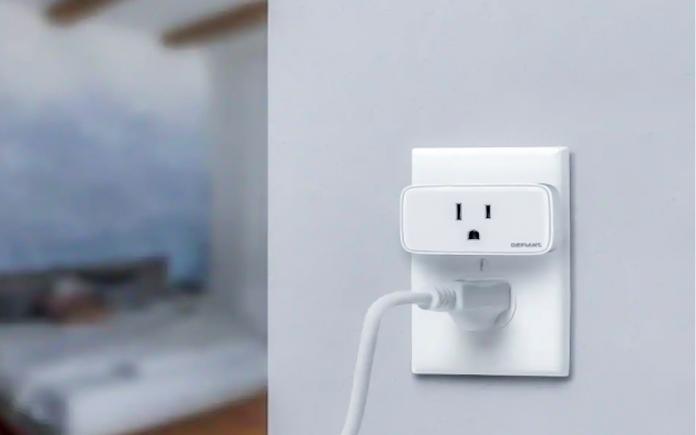
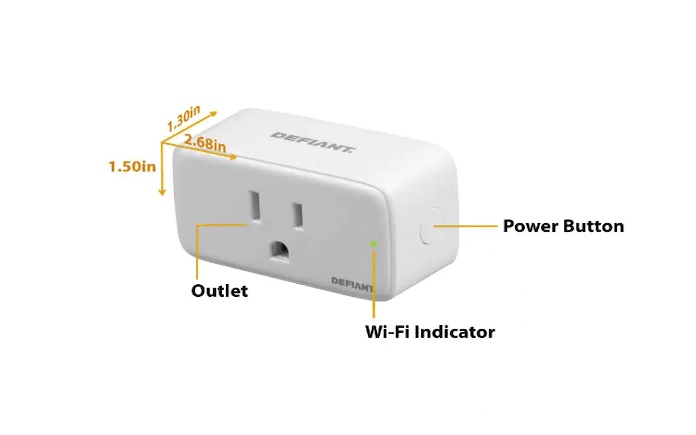
The Defiant Wi-Fi and Bluetooth-enabled smart plug gives you control over lights, appliances, or any device you plug into it from anywhere. (Image via The Home Depot)
There are all kinds of ways to add smart control to your home these days. But undoubtedly, one of the easiest ways is to simply control an outlet from your phone using a smart plug.
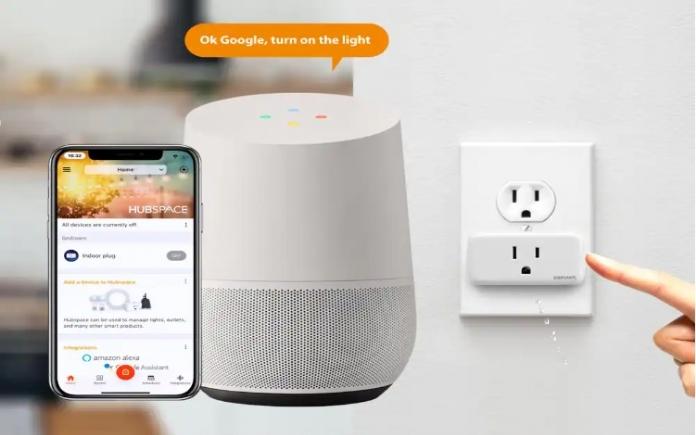
Use a voice control assistant to turn on and off devices. (Image via The Home Depot)
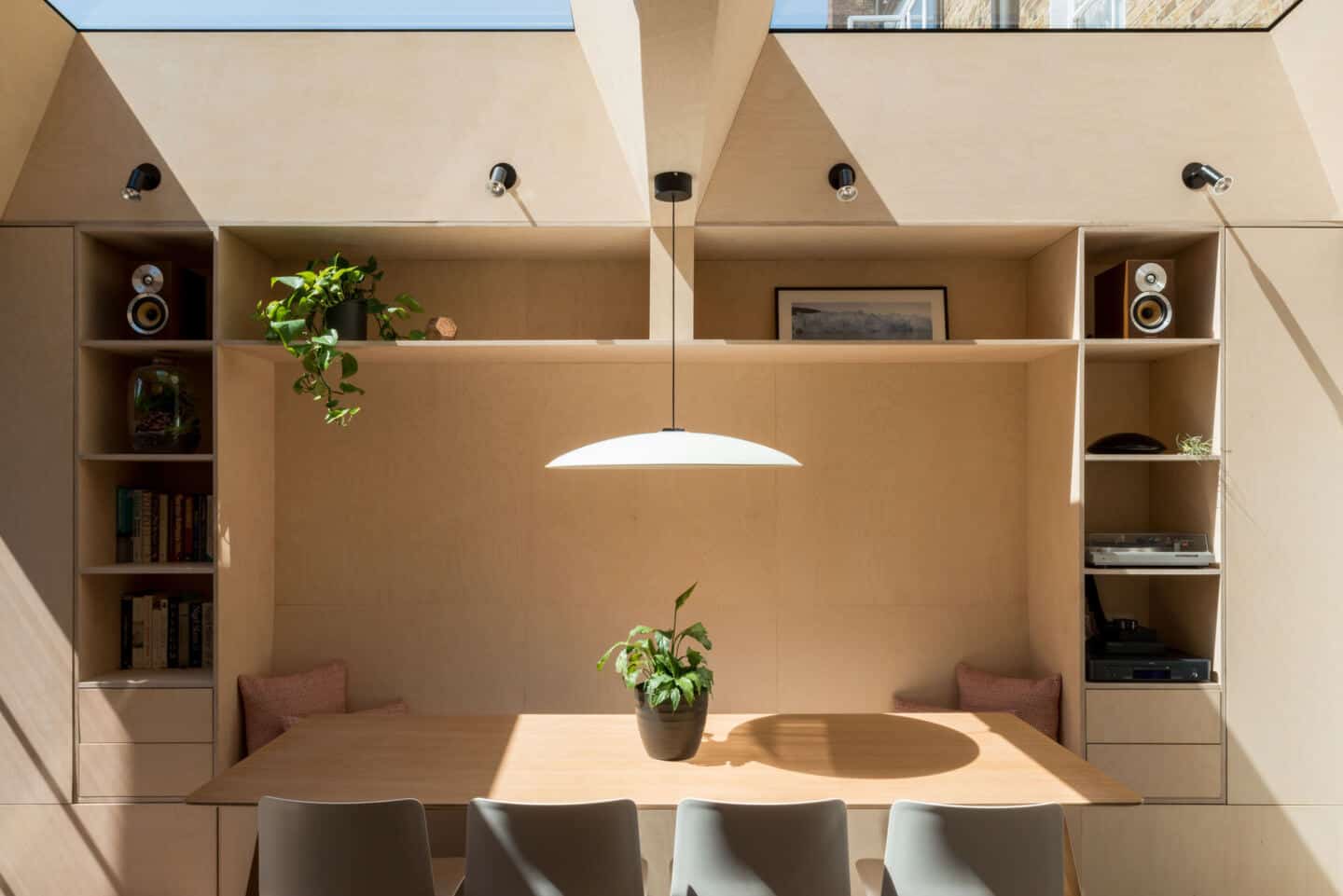
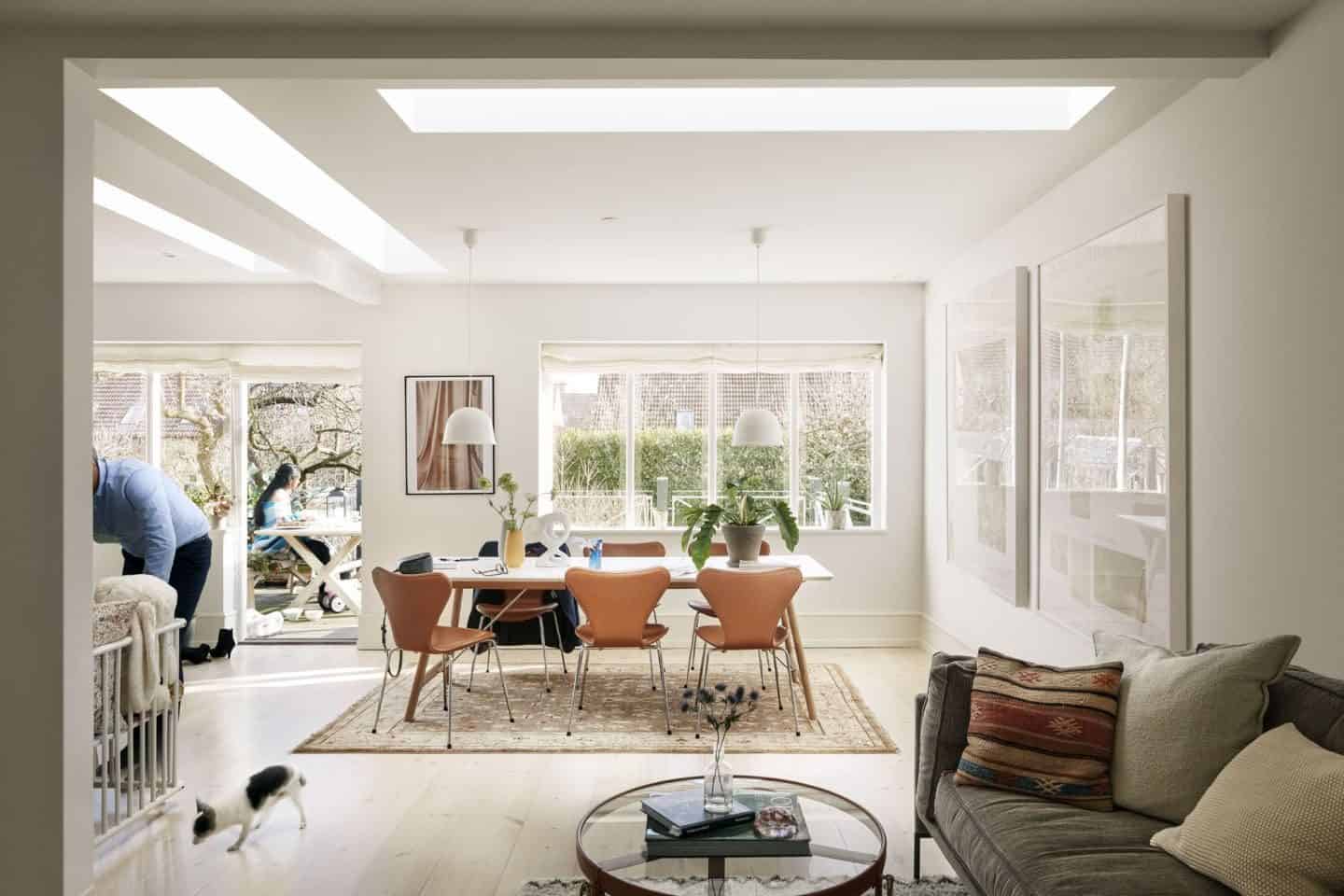
Natural light floods a plywood dining nook from two roof windows in the Vault House by Bradley Van Der Straeten Architects
I was approached by Pinterest a few weeks ago asking me if I would like to host my own show on Pinterest TV. Um, yes! Yes I would! And then it became a whole series. It took me all of a micro second to work out what topic I wanted to share in my series. Biophilic design of course as it is something I am so passionate about.
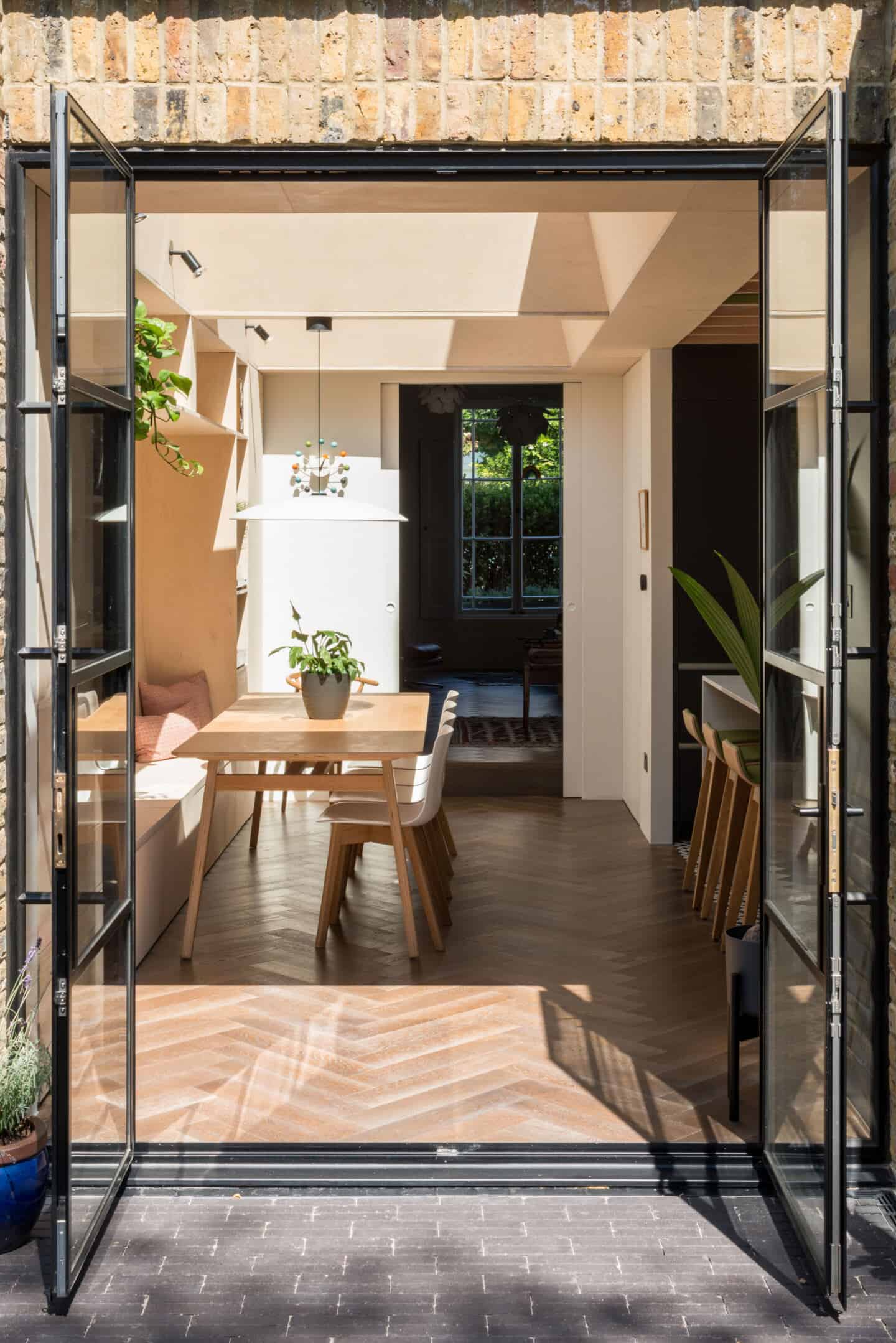
Natural light floods a plywood dining nook and kitchen from two roof windows in the Vault House by Bradley Van Der Straeten Architects
Lighting is such an integral part of our interiors and it is not easy to get right. In the past few centuries, humans have become predominantly urban dwellers. This shift from countryside to city environment has caused a persistent disconnect from nature. It is projected that by 2050, 68% of the developed world will be urbanised, and increasingly distanced from nature and natural systems.
There is also a direct correlation between the increasing urbanisation of our society and rising stress rates. In fact, stress has been called the “health epidemic of the 21st century” by the World Health Organisation.
Spending 90% of our time indoors is a lot of time in artificial lighting which really isn’t good for our health. Artificial light has a very disruptive effect in our circadian rhythms. We need to spend time outside in natural light so that our bodies can function as they were intended to. Natural light helps to regulate our circadian rhythms and co-ordinate our mental and physical systems.
If our circadian rhythms are disrupted by too much exposure to artificial light, particularly at night time, it can lead to disregulated nervous systems and health issues such as increased stress, emotional distress, mood disorders, depression, memory problems, general poor performance, disrupted sleep patterns and even critical illnesses such as obesity, heart problems and breast cancer.
However, when it comes to lighting our homes, if we take our queue from nature, we can’t go far wrong.
Study nature, love nature, stay close to nature. It will never fail you.
Frank Lloyd Wright, American architect, interior designer, writer, and educator
Lighting is an integral element of biophilic design and there are a number of ways that we can work with lighting to harness the powers of biophilic design. This is what is so wonderful about biophilic design, it is a really holistic approach to design and many of the associated principles overlap.
Bringing in More Natural Light
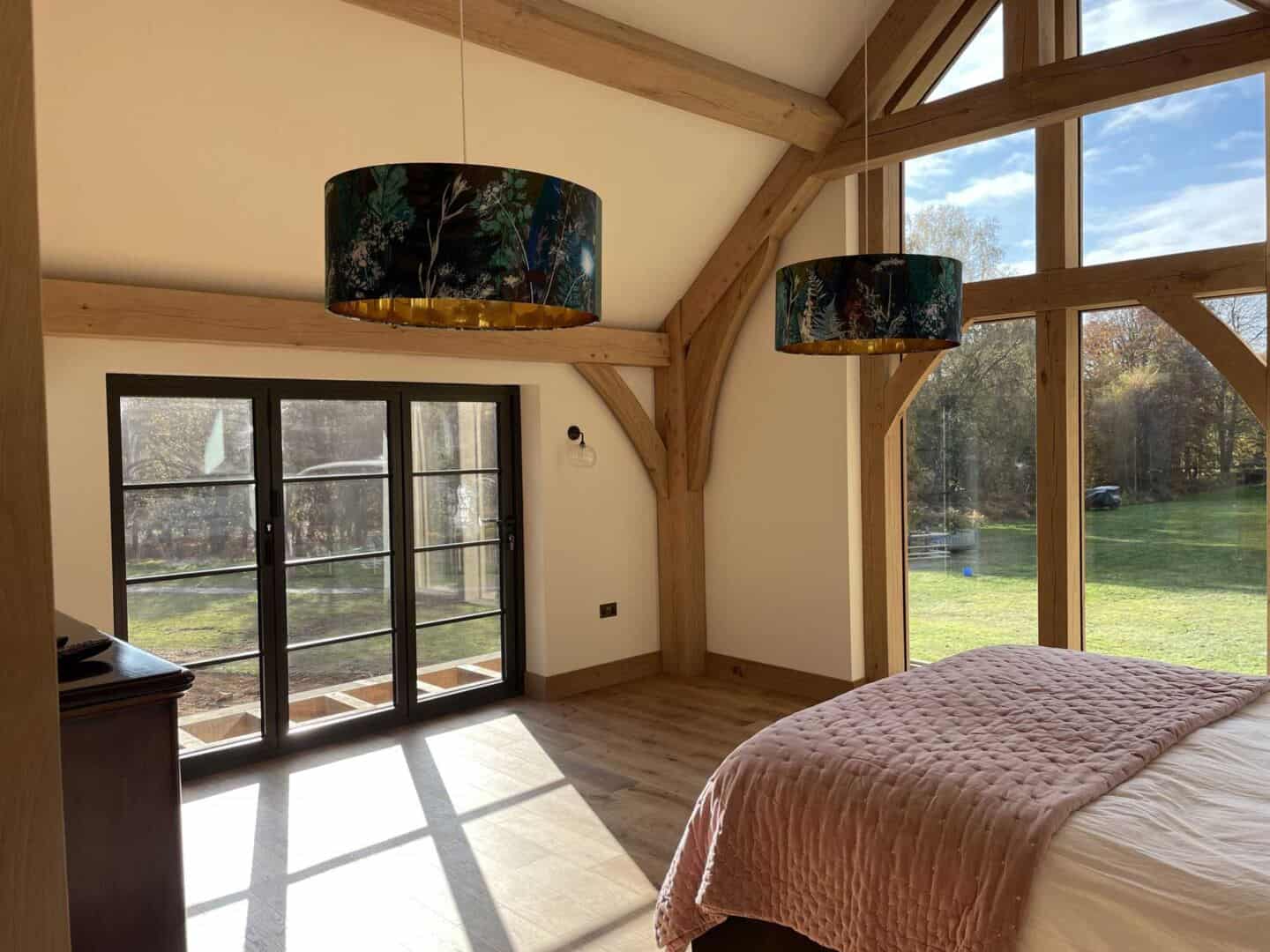
The most obvious way to bring nature indoors when it comes to lighting is to bring more natural light into your home. This is much easier said than done unless you are building your own home from scratch and you can design the home to really maximise the amount of natural light that comes in.
If you are designing your home from scratch you can make sure you plan in many more windows and doors. Flooding the space with natural light allows our bodies to work according to the natural rhythms of the day and night cycle.
Making windows and doors as large as possible and placing them strategically to ensure that light can enter the home at all times of day will bring maximum benefits. Having dual aspect rooms with windows on adjacent walls that provide views in more than one direction are better than having windows in just one wall.
It can also help to change out any solid internal doors for ones that are glazed instead. This will allow light to pass from one room to another. If privacy is a concern, for example bedroom and bathroom doors, you can get doors that have reeded or fluted glass.
The view through glass doors to the kitchen, dining room and garden beyond in the refurbishment of a North London terraced house by Cairn Architects | Photography by Peter Landers and Anna Stathaki
Add External Glazed Walls
Natural light floods this extension and refurbishment of a North London terraced house by Cairn Architects | Photography by Peter Landers and Anna Stathaki
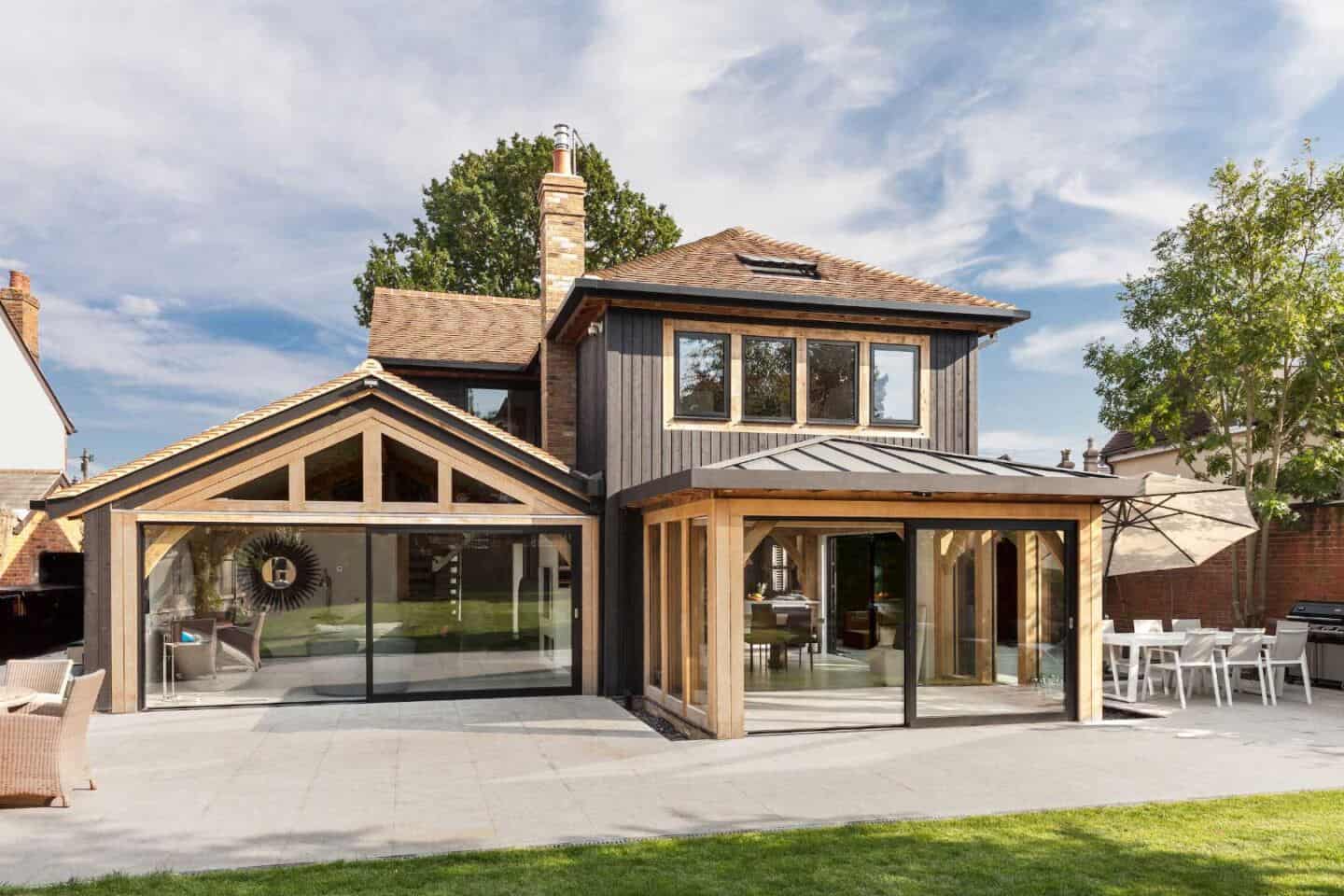
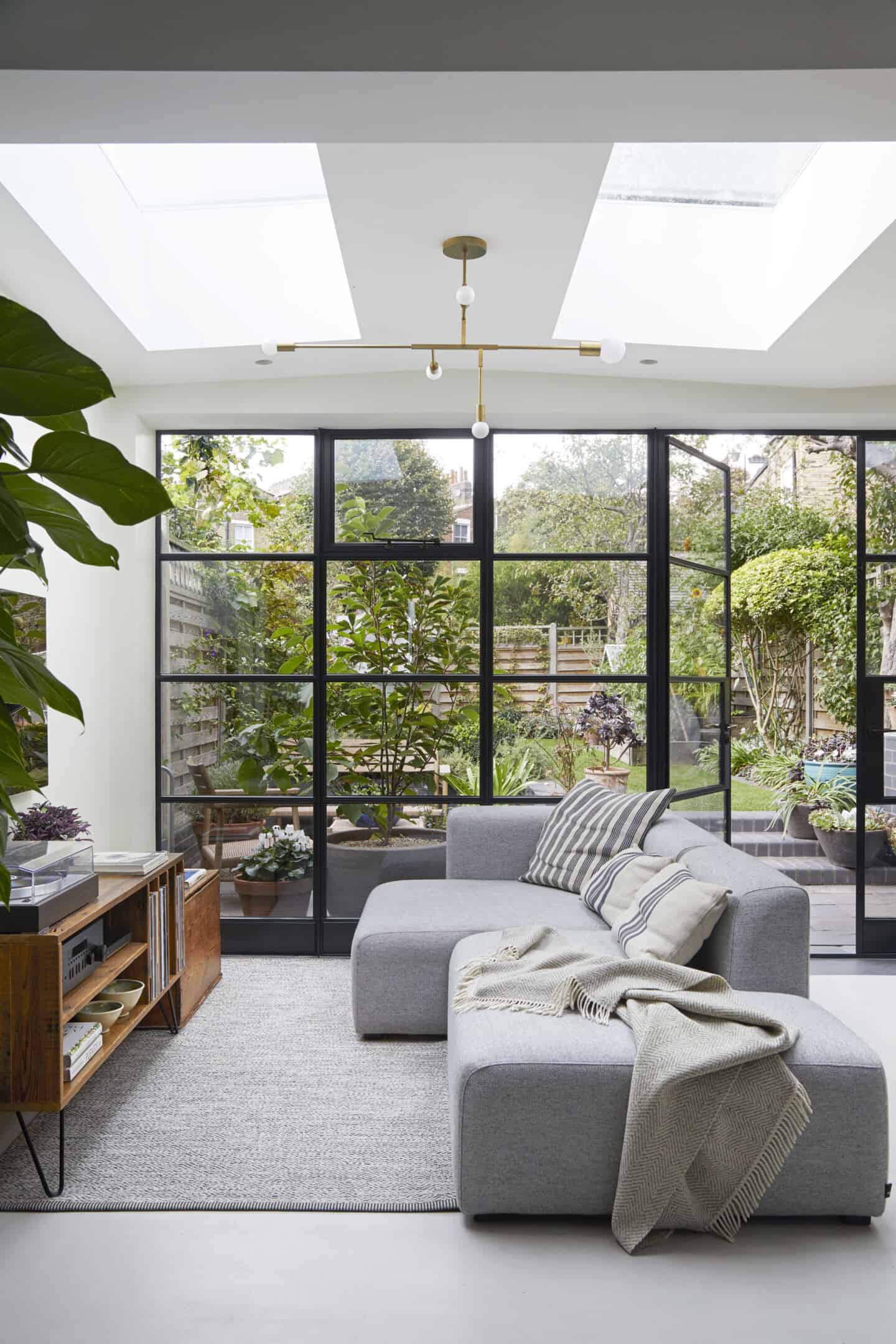
If you are building from scratch, adding glazed external walls is a great way to ensure that natural light can enter your home more easily. But this can also apply to home renovations.
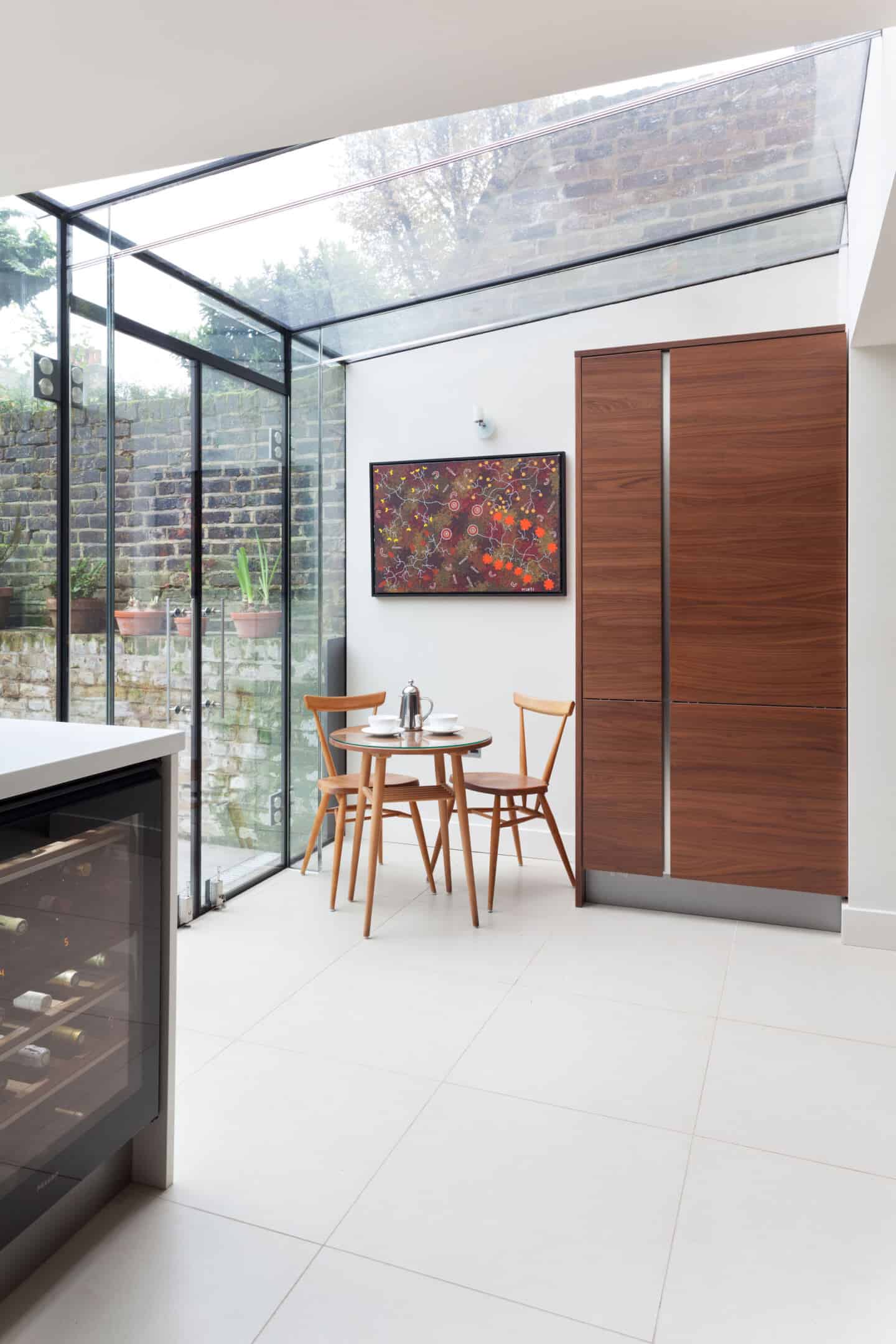
If you are planning an extension to your home, using glazed walls to create a glass box effect will allow the natural light to stream in unimpeded.
A glass extension to the rear of a Grade II listed property by London Contemporary | Photography by Paul Craig
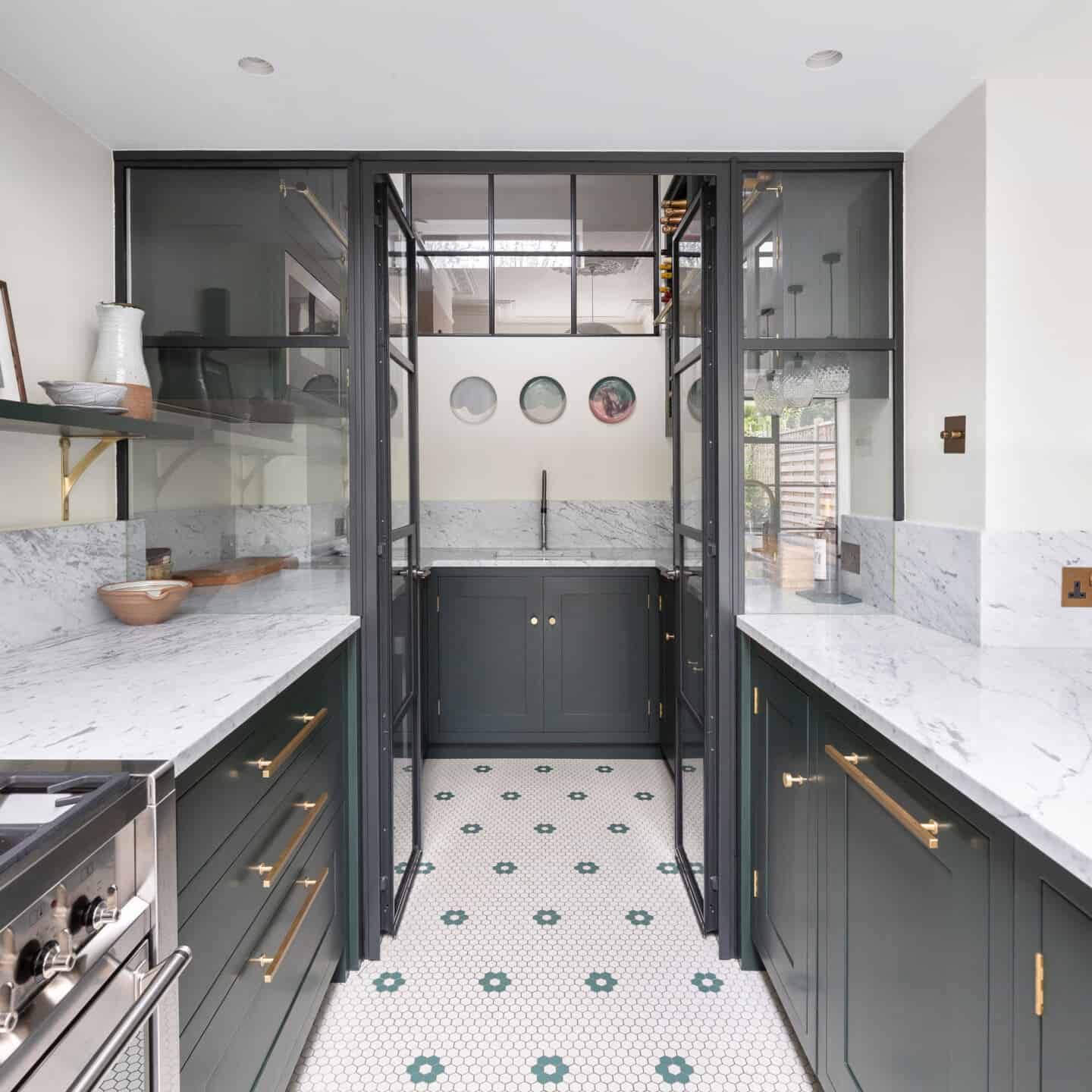
You can also help the natural light to move through your home more easily by replacing internal walls with glass partitions. You will still get the same sense of zoning your home and break up the space, but you won’t prevent the light from moving through the space.
Natural light floods the kitchen of a North London terraced house by Cairn Architects | Photography by Peter Landers and Anna Stathaki
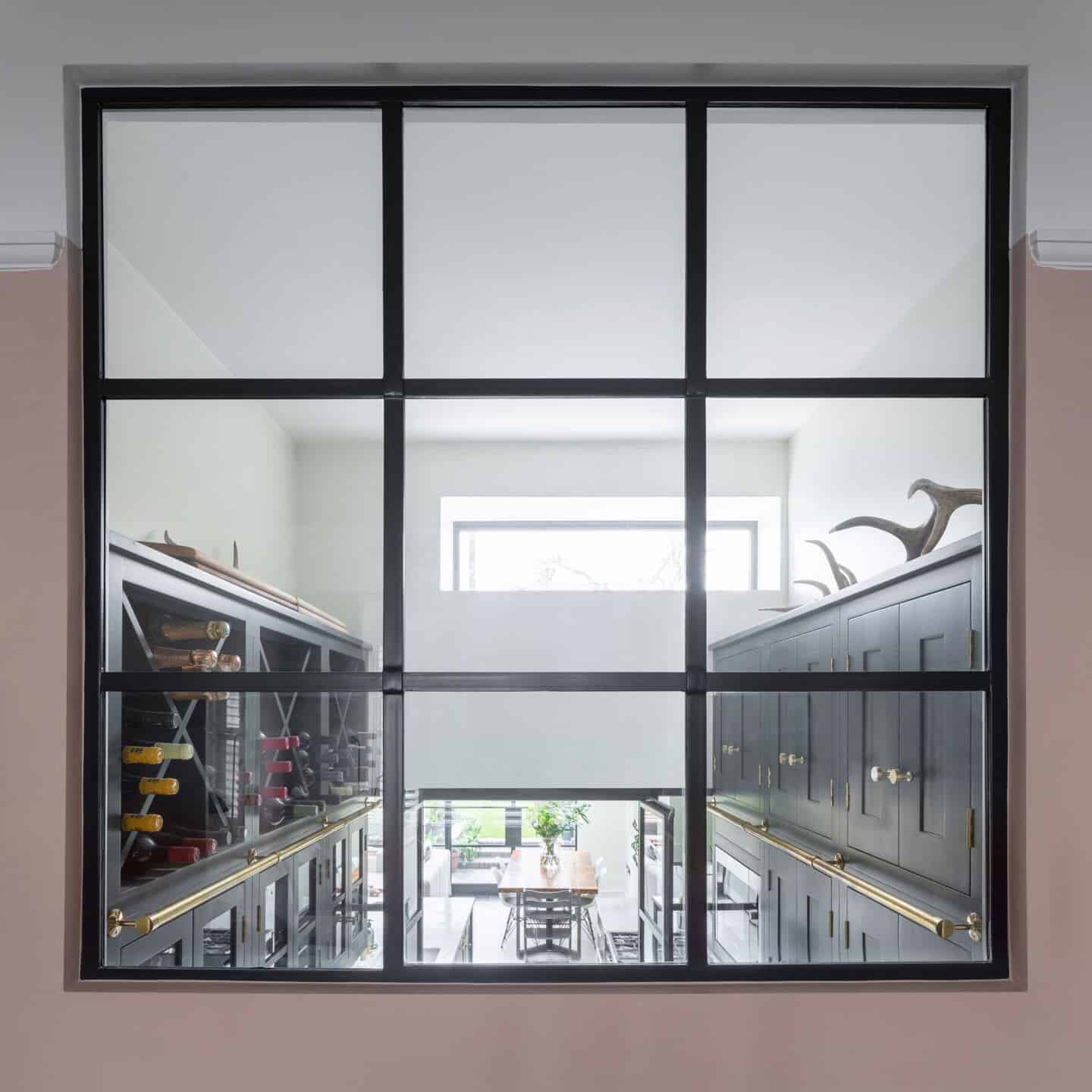
Small internal windows can also help the natural light pass from one room to another and can help to illuminate any particularly dark rooms or spaces.
The internal window in the home office allows natural light to move through this North London terraced house by Cairn Architects | Photography by Peter Landers and Anna Stathaki
Add Roof Lights to Increase Natural Light
Natural light floods a plywood dining nook and kitchen from two roof windows in the Vault House by Bradley Van Der Straeten Architects
Roof lights are another great way to get extra daylight into your home. Whether you use them instead of adding extra doors and windows or as well as, you can really make the most of how much light is entering your home.
You can add roof lights if you have a pitched roof but you can also add them to flat roofs. There are plenty of companies now that also offer bespoke sizes so you can make them work in your home no matter what restrictions you are dealing with.
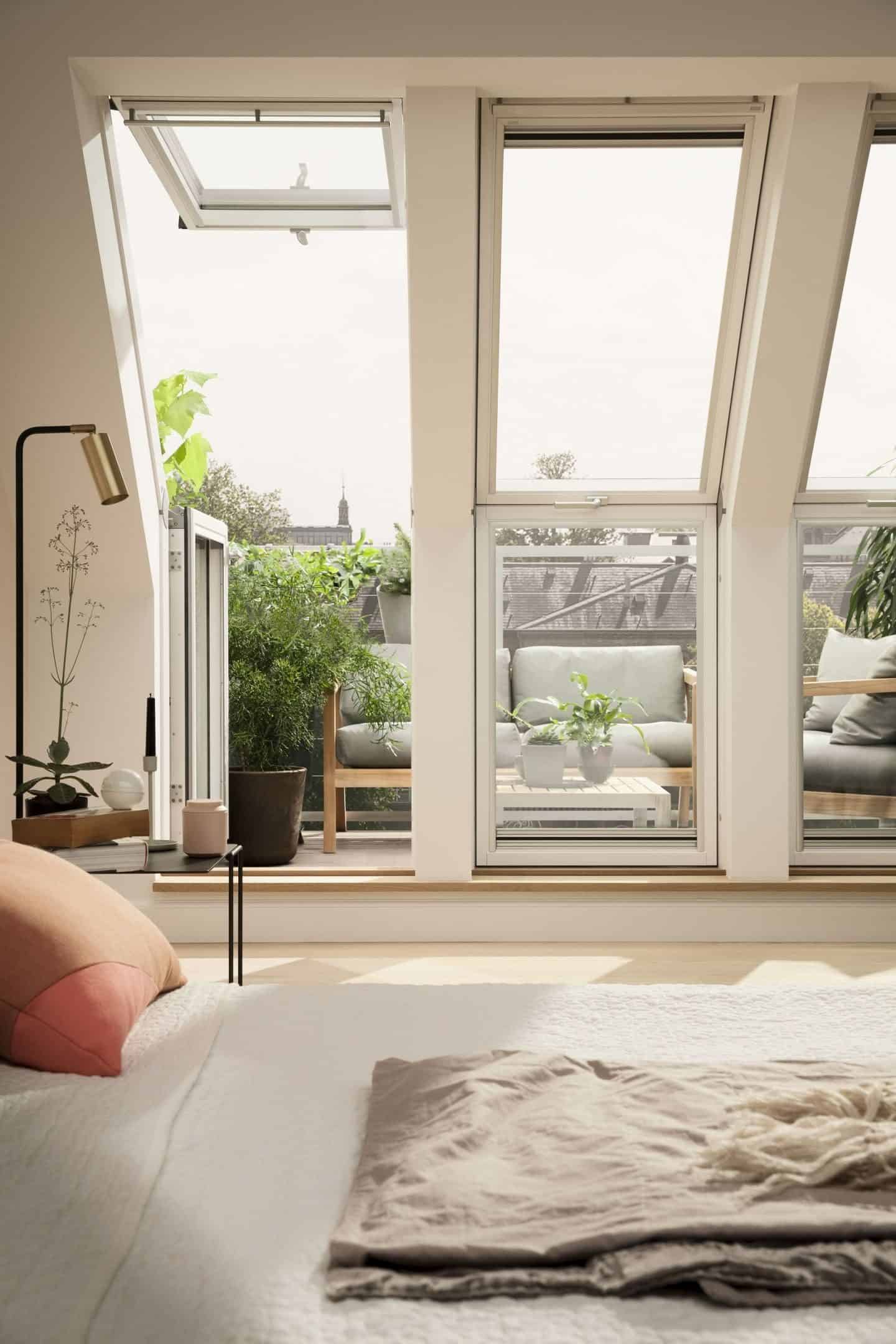
Velux also do terrace windows and cabrio windows which allow you to create a small balcony on your roof. I discovered these while thinking about how I would like to convert my loft and maximise the natural light in the space.
Sun tunnels are another great solution for pitched or flat roofs as they allow you to experience the changing light of the seasons and times of day. They can be used to bring extra light into any room in the house as long as the ceiling of that room is not too far from the roof.
It’s not just sunlight that can be brought in with a sun tunnel either. They allow you to experience changes in weather, passing clouds and even moonlight.
If natural light isn’t abundant in your home, one thing you can do to multiply it is to add mirrors. Mirrors help to reflect the light that is coming in and bounce it around the room creating the illusion of more natural light. Place mirrors opposite and adjacent to any windows for maximum benefit.
If you can’t add more windows to your home, adding mirrors that look like windows is a good alternative, particularly if they can reflect views of outdoors.
Bring in Dynamic and Diffuse Light
The principle of biophilic design that refers to lighting is all about dynamic and diffuse light. This means that it is important to incorporate varying intensities of light and shadow that change over time and mimic the lighting conditions that we might experience out in nature.
A space that has good dynamic & diffuse light conditions allows us to experience the time and movement through the light. Think of the dappled light under a canopy of trees, or the reflections of rippling water on a wall. These patterns are what we call fractals, and our brain is programmed to look for these fractals so incorporatingthem into our homes is beneficial.
Add Soft, Flowy Curtains or Drapes to Soften Natural Light
Diffuse light is when light has been dispersed and scattered evenly across a surface and has been softened slightly to reduce the glare. This effect can be seen in nature when sun light is refracted by cloud cover, fog or a forest.
We can achieve this in our homes by using soft, flowy curtains or drapes to soften any harsh sunlight that comes into our homes. This is particularly useful if you do have large expanses of glazing that may cause stron direct light to enter your home.
Choose Lights That Create Shadows Inspired by Nature
BE Water Lamp from the WAW Collection designed by Fernando Correa
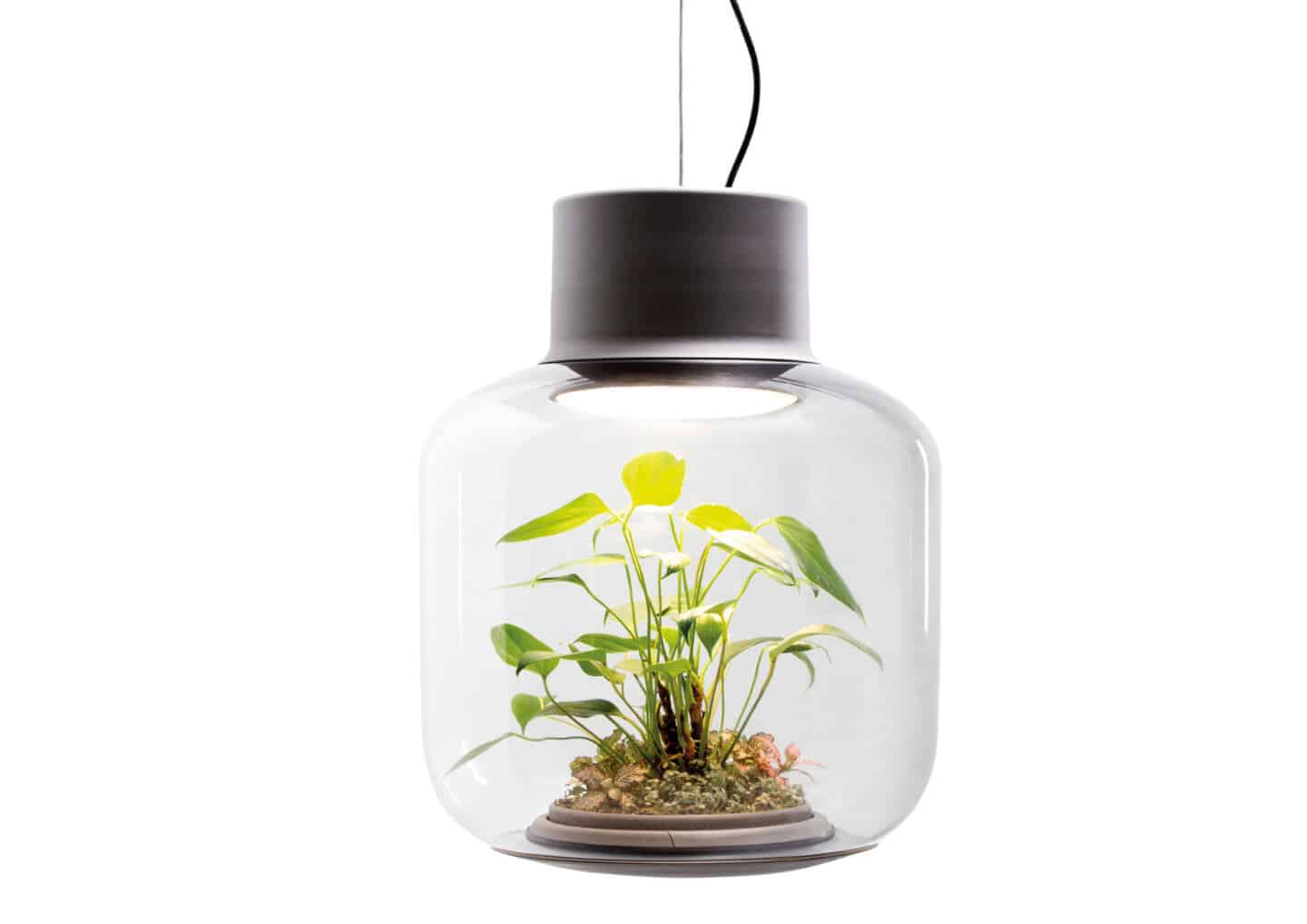
If you cannot create dynamic and diffuse light conditions naturally, you can always experiment with biomimicry and use lighting products that are modelled on this biological process. Lights that create shadows that look like a tree canopy or light relfected off water for example can add a sense of movement to the space which holds our attention and intrigue us.
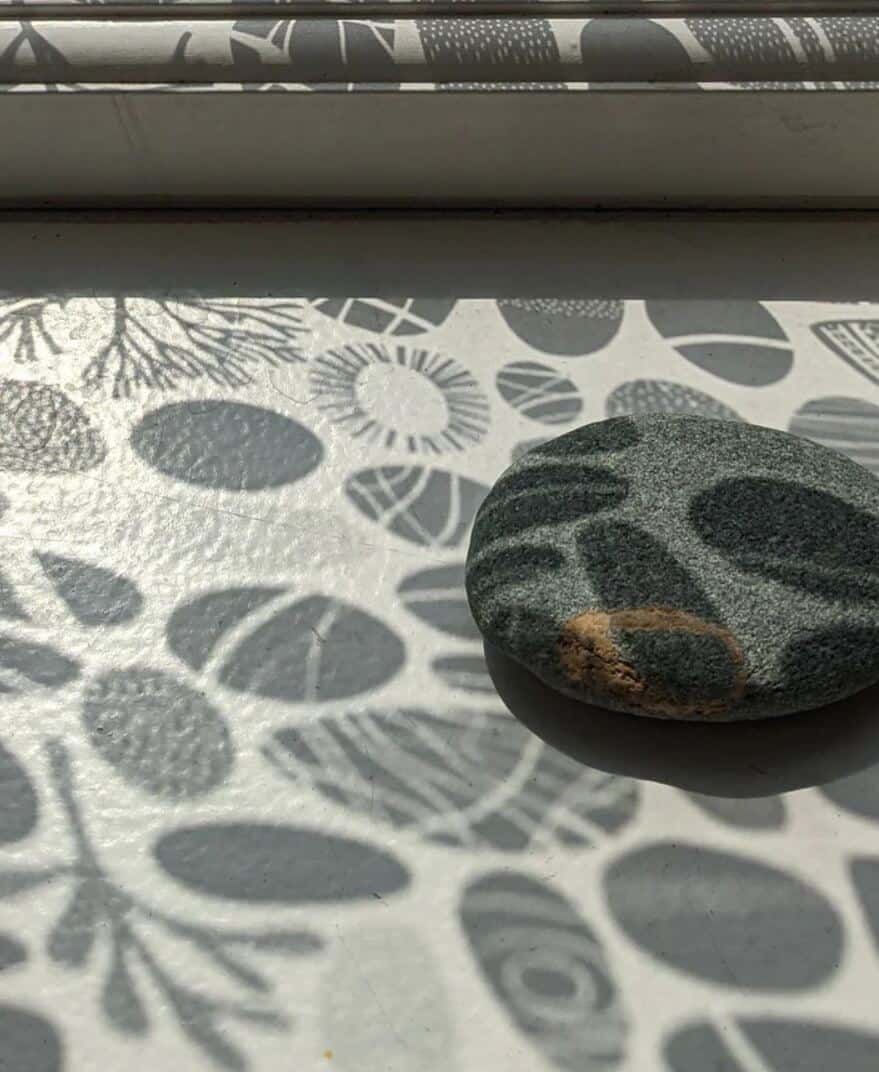
Window film is a great way to create more shadows in your home and to mimic the effect of dappled light. When sunlight comes pouring in through the windows, doors or glazed walls, a window film can help to turn this light into something that more ressembles the light and shadows that we might experience outside.
[embedded content]
Opt for window films that depict nature for maximum effect. The shadows that the window film casts should move and change throughout the day as the sun moves through the sky and enters your home from different angles.
Choose Lights That Mimic the Changing Time of Day
Throughout the day, the colour of sunlight changes and our bodies respond to this. Light is yellow in the morning, blue at midday, and red in the afternoon and evening. Blue light causes our bodies to release serotonin which gives us more energy and helps us to feel alert. As blue light fades into the evening and we see more red light, our body produces melatonin insted which helps us to feel calmer and prepare for sleep.
[embedded content]
If we are spending a lot of time indoors it helps if we can mimic the changing colour of the light throughout the day. There are lamps and lights that you can buy that work on this principle such as wake-up light alarm clocks.
The final way that you can can harness the power of light in your home is less about the lighting system itself and more about the decorative appearance of the light fittings. Choosing lights that feature organic shapes and materials that can be found in nature has many benefits.
Look for lights and lamps that either incorporate foliage or are symbolic representations of life and make us think of living things. Choose products that are contoured, patterned, textured or feature the numerical arrangements that we can find in nature.
If you are interested in learning more about how to incorporate the principles of biophilic design into your own home, you may be interested in reading these posts.
For a very long time, I was convinced that I need to live in a rather large house to be happy. I’d dream of one day moving into somewhere palatial, with an enormous footprint, vast ceilings and many rooms. I’ve always had this feeling that I need a lot of space to be happy.
But then, not so long ago I had a realisation. It doesn’t matter about the size of the home. What it comes down to is light. Natural light is what makes me feel better. So what I actually need is a home that is flooded with natural light and has lots of big windows that provide views of nature.
Scientific studies have proven that regular exposure to daylight is essential to maintaining human health and well-being. Research also shows that I am not alone in preferring buildings with large windows. This is because they provide a connection to the outdoors, give us a better sense of the time of day and allow us to experience varying intensities of light and shadow throughout the day.
Again, it all comes down to biophilic design which I have written about extensively. In fact, it was a short stay at Wildwood Spa, a tiny biophilic retreat in the forest of North Devon, that made me realise how much of an impact natural light actually has and how important windows are.
So let’s take a better look at some of the best reasons to maximise natural light in your home.
1. To Save Energy & Money
This is quite an obvious reason to start with. By bringing as much natural daylight as possible into your home you need to use far less artificial lighting and therefore energy which saves you money in the long run. This is definitely something worth thinking about if you are designing and building a home, renovating or extending. And it is particularly pertinent given the explosion in energy prices this year.
2. To Increase the Value of Your Home
My Home Move Conveyancing recently conducted a survey asking Brits what features of a property will make them fall in love at first sight. Over 2000 British homeowners were surveyed and the results showed that the size of the windows ranked fourth out of 30 features.
Clearly, the size of the windows directly correlates to the amount of natural light that a home gets. This makes natural light one of the most sought-after features and a key priority homebuyers look for when purchasing a property. Experts also agree that properties with good natural light have a higher resale value.
3. To Improve Sleep Patterns
Another reason to maximise natural light at home is that our current lifestyle is really interrupting our circadian rhythm and affecting our sleep patterns. Circadian rhythms are 24-hour cycles that are part of the body’s internal clock. They co-ordinate our mental and physical systems and make sure that our bodily processes occur at the right time during the 24hr period.
The sleep-wake cycle is one of the most important circadian rhythms. Exposure to daylight helps us to stay awake, feel alert and keep active. As night falls, it signals to our bodies to produce melatonin which is the sleep hormone that allows us to have a restful night’s sleep.
As we now tend to spend 90% of our time indoors it is easy to see why there is the need to maximise natural light at home. We need to ensure that our circadian rhythm and the sleep-wake cycle can continue to function properly and protect our sleep patterns.
Without good quality sleep, we begin to see all sorts of physical and mental consequences such as increased stress, emotional distress, mood disorders, memory problems and general poor performance.
4. To Prevent Seasonal Depression
Seasonal affective disorder (SAD) is a type of seasonal depression. It often affects people during the winter months when a lack of daylight reduces our serotonin levels. It can result in low mood, irritability, lethargy and sleepiness. We can lose interest in the things that we normally love to do and can crave carbohydrates.
It is important to expose ourselves to as much daylight as possible during the winter months so that we don’t experience these drops in serotonin and the resulting side effects. Spending more time outside will help with this, but also finding ways to maximise natural light inside your home too.
5. To Keep Us Fit and Healthy
As we’ve seen natural light is absolutely necessary for keeping us fit and healthy, both physically and mentally. But it is more than our sleep and our mood that is affected by the amount of natural light that we are exposed to.
Our skin absorbs vitamin D from sunlight. Vitamin D helps to prevent bone loss and reduces the risk of heart disease, weight gain, and various cancers. And according to science, it doesn’t matter whether we get this sunlight outdoors or indoors.
Vitamin D is also important for our immune system. Scientists at the University of Copenhagen in Denmark found that Vitamin D is crucial for activating our T-Cells which enable us to fight off serious, life-threatening infections in the body.
Exposure to natural light as we have seen increases our serotonin levels. A side effect of this is that serotonin suppresses our appetite and helps us to lose weight or not gain weight. Makes sense if you’ve ever found it easier to diet in the Summer months.
How Can We Maximise Natural Light at Home?
This is much easier to do if you are designing and building your own home, planning an extension or undergoing a large renovation project.
1. Add Extra Doors and Windows
Plan in as many large windows and doors as you can. Unless your home is a listed building and has to abide by certain regulations, making your windows and doors as big as possible will allow more light to enter your home.
2. Replace External Walls with Glazing
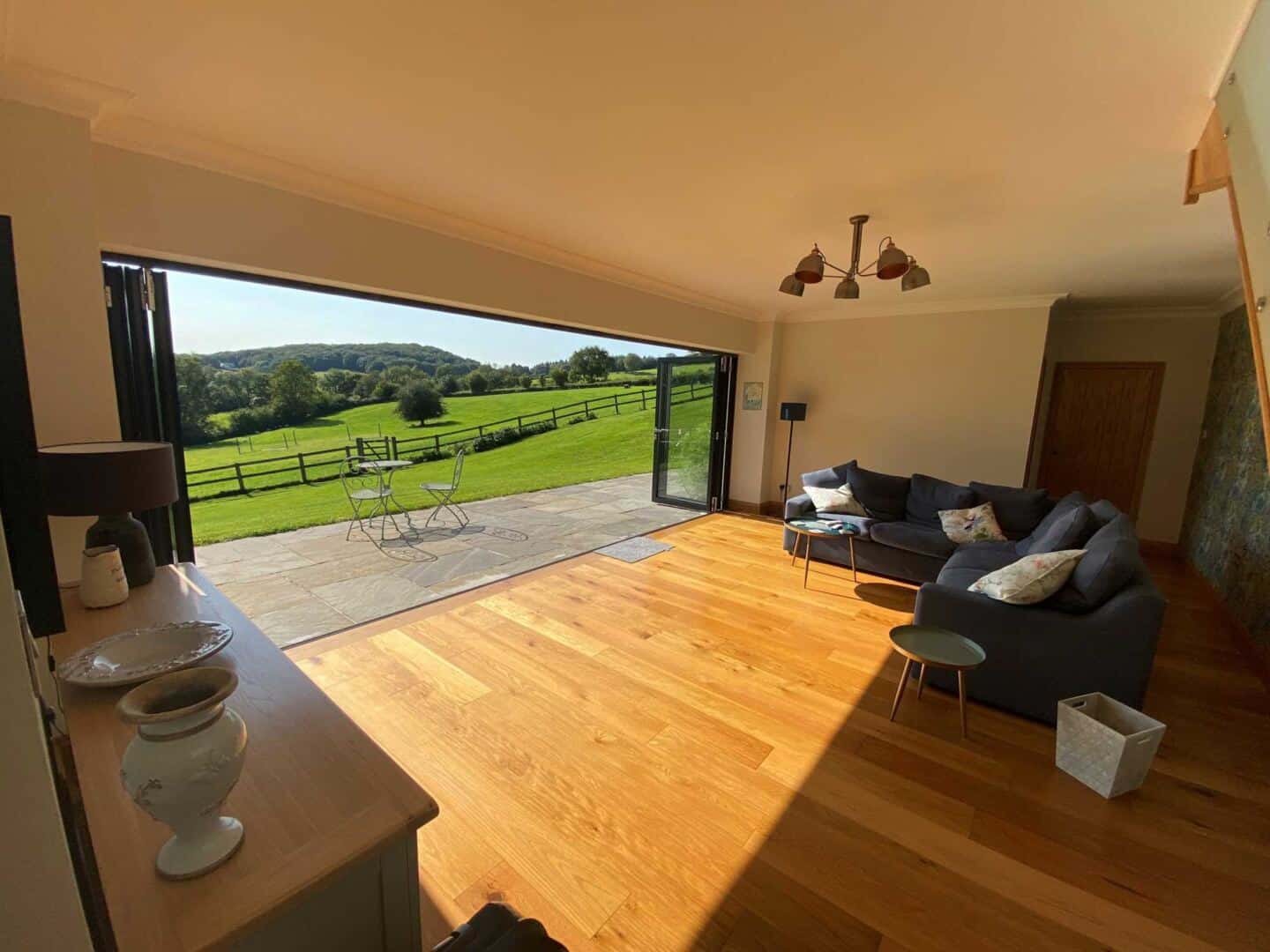
Consider replacing walls with glazing like large bi-fold doors or minimalist sliding patio doors that can fully open up one side of your home. This will not only improve the airflow in your home but will also allow light to flood in.
3. Replace Internal Walls with Glazing
If you have a particularly dark room in your home, you may be able to knock through an internal wall and replace it with glazed panels. This will allow you to still have a defined boundary between the rooms but the light can flow between them uninterrupted.
4. Add a Rooflight
Another way to maximise natural light in your home is by adding a rooflight. You can choose from a flat rooflight which offers a minimalistic finish or a pitched rooflight which has the added benefit of adding height to the room and therefore creating a feeling of spaciousness.
If you aren’t able to make structural changes to your home there are a number of other ways that you can bring more daylight into your home without the building work.
5. Use Light Colours When Decorating
Decorating with lighter colours is generally accepted as making a space feel brighter. Light colours reflect and bounce light around whereas darker colours tend to absorb it.
6. Choose Lighter Furniture
Dark, heavy furniture can take up a lot of visual space as well as absorb light. Opting for lighter furniture that can reflect the natural light around the room is a much better choice.
7. Add Mirrored Surfaces
If you can’t add extra windows, try adding mirrors to your interiors instead. Mirrors can bounce light around the room creating the illusion that light is entering the space from different angles. Consider getting mirrors that look like windows to trick the eye into believing that there is more natural light coming in.
8. Choose Lighter Flooring
By choosing lighter and polished flooring you can reflect the natural light back up into the room. Something like polished stone tiles works well for this.