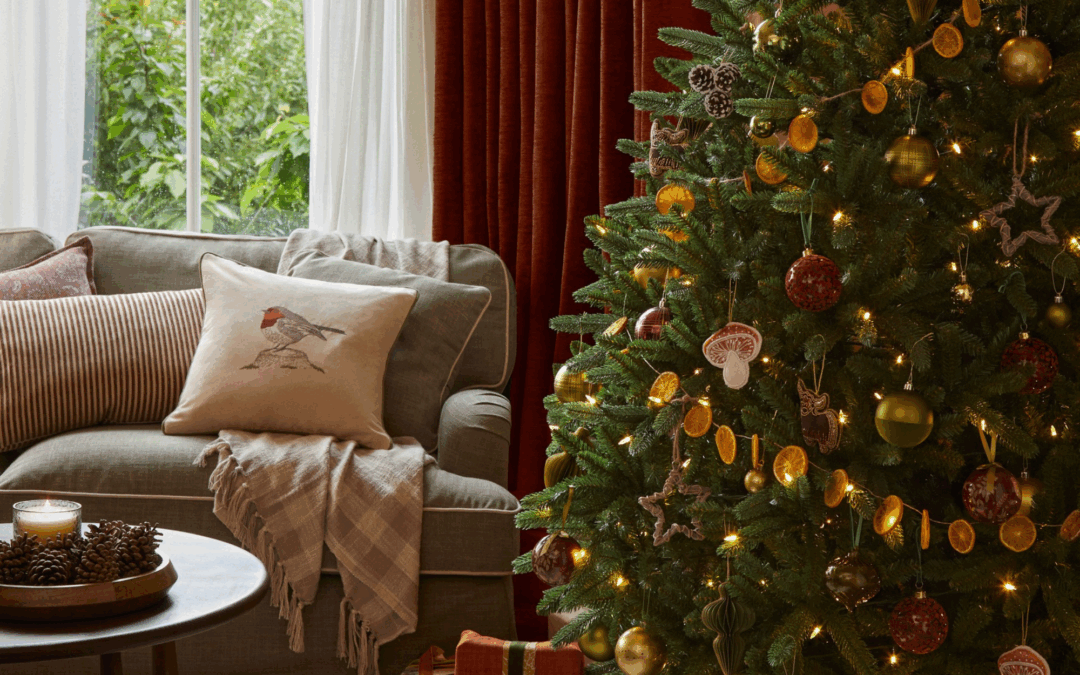
As an interiors journalist, Christmas doesn’t just last for one month in December; I’ve been living in Christmas land since September. So my enthusiasm for the new high street festive decorations has worn off slightly. However, this week one new launch revived my festive spirit and had me excited for Christmas all over again: the Habitat x Morris & Co decoration collection.
I am a massive fan of what Habitat has done with Morris & Co; they’ve revived and reinvigorated the classic arts and crafts patterns to work in modern homes. I currently have the Merton sunflower armchair in my living room, which remains one of my best investments for my home. Now the designers have turned their attention to christmas decorations, and they’ve nailed it.
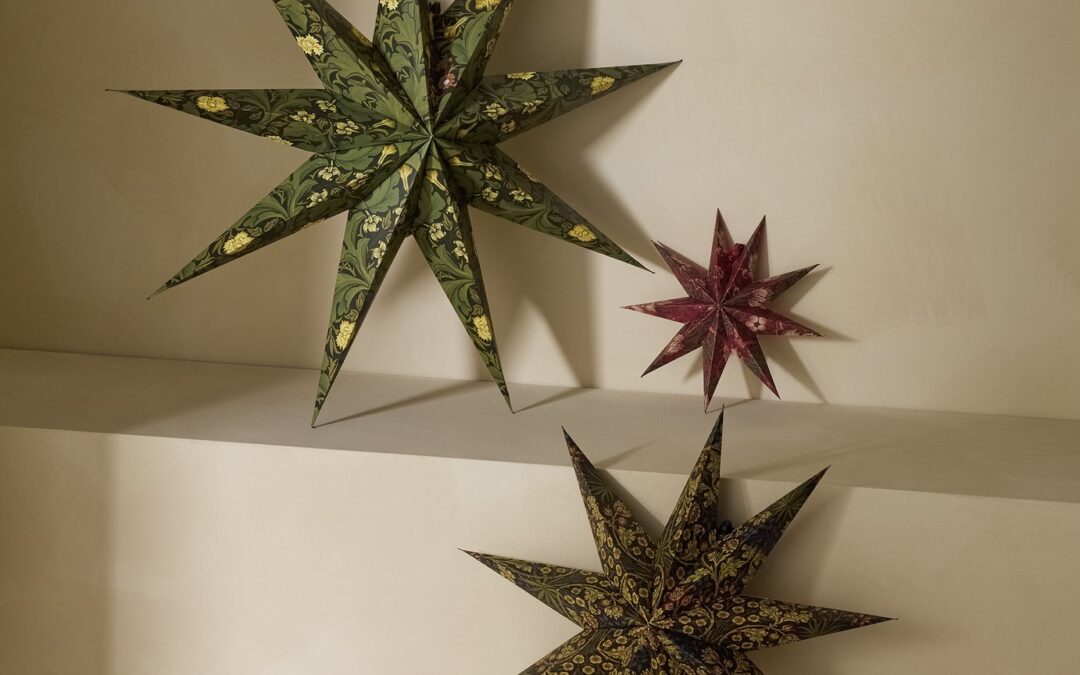
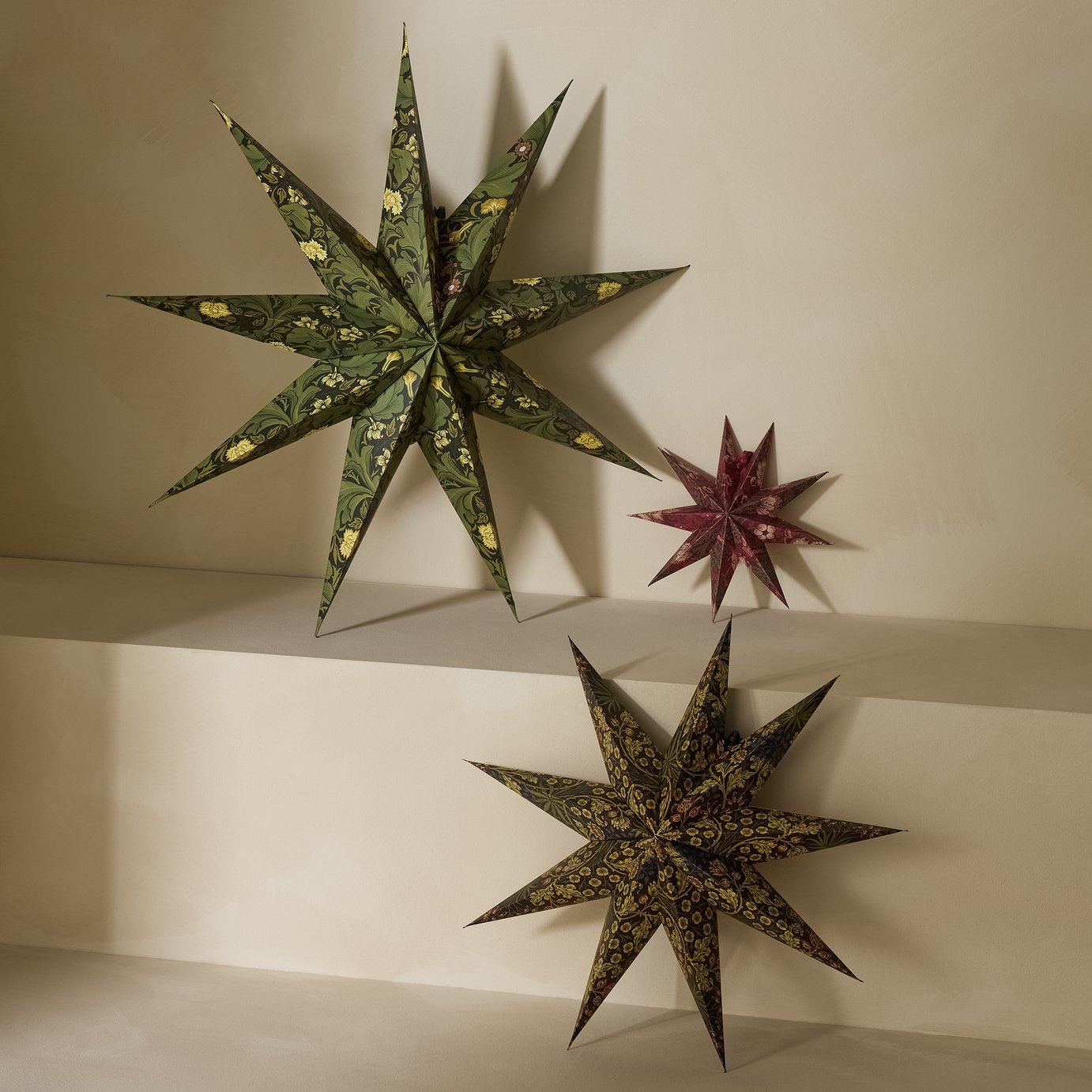
I’ve seen Morris & Co Christmas decorations before, but they’ve always felt a bit twee and unimaginative. The Habitat collection is none of these things. It was the set of medium Habitat x Morris & Co paper stars that jumped out at me first. Paper stars are a decoration Habitat already does incredibly well; they have been reimagined in classic Morris & Co designs, including Strawberry Thief, Hyacinth and Leicester in rich burgundy and forest greens.
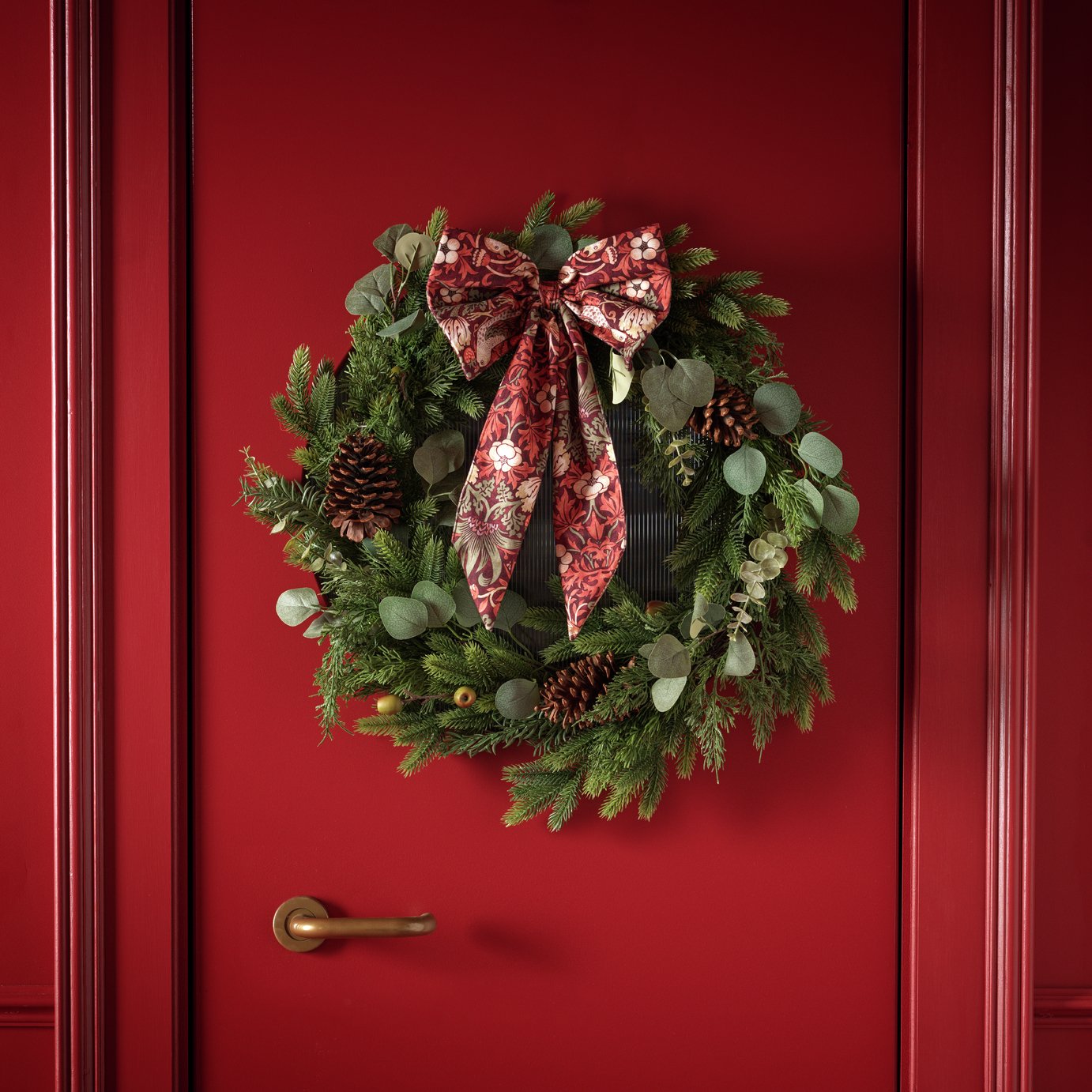
They’ve also turned their hand to baubles, bows and even a wreath, interpreting the iconic patterns into rich jewel-toned decorations. Here are the 6 gems in the range I’m eyeing up for my own home.
Habitat x Morris & Co.
Medium Paper Star Christmas Decoration – Pack of 3
<aside data-article-category="all-rooms" data-block-layout="hero" data-block-type="featured-product" data-editorial-currency="GBP" data-editorial-price="12" data-hawk-json="{"product":{"variants":{"Default":{"image":{"copyright":"","height":1382,"id":"oqKV8N6Vz2Zj9AU7BuFxKP","mimeType":"image\/jpeg","mos":"https:\/\/cdn.mos.cms.futurecdn.net\/oqKV8N6Vz2Zj9AU7BuFxKP.jpg","role":"","width":1382,"credit":"Habitat x Morris & Co.","alt":"Habitat X Morris & Co. Medium Paper Star Christmas Decoration – Pack of 3","caption":""},"strapline":"
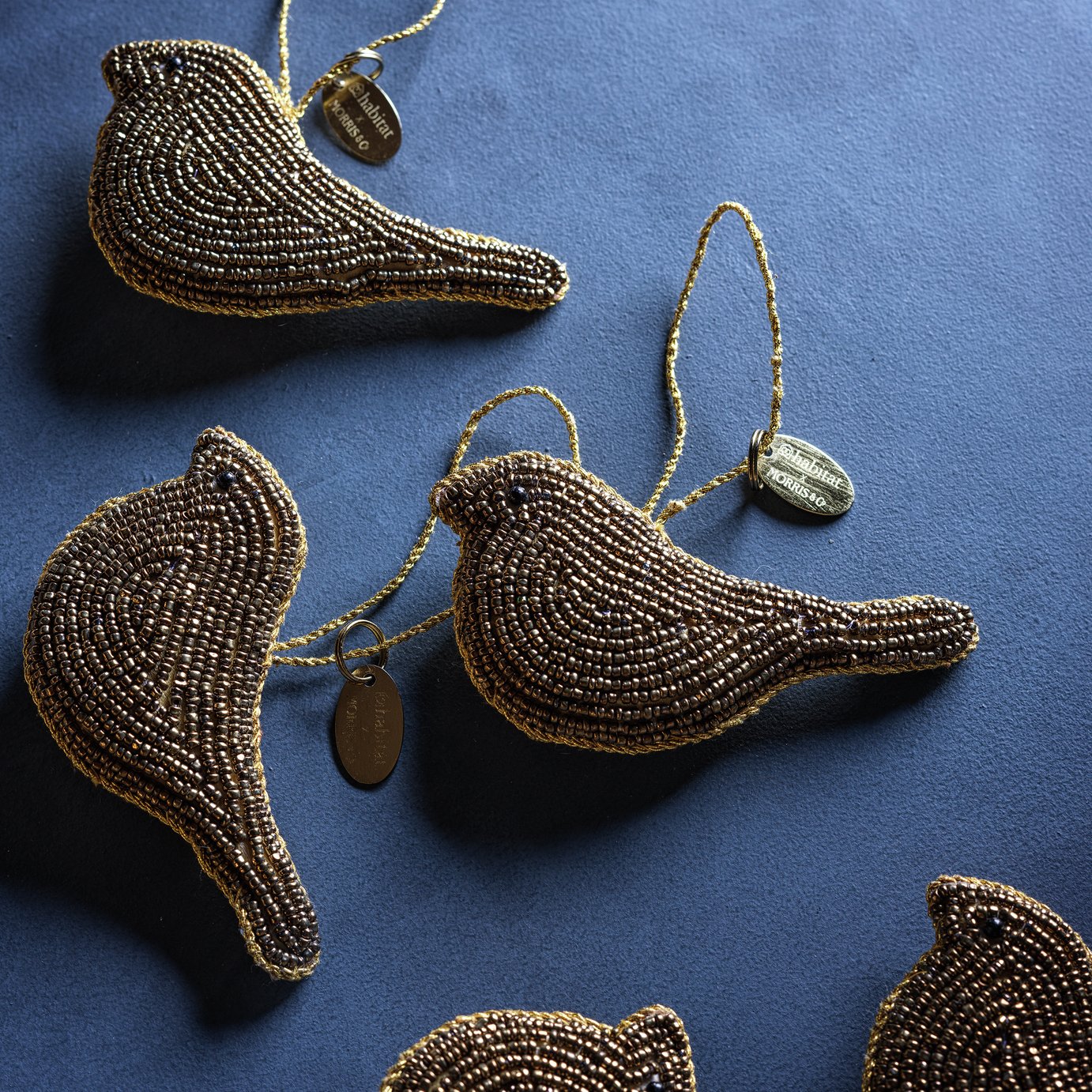
Gold Bead Bird Christmas Hanging Ornament- Pack of 3
<aside data-article-category="all-rooms" data-block-layout="hero" data-block-type="featured-product" data-editorial-currency="GBP" data-editorial-price="12" data-hawk-json="{"product":{"variants":{"Default":{"image":{"copyright":"","height":1382,"id":"pLjZKpRhcLe4oY9mQfrEx5","mimeType":"image\/jpeg","mos":"https:\/\/cdn.mos.cms.futurecdn.net\/pLjZKpRhcLe4oY9mQfrEx5.jpg","role":"","width":1382,"credit":"Habitat x Morris & Co.","alt":"Habitat X Morris & Co. Gold Bead Bird Christmas Hanging Ornament- Pack of 3","caption":""},"strapline":"
My favourite part of this range is that they have taken elements from the most famous Morris & Co designs and interpreted them into ornaments. These gorgeous beaded gold birds will add a little sparkle to a tree without feeling like Morris & Co. overkill.","brand":"Habitat x Morris & Co.","name":"Gold Bead Bird Christmas Hanging Ornament- Pack of 3","urlStyle":"","retailer":"","layout":"hero","linkText":"","noFollow":true,"noAffiliateTracking":false,"promoLabel":"","price":12,"salePrice":null,"currency":"GBP","linkLayout":"text","sponsored":false,"hawkProductNameMatchedCode":"","review":{"cons":[],"id":"","name":"","pros":[],"rating":0,"strapline":"","url":""},"id":"","externalId":"860a7f6fa5784ac7f237ed8cf0b955aee6bfcccb","lastCheckedPriceDate":"","link":{"url":"https:\/\/www.anrdoezrs.net\/click-100624752-17366417?sid=hawk-custom-tracking&url=https:\/\/www.habitat.co.uk\/product\/8940210?clickPR=plp:51:58","merchantName":"Habitat UK","merchantId":209252,"merchantNetwork":"CJ","merchantUrl":"habitat.co.uk"}}}}}” data-link=”https://www.anrdoezrs.net/click-100624752-17366417?sid=hawk-custom-tracking&url=https://www.habitat.co.uk/product/8940210?clickPR=plp:51:58″ data-link-merchant=”Habitat UK” data-merchant-id=”209252″ data-merchant-name=”Habitat UK” data-merchant-network=”CJ” data-merchant-url=”habitat.co.uk” data-model-brand=”Habitat x Morris & Co.” data-model-name=”Habitat x Morris & Co. Gold Bead Bird Christmas Hanging Ornament- Pack of 3″ data-name=”Product Block merchantlink widget” data-render-type=”fte” data-show-fallback=”button” data-widget-type=”merchantlink” class=”ecom-root”>
My favourite part of this range is that they have taken elements from the most famous Morris & Co designs and interpreted them into ornaments. These gorgeous beaded gold birds will add a little sparkle to a tree without feeling like Morris & Co. overkill.
Habitat x Morris & Co.
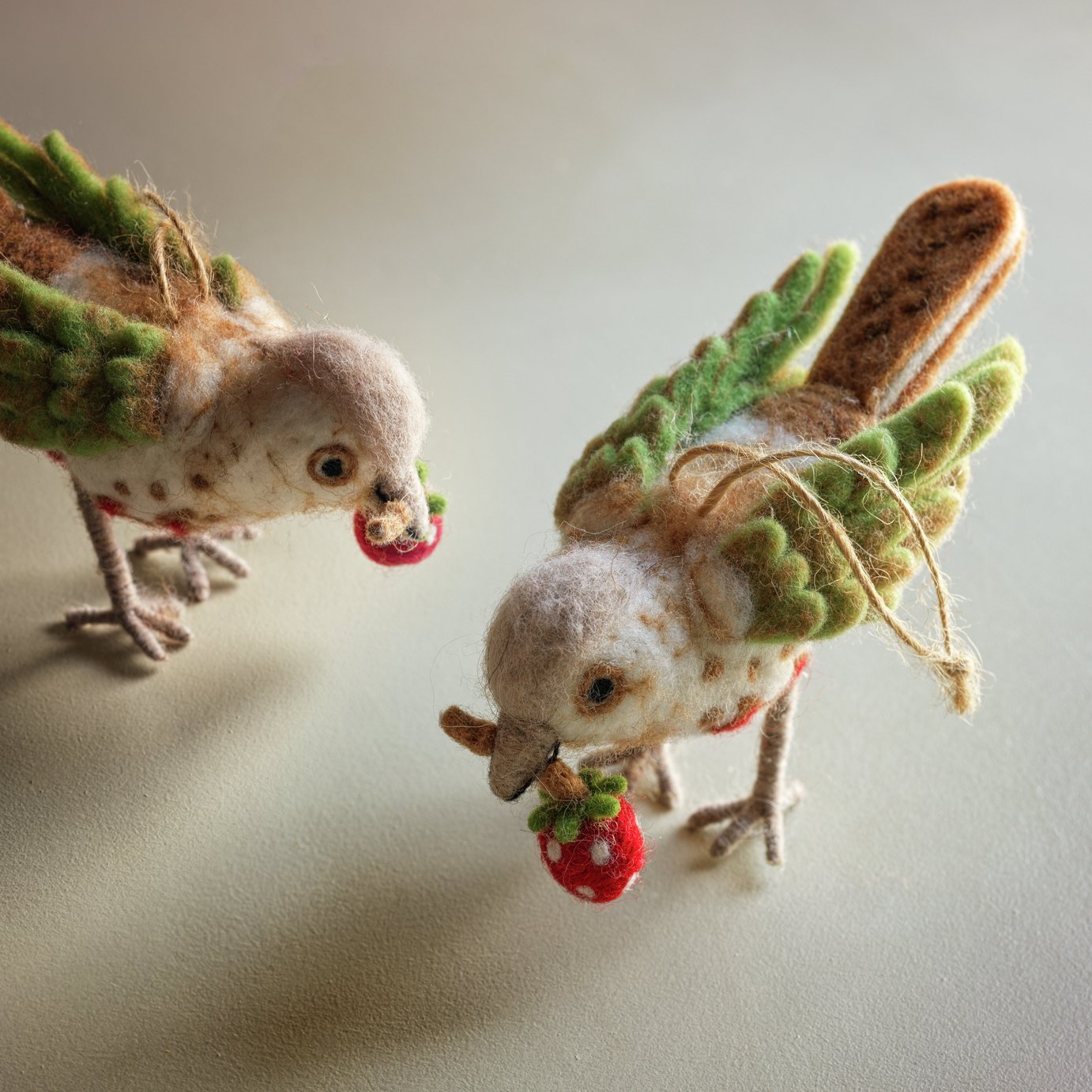
Strawberry Thief Bird Christmas Hanging Ornament
<aside data-article-category="all-rooms" data-block-layout="hero" data-block-type="featured-product" data-editorial-currency="GBP" data-editorial-price="6.5" data-hawk-json="{"product":{"variants":{"Default":{"image":{"copyright":"","height":1382,"id":"zfio9C4qzeJpVHZsG6uxn7","mimeType":"image\/jpeg","mos":"https:\/\/cdn.mos.cms.futurecdn.net\/zfio9C4qzeJpVHZsG6uxn7.jpg","role":"","width":1382,"credit":"Habitat x Morris & Co.","alt":"Habitat X Morris & Co. Strawberry Thief Bird Christmas Hanging Ornament","caption":""},"strapline":"
Whimsical decorations are massive this year, and this one depicting the famous 'strawberry thief' is too cute to ignore. I'm not a huge fan of the classic pattern, but this decoration is so fun, it won me over. I'd have him tucked up high on the tree, peeking out of the branches as a playful nod to the famous designer.","brand":"Habitat x Morris & Co.","name":"Strawberry Thief Bird Christmas Hanging Ornament","urlStyle":"","retailer":"","layout":"hero","linkText":"","noFollow":true,"noAffiliateTracking":false,"promoLabel":"","price":6.5,"salePrice":null,"currency":"GBP","linkLayout":"text","sponsored":false,"hawkProductNameMatchedCode":"","review":{"cons":[],"id":"","name":"","pros":[],"rating":0,"strapline":"","url":""},"id":"","externalId":"b86d43f03a89d76c2f545ea6fc3b194f6dd0e710","lastCheckedPriceDate":"","link":{"url":"https:\/\/www.anrdoezrs.net\/click-100624752-17366417?sid=hawk-custom-tracking&url=https:\/\/www.habitat.co.uk\/product\/8767675?clickPR=plp:53:58","merchantName":"Habitat UK","merchantId":209252,"merchantNetwork":"CJ","merchantUrl":"habitat.co.uk"}}}}}” data-link=”https://www.anrdoezrs.net/click-100624752-17366417?sid=hawk-custom-tracking&url=https://www.habitat.co.uk/product/8767675?clickPR=plp:53:58″ data-link-merchant=”Habitat UK” data-merchant-id=”209252″ data-merchant-name=”Habitat UK” data-merchant-network=”CJ” data-merchant-url=”habitat.co.uk” data-model-brand=”Habitat x Morris & Co.” data-model-name=”Habitat x Morris & Co. Strawberry Thief Bird Christmas Hanging Ornament” data-name=”Product Block merchantlink widget” data-render-type=”fte” data-show-fallback=”button” data-widget-type=”merchantlink” class=”ecom-root”>
Whimsical decorations are massive this year, and this one depicting the famous ‘strawberry thief’ is too cute to ignore. I’m not a huge fan of the classic pattern, but this decoration is so fun, it won me over. I’d have him tucked up high on the tree, peeking out of the branches as a playful nod to the famous designer.
Habitat x Morris & Co.
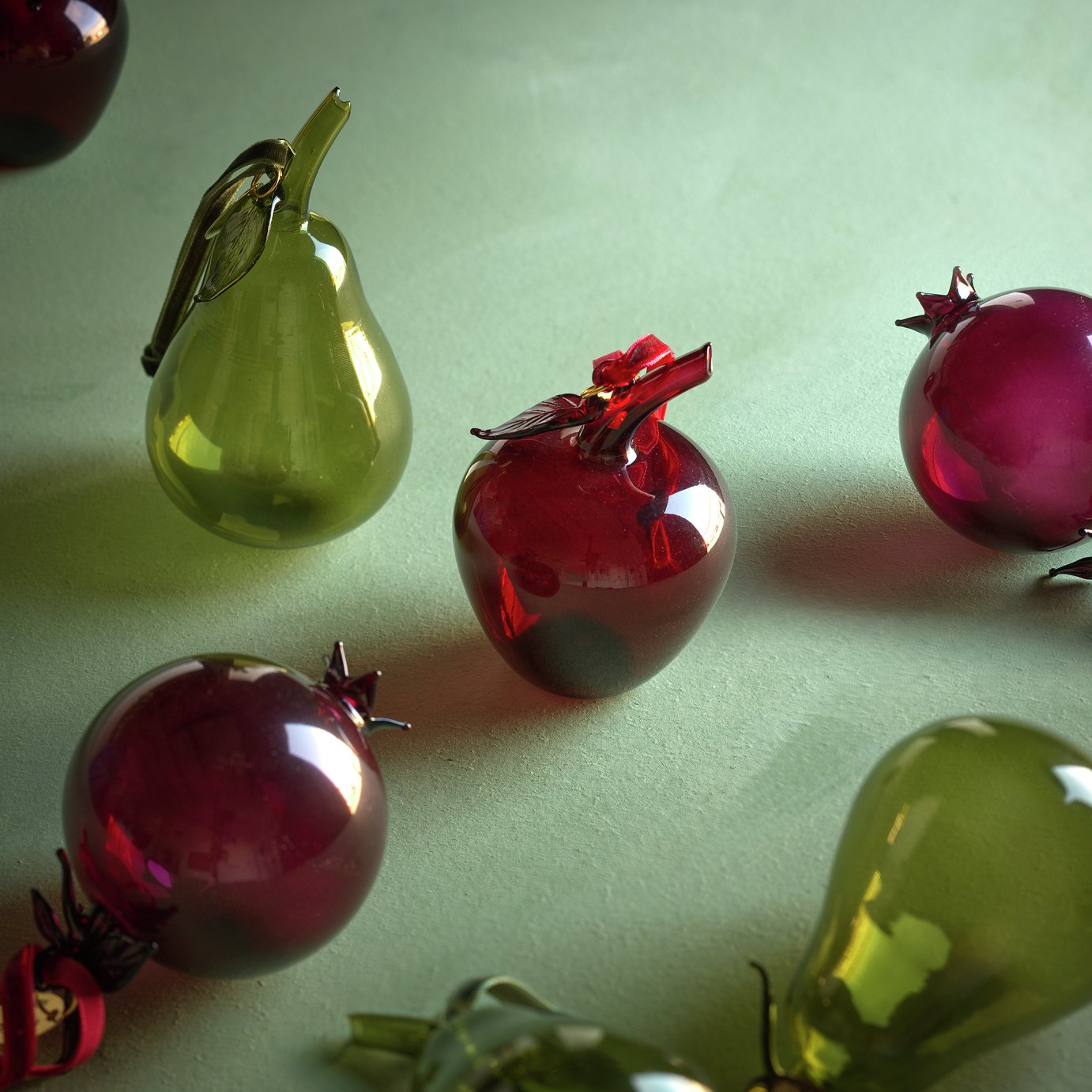
Glass Fruit Christmas Hanging Ornaments – Pack of 3
<aside data-article-category="all-rooms" data-block-layout="hero" data-block-type="featured-product" data-editorial-currency="GBP" data-editorial-price="12" data-hawk-json="{"product":{"variants":{"Default":{"image":{"copyright":"","height":1382,"id":"qjSVdA83YuaMoqQhcnnWzA","mimeType":"image\/jpeg","mos":"https:\/\/cdn.mos.cms.futurecdn.net\/qjSVdA83YuaMoqQhcnnWzA.jpg","role":"","width":1382,"credit":"Habitat x Morris & Co.","alt":"Habitat X Morris & Co. Glass Fruit Christmas Hanging Ornaments – Pack of 3","caption":""},"strapline":"
I've seen vintage-inspired fruit decorations popping up in a few high street collections lately, but these glass ornaments are my favourite. They look so rich and sumptuous; if you told me they were original Victorian decorations, I'd believe you. If I had to place bets on the one decoration you'd still be pulling out in 10 years, this is it.","brand":"Habitat x Morris & Co.","name":"Glass Fruit Christmas Hanging Ornaments – Pack of 3","urlStyle":"","retailer":"","layout":"hero","linkText":"","noFollow":true,"noAffiliateTracking":false,"promoLabel":"","price":12,"salePrice":null,"currency":"GBP","linkLayout":"text","sponsored":false,"hawkProductNameMatchedCode":"","review":{"cons":[],"id":"","name":"","pros":[],"rating":0,"strapline":"","url":""},"id":"","externalId":"d1103605134d2f7de064bea22cffa07e9615c5d0","lastCheckedPriceDate":"","link":{"url":"https:\/\/www.anrdoezrs.net\/click-100624752-17366417?sid=hawk-custom-tracking&url=https:\/\/www.habitat.co.uk\/product\/8531605?clickPR=plp:57:58","merchantName":"Habitat UK","merchantId":209252,"merchantNetwork":"CJ","merchantUrl":"habitat.co.uk"}}}}}” data-link=”https://www.anrdoezrs.net/click-100624752-17366417?sid=hawk-custom-tracking&url=https://www.habitat.co.uk/product/8531605?clickPR=plp:57:58″ data-link-merchant=”Habitat UK” data-merchant-id=”209252″ data-merchant-name=”Habitat UK” data-merchant-network=”CJ” data-merchant-url=”habitat.co.uk” data-model-brand=”Habitat x Morris & Co.” data-model-name=”Habitat x Morris & Co. Glass Fruit Christmas Hanging Ornaments – Pack of 3″ data-name=”Product Block merchantlink widget” data-render-type=”fte” data-show-fallback=”button” data-widget-type=”merchantlink” class=”ecom-root”>
I’ve seen vintage-inspired fruit decorations popping up in a few high street collections lately, but these glass ornaments are my favourite. They look so rich and sumptuous; if you told me they were original Victorian decorations, I’d believe you. If I had to place bets on the one decoration you’d still be pulling out in 10 years, this is it.
Habitat x Morris & Co.
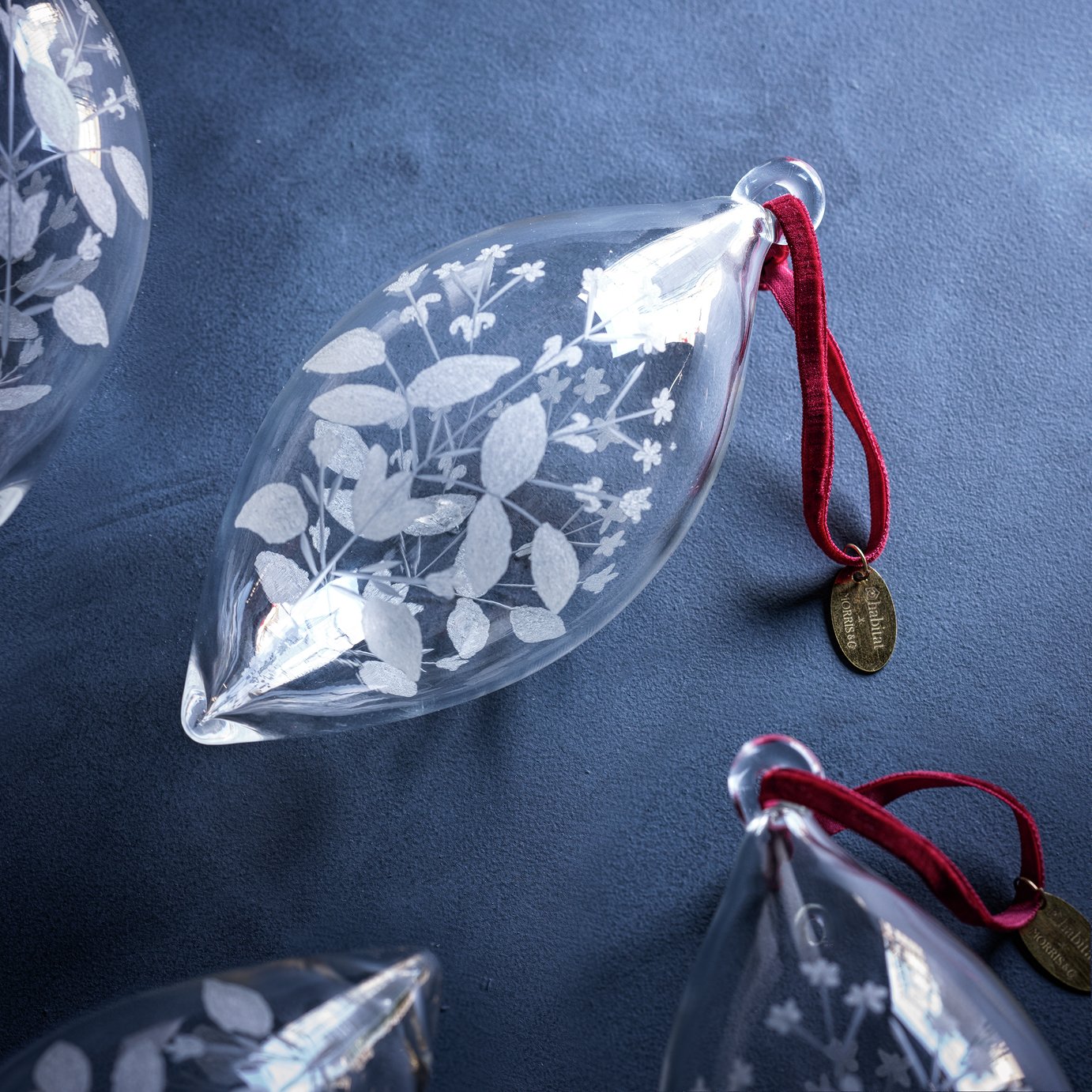
Clear Glass Christmas Bauble
<aside data-article-category="all-rooms" data-block-layout="hero" data-block-type="featured-product" data-editorial-currency="GBP" data-editorial-price="6" data-hawk-json="{"product":{"variants":{"Default":{"image":{"copyright":"","height":1382,"id":"LJW585wMvXCzFP6ncZS86Y","mimeType":"image\/jpeg","mos":"https:\/\/cdn.mos.cms.futurecdn.net\/LJW585wMvXCzFP6ncZS86Y.jpg","role":"","width":1382,"credit":"Habitat x Morris & Co.","alt":"Habitat X Morris & Co. Clear Glass Christmas Bauble","caption":""},"strapline":"
Another future heirloom decoration, these classic glass baubles have a pretty vintage edge that will work with any colour scheme. I'd invest in a couple of these dotted around the tree.","brand":"Habitat x Morris & Co.","name":"Clear Glass Christmas Bauble","urlStyle":"","retailer":"","layout":"hero","linkText":"","noFollow":false,"noAffiliateTracking":false,"promoLabel":"","price":6,"salePrice":null,"currency":"GBP","linkLayout":"text","sponsored":false,"hawkProductNameMatchedCode":"","review":{"cons":[],"id":"","name":"","pros":[],"rating":0,"strapline":"","url":""},"id":"","externalId":"16d44b8bf29d377e1c9f192f9b20e59443af8ac5","lastCheckedPriceDate":"","link":{"url":"https:\/\/www.anrdoezrs.net\/click-100624752-17366417?sid=hawk-custom-tracking&url=https:\/\/www.habitat.co.uk\/product\/8383781?clickPR=plp:34:58","merchantName":"Habitat UK","merchantId":209252,"merchantNetwork":"CJ","merchantUrl":"habitat.co.uk"}}}}}” data-link=”https://www.anrdoezrs.net/click-100624752-17366417?sid=hawk-custom-tracking&url=https://www.habitat.co.uk/product/8383781?clickPR=plp:34:58″ data-link-merchant=”Habitat UK” data-merchant-id=”209252″ data-merchant-name=”Habitat UK” data-merchant-network=”CJ” data-merchant-url=”habitat.co.uk” data-model-brand=”Habitat x Morris & Co.” data-model-name=”Habitat x Morris & Co. Clear Glass Christmas Bauble” data-name=”Product Block merchantlink widget” data-render-type=”fte” data-show-fallback=”button” data-widget-type=”merchantlink” class=”ecom-root”>
Another future heirloom decoration, these classic glass baubles have a pretty vintage edge that will work with any colour scheme. I’d invest in a couple of these dotted around the tree.
If you want to try the heritage Christmas trend in your home but aren’t a fan of tartan, this Morris & Co collection offers an alternative way to style it out. It is classic and filled with decorations you know will be pulled out year after year by you, your kids and potentially even your grandkids.
Sign up to our newsletter for style inspiration, real homes, project and garden advice and shopping know-how
Building a new home is one of the few times you get to plan every room around the way you actually live. The fun stuff grabs attention first (tiles, tapware, the right shade of white). Yet much of what makes a house comfortable is settled long before anyone opens a paint chart. Once the slab’s poured and the frame is standing, room sizes, wall positions and the way your living areas face are pretty much set.
That’s why the design stage deserves a bit of patience. You want a home that suits the people in it, works with its block and climate, and still makes sense in ten years’ time.
Table of Contents
Planning the Layout Around Daily Living
Put the list of rooms aside and picture a normal weekday.
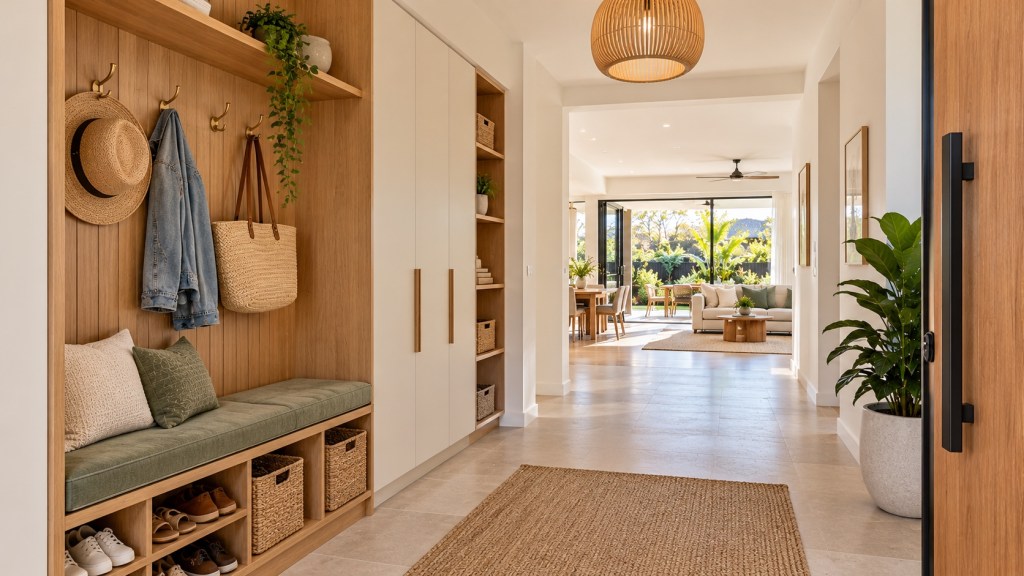
Daily routines. Where do school bags and shoes land? Who does most of the cooking? Is anyone working from home? Small questions, but they shape the plan. A modest drop zone by the entry (a bench, a few hooks) can help stop clutter drifting through the house.
Room placement. How rooms sit next to one another matters about as much as their size. A kitchen near the garage makes carrying the shopping in easier, and bedrooms tucked away from the living area are usually quieter.
Open-plan and separate zones. Open-plan living is great for keeping everyone together. It’s less great when dinner’s on the stove, someone’s taking a call and the TV is on. A second living area helps. So does a study with a door that shuts.
Setting Budget Priorities Early
Plenty of wish lists run longer than the budget, which is why priorities should be sorted early.
Needs, wants and extras. Split everything into three piles: the things you can’t live without, the things you’d love, and the things that can wait. It makes the trade-offs easier later.
Hard-to-change features. Spend on what’s hardest to change later. Ceiling heights, room sizes, window positions and the staircase location are expensive to alter after the build. A light fitting or benchtop can be upgraded later.
Inclusions. Quotes for similar-looking homes can cover quite different things. In Australia, many builders spell this out in an inclusions list, so people comparing home builders in Brisbane can line those lists up before deciding where the extra money goes.
Responding to Climate and Site Orientation
A floorplan can look great on paper and still feel wrong once it’s on the actual block. Often, it comes down to two things.
Sun and orientation. Where the sun lands through the day affects how bright and warm each room feels. In most Southern Hemisphere climates, living areas do well facing north. North of the equator, the general rule flips to south, so check which way the block faces before choosing a plan.
Airflow and shading. Eaves, window placement and covered outdoor areas shape how a house copes with summer. Windows on opposite sides of a room let breezes move through, while well-sized eaves keep high summer sun off sun-facing windows. West-facing glass needs extra care, as eaves do little against low afternoon sun.
Wherever you’re building, ask how a design handles local conditions before you fall for a facade.
Integrated Storage Solutions
Storage can look adequate on paper. Then you move in. Adding it later is harder, so build it in from day one.
Built-in joinery. Robes, linen cupboards and a walk-in pantry look tidier, and use space better, when they’re in the original plan.
Underused areas. Under the stairs, or that awkward end of a hallway, can take more than you’d think.
Bulky items. Suitcases, camping gear and the Christmas tree all need a home. Otherwise they end up in the garage or spare room, for good.
Lighting and Electrical Planning
Lighting and power are easier to get right while the frame is exposed. Mentally walk through each room: where will you read, charge phones or work late? The answers point to where switches and sockets should go.
Layering ambient, task and feature lighting can give a room more depth than a simple grid of downlights. Plan outdoor lighting and power for the alfresco or deck at the same time, since adding them once the walls are lined is generally more disruptive.
Designing for Long-Term Flexibility
Families change. A nursery turns into a teenager’s room, the playroom ends up as a second lounge, and the spare bedroom quietly becomes a home office.
A few choices now make those changes easier: a bedroom and bathroom on the ground floor, wider hallways and doorways, and walls placed so an opening could be added later. All are simpler to build in at design stage than to retrofit.
Final Thoughts
Some selections come up earlier than expected. With a concrete slab, toilet drainage is usually set before the pour, and because toilet suites vary in the set-out they need, you may have to pick the toilet long before it’s installed. Windows can need ordering early as well, as lead times differ between suppliers and products.
So before signing off the floorplan, ask your builder which selections will be needed and in what order. That way, big decisions aren’t rushed on site.
Around 20 million households in England will receive a £100 payment from the Government this winter to help with their energy bills, Chancellor John Healey confirmed, delivering the Autumn Budget.
The October price cap saw bills rise by £60 a year for millions of households, and consultants at Cornwall Insight have predicted a further 16% price increase in January 2027 compared to October of this year. This means energy bills could rise to £1,999 a year for a typical dual-fuel household in January 2027.
Unsurprisingly, many of us are looking to tighten our belts as a result, searching for ways to save energy and money at home. So, I asked an energy expert what exactly we can expect from the Household Energy Payment, who is eligible, and what difference it may have on our bills.
Latest Videos FromIdeal Home
Who is eligible for the payment?
‘Eligibility depends on where you live. In England, the £100 payment is for eligible households responsible for council tax on their main home in bands A to D. The governments in Wales and Scotland have also confirmed a £100 payment for households in those bands. So, if you don’t know, checking what council tax band you are in is the best place to start,’ explains Gareth Kloet, expert at Go.Compare Energy.
‘In Northern Ireland, which uses domestic rates rather than council tax, funding has been allocated for similar support, but households should await confirmation of the Executive’s arrangements rather than assuming the same rules apply.’
Gareth Kloet has been involved in utilities since working for Welsh Water in 1994, then in the energy market since it’s deregulation in 1996 for gas and 1998 for electricity, making him Go.Compare’s go-to for any energy and comparison know-how. He’s worked for both new businesses and established energy companies, including Atlantic, Energylinx and now Go.Compare, in his current role as energy expert and Director of Partnerships.
What impact is this payment expected to have on bills?
‘The £100 payment will be welcome support for eligible households at a time when energy costs remain a concern. But it’s important to note that this support is a one-off payment to help with paying your bill, rather than a reduction in the cost of energy. It can help offset some of your costs, but it won’t prevent your bills from rising if your energy use or the rates you pay increase,’ says Gareth.
Sign up to our newsletter for style inspiration, real homes, project and garden advice and shopping know-how
(Image credit: Future PLC/Colin Poole)
How will households receive the payment?
‘In England, payments are expected to start from January 2027. Those who pay council tax by direct debit should receive the money automatically, while others will be invited to apply through their council,’ says Gareth.
‘Wales and Scotland have also confirmed support, but households should check local guidance for payment details. Northern Ireland’s arrangements are yet to be confirmed. Be wary of unexpected messages asking for bank details and always check with official sources first.’
How do recieve payment if you don’t pay council tax?
‘In England, some households exempt from council tax are still expected to qualify, although full eligibility details have not yet been published. However, people who are not responsible for council tax are not currently included under the guidance. Councils will also receive extra funding to support households that miss out on the payment. Those in Wales, Scotland and Northern Ireland should check local guidance, as different rules may apply,’ says Gareth.
How is the payment being funded?
‘It’s government-funded support, not a discount provided by energy suppliers. The scheme is being funded through a temporary increase in the tax surcharge on bank profits and is expected to cost around £2.6 billion,’ says Gareth.
(Image credit: Future PLC/Tim Young)
What else is the Government doing to keep energy costs down?
‘The Government has extended the temporary removal of VAT on domestic electricity bills in Great Britain until July 2027. There are also plans to remove gas standing charges from 2027, although those costs would be moved into unit rates rather than disappear altogether. That means lower-use households could benefit more than higher users. In Northern Ireland, eligible customers already receive support through the Household Electricity Discount Scheme, which is separate from the new £100 payment,’ says Gareth.
What should we be doing to keep costs down?
‘Ultimately, one of the best things you can do to keep your energy costs down is regularly review your tariff and check whether switching could save you money. Even small differences between deals can add up to meaningful savings over time,’ says Gareth.
If you haven’t already fixed your tariff, it can be a good idea to fix now, considering energy bills are expected to increase.
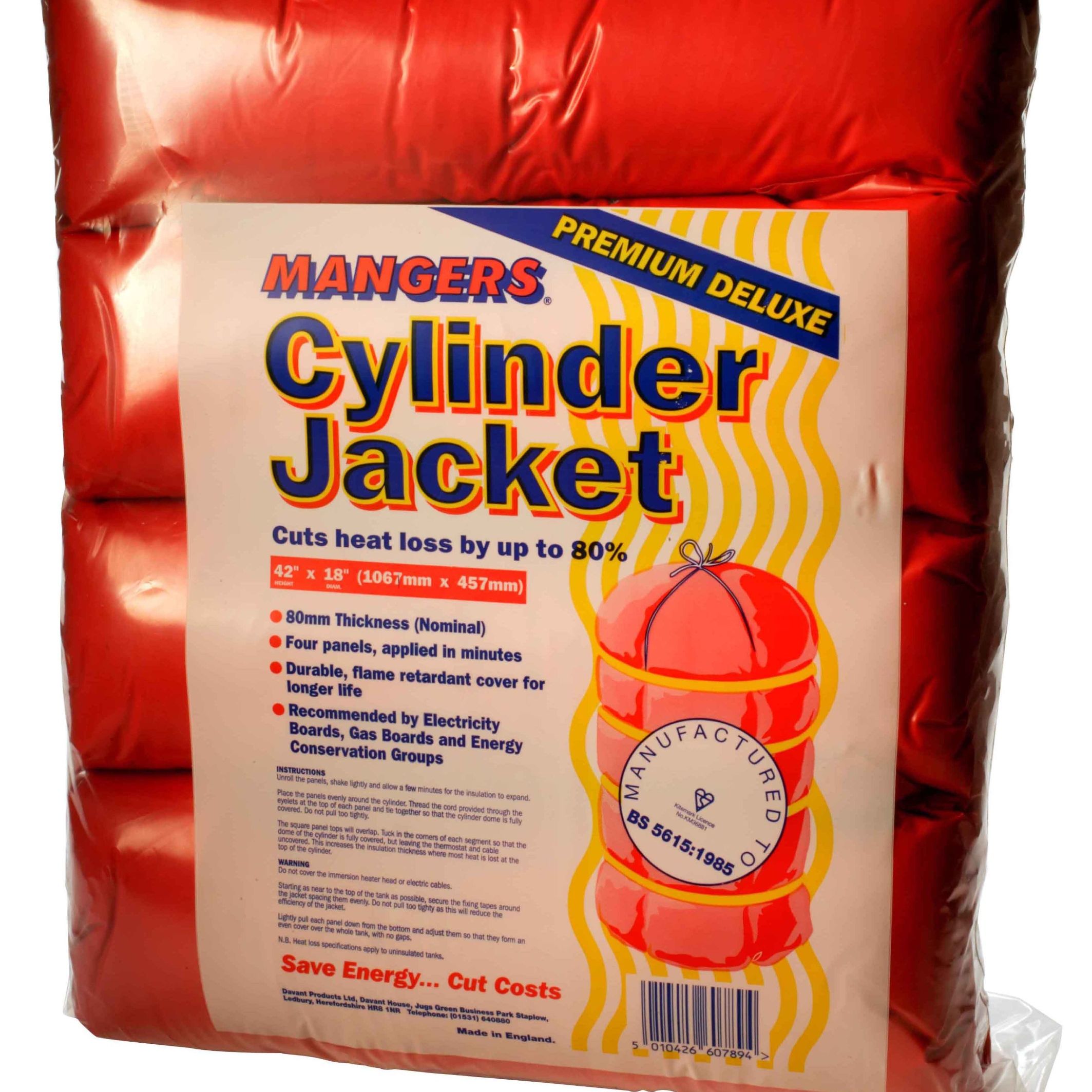
Mangers
Mangers 4 Piece Cylinder Water Tank Jacket (h)1067mm (w)450mm (t)80mm
<aside data-article-category="house-manual" data-block-layout="hero" data-block-type="featured-product" data-editorial-currency="GBP" data-editorial-price="23.98" data-hawk-json="{"product":{"variants":{"Default":{"image":{"copyright":"","height":2560,"id":"9NmMT49oVJcYyZCuxPMmCa","mimeType":"image\/jpeg","mos":"https:\/\/cdn.mos.cms.futurecdn.net\/v2\/t:340,l:0,cw:2127,ch:2127,q:80\/9NmMT49oVJcYyZCuxPMmCa.jpg","role":"","width":2127,"credit":"Mangers","alt":"Mangers 4 Piece Cylinder Water Tank Jacket (h)1067mm (w)450mm (t)80mm","caption":"","crop":{"label":"1:1","left":0,"top":340,"cropWidth":2127,"cropHeight":2127,"quality":80}},"strapline":"
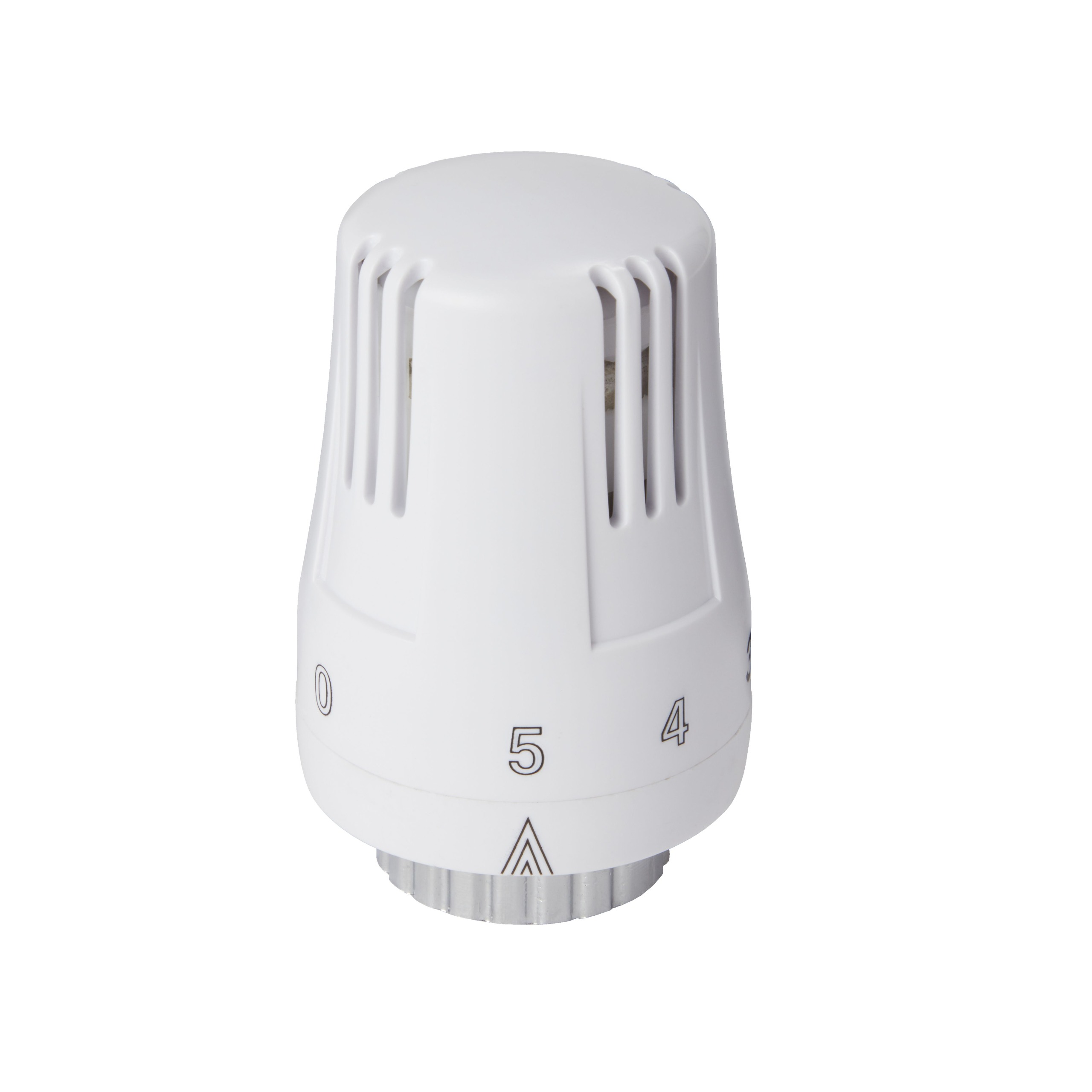
You should also consider using thermostatic valves on your radiators. This allows you to control the temperature of each individual radiator. You can turn radiators down or off in rooms you're not using, helping you save on your energy bills.","brand":"Flomasta","name":"Flomasta Thermostatic Radiator Valve Head","urlStyle":"","retailer":"","layout":"hero","linkText":"","noFollow":true,"noAffiliateTracking":false,"promoLabel":"","price":6.42,"salePrice":null,"currency":"GBP","linkLayout":"text","sponsored":false,"hawkProductNameMatchedCode":"","review":{"cons":[],"id":"","name":"","pros":[],"rating":0,"strapline":"","url":""},"id":"","externalId":"942ad92211b093760df3a6a7cdc5645f58e93dcd","lastCheckedPriceDate":"","link":{"url":"https:\/\/diy.pxf.io\/c\/221109\/1632830\/18948?subId1=hawk-custom-tracking&sharedId=hawk-prefix&u=https%3A%2F%2Fwww.diy.com%2Fdepartments%2Fflomasta-thermostatic-radiator-valve-head%2F5036581050580_BQ.prd","merchantName":"B&Q","merchantId":299090,"merchantNetwork":"ImpactRad","merchantUrl":"diy.com"}}}}}” data-link=”https://diy.pxf.io/c/221109/1632830/18948?subId1=hawk-custom-tracking&sharedId=hawk-prefix&u=https%3A%2F%2Fwww.diy.com%2Fdepartments%2Fflomasta-thermostatic-radiator-valve-head%2F5036581050580_BQ.prd” data-link-merchant=”B&Q” data-merchant-id=”299090″ data-merchant-name=”B&Q” data-merchant-network=”ImpactRad” data-merchant-url=”diy.com” data-model-brand=”Flomasta” data-model-name=”Flomasta Flomasta Thermostatic Radiator Valve Head” data-name=”Product Block merchantlink widget” data-render-type=”fte” data-show-fallback=”button” data-widget-type=”merchantlink” class=”ecom-root”>
You should also consider using thermostatic valves on your radiators. This allows you to control the temperature of each individual radiator. You can turn radiators down or off in rooms you’re not using, helping you save on your energy bills.
If you are struggling to pay your bills, you should reach out to your energy supplier to see what support you’re entitled to.
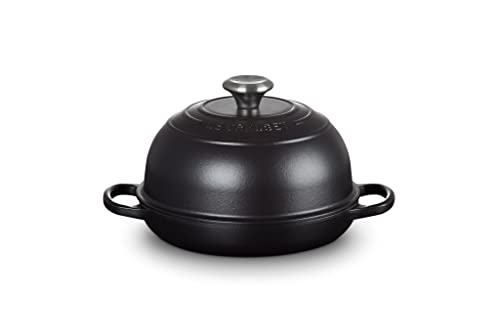
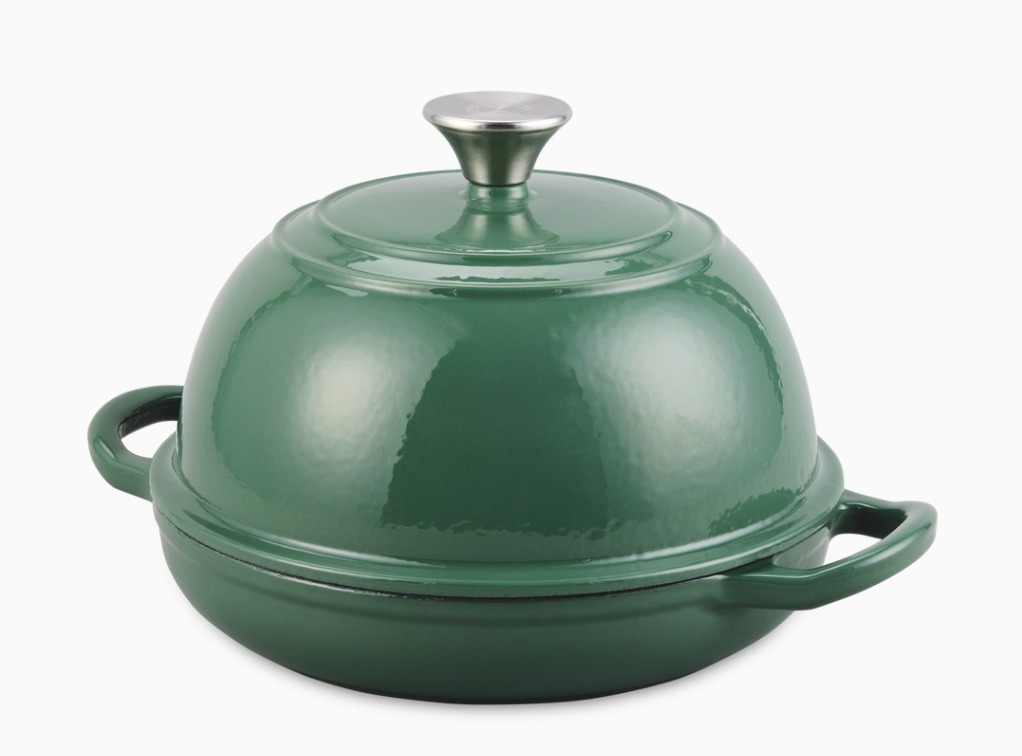
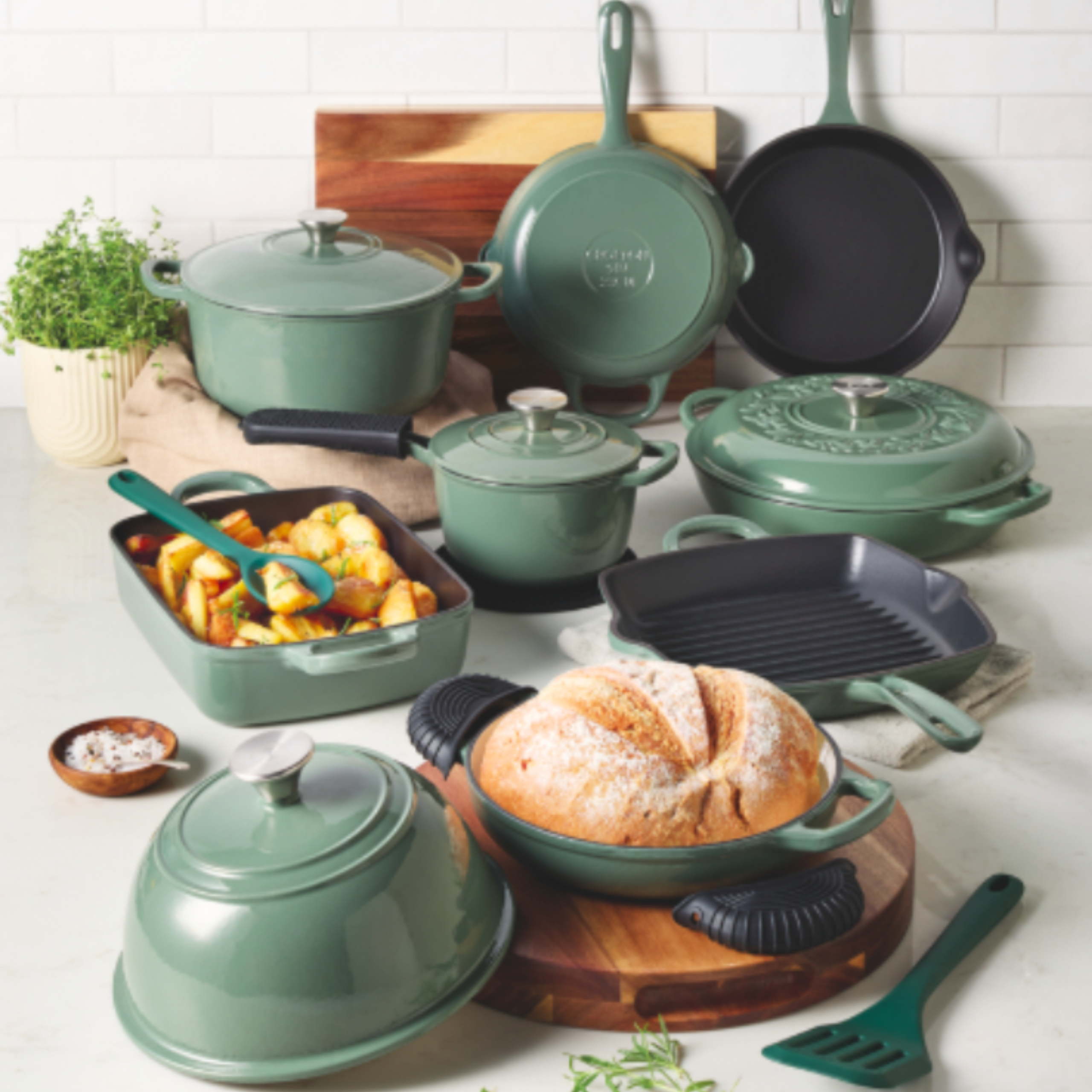
Aldi has just added an absolute gem into its Specialbuys collection of bestselling cast iron cookware: a £19.99 bread oven which is a dead ringer for Le Creuset’s £265 version (which is beloved by bread makers everywhere). Available from the 5th of November in the middle aisle, this is one limited-edition buy I’m desperate to get my hands on.
I’ve recently got into making sourdough at home in a big way – a task that you can’t rely on one of the best bread makers alone for – and have been fervently researching the kit I need to buy to make my loaves even better.
That led me to eyeing up Le Creuset‘s Bread Oven, which was recommended by my friend and Ideal Home’s previous Kitchen Appliances Editor Millie Fender, who tried it out for us in her Le Creuset Bread Oven review, where she said it helped to make a brilliant loaf of bread.
Here’s how Aldi’s version, which is part of its longstanding editor-approved line-up for one tenth of the price, stacks up against the Le Creuset classic that’s all the rage on bread-making forums (trust me, I’ve read them all).
The steep domed shape of this dish is designed to mimic the steam-injection that you'd get in a professional baker's kitchen. The base acts like a baking stone and the dome prevents steam escaping, creating the perfect conditions for rising bread. ","brand":"Le Creuset ","name":"Cast Iron Bread Oven","urlStyle":"","retailer":"","layout":"versus","linkText":"","noFollow":false,"noAffiliateTracking":false,"promoLabel":"","price":265,"salePrice":null,"currency":"GBP","linkLayout":"text","sponsored":false,"hawkProductNameMatchedCode":"","review":{"cons":[],"id":"","name":"","pros":[],"rating":0,"strapline":"","url":""},"id":"","externalId":"bcf2e991b5605931db4a46a2ab32b91f9d17c228","lastCheckedPriceDate":"","link":{"url":"https:\/\/click.linksynergy.com\/deeplink?id=kXQk6%2AivFEQ&mid=50370&u1=hawk-custom-tracking&murl=https%3A%2F%2Fwww.lecreuset.co.uk%2Fen_GB%2Fp%2Fcast-iron-bread-oven%2FCI1301.html","merchantName":"Le Creuset","merchantId":303220,"merchantNetwork":"LSfutureusLlc","merchantUrl":"lecreuset.co.uk"}}}}}” data-link=”https://click.linksynergy.com/deeplink?id=kXQk6%2AivFEQ&mid=50370&u1=hawk-custom-tracking&murl=https%3A%2F%2Fwww.lecreuset.co.uk%2Fen_GB%2Fp%2Fcast-iron-bread-oven%2FCI1301.html” data-link-merchant=”Le Creuset” data-merchant-id=”303220″ data-merchant-name=”Le Creuset” data-merchant-network=”LSfutureusLlc” data-merchant-url=”lecreuset.co.uk” data-model-brand=”Le Creuset ” data-model-name=”Le Creuset Cast Iron Bread Oven” data-name=”Product Block merchantlink widget” data-render-type=”fte” data-show-fallback=”button” data-widget-type=”merchantlink” class=”ecom-root”>
The steep domed shape of this dish is designed to mimic the steam-injection that you’d get in a professional baker’s kitchen. The base acts like a baking stone and the dome prevents steam escaping, creating the perfect conditions for rising bread.
It seems Aldi's version has taken more than a little inspiration from Le Creuset's bestseller from the shape to the very on-trend pastel green colourway. It's already been released at Aldi in the US and Australia and gained a cult following in breadmaking circles online thanks to its ultra-cheap price tag.","brand":"Aldi","name":"Cast Iron Bread Baker ","urlStyle":"","retailer":"","layout":"versus","noFollow":true,"noAffiliateTracking":false,"promoLabel":"","price":null,"salePrice":null,"currency":"GBP","linkLayout":"text","sponsored":false,"hawkProductNameMatchedCode":"","review":{"cons":[],"id":"","name":"","pros":[],"rating":0,"strapline":"","url":""},"id":"","lastCheckedPriceDate":"","link":{"url":"https:\/\/www.aldi.co.uk\/products\/specialbuys\/kitchen\/k\/1588161416584105","linkText":"Available from 5th November at Aldi","merchantName":"aldi.co.uk"}}}}}” data-link=”https://www.aldi.co.uk/products/specialbuys/kitchen/k/1588161416584105″ data-link-merchant=”aldi.co.uk” data-link-text=”Available from 5th November at Aldi” data-merchant-name=”aldi.co.uk” data-model-brand=”Aldi” data-model-name=”Aldi Cast Iron Bread Baker” data-name=”Product Block merchantlink widget” data-render-type=”fte” data-show-fallback=”button” data-widget-type=”merchantlink” class=”ecom-root”>
It seems Aldi’s version has taken more than a little inspiration from Le Creuset’s bestseller from the shape to the very on-trend pastel green colourway. It’s already been released at Aldi in the US and Australia and gained a cult following in breadmaking circles online thanks to its ultra-cheap price tag.
I’ve been researching this Le Creuset bread oven obsessively over the last few weeks, trying to work out if it’s worth splashing over £250 on in order to improve my sourdough. My biggest dilemma is over whether this oven really has that much over a standard Le Creuset casserole, which I’ve managed to get pretty good results out of already.
Making sourdough in Le Creuset’s Cast Iron Casserole Dish.
(Image credit: Future)
In the course of my research, I’ve found that if you’re after a dedicated bread baking vessel then Le Creuset’s Bread Oven is the ultimate bit of kit to pick up. It has the edge in a few ways including safer loading (you place your dough onto the flat plate) and a shape that lends itself better to preheating when empty and creating that all-important steam trap.
It’s important to note that if you’re looking for an all-rounder cast iron dish, the consensus is that a standard Le Creuset (or alternative) casserole is the best way to go. My own Le Creuset casserole in Chambray (£405), as pictured below, has been in constant use this winter for sourdough, stews and one-pot meals.
Sign up to our newsletter for style inspiration, real homes, project and garden advice and shopping know-how
(Image credit: Aldi)
One thing I have been concerned about with using my standard Le Creuset for sourdough is having to preheat it dry for 45 minutes before I pop my dough in as it’s not necessarily recommended by the manufacturer. I’m worried that doing this frequently might spell trouble for the enamel layer.
That’s where Aldi’s sub £20 bread oven comes in, seeming to me like a very affordable investment as a kind of middle ground. It’s shape will allow me to experiment with using a bread oven while I decide if I want to take the plunge on Le Creuset’s version and its price tag won’t break the bank in the meantime.
It’s not the only cast iron Specialbuy that Aldi will be stocking up the middle aisle with in December either – the supermarket’s £19.99 casserole is back too as well as a range of accessories from as little as £1.99.
This is one lookalike I’m definitely going to be venturing to my nearest Aldi for!
Robins are the UK’s favourite bird, according to the RSPB, and with long associations with Christmas, it’s easy to see why you’ll often spot robin motifs within Christmas decor. And this year, robins appear to be everywhere, and experts say this is down to the fact the traditional Christmas trend is booming.
If you take a look at the year’s biggest Christmas trends, you’ll notice that many of them are focused on a return to traditional festive styles. From traditionally decorated trees to the use of heritage tartan and whimsical folk decorations, it’s out with the new and in with the old this year.
And considering the cheerful, red-breasted robin has been associated with Christmas since the Victorian era, it makes perfect sense we’re seeing a surge in its popularity as a Christmas decorating idea this year. Here’s how to introduce robins to your home this Christmas.
Latest Videos FromIdeal Home
Why are robins trending?
Any gardener will know how wonderful it is to attract robins to their gardens. These birds are curious, confident, and have a beautiful birdsong, and the good news about incorporating them into your home is that one of the best artificial Christmas trees will suffice to house them.
(Image credit: Dunelm)
‘The robin has long been a staple of Christmas decor, but this year, it’s helping us rediscover the magic of a truly traditional Christmas,’ comments Natalie Evans, founder and CEO of home styling and staging company Little Barn Door.
‘After a decade of ever-changing festive trends, 2026 is all about nostalgia. Cherished memories, familiar decorations and the comforting traditions that make Christmas feel like Christmas. It’s less about reinventing the festive season and more about celebrating Christmases past, creating new memories and building traditions that will be treasured for generations to come.’
According to Natasha Copper, a trend and social expert at MediaVision, searches for ‘Christmas robin decor’ are up 100%, proving the increase in popularity.
Sign up to our newsletter for style inspiration, real homes, project and garden advice and shopping know-how
‘Robins are definitely a timeless trend, as it’s been a trend that sticks every season and will be for the foreseeable future. There are certain things that will never go out of style, and this is one of them with its historical connection to Christmas,’ she says.
In the Victorian era, postmen wore bright red uniforms and were nicknamed ‘robins’ or ‘robin redbreasts.’ As a result, many Victorian illustrations depicted robins delivering their Christmas cards, cementing the association.
How to style robin-inspired decor
‘Unlike fleeting decor trends that come and go, the robin has a timeless place in our Christmas traditions. Year after year, these cheerful little characters return to our homes, bringing with them a comforting sense of nostalgia, familiarity and festive warmth,’ says Natalie.
(Image credit: Morrisons Home)
‘Introduce a few subtle touches of robin décor into your home, rather than going overboard and creating a look that feels too themed or faddy. Better still, why not start a new family tradition? Choose a special robin decoration together, something that can be brought out and treasured year after year,’ she continues.
‘After all, Christmas decorating isn’t just about how our homes look. It’s about the memories we make, the traditions we build and the stories behind the pieces we choose together.’
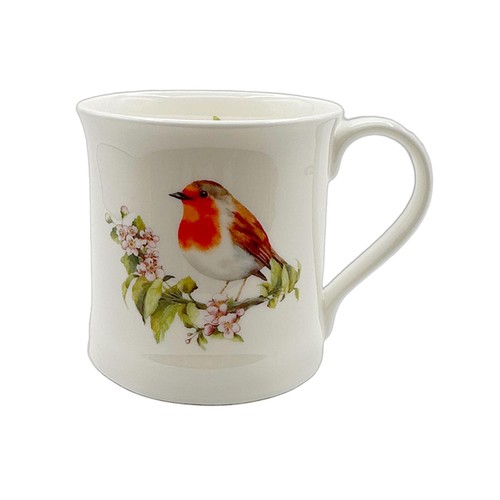
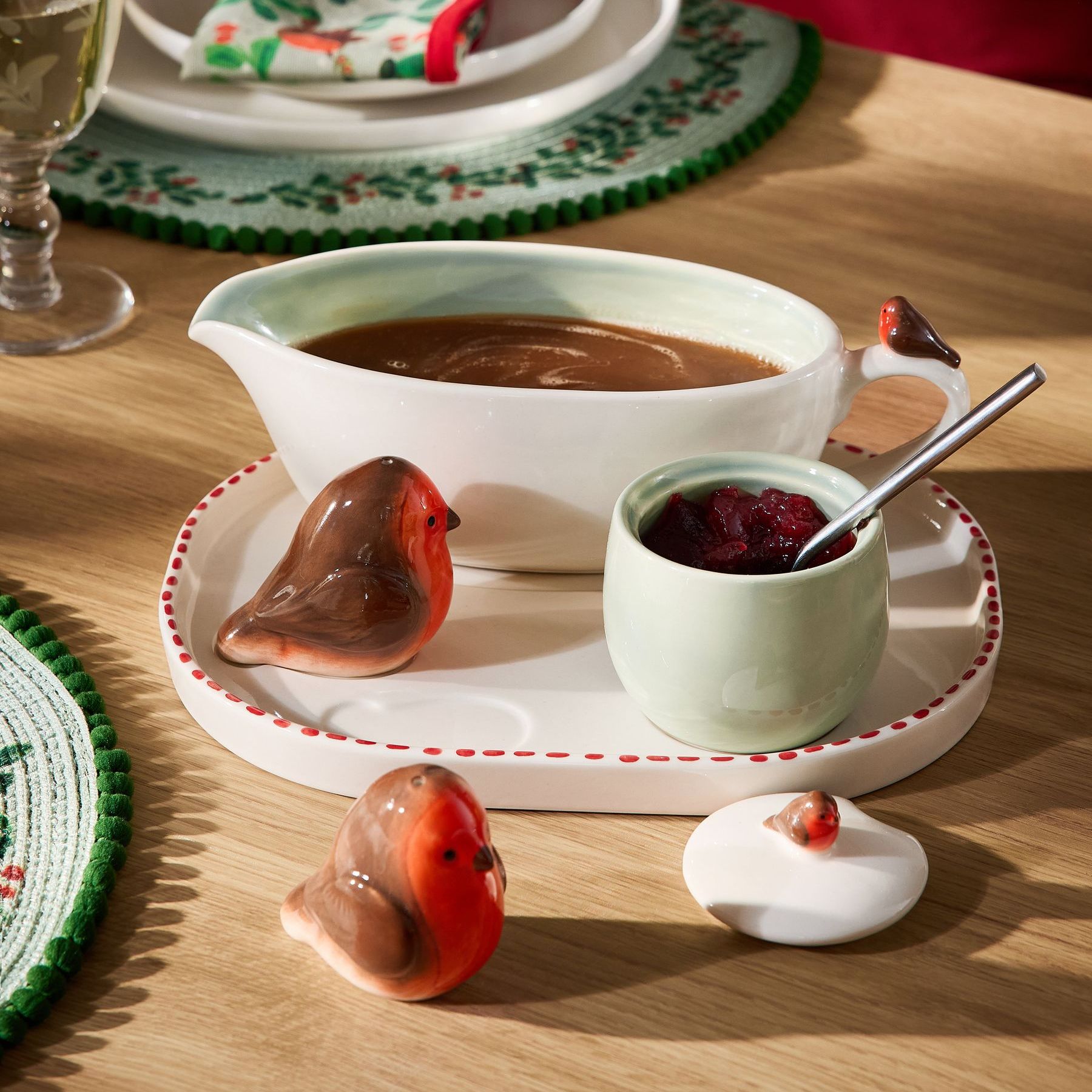
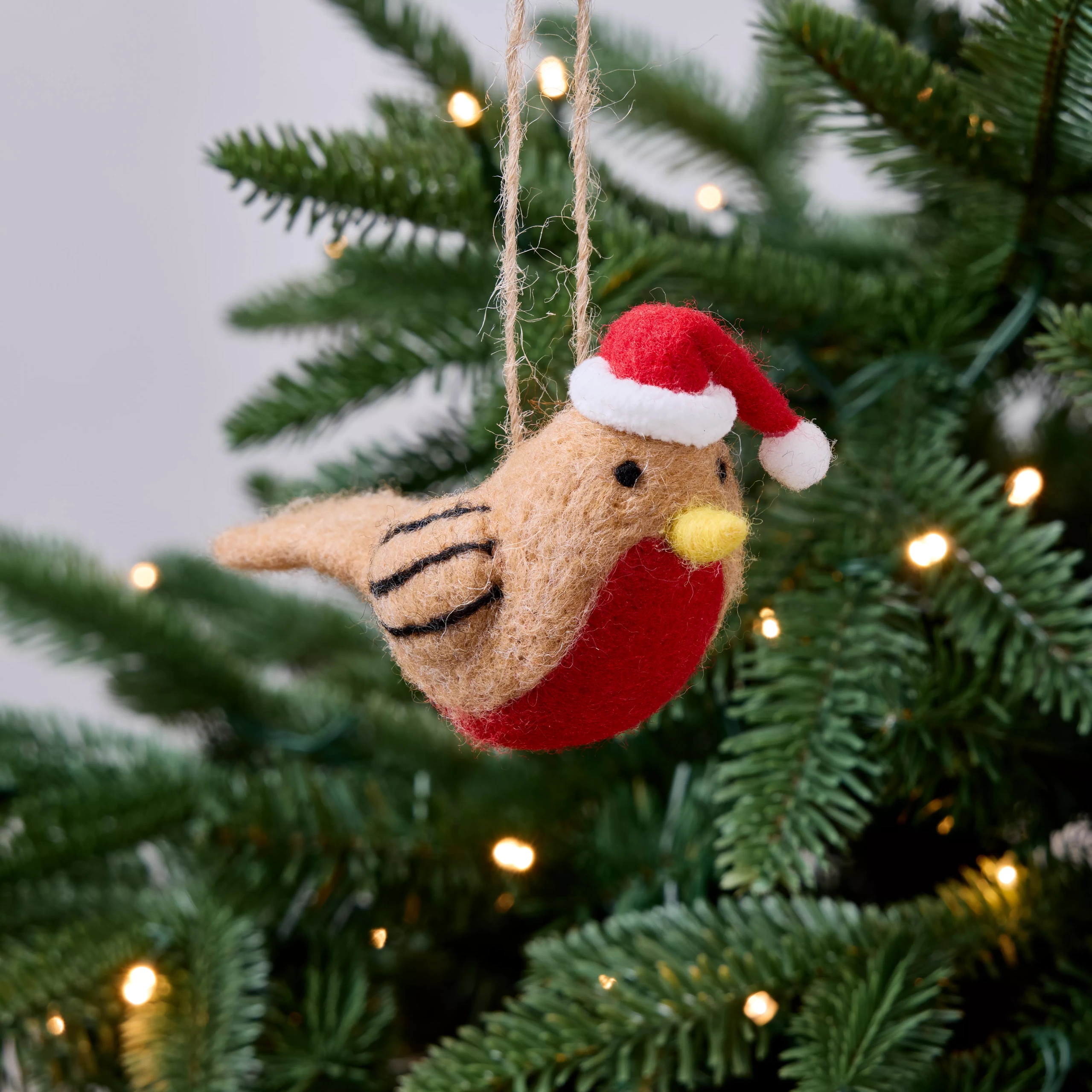
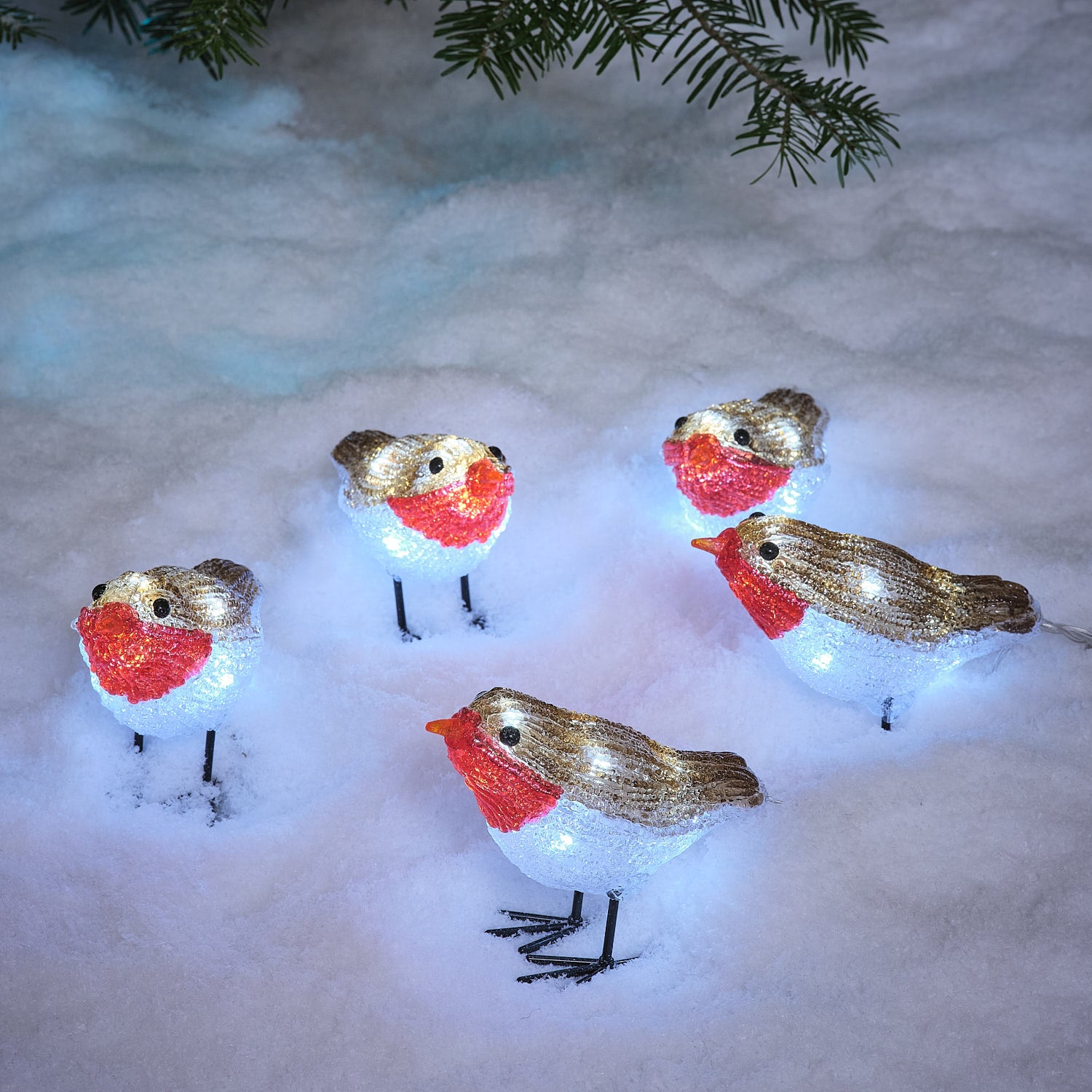
You don’t have to go full-blown robin maniac to get the look. You could opt for some robin-themed Christmas cookware, baubles or even nestle a few robin ornaments within your festive ornaments. If you’re in need of inspiration, here are a few of my favourite styles I’ve spotted, and you can shop them online.
Shop the trend
Dunelm
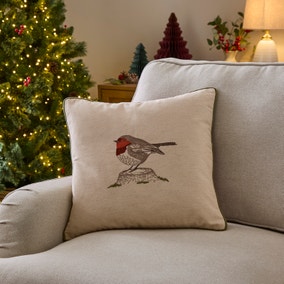
Embroidered Robin Tartan Square Cushion
Argos Home
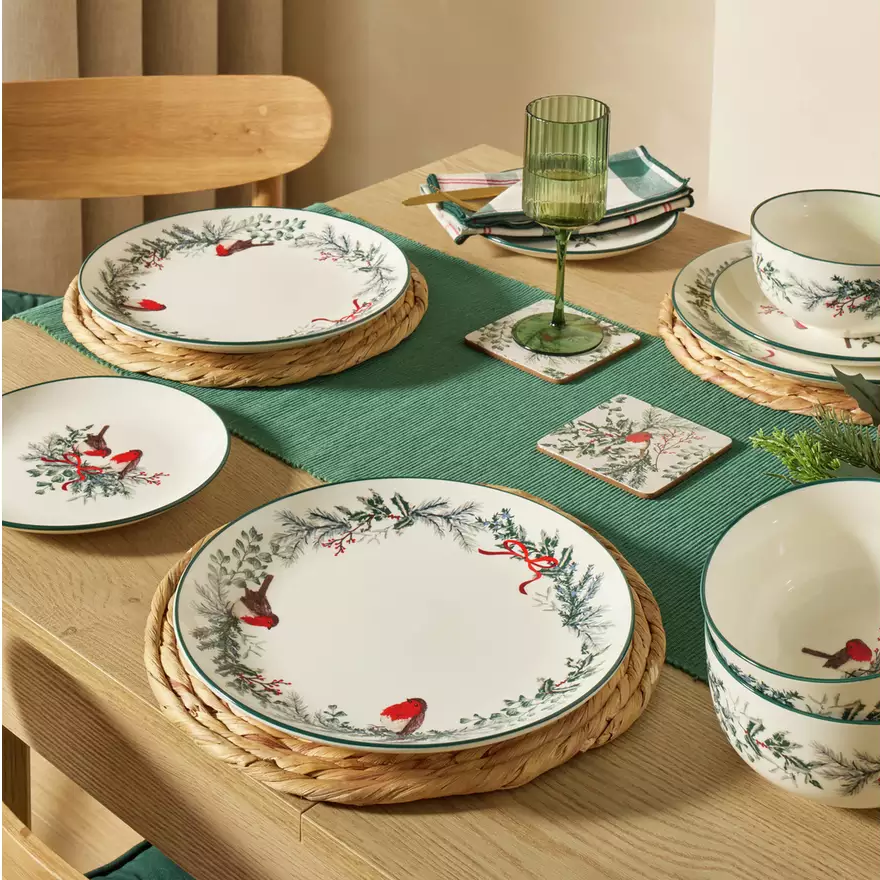
Argos Home Robin 12 Piece Stoneware Dinner Set – Green
Nutmeg Home
Nutmeg Home Robin Bone China Mug
Next
Green Merry Christmas Robin Centrepiece With Salt and Pepper Shakers and Condiment Pot and Gravy Boat – Size One
B&Q
Felt Robin Hanging Decoration – Multicolour
Lights4Fun
5 Acrylic Robins 3d Led Outdoor Christmas Figures
I love robins, whether that’s watching them out in the wild, or adding a few seasonal touches to my home. This is a traditional style that will never go out of fashion.
Christmas is the perfect opportunity to make your dining table feel a little more special. Whether you’re hosting Christmas dinner, entertaining friends or simply enjoying a beautifully decorated home throughout December, a thoughtfully styled table decoration can transform an ordinary table into an inviting festive setting.
The good news is that creating an elegant Christmas table doesn’t have to involve expensive decorations, elaborate floral arrangements or hours of preparation. Some of the most beautiful Christmas table centrepiece ideas are surprisingly simple, combining a handful of carefully chosen accessories with seasonal colours, interesting textures and atmospheric lighting. From minimalist ceramic Christmas trees and sculptural candle arrangements to natural evergreen garlands and glamorous metallic decorations, there are plenty of ways to create a festive display that complements your home.
If you love contemporary interiors, you don’t have to rely on traditional red and green decorations either. Burgundy, champagne gold, forest green, soft ivory and even unexpected combinations of pink, copper and teal can all look wonderful on a modern Christmas table.
We’ve brought together 20 modern and elegant Christmas table decoration ideas, along with practical styling tips to help you create a beautiful festive dining table, whatever your decorating style, available space or budget.
Table of Contents
Quick Answer: What Makes a Good Christmas Table Centrepiece Decoration?
A beautiful Christmas table centrepiece combines seasonal decorations, complementary colours and interesting textures to create an attractive focal point. Popular modern Christmas table centrepieces include candle arrangements, evergreen garlands, decorative bowls filled with baubles, miniature Christmas trees and sculptural ornaments. The best designs complement your dining table without overwhelming it, leaving enough room for food, drinks and conversation.
20 Modern and Elegant Christmas Table Decoration Ideas
Whether you prefer understated Scandinavian styling, colourful contemporary decorations or luxurious metallic accents, these Christmas dining table decoration ideas offer inspiration for creating a festive centrepiece display that feels personal, welcoming and stylish.
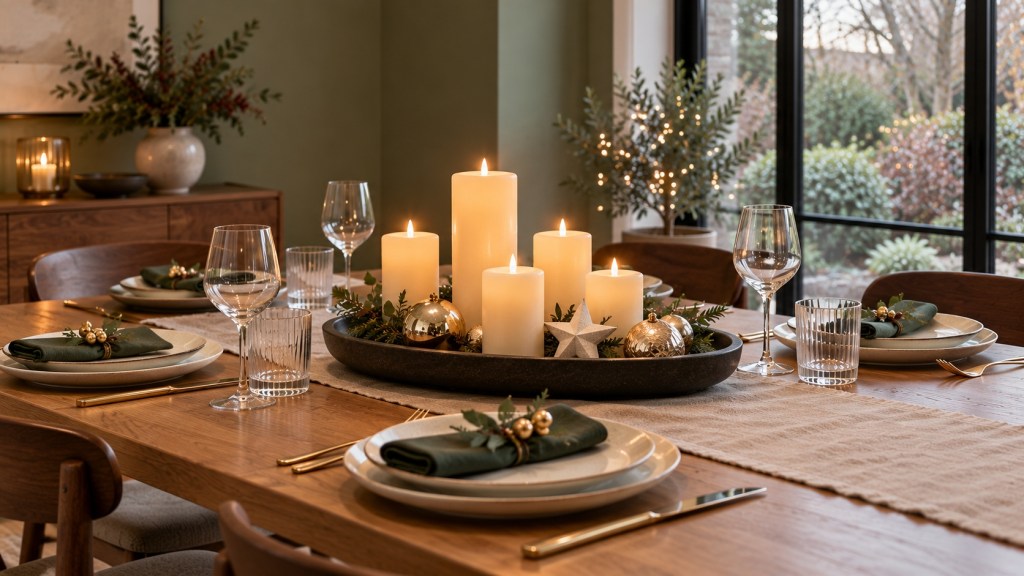
1. Create an Elegant Christmas Centrepiece with Candles
Candles are one of the easiest ways to create a beautiful Christmas table centrepiece. Their warm, gentle glow immediately makes a dining room feel more welcoming, while the wide choice of contemporary candleholders makes it easy to coordinate your display with your existing decor.
For a modern look, arrange several pillar candles of different heights on a low ceramic or metal tray. Ivory candles are wonderfully versatile, but burgundy, forest green and muted gold can introduce a richer festive colour palette. Or use slender taper candles in contemporary brass, black metal or glass candleholders. A collection of three or five candleholders in complementary heights can look particularly effective on a rectangular dining table.
Keep the surrounding decorations simple. A few carefully positioned baubles or ceramic stars may be all you need to complete the arrangement.
Fresh Design styling tip: Mix candle heights rather than using identical designs. The variation creates visual interest while keeping the overall display balanced. For a worry-free alternative, choose realistic battery-operated LED candles, particularly when decorating with greenery.
2. Style a Minimalist Christmas Table with Sculptural Decorations
If your home has a contemporary or minimalist interior, there’s no reason to abandon your usual decorating style at Christmas. Minimalist Christmas table decorations can be wonderfully effective, particularly when you focus on interesting shapes, quality materials and a restrained colour palette.
Try arranging three sculptural ceramic Christmas trees along the centre of your dining table. Choose designs in different heights but similar finishes, such as matte white, warm ivory or charcoal. Alternatively, combine a single abstract Christmas tree with a contemporary star ornament and a simple candleholder.
The key is to leave plenty of space around the decorations. Rather than filling every available surface, allow each object to stand out. This approach works particularly well with natural oak, walnut, glass or dark contemporary dining tables.
A minimalist centrepiece can be particularly effective when it reflects the wider decorating style of your home. Using a consistent palette of natural materials, soft neutrals and carefully chosen ornaments helps create the calm, considered atmosphere explored in The Art of a Minimal Christmas.
Fresh Design styling tip: Choose decorations with interesting silhouettes or tactile finishes. A beautifully shaped ceramic tree can make more of an impression than a collection of smaller, unrelated ornaments.
3. Arrange a Natural Evergreen Christmas Garland
An evergreen garland is a timeless Christmas decoration, but it can also look beautifully contemporary when styled with restraint. Instead of creating an oversized arrangement, use a relatively narrow garland running along the centre of your dining table.
Combine different foliage textures, such as fir, pine and eucalyptus, to create a natural-looking display. The contrast between delicate leaves and more structured evergreen branches adds depth without requiring lots of additional decorations.
For a minimalist look, leave the greenery undecorated. Alternatively, weave a few battery-operated warm white fairy lights through the arrangement or add several small ceramic ornaments. An elongated garland works particularly well on rectangular dining tables, where it can follow the shape of the furniture. You can use fresh foliage for an authentic seasonal display or invest in a good-quality artificial garland that can be reused each year.
Fresh Design styling tip: Keep the garland narrow enough to leave comfortable space for plates, glasses and serving dishes. If you’re using fresh greenery, check that the foliage is suitable for your household, particularly if you have pets.
4. Make a Statement with an Oversized Decorative Bowl
Sometimes the simplest Christmas table styling ideas are the most effective. A large decorative bowl filled with carefully chosen Christmas ornaments can create a striking contemporary centrepiece without requiring any complicated arranging.
Start with a beautiful bowl that complements your dining table. A wide charcoal ceramic bowl, sculptural stoneware design, metallic dish or shallow marble-effect bowl can all work well. Fill it with oversized Christmas baubles in a coordinated colour palette. Champagne gold and ivory create a soft, elegant look, while burgundy and antique gold offer a richer, more dramatic alternative.
You could also combine decorative wooden spheres, textured glass ornaments and a few metallic decorations. Vary the sizes and finishes of the ornaments to create a more interesting arrangement. This is also one of the most practical Christmas centrepiece ideas because the entire display can be moved when you need additional table space.
Fresh Design styling tip: Choose a relatively shallow bowl so that the decorations remain visible without creating an excessively tall arrangement.
5. Create a Modern White and Gold Christmas Centrepiece
White and gold is a classic Christmas colour combination, but it can feel particularly sophisticated when interpreted in a contemporary way. Instead of relying on glittery decorations, combine soft ivory, champagne metallics, antique gold and natural textures.
Start with a collection of white ceramic Christmas trees or sculptural ornaments. Add a few slender gold candleholders and arrange champagne-coloured baubles around the base. For a more luxurious appearance, introduce a mixture of polished, brushed and matte metallic finishes.
A natural linen table runner can soften the overall look, while simple white plates and elegant glassware allow the centrepiece to become the focal point. This combination works beautifully in contemporary dining rooms with oak, walnut or dark timber furniture.
Fresh Design styling tip: Avoid using too many highly reflective gold decorations. Mixing metallic finishes with matte ceramics and natural fabrics creates a more balanced, elegant result.
If you love this elegant colour combination, you can carry the same palette through to your Christmas tree with our white and gold Christmas tree ideas.
6. Use a Cluster of Miniature Christmas Trees
Miniature Christmas trees are perfect for creating a festive centrepiece, especially if you enjoy Scandinavian or contemporary Christmas decorating. Rather than choosing identical decorations, group several small trees in different heights, shapes and materials.
For example, combine a wooden Christmas tree with two ceramic designs and a folded paper tree. Keeping the colours relatively consistent will help the arrangement feel cohesive, even when the materials vary. You could also use a collection of miniature artificial evergreen trees for a more traditional woodland-inspired display. Arrange the trees in a loose group on a round table or position them along the centre of a rectangular dining table. Small Christmas trees are particularly useful because they can be incorporated into other seasonal displays after Christmas dinner.
Fresh Design styling tip: Choose three or five trees with different heights. Position the tallest towards the centre or slightly behind the smaller decorations to create a pleasing arrangement.
7. Design a Christmas Centrepiece with Burgundy and Brass
Burgundy is a beautiful alternative to traditional bright Christmas red, particularly when combined with warm brass accents. This rich colour combination can create an elegant, atmospheric Christmas dining table that feels contemporary rather than overly traditional.
Start with several burgundy taper candles arranged in aged brass candleholders. Add a few deep red glass baubles and introduce small amounts of dark green foliage to soften the arrangement. Neutral table linens in ivory, stone or natural linen provide a lovely contrast to the darker colours.
If you prefer a slightly more dramatic appearance, introduce a few decorative objects in dark walnut or smoked glass. The combination of burgundy, brass and greenery works particularly well in dining rooms with dark timber furniture, warm neutral walls or muted green interiors.
Fresh Design styling tip: Let burgundy become the main accent colour rather than introducing several competing shades. This helps the centrepiece look considered and sophisticated.
8. Create a Scandinavian Christmas Centrepiece with Natural Materials
Scandinavian-inspired Christmas decorating celebrates simplicity, natural materials and welcoming interiors. For an understated Nordic-style centrepiece, combine wooden ornaments, ceramic candleholders and a few carefully chosen natural decorations.
Start with a simple linen table runner and arrange a small collection of wooden Christmas trees or stars along the centre. Add white candles in contemporary ceramic holders and introduce a few pine cones for additional texture. You could also use small birch branches or handcrafted decorations made from natural materials. Keep the colour palette simple, focusing on warm white, pale timber, soft grey and muted green. The finished arrangement should feel relaxed rather than perfectly symmetrical.
Fresh Design styling tip: Mix smooth ceramics with textured wood and natural linen. The contrast between these materials helps a simple centrepiece feel warm and inviting.
9. Arrange a Contemporary Christmas Centrepiece on a Decorative Tray
Using a decorative tray is one of the most practical ways to create an attractive Christmas table centrepiece. A tray provides a defined area for your decorations, making it easier to combine several objects without the arrangement looking cluttered.
Choose a tray that complements your dining table. Round wooden trays work beautifully with Scandinavian interiors, while dark metal, marble-effect or ceramic designs suit more contemporary settings.
Arrange a small collection of decorations inside the tray, such as a miniature Christmas tree, two candleholders and several carefully chosen baubles. Vary the heights and shapes of the objects while keeping the overall colour palette consistent. A tray is particularly useful for everyday Christmas table decorations because it can be lifted away quickly when you need to serve food.
Fresh Design styling tip: Leave a little space between individual decorations rather than filling the entire tray. This helps each object stand out.
10. Add Festive Sparkle with Glass and Crystal Decorations
If you love elegant Christmas table decorations with a little sparkle, glass and crystal-style accessories are an excellent choice. Their reflective surfaces catch natural daylight and candlelight, creating a beautiful festive atmosphere without relying on bright colours or excessive glitter.
Try combining clear glass candleholders with ribbed glass ornaments and transparent Christmas baubles. For a more contemporary look, use a collection of glass decorations in different shapes but similar finishes. Smoked glass, amber glass and delicate metallic accents can introduce additional warmth and depth. This type of arrangement works particularly well with white tableware, neutral linens and contemporary dining furniture. You could also position the decorations on a mirrored or metallic tray to enhance their reflective qualities.
Fresh Design styling tip: Mix clear glass with one or two contrasting materials, such as dark metal or natural wood, to prevent the arrangement from feeling too delicate or visually insubstantial.
11. Create a Modern Christmas Centrepiece with Paper Decorations
Paper Christmas decorations have become a stylish choice for contemporary festive interiors, offering an affordable way to introduce interesting shapes and colours.
Honeycomb Christmas trees, folded paper stars and pleated decorations can all make beautiful centrepieces. For a minimalist display, group several white or ivory paper trees in different heights along the centre of your dining table. Alternatively, introduce colour with burgundy, forest green, terracotta or dusty pink paper decorations. You could also combine paper trees with wooden ornaments or ceramic accessories for a more layered arrangement.
Paper decorations are particularly appealing because they’re lightweight, easy to store and available in a wide variety of contemporary designs.
Fresh Design styling tip: Choose paper decorations in two or three complementary colours and vary their sizes. Keep them well away from candles and other heat sources, using LED lighting instead.
12. Style a Beautiful Christmas Centrepiece with Winter Branches
Bare winter branches can create a striking sculptural centrepiece, particularly in contemporary interiors where natural shapes are allowed to become the main decorative feature.
Choose a few branches with attractive silhouettes and arrange them in a substantial ceramic vase. Natural birch twigs, carefully selected bare branches or artificial frosted branches can all work well. For a festive touch, hang a small number of lightweight ornaments from the branches. Delicate glass baubles, ceramic stars or simple wooden decorations can look particularly effective.
Keep the arrangement relatively open rather than filling the vase with excessive foliage. A tall branch display is best suited to a large dining table or an area where it won’t obstruct conversation. For smaller tables, choose shorter branches arranged in a low, wide container.
Fresh Design styling tip: Use a vase with enough weight and stability to support the branches securely. A simple matte ceramic design allows their natural shapes to become the focal point.
13. Introduce Colour with a Playful Modern Christmas Centrepiece
Christmas decorating doesn’t have to follow traditional colour combinations. If you enjoy colourful contemporary interiors, a vibrant Christmas centrepiece can be a wonderful way to express your personal style.
Try combining raspberry pink and burgundy, teal and copper, emerald green and cobalt blue, or burnt orange and deep red. Start with a decorative bowl or tray and arrange colourful glass baubles in different sizes. Add contemporary candleholders or sculptural ceramic ornaments in coordinating shades.
To keep the display looking sophisticated, choose a limited palette rather than introducing every colour available. The surrounding tableware can remain relatively neutral, allowing the centrepiece to provide the main burst of colour.
Fresh Design styling tip: Repeat one of the centrepiece colours in your napkins, placemats or glassware to create a cohesive Christmas tablescape.
14. Create a Rustic-Modern Christmas Centrepiece with Pine Cones
Pine cones are a familiar Christmas decoration, but they can look surprisingly contemporary when combined with clean-lined accessories and natural materials.
For a rustic-modern arrangement, start with a simple wooden board, shallow ceramic dish or dark metal tray. Add several large pine cones in different sizes, leaving enough space for a few neutral candles or wooden decorations. A small amount of evergreen foliage can introduce colour without overwhelming the arrangement.
Keep the palette natural, using warm brown, charcoal, cream and muted green. Avoid adding too many traditional rustic accessories. The aim is to create a simple, textural display that complements modern interiors. This is also a budget-friendly option, particularly if you already have suitable containers and decorations at home.
Fresh Design styling tip: Leave pine cones in their natural colour rather than covering them in glitter or artificial snow. Their interesting shapes and textures provide plenty of decorative appeal.
15. Make a Festive Centrepiece with Fresh Seasonal Flowers
Fresh flowers can make a beautiful alternative to traditional Christmas ornaments, particularly if you’re looking for an elegant centrepiece for Christmas dinner.
Choose seasonal flowers in a coordinated colour palette and arrange them in a low vase or decorative container. White amaryllis, roses, chrysanthemums and hellebores can all work beautifully in festive arrangements, depending on availability. For a sophisticated look, combine white or ivory flowers with dark green foliage. Alternatively, introduce burgundy, blush pink or muted peach flowers for a warmer, more colourful display.
Keep the arrangement relatively low and compact so guests can see one another comfortably across the table. You don’t need a large number of flowers to create an attractive centrepiece. A few carefully selected stems can make a strong impression.
Fresh Design styling tip: Choose flowers with little or no fragrance for the dining table, as heavily scented arrangements can interfere with the enjoyment of food. Check plant safety if you have pets, particularly when using hellebores or other potentially toxic flowers.
16. Use Contemporary Metallic Decorations for a Glamorous Christmas Table
Metallic decorations are ideal if you want your Christmas dining table to feel glamorous without looking overly elaborate. Copper, champagne gold, brushed brass and silver can all create beautiful contemporary centrepieces.
For a modern display, arrange several metallic ornaments in a shallow decorative bowl or on a dark ceramic tray. Add a sculptural candleholder or a small collection of contemporary metallic Christmas trees. Rather than using identical finishes, combine brushed and polished surfaces to create depth.
Copper looks particularly attractive alongside teal, forest green or warm neutral colours, while champagne gold complements ivory, burgundy and soft grey. Silver can create a cooler, more minimalist appearance, especially when paired with white ceramics and clear glass.
Fresh Design styling tip: Use metallic decorations as accents rather than covering the entire table in reflective surfaces. Natural linen, matte ceramics and simple tableware help balance the sparkle.
17. Create a Woodland-Inspired Christmas Table Centrepiece
Woodland-inspired Christmas decorations can introduce a lovely connection with nature, especially when interpreted in a contemporary way.
Rather than creating an elaborate miniature forest, choose a handful of simple decorations that suggest a winter woodland. Start with two or three wooden Christmas trees in different heights. Add a few pine cones, a small amount of greenery and perhaps a simple ceramic woodland ornament. A restrained colour palette of warm brown, forest green, ivory and charcoal helps the arrangement feel sophisticated.
You could also introduce a narrow natural linen runner to provide a soft background for the decorations. This style works particularly well in dining rooms with wooden furniture, natural flooring and contemporary rustic interiors.
Fresh Design styling tip: Avoid overcrowding the display with miniature animals, artificial snow and too many woodland accessories. A few carefully selected objects create a more elegant effect.
18. Style an Elegant Christmas Centrepiece with Decorative Lanterns
Lanterns are a beautiful way to introduce atmospheric lighting to your Christmas dining table. Contemporary designs in black metal, brushed brass or clear glass can create an attractive focal point while complementing a wide range of decorating styles.
For a large rectangular table, arrange two or three lanterns of different heights along the centre. On a smaller dining table, a single lantern may be enough. Choose designs with clean lines and simple proportions rather than heavily ornate detailing. Place realistic LED candles inside the lanterns to create a warm festive glow. You can leave the lanterns undecorated for a minimalist look or arrange a few small baubles around their bases.
Fresh Design styling tip: Check the proportions carefully before choosing lanterns. Large, tall designs can overwhelm smaller dining tables and obstruct conversation.
19. Create a Sustainable Christmas Centrepiece with Reusable Decorations
A beautiful Christmas table doesn’t need a completely new collection of decorations every year. In fact, some of the most attractive festive centrepieces are created by combining favourite ornaments and accessories that can be reused in different ways.
Wooden Christmas trees, ceramic decorations, glass candleholders and fabric ornaments are all versatile choices. You could also incorporate vintage Christmas decorations or second-hand accessories for a more individual look.
Start by choosing a few decorations you already own and arrange them together on a tray, board or decorative dish. Add natural materials where appropriate, such as pine cones or responsibly sourced seasonal greenery. The aim is to create an arrangement that looks considered rather than simply using as many decorations as possible.
Fresh Design styling tip: Invest in a small collection of versatile, reusable decorations in colours and materials you genuinely love. They can be incorporated into different festive displays for years to come.
20. Design a Sophisticated Christmas Centrepiece with a Single Statement Piece
Sometimes one beautiful decoration is all you need to create a memorable Christmas table centrepiece. This approach is particularly effective in contemporary dining rooms, where a single sculptural object can become the main focal point.
Choose a statement decoration with an interesting shape, texture or finish. An oversized ceramic Christmas tree, architectural wooden ornament, sculptural metallic star or dramatic contemporary candleholder can all work beautifully. Position the decoration in the centre of the table and allow plenty of space around it. You could add a simple table runner or understated placemats, but avoid introducing too many competing accessories.
This is an excellent option for smaller dining tables because it creates a festive atmosphere without occupying unnecessary space.
Fresh Design styling tip: Choose a statement piece that feels substantial enough to hold its own. A beautifully proportioned decoration can look more sophisticated than several smaller ornaments grouped together.
How to Choose the Right Christmas Table Centrepiece
With so many Christmas table centrepiece ideas available, it’s worth considering the practicalities of your dining space before deciding on a particular design.
The most successful arrangements complement the size and shape of your table, coordinate with your existing decor and leave enough room for comfortable dining.
Consider the Size and Shape of Your Dining Table
The shape of your dining table can help determine which type of centrepiece will work best.
Round dining tables generally suit compact, circular arrangements. A decorative bowl, round tray or small cluster of candles can create a balanced focal point.
Rectangular dining tables are ideal for elongated displays. Narrow evergreen garlands, arrangements of miniature Christmas trees or several coordinated candleholders can follow the length of the table.
Small dining tables benefit from simple decorations that don’t occupy too much space. A single sculptural ornament or compact tray arrangement is often sufficient.
Large dining tables can accommodate more substantial displays, although it’s still important to leave enough space for serving dishes and place settings.
Choose a Colour Palette That Complements Your Room
Your Christmas table decorations don’t have to match every other festive accessory in your home, but choosing complementary colours will help create a cohesive appearance.
If your dining room features warm timber furniture and neutral walls, natural greenery, ivory and antique gold can look particularly attractive.
For darker contemporary interiors, consider burgundy, brass, forest green or smoked glass.
If your home features colourful furniture or painted walls, choose centrepiece decorations that pick up one or two existing shades.
As a general guide, limiting your arrangement to two or three main colours will help it feel balanced.
Think About Height and Visibility
One of the most important considerations when styling Christmas dining table centrepieces is their height.
Tall arrangements can look beautiful in photographs, but they aren’t always practical when people are sitting around the table. Low candle arrangements, decorative bowls and miniature Christmas trees generally work well because they allow guests to see one another.
If you prefer taller decorations, choose slender designs that don’t obstruct views or arrange them where they won’t interfere with conversation.
Leave Enough Space for Dining
It’s easy to become carried away with Christmas table decorating, particularly when you’re combining candles, greenery and ornaments. However, remember that your dining table still needs to function as a comfortable place to eat. Allow sufficient space for plates, glasses, cutlery, crackers and serving dishes.
If you’re planning a particularly elaborate Christmas dinner, consider choosing a centrepiece that can easily be moved to a sideboard once the meal begins.
How to Style a Modern Christmas Tablescape
A beautiful centrepiece provides the focal point, but the surrounding table decorations help create a complete festive look. The secret to an elegant Christmas tablescape is choosing accessories that complement one another without making the table feel overcrowded.
Start with a Tablecloth or Runner
A tablecloth or runner provides a useful foundation for your Christmas table decorations.
Natural linen is particularly versatile and works beautifully with Scandinavian, rustic-modern and minimalist designs. For a more luxurious appearance, consider a velvet runner in burgundy, forest green or another rich seasonal shade. Alternatively, leave an attractive wooden dining table uncovered and use simple placemats to introduce texture.
Coordinate Your Tableware
Your everyday tableware can work perfectly well for Christmas dinner, particularly if you choose a centrepiece that complements its colours and finishes.
Simple white plates provide a timeless backdrop for colourful or metallic decorations. Contemporary stoneware in cream, grey or muted green can create a relaxed, modern appearance. If you’re using patterned plates, keep the centrepiece relatively simple so the different elements don’t compete for attention.
Add Beautiful Napkins and Place Settings
Once you’ve chosen your centrepiece, think about the surrounding place settings. Small details can make a Christmas table feel particularly special. Folded linen napkins, understated napkin rings and simple place cards can all contribute to a beautifully coordinated setting.
You could place a small wooden star beside each plate or use a miniature Christmas ornament as a decorative finishing touch. For a more personal approach, add handwritten place cards in a style that complements your centrepiece.
Lighting can make a significant difference to the atmosphere of your Christmas dining table.
Candles are a traditional choice, but battery-operated LED candles and delicate fairy lights can create a similarly inviting effect. Warm white lighting generally works particularly well with natural greenery, wood and metallic decorations. Avoid excessively bright or flashing lights, which can distract from the dining experience.
Keep the Overall Arrangement Balanced
The most successful Christmas tablescapes combine a clear focal point with carefully chosen supporting decorations. If your centrepiece is colourful or elaborate, keep the surrounding tableware and linens relatively simple.
If you’ve chosen a minimalist centrepiece, you can introduce more texture through napkins, placemats and glassware. The aim is to create a welcoming table that feels beautifully styled without appearing overly formal or cluttered.
Easy DIY Christmas Table Centrepiece Ideas
You don’t need to buy a completely new collection of decorations to create an attractive Christmas dining table. There are plenty of easy DIY Christmas centrepieces that can be made using accessories you already own, along with a few inexpensive seasonal additions.
A Five-Minute Christmas Bauble Bowl
Choose a decorative bowl from your kitchen or living room and fill it with Christmas baubles in two or three complementary colours. Mix different sizes and finishes to create an interesting arrangement.
This is one of the quickest and easiest ways to create a festive centrepiece, and the decorations can be returned to your Christmas tree afterwards.
A Simple Candle and Greenery Arrangement
Place three LED pillar candles on a shallow tray and arrange a small amount of artificial greenery around their bases. Add one or two decorative ornaments if you want a slightly more festive appearance. Choose candles in different heights to create a balanced display.
A Miniature Christmas Tree Display
Gather several small Christmas tree decorations and arrange them together in the centre of your table. Wooden, ceramic and paper trees can all work well. Keep the colour palette consistent and vary the heights to create visual interest.
A Natural Pine Cone Centrepiece
Arrange several pine cones on a wooden board or in a shallow ceramic dish. Add a few small wooden ornaments or a simple LED candle. This inexpensive arrangement works particularly well with natural linen, contemporary stoneware and rustic-modern interiors.
Christmas Table Centrepiece Ideas for Small Dining Tables
Decorating a small dining table for Christmas can be challenging, particularly when you need to accommodate several place settings and serving dishes.
However, a compact table can still look wonderfully festive with the right decorations. The key is to focus on one attractive arrangement rather than trying to incorporate several different decorative elements.
A small ceramic Christmas tree, shallow bowl of baubles or compact candle display can provide plenty of festive atmosphere without occupying too much space.
For a narrow rectangular table, consider a slim table runner with a few small decorations positioned along its centre.
If your dining table is also used for everyday meals, a centrepiece arranged on a removable tray can be particularly practical. You can simply lift the decorations away when you need additional space.
Avoid oversized floral arrangements, wide garlands and large lanterns that extend into the space needed for plates and glasses.
Remember: A smaller centrepiece doesn’t have to feel less impressive. One beautifully chosen decoration can make a strong visual statement, particularly when combined with attractive tableware and thoughtful lighting.
Christmas Table Centrepiece Safety and Practical Tips
While appearance is important, your Christmas table decorations should also be safe and practical.
If you’re using real candles, keep them well away from greenery, paper decorations, fabric and other flammable materials. Never leave burning candles unattended. Battery-operated LED candles are a useful alternative, especially when decorating with natural materials or in homes with children and pets.
Make sure tall decorations are stable and cannot easily be knocked over. Avoid placing fragile ornaments where they might fall into serving dishes or onto the floor.
If you’re using fresh flowers, foliage or berries, check whether they’re suitable for households with pets or young children. Some popular seasonal plants can be harmful if eaten.
Finally, consider the comfort of your guests. Avoid strongly scented decorations and ensure your centrepiece doesn’t interfere with conversation or the serving of food.
Frequently Asked Questions About Christmas Table Centrepieces
What Can I Use as a Christmas Table Centrepiece?
There are plenty of options for creating a beautiful Christmas table centrepiece, including candles, evergreen garlands, decorative bowls, miniature Christmas trees, seasonal flowers and sculptural ornaments.
For a contemporary look, choose decorations in complementary colours and combine materials such as ceramics, glass, wood and metal.
The best option will depend on your dining table’s size, your decorating style and how much space you need for food and tableware.
How Do You Make a Christmas Table Look Elegant?
An elegant Christmas table usually starts with a coordinated colour palette and a carefully chosen centrepiece. Rather than using lots of different decorations, focus on a few attractive accessories that complement your tableware and existing interior.
Natural linen, contemporary ceramics, quality-looking glassware and warm lighting can all help create a sophisticated atmosphere.
Mixing different textures is another useful styling technique. For example, matte ceramic decorations can look particularly beautiful alongside metallic candleholders and soft fabric napkins.
What Are Some Inexpensive Christmas Table Centrepiece Ideas?
You can create an attractive Christmas centrepiece without spending much money. Try filling an existing decorative bowl with baubles, arranging pine cones on a wooden tray or grouping a few miniature Christmas trees together.
Paper decorations are another affordable option, particularly if you enjoy contemporary or Scandinavian-inspired styling. Reusing decorations from previous Christmases is also a good way to create a fresh look without buying lots of new accessories.
How Tall Should a Christmas Table Centrepiece Be?
For a dining table, lower centrepieces are generally the most practical because they allow guests to see one another comfortably.
Decorative bowls, small candle arrangements and miniature Christmas trees are all suitable options. Taller arrangements can work if they’re relatively narrow and don’t obstruct conversation, but oversized floral displays and large branches may be better suited to a sideboard.
How Can I Decorate a Christmas Table Without Using Traditional Red and Green?
There are plenty of alternative Christmas colour combinations that work beautifully in contemporary interiors.
White and champagne gold create an elegant, understated appearance, while burgundy and brass offer a richer festive look. Other attractive combinations include forest green and cream, copper and teal, silver and white, or dusty pink and burgundy.
You could also create a minimalist Christmas table using natural wood, ivory ceramics and simple greenery.
Can I Leave a Christmas Centrepiece on the Dining Table Throughout December?
Absolutely. Many Christmas table centrepieces are suitable for everyday seasonal decorating, particularly those made with reusable ornaments, artificial greenery and LED candles.
A decorative bowl filled with baubles, a collection of ceramic Christmas trees or a simple tray arrangement can look beautiful throughout December.
If you’re using fresh flowers or greenery, remember that they may need regular maintenance or replacing. For a practical everyday display, choose decorations that can easily be moved when you need the table for meals.
Create a Christmas Table That Feels Special
A beautiful Christmas table centrepiece doesn’t have to be expensive, elaborate or difficult to recreate. Whether you prefer the understated simplicity of Scandinavian decorations, the natural appeal of evergreen foliage or the luxurious sparkle of metallic ornaments, there are plenty of ways to create a festive display that complements your home.
The most successful Christmas table centrepiece ideas combine attractive decorations with practical styling, allowing everyone to enjoy the occasion comfortably. Start with a few accessories you love, experiment with different arrangements and choose colours and textures that reflect your personal style.
After all, the best Christmas tables aren’t necessarily the most elaborately decorated. They’re the ones that feel welcoming, comfortable and ready for everyone to gather around.