Few places on earth let you wake up to the sound of surf, walk to a five-star spa, and still feel like you’re living in a private retreat rather than a resort. Wailea’s Point delivers all of that. It’s a pocket of South Maui that draws buyers seeking genuine luxury coastal living, not a packaged resort experience.
The five reasons below explain why discerning buyers keep coming back to this stretch of coastline. The properties here carry a different weight than anything else on the island.
Why Wailea’s Point Area Stands Out for Luxury Coastal Living
Wailea’s Point sits at the southern tip of the Wailea resort corridor. Open lava fields and ocean frontage on three sides separate it from neighboring communities, giving it a level of privacy that’s hard to find elsewhere in the area. For buyers exploring exclusive oceanfront residences, browsing options like Wailea Point for sale at Maui Elite Property can offer a closer look at the luxury condos and amenities available in this highly sought-after community.
Beyond the location itself, the area is known for its carefully maintained landscaping, direct access to coastal walking paths, and panoramic views of the Pacific Ocean. Residents also benefit from proximity to Wailea’s golf courses, fine dining, luxury resorts, and high-end shopping, while still enjoying a quieter and more secluded residential atmosphere. This combination of privacy, scenery, and resort-style convenience continues to make Wailea’s Point one of Maui’s most desirable coastal communities.
1. Unobstructed Ocean Views and Dramatic Coastal Scenery
Wailea’s Point sits on a lava shelf that drops straight to the Pacific; there’s no road between the residences and water. No hotel towers. No strip of commercial buildings cutting across your sightline.
From most units, you’re looking at a 180-degree sweep taking in Molokini Crater, Kaho’olawe, and on clear days, the faint outline of Lanai. Island views shift throughout the day as light changes. You can’t manufacture that elsewhere.
But the real difference goes deeper. The sound carries differently here; you hear the actual ocean, not some filtered version of it.
2. World-Class Resorts and Five-Star Amenities Within Steps
Wailea’s resort corridor runs along Wailea Alanui and includes some of Hawaii’s most decorated properties. The Grand Wailea, Andaz Maui, and Fairmont Kea Lani all sit within a short walk of the Wailea Point community. That proximity isn’t accidental. It’s why people choose this address over other options on South Maui.
You access world-class dining, spa facilities, and beach services without owning a hotel suite. Residents treat these resort amenities as extensions of home. Three or four restaurants are genuinely walkable; so are Wailea’s Blue and Emerald golf courses, consistently ranked among Hawaii’s top layouts.
And here’s the thing: the Wailea Beach Path runs directly past the community and connects to five pristine white-sand beaches. You can walk the entire strip in under 20 minutes.
3. Year-Round Perfect Weather and Ideal Swimming Conditions
South Maui receives roughly 300 sunny days per year, according to the National Weather Service Pacific Region data. Wailea sits in the rain shadow of Haleakala, which means cloud cover that drenches Haiku or Paia rarely reaches here. Trade winds keep afternoon temperatures comfortable, typically between 75°F and 85°F most months.
The ocean conditions match. Wailea’s protected coves and sandy shorelines produce calm water through much of the year; Polo Beach and Wailea Beach, both steps from Wailea Point, rank among Maui’s most swimmable beaches. Snorkeling works well even for beginners. Big surf is rare enough that most residents never need to think about it.
That consistency matters more than people expect. Owning a coastal property you can actually use every month differs from owning one you visit only during the calm season.
4. Exclusive Community with Privacy and Low-Density Development
Wailea Point has a fixed number of residences. The community is gated; the low-density layout means you’re not stacked on top of neighbors. Planted grounds separate each unit, and the lava shoreline acts as a natural boundary on the ocean side.
This kind of privacy is increasingly rare in Hawaii’s resort areas. Many beachfront communities built in the 1980s and 1990s have since filled in with hotels, timeshares, and retail. Wailea Point didn’t go that route. The surrounding parcels are either preserved lava or resort land that can’t be converted to residential density.
So the privacy you buy today isn’t temporary; it’s structural.
5. Strong Property Values and Long-Term Investment Potential
Wailea’s luxury market has shown consistent appreciation over the past two decades. Properties in the Point community hold value well because of their scarcity. Inventory rarely exceeds a handful of active listings at any given time, and days-on-market for turnkey units tend to run shorter than comparable properties elsewhere in Wailea.
Buyers here are split between full-time residents and those who treat the property as a vacation home with rental income potential. Short-term rental regulations on Maui have tightened in recent years, but Wailea Point’s existing permits make it a considered option for investors who want income alongside appreciation.
The real estate market on Maui saw median luxury home prices hold above $3 million through 2025, according to Realtors Association of Maui data, even as some island markets softened; Wailea’s supply constraints continue to support that floor.
Finding Your Luxury Home in Wailea’s Point
The luxury coastal living you’ll find in this community isn’t replicated elsewhere on Maui. Ocean-front positioning, resort proximity, weather reliability, community privacy, and market durability combine to put Wailea Point in a category by itself.
And if you’re serious about ownership here, inventory moves fast. Listings require real context to read correctly. Working with an agent who knows the community’s specific units, permit history, and recent comparable sales that’s what separates a good purchase from the right one.
Conclusion
Wailea’s Point isn’t a compromise between luxury and livability; it’s the rare place where both exist without trade-offs. The ocean views, resort access, reliable weather, genuine privacy, and proven market performance aren’t marketing points; they’re the daily reality for people who own here. If you’re looking for a coastal property that delivers on every level and holds its value over time, this stretch of South Maui deserves serious attention.
Renewable heating has moved from niche to mainstream in UK homes over the last three years. The Boiler Upgrade Scheme provides £7,500 toward an air source or ground source heat pump, planning rules have been relaxed under the Warm Homes Plan, and smart tariffs have made off-peak electricity genuinely cheap. The case for switching is stronger than it has ever been.
Yet a worrying share of homeowners who make the switch end up dissatisfied. Forums and consumer publications are full of stories about systems that didn’t deliver, bills that didn’t fall, and installers who disappeared after handover. Almost none of these outcomes are caused by the technology. They’re caused by predictable mistakes in the buying process. Here are the five most common ones.
1. Choosing the Installer by the Quote, Not the Design Process
The most expensive mistake at the start of a heat pump project is picking the cheapest quote without understanding what’s missing from it. A properly designed heat pump installation runs through a room-by-room heat loss calculation, identifies which radiators need upgrading to work at lower water temperatures, specifies a target flow temperature, and documents all of this before any equipment is ordered. A poorly designed one produces a single-page quote with a unit size and a price.
The first installer can deliver a system that runs efficiently and quietly for fifteen years. The second can leave you with a heat pump that costs significantly more to run than the brochure suggested, because the system has been forced to operate at flow temperatures it was never meant to run at. For homeowners in the South East considering the switch, Berkshire-based renewable heating specialist Eco Renewables produces a written design document (the Heat Pump Blueprint) before any equipment is ordered, showing the heat loss figures, emitter schedule, target flow temperatures, and projected running cost range for the specific property. This is the kind of process worth looking for, regardless of which installer you end up choosing.
The test is whether the installer can explain the design decisions in plain English. If the answer to “what flow temperature is this system designed around?” is “we’ll work it out on the day,” the design hasn’t been done.
2. Treating the New System Like the Old One
Gas boilers fire hot for short bursts and switch off. Most homeowners use them that way, often with timer schedules that drop the thermostat overnight. Heat pumps work in the opposite direction. They maintain a steady, low output continuously, holding the house at a constant setpoint.
Setting back the temperature overnight and trying to recover in the morning forces the heat pump to ramp up flow temperature, which kills efficiency. The single most common cause of “my heat pump is expensive to run” complaints in the first year of operation is the homeowner trying to operate it like a gas boiler. The right approach is to set the property to a comfortable steady setpoint, engage weather compensation, and avoid setbacks except for prolonged absences.
This shift in operating mindset is rarely explained at handover. It should be. The first heating season is when running costs are most likely to surprise homeowners, almost always because the system is being run incorrectly.
3. Underestimating the Radiator Question
A heat pump heats your house via the same radiators or underfloor circuits you already have. But there’s a catch. Radiators sized for a gas boiler running flow temperatures at 65 to 75°C will only deliver a fraction of their rated output at the 35 to 45°C flow temperatures a heat pump is designed for. To compensate, the system either needs bigger radiators in certain rooms or has to run hotter, sacrificing efficiency.
Most properties switching from gas need some radiator upgrades. Not all of them. Not every room. But the rooms with high heat demand relative to existing emitter size will need new radiators if the system is to run efficiently. A proper heat loss survey identifies these rooms at the design stage and prices the upgrades into the quote upfront.
Where homeowners get caught out is when the survey is rushed and the emitter assessment is skipped. The system is then commissioned at a high flow temperature to mask the undersized emitters, and the homeowner pays for that compromise in running costs for the life of the system. If your quote doesn’t itemise the emitter schedule, ask for it before signing.
4. Believing the “Free Heat Pump” Marketing
Search “heat pump grant” online and you’ll see a mix of legitimate information about the Boiler Upgrade Scheme and misleading advertising about “free boiler schemes” and “Octopus heat pump grants.” Most of it is at least partially misleading. There are essentially three real funding routes for heat pump installations in England and Wales.
The Boiler Upgrade Scheme is the main one: a £7,500 grant deducted from your installer’s invoice, applicable to most homeowners regardless of income. ECO4 is a separate scheme for low-income households receiving qualifying benefits, typically funding gas boiler replacements rather than heat pumps. And 0% VAT applies to qualifying installations through March 2027.
None of these make a heat pump free. A typical installation costs £14,000 to £18,000 for a three-bed property. After the £7,500 grant and 0% VAT, the homeowner pays roughly £6,500 to £10,500 net. That’s a meaningful subsidy, but it’s not free. Adverts that promise no cost almost always lead to either ECO4 (which most homeowners don’t qualify for) or finance arrangements that quietly add the cost back over five to ten years. Read the small print before signing anything.
5. Missing the Planning and Eligibility Curveballs
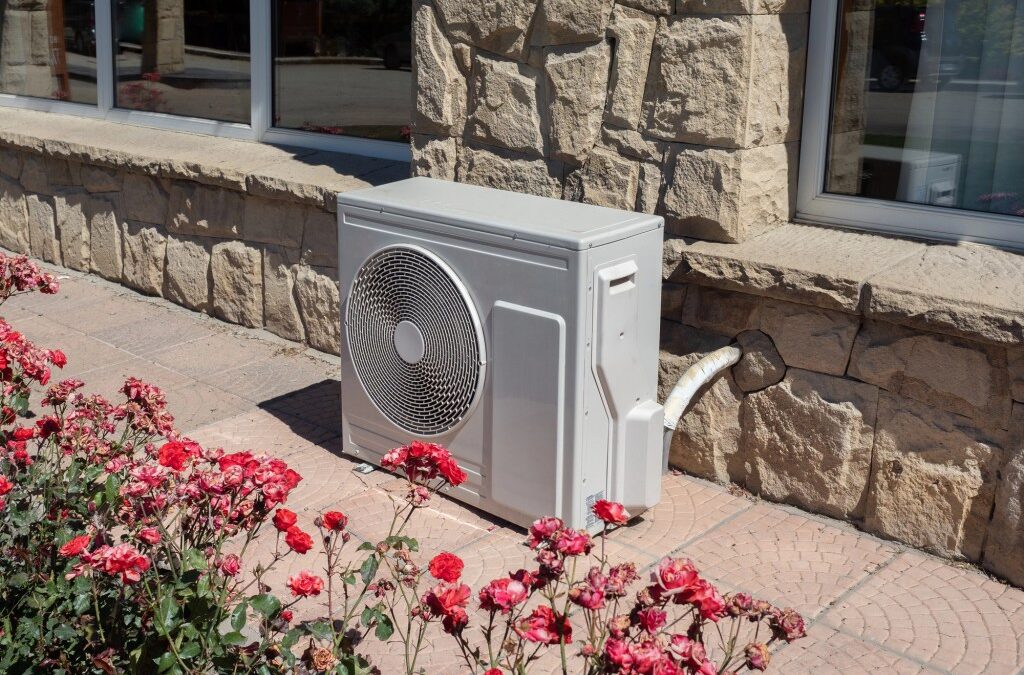
Most heat pump installations now proceed under Permitted Development rights, which were relaxed in May 2025. Outdoor units can sit up to the property boundary, the size limit was raised, and detached homes can have two units under PD. Most properties have no planning headache to worry about.
The exceptions matter. Listed buildings always need Listed Building Consent regardless of unit placement. Conservation areas typically remove or restrict PD rights, particularly for installations visible from a public highway. Flats are subject to a tighter size limit that rules out most modern heat pump units without specific planning permission. Pitched roof installations are never permitted under PD.
For homeowners in conservation areas or listed buildings (common in towns like Windsor, Sunningdale, Ascot, Guildford, and across the Surrey Hills), planning needs to be flagged at the survey stage. A planning rejection or delay can push the install past the 3-month Boiler Upgrade Scheme voucher validity window. The good installers identify this risk early and coordinate the planning route alongside the grant timeline.
None of these mistakes are difficult to avoid once you know what to look for. The difference between a heat pump installation that exceeds expectations and one that disappoints comes down almost entirely to the buying process, not the technology. Ask the right questions, demand the design documentation, understand how the system is meant to be operated, and the renewable heating transition becomes one of the better decisions a UK homeowner can make this decade.
I’m seeing pretty plant stakes all over the internet and Etsy, and they’re proving that functional plant support doesn’t have to be boring – in fact, they can look like a work of art.
Anyone with a house full of the best houseplants will know that climbing houseplants require a little extra support, and this often comes in the form of plant stakes or moss poles.
While your typical moss pole can look a little plain, pretty plant stakes are becoming increasingly more popular online. I’ve rounded up a few of my favourites to show that these functional poles can also be used to add a little designer flair to your houseplants.
Latest Videos From
Otoolling
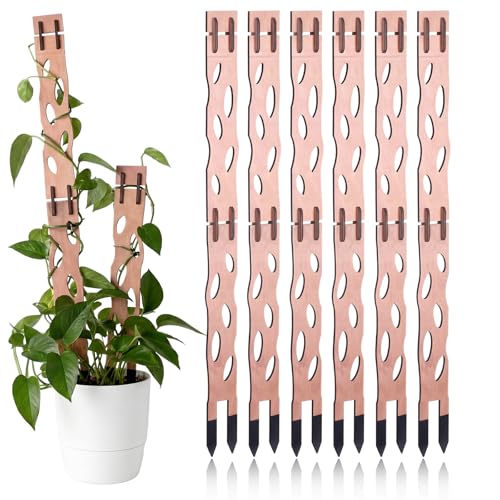
Extendable Plant Wood Trellis Kit
These stylish looking poles can be extended depending on the length you need for your plant. It’s quirky shape gives it a stylish edge, too.
Grevosea
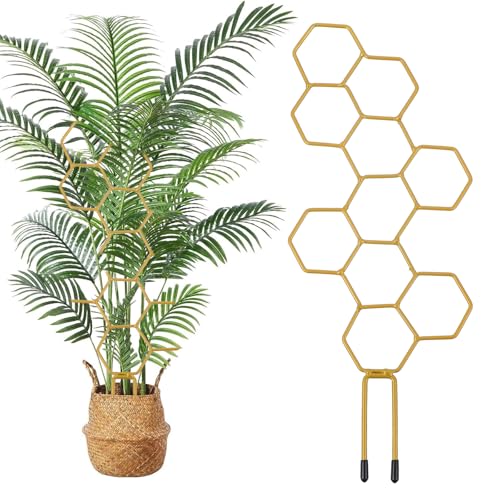
Grevosea 14 Inch Trellis for Climbing Plants Indoors
This gold, hexagonal shape will give your plant a luxe, almost Art Deco look which is very trendy right now.
Mozeat Lens
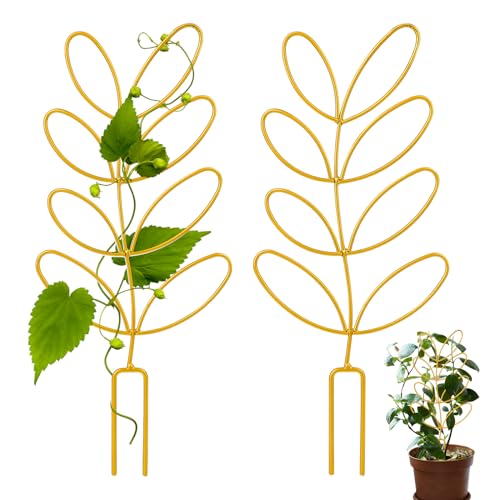
Potted Plant Trellis, 2 Pack 12” Small Metal Plant Climber
I love that this trellis is shaped just like a plant. It’s perfect for bolstering young plants while adding a playful touch to your home.
Fluffiverse
Support That Grows With Your Plant – Up to 134 Cm!
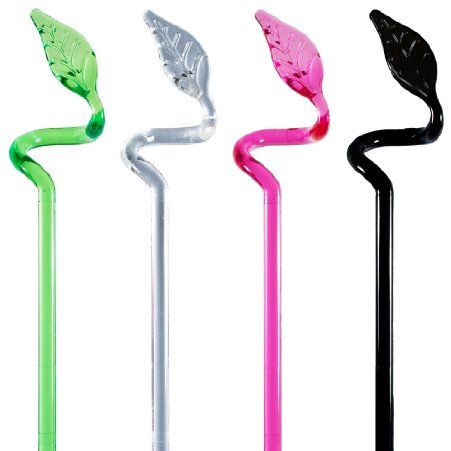
I love this fun, wavy purple stake. It’s exactly what you need to add a bold splash of colour amongst the greenery.
Growth Technology
Plastic Orchid Flower Leaf Support – Pink 50cm
These bold-hued plant stales are great for supporting orchids without relying on clips.
ColourfulPlanters
Rich Tones Wavy Plant Stake – Colourful Trellis in the Shape of a Wiggle (2-Pack)
These are the first colour plant stakes I saw and I love them. The blue and orange colours complement the greenery of houseplants perfectly.
If you have climbing plants or top-heavy plants like monstera, then you’ll need to learn how to train climbing plants, and this is often done by adding a stake to your pot to help support the plant’s growth.
‘Plant stakes are a great way to help your plants grow in a healthy way. Think of it as a little support system for your plant,’ says Bloom & Wild’s Plant and Floral Lead, Lucy Hook.
‘They help guide stems upwards as they grow, preventing them from bending, drooping or snapping under their own weight. In nature, many plants would lean on trees or surrounding foliage for support, so staking simply recreates that environment indoors.’
‘Plants like monstera, rubber plants, fiddle leaf figs and orchids all benefit from extra support as they mature. A good rule of thumb is to think about how your plant would grow in the wild. If it likes to climb upwards, a stake can help keep its stems strong and supported. If it prefers to trail or spread out, it’s usually happiest left to do its own thing.’
Sign up to our newsletter for style inspiration, real homes, project and garden advice and shopping know-how
(Image credit: Future PLC / Bee Holmes)
And as handy as plant stakes are, you should also consider looking for aesthetically pleasing models. I first spotted the Rich Tones Wavy Plant Stake (£11.42) on Etsy, and immediately loved the idea.
Using bright colours and different shapes to support plants added more visual texture to the pot. It’s like giving your plant a makeover, rather than simply training your plant to grow correctly. It’s a fun way to add a pop of colour to your houseplant ideas, whilst still fulfilling an important function. In fact, I see it becoming a popular houseplant trend.
If you’re a plant parent who also loves colour, opting for bolder, brighter plant stakes is an excellent way to add some subtle colour to your home. What do you say?
A good houseplant changes the mood of a room faster than almost anything else. Problem is, plenty of the “pretty” ones come with dramatic care instructions, crispy leaves, and guilt the second you forget to water them.
The four low-maintenance plants in today’s POW survive real life. Busy schedules, forgotten watering days, awkward lighting situations, all while still looking like they belong in a carefully styled home, so stick with us to add your favorite(s) to cart 🌿
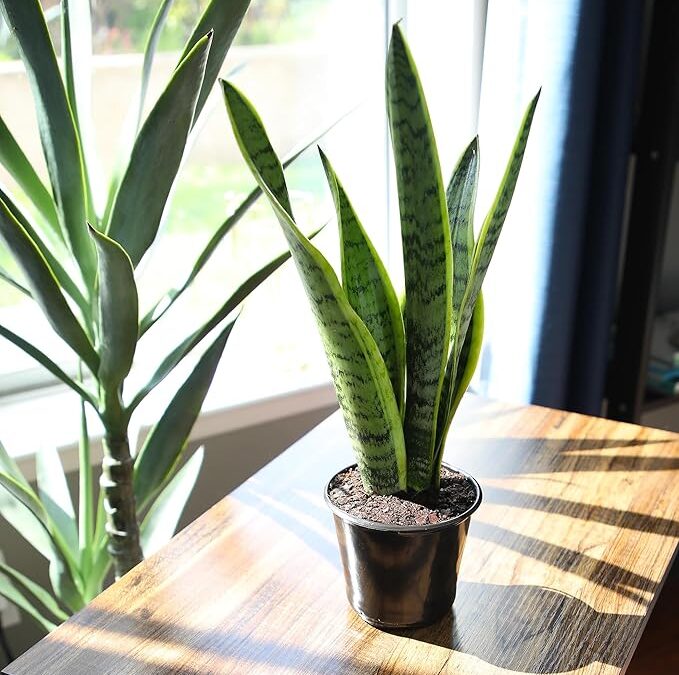
Those upright striped leaves are the reason snake plants never look messy. Growth stays vertical and structured, which is why even a small one can add shape without taking over the surrounding surface.
Real fiddle leaf figs are famous for dropping leaves the second they get annoyed. A good faux version solves the drama yet keeps the lovely look everyone wants.
Its layered, oversized leaves make the plant a great fit for empty corners near entryways or bedside consoles, and in rooms that need height but lack natural light.
Loose eucalyptus stems arranged in a large ceramic vase create a stunning look that makes for a surprisingly cute centerpiece over your dining table or living room console.
Most low-maintenance plants stick to green. Aglaonema gives you a vibrant pop of color 🪷 The pink-red leaves lined with a green border look like an absolute work of art planted in a pot.
Now, in the midst of bank holiday weekends away and summer holidays to look forward to, I’m always impressed by the pretty plants you spot on the grounds of hotels. So, I asked the experts, and they have recommended five low-maintenance plants to give your garden a chic hotel look.
Low-maintenance planting is not only a key gardening trend for this year, but also every lazy gardener’s dream. Low-effort shrubs and low-maintenance fragrant pot plants don’t need much upkeep to look their best, making them a great choice for anyone who doesn’t have hours to spend tending their gardens.
Low-maintenance plants can look incredibly chic, too. If you’re striving for that boutique hotel look, but have loads of time and effort to spare, these are the low-maintenance plants experts recommend to give your garden a chic and elegant look.
Latest Videos From
1. Lavender
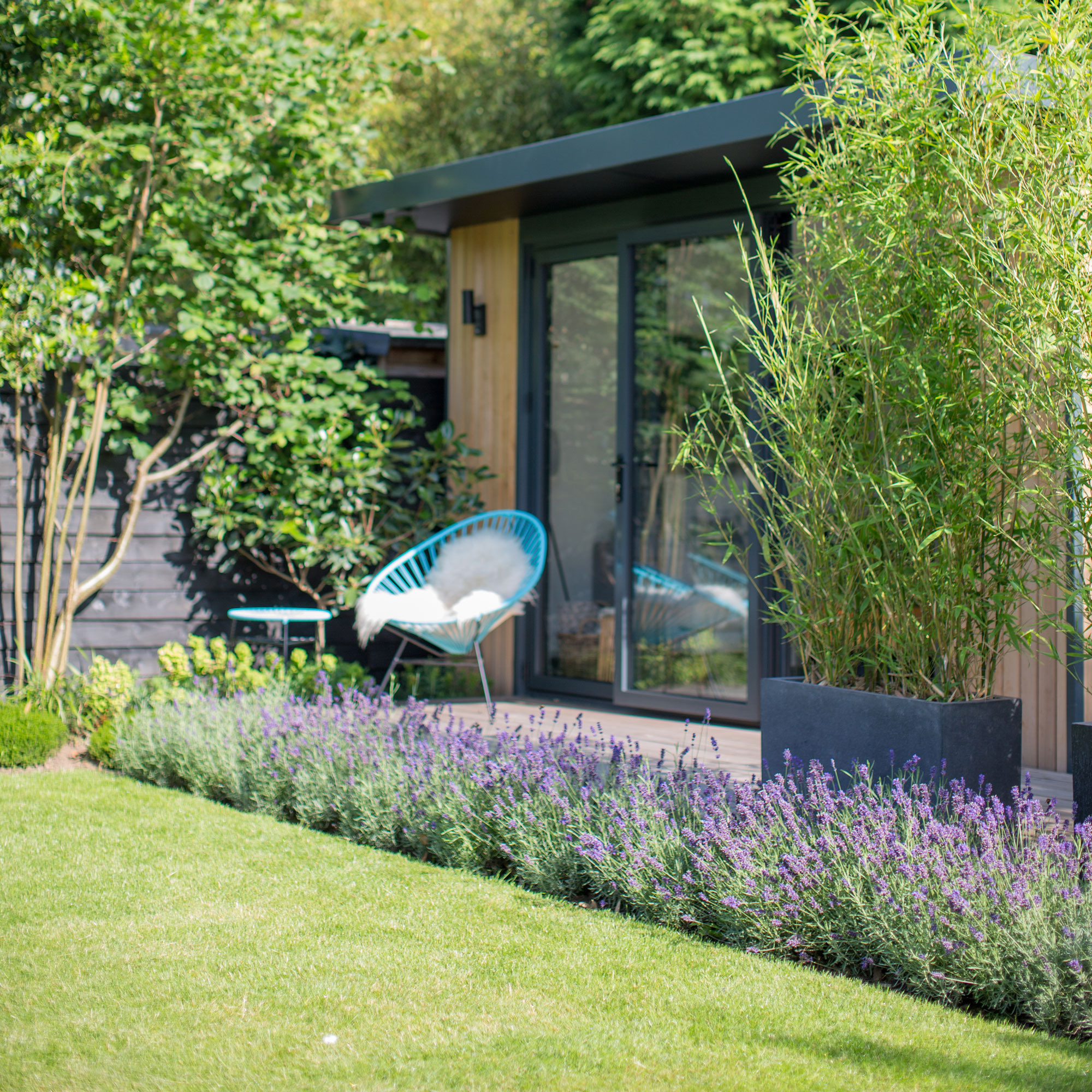
Lavender is a Mediterranean planting staple and, in my opinion, deserves a place in every garden. Not only does it smell amazing, but it also attracts bees and butterflies for a happy garden ecosystem.
(Image credit: Future PLC/Claire Lloyd Davies)
‘Many hotel gardens include Lavender in their gardens as they are easy to care for, needing minimal maintenance, are drought-tolerant once established and hardy to most pests and diseases,’ says Lucie Bradley, gardens and greenhouse expert at Easy Garden Irrigation.
‘In addition, English Lavender, such as ‘Hidcote’, is extremely hardy, and when positioned in full sun and pruned twice a year to prevent it from becoming sparse by keeping it bushy with new growth, you can expect to have lavender thriving in your garden for well over ten years.’
Where to buy
2. Box honeysuckle
This fast-growing shrub has gorgeous glossy green leaves, sprouting white flowers in the spring, followed by purple berries. It’s also a fragranced shrub, offering a delicate, light scent that attracts bees to your garden.
Sign up to our newsletter for style inspiration, real homes, project and garden advice and shopping know-how
(Image credit: Getty Images/ Artem Stepanov)
‘Box honeysuckle is one of the best options for achieving the clipped, structured look you see in luxury hotel courtyards and formal entrance areas. It’s often used as a substitute for a traditional box because it responds well to trimming and naturally holds a dense, small-leaved shape,’ says Patrick Martin, horticulture specialist at Frantoio Grove.
‘It can be clipped into low hedges, neat borders, or simple rounded forms that immediately make a space feel ordered and intentional. One of its biggest advantages is that it stays green all year, so even in winter, the garden still looks cared for rather than bare or tired. Once it has settled in, it only needs a light trim once or twice a year to keep its shape sharp, which is why it works so well in low-maintenance designs.’
Where to buy
3. Japanese holly
One of the best hedging plants you can use, Japanese holly is often favoured by fancy hotels for crafting stunning topiary displays.
(Image credit: Getty Images)
‘With dense, evergreen foliage of glossy, dark green leaves it is not only easy to care for, being disease resistant, adaptable to different types of soil and suitable for positions in full sun or partial shade, the fact that this is a slow growing shrub means it doesn’t need to be pruned often, although is happy to tolerate frequent trimming if you want to keep it perfectly shaped for structural topiary or Cloud Trees which are increasing in popularity,’ says Lucie.
‘Perfect to grow large pots filled with slightly acidic, well-draining soil, you can place one on either side of your front door to make a statement entrance or use them planted as formal hedging. It’s also the perfect addition to garden borders, providing year-round structure, especially when trimmed into neat shapes.’
Where to buy
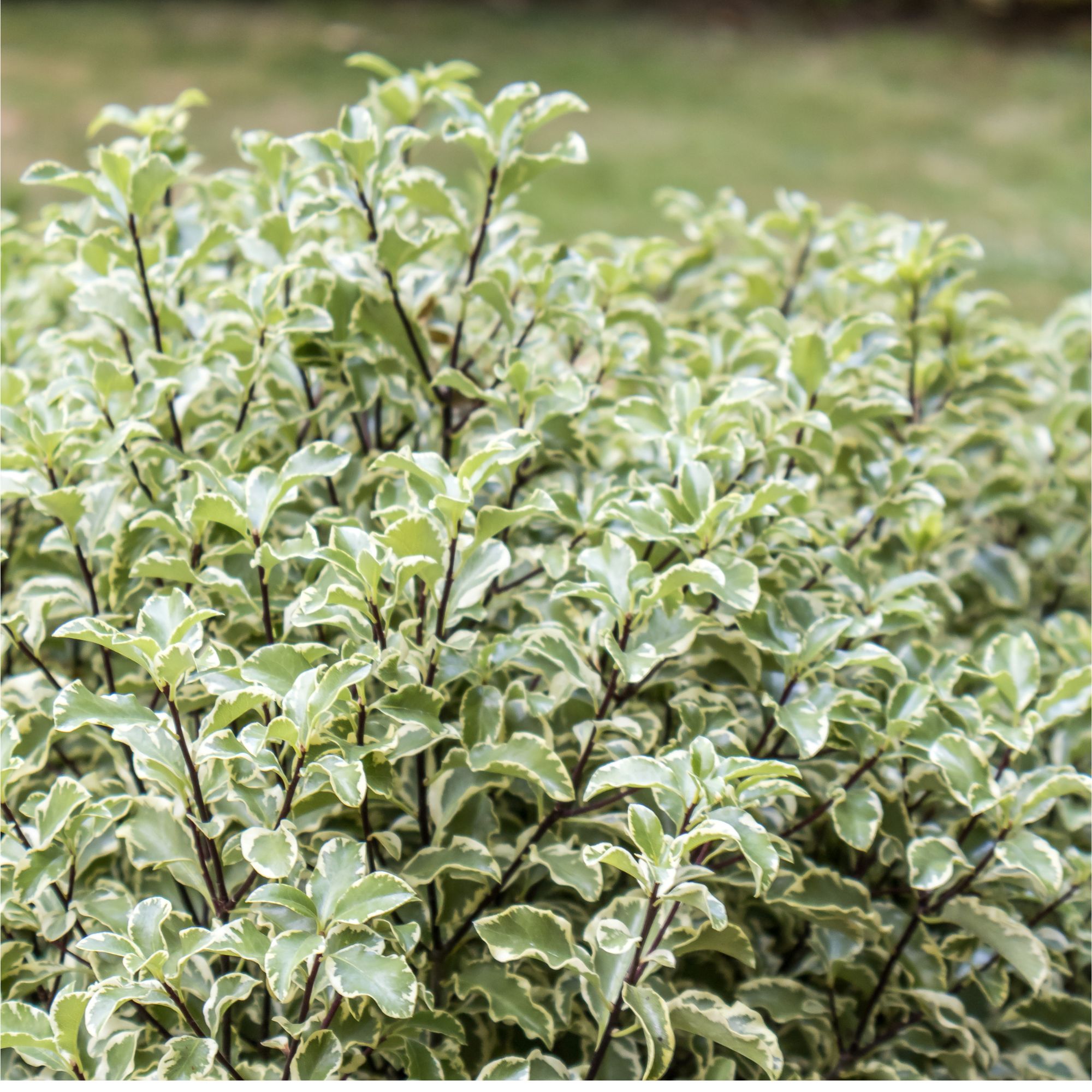
4. Pittosporum
Another fragranced shrub, pittosporum, is one of the best evergreen shrubs for borders and goes with anything! It has pretty, silver-green leaves and will stop your garden looking bare in winter.
(Image credit: Getty Images / Santiago Urquijo)
‘Pittosporum brings a slightly softer but still very polished structure. The rounded varieties are especially useful because they naturally form tidy, cloud-like shapes that look curated even without constant attention,’ says Patrick.
‘The leaves are glossy and dense, which adds a sense of depth and finish, particularly in shaded areas or around seating where you want the planting to feel calm and deliberate. It also holds its form well over time, so it continues to look controlled even if you leave it alone for long periods, with only occasional shaping needed to keep it looking crisp.’
Where to buy
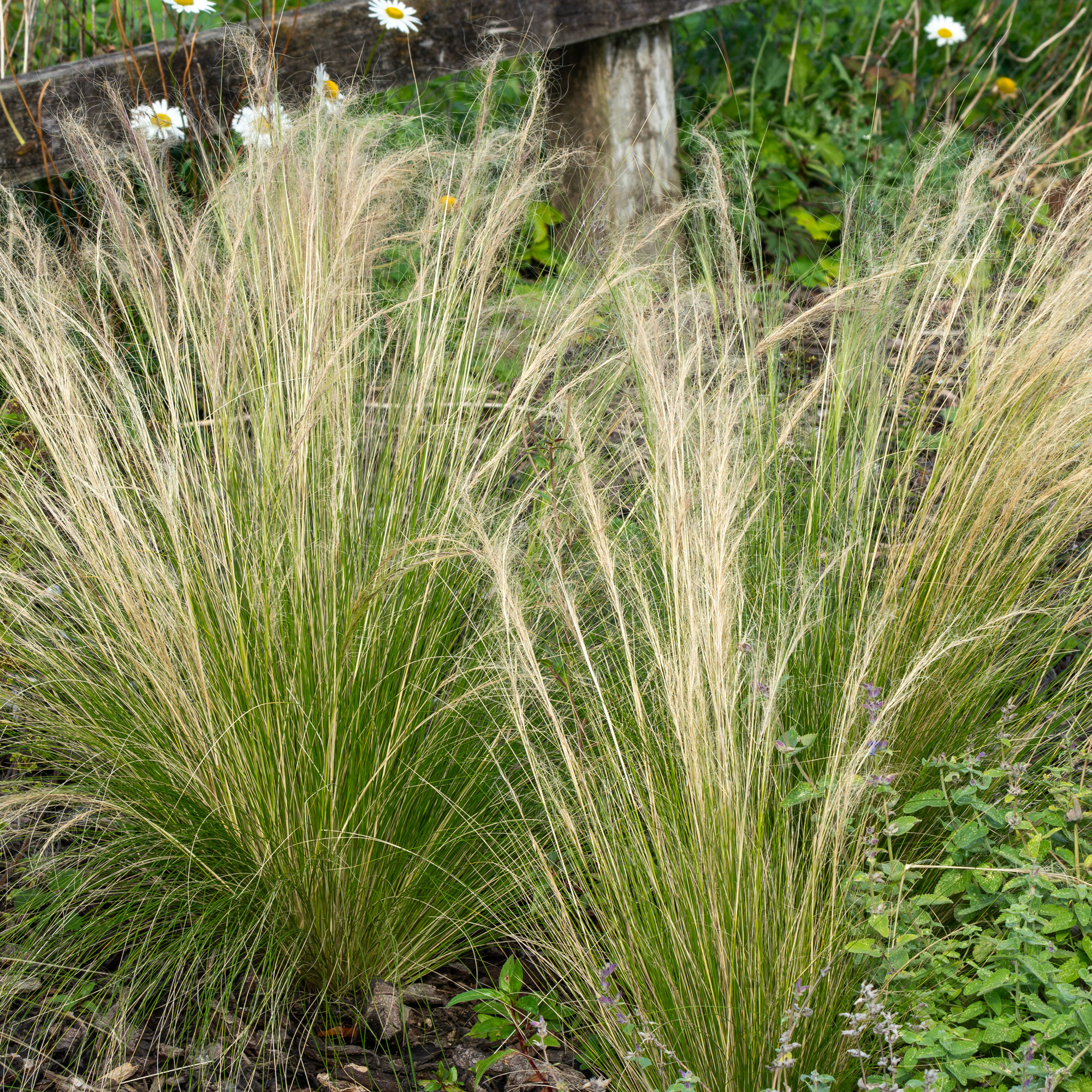
5. Mexican feather grass
Ornamental grasses are often a staple of hotel planting, and with graceful, swaying plumes, it’s easy to see why. They’re a plant that I think makes your garden look instantly expensive. Plus, May is a great time to plant Mexican feather grass in your garden.
(Image credit: Getty Images)
‘When you love to add movement and texture to your garden in a natural way, then using the thin, silky, hair-like blades of Mexican feather grass is the low-maintenance way to achieve this,’ says Lucie.
‘A popular perennial ornamental grass often used in hotel gardens and resorts, Mexican feather grass excels when planted in garden borders or in groups, where its swaying, fountain-like blades almost appear to ‘dance’ in the slightest of breezes, perfect if you are sat outside and want soothing movement and gentle sounds.’
Where to buy
If you want your garden to feel like a constant holiday, these plants will certainly help give it the right look. Which one is your favourite?
Yes, this week might have been a washout, but the weather forecast promises there are higher temperatures on the horizon. Now is the time to invest in a handheld fan before they inevitably sell out, and M&S has dropped an almost identical M&S travel fan to the cult £12 John Lewis handheld fan, but at a lower price point.
If you went on a train, underground or bus last summer (or even a few weeks ago), you’ll have seen the John Lewis fan in action. It has not only thousands of reviews raving about it, but a fan following on the Ideal Home team, too.
It was one of the first sleek-looking handheld fans, but M&S is coming for its cult title with an even cheaper version at £10. It has a similar sleek profile to the John Lewis version but is available in several stylish neutral colour ways to complement your handbag collection and even your holiday/office outfits.
Latest Videos From
Now, this portable fan is not going to outperform the best fans at home, but when out and about, these little fans are a game-changer.
M&S
USB Travel Fan
John Lewis
Handheld & Foldable Desk Fan, 4 Inch
The M&S version is available in black, neutral, navy or khaki. Like the John Lewis version, it is easily rechargeable, and its clever design means that it can stand on a desk. It’s fitted with rechargeable AA batteries, while its one-button operation makes it easy for anyone to use.
With 15 reviews from shoppers and a 4.8-star rating out of 5, most rave about its battery life, saying that it’s impressive. They also love its speed options, as there are 3 to choose from. Most reviewers claim that it’s well-made and that it’s super handy for travelling.
(Image credit: M&S)
In comparison, the John Lewis version is available in 5 colourways that are arguably a little more fun (with pink, purple and some blues) it also features 3 speed settings. Their designs are also the same — a fold-out stand is incorporated into its handle, so it can sit on a table.
Sign up to our newsletter for style inspiration, real homes, project and garden advice and shopping know-how
A full charge takes 5 hours, and from this, the fan will work for 9 hours at its lowest speed, 6 hours on its medium speed and at its highest, 4 hours. With a lot to say from 3,000+ reviewers with a stellar 4.9-star rating, this fan is pleasantly powerful according to shoppers, as well as the perfect size, and most people own more than one!
Should you choose the M&S or John Lewis handheld fan?
The key difference between these fans is price — the M&S dupe is £2 cheaper. You’ll also want to consider colour, if this matters to you. Then comes size as the M&S fan is slightly longer in length, at 25.5cm VS 25.1cm; both are roughly 11cm wide. It’s unclear how long it takes the M&S fan to charge, and its battery life, but reviewers claim it’s great.
All-in-all, it really boils down to colour preference and price. If you don’t mind spending the extra £2 on a neutral colourway, then do it! If not, then keep it safe with the John Lewis model.