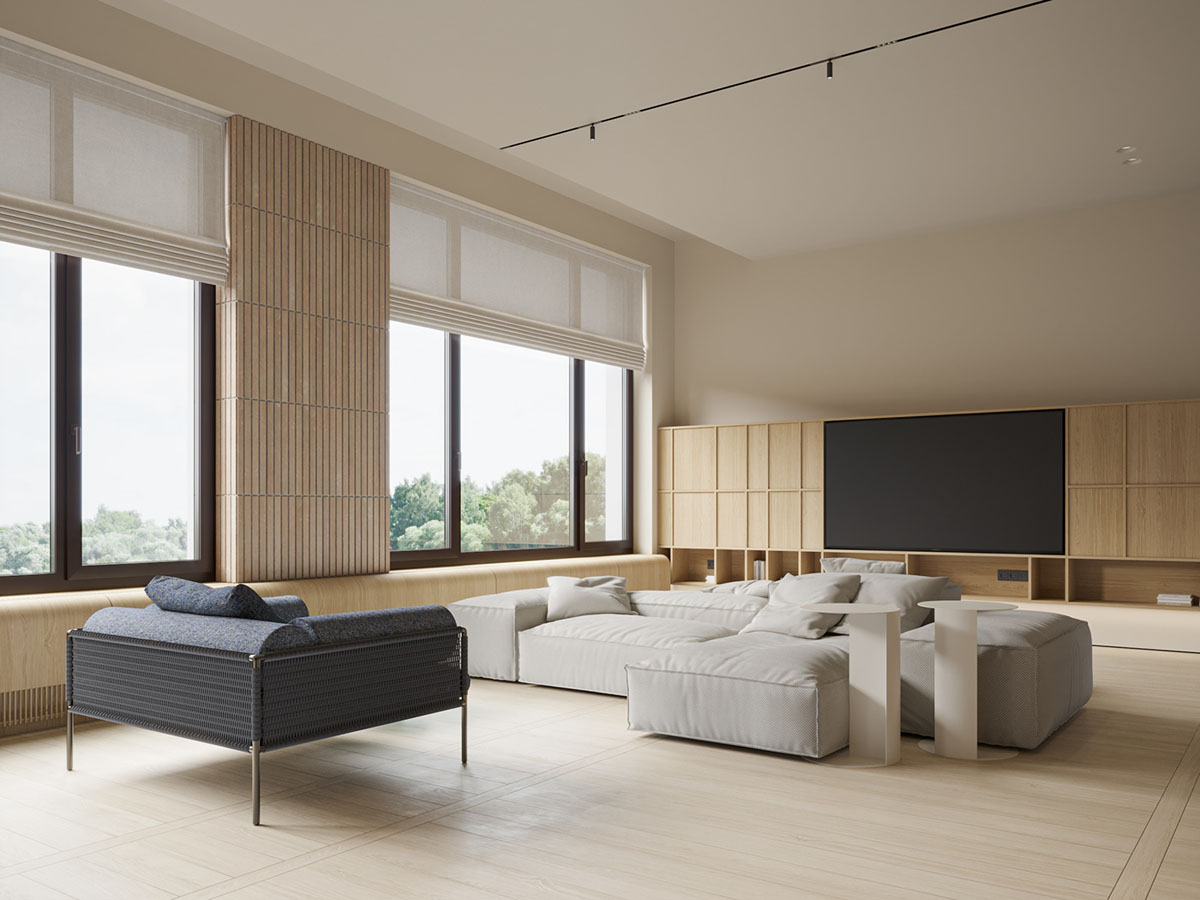
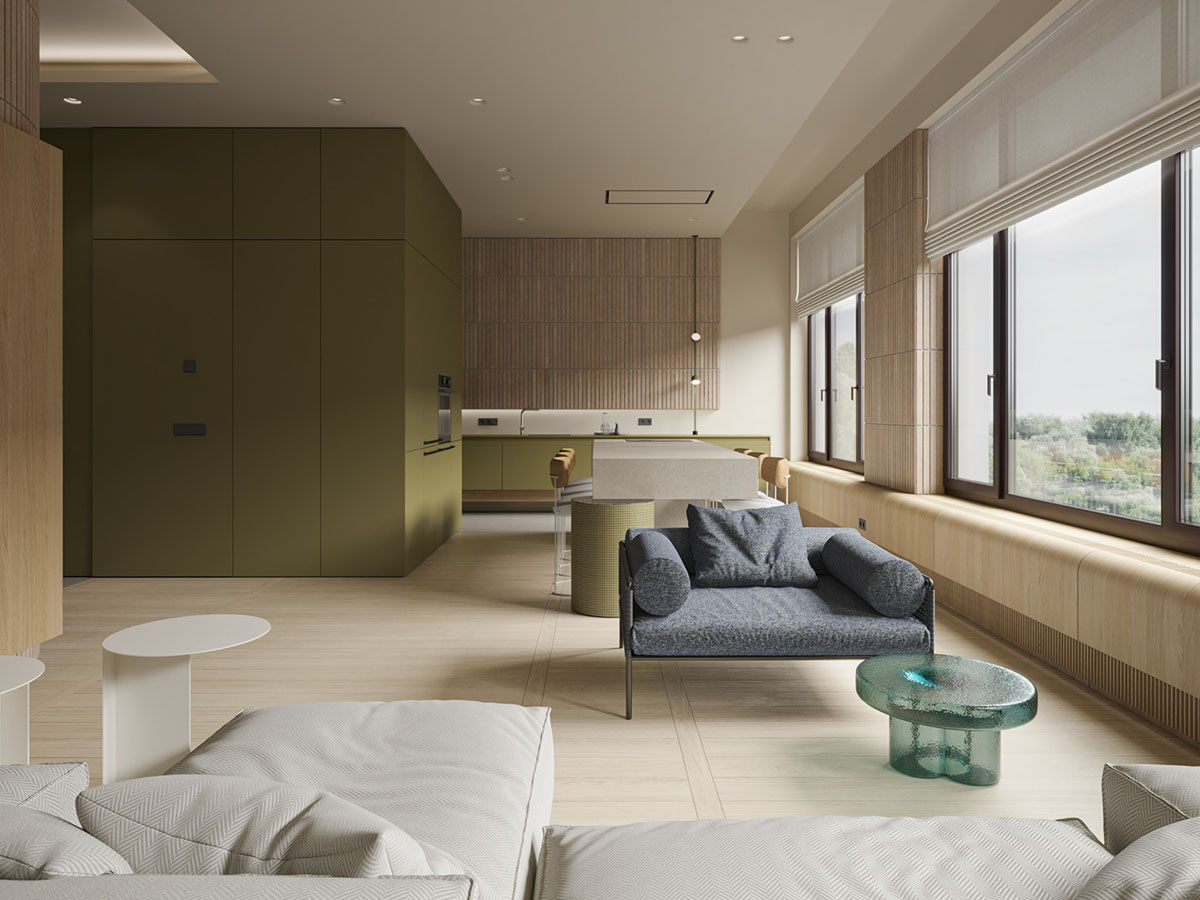
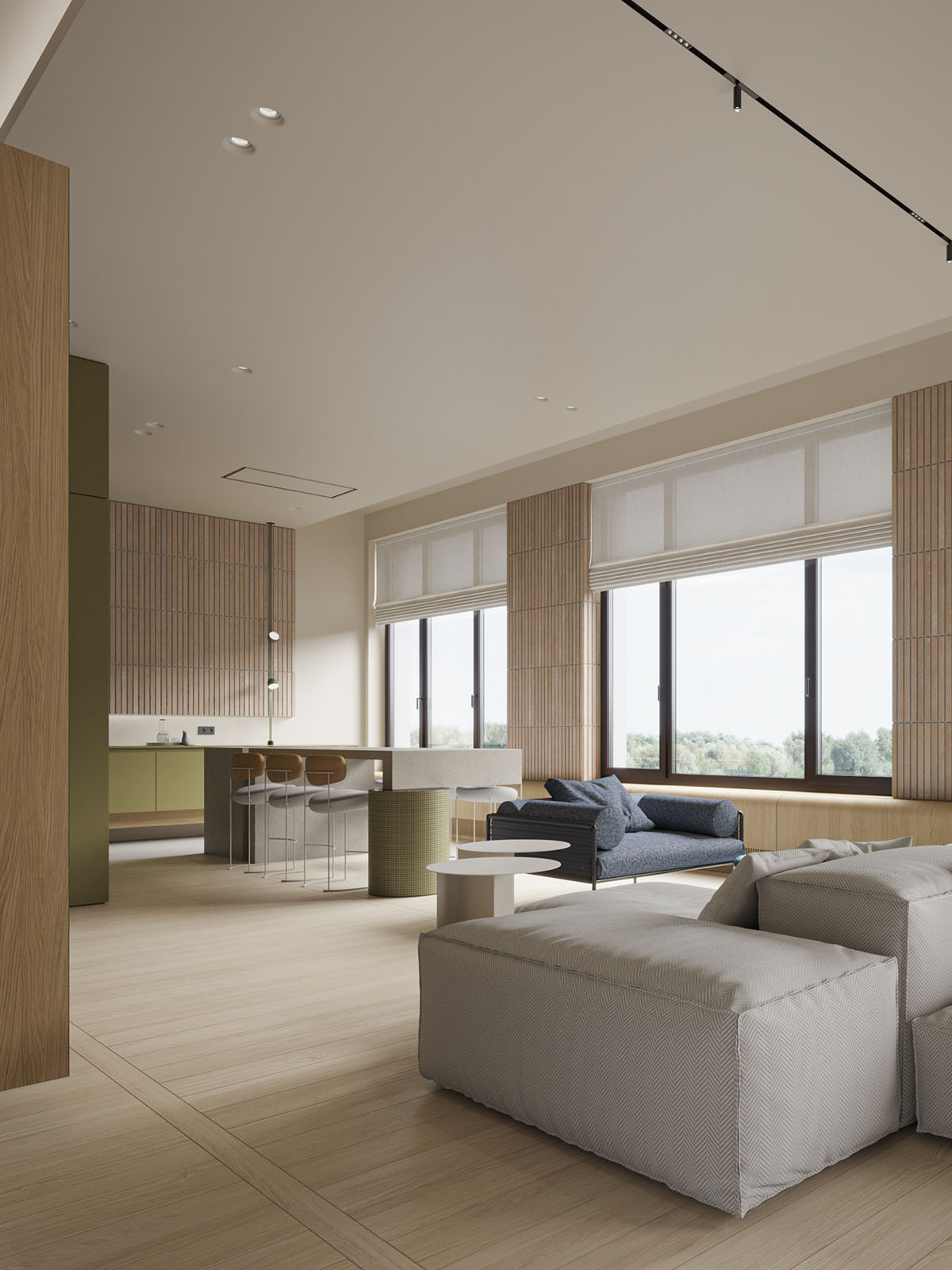
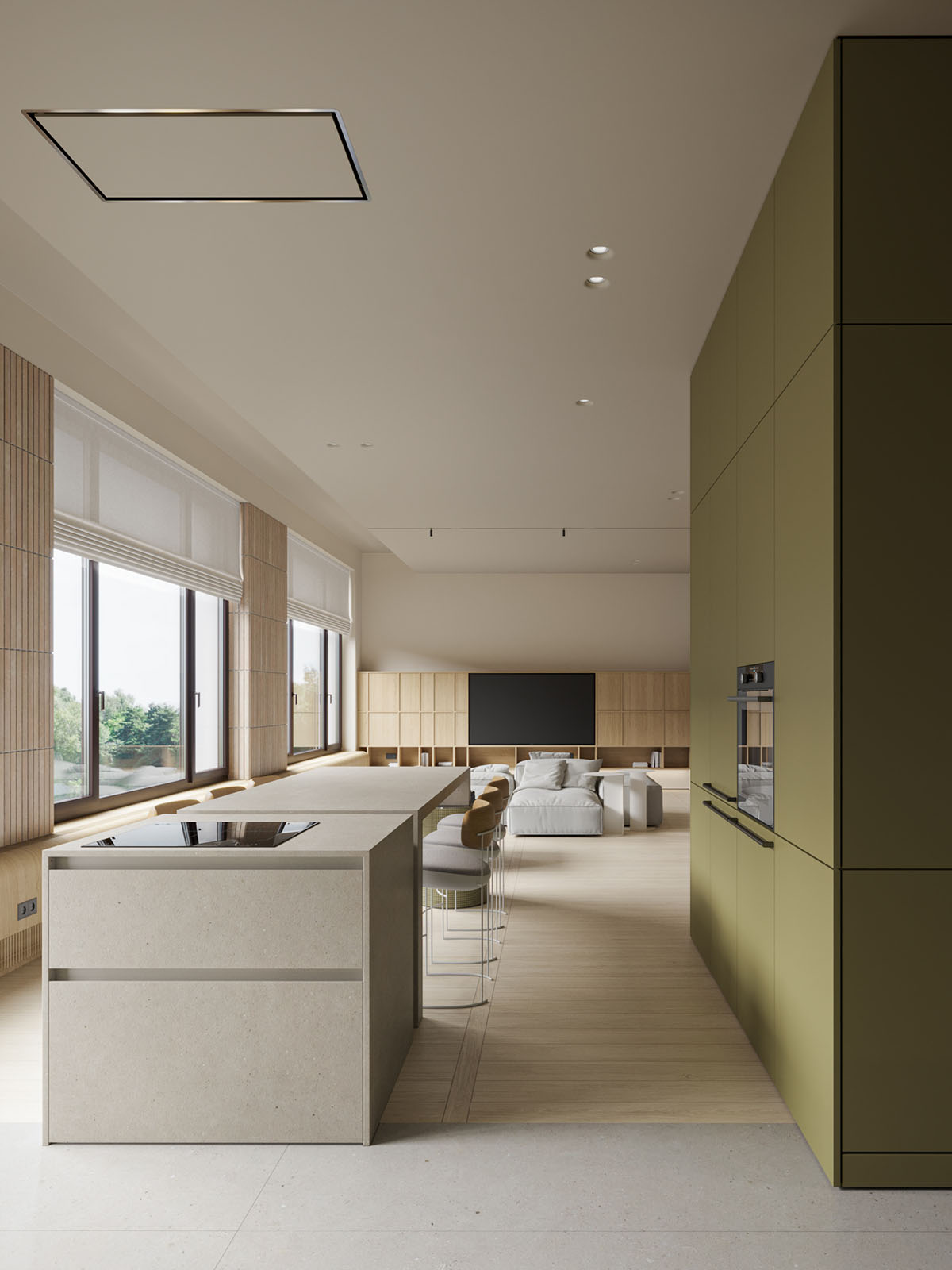
White and gray modern home interiors appear clean and fresh but sometimes lack warmth. In these two contemporary home designs, we’ll see how pale wooden accents add subtle visual heat to the palette, without pushing the aesthetic into the rustic realm. Our first featured home interior includes an airy open plan layout with a dual height living space. Light wood accents soften the monochrome meld, adding areas of texture and interest. Our second home tour takes place in a smaller home with a cozy ambiance. Here, pale wood elements are complemented by an injection of earthy olive green, which threads a cohesive color story through the entire apartment.
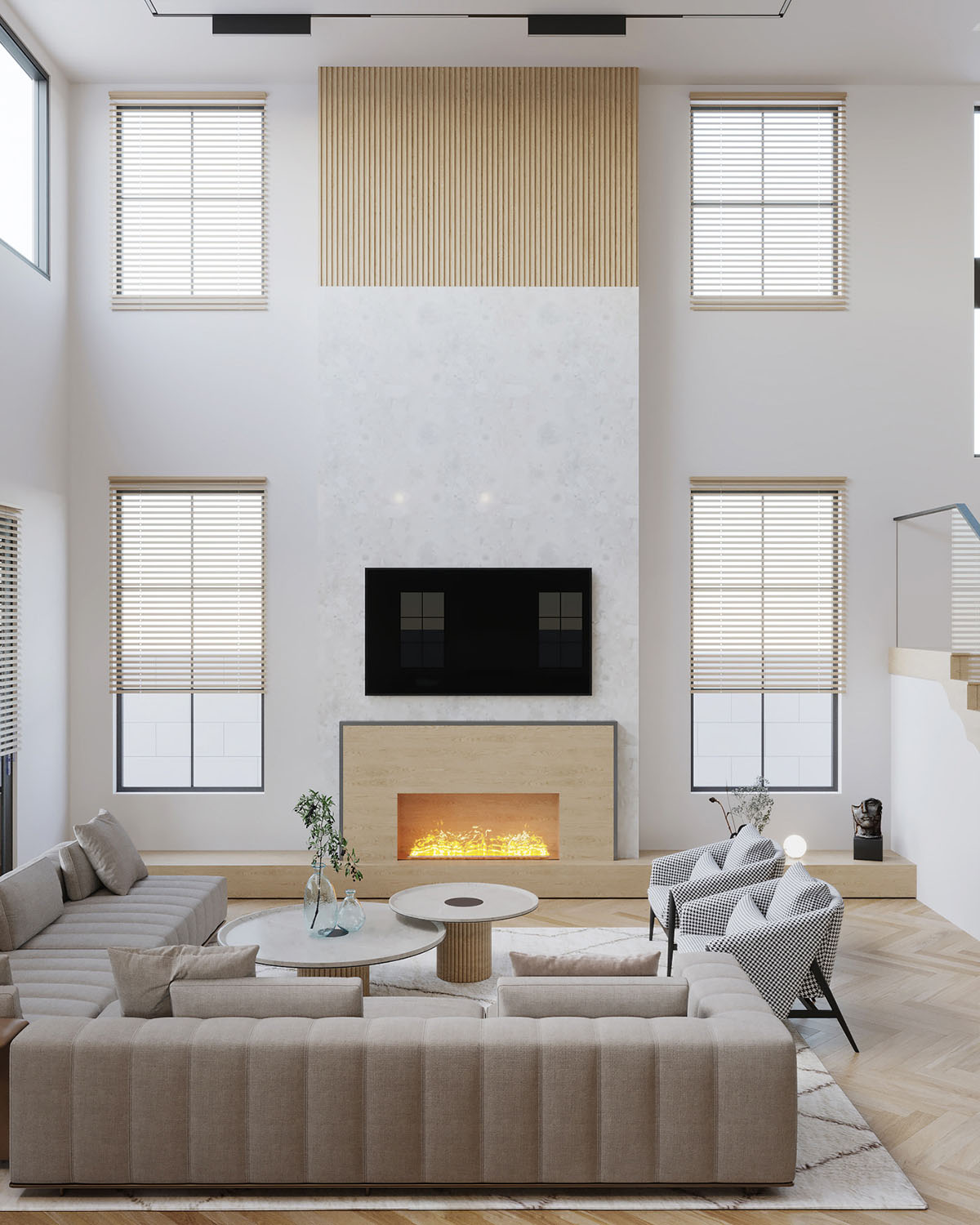
At the heart of our first featured living space, nesting coffee tables create a warm moment of wood tone and texture upon a large area rug.
A greige tufted sofa complements the light wood tone elements in the room. Opposite the couch, a modern fireplace burns brightly within a wood surround. A wooden hearth underlines the fireplace wall in its entirety, whilst fluted wood paneling adds a brief crown of texture to the top of the chimney breast.
Advertisement
The double-height living room has a predominantly white decor scheme, which creates a cool and airy aesthetic. The wooden elements counteract the coolness of the blank backdrop.
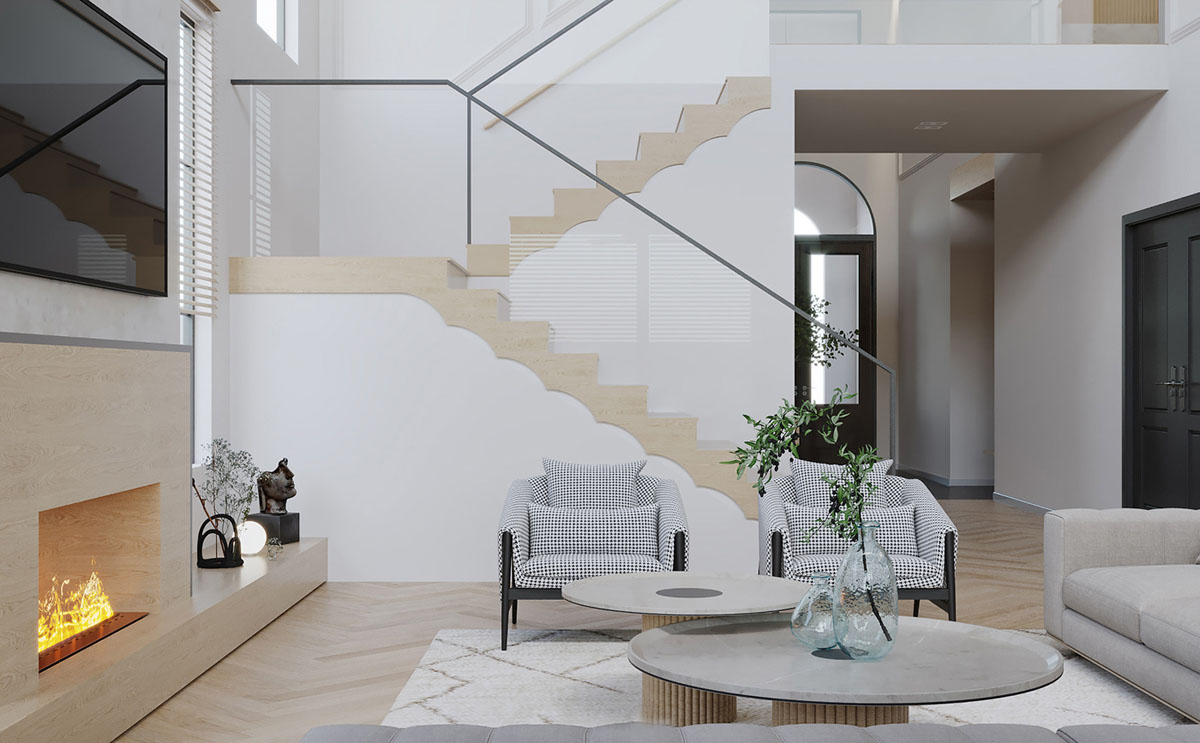
A modern staircase design cuts through the crisp white decor scheme with natural wood treads and risers. Glass vases are filled with a floral display to create an understated botanical table centerpiece.
Under the staircase, the white wall render is cut away with a decorative scalloped edge.
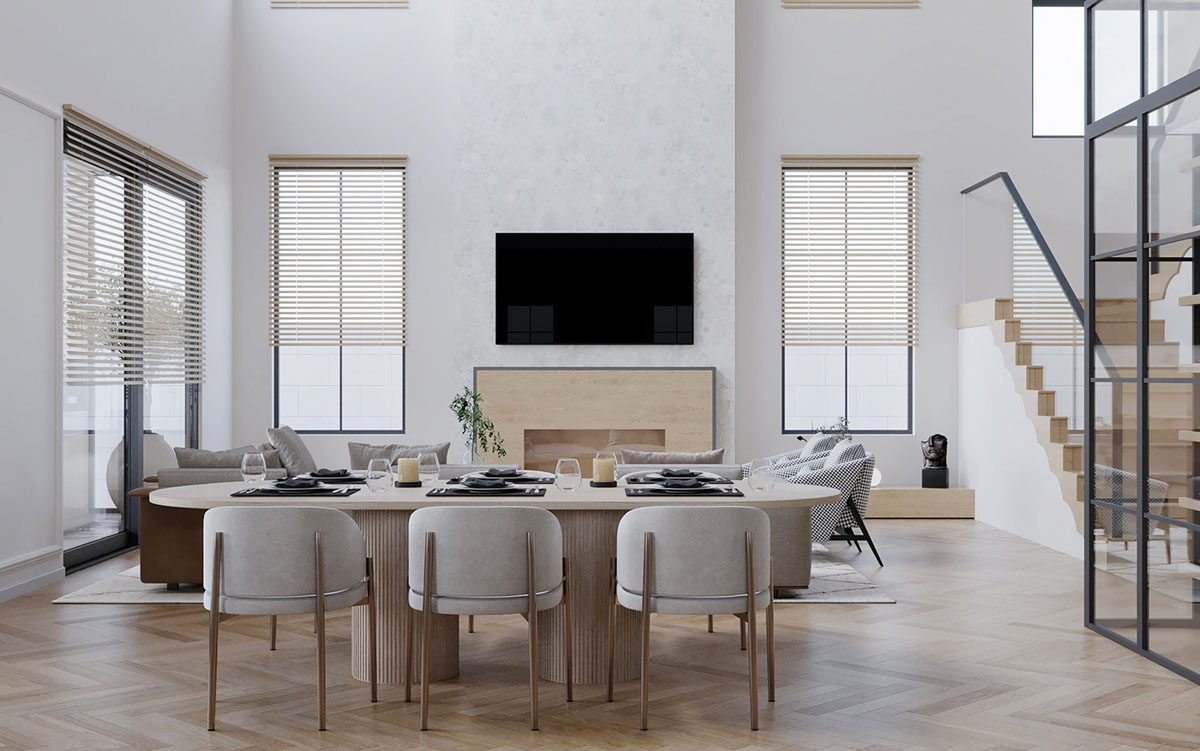
Wooden Venetian blinds dress the windows.
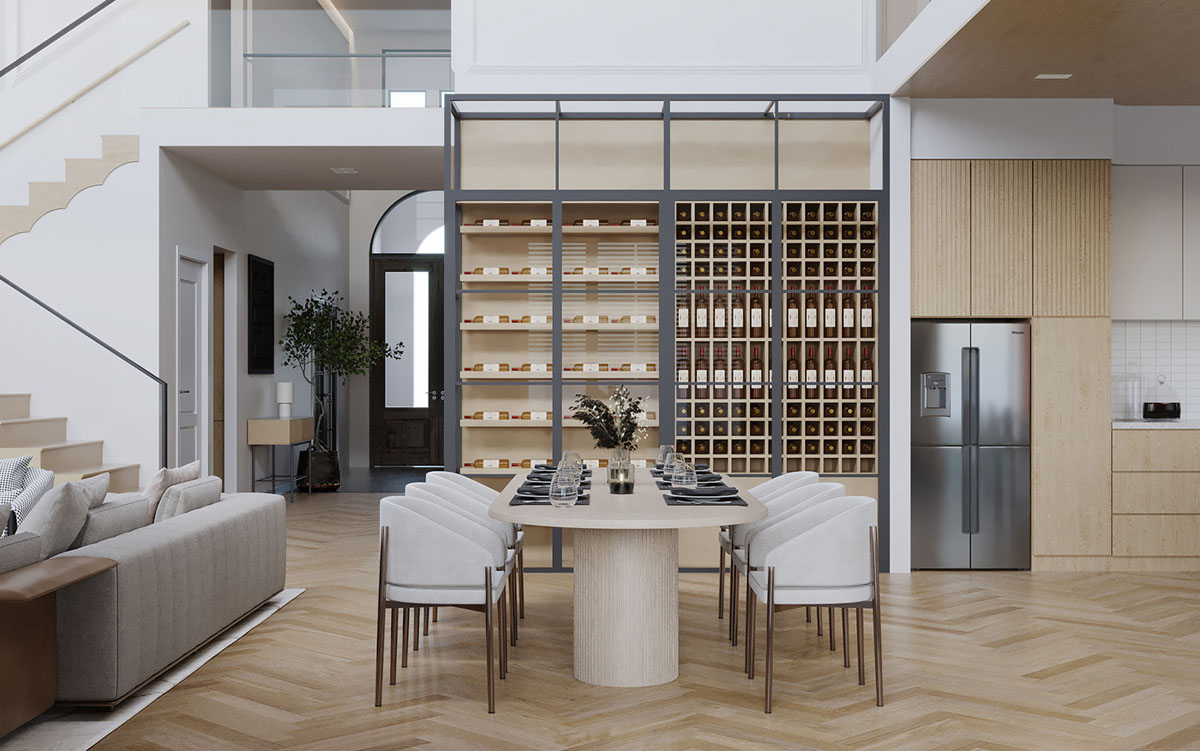
A wine storage wall decorates the formal dining area. Gray upholstered chairs flank a trendy racetrack-shaped dining table.
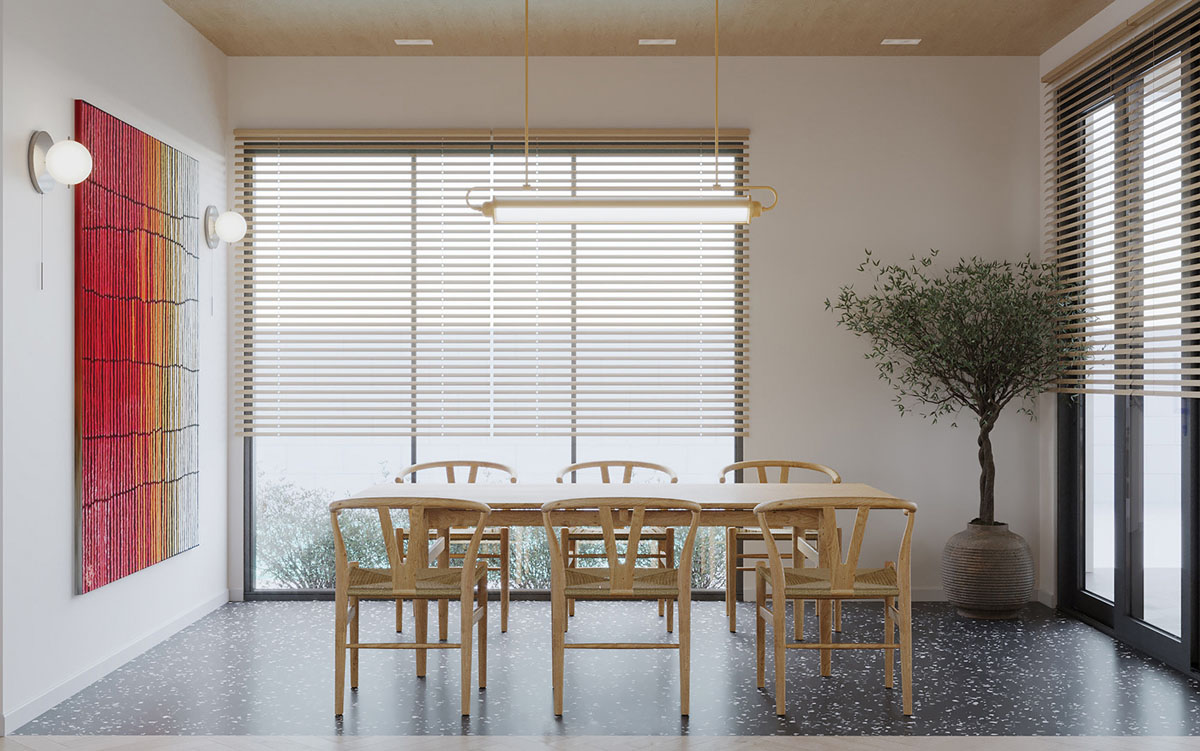
Across the room, a casual dining spot is decorated with vibrant artwork and a more simple wooden dining set. Two modern wall sconces and a contemporary linear suspension light illuminate the space. See more ideas for stylish linear suspension lights.
Advertisement
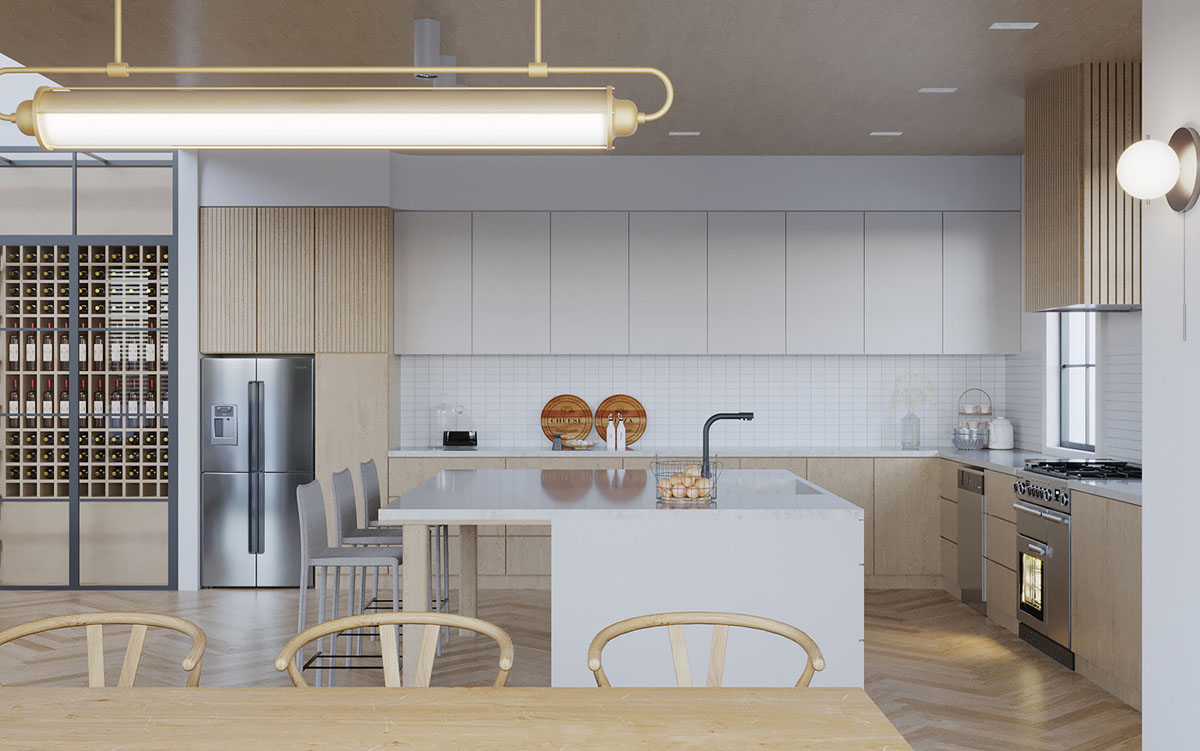
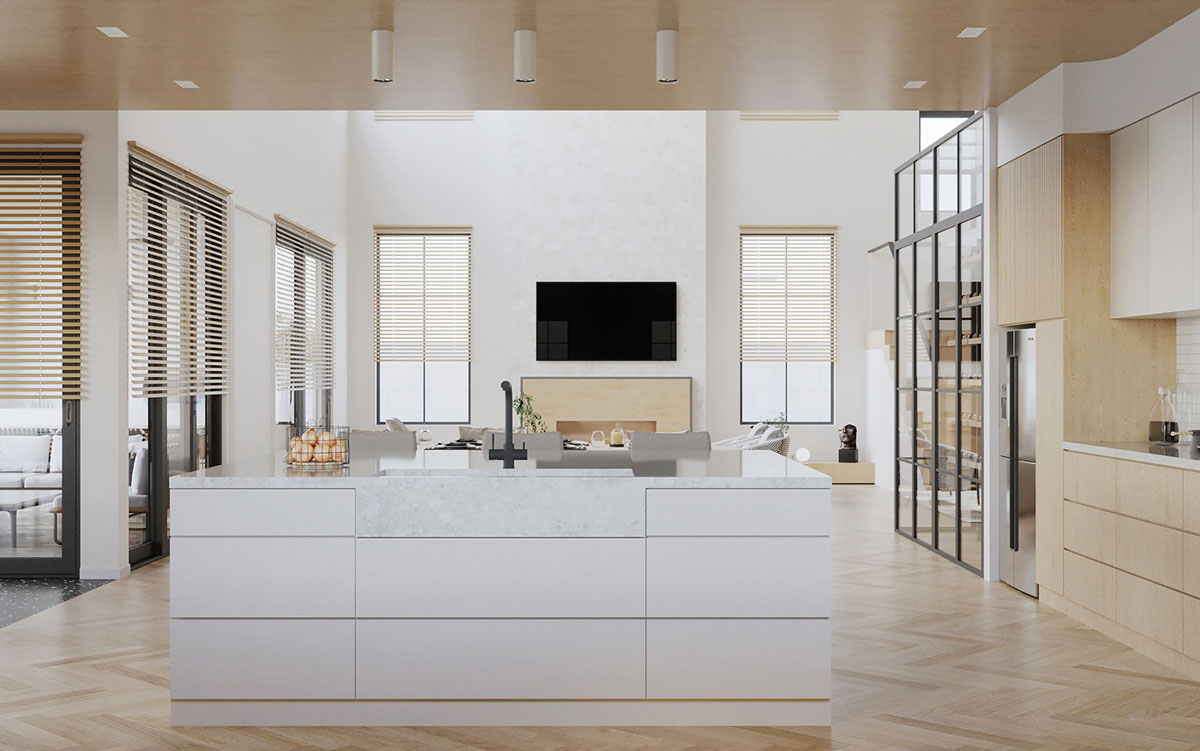
A large kitchen island serves the center of a spacious white and wood kitchen design. Stainless steel kitchen appliances add metallic shimmer.
A small scullery hides away food messes when guests are present in the large open plan living space.
The kitchen ceiling is warmed by wood cladding. The cladding also serves as a visual zoning technique to separate the culinary space from the dining room and sitting area.
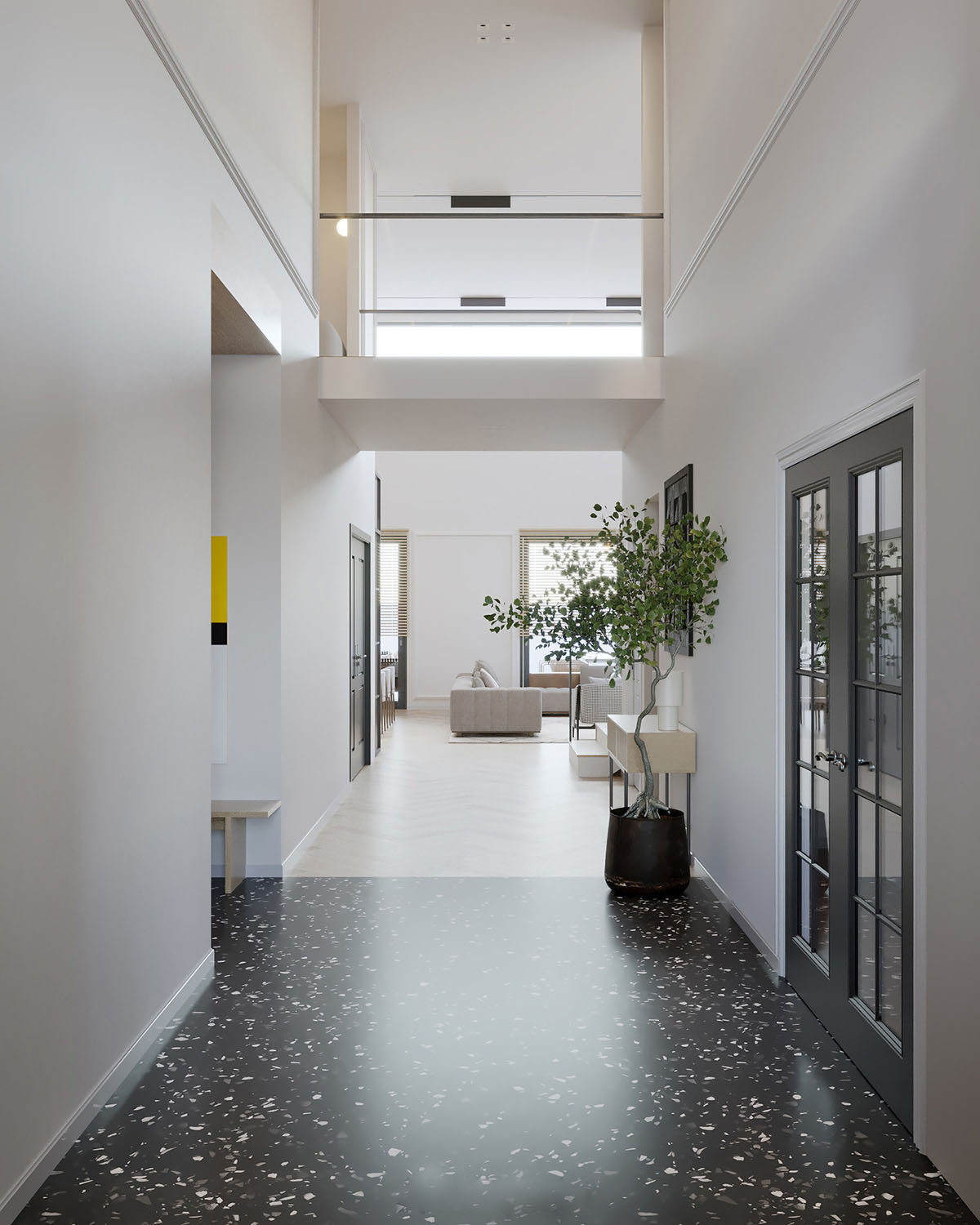
Wood herringbone flooring is switched out for durable black tiles in the home entryway. A large planter pot buffers the sudden transition.
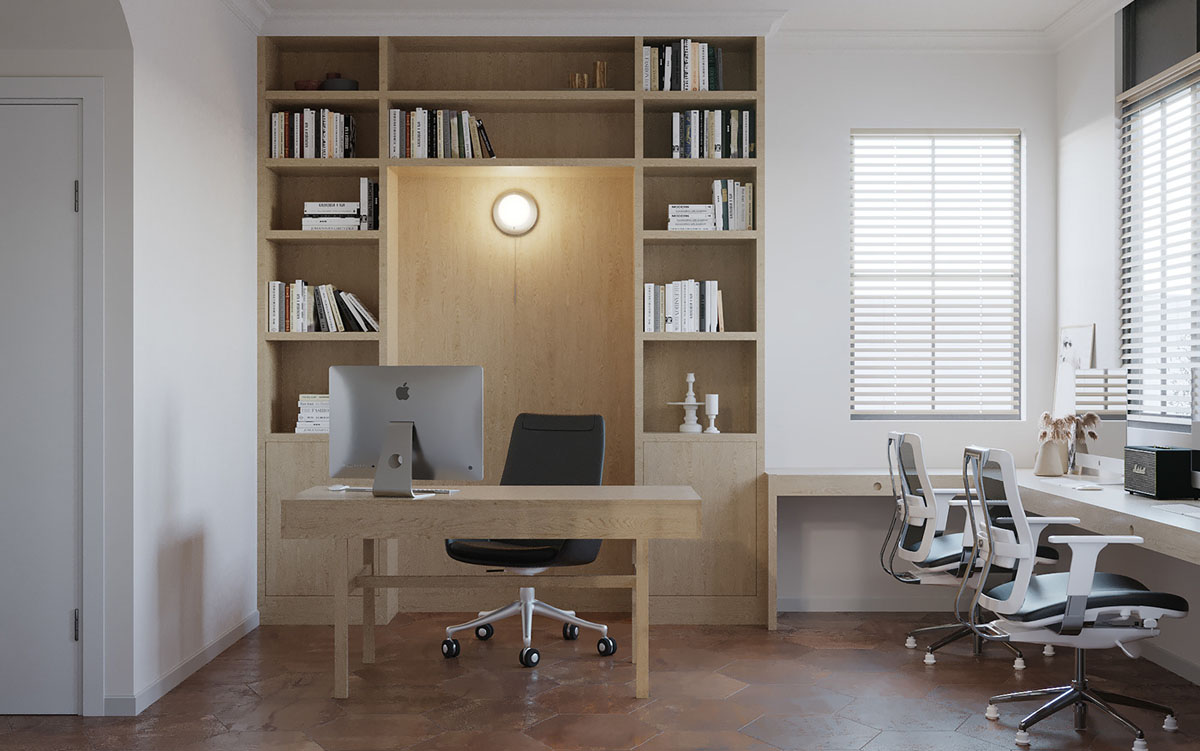
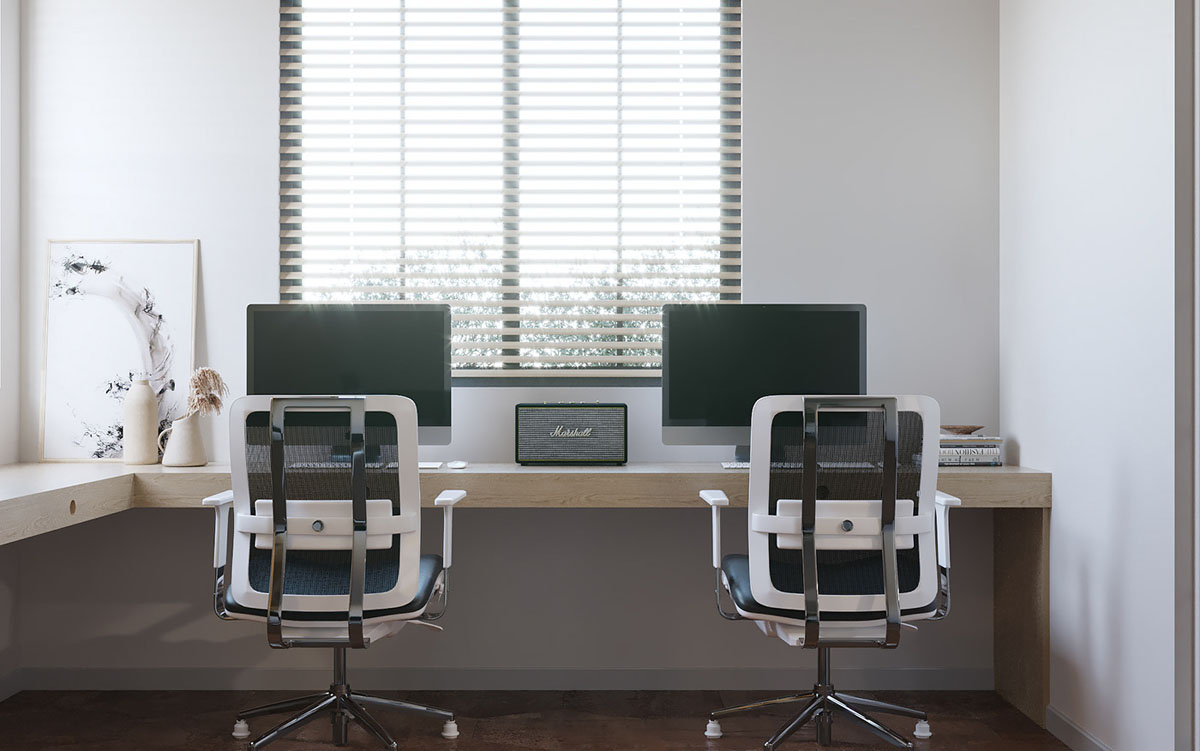
A home office space is set up for several people to use at once, facilitating business and homework.
A bespoke bookcase bridges the main workspace, whilst a double workspace is built into a bright spot below the home office windows. See more inspiration for double workspaces.
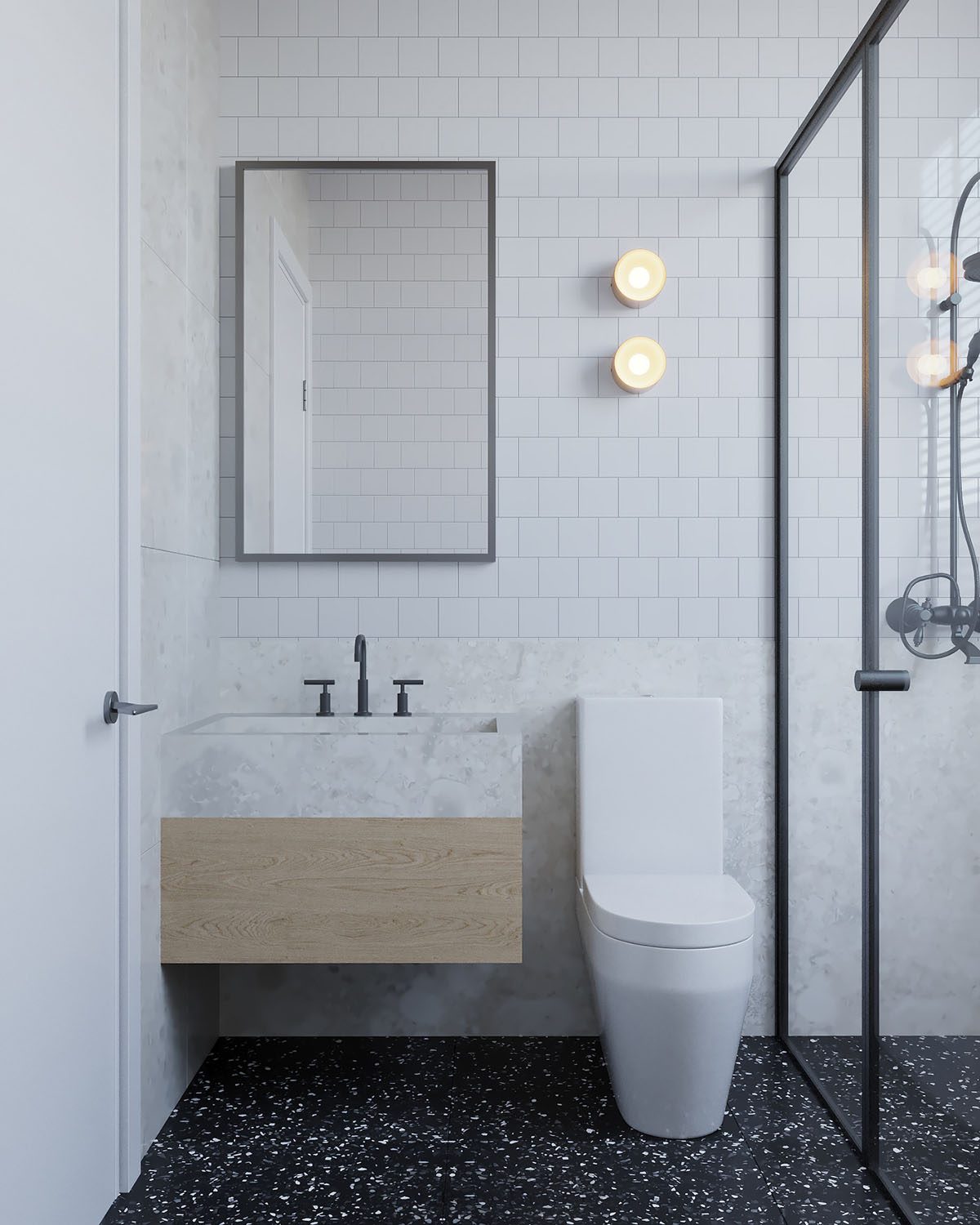
The bathroom is clad in a combination of small white tiles and large marble counterparts. A wood vanity unit and a pair of bathroom vanity lights warm the look.
A second bathroom is characterized by an attractive arched ceiling. Terracotta floor tiles warmly complement a wooden vanity cabinet.
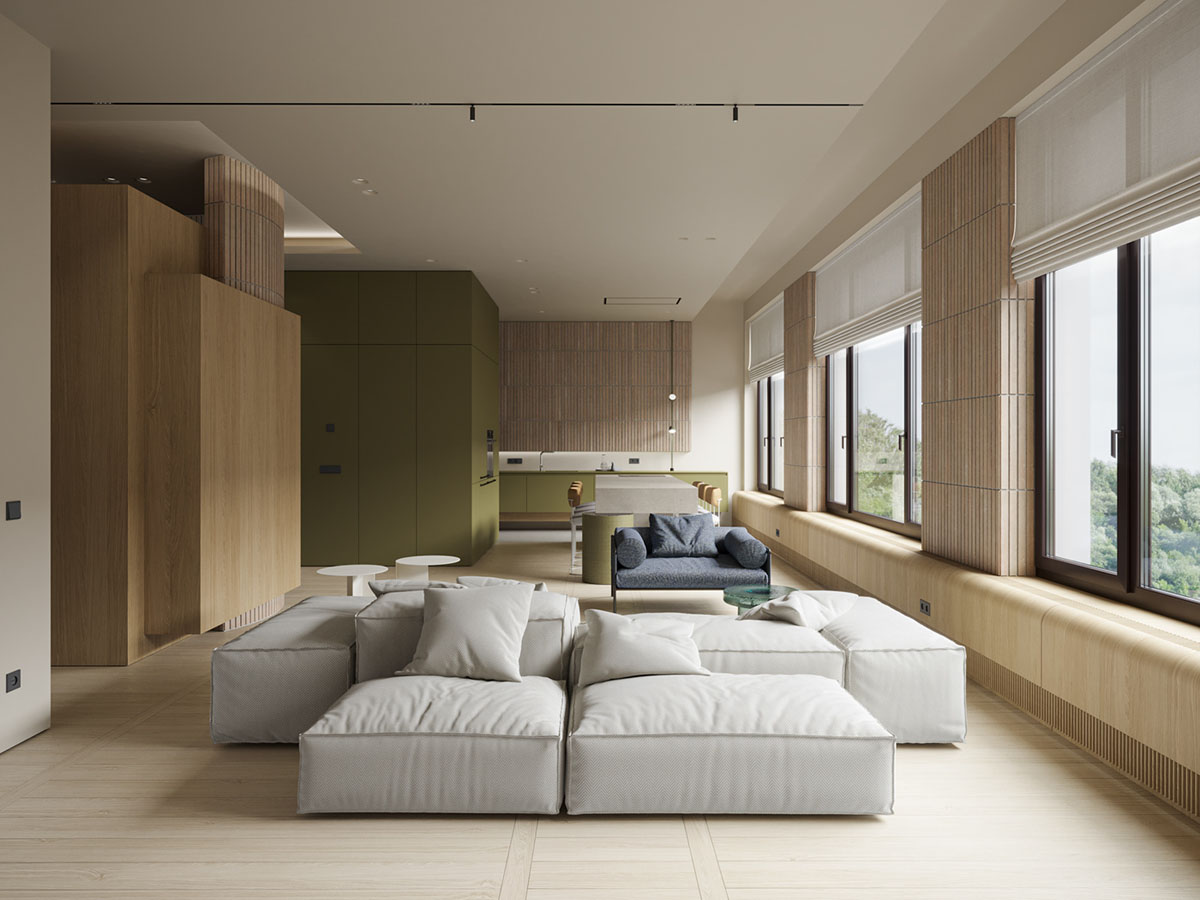
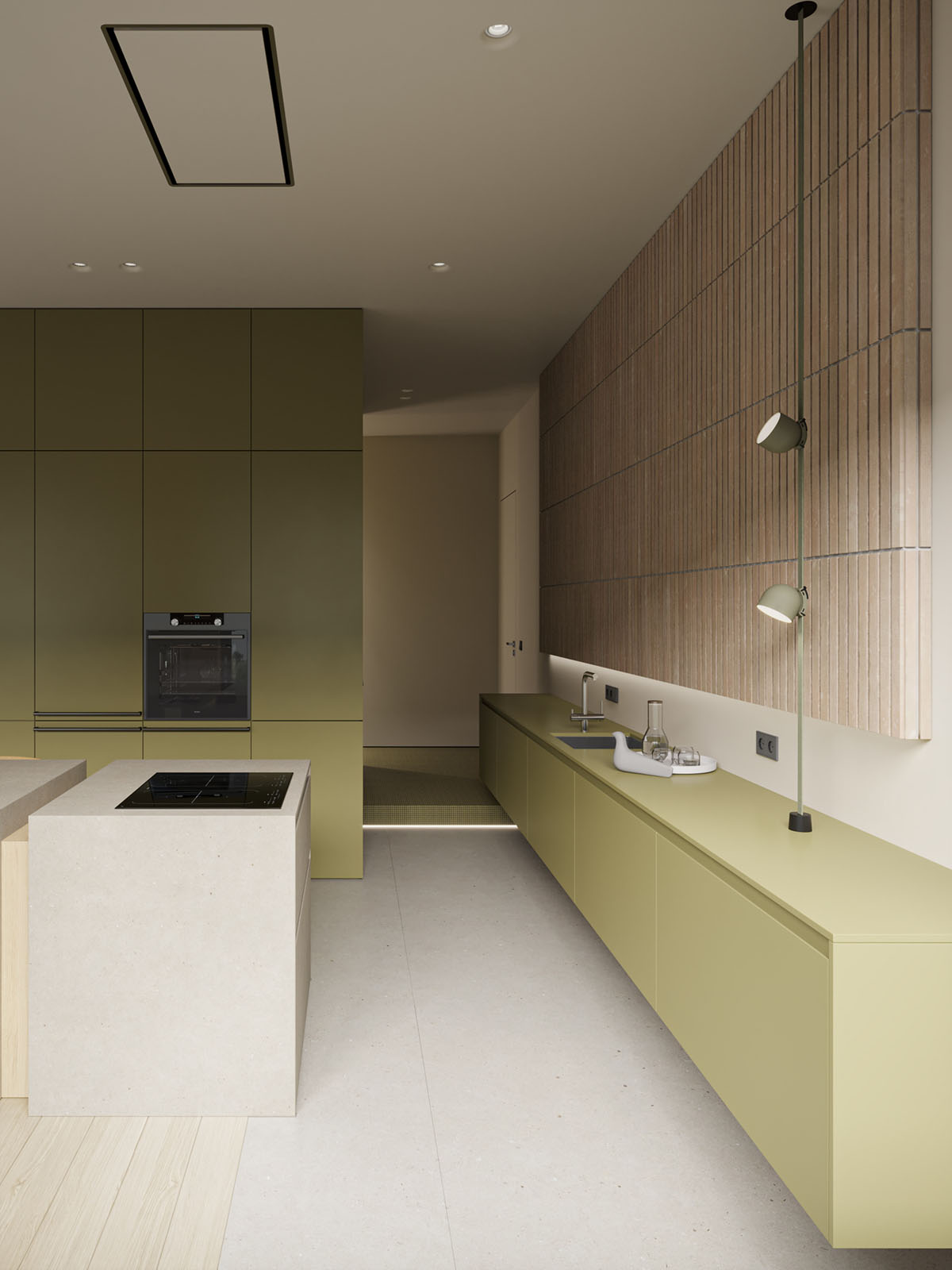
In this smaller home design, light wood accents are combined with olive green elements to expand the earthy interludes. A gray modular sofa is set out in a two-sided arrangement. One side looks upon the TV, whilst the other forms a conversational setting along with a modern lounge chair.
The living room is devoid of area rugs, which leaves focus on the wooden floor treatment.
Two small side tables tuck around the edges of the couch.
The kitchen island features an olive green support column, which matches the kitchen base units.
The cooktop is located on the dining island, bringing the chef closer to their dinner guests.
A wide column of color is formed by a wall of green kitchen units and a green-paneled bathroom block.
A textured backsplash wall builds interest at the back of the open plan living space.
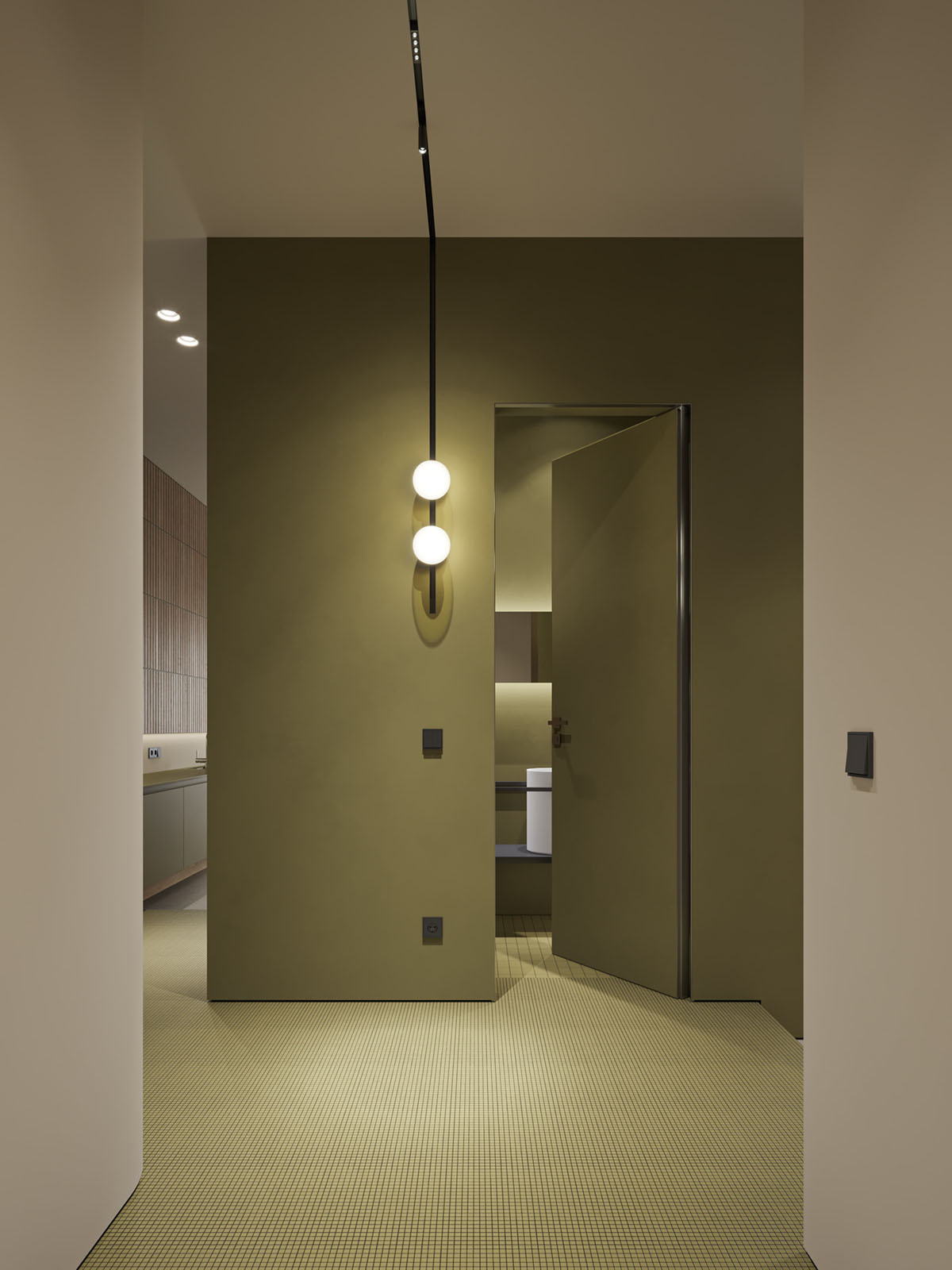
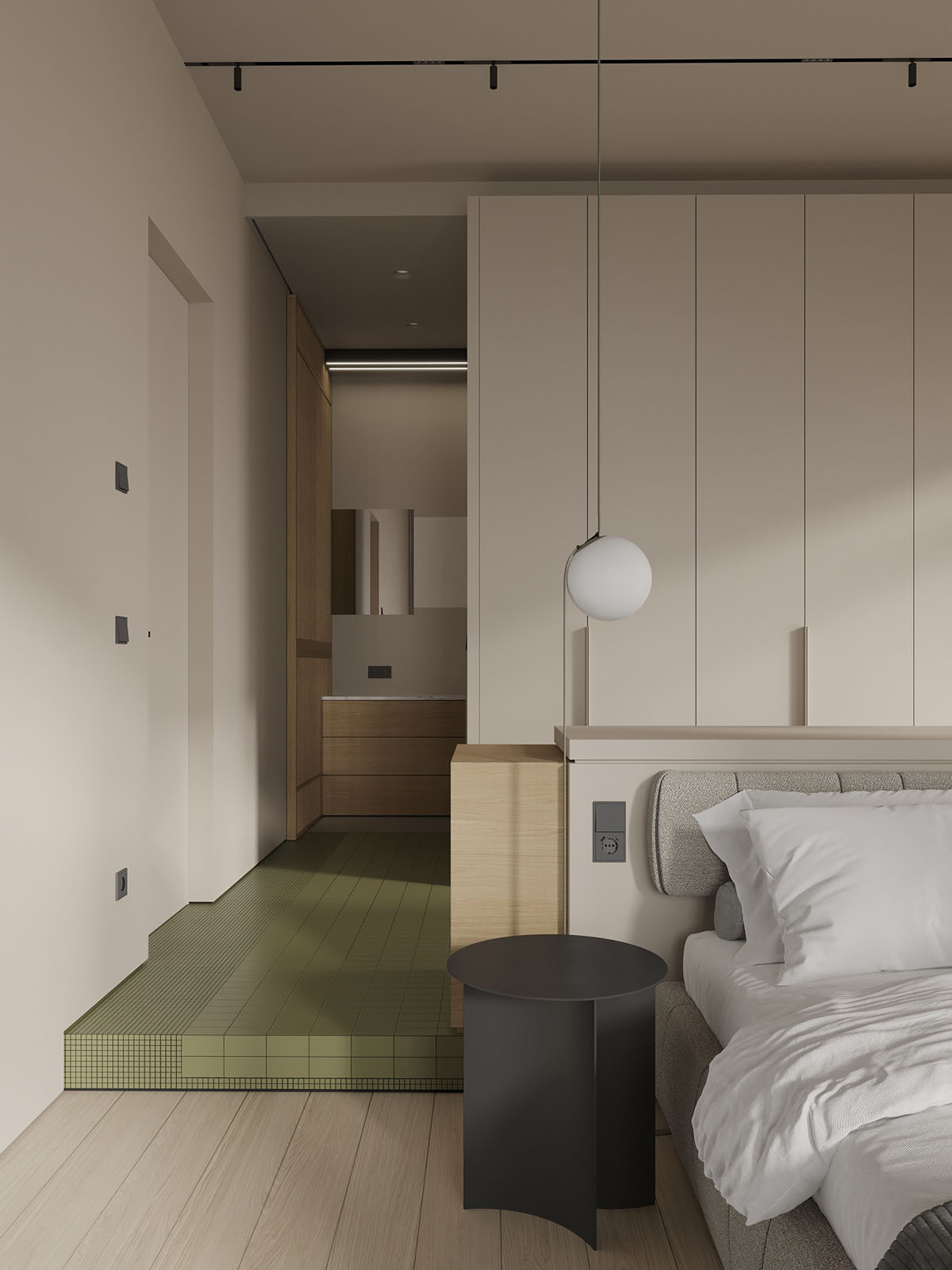
The raised floor area that leads into the bathroom is clad in tiny green mosaic tiles, providing playful definition from the rest of the apartment. Modern wall sconces illuminate the windowless area.
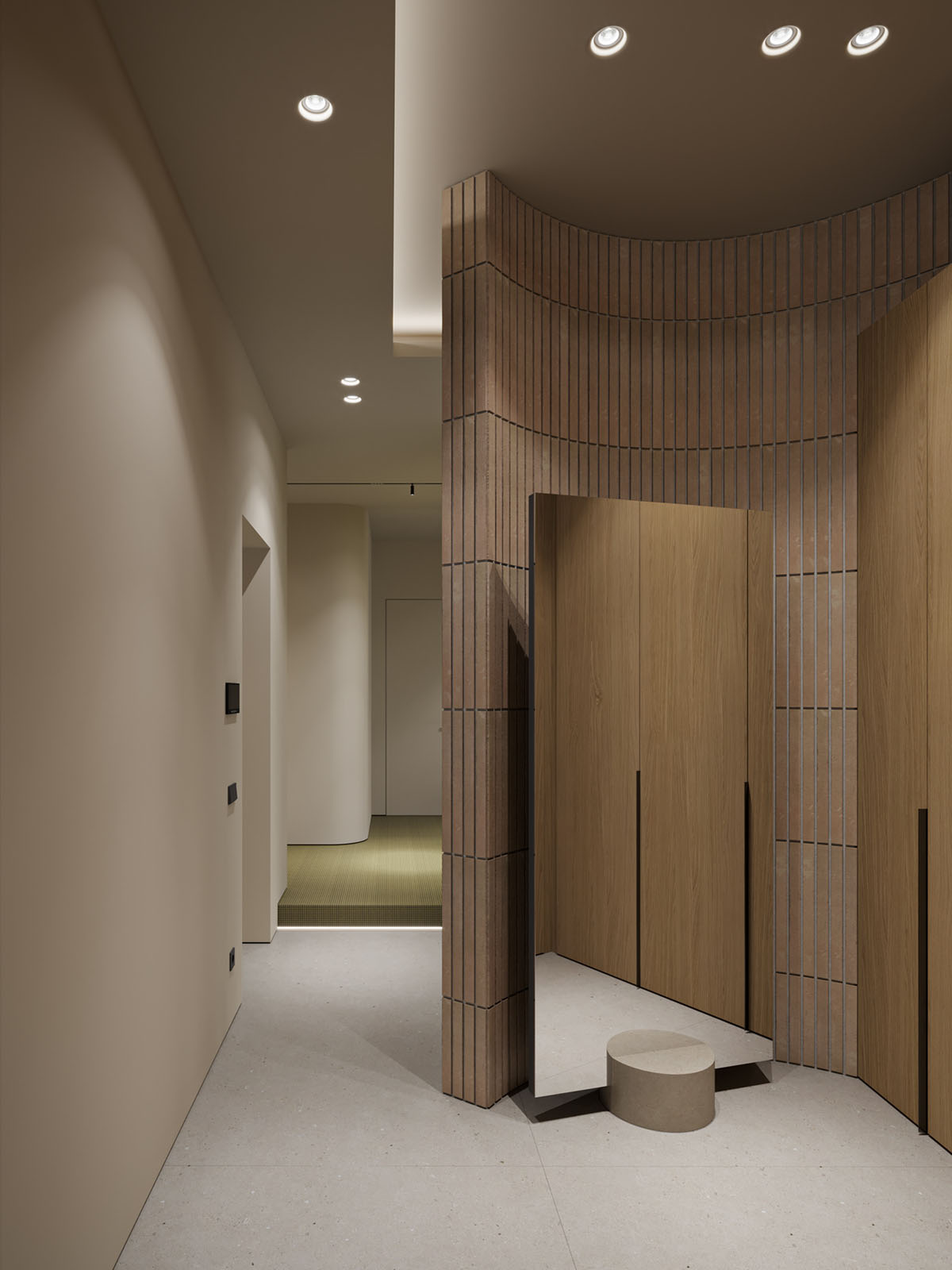
A curved wall creates a cozy cocoon around the home entryway. A unique full-length mirror stands next to the front door.
LED strips highlight the raised floor area for both safety and aesthetics.
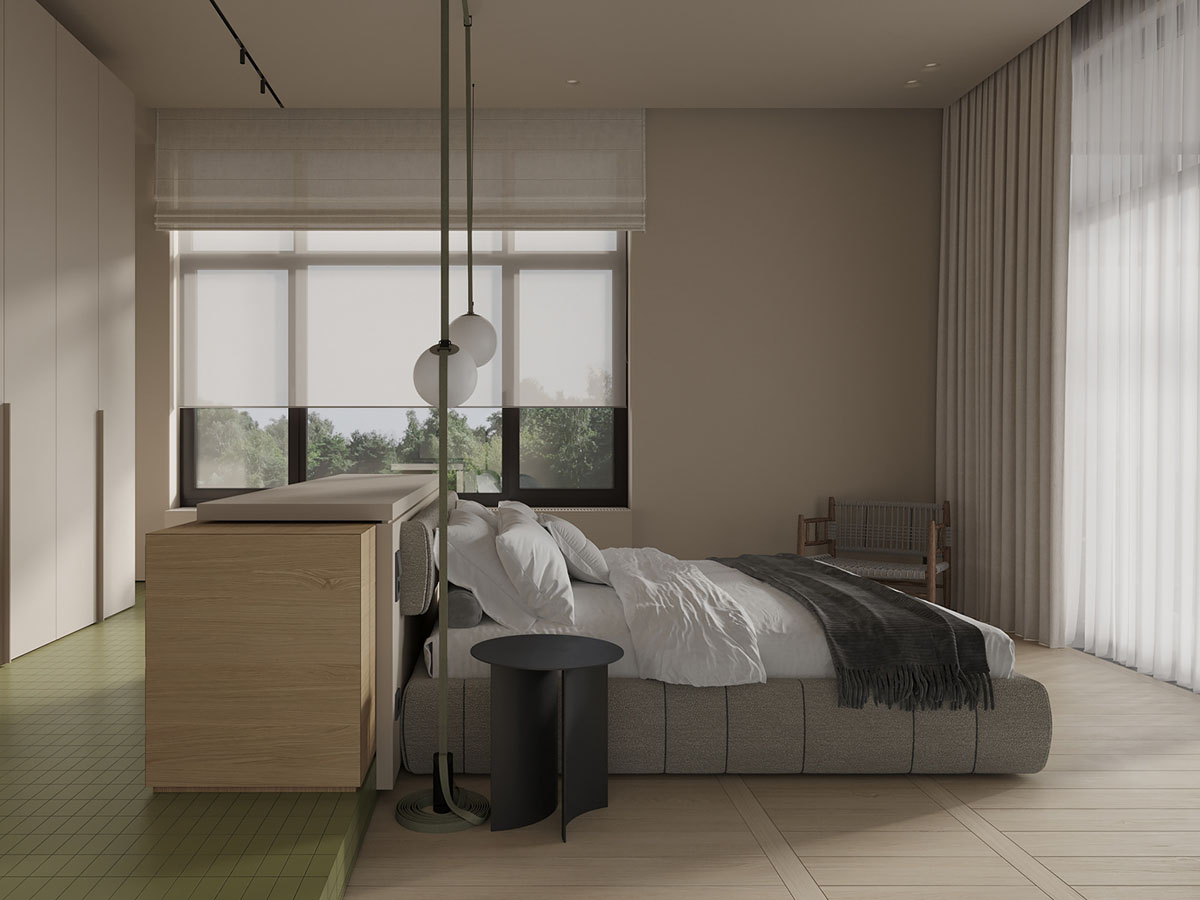
A matching globe floor lamp illuminates the opposite side of the room.
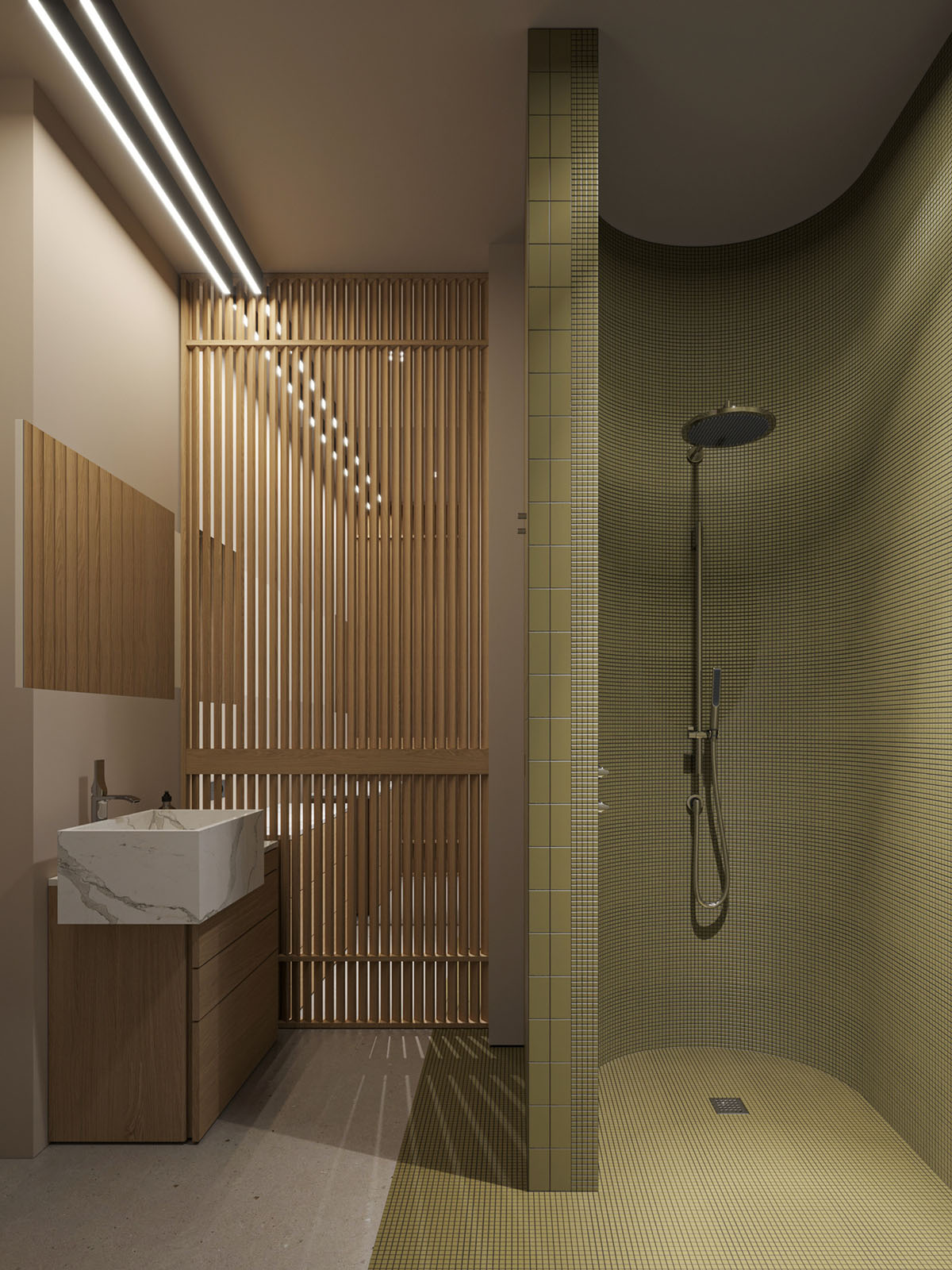
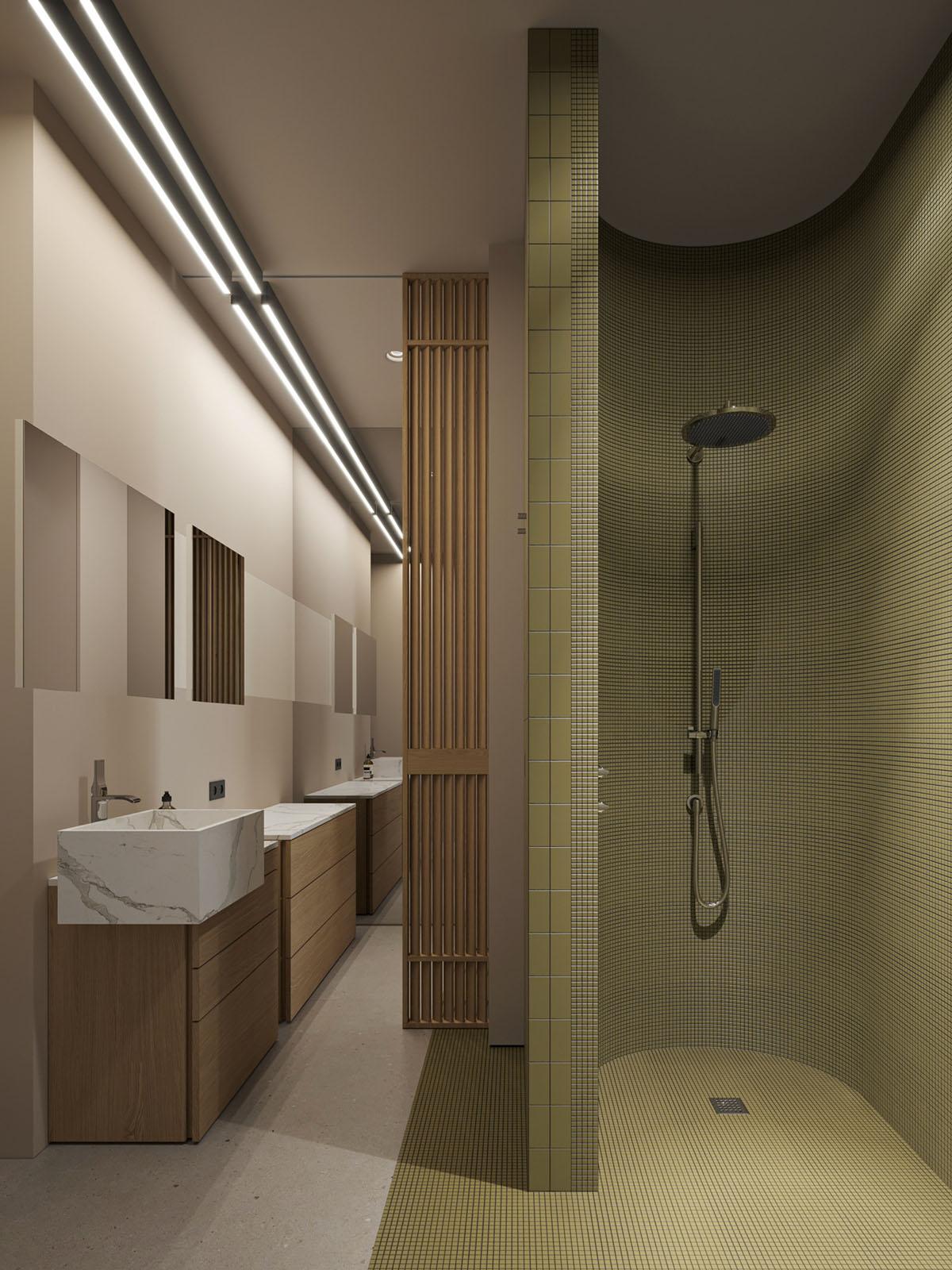
Green tiles floor the entry into a vanity area and an ensuite bathroom.
A wood slatted door separates the bedroom vanity area from a private shower zone and WC.
A luxurious white marble basin overhangs the edge of a modern wooden vanity unit.
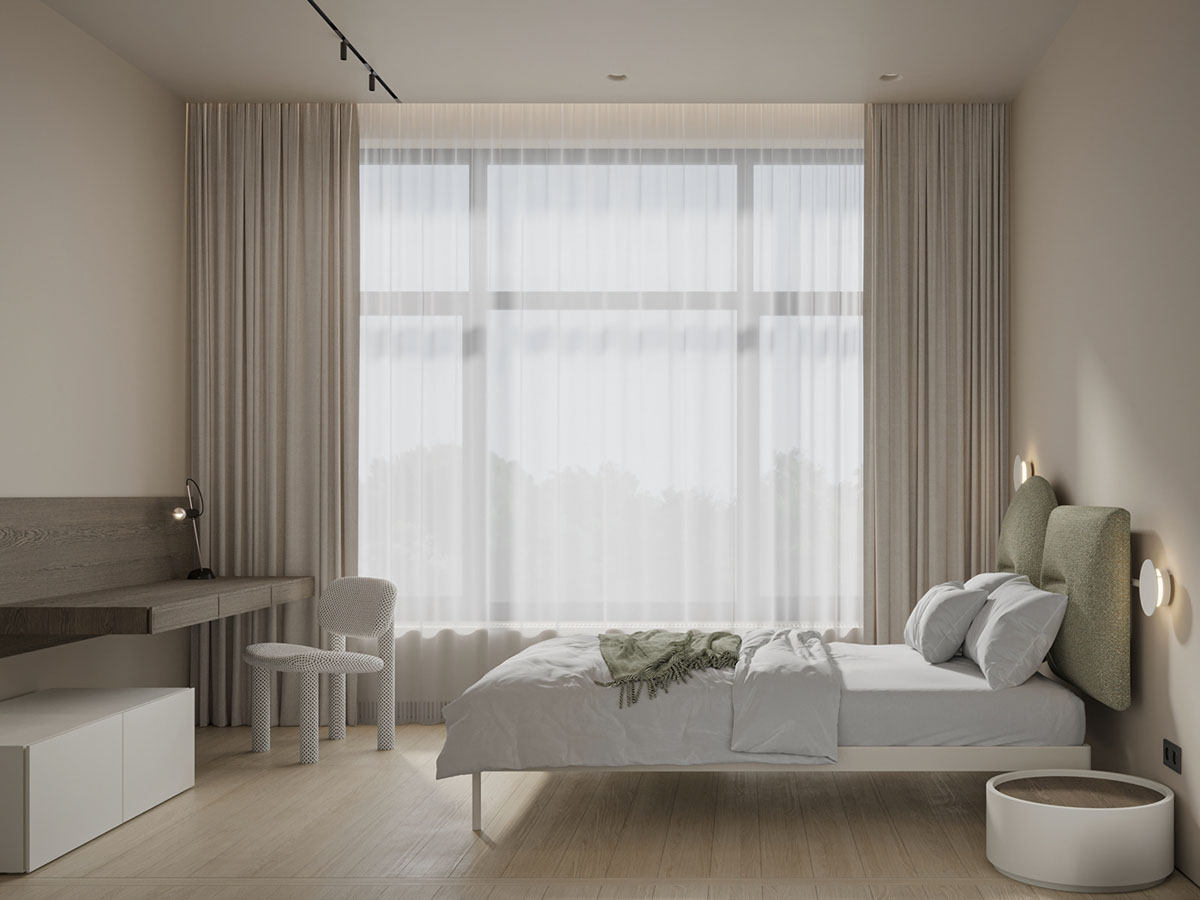
The second double bedroom in the apartment is colored by a green upholstered headboard and a matching throw.
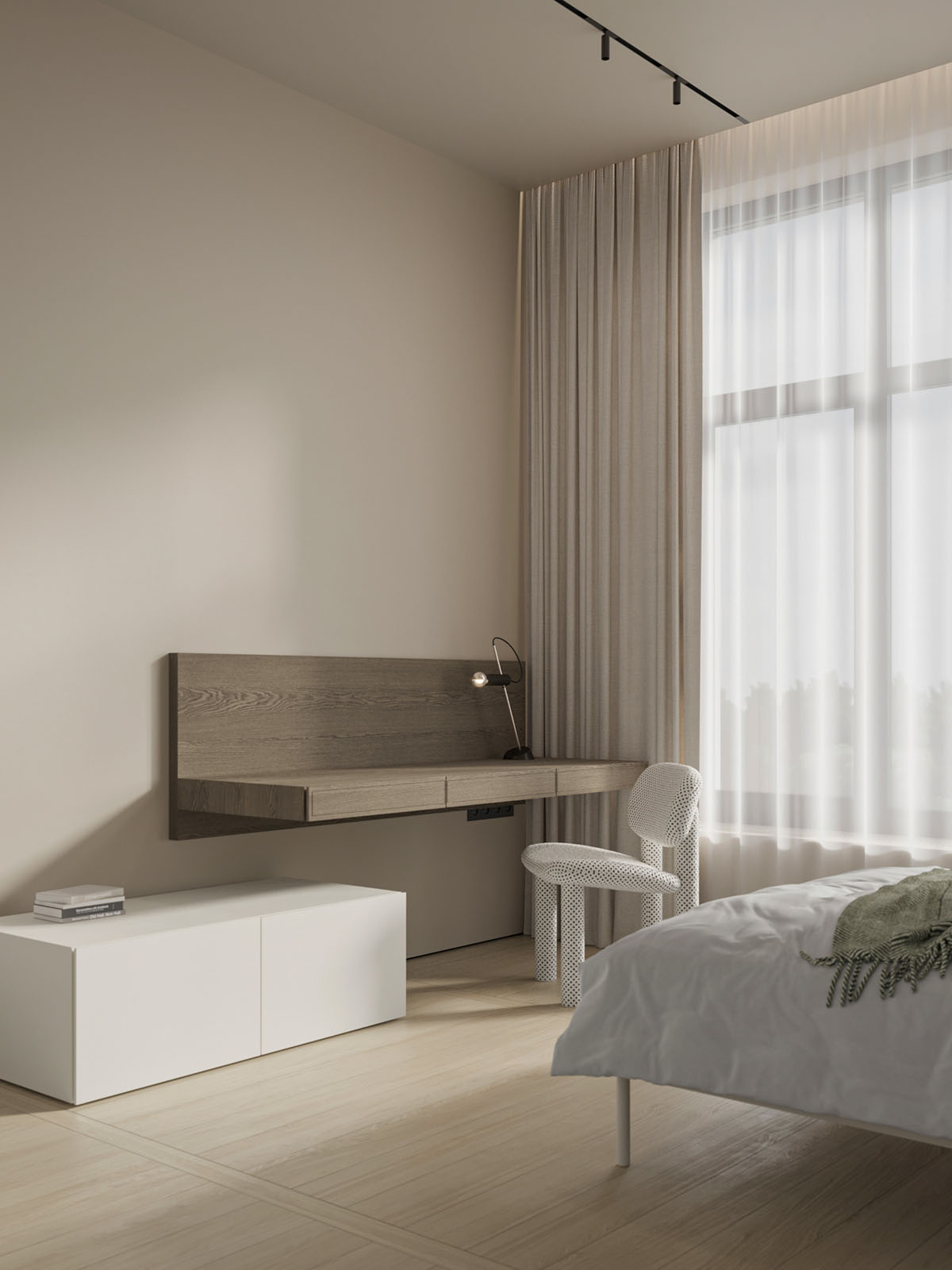
A wall mounted desk creates a bedroom workspace that doubles as a dressing table. A small table lamp provides focussed task lighting. See more ideas for unique table lamps.
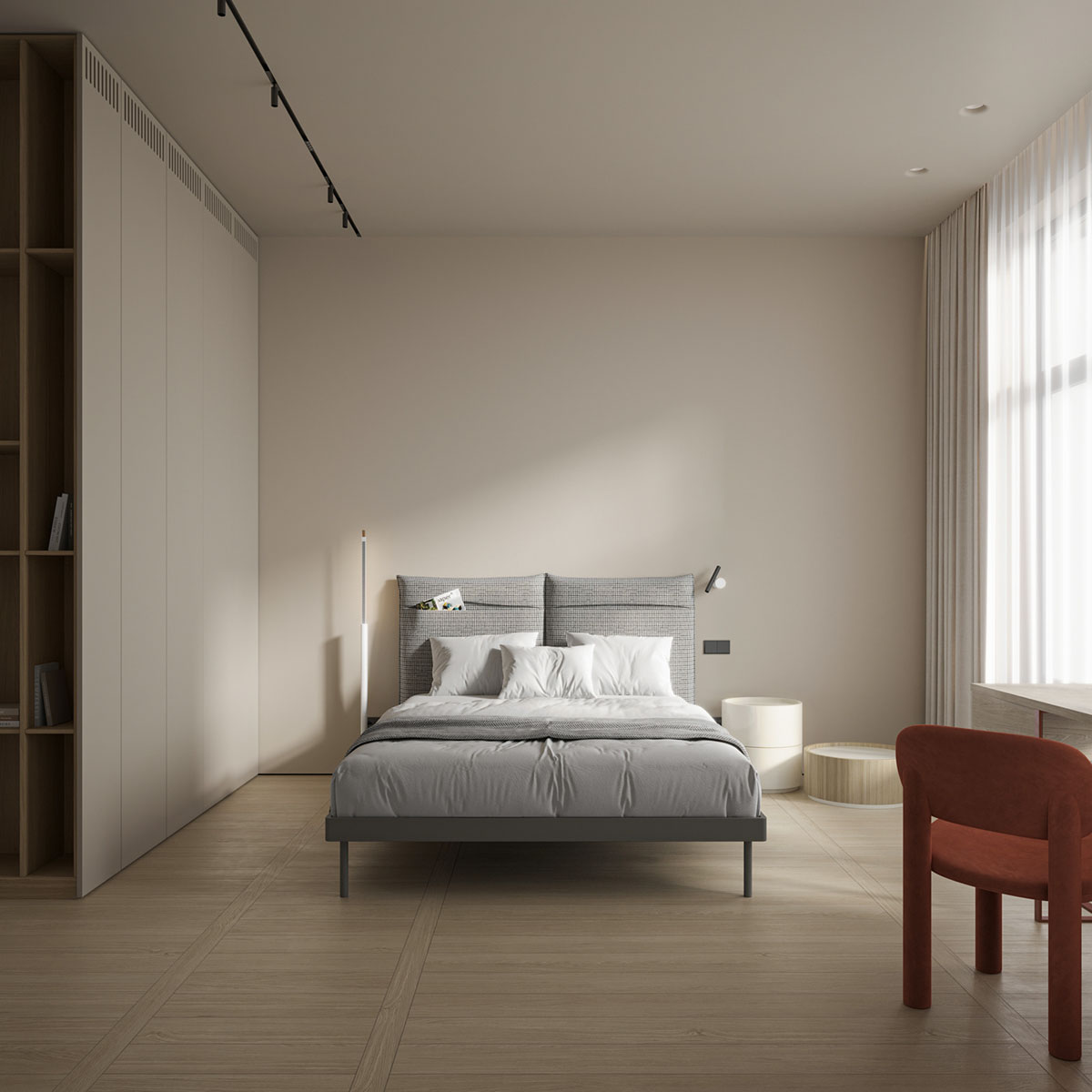
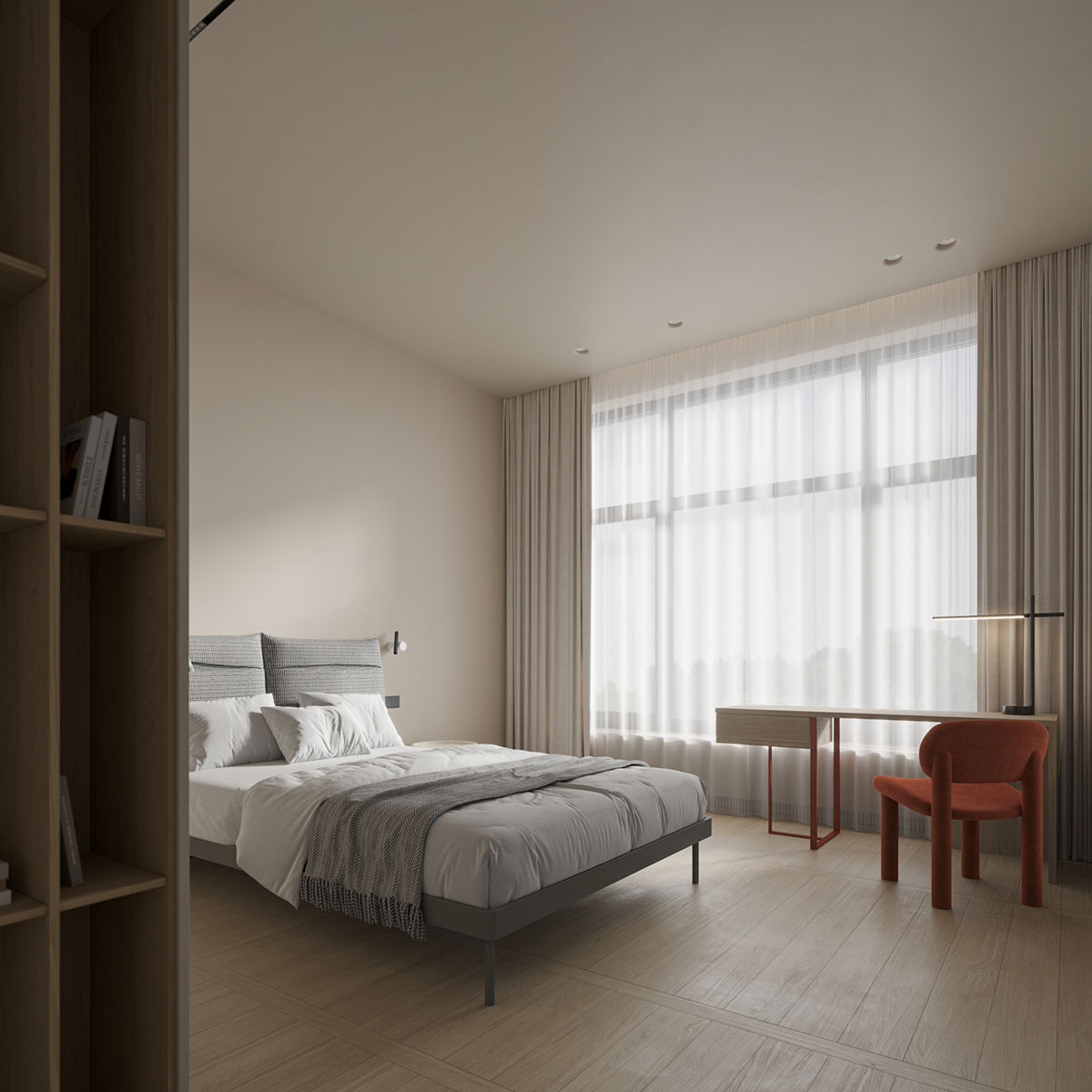
The final double bedroom in the apartment receives an unexpected splash of red.
The red desk chair coordinates with red framework on the modern desk design.
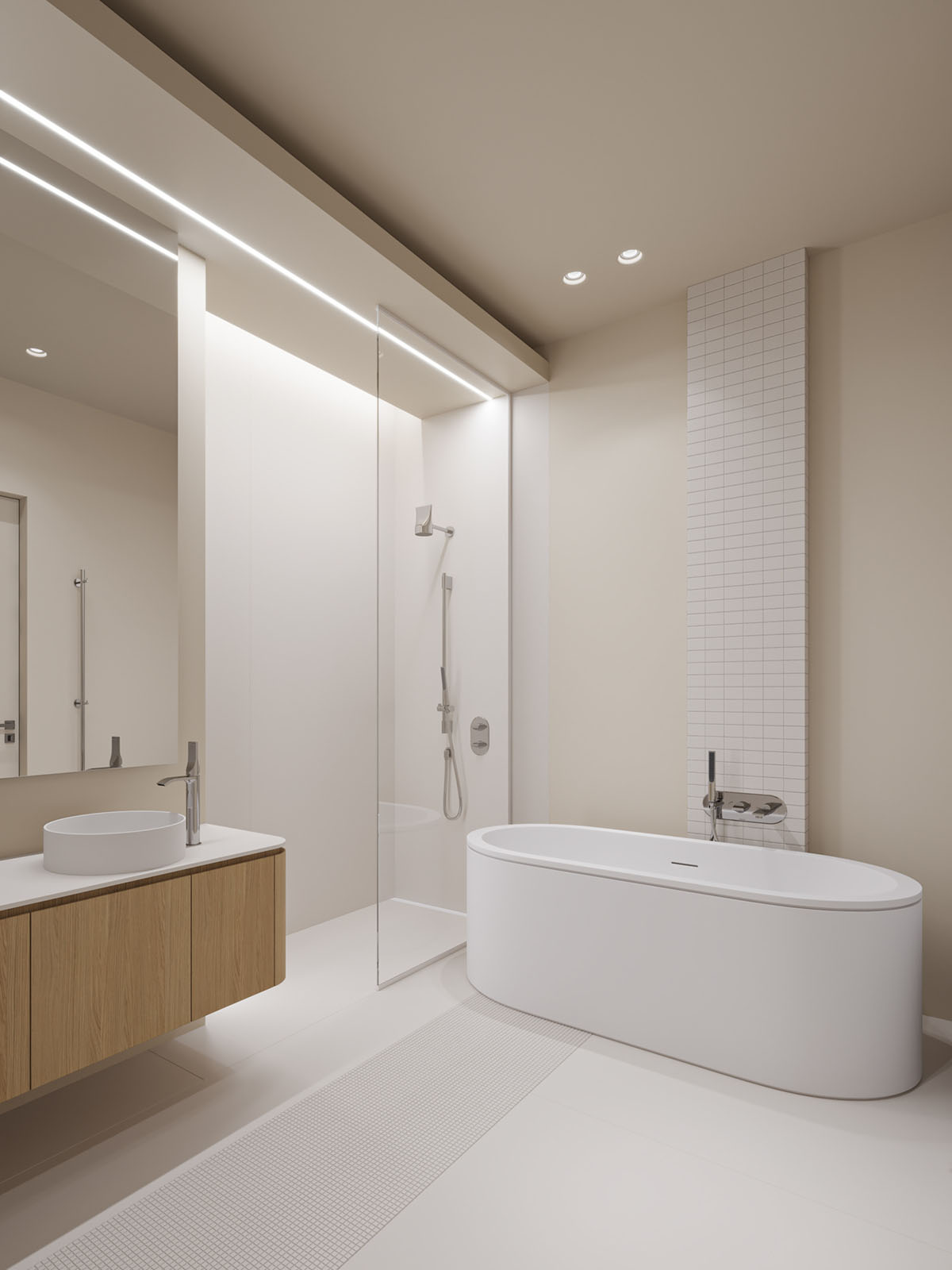
A spacious white bathroom is furnished with a floating wood vanity unit. A racetrack-shaped bathtub sets out a smooth silhouette.
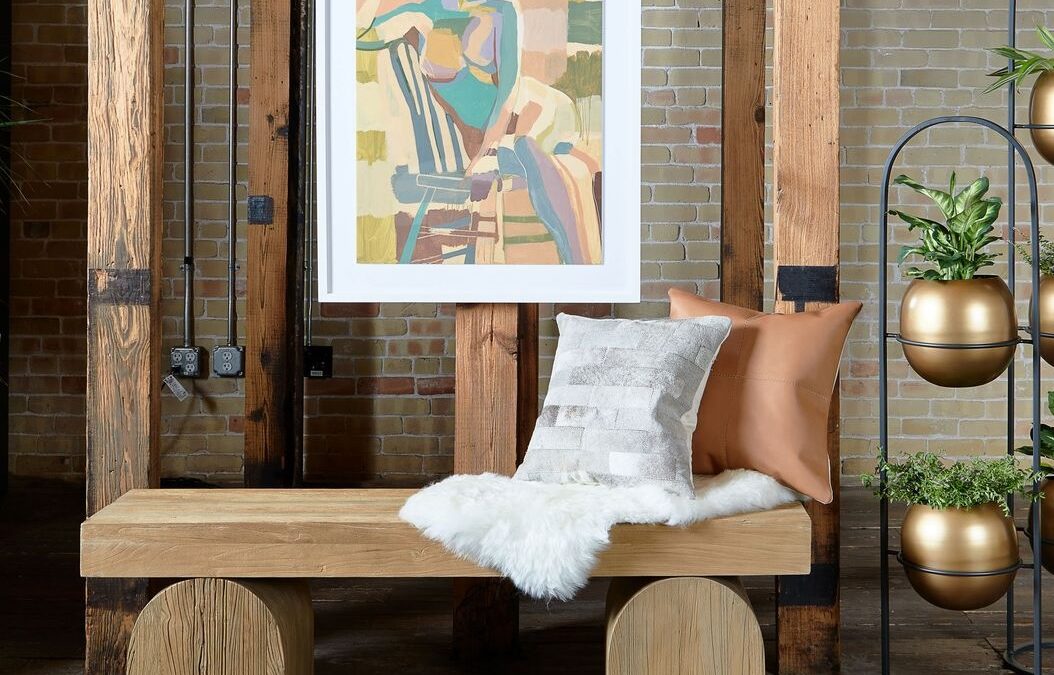
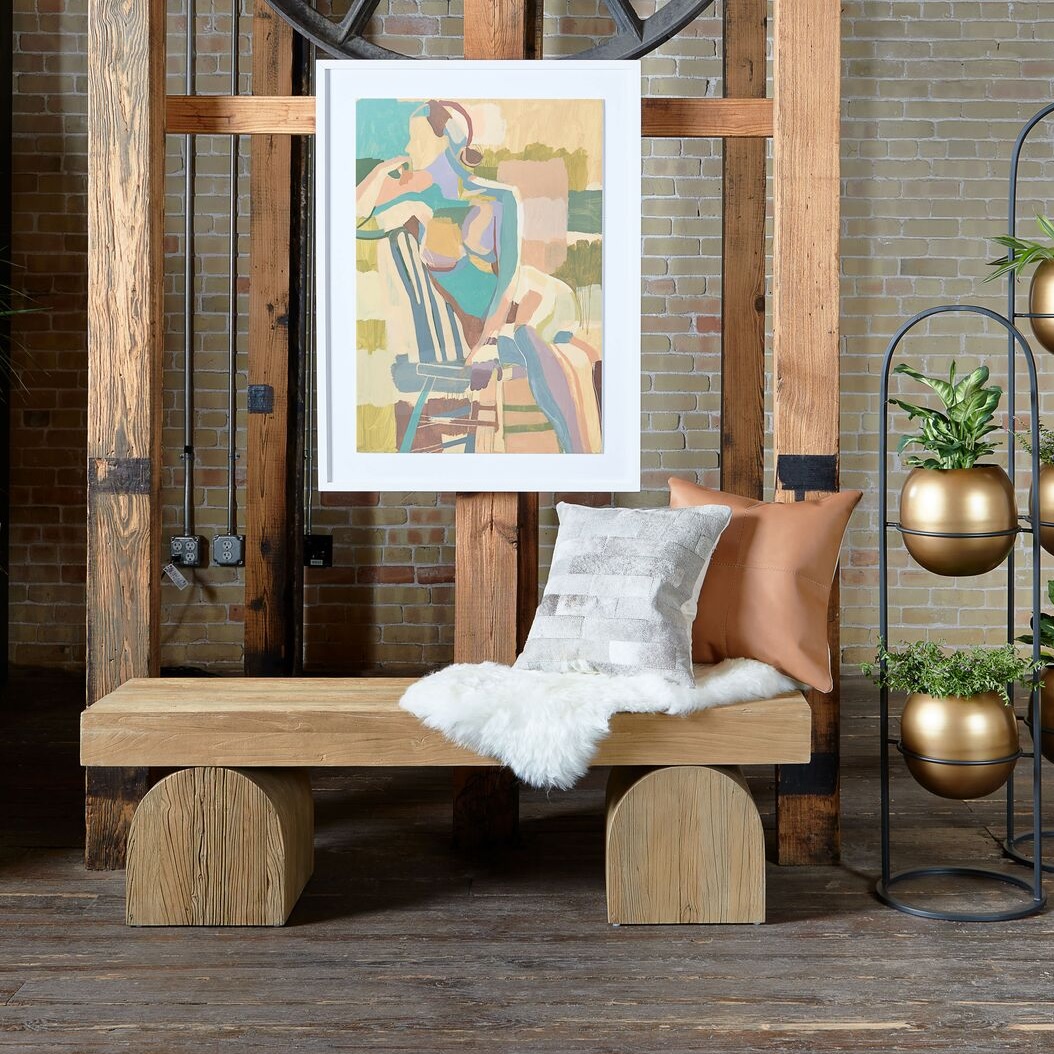
You’ll never run out of ways to use a well-made wood bench. These adaptable pieces of furniture can be placed at the entryway, along a wide hallway, at the foot of the bed, alongside a dining table, or even used as a coffee table right in the living room. When it’s time to rearrange your furniture, that versatile wood bench will always find a new purpose somewhere else in the home. For this compilation, we’ve collected our favorites from around the web – from designer wooden benches to practical budget-friendly selections, there’s something here for every budget and every style.
.ml-mobileButton-horizontal{display:none}#mlb2-3976399 .ml-mobileButton-horizontal button{background-color:#d3305f!important;border-color:#d3305f!important;border-style:solid!important;border-width:1px!important;border-radius:0!important;box-shadow:none!important;color:#fff!important;cursor:pointer;font-family:’Open Sans’,Arial,Helvetica,sans-serif!important;font-size:14px!important;font-weight:700!important;line-height:20px!important;padding:10px!important;width:100%!important}@media only screen and (max-width:400px){#mlb2-3976399.ml-form-embedContainer .ml-form-embedWrapper .ml-form-embedBody .ml-form-formContent.horozintalForm{padding:0 0 10px 0!important}.ml-hide-horizontal{display:none!important}.ml-form-formContent.horozintalForm .ml-button-horizontal{display:none!important}.ml-mobileButton-horizontal{display:inline-block!important;margin-bottom:20px;width:100%}.ml-form-formContent.horozintalForm .ml-form-horizontalRow .ml-input-horizontal>div{padding-bottom:0!important}}
@media only screen and (max-width:400px){.ml-form-formContent.horozintalForm .ml-form-horizontalRow .horizontal-fields{margin-bottom:10px!important;width:100%!important}}
Home Designing may earn commissions for purchases made through the links on our website. See our disclosure policy.
Make a striking addition to the living room, home office, bedroom, or hallway with one of these rustic wooden wall art plaques.
Add a touch of texture and rustic flair to any area with a DIY wood wreath.
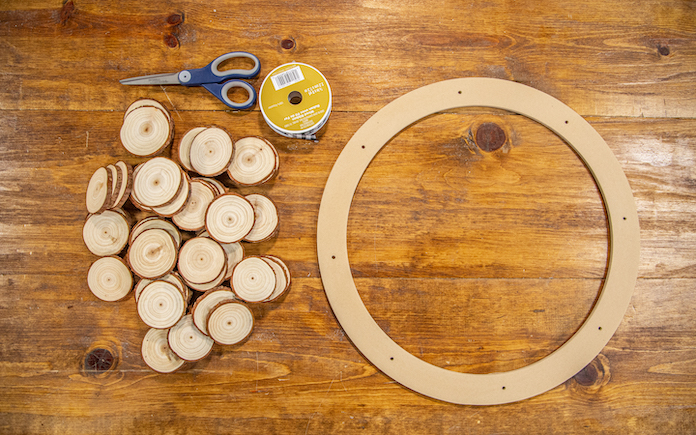
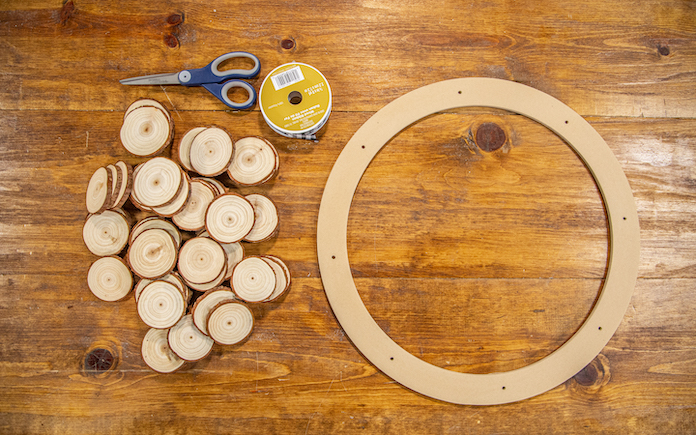
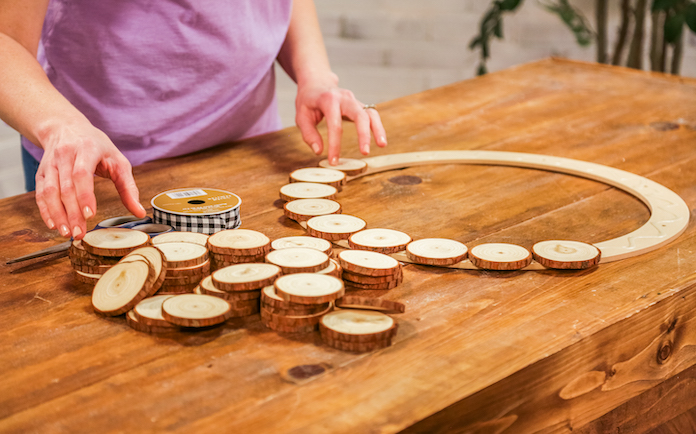
This one is a unique take on a traditional wreath using wood cross sections from a small tree (or wood rounds).
Wood rounds are sold at most craft stores, but you can also cut your own if you’ve just trimmed some large tree branches or chopped down a small tree.
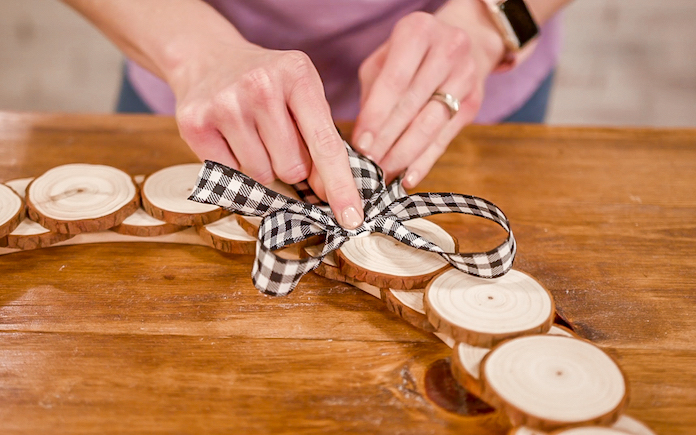
This versatile wood wreath can be changed throughout the seasons. Add some holly and red and green ribbon for Christmas. Wrap a pastel-colored ribbon and faux Easter eggs when spring rolls around.
The possibilities for customization are as endless as your imagination!
This wreath isn’t just a door decoration. It’s an eye-catching piece for above a fireplace as well. You can even create multiples for a DIY wedding or baby shower decor.
Assembly takes just a few minutes, and it’s a great way to accent a rustic or farmhouse style. Plus, you can show off your crafty skills to the neighbors too.
This page contains affiliate links. If you purchase a product from these links, we will earn a small commission at no additional cost to you.
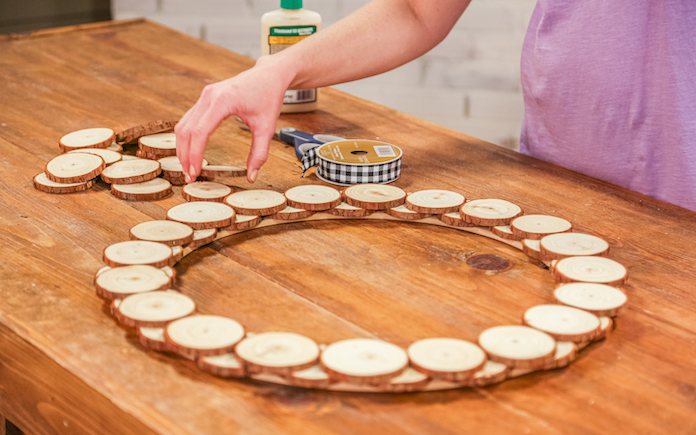
Feel free to get creative and glue another row of rounds to make the wreath thicker. (3 Echoes Content Studio)
1. Glue Wood Rounds to Floral Wreath
Begin by gluing the wood rounds edge-to-edge around the perimeter of a pre-made wood floral wreath frame using Titebond III Ultimate Wood Glue. Feel free to get creative and glue another row of rounds to make the wreath thicker.
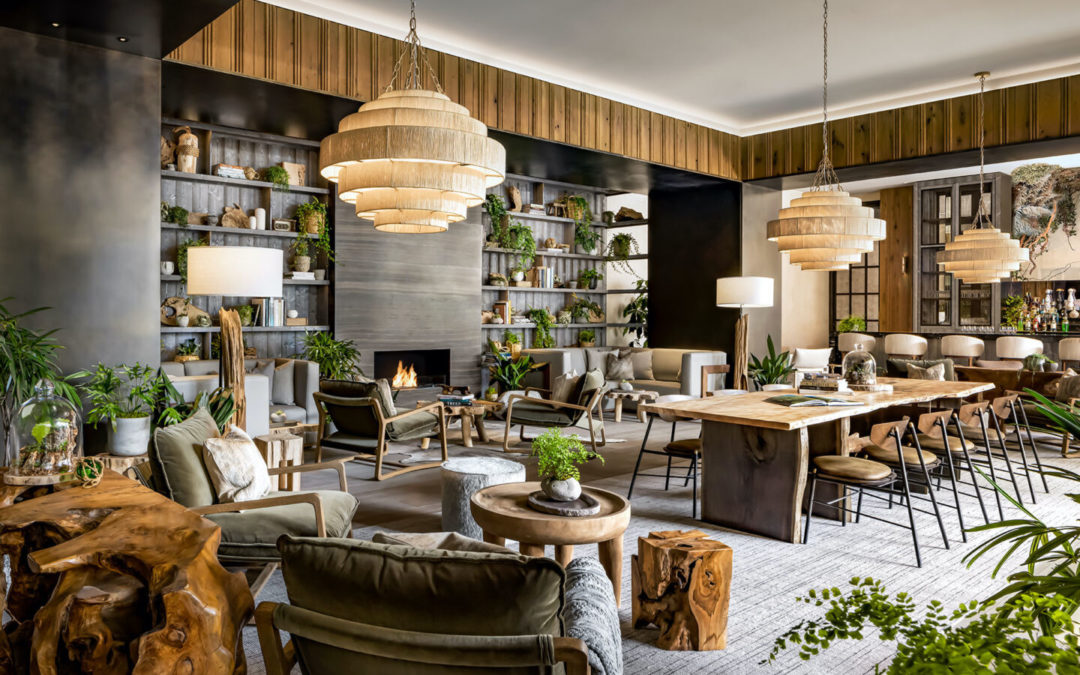
The Lobby of 1 Hotel Toronto provides inspiration for using biophilic design materials in our homes.
There are 14 Principles of Biophilic Design that we can use to create a home that brings nature into the built environment and benefits our mental and physical health and wellbeing. One of those principles is creating a material connection with nature. We can do this by using minimally processed natural materials and elements from nature that reflect the local ecology or geology to create a distinct sense of place.
By establishing a material connection with nature, we can create a home that feels richer, warmer and more authentic. We can also create a more sensory experience that draws not only on the visual connection to nature but one that is stimulating to our sense of touch.
In this post, I want to take a look at a selection of biophilic design materials that we can incorporate into our homes in order to harness the benefits that biophilic design has to offer.
Wood
The most obvious place to start is with wood. We all know that spending time outdoors in nature makes us feel better and creates positive physiological responses in the human body. We feel calmer, less stressed, less anxious, our pulse rate lowers and we generally feel better.
We can mimic this biophilic response to spending time in nature by bringing those materials, such as wood, into our homes. Studies have shown that an interior space with a wood ratio of 45% on the walls will boost our perception of comfort and lower our blood pressure.
It is best to try to use wood in its natural state for maximum benefit. We are drawn to the natural texture of wood and this is what we find to be one of its most attractive characteristics.
Visually we are also more attracted to wood in its natural state. We like to see the grain pattern, surface colour and features such as knots. The positive reaction we have to wood decreases when we these natural features are less perceptible.
Cork
Cork is one of my absolute favourite materials. I had the pleasure of learning all about it first-hand by visiting a cork oak forest in Portugal back in 2019. Cork is an absolutely remarkable material because it is so versatile. In recent years we have seen cork being used to create all sorts of home products from flooring and wallcoverings to furniture, storage, lighting, building facades, and even insulation.
What makes cork so special is how renewable it is. Cork can be harvested from a cork oak tree once it reaches 25 years of age with a trunk circumference of 70cm when measured 1.3m from the ground. After that, the harvest can be repeated every nine years as the tree needs this time to replenish its bark.
Cork trees store carbon in their bark and that carbon remains stored for the lifetime of the product that is made. This means that cork production is actually carbon positive as the process captures more carbon than it creates.
Cork production is also a circular process as no waste is created throughout the entire process and cork is completely recyclable.
There are many reasons that explain why cork is the perfect biophilic design material.
It is extremely lightweight (one of the lightest solid substances there is)
It can withstand a lot of pressure and bounces back easily so has great impact resistance
It has a high resistance to penetration by water
It is a great thermal insulator and has the same core temperature as human body temperature making it warm to the touch
It is a good sound insulator and absorbs vibrations
It is stable, tough, durable and hard-wearing.
And when used with minimal processing, resembling its natural state, it of course reminds us of tree bark and is extremely tactile.
Bamboo
Bamboo has grown in popularity recently but it is still a rather underrated biophilic design material. Bamboo is actually a type of fast-growing grass that is native to tropical, sub-tropical, and temperate climates and is most common in Asia and South America.
This means that it can withstand extreme changes in humidity and temperature and is therefore resistant to shrinking and swelling. As a material, it is strong, practical and durable. In fact, studies have shown that it is stronger than steel which makes it ideal for building furniture.
It usually reaches maturity between one and five years and can grow from 20 cm to 1 meter per day depending on the species. Once it reaches maturity it can be harvested and like cork, it doesn’t need to be replanted but regrows once it has been harvested.
Bamboo is an interesting choice of biophilic design material as it releases 35% more oxygen than other types of wood.
It is also very versatile and can be used to create flooring, furniture, lighting, fabric, storage, wall panels, home accessories, and even rugs.
Linen
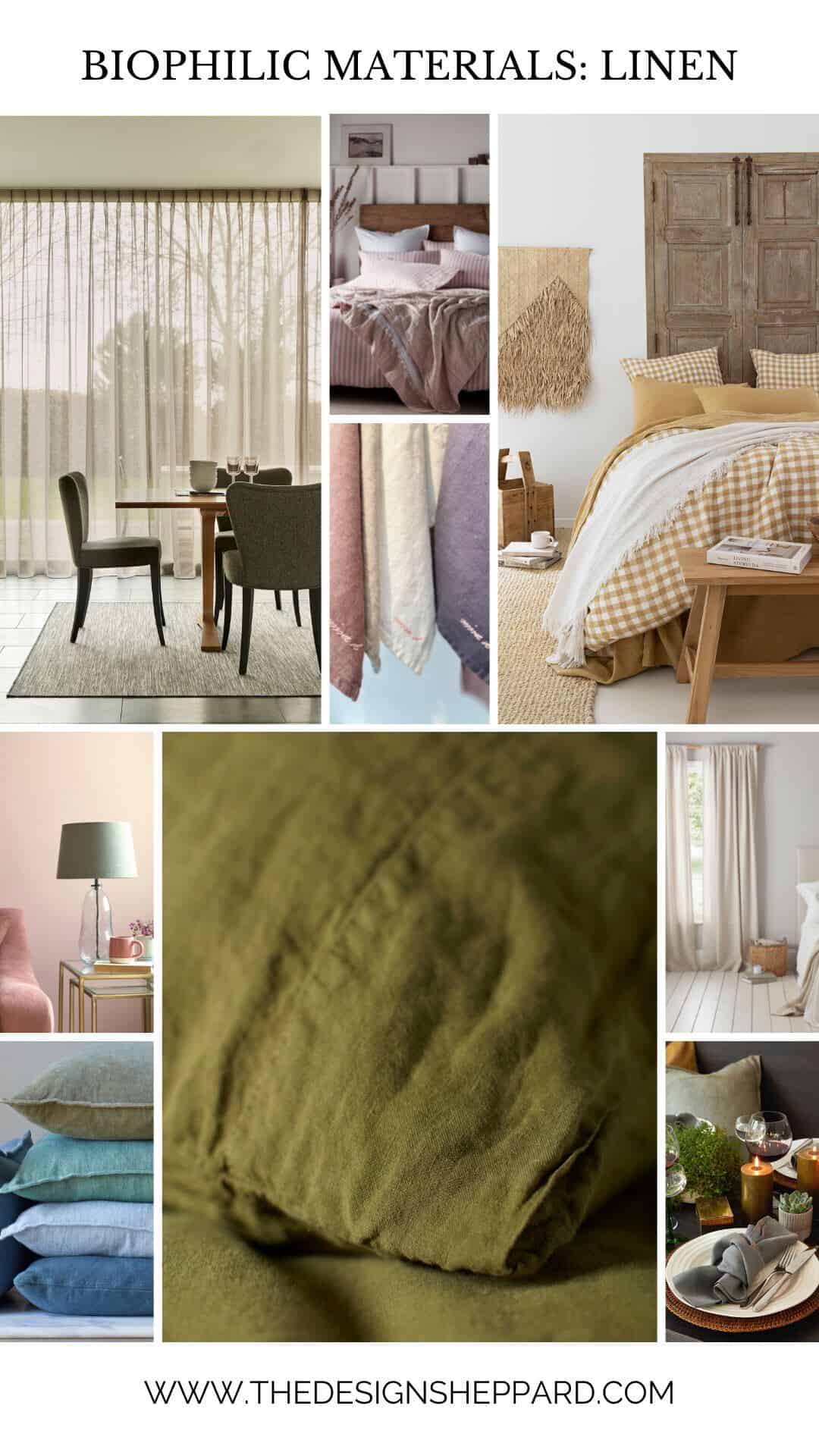
Linen is a wonderful material that is made from the flax plant that grows especially well in Northern Europe. It has been used for centuries and is the world’s second most productive crop per hectare after hemp.
It outperforms cotton because it makes better use of the land through crop rotation and requires less water to grow. It also can be grown without the need for pesticides.
Linen is also biodegradable so it won’t clog up landfill or pollute the oceans as synthetic fibres do.
It is also a lovely material to have in your home as it is breathable and comfortable and this is why it is often used for bedding.
Rattan
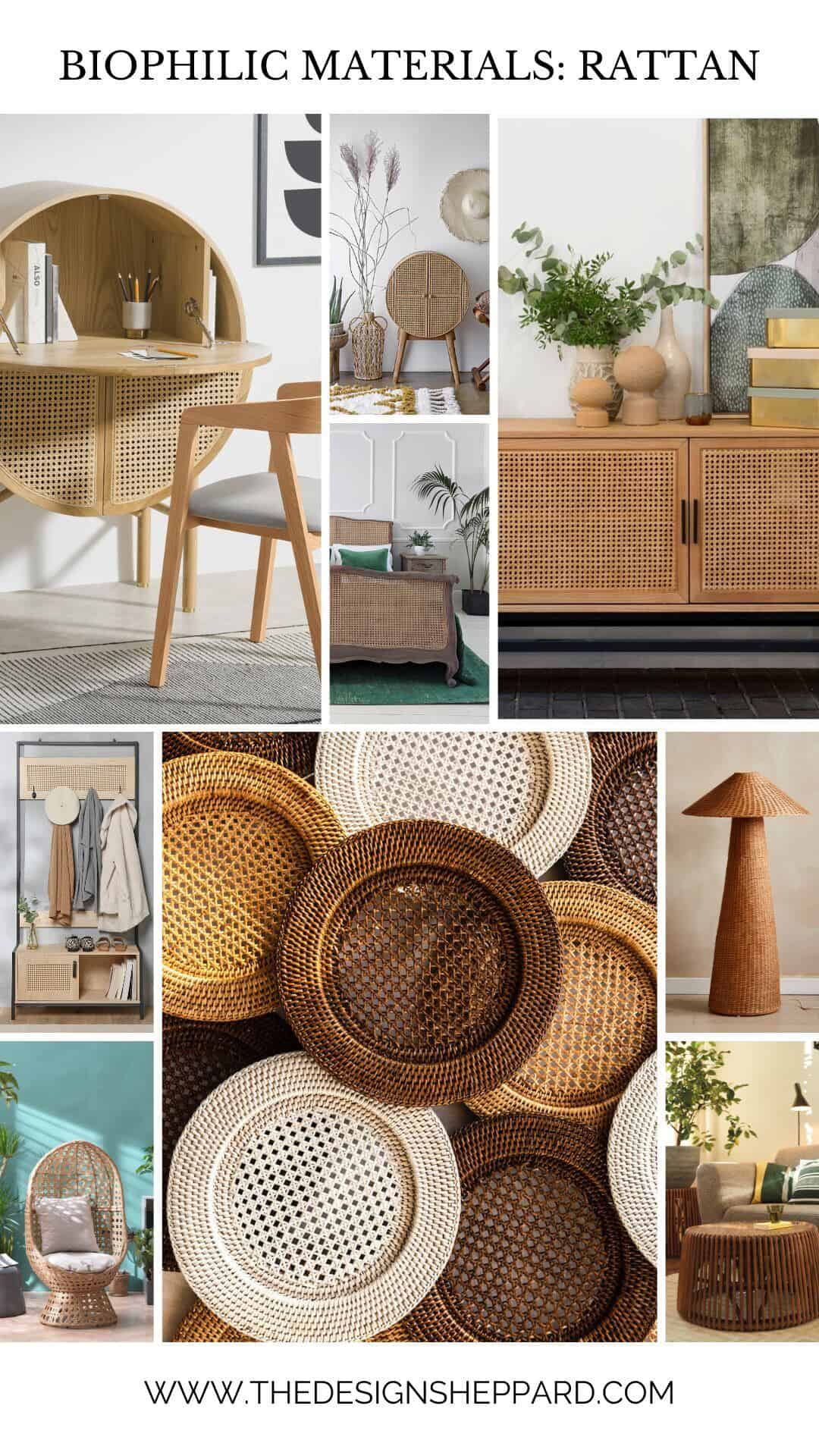
Rattan is another great biophilic design material. Again it is completely natural as it is a climbing palm which develops as a vine in the jungle. It grows up tropical trees in the rainforest and can grow to be between 200 and 500 feet long. It is the quickest developing tropical wood that renews in only 5-7 years.
Once harvested the vines are usually cut into 13 feet lengths and left to dry in the sun. As a material, it is lightweight, durable, resilient and exceptionally sustainable.
Rattan also has air purifying properties as it converts CO2 into clean air.
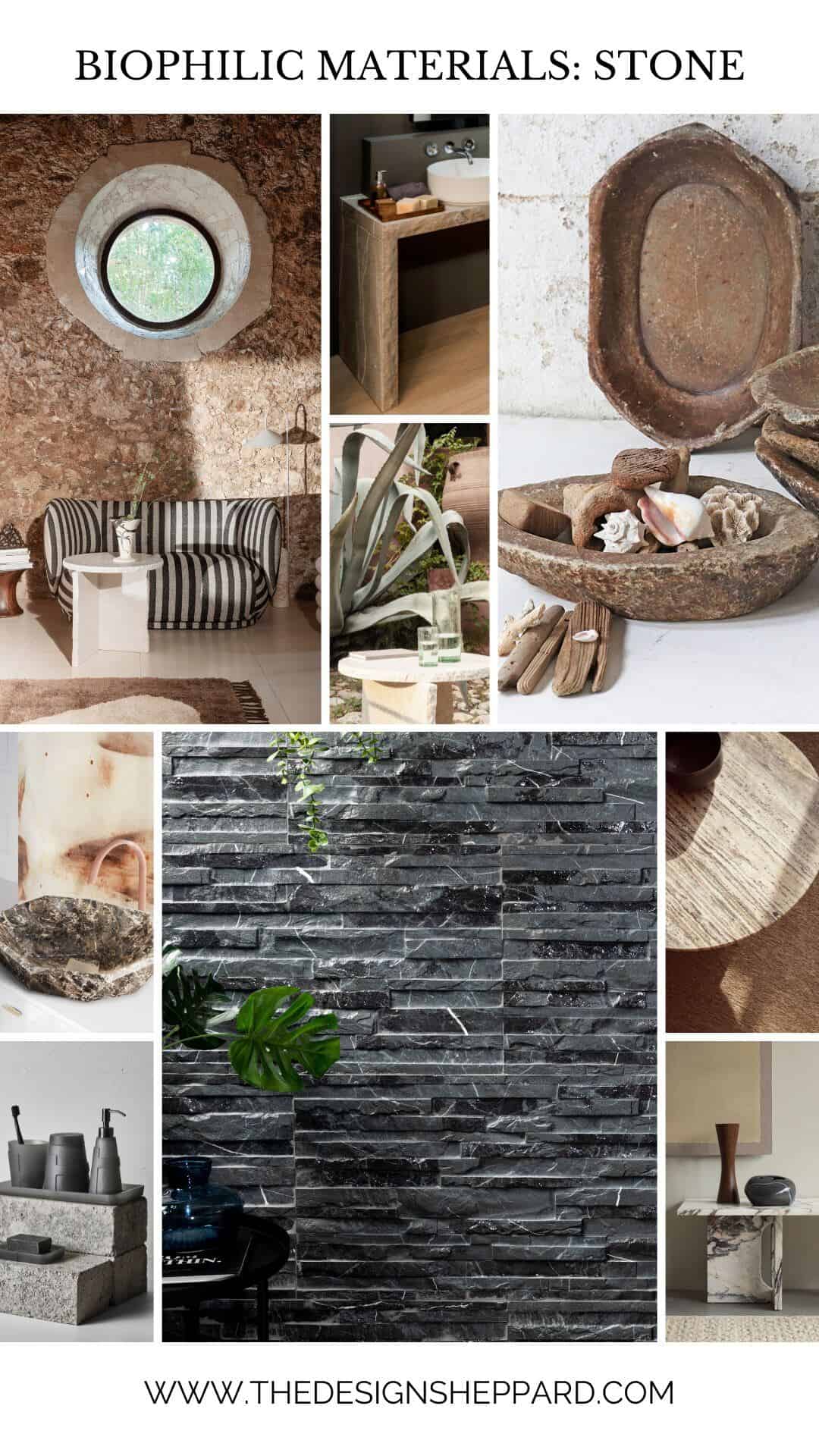
As biophilic design is all about bringing the outside in, it makes sense that stone features on our list of biophilic design materials.
As a natural material, it is the veining, striping and speckling that we tend to be drawn to along with the earth-toned colour palette.
Stone also offers a variation in temperature compared to more organic materials such as wood and cork. Stone is cold to the touch because it has high thermal conductivity so heat flows from us to the stone quickly making it feel cooler than wood for example which has a lower conductivity.
Stone is a great way to add a biophilic response to the bathroom which is traditionally very white, sterile and lacking in texture.
How to Use Biophilic Design Materials in Your Own Home
When thinking about how to use biophilic design materials in your own home, first take a hard look around at your surrounds outside. What kind of landscape is there? What is the local ecology and geology like? Is your local area surrounded by woodlands and forest? Is it near to sandy beaches or craggy mountains?
Try to bring elements of your local landscape into your home because connecting with local natural materials is a great way establish that material connection with nature and support that sense of place and of belonging.
Try to bring in lots of textures that resemble minimally processed natural materials. Think of how those textures make you feel and choose ones that you can’t resist running your fingers over. But choose a variety of contrasting textures and temperatures.
We want to create an experience that engages all of our senses, not just our vision.
The Added Advantage of Biophilic Design Materials
The added benefit of using biophilic design materials is of course the sustainability factor. All of these natural materials are sustainable, eco-friendly, renewable, recyclable and biodegradable making them much better, not only for people, but also for the planet.
So you can rest assured that while you are doing something to benefit your own health and wellbeing, you are also doing your bit to protect the planet.