Forgive me for being a little crass, but do your neighbours stink? And I mean, really stink?
If you’re nodding your head, do you know what legal rights you have if bad smells are coming from your neighbour’s property, do you know what legal rights you have?
Bad smells are never pleasant, and if they’re coming from your neighbour’s home, it can feel inescapable, too. So, I spoke to legal experts about when smells become a nuisance, and what you can do if said bad smells are affecting your day-to-day life.
Can you complain about bad smells coming from your neighbour’s property?
I’ll admit I’m unfortunately speaking from experience. Having lived in a flat where one of my neighbours was particularly stinky, I was never sure if I could complain or not. Despite the fact that I was practically holding my breath every time I walked past their door, it felt rude to say anything – and I wasn’t sure if it was the sort of thing that warranted a complaint anyway.
However, it turns out you can complain to your landlord or even council about bad smells. But there are a few considerations to take into account.
(Image credit: Future PLC/ David Giles)
‘The specific ‘smell’ category of statutory nuisance under the Environmental Protection Act 1990 applies only to industrial, trade or business premises, not private homes. The council can still act under other categories that do apply to homes: fumes or gases emitted from a private dwelling; premises in a state prejudicial to health or a nuisance; accumulations or deposits that are prejudicial to health or a nuisance; and animals kept in a place or manner that is prejudicial to health or a nuisance,’ explains Yulia Barnes, managing partner of Barnes Law.
Sign up to our newsletter for style inspiration, real homes, project and garden advice and shopping know-how
‘If your neighbour is a tenant, complaining to their landlord can be very effective. Most tenancy agreements contain nuisance clauses, giving the landlord leverage to require the problem to be addressed. Social housing landlords also have their own anti-social behaviour procedures. Where a rented home has serious damp, mould or sanitation problems, the council can also inspect it and take enforcement action against the landlord under the Housing Act 2004. When you complain, explain what steps you have already taken, such as speaking to your neighbour, and share your smell diary.
‘If the council decides not to act, you can bring a statutory nuisance complaint directly to the magistrates’ court yourself, or make a civil claim in private nuisance for an injunction or damages. Take legal advice before starting either route.’
What smells can you complain about?
There’s no list of the sort of stink you can complain about, but there are some scents that are worthy of complaint. You should also be keeping a diary if you notice poor smells, recording what they smelt like and when you smelt them.
‘The council can potentially take action if the smell is considered a statutory nuisance. This may apply to persistent or serious odours caused by things such as waste, animals, smoke, or poor conditions. The council can investigate the complaint and, if necessary, require the person responsible to take steps to reduce or stop the smell,’ says Jack Malnick, founder of Sell House Fast.
(Image credit: Future PLC/ Simon Whitmore)
It has to be considered a statutory nuisance for the council to uphold your complaint. But renters can complain to their landlord about other smells.
‘If you own or rent your home, you may be able to bring your own civil claim for private nuisance. The test is whether the smell substantially and unreasonably interferes with your use or enjoyment of your home, considering the character of the area and the frequency and intensity of the smell. A fleeting whiff is unlikely to qualify; a persistent, overpowering odour that stops you opening windows or enjoying your garden may well do so,’ says Yulia.
‘Cooking smells will rarely meet either threshold unless extreme and persistent. One exception is where a home is used to run a food business, such as an unregistered commercial kitchen. The property may then count as business premises, bringing the smell within the council’s statutory nuisance powers.’
How to speak your neighbour about bad smells
Of course, the last thing you want to do is fall out with your neighbour, and before you lodge a complaint, the right course of action is to have an open conversation about the smells. I know this can be awkward, so I asked our experts exactly how we should go about this conversation.
‘As with all neighbour problems, the best way to resolve them is to start by speaking to your neighbour in person, politely and calmly. The owner may not be aware of any issue due to what people often call ‘nose blindness’, or they could be working their way to sorting it, so it is best to approach the conversation politely,’ says Jack.
(Image credit: Future PLC/ Oliver Gordon)
Julia also says it’s worth trying to work out what the bad smells are, such as bad drains, before speaking to your neighbour.
If the smell seems to come from drains, bear in mind that shared sewers are usually the responsibility of your local water company, which you can contact directly,’ she says.
‘If talking does not help, contact your council’s environmental health team. Under the Environmental Protection Act 1990, councils must take reasonably practicable steps to investigate statutory nuisance complaints from people living in their area. Also check your lease or title deeds for nuisance clauses or covenants. If you share a landlord with your neighbour, you will usually need to ask the landlord or management company to enforce these terms, and some leases require you to cover the costs.
‘Freehold covenants can sometimes be enforced between neighbours, but only where you have the benefit of the covenant, so take advice. If the smell affects your health, see your GP and keep a record of symptoms.’
If you're struggling with bad smells coming from your neighbour's house, the first thing to do is start keeping a smell diary. Record the dates, times and descriptions of the bad odours.","brand":"PrimEpoch","name":"Primepoch Notebook A5 Lined With 256 Pages Thick Journal, Sticky Notes","urlStyle":"","retailer":"","layout":"horizontal","linkText":"","noFollow":true,"noAffiliateTracking":false,"promoLabel":"","price":6.99,"salePrice":null,"currency":"GBP","linkLayout":"text","sponsored":false,"hawkProductNameMatchedCode":"","review":{"cons":[],"id":"","name":"","pros":[],"rating":0,"strapline":"","url":""},"id":"","externalId":"ba982a6c9374f73c9ebb1781b42cd128c3ef8271","lastCheckedPriceDate":"","link":{"url":"https:\/\/target.georiot.com\/Proxy.ashx?tsid=107653&GR_URL=https%3A%2F%2Famazon.co.uk%2FPrimEpoch-Notebook-Lined-Journal-Sticky%2Fdp%2FB0H999RWQS%2Fref%3Dsr_1_3_sspa%3Ftag%3Dftr-idealhome-gb-21%26ascsubtag%3Dhawk-custom-tracking-21","merchantName":"Amazon UK","merchantId":1027,"merchantNetwork":"Amazonuk","merchantUrl":"amazon.co.uk"}}}}}” data-link=”https://target.georiot.com/Proxy.ashx?tsid=107653&GR_URL=https%3A%2F%2Famazon.co.uk%2FPrimEpoch-Notebook-Lined-Journal-Sticky%2Fdp%2FB0H999RWQS%2Fref%3Dsr_1_3_sspa%3Ftag%3Dftr-idealhome-gb-21%26ascsubtag%3Dhawk-custom-tracking-21″ data-link-merchant=”Amazon UK” data-merchant-id=”1027″ data-merchant-name=”Amazon UK” data-merchant-network=”Amazonuk” data-merchant-url=”amazon.co.uk” data-model-brand=”PrimEpoch” data-model-name=”PrimEpoch Primepoch Notebook A5 Lined With 256 Pages Thick Journal, Sticky Notes” data-name=”Horizontal Product Block merchantlink widget” data-render-type=”fte” data-show-fallback=”button” data-widget-type=”merchantlink” class=”ecom-root”>
If you’re struggling with bad smells coming from your neighbour’s house, the first thing to do is start keeping a smell diary. Record the dates, times and descriptions of the bad odours.
Bad smells are both awkward to talk about and unpleasant to encounter. But if you stay calm and speak to your neighbours, it should be easy to resolve.
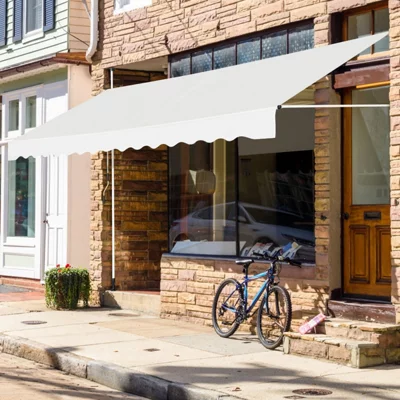
This hot, dry summer (and the promise of more extreme weather in the years to come) has had me thinking constantly about the importance of shade over the past few months. And it’s not just me following this line of thinking either, as estate agents say that shade is becoming a more desired quality for buyers, too – and that an awning might just be the thing that helps you sell your home in 2027.
I’ll preface by saying that while an awning won’t make your home more valuable per se, it is a garden shade idea that will improve your home’s appeal to buyers and even help you sell it.
While it’s far too soon to say exactly what effect a desire for shade will have on the housing market just yet, I’ve spoken to multiple estate agents and experts who have all told me the same thing – features such as awnings are only becoming more and more desirable.
Latest Videos FromIdeal Home
Why buyers are seeking shade:
In July, the Met Office reported in the latest edition of the State of the UK Climate report that extreme weather, such as the heatwaves we’ve experienced this summer, would become increasingly common in the UK. And it is this promise of hotter summers that has already impacted our home buying preferences, according to estate agents.
(Image credit: Future PLC/ Colin Poole)
‘After the recent run of hot summers, buyers are asking questions about how a property handles heat that they simply did not ask five years ago. A south-facing garden used to be an unambiguous positive. Now buyers are asking about shade, about what the patio is like in the afternoon and whether the house stays cool. Shade-creating features are moving from a nice-to-have to a genuine consideration for a growing number of buyers,’ comments Katie Cromwell, founder and director of Swansea-based estate agents No. 86 Estate Agency.
Given that the majority of this year’s garden trends have revolved around climate-resilient gardens and water harvesting, it is arguably a little unsurprising that sun sails, pergolas and awnings have also increased in popularity.
‘An awning is unlikely to add a fixed percentage to a property’s value in the same way that an extra bedroom or a high-quality extension might. However, it can certainly add to a home’s appeal and help it stand out when it comes to selling. A well-designed awning or pergola can make a garden, terrace or patio feel like a genuine extension of the living space, while also providing practical shade, reflecting heat before it reaches windows and potentially reducing indoor temperature by five to ten degrees Celsius This makes the property an overall more comfortable place to be during periods of hot weather,’ Luke Saywell, partner at Nottinghamshire family estate agents Gascoines said.
Sign up to our newsletter for style inspiration, real homes, project and garden advice and shopping know-how
‘Ultimately, I think shade will become a more recognised quality in UK homes. As summers become hotter, buyers are likely to think increasingly about not just how warm and energy-efficient a property is in winter, but how comfortable it will be in summer. Awnings and pergolas are relatively simple ways of improving that balance, while also making gardens and outdoor spaces more usable.’
Will an awnining increase the value of your home?
While an awning or a well-thought-out pergola idea can make your home more attractive to potential buyers, it is far too soon to see any conclusive data to prove it will boost your home’s value as well. In fact, some experts argue that a general garden makeover won’t make much of a difference to your home’s value anyway.
(Image credit: Future/Jenny McFarlane)
‘According to Go.Compare’s home renovation calculator, on average, a garden makeover only increases property value by an estimated 1%. They cost £9,500 and add just £2,850 in value, resulting in an average loss of £6,650,’ states Nathan Blackler, expert at Go.Compare home insurance.
‘Features such as pergolas and awnings are unlikely to hugely increase a property’s value on their own, but with summers getting hotter, many homeowners are looking for ways to make their gardens more comfortable during prolonged periods of high temperatures.
‘Therefore, buyers are increasingly looking for homes that offer usable outdoor living areas, and shade can form an important part of that, particularly during warmer weather as we look to spend more time outside safely. They’re already a popular sight in many parts of Europe, where providing shade from the sun has long been a practical consideration, and we could see more homeowners investing in similar solutions here.’
So while an awning won’t exactly put extra zeros on your home’s value, it is becoming a more sought-after feature. Plus, an awning can make your garden a more comfortable place for you, as well as appealing to buyers.
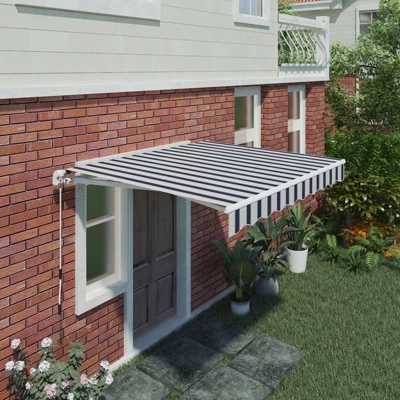
Sundaze 3 X 2.5m Manual Awning Retractable Garden Patio Canopy Sun Shade Shelter With Fittings and Crank Handle Blue-White
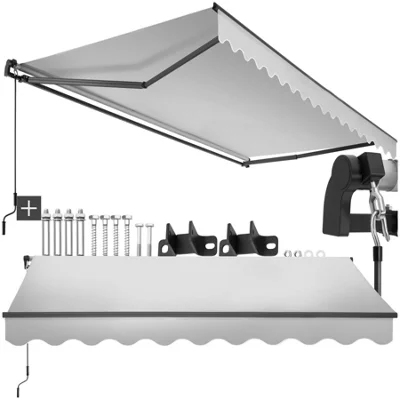
Retractable Awning Ornella – Wall Bracket Incl, Easy Adjustment, and Uv Blocking 300 X 250 Cm – Light Grey
‘As UK summers become more reliably warm and buyers factor thermal comfort into property decisions, the features that manage heat are going to feel increasingly necessary rather than optional. We are at the early stages of a genuine shift in how buyers think about sun exposure and shade,’ Katie concludes.
Whether you’re looking to sell your home or simply want to make it better-suited to your needs, an awning is a step in the right direction. If hotter summers are set to be the new normal, it is a smart idea to invest in quality shade solutions now.
If you’ve been waiting for a delivery, there’s nothing more frustrating than discovering it’s been stolen from your doorstep.
Regardless of whether you’ve ordered an expensive new outfit or picked up some home essentials on Prime, it is always upsetting and angering to be the victim of porch pirates.
While there is no magic spell to prevent burglary, there are some safety measures you can take to stop thieves from stealing parcels from your front door, porch or even a designated safe space.
Latest Videos From
I spoke to security experts, and they revealed three ways to stop porch pirates from stealing your parcels this summer.
What are porch pirates?
(Image credit: Future PLC/Polly Eltes)
When I say porch pirates, I’m referring to a slang term for thieves that steal unattended delivery parcels from porches, front doors and outbuildings.
Statistics show that burglaries increase during the summer months, as we’re all more likely to be away from our homes on either day trips, holidays or long weekends. Plus, as online shopping booms in popularity, it’s unsurprising that opportunistic thieves want to take advantage of this.
With Amazon Prime Day in the calendar for June, these are the safety precautions experts recommend to keep your home protected from porch pirates this summer.
Sign up to our newsletter for style inspiration, real homes, project and garden advice and shopping know-how
1. Install a video doorbell
One of the most important steps you should take (especially if you not only have lots of parcels, but lots of visitors, too) is install a door bell camera.
(Image credit: Future PLC/Jody Stewart)
‘Installing a doorbell camera that covers both the porch and driveway is a smart move to make property appear less accessible to thieves when they’re looking for packages to target,’ says Anthony Neary, security expert at Safe.co.uk.
Not only does it act as a physical deterrent, but it also gives households visibility over who’s approaching your home and provides footage in the event of any suspicious activity.’
‘Placing a lockbox near your front door means that delivery drivers have a secure place to leave parcels if you are not at home,’ says Dominic Smith, a home security expert from Bison Products.
‘Once the driver has placed the parcel inside of the lockbox, it can only be opened by you, with lockboxes that can be secured to your home being the best option.’
‘Proper outdoor lighting is also key, as well-lit entryways remove the ability for thieves to hide in spots that are less visible on CCTV cameras and make it far more difficult for opportunists to approach a property unnoticed,’ says Anthony.
‘Motion-sensor lights in particular are effective tools for alerting homeowners to suspicious activity, whilst also working to scare thieves away before they can reach the parcels.’
(Image credit: Future PLC/Bee Holmes)
You want to layer visual deterrents to scare thieves off, and motion lighting is excellent for this. Opt for a motion sensor porch light (£55, Dunelm), as well as motion lights around the boundaries of your property and driveway. For example, motion sensor spotlights (£15, Argos) will help alert you when someone enters your driveway.
Dunelm
Leese Outdoor Semi Flush Porch Light
Argos
Black Plastic Solar Sensor LED Spot Light
Luceco
Luceco Outdoor Security LED Floodlight
No one wants to be the victim of porch piracy, and by adding these safety precautions to your home, you are lessening your chances of being targeted.
This month, social landlords will have to respond faster to tenants’ concerns of serious damp and mould, under new government legislation. Awaab’s Law is coming into effect this month and is expected to extend to all landlords as the law and other housing reforms are phased in in the coming weeks and months.
Getting rid of damp and mould can be both a recurrent and difficult problem to tackle, only made worse for tenants when landlords neglect to address or fix the problem (university landlord, I’m looking at you.)
When left untreated, damp and mould can have a serious impact on one’s health. In December 2020, two-year-old Awaab Ishak tragically died following prolonged exposure to damp and mould. Now Awaab’s Law is being introduced as part of measures to improve the safety and quality of social housing. This is everything you need to know.
What is Awaab’s Law?
Awaab Ishak died from a respiratory condition caused by prolonged exposure to mould in his Rochdale home. His parents had repeatedly reported the problem to their housing association, but their landlord failed to act.
(Image credit: Getty Images)
‘The death of Awaab highlighted serious shortcomings in how some housing providers responded (or failed to respond) to reports of damp, mould and other hazards. It revealed systemic issues in social housing: delays in repair, poor record-keeping, inadequate ventilation/heating, and weak accountability,’ says Mark Dawson, who is a property expert and CEO of AST Assistance.
As a result, from 27 October this year, social landlords will be required to comply with stricter standards. Eventually, this will apply to all landlords.
‘Under Awaab’s Law, landlords must investigate emergency hazards within 24 hours of being notified. This includes issues such as damp, mould, gas leaks and structural issues. They will then have seven days to resolve the emergency hazards, unless exceptional circumstances apply,’ says Lara O’Donnell is a housing disrepair expert and Director of Litigation at CEL Solicitors.
Sign up to our newsletter for style inspiration, real homes, project and garden advice and shopping know-how
‘Strict timeframes for repairing significant issues such as fire risks, electrical faults, extreme cold or heat and hygiene problems will be introduced from 2026 onward. Landlords will need to keep detailed records of inspections, tenant communications and repair actions to show compliance.’
What rights do renters have?
Most people reading this will have some experience with damp, mould and condensation. After all, UK winters are famously cold and wet. In particular, older homes can have huge problems with damp. These new housing rules could give renters peace of mind that landlords will respond to their complaints promptly.
(Image credit: Getty Images)
‘Through Awaab’s Law, tenants gain legal protection against prolonged exposure to health hazards in their home. They will have protection from retaliation, such as unfair eviction when reporting hazards,’ says Lara.
‘Their complaints will be met with clear timeframes for when their landlord must act and repair issues. They will still have the right to escalate complaints to the Housing Ombudsman Service if repairs are delayed or mishandled.
‘The law gives tenants the right to insist on safe living conditions and provides a way to hold landlords responsible if they don’t comply.’
What can you do if your home has damp and mould?
If you’re worried about damp and mould in your rented property, and feel like your landlord is not taking action, Lara has some advice.
(Image credit: Getty Images)
‘Keep a paper trail of reports to your landlord safe. Log dates and times and record the disrepair with photos and videos, if possible,’ she says.
‘If the problem is impacting your health, keep a note of your symptoms and if you visit a doctor or hospital, maintain important records.
‘Send your landlord a request for a timeline for repairs based on Awaab’s Law deadlines. You can escalate your complaints to the Housing Ombudsman if your landlord fails to act.
‘Legal advice is available to support your complaints to your landlord and the Housing Ombudsman. This can put pressure on landlords to act quicker, and ensure you get the compensation and support you deserve.’
What do landlords need to know?
While the law applies to social landlords right now, it will extend to all landlords, so if you rent property, it’s important to get clued up on the new rules now.
(Image credit: Getty Images)
‘Landlords may face financial penalties for failures to act. For example, sources for the private rented sector suggest fines of up to £7,000 for initial breaches and up to £40,000 in more serious cases,’ explains Mark.
‘Tenants can bring claims for disrepair or breach of duty. Awaab’s Law strengthens the tenant’s ability to challenge landlords who don’t respond to hazards in a timely manner (including via court applications for temporary accommodation).
‘If a landlord fails to deal with hazards, they may be prevented from serving valid eviction notices (such as a valid Section 21 Notice) or face challenges in possession proceedings.
‘Even where not formally penalised yet, landlords risk being added to “rogue landlord” registers, being subject to greater scrutiny, inspections, and having higher compliance costs.’
The best dehumidifier we’ve tested at Ideal Home, the MeacoDry Arete Two, is quiet, easy to use, works superbly and is very energy-efficient compared.
Dryzone dehumidifier
The Dryzone dehumidifier and air purifier is a compact two-in-one unit that tackles excess moisture while filtering out dust, allergens and pet dander.
Pro Breeze 1500ml Mini Dehumidifier
Small, affordable, super quiet, and with low running costs of just 1p per hour, this is a budget-friendly option for minor moisture problems.
Awaab’s Law is a significant step towards housing reform, giving more rights to renters. Because no one should have to live in a damp, mouldy property.
I don’t know about you, but Halloween is one of my favourite times of year, and with it comes the opportunity to go bigger and bolder with my decorations every year. However, before you get your bats, skeletons and pumpkins out, legal experts have warned that your Halloween decor can land you with a hefty fine.
When you put together your Halloween decoration ideas, it’s fair to say that you’re not thinking of the legal consequences, but rather focusing solely on the aesthetics. But if you’re planning on dotting more than a couple of plastic pumpkins in your windowsills, then you need to be aware of the various property laws that can be breached by way of decor.
With Halloween decor responsible for fines up to £50,000 in extreme cases, these are all the rules and regulations you need to be aware of before decorating your home this Halloween.
How can your Halloween decorations land you in trouble?
I can’t say I’ve ever considered that my Halloween decorations could land me in legal trouble. From hopping on board the glass pumpkin trend to going all out for Pinkoween, the last thing on my mind was the law. But there are, in fact, multiple acts you need to be aware of.
(Image credit: Future PLC/Dan Duchars)
‘Halloween decorations can cause safety hazards, neighbour disputes, and even affect a property’s value or future sale. Councils can issue fines ranging from £100 to £5,000 if displays cause hazards, and liabilities can rise to £50,000 in cases where negligence leads to injury,’ says Louise Ainley, a qualified conveyancer at licensed conveyancer course provider Access Law Online.
The laws to be aware of? You need to consider the Occupier’s Liability Act 1957 and 1984, the Highways Act 1980, and the Environmental Protection Act 1990.
‘Under the Occupiers’ Liability Acts 1957 and 1984, you have a duty of care to ensure there are no foreseeable risks to visitors, for instance, tripping hazards from extension leads, low hanging items in the garden, or open flames from candles. It’s also vital to check that any outdoor electrics are weatherproof and that sockets aren’t overloaded,’ explains Lucie-Anne Rhodes, Consultant Solicitor at Richard Nelson LLP.
Sign up to our newsletter for style inspiration, real homes, project and garden advice and shopping know-how
‘You should also make sure your decorations don’t obstruct public paths or roads, as this can breach the Highways Act 1980, and be mindful that overly noisy or disruptive displays could lead to complaints under the Environmental Protection Act 1990.’
(Image credit: Getty Images)
If you’re a renter, you should also ensure that your decor does not damage the property or breach your tenancy agreement, for example, staining the walls with Blu Tack, as this can land you in trouble with your landlord and potentially mean you don’t get your full deposit back.
‘In short, keep decorations safe, considerate, and within your property boundaries; that way, you can enjoy a spooktacular display without any legal scares,’ concluded Lucie-Anne.
And if you’re lacking in ideas for safe, considerate decor, here are a few options to get started.
Next
2 Pack Black Light Up Halloween Witch Hat Decorations
These incredibly chic lights are an easy way to elevate your Halloween decor. These hats are proof spooky can also be stylish.
Argos Home
Argos Home Pack of 3 Halloween Light Up Ghosts Decoration
Stake these lights in your flower beds and give your garden a ghostly glow! What a great way to welcome your trick-or-treaters.
OTMVicor
7pcs Artificial Pumpkin
Don’t risk attract pests by opting for artificial pumpkins over real ones.
Spooky season is the optimum time to have fun with brash, in-your-face decorations. But you need to ensure they don’t encroach on your neighbour’s property, risk injury or disrupt your community to ensure everyone can enjoy them.