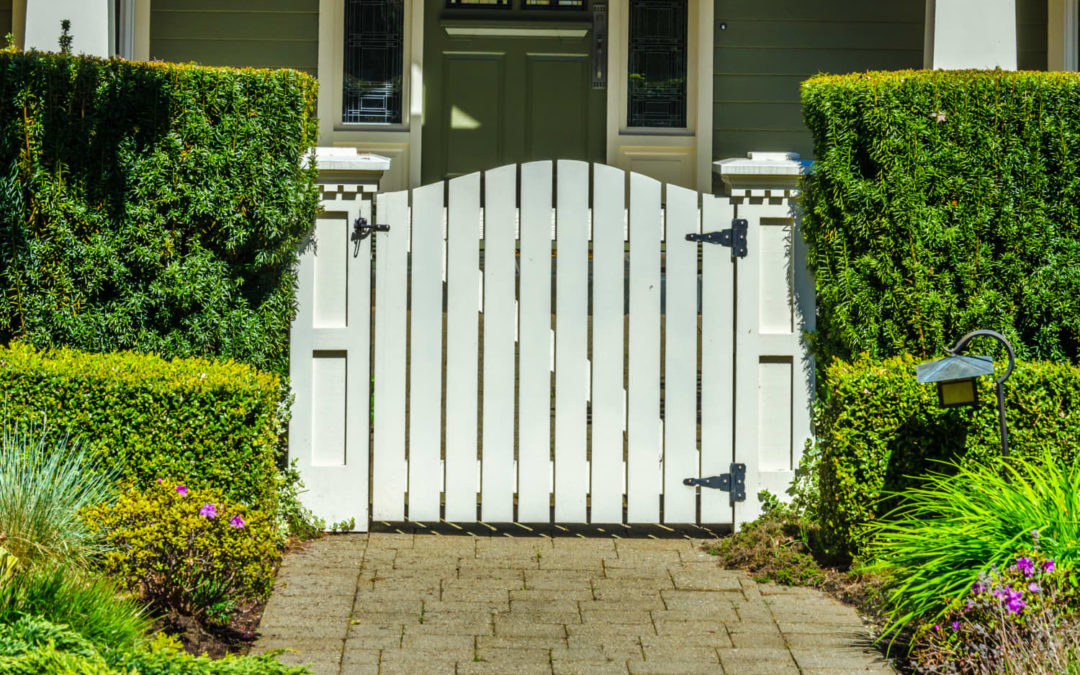
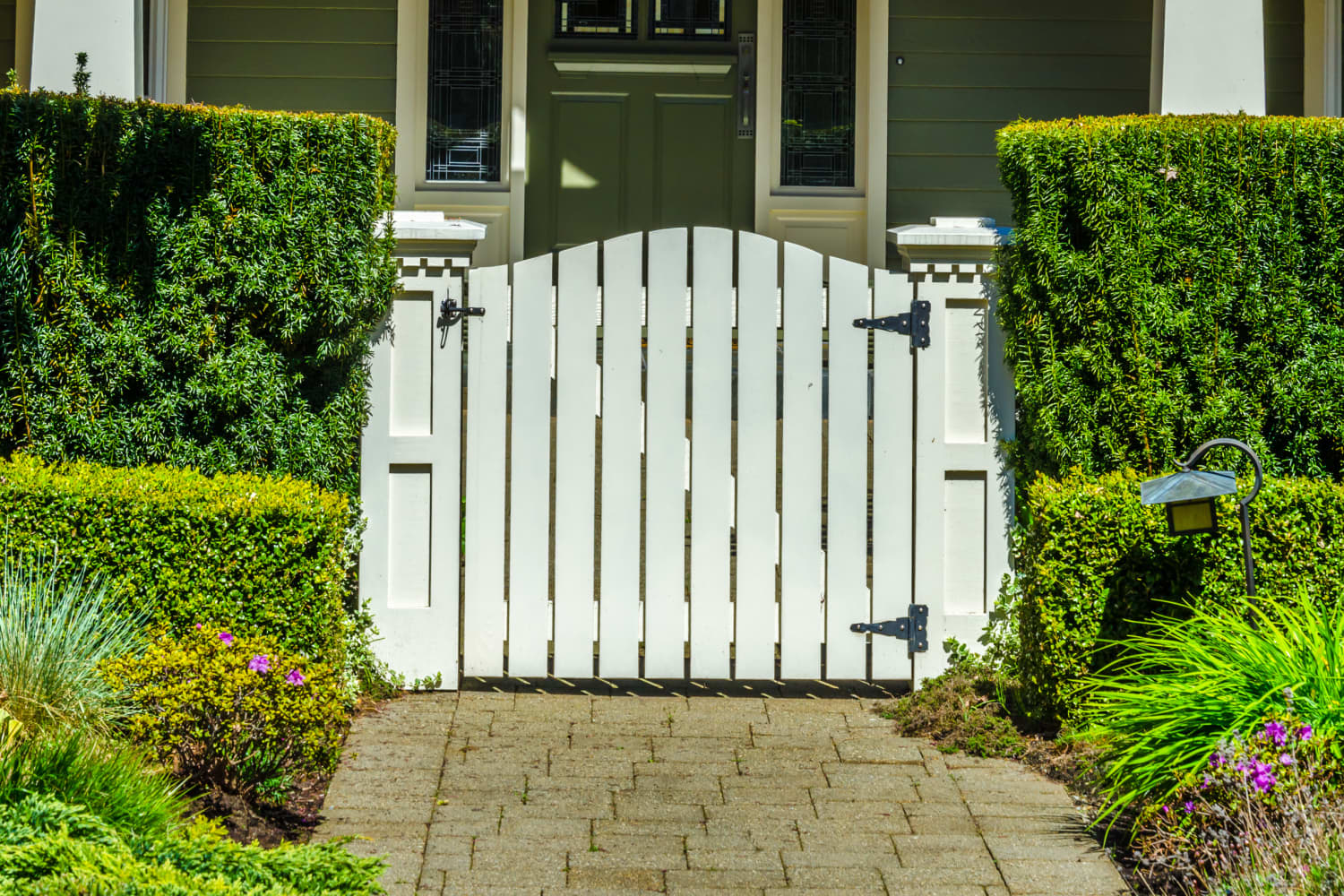
When my husband and I bought our house several years ago, the tall backyard fence had a gate that opened to the property behind it. The sellers happened to be related to the folks on the other side of the fence — who had a pool — so the gate provided easy, shared access to the other yard during the summer.
For more content like this follow
“That makes sense,” I remember saying to the real estate agent. “But do you think they’d close it up for us?” I wanted to make it clear that though my husband and I are quite friendly, there would be no more going back and forth between yards once we moved in.
The sellers were eager to comply, likely because the property had lingered on the market for quite some time. In today’s seller’s market where people are buying houses as-is, I am sure we would have been on the hook for fixing it ourselves — even if it just meant buying a really strong padlock and throwing away the key.
What is a neighbor gate, anyway?
The poet Robert Frost wrote, “Good fences make good neighbors.” It’s a philosophy that I subscribe to as someone who enjoys living in a safe community.
It’s not that this “neighbor gate,” as I’ve since learned it’s called, creeped me out. It’s actually heartwarming to think of those neighbor-relatives being so tight that they gave each other carte blanche to their respective backyards. In fact, when pool season came around again and we heard the splashes and shouts coming from their yard, my husband asked me, “Why did we close up that fence again?”
To be fair, closing up the neighbor gate wasn’t a lopsided deal. I never expected that my neighbors, nice as they are, would ever extend an open invitation to their pool parties. In fact, we’ve never gone beyond some yelled greetings and the occasional toss back of a beach ball that flew over the fence. There’s where a neighbor gate might come in handy, but I knew there had to be something more to it. So I asked a couple of real estate professionals about it.
“A neighbor gate can convey trust,” says Lauren Byington, a licensed real estate agent in Texas who co-owns an eco-focused home building firm with her husband, Warren, that is aptly named Warren + Lauren. “It’s literally a physical way to say, ‘Hey, I trust these neighbors so much that they have easy access to my property.’” Byington mentioned that for some buyers, they might see a neighbor gate as “a beacon of trust, which imparts a positive impression.”
Well, apparently my husband and I were hard to impress as house hunters. I chalked it up to us being cautious New Yorkers who valued both security and privacy. But were we too cautious?
“Most homebuyers don’t like neighbor gates, or at least they see them as suspicious,” says Jordan Woolf, CEO of We Buy Houses in Bama, a real estate investment company in Huntsville, Alabama. “For us, there hasn’t been a gate of this kind that has stayed after the new owners moved to the house. They don’t trust having neighbors with access to their property.”
It was nice to have Woolf confirm my own suspicions — though I am well aware that if someone really wanted to get into our yard, they might not need a neighbor gate to do so.
I also asked some friends with knowledge of neighbor gates and was surprised at what I learned. One friend told me about growing up in Long Island with a yard that had an opening in the hedge fence they shared with a neighbor, allowing her and the neighbor kids unfettered access to their backyard fun.
Another friend who grew up in Rhode Island had a neighbor gate and a pool, just like in my situation. When new neighbors moved in next door, they kept the gate and used it frequently to visit each other and enjoy the pool.
Still another friend mentioned that when Hurricane Sandy struck down part of his fence in his New Jersey backyard, he and his neighbor removed the damaged part and left it open for the past decade — a testament to their relationship.
I don’t regret closing up our neighbor gate. But I do love hearing these stories about homeowners whose relationships with their neighbors transcend their property lines. It reminds me that close neighbor relationships aren’t just the stuff of TV sitcoms. There are people who are lucky enough to move in next door to their BFFs — or at least people you won’t mind seeing in your backyard from time to time.
Jumble sale; garage sale. Yinz; y’all. Jawn; practically anything. Regional terminology is a part of American culture which, in my humble opinion, deserves to be celebrated. Connecting over your differences is as fun as having something in common. Lovers of camping sitting fireside, watching the lightning bugs… and the fireflies. Your great-grandparents, one hella old, the other wicked old.
As much as the myriad of regional nicknames for everyday occurrences thrills and delights me, there are some words and phrases that just hit harder than others. After all, there’s a reason “sneakerhead” caught on and not “gym shoe head” (sorry, fellow Midwesterners). In my own house growing up, my mom put in work to get the word “study” to stick instead of “office” or “computer room.”
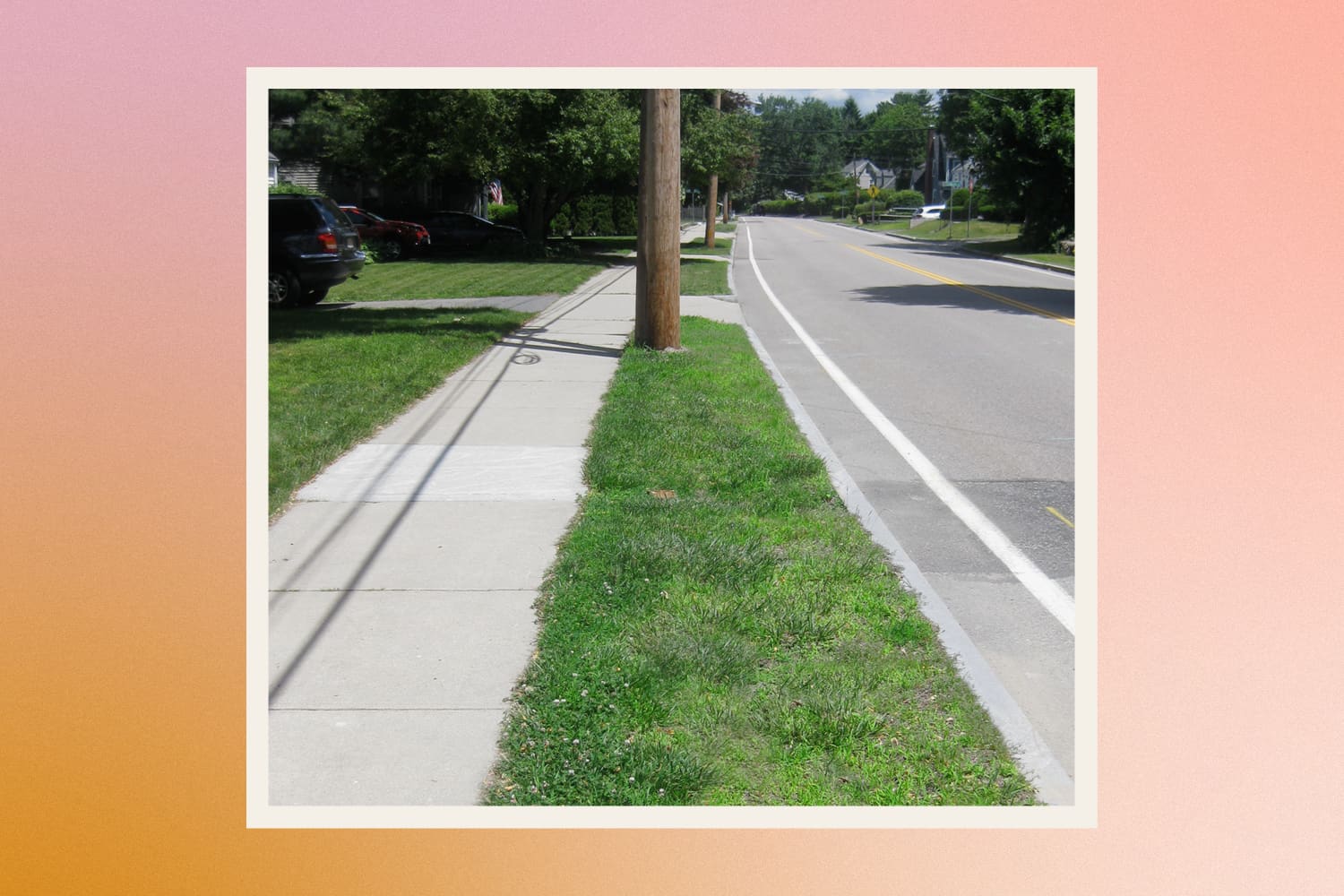
You might be asking, “Sarah, what set you off on this examination of regional colloquialisms?” Thanks for asking, readers! There are some things that I simply don’t know the word for. The spot behind your knee? The thing that separates your groceries from the ones in front of yours on the conveyor belt? And specifically: that space between the street and the sidewalk.
Apparently there’s a laundry list of unexpected terms for this ordinary space that’s technically referred to as a “road verge.” Y’all, this term isn’t going to work for me, given the delicious and often ridiculous alternatives that exist! Below, I’ve ranked my 8 favorite road verge terms. See if you spot any terms you use, or a new one to add to your lexicon.
Apparently, some civil engineers refer to the road verge as a “furniture zone” because it’s the location where different components of utilities are installed (think of street furniture like street lamps and electric boxes). For me, this sounds more like a discount furniture store where for $400 you can snag a brand new loveseat that someone just didn’t want with their set.
This seems made up, point blank. Can you picture the nation’s first urban planners sitting around an ornate office, probably with cigars aflame, saying, “Hey, what if we popped a little space between the street and sidewalk, like a little, ya know, buffer? Can’t have m’lady’s skirt getting splashed by a horse!”
It’s no secret that I love New Orleans, and the story behind its Neutral Ground street medians is a rich piece of American history. I imagine that folks within the region just started applying that phrase to other stretches of public space that resembled these specific medians. Hey, when I’m in NOLA, I’ll do as the New Orleanians do!
Technically a silly phrase, but ultimately, kind of a good idea? Can you get samples of yards like you do for tile or carpet or paint? I’d love to test out a yard with a fire pit or one with a pool! Anything’s better than the “yard sample” I’ve got outside my Chicago condo right now — piled high with snow and dotted with abandoned dog poop. New sample, please!
Technically, throughout most of the United States, the road verge is public land — as in “owned by Uncle Sam.” This term conjures within me the stubborn desire to complain. “No, I’m not wasting my time mowing the lawn over on the GOVERNMENT GRASS!” Or, “Hmm, the government has time to audit me but not to tend to THE GOVERNMENT GRASS?” Or “Officer, do you mean to tell me I can’t annex this land as an extension of my own lawn because it’s the GOVERNMENT’S GRASS?” Uncle Sam, come get your lawn, my dude!
This sounds like the name of the next big waxing craze for your downtown. My imagination is running wild. Next!
Hilarious, perfect, stunning, iconic. I live and die for the portmanteau. This is exactly what the area beside the sidewalk is: the besidewalk. And if it weren’t for my number one term, this would be the name I adopt for my use of road verge. But alas, I bring you to the number one best term…
This term echoes back to Government Grass, but is far more sinister, spooky, and satisfying. I can’t wait to be a terrifying old lady yelling at kids to stay off my lawn, but adding, “AND the devil strip!” This will secure my position as the most frightening neighbor in my community, which is all I want in this world.
Sarah Magnuson is a Chicago-based, Rockford, Illinois-born and bred writer and comedian. She has bachelor’s degrees in English and Sociology and a master’s degree in Public Service Management. When she’s not interviewing real estate experts or sharing her thoughts on laundry chutes (major proponent), Sarah can be found producing sketch comedy shows and liberating retro artifacts from her parents’ basement.
We independently select these products—if you buy from one of our links, we may earn a commission.
Warning! Spoilers ahead for “You” season 3
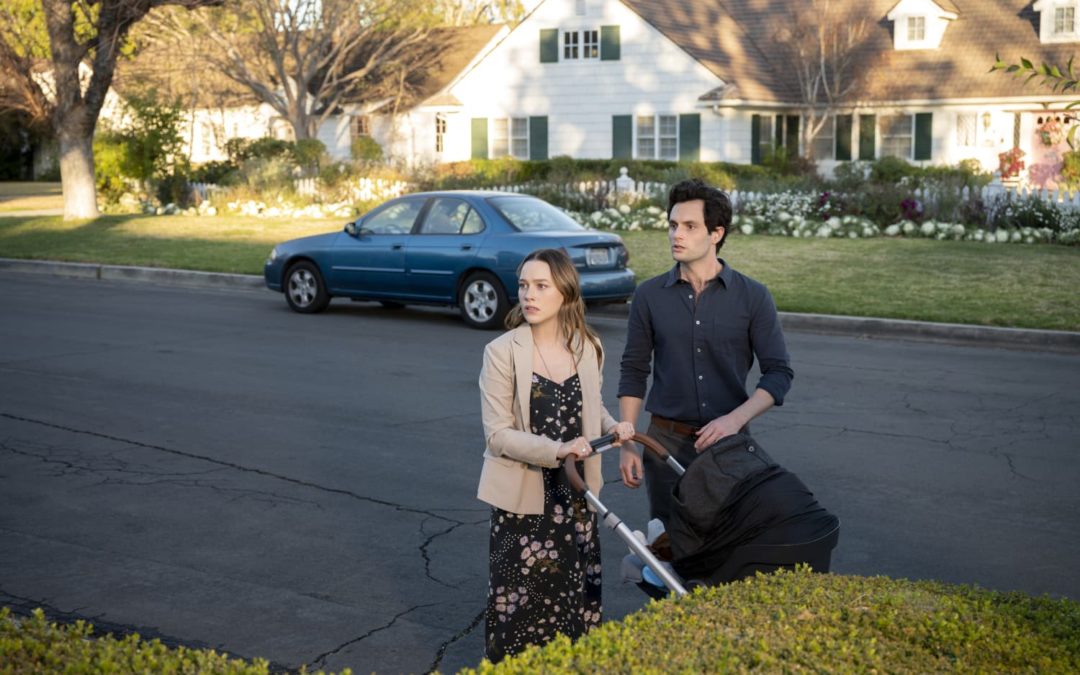
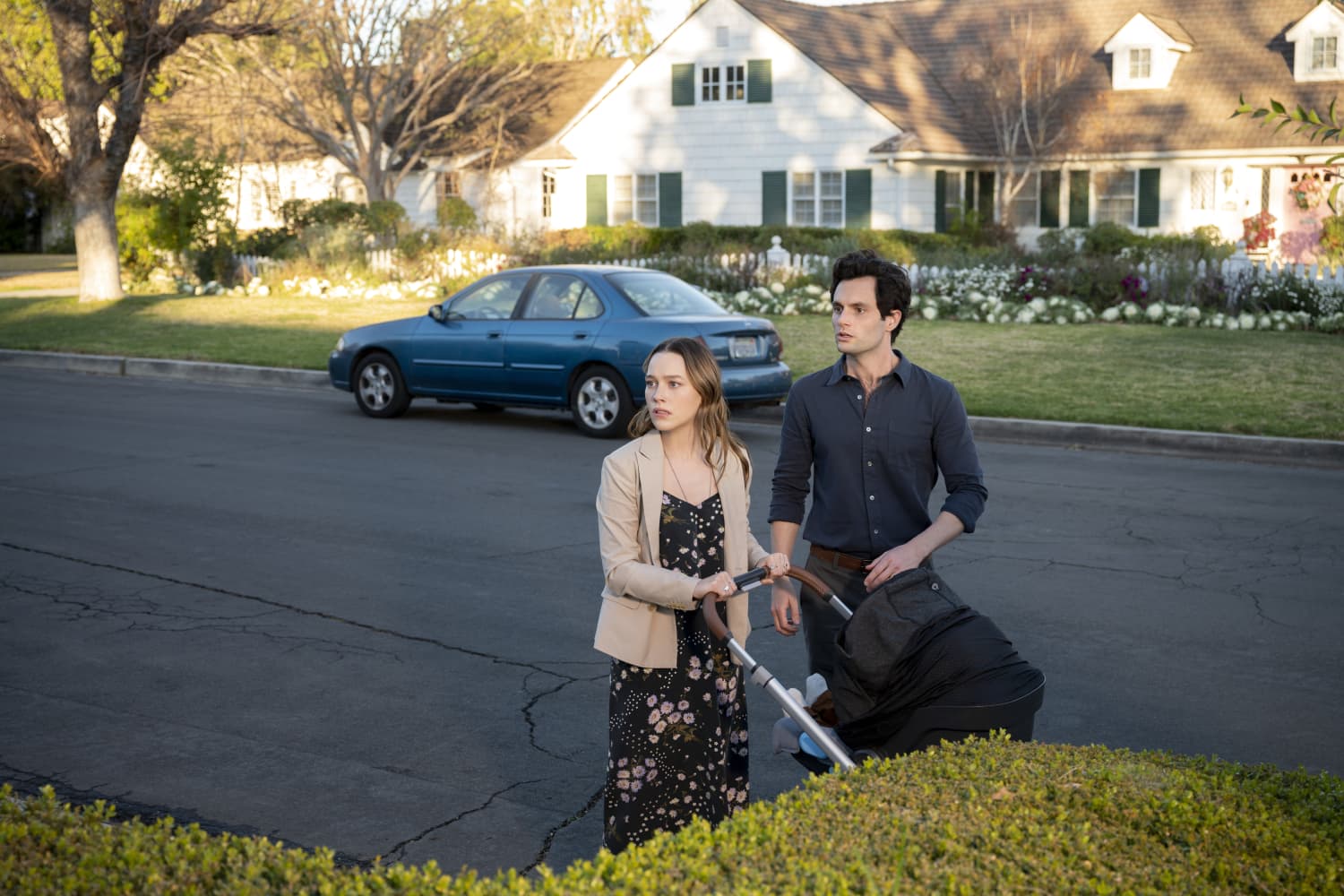
The third season of Netflix’s “You” transports its serial killing antiheroes, Joe and Love, to Madre Linda, a boring suburb of San Francisco, where pristinely manicured lawns, shiny SUVs, and gossipy neighbors abound.
Suburbs are often presented in pop culture as places where bright facades conceal the dark inner lives of the dwellers within. So, in some ways, Madre Linda is the perfect spot for Joe and Love to settle down, raise their family, and quickly fall back into their old sadistic patterns.
While rows of white picket fences and immaculate green lawns provide the perfect, eerie backdrop for Joe’s third act, just how accurate is the portrayal of the hellscape of wealthy American suburbs in “You?” Here are the things it gets right — and wrong — about suburbia.
Suburbia can have mean cliques and gossip. Madre Linda is a town where cliques rule supreme and gossip spreads like wildfire. As Natalie tells Love knowingly in the first episode, “Sherry Conrad is a terrible person who runs this town. Everyone has to find their way in Madre Linda.” Love replies, “You mean around Sherry and her mafia?”
But is this “Godfather” meets “Mean Girls” version of the ‘burbs all that accurate?
Julie Suratt, who writes for Boston Magazine, proves this to be true in an excerpt she wrote about moving to the suburbs — and the shockingly cliquey, isolating culture that can come with it. “It turns out that suburban life is dictated by the kind of tribal behavior I thought we’d grown out of: popular girls and their obsequious minions willing to do anything to fit in,” she wrote.
Sure, this isn’t the case for every single suburban community, but it does happen. And that’s where “You” strikes truthful gold.
There is often a strict athleisure dress code. When Love first meets Theo, the flirty “femgen” major from next door, he notes wryly, “You are new in town; they haven’t converted you to full-time athleisure yet.” In “You” suburbia, you’d be hard-pressed to go a single day without seeing a flock of women grabbing flat whites in athleisure. “You” suggests that this is the mandatory uniform for the contemporary suburban woman.
It seems that the costume department pretty much nailed it. According to Statista, the U.S. athleisure market was worth $105.1 billion in 2020 and continued to climb dramatically in 2021. Fancy yoga clothes are so popular, you can’t help but see them everywhere — especially in the suburbs.
As Kerry Folan wrote for the Chicago Tribune about her D.C. suburb, “Women in my neighborhood go about their entire day in yoga pants and running shoes. Moms with strollers, undergrads on campus, girlfriends meeting up for coffee dates or errands — I have even seen women dressed this way for cocktails.”
It seems as though the producers of “You” were not exaggerating.
Over-the-top community events can be the norm. The women of Madre Linda are compulsive hostesses. They always need a community project or event — a neighborhood search party for the missing local woman, W.O.M.B. (the Women Owning Motherhood and Business symposium), an elaborate “Alice in Wonderland”-themed fundraiser at the local library.
As a study conducted by the Pew Research Center showed, suburban residents are the most likely people to feel confident that they can make a “positive impact on their community.” You might be surprised to hear that after watching the residents of Madre Linda at work, though.
There’s no such thing as privacy in the suburbs. In the suburbs of “You,” there are cameras everywhere. As Natalie tells Joe, showing him the dozens of cameras on her own property, that “there’s no such thing as privacy in Madre Linda.” In fact, she tells Joe that the space under a broken camera in her backyard is “the only place in this entire town” where she doesn’t feel like she’s being watched.
In “You,” the suburbs are a place of mass and vigilant monitoring. However, while the modern world is increasingly filled with surveillance, the suburbans haven’t become quite this dystopian — yet.
Yes, more and more suburban dwellers are investing in CCTV security. As Wired and The Washington Post note, Amazon’s Ring camera doorbells are becoming hugely popular in the suburbs. However, the idea that you’re always being watched by your neighbors is a little far fetched. According to the 2019 U.S. Census, only 16 percent of suburban dwellers used private security cameras that year, while 25 percent planned to use one in the future.
Of course, while “You” gives viewers a bit of an unrealistic camera-heavy version of the suburbs, it could very well represent the future of suburban surveillance.
Suburbs are pretty diverse these days. In the version of suburbia in “You,” life may be privileged, cliquey, and dull, but it is diverse. The makeup of Madre Linda is surprisingly multicultural.
This portrayal of a diverse American suburbia, with no hint of racism, may be overly optimistic. In reality, many of the wealthier, conservative suburbs in America remain starkly whitewashed.
While there is still much work to be done, experts have noted the suburbs have become more diverse over the last few decades. As R. L’Heureux Lewis-McCoy, an Associate Professor of Sociology of Education at NYU, wrote in a 2017 paper, the suburbs “are now often more racially, ethnically, and economically diverse than their proximal central cities.” However, as he and fellow NYU professor Kimberley Johnson noted in their ongoing research of American suburbs, there are still plenty of problems with racial segregation — disparity in wealth distribution and school quality, among others — in what are considered ethnically diverse suburbs.
Seems like this is at least one way that Madre Linda is actually better than the real version of American suburbs.
Women in the suburbs are bored, dissatisfied housewives. As soon as you saw the season two finale of “You,” which showed Joe peering over the fence, leering at his new suburban neighbor, you probably guessed the direction the show would take: Joe would fall for (and probably murder) the bored housewife next door.
Like countless shows and movies before it, the third season of “You” dove headfirst into the age-old cliche of the bored, suburban housewife, first with Natalie, and then later with Love. The typical suburban wife, the series seems to suggest, is a stay-at-home mom who spends her days guzzling back wine, idly seeking out affairs, and resenting her boring husband.
In reality, this cliche isn’t entirely accurate. According to the U.S. Census, the percentage of married women with jobs has risen steadily since the 1950s, while the percentage of married women has dropped. In fact, there are now more married women with jobs than without. And as sociologist Rupa Huq writes in “Women on the Edge? Representations of the Post-War Suburban Woman in Popular Culture to the Present Day,” contemporary suburbia is “more than just the stomping ground of neurotic, bored, pill-popping housewives.”
Huq writes that TV shows and films should try to break away from the bored housewife cliche. It seems that the portrayal of the stay-at-home suburban housewife in “You” may be more than just a little outdated.
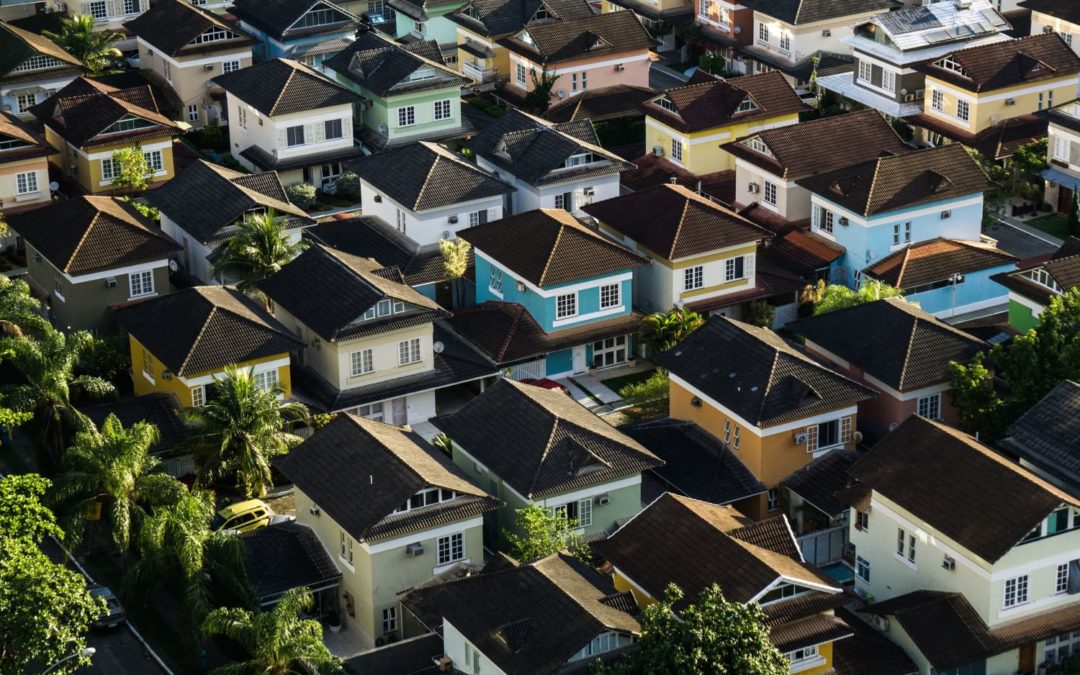
I grew up in a suburban neighborhood of Atlanta and always found it odd that we waved at our neighbors but rarely knew them. I suspected it was a symptom of the suburbs. But that wasn’t entirely the case; in fact, only 26 percent of Americans say they really know their neighbors. I’ve always wondered — why is that?
I sat down with my husband Jordan, an urban planner (with an urban planning podcast!), for his thoughts on why most of us don’t know our neighbors and what we can do about it.
Most destinations (and people) are not within walking distance.
I tend to feel more connected to a city when I can be independent of a car. I always thought my sense of community from walking was more of a personal preference, but it turns out that living in places that encourage us to walk helps us build trust with one another.
As sociology professor Rebecca Adams has noted, there are a few key conditions necessary for developing friendships: “proximity; repeated, unplanned interactions, and a setting that encourages people to let their guard down.” This can come from seeing the same people at your favorite bar or learning the name of the crossing guard as you drop your kids off at school. When we can regularly walk to things, we allow for organic relationships to occur.
Jordan points to two developments from the previous century that play a big role. “In the 1920s, you had both the automobile and the first single-use zoning codes.” Separating “land uses” such as residential, commercial, and industrial had understandable beginnings but ultimately “served to remove much of the texture from our neighborhoods,” he says. “Combine that with decisions to mandate more space for cars, and you end up with people and destinations spread ever further apart.”
Our homes and neighborhoods aren’t designed to encourage neighborly interactions.
I remember my first apartment after college. I was living in a complex that likely housed some 300 young professionals. I had fantasies of making friends with people “just down the hall.” I never made friends with a single person in my building.
“It may sound quaint, but the front porch or stoop serves the important purpose of putting us in touch with our neighbors — especially in a way that lets us put our guard down. Of course, context also matters: we’ll want to spend more time along streets that are comfortably narrow and low-speed, and we’ll encounter more people walking if there are plenty of accessible destinations for us to walk to. If you’re required to leave your neighborhood to get to everything from work or school to shopping and entertainment, and everything requires a car to get to, that leaves very little time or opportunity for developing relationships with your neighbors.”
We prioritize the car over the person.
It’s also difficult to ignore the impact of cars on the places we call home. Cars did not have to become the central focus of how our cities were planned, but decades of design standards have made car use the default. Jordan notes, “[This evolution] has not been good for human relationships. It has been good for the automobile industry and related industries. […] We can’t design places for maximum car comfort and expect them to function well as places for human interaction.”
He shares that cities can start by removing driving incentives such as parking minimums and allowing denser development and mixing of uses. We can also start changing design standards to create slower streets that prioritize people rather than vehicles. “If readers are interested in going deeper on the human impact of our development decisions, as well as what we can start doing as individuals and local governments in response, a great place to start would be Strong Towns.”
Ashley Abramson is a writer-mom hybrid in Minneapolis, MN. Her work, mostly focused on health, psychology, and parenting, has been featured in the Washington Post, New York Times, Allure, and more. She lives in the Minneapolis suburbs with her husband and two young sons.