While there are plenty of expensive wellness practices being touted by “influencers” on social media, some of the most beneficial ones are actually free (think: walking outside and getting eight hours of sleep). One of our favorites is journaling, which allows people of all interests and personality types to express themselves and find balance in their lives anytime, anywhere. From what journaling actually is to its benefits and tips for how to get started, we’re here to help you make this highly beneficial practice a healthy habit in no time.
For more content like this follow
thoughts, and experiences in whatever form or fashion they choose. There is no specific format to follow or style of writing required. Instead, journaling is about processing one’s emotions or pursuing personal development. Although becoming a better writer isn’t the primary goal of journaling, that may happen along the way if it becomes habitual!
You may be surprised to learn that incorporating a regular journaling practice is associated with numerous physical and mental health benefits. A 2005 study published by the University of Cambridge found that participants who practiced expressive writing—through the form of journaling—self-reported health outcomes such as fewer stress-related doctor visits, improved immune, lung, and liver function; reduced blood pressure; and a greater feeling of psychological well-being. The participants also reported improved performance at work and greater confidence in social situations.
According to the Centers for Disease Control and Prevention (CDC) journaling could help give us a better understanding of who we are and what we want to achieve. Journaling could also help determine strengths and weaknesses, clarify thoughts and feelings, solve problems, and even recognize successes. Plus, journaling may help identify and manage stress, something we could all use in our mental health toolkits.
We asked Chesbrough “Chesie” Roberts, MS, ADC, LPC, founder and principal therapist at CLR Counseling Group in Birmingham, Alabama, about some tips for aspiring journalers (for personal use).
There’s no “right” time to practice journaling.
Robert’s biggest advice is to play up your strengths in order to turn journaling into a habit you’ll actually stick to. While some people are great at waking up early with a cup of coffee to reflect on life, Roberts recognizes that may not be realistic for everyone . Whether you’re a night owl or early bird, there’s no specific time or way to journal that’s better than any other.
Start your day with a list of simple questions.
“I give my clients a very simple daily ‘good things’ question list to answer at the end of each day, ” says Roberts. She asks her clients to post this list of self-esteem building questions somewhere that can be easily seen each morning and at least one other time during the day, such as on the fridge. From there, her clients can reflect deeper through journaling, whether it’s upon waking, during lunch, or before going to sleep. To stimulate your writing habit, try starting with a daily list of questions built around your personal goals, whether that’s building confidence, dealing with anxiety, or simply being more present in your daily life.
Reflect with gratitude journaling.
If you’re looking for some structure to help you stick to a journaling practice, consider trying a gratitude journal to help build your positivity in mere minutes a day.
Organize your thoughts with bullet journaling.
Busy bees may benefit from starting off with bullet journaling, which can help you stick to any personal goals such as building up your fitness and health or developing stronger relationships in your work and social circles.
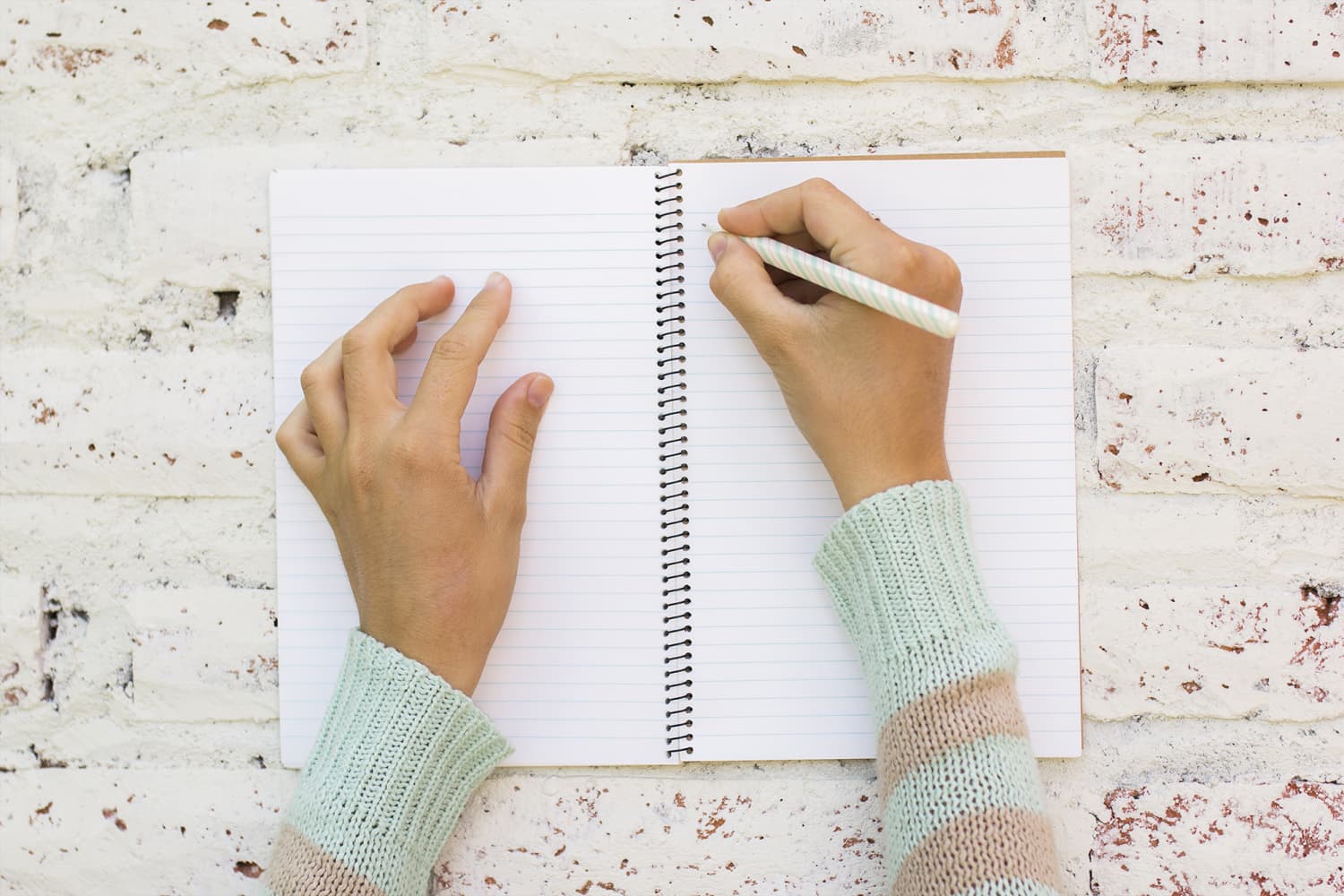
“I have found that we don’t have to journal these eloquent paragraphs reflecting on our lives with a perfect notebook and fancy pen for success,” says Roberts. Simply grab a journal, pick up a set of pens or pencils, and get to writing!
Earlier this year, I wrote about how my urge to donate to Goodwill was something I was fighting as I got older. I had realized that my distaste for holding onto mementos meant I wasn’t able to reminisce in the same way that, for example, my girlfriend does when she opens a mislabeled box in her closet and out comes a diploma, family photos, an old driver’s license, and more. I consider myself a sentimental person; however, during my various moves of the last decade, I haven’t made a point of keeping things because they didn’t matter in the moment.
For more content like this follow
But in writing this article and receiving the feedback I did, I’ve realized that an item that doesn’t feel like it matters now might matter a whole lot later on. One of the comments that stuck out the most to me on my article was from a reader who appreciated how I wrote about emotional attachment to objects. “Usually people acknowledge it and then promptly tell you to get over it, scan the item, and move on,” this reader wrote, then shared that they were going to help their mother begin artifacting her possessions and, in doing so, discover the memories and stories attached to those pieces. I love that the story I wrote made someone feel heard and perhaps even more inspired to learn more about their family tree.
As it turns out, my experience resonated with many people. The piece was the most-commented-on post in Apartment Therapy’s Lifestyle section this year, and second-most-commented-on post on Apartment Therapy’s website overall for 2022. I’m thrilled by that; chatting with more than 120 other readers in the comments section of the article helped me learn the stories of readers’ personal “clutter” and how they feel about it. It was eye-opening for me to find out how many people are left with the objects of their past loved ones and, though it can be a burden for some, how the process of going through the items can be its own type of closure.
Of course, there is definitely a fine line when it comes to holding onto things. Living in a 200-square-foot apartment, I’m adamant that I feel like there’s space to breathe between the stacks of books and tchotchkes, that I have room to stretch among the thrifted furniture and newly purchased rocker (thank you, Facebook Marketplace). At the same time, I now make sure my desire for space and ease doesn’t lead me to a one-in-one-out rule.
My home has become less empty recently — a stack of letters from my girlfriend sits in a thrifted basket, while I’ve used a frame to house a book of stamps she gifted me and two inspirational cards — but each object feels like it has earned its spot. After all, it really isn’t the items that make the home, but the home that invites in the items.
Charli Penn is the Executive Lifestyle Director at Apartment Therapy and an award-winning journalist, editor and Webby-nominated former podcast host who writes in the name and praise of all things good living (and loving!). She thoroughly enjoys photography, 90s R&B, and all things gold accents. When she’s not curled up at home spending quality time with her husband and their two small dogs, you’ll find her traveling, redecorating (again), perusing a Home Goods aisle or planning an impromptu theme party for family and friends.
That was the case for me, anyway. I wouldn’t realize that I was overdue to deep clean my bathtub until I was sinking into a bubble bath — surrounded by a grimy bath ring. I thought I vacuumed regularly, but I’d be stretching on my yoga mat and come eye-to-eye with a stray dust bunny. I kept inadvertently falling behind on my chores, resulting in a dirty/clean cycle that I could never seem to break.
There had to be a better way. It is perhaps unsurprising that my solution was inspired by one of my earliest role models in housekeeping, Laura Ingalls Wilder. In “Little House in the Big Woods,” Wilder relates a typical weekly schedule: “Wash on Monday, iron on Tuesday, mend on Wednesday, churn on Thursday, and clean on Friday, bake on Saturday, rest on Sunday.”
Given that I’m not a 19th-century homesteader, much of Wilder’s list doesn’t make sense for me. But I loved the idea of knowing exactly what I’m meant to do on a given day, and tackling a lot of work in quick, easy increments. Enter: my Notes app chore list.
What I love about this approach is the flexibility it affords while ensuring I cover my bases. It took me a few weeks to really nail down the list, since new tasks kept occurring to me. When I keep up with it, I’m able to keep my house perpetually tidy without spending more than 30 minutes a day on housekeeping. The best part is, I don’t even have to think about it — I just check my list and see what needs doing.
I set my lists up on my phone’s Notes app because it’s easy for me to edit, check off, and reschedule items as needed. At the end of the week, I simply uncheck everything to start all over again.
For a more analog approach, using a whiteboard, a laminated piece of paper, or writing out a list at the start of every week could also work well. I handle most of my housekeeping on my own, but a shared list is also a great way to divide and conquer throughout the week.
Everyone’s needs are different. For example, I live in an apartment, so I don’t have to consider adding yard work to my rotation. To build out my list, I jotted down recurring tasks as they occurred to me. As I worked my way through the list, I adjusted my cadence as needed (for example, realizing that I could do a task less frequently, or figuring out what days were most convenient to load up with a little more housework).
I like to organize my tasks by the days of the week: I vacuum Mondays, Wednesdays, and Fridays, scrub the kitchen sink on Tuesdays, and so on. It’s easy for me to stick to this cadence because I only give myself a few tasks to do each day, so I’m never overwhelmed. Another approach could be to tackle your house room-by-room: on Mondays and Wednesdays, you focus on the kitchen, Tuesdays and Fridays are for cleaning the bathroom, and so forth.
For my list, I prioritize the tasks that aren’t obvious. I don’t need a reminder for every task — for example, I’ll immediately know when the trash can is full, or when the sink is stacked with dishes. Instead, I make note of the sneakier to-dos, like dusting or cleaning the bathtub, that are easy to forget until neglecting them results in visible dirt. Here are some tasks you might tackle a couple times throughout the week:
Besides these daily “maintenance” tasks, I also make time for the more rigorous cleaning that really keeps things sparkling. These chores require more elbow grease and a little more time. I try to disperse them throughout the week, but it’s also not uncommon for me to spend an hour on the weekends knocking them all out in one sitting. (I have a small apartment, so this approach is easier for me than it might be for some.)
Monthly / Infrequent Tasks
Lastly, I set time aside every month — usually the first weekend — to handle the bigger tasks. These are the tasks that are, frankly, too annoying to do too often, but are also necessary to keeping my house clean. Seasonal tasks, like cleaning my AC filter in the summer, usually fall under this section of my list.
The wonderful thing about this list is how adaptable it is. If I’m too tired to do a task one day, I simply drag-and-drop it for later in the week, ensuring I don’t forget it while allowing me to relax. List-making is a little more work to set up initially, but it allows me to easily keep my space clean and organized with minimal time and effort. These days, I feel a sense of comfort and control of my surroundings — and I’m rarely surprised by stray dust bunnies.
With five children, Shifrah is learning a thing or two about how to keep a fairly organized and pretty clean house with a grateful heart in a way that leaves plenty of time for the people who matter most. Shifrah grew up in San Francisco, but has come to appreciate smaller town life in Tallahassee, Florida, which she now calls home. She’s been writing professionally for twenty years and she loves lifestyle photography, memory keeping, gardening, reading, and going to the beach with her husband and children.