6 Living Room “Fixes” That Are Actually Fails, According to Designers

6 Living Room “Fixes” That Are Actually Fails, According to Designers
We independently select these products—if you buy from one of our links, we may earn a commission. All prices were accurate at the time of publishing.

When mapping out a living room layout and deciding on its design style, sometimes you’re stuck between reality and wishful thinking. While you might fantasize about buying all new trendy furniture that perfectly fits your space, the truth is you’re often trying to sprinkle in a few fresh pieces beside hand-me-downs and what you already own. It can be tough to find a balance that satisfies your vision. So you settle on certain solutions — or quick “fixes” — that likely don’t fully address your needs. 

“First and foremost, as much as we love a designer-approved aesthetic, the only person who really needs to love your living room is you,” says designer Galey Alix. “That said, the two living room essentials my designer-heart is most drawn to are the following: That the room is visually balanced, and there is a thoughtful use of texture.”

A visually balanced room, Alix describes, is a space that has just the right amount of colors and furnishings from wall to wall — not crammed in one area — plus, layers that make it all feel intentional and inviting. That’s sometimes easier said than done, which is why I tapped Alix, who joins with Thea Bloch-Neal of Curated by Thea and designer and content creator Anne Sage, to call out some common living room “fixes” that may actually be making your space look and feel worse. Read on to get their advice, so you’re not unknowingly sabotaging your living room — because nobody wants that. 

Fix #1: Working Your Wall Space for Large-Scale Furniture

The size of your living room affects the scale of your furniture, which means what you fill the room with will either make it feel more comfortable or more claustrophobic. If you’re in a position to buy new furniture for your living room, Sage says that you want to avoid a very relatable shopping pitfall. “One of the most common mistakes I see is people purchasing furniture that is way too big for their living room: sofas so deep they leave no space to walk around them, giant chairs eating up whole corners, and table lamps filling the entire surface of end tables,” she notes. 

In this scenario, the “fix” often means pushing large furniture against the walls. And that’s helpful in theory, except that the entire space then usually ends up feeling less cozy and intentional — with awkward blank spots at the heart of the room. To fix it, Sage has some advice that’ll work wonders (and it also applies to those who are schlepping their existing furniture somewhere new or rearranging their surroundings for a better flow, too). 

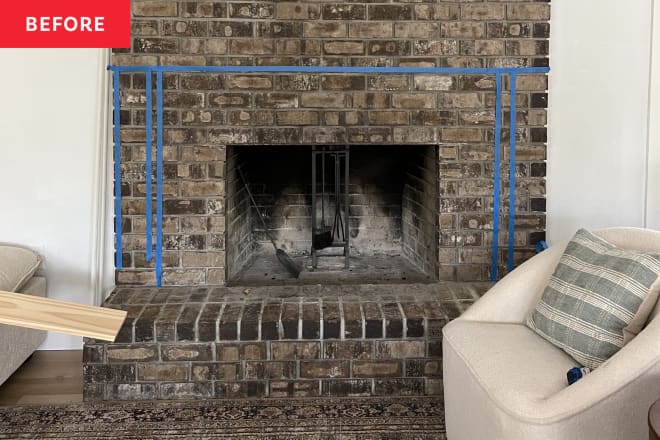
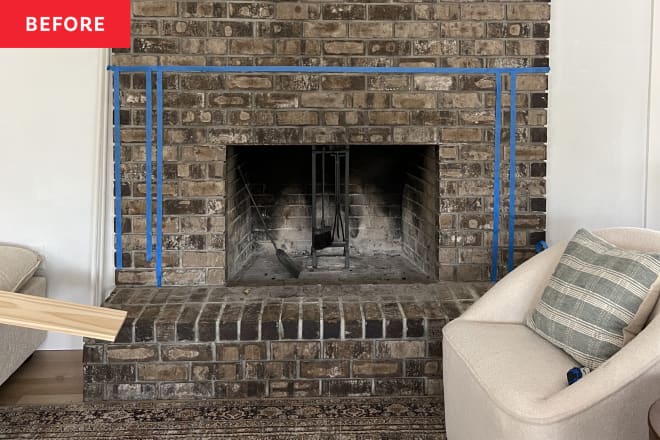
“Get nitty gritty about your measurements,” Sage says. “Shop with your tape measure by your side, and use blue painter’s tape to outline on the floor the dimensions of the pieces you’re considering.” That way, you’ll know if a piece is too large, and you can avoid buying it — or sell/donate a too-big piece you might have now (if it’s in your means to do so). That way, you can buy something that’s more appropriate in scale. 

You’ll know your pieces are the right size when your furniture layout creates a seamless walking path for easy flow around a space — no shuffling required. That means having ample “breathing room” around the walls. “To level up, pay attention to the seat height of your sofa compared to the height of your coffee table,” Sage adds. “The ideal coffee table height is generally one to two inches lower than your sofa’s seat height, but if you don’t pay attention to those measurements while shopping, you can end up with a huge differential between the two — and it both looks and feels weird!” 

Lastly, don’t be afraid to sell or skip items that would crowd the room. Even if entertaining friends and family is a priority, you’re the one who’s going to be living in this space every day. And for Sage, that means prioritizing your comfort. 

Fix #2: Opting for Tiny Furniture to Make a Small Room Feel Bigger

Another reason to scale your furniture correctly comes from what Alix sees as an opposite problem: When living rooms are compact, people often think the furniture needs to be even smaller. Maybe that will make everything feel larger? Well, no, that’s not the case, says the designer. 

“People believe a small apartment means you’re limited to small furniture,” Alix says. “I describe it as the Polly Pocket Effect. I don’t blame them for this assumption because it’s natural to assume a small living room calls for bite-size furniture. However, when you do this, the room actually feels smaller.”

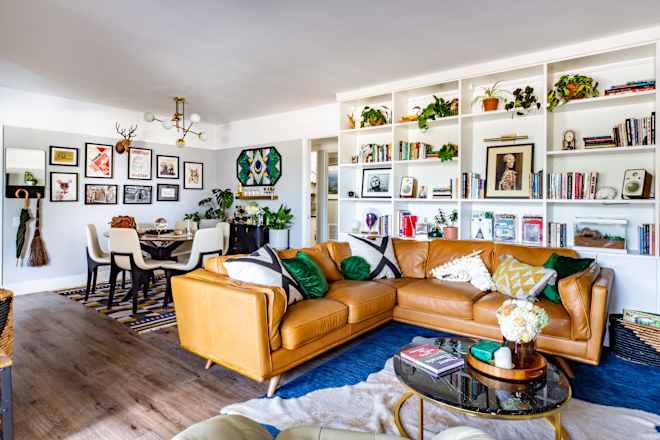
To make a small footprint pack a big punch, Alix recommends choosing one furniture piece that’s somewhat larger in scale (this is where painter’s tape comes into play). “Know where you can go big so that you have at least one oversized item to balance all the smaller pieces,” she says. “For example, if you can only fit a five-foot sofa, balance it out with a coffee table close to the same width. You’ll now have an area to display stacks of coffee table books, maybe a candle, and it will bring an instant sophistication and elevation to your otherwise smaller living room.”

The upshot here? If you’ve gone super small in your little living room, you’ve probably over-corrected in terms of scale. Bring in at least one regularly-sized item for that elusive visual balance that Alix talked about above.

Fix #3: Letting Accent Shades Do the Heavy Lifting in a More Colorful Palette

After many years of neutral living rooms, Bloch-Neal says it’s exciting how color is coming back in a big way. “We’re seeing such a wonderful resurgence of color right now, but it can also feel tricky, overwhelming, and hard to get right,” she notes. Too many colors can turn a living room into a fun house, but “accent” colors don’t always make enough of an impact. So don’t think that you can rely on random pops of color if you want your space to feel fully vibrant. 

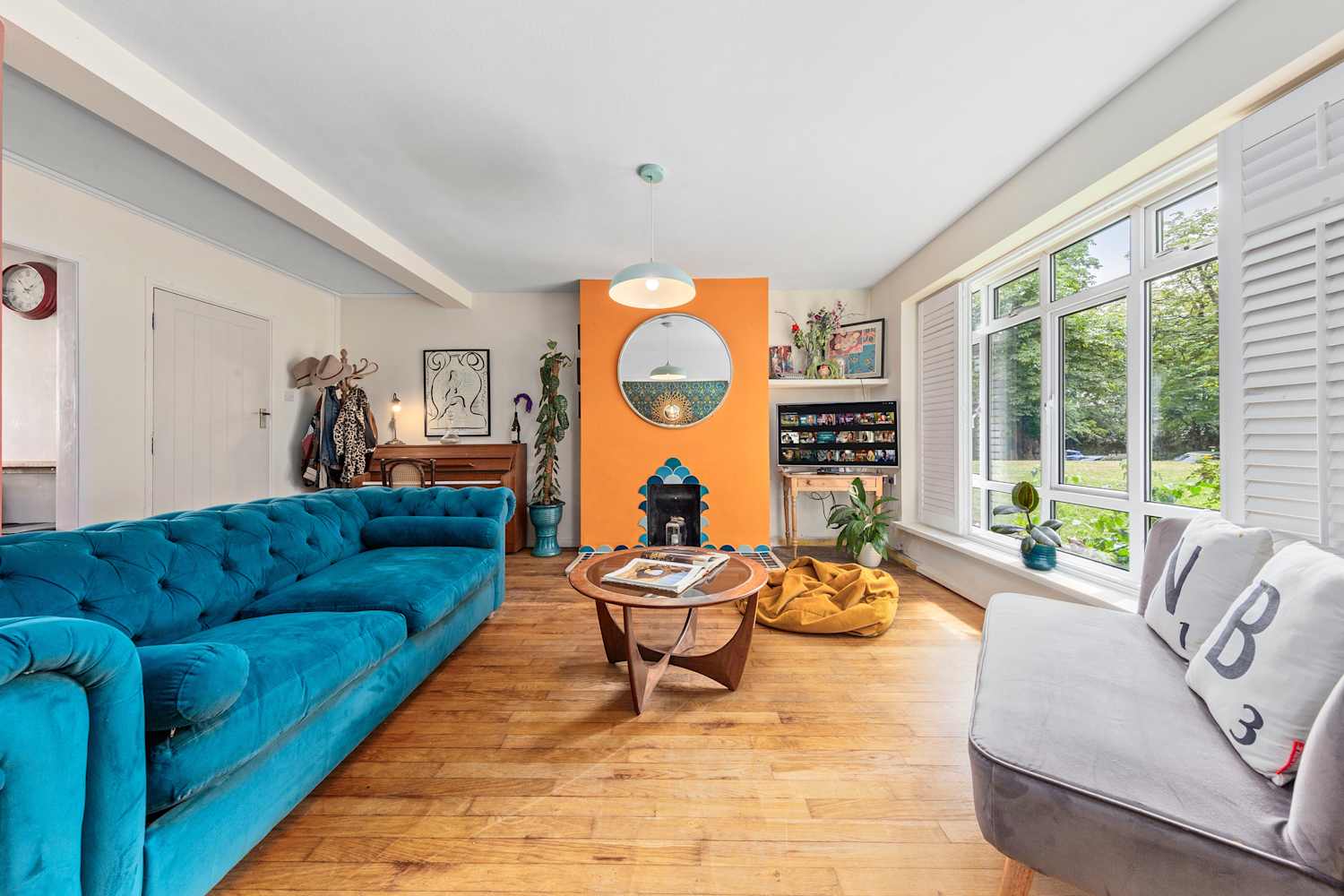
A better solution? A considered palette. “When I think about using color to bring a space alive while leaning into current trends, I like to focus on one item first and then build the room around it,” says Bloch-Neal. 

For Bloch-Neal, that means choosing a color for a couch or accent chair as an anchor and then creating layers through more substantial accent accessories like curtains and art. Just make sure that each additional shade you pick coordinates back to your anchor. 

Need a little bit of advice on what color coordination looks like? Bloch-Neal has your back. “If you choose a bold shade of color in your living room — say a maroon, a deep navy, or a rich green — it often looks best when paired with a softer counterpart across the color wheel,” she says. “Think: maroon with pale yellow, or maroon with a light blue. If you’re working with dark navy, pairing it with creamy tones or even a soft coral creates a beautiful juxtaposition.”

The success is in finding complementary shades and cozy contrasts, and creating layers that all feel cohesive. “Don’t forget about neutrals,” she adds. “Beige, gray, black, and white are timeless, and far from being out. Used thoughtfully, they make wonderful accents that let richer colors really shine.”

Fix #4: Layering Textured Touches Everywhere in a Room to Jazz It Up

If you’re into design, you probably understand the benefits of adding textural elements like throw blankets, pillows, and tapestries to a room. And yes, you don’t want a room to fall flat visually, so texture can help with that. Alix also appreciates that fellow social media scrollers want to make their living rooms cozy, but she’s quick to point out that too much texture can sometimes be overpowering.  

“If you’re heavy-handed with layering texture on texture, the end result can feel less calming and more overwhelming,” she says. “An example of this would be laying rugs. I can appreciate trying to cover a carpeted living room with an oversized area rug to elevate your apartment, but the offense happens when a second rug is layered on top of the new rug to create a vibe.”

The solution would be to edit your choices — Alix says one bold rug is just fine. “And don’t be afraid to go with a busy pattern so you can still achieve the statement you want to make,” she adds. “You can still create additional layers of texture with a throw blanket over the side of your couch and heavily textured throw pillows, but let’s avoid dual rug layers.”

Fix #5: Prioritizing Style Above All Else When Decorating

When you want your living room to look good, it’s only natural that you’d gravitate toward stylish pieces — that seems like the point, right? It is, but too many stylish pieces over functional ones can make your room feel like a luxury museum. 

“One of the most common mistakes I see in living rooms is choosing pieces that look fun and stylish but just aren’t functional,” Bloch-Neal says. “That balance is tricky. My advice is always to pick one piece that’s bold or playful, and let the rest focus on comfort and practicality.”

You could reupholster a cozy chair in a vibrant fabric, she suggests, or layer statement pillows and a bold throw over a classic sofa. “That way, you still get personality and joy in the space without sacrificing livability,” says Bloch-Neal. Just don’t make every choice an aesthetic one, and you’ll be golden.

Fix #6: Lowering the curtain rods to fake the right curtain length

Furniture probably has taken up the bulk of your design attention in your living space, but don’t let secondary concerns around curtains fool you. Get your drapery or window treatments wrong, and it’ll throw the whole room off.

“Thanks to the important work done by designers on social media, many homeowners are now aware that too-short curtains can negatively impact the look of your space and make it look like your windows are wearing floodpants,” Sage says. “Unfortunately, I’ve seen many people ‘fix’ the problem of too-short curtains by just lowering the curtain rod, which in turn creates its own problems!”

According to Sage, a well-positioned curtain rod can make a space feel larger by properly framing the window and creating the illusion of higher ceilings. A too-low curtain rod has the opposite effect: It makes the window and room feel smaller. To fix this, Sage says you’ll need a tape measure.

“Measure for curtains starting at least four to six inches above the top of the window frame,” she says. “It may mean you need to buy longer curtains than you think. And if the exact length you need isn’t available off the shelf, consider buying longer curtains and having them hemmed. It’s always better to start with the item that’s a relatively fixed position — the curtain rod in— and then adjust the changeable items to that.” Adjusting to make your living room better is what actual fixes are all about. 
How To Choose A Chandelier That Transforms Your Living Room

How To Choose A Chandelier That Transforms Your Living Room

There’s something undeniably magical about a chandelier. More than just a light fixture, it has the power to set the tone of an entire room — adding drama, elegance, or even a touch of whimsy. In a living room, where family life unfolds and guests are entertained, the right chandelier can be the statement piece that pulls everything together.

But with so many styles, sizes, and finishes to choose from, finding one that truly transforms your space can feel overwhelming. Should you go for a sparkling crystal showstopper, a sleek modern design, or a rustic statement in wood and metal? In this guide, we’ll walk you through the key things to consider so you can choose a luxury modern chandelier that not only lights your living room, but elevates it.

Step 1: Pay Attention to Size and Placement

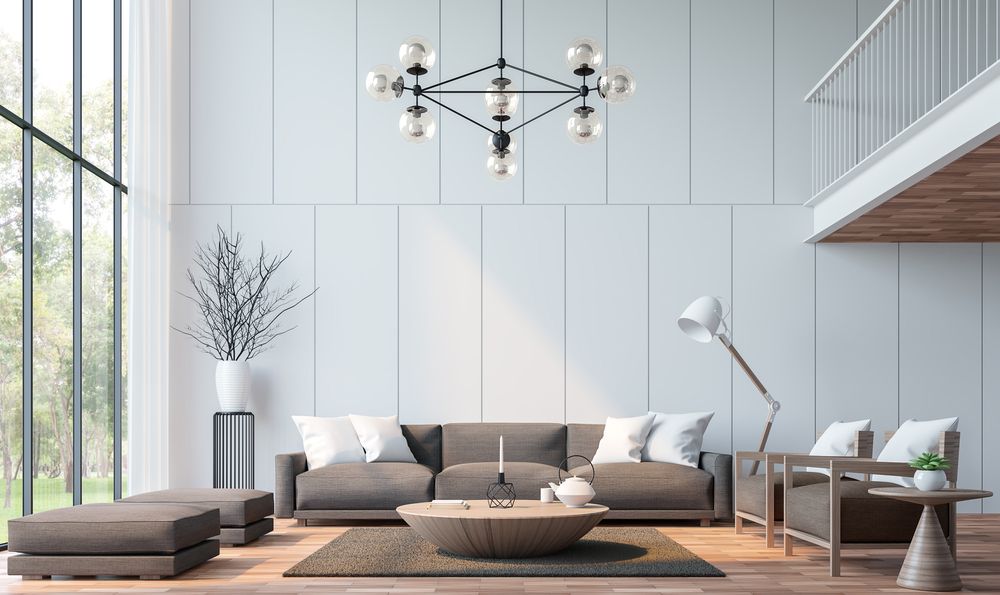
Modern living room interior with stunning light feature
Credit: Onzon / Shutterstock

The most common mistake is choosing a chandelier that’s either too big or too small for a space. The right size is crucial for creating a balanced look. Here’s a simple trick to nail the dimensions:

For the Diameter: Add the length and width of your room (in feet) and use that number for the ideal chandelier diameter (in inches). For example, a 12-foot by 16-foot living room would be perfect for a 28-inch diameter chandelier (12 + 16 = 28). This formula is a foolproof starting point.

For the Height: A good rule of thumb is to allow for about 7 feet of clearance from the bottom of the chandelier to the floor. This prevents people from bumping their heads and ensures the fixture doesn’t block sightlines. In a room with an extra-high ceiling (10 feet or more), you can go for a taller, more dramatic fixture.

Placement is Key: A chandelier can be more impactful when placed strategically. In a living room, it might hang over a central seating area or a coffee table to create an intimate gathering space. In an open-concept layout, it can be used to visually delineate the living room from a dining or kitchen area, acting as a stylish anchor for the zone.

Step 2: Choose a Style That Defines Your Space 

Your chandelier is not just a light source; it’s a design point. Its appearance needs to coincide with your designer pieces of furniture and the overall look of a living room, but don’t be afraid to make it the center of attention.

Modern & Geometric: If your living room is all about minimalist lines, a single color scheme, and a “less is more” philosophy, a geometric chandelier with a narrow metal or glass design can be the ultimate sculptural piece. Such fixtures usually have asymmetrical arms, minimalist features, and an architectural, dramatic beauty that makes an impact without clutter.

Glam & Crystal: To achieve the ultimate sense of glamour, nothing comes close to a crystal chandelier. It usually has a streamlined appearance and clear, flowing crystals that beautifully reflect light with ease. This type of chandelier creates a luxurious and sophisticated ambiance in a room.

Mid-Century Modern: A mid-century modern chandelier, often with radiating arms and globe-shaped bulbs, can be a perfect fit for a space with warm woods, clean-lined luxury furniture, and an appreciation for classic 20th-century design.

Industrial Chic: Raw materials and exposed elements are the hallmarks of this style. An industrial-inspired chandelier, often made of dark metal or brass with exposed filament bulbs, can be the perfect choice for a loft-style living room or a space that embraces a rugged, urban aesthetic.

Boho & Organic: Think of natural materials, such as wood beads, woven rattan, or polished stones. These chandeliers add a soft, earthy vibe that makes the space feel warm and inviting. They are ideal for living rooms with a more relaxed, layered aesthetic, where natural textures and decor are paramount.

Step 3: Take the Quality of Light into Consideration

Large disabled friendly living room interior with a door to the garden
Credit: Eugene Deshko, licensed under the Unsplash+ License

While the chandelier’s design is paramount, the quality of its light is what truly determines the mood of your living room. The type of bulbs you choose and their color temperature can transform the entire atmosphere.

Bulb Type: LED bulbs are now the standard for their energy efficiency and long lifespan. They come in a variety of shapes, from classic candle-style bulbs to modern globes, and can be dimmed to control the light output. For a vintage or industrial look, consider filament bulbs that add a warm, nostalgic glow.

Color Temperature: This is measured in Kelvin (K). A lower Kelvin number (2,700K – 3,000K) produces a warm, yellowish light, perfect for creating a cozy and inviting atmosphere. A higher number (4,000K+) produces a cooler, bluer light that feels more modern and bright. For a living room, a warmer color temperature is almost always the best choice.

Dimmer Switches: A dimmer allows you to adjust the light level to suit any occasion, from a bright, well-lit gathering to a soft, romantic evening. It gives you complete control over the mood and functionality of the space.

Step 4: Create a Cohesive Narrative

Interior of home with beam and block floors

A chandelier is a powerful design choice on its own, but its true magic is unlocked when it works in harmony with the rest of your home. Your chandelier can set a design precedent that is echoed throughout your space, from the luxury furniture in your living room to the sanitary ware in your bathroom.

Imagine a living room with a sleek, chrome-finished chandelier. This contemporary design choice can be mirrored in the polished metal legs of a sofa or the clean lines of a console table. In an open-concept layout, this aesthetic can even extend to the kitchen and bathroom, where the elegant, minimalist design of faucets and basins in your sanitary ware collection aligns with the modern flair of the chandelier. This cohesive design language links every part of your home together, creating a seamless and sophisticated look.

A chandelier is a key design choice, but one that can completely redefine the look and feel of your living room. Simply pausing to consider scale, style, and the quality of materials can help you choose a piece that not only lights up your room but also reflects your own taste and creates a sophisticated, welcoming space for the years ahead.

0

<!–
–>

John Lewis has launched what I think is the most stylish sofa bed on the market – *and* it promises to be comfortable

John Lewis has launched what I think is the most stylish sofa bed on the market – *and* it promises to be comfortable

If you’ve been hunting the high street for a sofa bed worthy of floor space in your home recently, then you’ll definitely want John Lewis‘ most recent launch on your radar.

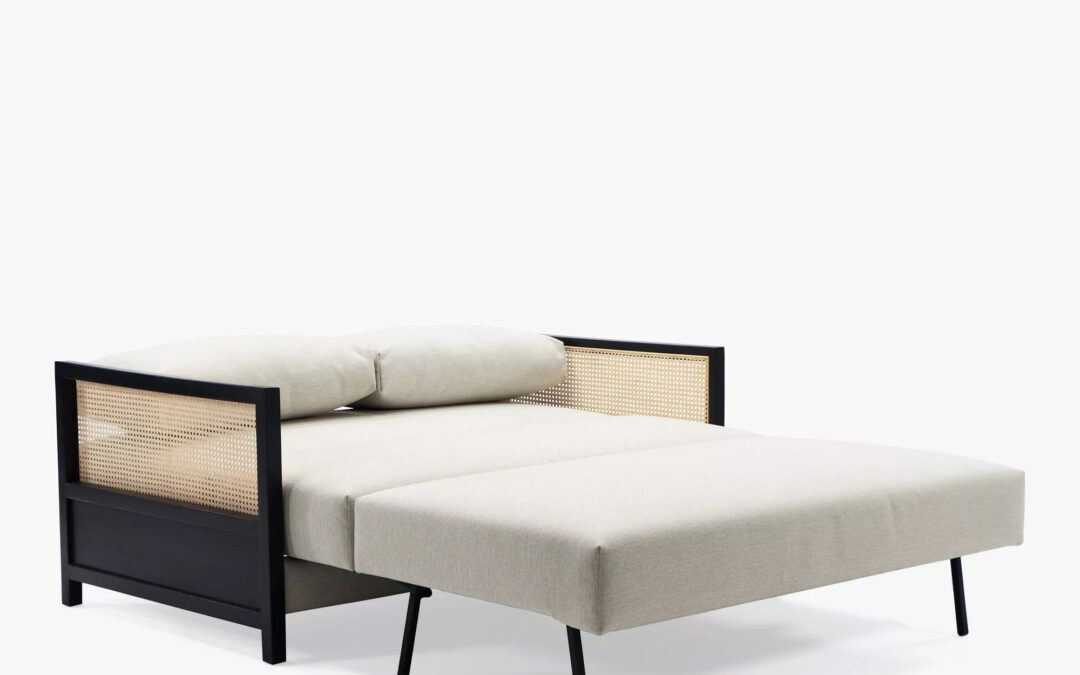
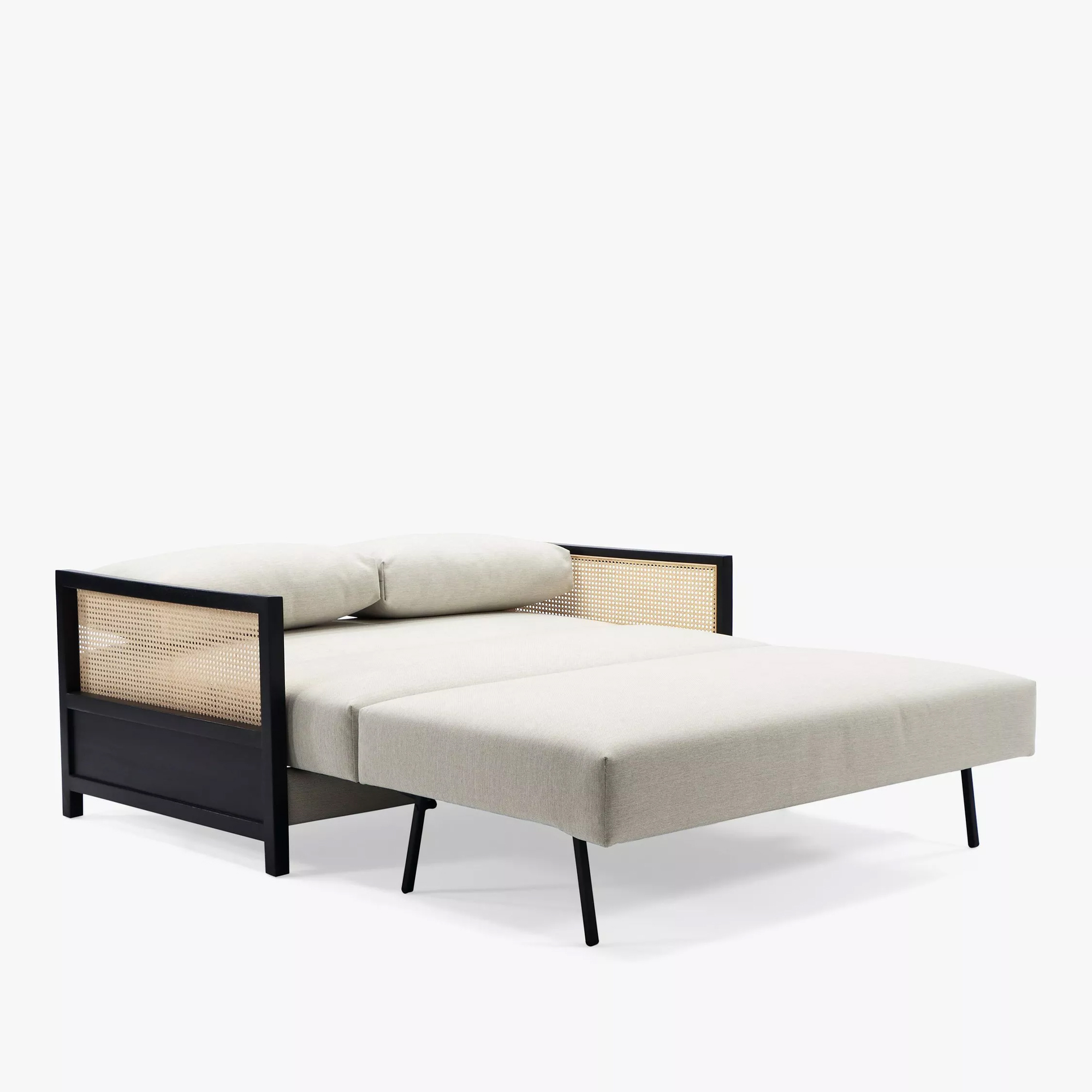
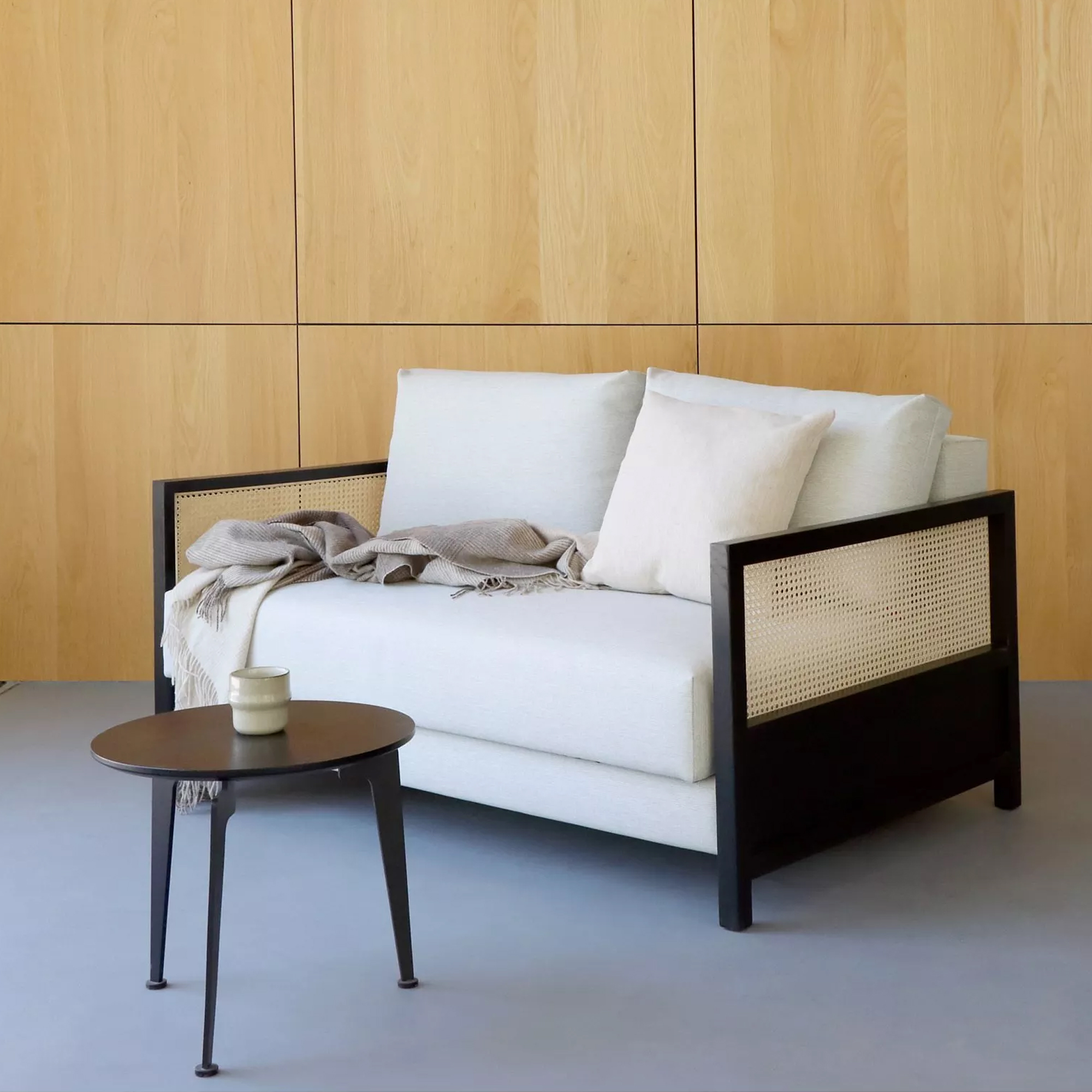
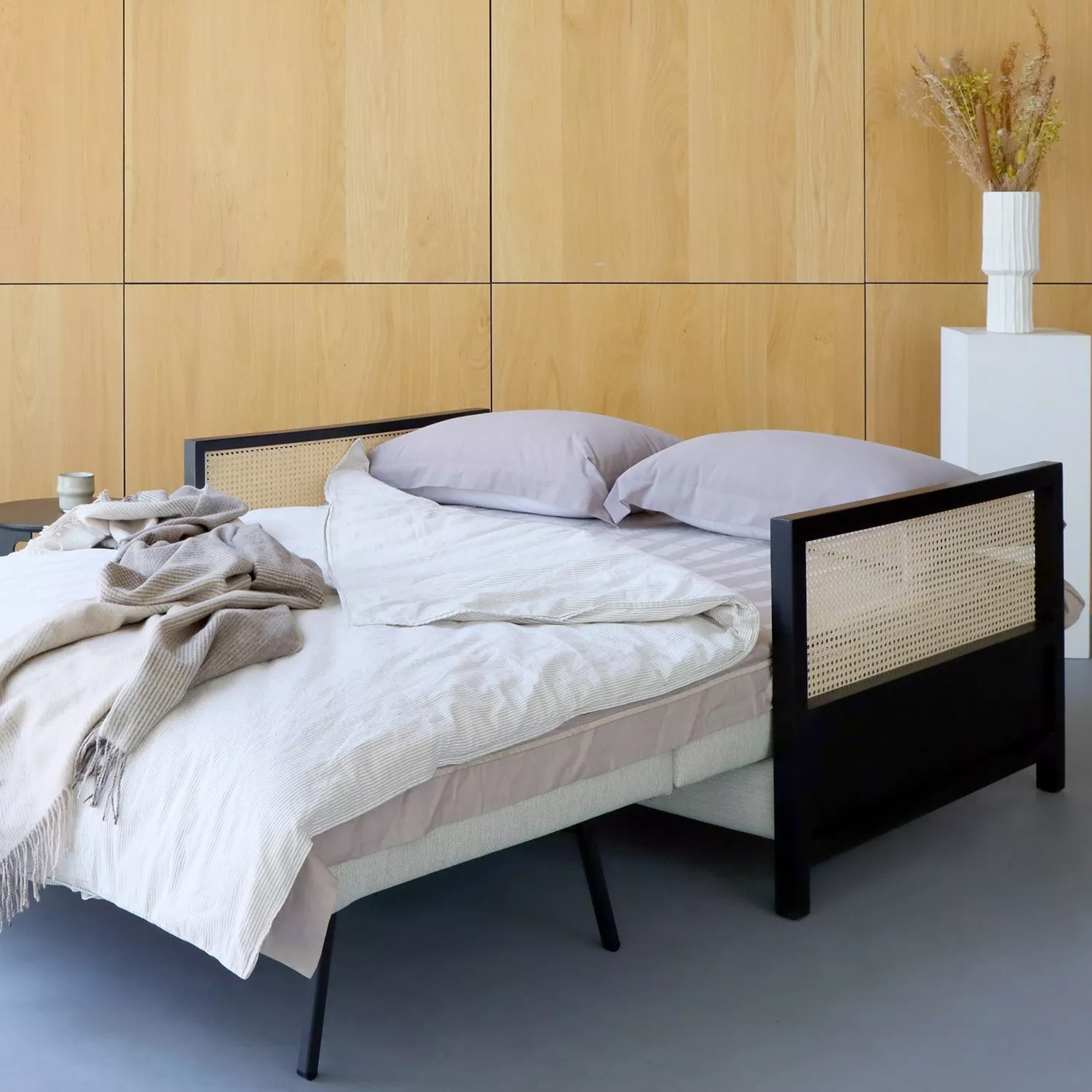
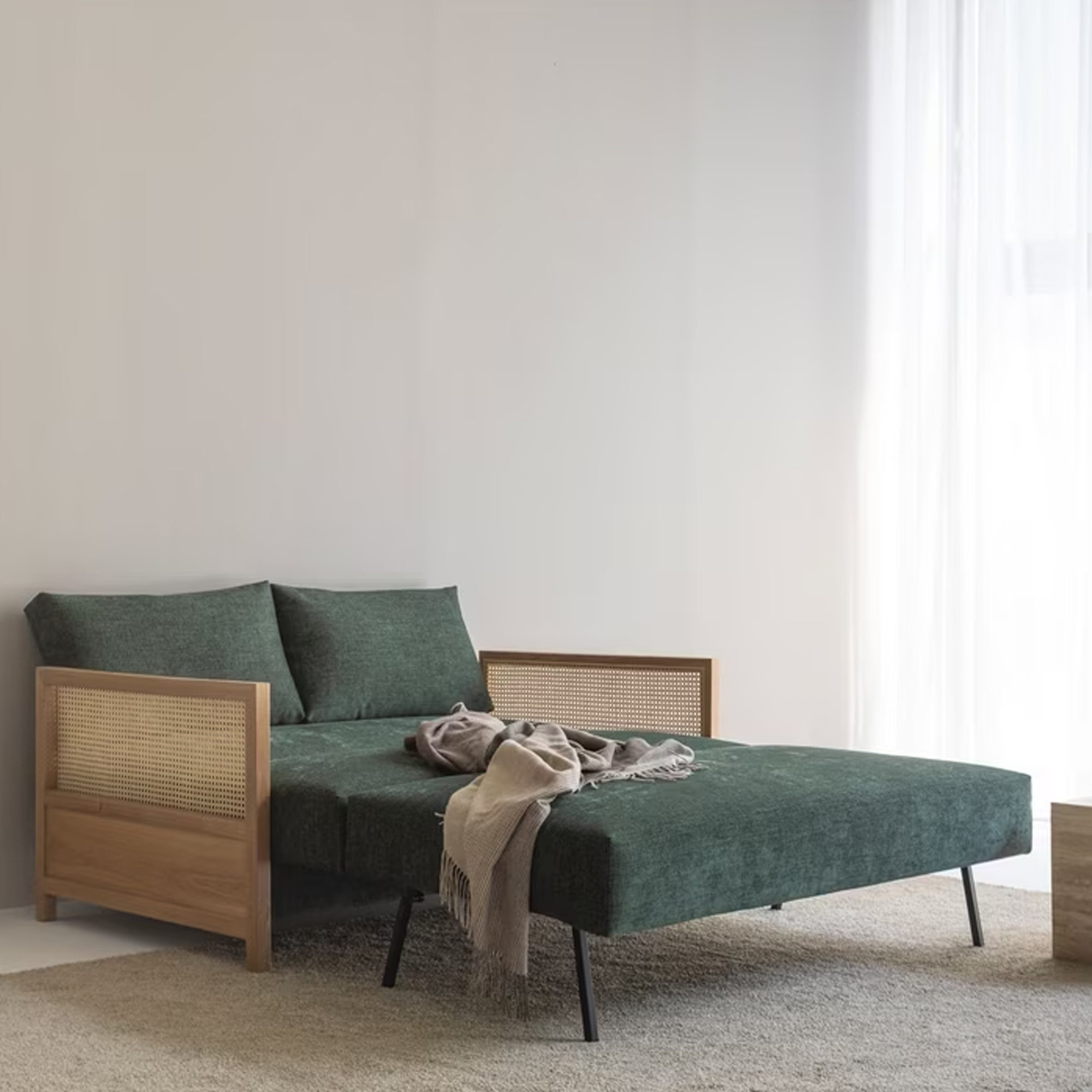
Available online and in-store, the Innovation Living Cane Sofa Bed scores some serious style points, and, based on my testing of other sofa beds in the Innovation Living range, it promises to be comfortable too – something of a miracle in the world of sleeper sofas.

Designed by Danish furniture company Innovation Living, the Cane Sofa Bed is a riff on the brand’s bestselling Cubed 140 Sofa Bed.

As Ideal Home’s Sleep Editor, I first tested Innovation Living’s sofa bed range four years ago, and I still rate the Cubed 140 as one of the best sofa beds you can buy.

My only gripe with the Cubed 140 – other than its price – is that it looks a little… functional. Perfect for a home office, but would I want it in prime position in my living room? Personally, not.

In comparison, the new Cane Sofa Bed has a similar seating set-up to the Cubed 140, but with oh-so-stylish cane side panels that elevate it into a sofa bed I’d be more than happy giving centrestage in my main living space.

Innovation Living can sofa bed in white and black

(Image credit: Innovation Living @ John Lewis)

I haven’t yet tested the Cane Sofa Bed in person, but because that seating arrangement looks almost identical to the Cubed 140, I’m confident it’s going to be equally comfortable.

It also mirrors another of the Cubed 140’s great selling points; despite only taking up a modest H73 x W153 x D92cm of floor space, it transforms into a double bed-sized sleeping area. That’s a rarity in the world of sofa beds, which tend to offer sleeping areas much smaller than standard bed sizes.

No wonder the Cane Sofa Bed is already scoring highly with John Lewis reviewers, with full marks given by all of its owners so far.

‘We just assembled the sofa bed and are excited to actually use it. It’s comfortable both as a sofa and a bed, which is rare,’ says one 5-star reviewer. ‘The bamboo detailing looks great and fits well with our interior.’

The Innovation Living Cane Sofa Bed

(Image credit: Innovation Living @ John Lewis)

‘Easy to assemble, excellent quality, looks and functions well as a sofa, and very easy to convert into a comfortable sofa bed,’ shares another 5-star reviewer.

As someone who’s spent four years testing out sofa beds, I can assure you that finding a stylish *and* comfortable sofa bed is no mean feat. I’ve tested numerous promising-looking sofa beds that felt as hard as bricks when I sat or lay down. So, although this sofa bed doesn’t come cheap, if you’re looking for a sofa bed that can double up as actual everyday seating, that price tag could well be worth it.

You might just need to move fast to bag one. As one reviewer says, ‘when it comes into stock you have to be quick,’ because whilst the ‘Natural’ colourway is available to shop, the Cane Sofa Bed in Avella Pine is currently sold out.

The Innovation Living Cane Sofa Bed

(Image credit: Innovation Living @ John Lewis)

However, if your budget doesn’t stretch to investing in the Cane Sofa Bed, all is not lost. I haven’t found a sofa bed that offers quite such trend-setting design as those webbed side panels, but there are other options.

Looks-wise, the Dunelm Mila Rattan Sofa Bed is the closest alternative I’ve found, and at £449 it’s considerably cheaper. But I can’t vouch for its comfort as I haven’t tested it, and it doesn’t have great reviews online. (If you’ve sat or lain down on it, let me know how it fares in the comment section!).

Instead, although these options might lack that cane detailing, these are my top three alternative recommendations for combining style, comfort, *and* affordability.

Are you tempted by the Cane Sofa Bed? Or would you opt for one of these more affordable choices instead? Let me know in the comments!