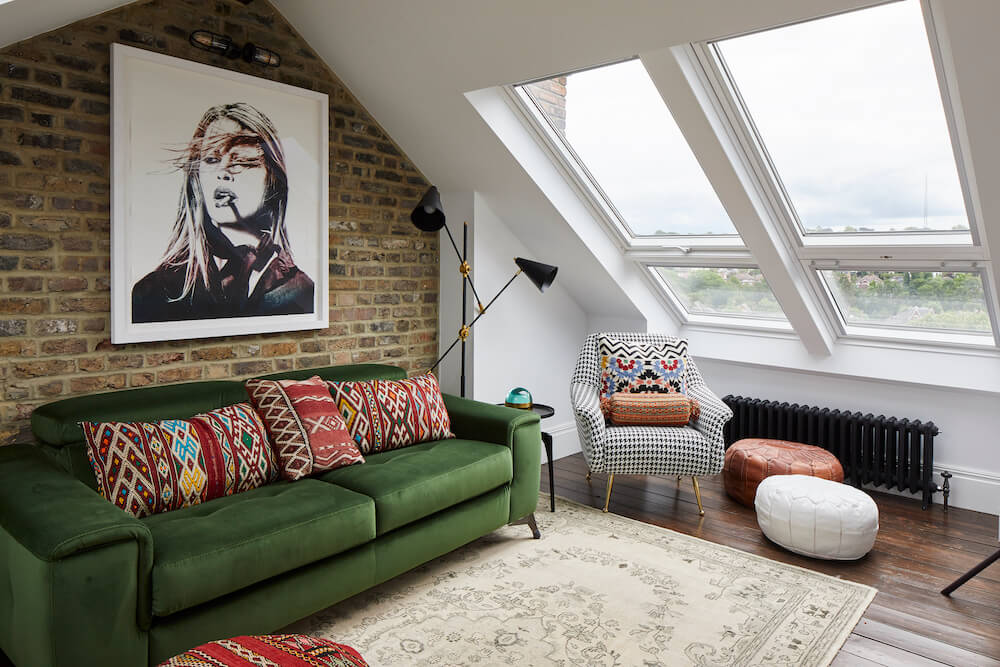
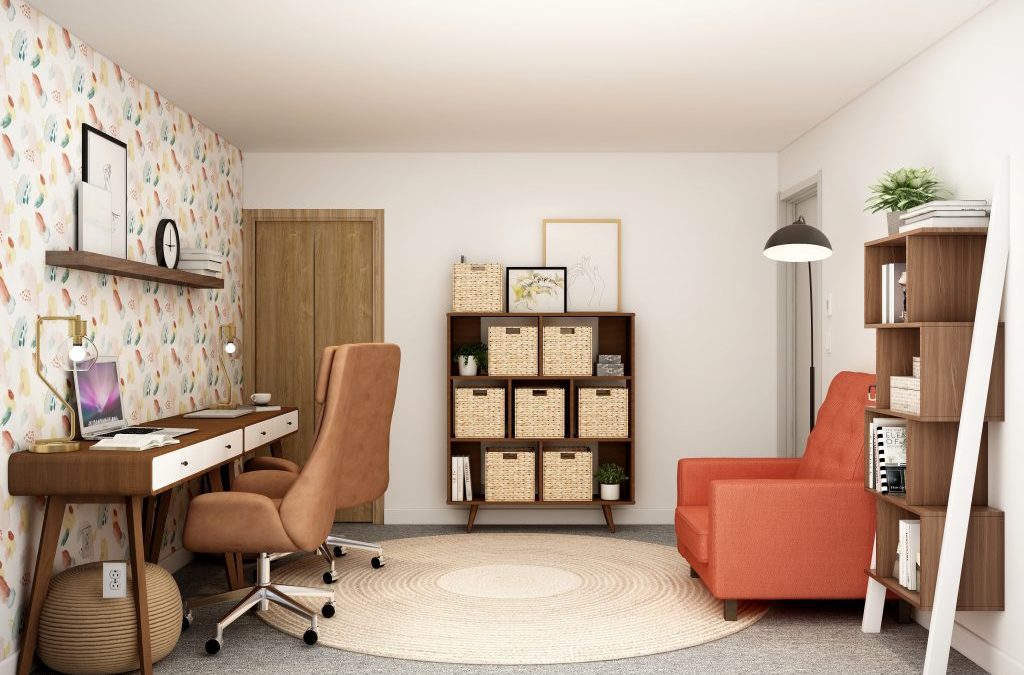
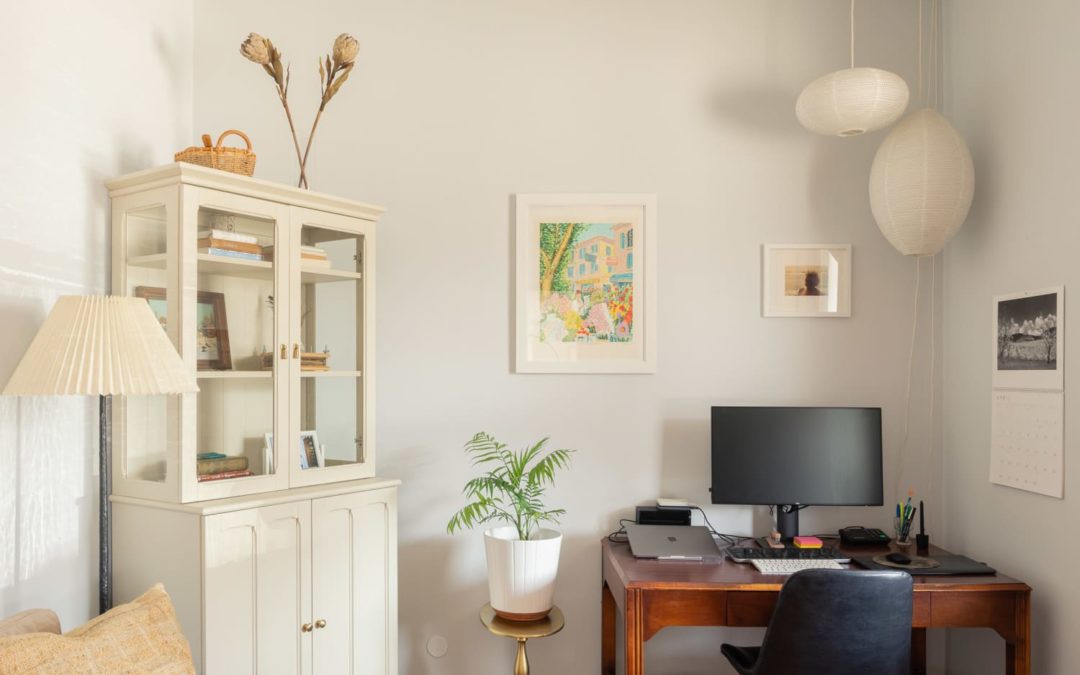
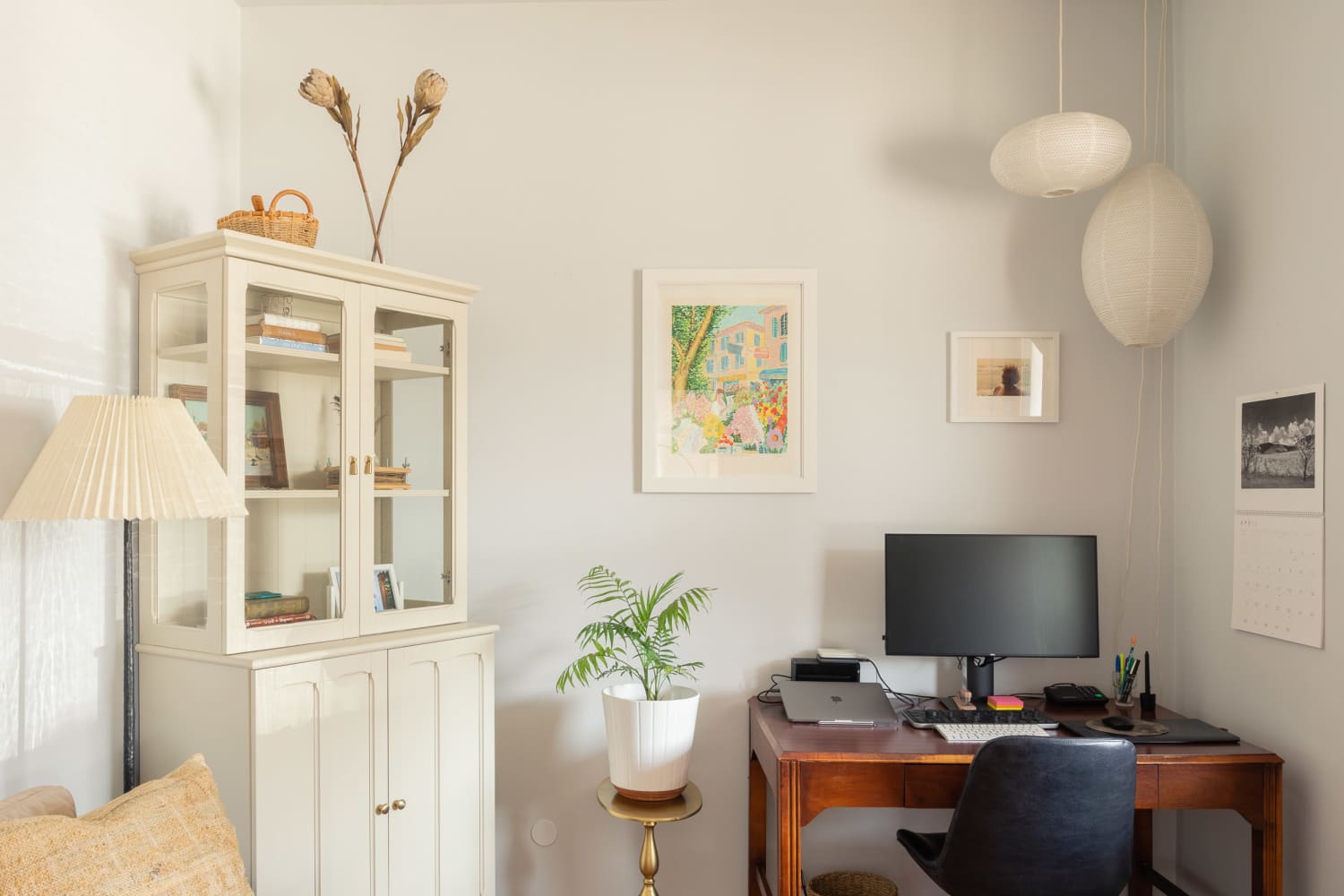
A few years ago, you may have defined the extra space in your home as a catch-all spare room that you didn’t put too much thought into. But the number of people working from home tripled between 2019 and 2021, according to U.S. Census Bureau figures, which means the home office is still in the spotlight.
Now, if you’re among the nearly 28 million people who work from home, that extra space has likely become one of the places where you’re spending the most time. In turn, you’re probably more invested in how your home office looks and feels. (Goodbye fluorescent overhead lights and generic office supplies; hello natural lighting, plant companions, and bespoke accessories!)
For more content like this follow
Perhaps one of the most important design choices you’ll make in your home office is deciding on a color to paint it. Are there shades that can help promote productivity and put you in your WFH groove? What about paint colors that can potentially stir your creativity?
The right shade for your office really comes down to how you want to feel when you’re working, says Maureen McDermut, a Montecito, California-based real estate agent with Sotheby’s International Realty.
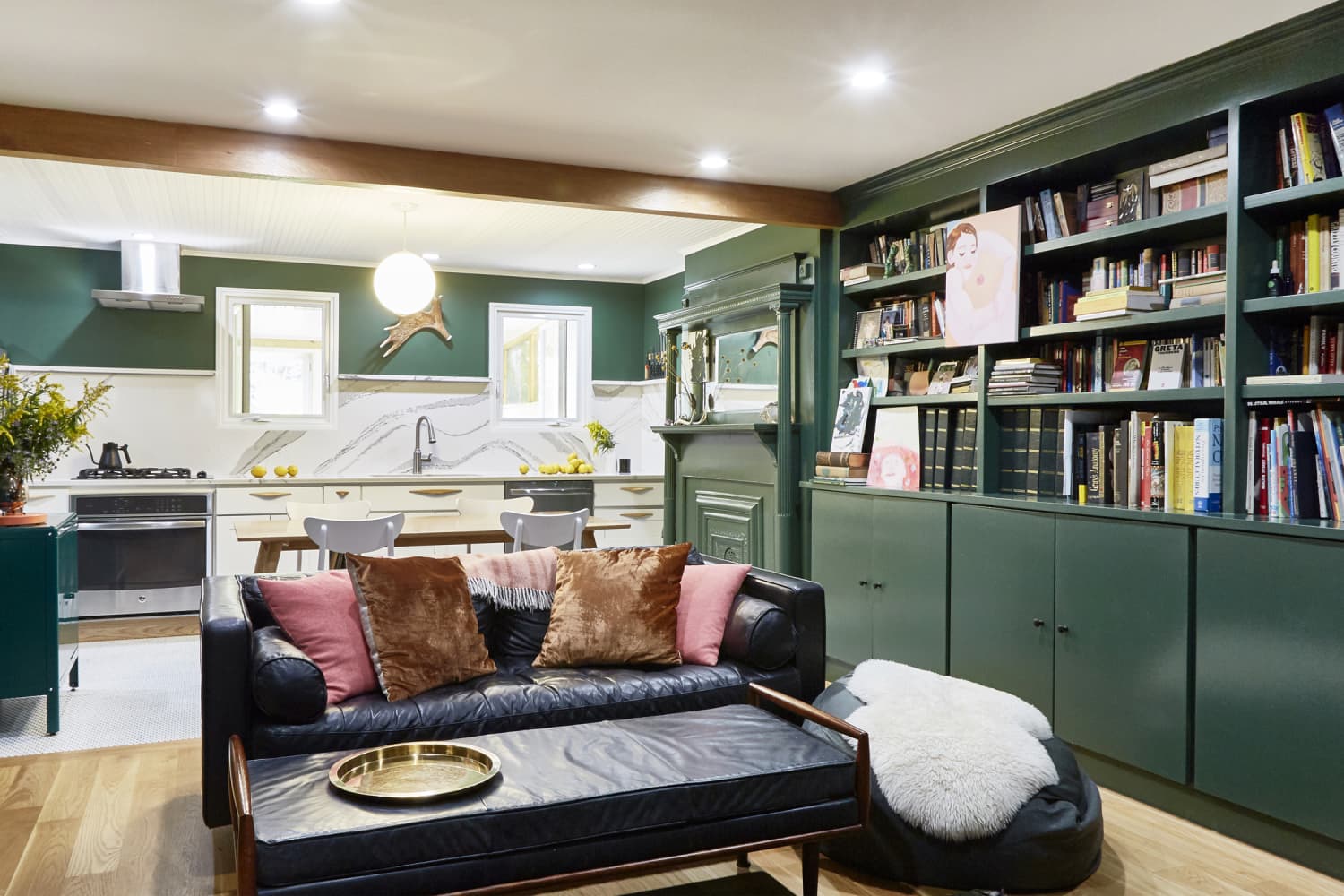
“Office color schemes have a lot to do with the type of business you are in,” McDermut says. “For those that need to concentrate, a calmer color palette is desired. A nice green like Farrow & Ball’s Green Smoke can have a calming effect, giving those that are in businesses like accounting or finance the calm atmosphere they need.”
There’s some science to back all of this up: Researchers have studied colors and found that different shades are associated with various characteristics — for instance, greens are harmonious, yellows are lively and optimistic, and dark grays are regarded as rational.
For creative types, a brighter, more energetic scheme may work best, McDermut says. For instance, a classic soft yellow like Benjamin Moore’s Pale Moon sets a bright and happy tone for your home office, she says.
When it comes to picking a home office color, you’ll also want to strike the balance of differentiating it from other areas in your home, yet still having a cohesive color palette throughout. Neutral tones in the office tend to work really well, too, especially if you plan on selling your home in the near future, McDermut says.
Sellers have been using their homes’ extra space to market the sale, knowing that many people are looking to buy places with a home office. Earlier in the pandemic, Rocket Mortgage analyzed listings and found a 17 percent increase in the number of listings that contained the word “office.”
Neutral doesn’t need to translate to boring, though: A cool gray shade with medium weight like Nimbus Gray by Benjamin Moore has wide appeal for interior spaces, McDermut adds.
“You will want your paint colors to give potential buyers the ability to envision the room as they would use it,” she says.
Sarah writes about all things shopping for Apartment Therapy, The Kitchn, and Cubby helping you find the best deals and the best products for you and your home. A Brooklyn-born Jersey Girl, she loves a good playlist, a good bagel, and her family (but not necessarily in that order).
Kelly Dawson is a media consultant based in Los Angeles. She is a prolific writer for notable publications including Cup of Jo, Vox, AFAR, Dwell, Martha Stewart Living, McSweeney’s and Architectural Digest. Kelly is the three-time guest editor for Refinery29’s “Voices of Disability” series, two-time guest host of “Call Your Girlfriend,” and deputy editor at Apartment Therapy.
The family home is a place for you all to work, rest and play. Establishing a separate study area for your children to do their homework is important for a number of reasons.
It separates study apart from other activities in the house. This is important to encourage your child to associate that space with learning.
It allows your child to switch off from study mode and back into a more relaxed and fun mode, which is equally important to maintain balanced emotional well-being.
It can be set up to create an environment which is more conducive to learning.
Where is the best place for a child’s study space?
Credit: Fabio Principe / Adobe Stock
While their bedroom is possibly the first choice, it might be more conducive for the study space to be created in a different area. Your child’s bedroom should be a space where they can rest and relax, play, talk to their friend, and, most importantly, sleep. By having a study space in their bedroom, it may be a constant distraction which places silent pressure on young shoulders.
Consequently, if you have the room try and partition off an area which is dedicated to your child’s studying. If this space is in a communal family area, it will help your child not to feel isolated and mean that you are on hand to help out when necessary.
Create a separate space using partition boards and an aluminium angle that can be folded back when not in use to hide or camouflage the space.
What do you need to include in the space?
First and foremost, the workspace needs to be sufficiently large enough to include a tablet, laptop or PC. All schoolchildren these days need access to technology to do their schoolwork. Indeed, during the pandemic, it became clear that those children who did not have access to smart technology are the ones that were most at risk of falling behind in their education.
Alongside the technology, enough plug points need to be included to ensure that the battery life of the technology does not diminish before your child can complete their schoolwork.
If possible, put a shelf up to hold some books and maybe a couple of inspiring pictures or photographs. Include a dictionary as a reference book. Although everything can be found online, encourage your child to verify spellings via a different source as well to broaden their scope of research skills.
A comfortable chair is essential. If you can invest in a proper office chair. Not only will this last longer, but it will make your child feel more grown up and treated with more ‘adult’ respect which will encourage them to concentrate on their schoolwork with more discipline.
Get the lighting right
Credit: Studio Romantic/Shutterstock
There’s something cosy about studying in a defined space by the light of a desk lamp. If the rest of the room is quite dark, it helps your child to focus on the work in front of them. Make sure that you include a funky light that has several settings so that it doesn’t interfere with any screens.
Make it a family affair
If your kids are quite young, it is particularly important to make that study time a family affair. Switch off any other disturbances in the house, such as the TV or radio, create a separate space for yourself as the parent, and use the homework time to catch up on your own admin or other work tasks. The companionship of sitting quietly together for a short period of concentration will create warm and fuzzy memories for your child that will take them into adulthood.
Sarah is a staff writer at Apartment Therapy. She completed her MA in journalism at the University of Missouri and has a bachelor’s degree in journalism from Belmont University. Past writing and editing stops include HGTV Magazine, Nashville Arts Magazine, and several outlets local to her hometown, Columbia, Missouri.