You don’t need to use a ton of chemicals to get rid of peeling concrete paint. (Katherine Jones)
Katherine Jones, in Cherokee Village, Ark., wants to know the best way to remove paint from the concrete on her 60-foot-long front porch.
She doesn’t want to use a harsh chemical stripper that could kill the shrubs and grass around the porch.
The freshly painted concrete looks great and easy to clean, but not long after it starts to blister or bubble. This is why we don’t recommend painting concrete.
Here’s how to remove paint from concrete.
For a porch this size, rent an orbital floor sander and choose a sandpaper that’s not too coarse. You want to remove the finish and not grind the concrete. This will be the easiest way to get the bulk of the paint off.
Then, you’ll have to use some elbow grease to sand the areas the sander can’t reach, like around handrails and columns.
There are citrus-based strippers that are non-toxic and aren’t harmful to plants. This type of stripper will help in the areas where the sander can’t reach.
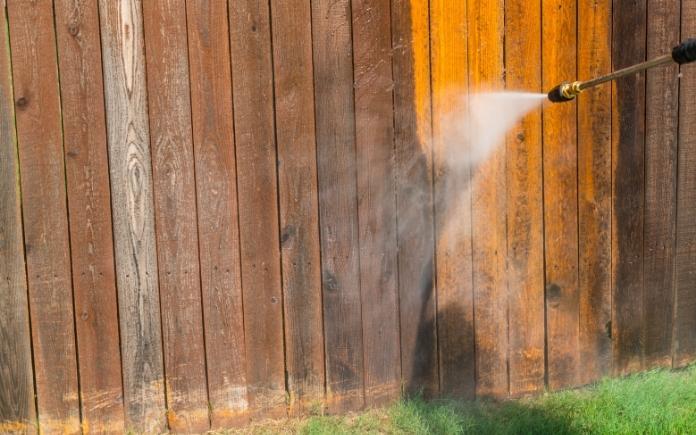
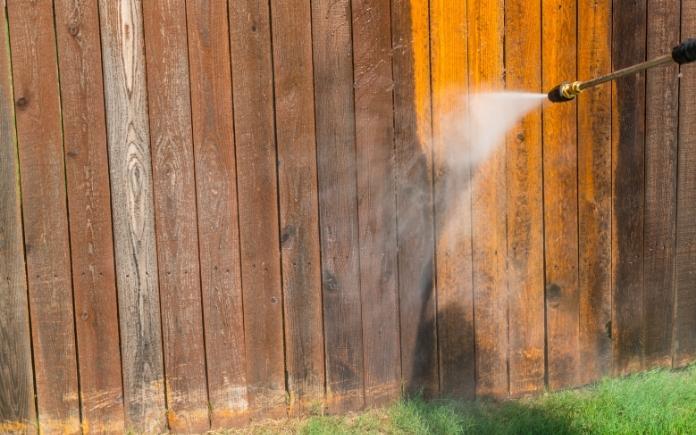
Also, consider renting a soda blaster. It works the same as a sandblaster but uses baking soda instead.
Skip to [23:12] for the full segment on the Today’s Homeowner Podcast.
Also on this episode:
Best New Product
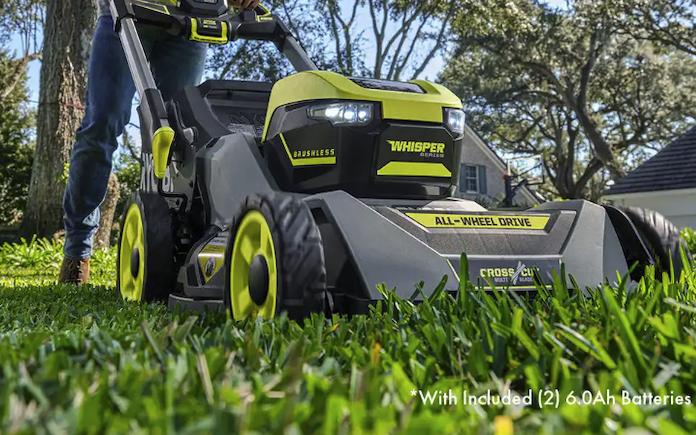
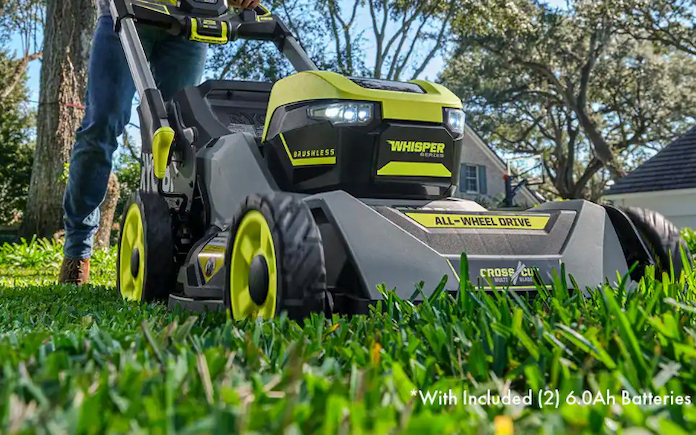
Get the same power as gas minus all the noise with Ryobi’s Whisper Walk electric push mower. Learn more>>
Improvised Lawn Sprinkler — The next time you need to water newly planted grass seed, trees, flowers or shrubs, and you don’t have a sprinkler, you have a few options.
You can go out and buy one, borrow one from a neighbor, or you can make one from an empty soda jug.
Drill three or four 1/8-inch-diameter holes in the side of a plastic, two-liter soda bottle.
Wrap some Teflon tape around the bottle treads and then screw on a female-to-female hose connector.
Attach a garden hose to the hose connector, place the sprinkler in the yard with the holes facing up, and turn on the water.
Protest your fingertips with latex gloves. (eduardolopezcoronadophoto)
Rescuing Used Rubber Gloves — Before discarding used latex gloves, snip off any fingers that aren’t too badly damaged or dirty, and use them as slip-on fingertip protectors when spreading glue, smoothing caulk or spraying paint.
Some termite warranty companies don’t cover your house if you have spray foam insulation. (stock.adobe.com)
Question of the Week
Q: My wife and I are building a new home. I was planning to use spray foam insulation, but after calling several termite-bonding companies, I was surprised that most were hesitant to cover homes with spray foam. Some flatly refused coverage. Why is that, and what other options do I have?
A: Some termite-bonding companies don’t cover homes with spray foam insulation because of inspection issues.
If you have fiberglass or Rockwool insulation, an inspector can just pull the insulation away to look for termite damage. With spray foam insulation, they can’t do that because it sticks to the wood.
Some southern states have modified their building codes to require a termite inspection strip. This strip is installed above and below the foundation slab and allows inspectors to see termite damage in homes with spray foam insulation.
Talk to a local building inspector and see what they recommend to do on a new home build.
Skip to [31:59] for the full segment on the Today’s Homeowner Podcast.
Further Reading
Ask a Question! (Podcast)
Ask a question and we could answer it on the “Today’s Homeowner Podcast!” We also may use it on our nationally syndicated radio broadcast or on todayshomeowner.com.
Don’t delay mowing your lawn for fear of waking the neighbors. Buy a quiet electric push mower like the Ryobi 40 Volt HP Whisper Walk and get the job done early!
This page contains affiliate links. If you purchase a product from these links, we will earn a small commission at no additional cost to you.
Because it’s electric, it’s whisper-quiet. Plus it has high-intensity LED headlights, so you can mow before the sun rises.
The Ryobi 40 Volt HP Whisper Walk electric push mower gives you all the power of gas with cordless convenience. The brushless motor provides more power, longer runtime, and longer motor life than competing battery-powered mowers.
With a 70-minute run time, it’s ideal for yards up to three-quarters of an acre. The onboard fuel gauge shows the battery life, so you won’t be caught off-guard mid-mow.
11-inch high wheels and a lightweight deck make operating this electric push mower a breeze.
And the all-wheel-drive with Smart Trek technology matches the mower’s speed along with your own pace.
With help from our friends at The Home Depot, we’ve compiled this list of timely chores to keep your house clean and comfortable.
Listen to this special-edition Today’s Homeowner Podcast, and follow along below, to learn all about the top summer home maintenance projects!
Changing the air conditioner filter makes your AC work better to keep you cooler. (3 Echoes Content Studio)
1. Change AC & Heating System Filters
Regularly changing your HVAC system’s filters is important because a dirty filter will slow down and strain your system. It should take about two to three minutes to take out your old filter and put in a new one.
Also, once your filter is out, go ahead and vacuum the cavity in case of dust build-up.
Your AC drain line can get blocked with mold and mildew, causing its pan to overflow. Flush it with bleach twice during the summer, when it’s working at its hardest.
3. Check for Loose Railings or Damage on Wooden Decks
Changing weather can take a toll on your deck. Nails and screws can loosen during the temperature change and splinters can pop up once the heat rises.
Inspect and repair any damage to your deck so you can have some safe fun in the sun. Top it off with a coat of sealer to keep it protected all summer long.
Check for any loose parts or rot (if it’s wood). If you have cushions, be sure to wash them. In addition, if your cushions get wet from rain, be sure to hang them out to dry on a sunny day to avoid mold.
If you do this on a regular basis, it makes it a lot easier to keep everything clean.
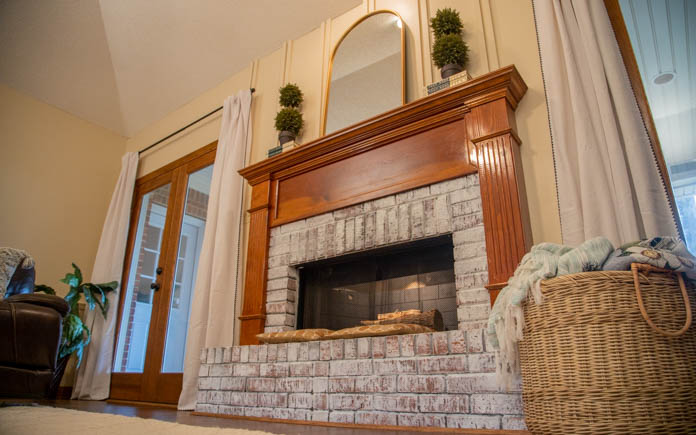
Your fireplace will be ready for winter if you have it inspected this summer. (3 Echoes Content Studio)
7. Have Chimney Inspected & Cleaned
Now’s a great time to have a professional inspect your fireplace and chimney because you aren’t using them during the summer.
Plus, you’ll have more time for repairs if needed.
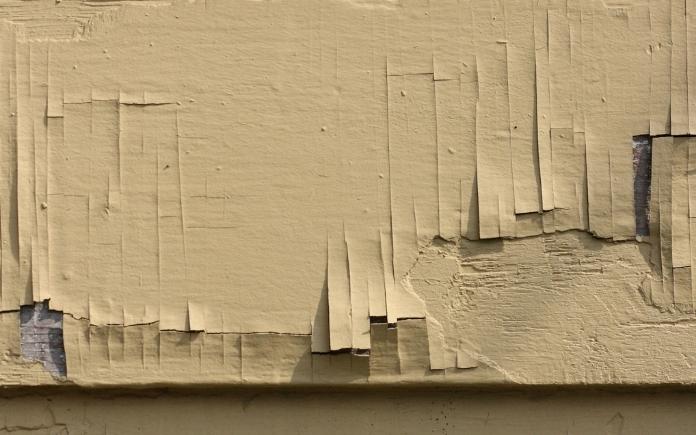
Scrape off peeling paint and put on a fresh coat for an exterior refresh. (mehampson, Getty Images)
8. Scrape Loose Paint from Siding & Trim
Boost your home’s curb appeal by freshening up siding. Scrape away any loose paint, sand if needed, then prime and paint on a fresh coat.
If it’s an older paint, be sure to test it for lead as a precaution.
Mix 1 teaspoon of baby shampoo to 1 gallon of water, or 1-1/2 cups of vinegar to 1 gallon of water, and wipe windows down with newspaper for a streak-free shine.
Involve family members and tag-team to speed things up! Have one person clean the windows inside while another cleans the outside.
Finally, summer blooms are burgeoning! Now is the perfect time to pull any weeds from garden beds and prevent further weed growth by adding 2 to 3 inches of mulch.
Listen to this special-edition Today’s Homeowner Podcast for more summer home maintenance tips!
It’s important to get the best insurance possible with 100% coverage.(DepositPhotos)
Just as there are different home styles, insurers offer a menu of different policies. For the majority of single-family homeowners, the most appropriate policy is the HO-3, sometimes called the Special Form. It insures all major perils, except flood, earthquake, war, and nuclear accident.
You’ll need deep coverage, up to and including 100% of your home’s replacement cost. By insuring at, say, 90%, you’re gambling that you won’t suffer a complete loss. To be safe, always insure at 100%. Research on some insurance companies and compare their insurance services and rates to choose the best deal. If you own a mobile home, there are companies that you can contact to find a great deal on a Mobile Home Insurance Plan.
Insurers generally cover a home’s contents between 50% and 75% of the home’s value. Make a list of your home’s contents for a more accurate estimate of your needs. That way, you’ll have a written record if you need to file a claim. The industry-sponsored Insurance Information Institute provides useful instructions on how to put together an inventory.
You’ll also have to pick a deductible, which is the amount you will pay before the insurance kicks in. Remember, the higher the deductible, the lower your premium will be.
Here are some tips to help you make the right choices about homeowners insurance.
If your home is damaged, insurance could pay to get it fixed, even if the cost is more than the home’s original value.
Buy the guarantees
Traditional guaranteed replacement cost coverage promises to pay whatever it takes to rebuild your home, even if it costs more than the original limits you purchased. That’s crucial in the event that labor and building costs balloon after a major disaster. In many states, large insurers may cap the guarantee at 120% to 125% of purchased limits. Several preferred carriers offer even higher coverage. Speak to your insurance agent for more information. Also, ask for replacement cost coverage for your home’s contents. Without it, you’ll end up with the depreciated value of any object that’s damaged or stolen.
Extra coverage can come in handy when you least expect it to.
Get these types of important coverage, too:
–Inflation guard: This option annually increases your coverage at the rate of local building-cost inflation.
–Ordinance-and-law coverage: This rider, which covers the costs of bringing your home into compliance with current building codes, is a must if your home is more than a few years old.
–Limit your liability: Your homeowners policy protects against lawsuits for accidents that happen on your property. It also covers you if your dog bites someone. You might also consider adding an umbrella policy, which provides additional coverage over and above your regular homeowners liability limits.
Good insurance policies will come in handy if your home is hit with a natural disaster such as a hurricane or tornado(DepositPhotos)
Consider these options:
–Displacement: Your homeowners policy also provides for living expenses if you need to secure other housing while your home is being repaired or rebuilt.
–Other structures: Replacement of structures such as garages, detached covered porches or patios, and sheds.
–Medical Coverage: Provides coverage for medical expenses if someone is injured on your property.
–Home business coverage: Business property worth more than $2,500 isn’t covered by a homeowners policy, so buy a separate policy — also known as a rider — to fill the gap. Business liability coverage must be purchased separately, too.
–Riders for valuables: A standard policy provides minimal coverage for antiques, collectibles, furs, silver, jewels, cameras, computers, musical instruments, and firearms. For these, you may need additional or separate coverage. Again, speak with your insurance agent about the proper coverage for your specific needs.
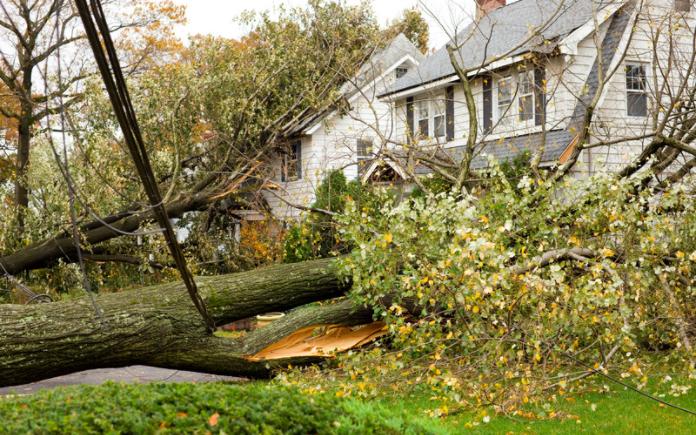
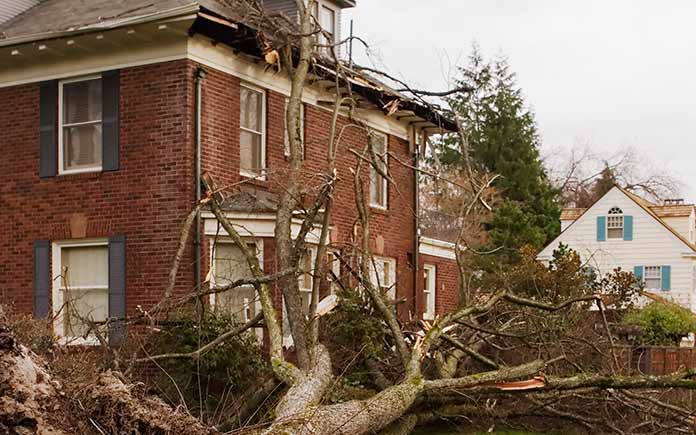
Tree branches can fall on your roof during a storm, and when that happens, it’s important to take fast action to prevent more damage. (DepositPhotos)
In recent years, the number of homes that actually have put together a basic “survival kit” of some sort – with water, food, candles, extra batteries, etc. – has soared. So have the sales of residential backup generators, all in the interest of one’s being self-sufficient for a limited period of time after a natural disaster strikes and isolates its victims.
But these measures pale next to the new and emerging drive now underway to seriously prepare one’s home – well in advance – for all sorts of “heavy weather” that is sure to come.
Residential storm damage begins with strong winds that attack the integrity of roofing, windows and both entry and garage doors. As winds increase, and driving rain is added to the equation, building products begin to fail and pervasive water begins to make its way in.
Still stronger winds, say as in a category three, four or five hurricane with winds ranging from 111 to 155-plus mph rip away exterior products. Adding flying debris to the equation and homes are left seriously exposed, damaged and vulnerable to major devastation and its occupants at risk.
But just like in the movies, when things are looking most foreboding, the cavalry always charges in “to save the day” – and America’s building products manufacturers are now responding with an ever-increasing array of ways and means for homeowners to defend themselves (and their homes) against the wrath of natural disasters.
A house with a fortified roof
Leading the Charge
All types of residential “heavy-weather” storm products are seeing a dramatic increase in both acceptance and usage. These range from a variety of inventive window covering products to complete interior “fortified storm safe rooms” lined with the very same material used in bullet-proof vests.
New storm-oriented products also include specially-designed nails and fasteners with “hurricane-strength” holding power; stronger and more impact-resistant wood sheathing and tougher exterior siding products; and a number of do-it-yourself, easy-to-install kits that strengthen existing garage doors against being blown-in by severe winds.
Yet, of the many protective measures now being offered to homeowners, those that covered and protected window openings were an early and instinctive choice and were initially most popular – and to this day, many inventive “cover-up” systems are still being engineered and introduced almost daily.
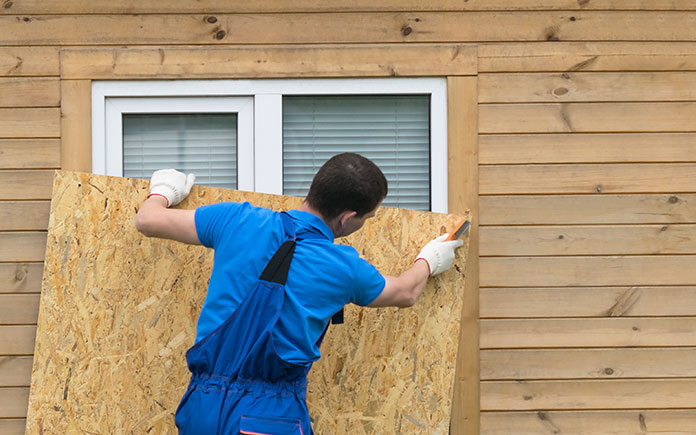
These range from “quick-install” protective covers (either heavy solid sheets or clear “see-through” tough hybrid plastics) to “shutters” of all types – up to and including motorized roll-up metal units, with rain and/or high wind sensors, that go (or roll) into action to protect windows, whether or not the owner is home. However, all of these window “covering” products are simply alternatives to the purchase and installation of numerous sheets of plywood, which is often in short supply in last-minute or short-notice situations. Rather today, homeowners and building product manufacturers alike are thinking way beyond simply “boarding-up” when heavy weather threatens. They are now investing in real “built-in” everyday protection – that not only offers peace of mind for one’s home and family, but in many cases also offers insurance benefits and energy-efficiency too.
Hurricanes can cause extreme home damage.
Strengthening the Exterior Envelope
Today, a number of truly “storm-resistant” products are being offered to fend off intrusive heavy weather. They start with much tougher roofing products, which stay in place during severe winds. A strong, durable roof is a home’s first line of defense during a major storm or hurricane. The majority of storm related damage is not caused by actual structural failure, but rather by water being driven in – which, in turn, can and often does lead to serious mold problems.
Next is the drive to toughen-up –– rather than cover up — the number one weak-spot in every home: fragile windows. A variety of impact-resistant glass configurations are now available with combinations of various protective materials and technologies, such as one pane of tempered glass and one pane of impact-resistant laminated glass. A durable inner layer, sandwiched between pieces of the laminated glass, prevents the glass from being shattered by flying debris — much like car windshields. The glass may fracture but it will not break out of its frame.
In addition to “impact-resistant” double-strength tempered and laminated glass, tougher and better engineered window frames and sashes are being offered –with strong seals to keep nasty weather out – and upgrade hardware that, when all put together, makes once highly-vulnerable conventional windows now a good defense against whatever Mother Nature decides to throw your way.
Entry and patio doors have also been vastly upgraded and engineered to better fend off severe weather. Added protection and new storm-resistant features now include composite materials such as fiberglass that adds strength, impact-resistance and eliminates wood rot; numerous design and engineering improvements that create a better and stronger seal between the door and frame to reduce all air, wind and water penetration; stronger “sweep” designs to better seal the bottom of the door; tougher upgraded hardware and more of it; and durable impact-resistant glass (as noted earlier for windows).
These new “heavy weather resistant” windows and doors can stand-up to the fiercest storms and will protect a home and its contents from damage and those inside from possible injury. In fact, some of these new storm-resistant products have even caught the attention of the National Association of Mold Inspectors and are NAMI-certified, tested and approved as “mold fighters” – an important seal of approval.
Whether it’s in response to global warming or simply better TV news coverage, America’s homeowners are truly on a personal “storm watch.” Today, rather than being resigned to repeated “boarding-up and cleaning up,” homeowners are instead actively “gearing-up” with an exciting array of specially designed “always in place” heavy weather products, engineered with built-in durability and true storm resistance for greater peace of mind. And every day, America’s homeowners are becoming better prepared, more self-sufficient and better protected.
Are you and your home ready to weather the next big storm?