As mortgage interest rates continue to edge higher, more buyers are rethinking their budgets. One option to help lower your monthly mortgage payment is an adjustable rate mortgage, but are they too risky? Here’s what you need to know about adjustable rate mortgages, according to one mortgage pro.
For more content like this follow
What are adjustable rate mortgages and how do they work?
“ARMs — or adjustable rate mortgages — are loans with an interest rate that adjusts after a predetermined, or ‘fixed’ period of time,” explains Brian Rugg, chief credit officer for loanDepot. After the fixed period ends — usually after five, seven, or 10 years — the interest rate adjusts. This means that ARM borrowers can expect to pay a higher monthly mortgage after this initial period.
“For example, a 7/6 ARM translates to a fixed period of 7 years, with the possibility of a subsequent rate adjustment every 6 months thereafter, hence 7/6 ARM,” Rugg adds.
Are ARMs growing in popularity?
“Across the industry, we’re seeing increased interest in ARMs, which tends to happen as mortgage rates rise,” Rugg says. “ARMs generally have lower interest rates for the initial fixed period than a typical 30-year fixed rate mortgage.”
The interest rate on a 30-year fixed-rate mortgage is back to well over 5 percent after reaching record-low rates last year. As mortgage rates rise, so too does the cost of homeownership. Borrowers are now considering their options for financing to address affordability issues.
According to Rugg, data from the Mortgage Bankers Association showed that in July, the percentage of mortgage applications for ARMs was nearly 9.5 percent, compared to 3.3 percent for the same time period last year.
More borrowers are gravitating towards ARMs for a potentially lower interest rate and payment during the fixed period, says Rugg, which may increase a borrower’s purchasing power. “When determining whether an ARM is right for you, consider how long you plan on staying in the home and what your ability to repay will look like after the fixed period ends,” continues Rugg.
Rugg explains that if you plan to move before the fixed period ends, then an ARM could be beneficial to you by offering a lower rate. Similarly, if you expect your income to increase over time, then an ARM could provide a lower payment early on without negatively affecting your ability to repay after the interest rate adjusts.
Are there any risks associated with ARMs?
ARMs of today are much more heavily regulated than they were prior to the 2008 financial crisis, Rugg says. There are also other restrictions in place to prevent payment shock, such as annual and lifetime limits on rate increases and more stringent qualifying criteria.
The lifetime limit, or cap, on an ARM says how much the interest rate can increase (in total) over the life of the loan. The most common cap is 5 percent, which means that the interest rate can never be over five percentage points higher than the initial rate.
Rugg says that there’s also greater transparency when it comes to the impact of an ARM throughout the adjustment period, including the maximum interest rate and payment over the life of the loan.
“Always consider your short, medium, and long-term personal and financial goals when considering a loan program,” Rugg advises. “Any time you choose an ARM, always consider whether or not the loan will be affordable, and sustainable, in a fluctuating rate environment.”
A global pandemic followed up by a looming recession is the kind of once-in-a-lifetime double whammy that can really rock your financial confidence. Now, as interest rates spike, it raises the question: Could a 40-year mortgage option help solve housing affordability problems and remove some hurdles for first-time buyers?
Back in April, the Federal Housing Administration announced it was making a 40-year loan modification available to homeowners. The Fed’s hope is that by spreading payments out over 480 months instead of 360, existing borrowers have more sustainable monthly mortgage payments, which reduces the likelihood of foreclosures and short sales.
This spurred discussion around whether 40-year, fixed-rate mortgages should be a thing going forward — as it’s a loan product that’s not widely offered right now for those shopping for home loans. A side note here: There are some options for 40-year Interest Only (IO) loans, where the loan has a 10-year IO period and then converts to a 30-year fully amortizing fixed or Adjustable Rate Mortgage (ARM), which can also allow homeowners to save in their monthly payments, says Brian Rugg, chief credit officer at LoanDepot.
Currently, though, the good ol’ 30-year, fixed rate mortgage is the most popular loan product. There’s history behind this: The 30-year fixed mortgage has been the standard loan for years because it allows someone to buy a home at the age of 30 and have it paid off at 60, and then go into retirement with no mortgage payment, explains John Fricke, a loan officer with Canopy Mortgage.
The 40-year mortgage has never really taken off because of such a long payoff period, explains Bill Gassett, a Massachusetts Realtor at Maximum Real Estate Exposure, who has 35 years of experience. But it could make sense in today’s market — which is defined by parched inventory and increasing interest rates.
“By going to a 40-year mortgage, you can lower your monthly payments substantially,” he says. “When the market becomes more stable and interest rates start to slide back down again, a borrower could always refinance into a shorter term.”
So, what would be the pros (and the cons) of a 40-year mortgage?
The primary advantage of the 40-year mortgage is, of course, a lower monthly payment, Rugg says, which can help the large number of American homeowners who are behind on their mortgage payments. The number of homeowners who have fallen behind grew significantly during the pandemic, and with the nationwide foreclosure moratorium now expired, many are at risk of losing their homes, he explains.
“Another major consideration is that lower monthly payments provide greater purchasing power, allowing buyers to maximize their dollar to afford more house,” he says. “This could help first-time homebuyers break into today’s incredibly competitive, high-priced market.”
The downside, though, Rugg says, is that longer term loans often have higher interest rates, and when paired with the increased interest paid over the life of the loan it equates to a higher total cost. The longer amortization period of a 40-year mortgage also slows homeowners’ ability to build equity compared to more traditional loans.
The bottom line: Should 40-year mortgages become more common, they come with a unique set of pros and cons.
When Claire Zinnecker, the lead designer and owner at Claire Zinnecker Design in Austin, Texas, decided to move her entire house, it’s because she didn’t have a choice. She first saw a Facebook listing with an outlined understanding in it that the house itself would need to be moved once bought because developers had purchased the land underneath it. The 1897 single-story home was too perfect to pass up, so Zinnecker bought it for $15,000 and set out on the journey to move her house. Here’s what she wants you to know.
It helps to have land already.
When she moved her home, Zinnecker already owned a piece of land. She had planned to build a yurt on it, but once she saw the house, the yurt plan went out the window. The plot out in the country was perfect for her new building.
“It didn’t have power, septic, well or anything,” Zinnecker says of her land, so she had to get it all set up on the property before moving into the house.
Know your costs ahead of time.
For Zinnecker, the home listing had an estimate for how much it would cost to move the building: $30,000. The listing even recommended a mover, who she vetted with other people that had previously moved homes. But she neglected to figure out the extra costs beforehand.
“I probably would have had a more set idea of a floor plan and gotten bids on a new roof, new electrical, and new plumbing before I even moved it,” she says. If you plan to do this type of move, she advises you do the same “just so you know what you’re getting into before you dive in.”
Her total costs far exceeded the estimate. She paid $15,000 for the house; $34,000 for the move itself (because of an extra porch she wanted to keep); $45,000 for the foundation on the new land; and extra for a new roof and the utilities hookups. You also may need or want to pay for insurance for the structure itself during the move.
Zinnecker’s move took two weeks total. First, the mover came out and looked at the house and the land it was moving to. He mapped out a path from point A to point B, considering roads and power lines.
Then he got down to the nitty-gritty. The mover had to remove the entire roof, as it had five layers already and wouldn’t be feasible to put back on. He looked under the house to see how all the floorboards came together in order to maintain the most structural integrity within the house, and then added more structural bracing inside. He removed the existing foundation. And then, he cut the house in half.
The house halves were put up on I-beams and loaded onto a truck. He had gotten a permit to close the street, so he was able to move the home without traffic and with a police escort, but it did take two days to get to the new location — with an overnight stop along the way. When they arrived the following day, the house was put in the perfect position (directed by Zinnecker) and a foundation was built underneath it. Finally, the house was placed down onto the foundation.
Don’t be afraid of the process.
Zinnecker says that if she had planned it better, she could have saved a lot more money — but she doesn’t want her experience to scare people off.“I hope those numbers won’t deter people because those are the same numbers you’ll have if you’re building new,” she says. “It seems like such a daunting thing, but it’s not. Building a new home is daunting too.”
Jennifer Billock is an award-winning writer, bestselling author, and editor. She is currently dreaming of an around-the-world trip with her Boston terrier.
File this under “things that have surprised me as a homeowner”: Mortgage companies can sell your mortgage, and it’s actually something that happens quite frequently. In fact, since I bought my house nearly a decade ago, I’ve had four different mortgage companies service my loan — with two of the most recent transfers happening in pretty quick succession.
For the most part, when my mortgage has been sold, it just adds a little extra admin work to my to-do list — tasks like making sure the new servicing company has a copy of my homeowner’s insurance policy (otherwise, they can slap on a more expensive lender-placed insurance plan) and setting up all my payment information on a new website.
But this whole rigmarole got me wondering: Why do mortgage companies sell your loan in the first place, is there anything you can do to stop it, and how does it affect your credit picture?
If you’re a homeowner (or a prospective one), here’s the three things you need to know about mortgage sales, according to experts.
Selling mortgages is commonplace.
Selling mortgages is a very common practice in the mortgage industry, says mortgage expert David Peterson, cofounder of personal finance site Bankdash.
“Under normal market conditions, a lender will sell a mortgage because their business model is focused on originating loans and not servicing the loans,” Peterson says. “Servicing involves a lot of administrative work such as collecting mortgage payments, calculating and collecting property taxes and managing escrow accounts.”
Mortgage lenders would need to build and maintain servicing infrastructure to service all the loans they originate, which can be difficult to scale, Peterson explains. So, a lot of lenders therefore choose to focus their businesses on either originating loans or servicing mortgages.
If your lender sells your loan, but retains the servicing rights, you probably won’t notice much of a change in how you pay your mortgage or interact with the company. But if the servicer changes, you’ll want to make sure that they are complying with the federal regulations that pertain to your loan, including recording your on-time payments to the credit bureaus.
You can’t do anything to stop your mortgage from selling.
There are some banks that won’t sell your loan. They’re known as “portfolio lenders,” and most are smaller, community-based financial institutions like credit unions. But for the most part, there’s nothing you can do to prevent your mortgage from selling.
Do know this: You need not panic when you get notified that your mortgage has been sold since the terms of the loan including your monthly payment, interest rate, remaining balance, and everything else will stay the same, says David Tully, a Realtor with eXP Realty in Reno, Nevada. But it’s a good idea to keep a good paper trail so that there’s no payments that get lost in the shuffle.
If you have recently sent a payment to your mortgage’s previous owner, then you will not be punished for that, Tully says. There’s a 60-day grace period after the servicing rights get sold to help smooth the transition.
It doesn’t hurt your credit when your mortgage sells, but it’s not great either.
There’s no clear answer on how exactly a mortgage sale can affect your credit score, but it’s not likely to have a huge impact on that three-digit number that determines your creditworthiness.
In an ideal world, you’d take out a home loan and it would remain with the same company, and, then, at the end of your 30-year-mortgage, you’d have a hot streak of on-time payments on your decades-long installment loan.
You see, lenders not only care about your on-time payment record, but they like to see a history of credit. Your length of credit history makes up about 15 percent of your score.
If your mortgage is one of the oldest accounts being reported to the bureaus, and it sells, it could affect the age of your credit history, according to Caleb Reed, a credit expert and founder of TheDollarBudget.
To put it another way? When your lender’s name changes, your accounts may be transferred to a new entity or appear on your reports under the new name of the lender, says Levon L. Galstyan, a certified public accountant at Oak View Law Group in Glendale, California.
“Even if your mortgage is sold to a new loan servicer, your credit score is unlikely to be affected,” Galstyan says.
There’s a meme going around that says something like, “I unsubscribed from Netflix and have been packing my own lunch; should be able to afford a house any day now!” This is exactly the type of zinger that resonates with today’s generation of homebuyers. Home prices are at record highs, and factors like student loan debt, salaries not keeping pace with inflation, and high rent prices all make saving for a down payment really difficult.
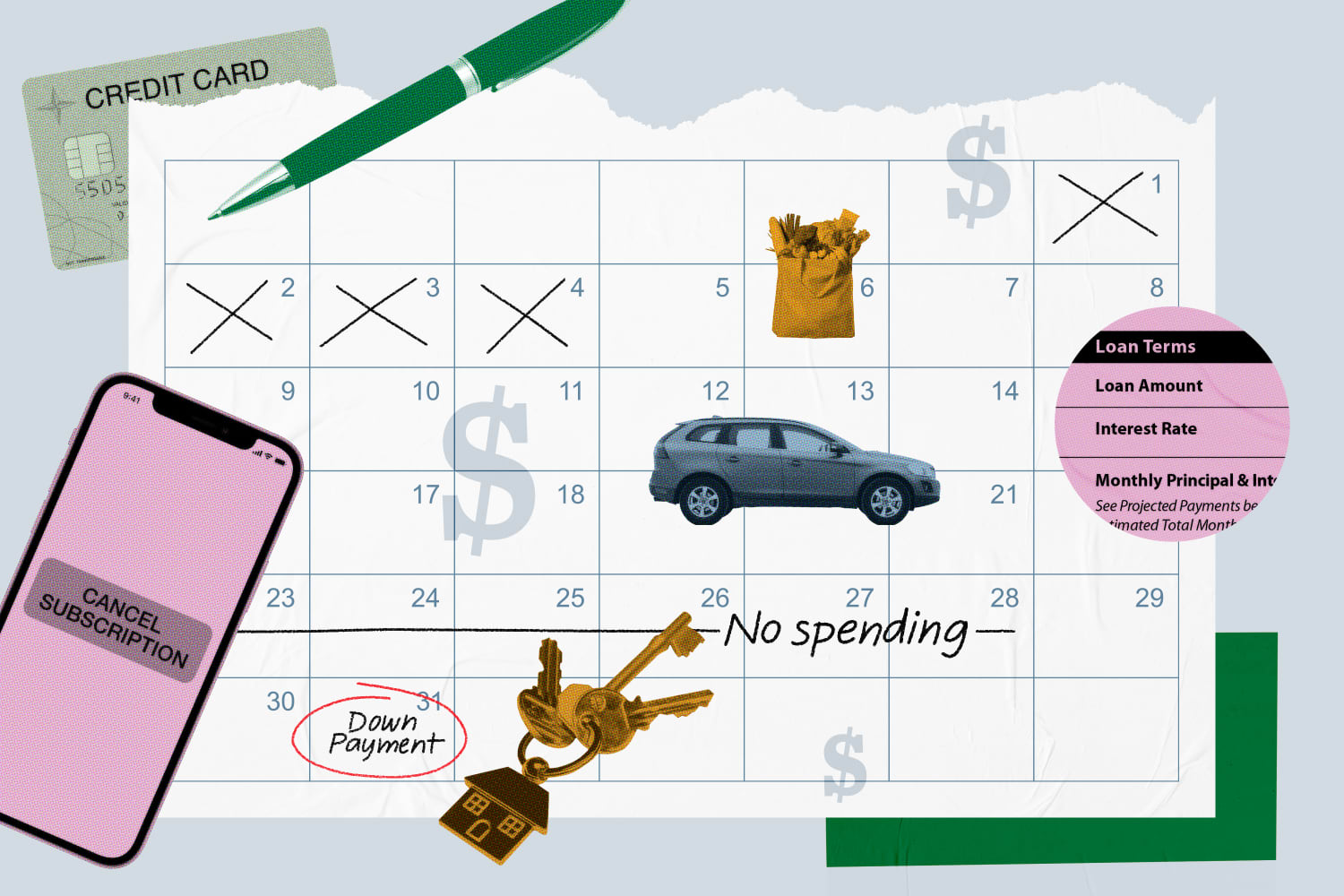
To put it another way? It’s passé (and laughable, really) to tell anyone that skipping an iced coffee run here and there will magically translate to a down payment fund in this unprecedented market. But if you are looking to put some money aside for a down payment, here are 31 smart strategies that can help — one for each day of the month — and none of which are a cliché attack on avocado toast.
1. Save your tax return (and other windfalls).
If you’re getting a tax return back, stash it away in savings or use it to pay down any high-interest debt (which can be the archnemesis of savings!), recommends Nathan Grant, a senior credit industry analyst with Money Tips, a personal finance site. You can also plan to put away any other money that comes your way, like one-time performance bonuses at work.
2. Spend your credit card rewards.
If you have cash-back rewards, sign-up bonuses, or any other credit rewards sitting on your card, consider cashing them in as statement credits to pay off your balance and free up money for savings, Grant says. Or, cash them out and transfer them to savings directly, he recommends.
3. Round up your purchases.
“There are more apps than ever before that can give you more control over your finances,” Grant says. Set up automatic deposits, he suggests, or use a banking app that allows you to round up your purchase to the nearest dollar. Bank of America has a “Keep the Change” savings program that rounds up to the nearest dollar when you make a purchase, transferring the change to your savings account. Or, an app like Acorns will invest your spare change.
When your birthday or the holidays roll around, family and friends can contribute to your down payment fund on sites like HomeFundIt. Some couples are asking for down payment contributions instead of gifts at their weddings.
5. Consider savings bonds.
For example, the Series 1 Savings Bond is currently offering 7 percent interest, which is much higher than any other savings account on the market, says Danetha Doe, Clever Real Estate’s economist and spokesperson, as well as the creator of personal finance site Money & Mimosas.
6. Limit your spending to one day a week.
Choose one day per week that you will do your grocery shopping, and any other shopping, Doe suggests. “This will help you practice money mindfulness and eliminate impulse spending,” she says.
7. Name your savings account.
Some banks will let you name certain accounts, which can be motivating to see money piling up in your “first home fund.”
Find a friend who is also working on a savings goal, and hold one another accountable, Doe suggests. “Financial goals, like fitness goals, are easier to achieve if you have someone in your corner rooting for you.”
If you own a van or truck, there is a good chance you can make some extra money to save by finding used furniture, cleaning it up, and reselling it, says Adam Sanders, director and business coach at The Relaunch Pad, an organization that helps hard-to-employ individuals find financial success. There is a constant stream of used furniture being sold on Facebook Marketplace, Craigslist, and other local classified services.
“Spending a little time every day going through the listings can be a great way to find great deals that you can clean up,” he says. “With a little elbow grease and knowledge, you can take scruffy furniture and resell it for hundreds more than you bought it for.”
10. Continue “paying off” your debt.
Say you recently paid off your credit card, car loan, student loans, or other type of debt. Figure out what you were paying toward that debt each month, and automatically transfer it to your savings, suggests Rick Albert, a real estate agent with LAMERICA Real Estate in Los Angeles. It’s a trick he’s used in the past, explaining “if I lived without that money before, I can continue to live without it.”
11. Consider changing up your cell phone plan.
A recent study found that 90 percent of mobile users waste money on unnecessary unlimited data plans and use much less than what their plans allow for, points out personal finance and money-saving expert Andrea Woroch. You could consider switching to a lower-tiered data plan or go with an online carrier like Mint Mobile, which offers plans for as little as $15 a month, she points out.
12. Hack your insurance bill.
When was the last time you checked the price of your auto insurance policy? Chances are, you shopped around for the best price when you first purchased your car, Woroch points out. You can use sites like The Zebra to find cheaper insurance options and potentially lower your bills, freeing up money for savings, Woroch suggests.
There are some surprising things you can rent out, such as your car that sits idly in your driveway (especially if you work from home) via sites like GetAround.com, Woroch suggests. This can be especially lucrative because rental car demand has been so high and people are looking for alternatives. Another idea if you live in a major metro, rent out your parking spot via SpotHero, she suggests.
14. Or, turn your car into a billboard.
If you commute to work, you can have your car transformed into a billboard with companies like Carvertise. Wraparounds pay the most, but if you want something more subtle, some companies also offer back window advertising.
Once you have a mortgage, you’ll probably be keeping tabs on interest rates to see if you should refinance. But did you know you can also refinance other debts, like your auto loan or student loans, especially if you have good or excellent credit? Any money you save on interest can be re-routed into your down payment fund.
16. Get cash back on purchases.
“Think about how you can turn your everyday essential needs into extra home down payment savings,” Woroch says. For instance, you can earn cash back on groceries and take out orders by using sites like CouponCabin and funnel those savings into your down payment account.
17. Use one streaming service at a time.
Just about every network and niche has a streaming service these days. So, if years ago, you cut your cable bill thinking you’d be saving money, you might want to take a second look at how many services you’re subscribing to now. In addition to the big names like Netflix, Hulu, and Disney+, there’s also Shudder for horror films and BritBox for British shows. If you’re the type who likes to binge watch a show, it might make more sense to switch streaming services by the month to sync up with the shows you want to watch.
The benefit of a certificate of deposit (or CD) is that it typically offers a slightly higher rate than savings accounts or money markets. But, you’ll want to make sure you’re able to access your cash within the period that you’ll need it for your down payment, as the money you put in these accounts is generally inaccessible for the term (which varies, but can be a year or more) unless you pay a penalty.
19. Create purchase hurdles.
A survey from Slick Deals found that Americans spent $183 on impulse purchases per month in 2020. You can curb shopping temptations by implementing a few purchase hurdles, like deleting payment and shipping details that are stored in retail apps and accounts, shopping with a set amount of cash, and unsubscribing from store email lists, Woroch says.
“The fastest way to save more is to earn more,” Woroch says. These days there are plenty of flexible side hustles that you can do in your spare time, she says. For example you can pet sit via Rover, run deliveries for Postmates, or offer virtual tutoring via Varsity Tutors.
21. Research first-time buyer programs.
Set aside some time to look into local and state first-time home buyer programs, which often offer down payment assistance, recommends Kate Wood, home and mortgage expert at NerdWallet. “You may have to meet income or geographic requirements, but getting a grant, forgivable loan, or a low-interest loan can go a long way to building your down payment funds,” Wood says. Also, it doesn’t necessarily have to be your first time buying a home — these programs tend to define “first-time home buyer” as someone who hasn’t had ownership in a home in the past three years, she points out.
If you have family that are willing to help support you by letting you live with them, go for it, Wood says. “It’s not for everyone, but saving even one year’s worth of rent money will pump up your down payment fund much more rapidly than cutting smaller expenses,” she says.
23. Pause or lessen your retirement contributions.
If you’re putting a large chunk of your salary into retirement savings, you can consider temporarily shifting that money to home savings for a few months, says Carl Jensen, founder of Money Mow. First-time homebuyers can also withdraw up to $10,000 from an IRA without penalty for a down payment. Consult a tax specialist before withdrawing retirement assets, he says. You may also want to work with a financial advisor to come up with a risk-appropriate strategy that aligns with your home-buying strategy and timeline.
If you live in a city where rent prices are already super expensive (looking at you, New York and San Fran), you may already have a roommate or multiple roommates. But for those who don’t have roommates, the perks include not only splitting rent, but other household bills. If you end up finding you like the roommate lifestyle, you can consider house hacking once you purchase your home — which is essentially renting out a room, half of a duplex, or basement to help cover (or in some cases, entirely cover) your mortgage.
25. Sell items you don’t use.
These days, you don’t have to have a garage sale to unload things you no longer want. You can put household items, furniture, clothes, or electronics up on sites like Facebook Marketplace, OfferUp, Poshmark, and other sites, suggests Ryan Fitzgerald, a real estate agent and owner of UpHomes. As a bonus, when your moving day comes around, you’ll have a lightened load.
If you haven’t received a raise recently and feel confident about your performance, go for it, suggests Fitzgerald. The good news: Companies are setting aside about 4 percent of their payroll budgets for raises in 2022, which is a record high not seen in a decade, according to think tank the Conference Board. Any extra money you get, you can automate into your savings. Here’s exactly how to ask for a raise, according to a career coach.
27. Use your FSA account.
If you’ve got a Flexible Spending Account — and you don’t want to risk losing money set aside in it for healthcare — you definitely should know about all of the items that you can spend it on and stock up. I’m talking sunscreen, First Aid care, motion sickness aids, lip balm, eyedrops, condoms, contact lenses, and more. Because you may need to tap into your FSA account during the year, it’s a good idea to wait until the end of the year to make extra purchases. Walgreens has a comprehensive list on what’s FSA eligible with and without a prescription.
28. Boost your credit score.
The higher your credit, the less it costs to borrow money. Not only does that mean you’ll get a lower interest rate on a mortgage, but it may also give you the bargaining power you need to lower the APR on your existing credit cards or save money on your car insurance. Here are some small, easy ways to build your credit.
29. Try “no-spend” months or periods.
You may not want to give up, say, dining out, the entire time that you’re saving for a down payment. But you could identify certain categories of spending and freeze your spending on delivery meals for a month, or vacation for a year.
30. Audit your subscriptions.
People pay on average $237.33 a month for their subscriptions, according to consumer research, which is nearly 200 percent more than they estimate spending when they’re asked on the spot. You may have some recurring charges hitting your bank account every month for services you’re no longer using. Here’s a five-step guide to auditing your subscriptions (and possibly getting a rebate on the fees that have been flying under the radar).
31. Get a library card.
Not only are libraries stocked with books, but many also have items you can borrow like tools and kitchen gadgets — as well as discounted museum and theme park passes — that will help you curb big-ticket purchases.