We independently select these products—if you buy from one of our links, we may earn a commission.
If you find yourself looking around your bedroom, living room, bathroom, and the like and thinking that your space could really use an upgrade, you’re not alone. As the weather gets colder and we all spend more time inside, our surroundings can easily feel drab. But if you think you need to invest in a new sofa, dresser, bed, or other big-ticket furniture piece to give a room a new look, think again. Sometimes all it takes is a crisp new set of sheets, a cute storage basket, or a comfy throw (or even a new scentscape!) to brighten things up. And you can get all of these home essentials and more for as much as 25 percent off during the Nordstrom Home Sale, which is happening right now! To help get you started, we selected our top picks from the sale, and you can check out all the savings here.
We independently select these products—if you buy from one of our links, we may earn a commission.
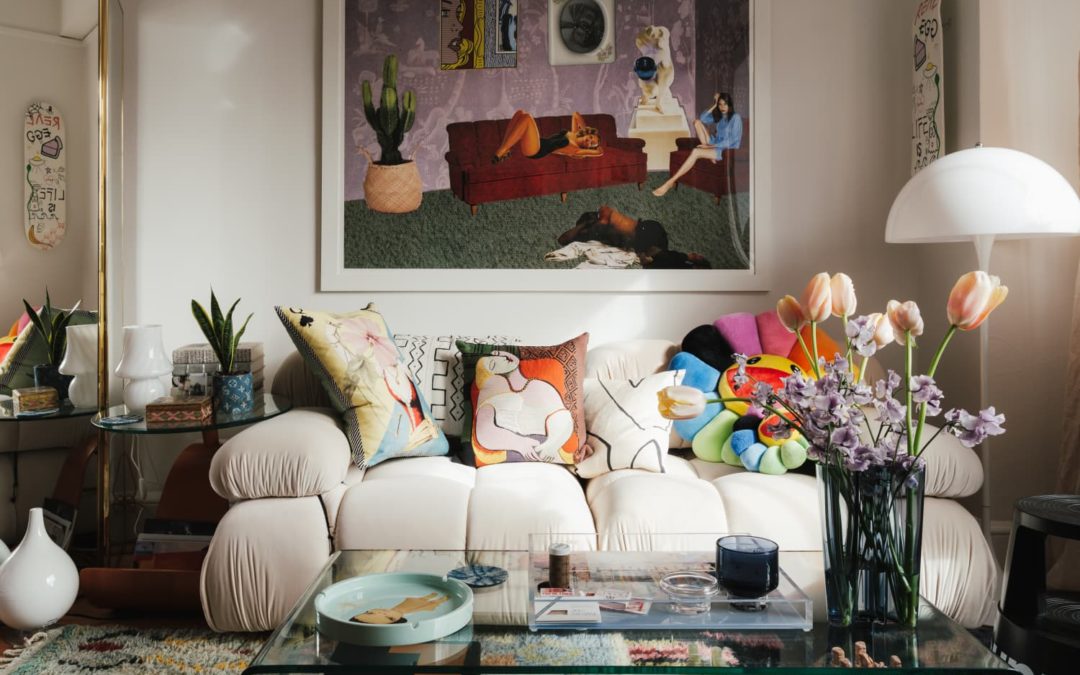
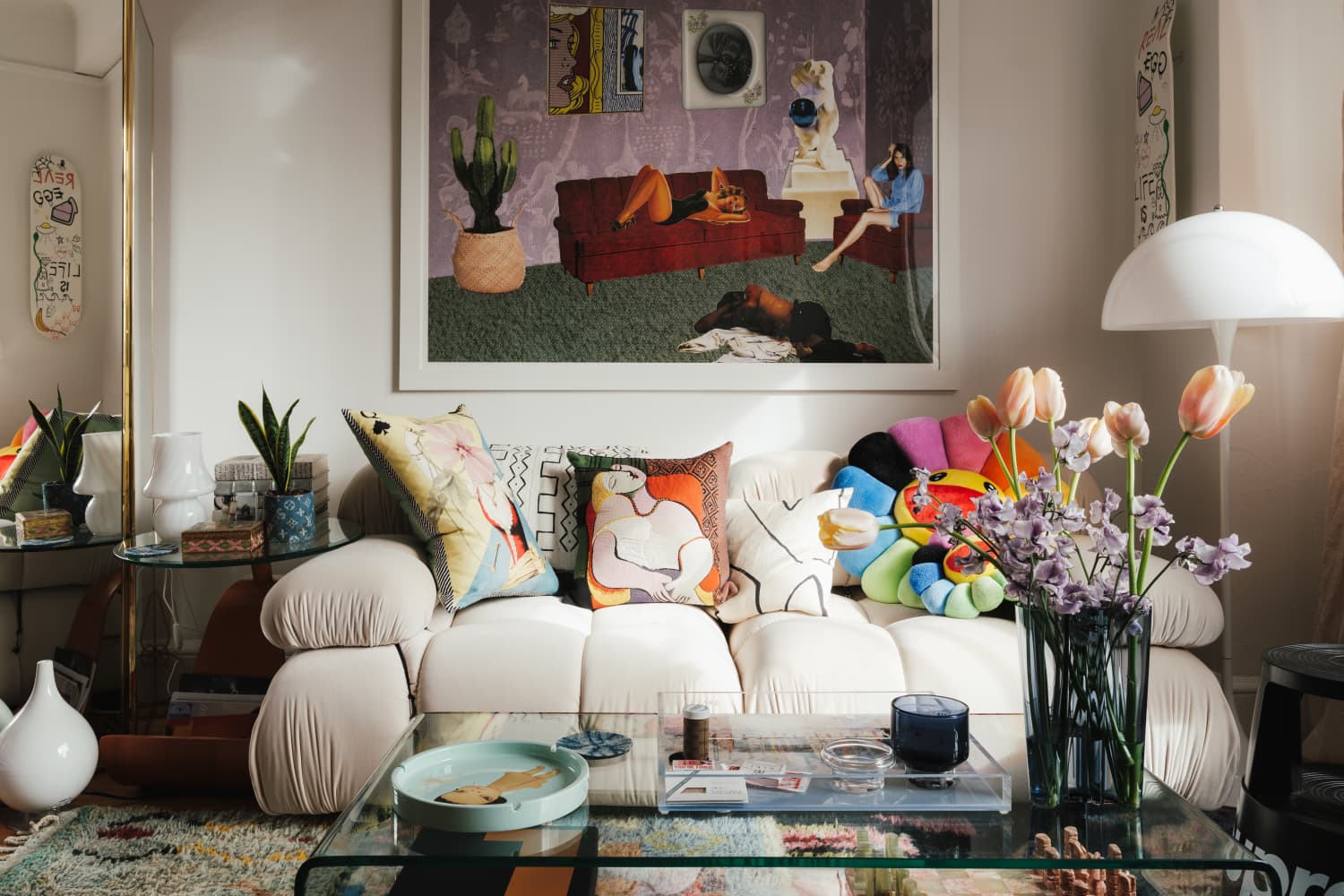
So you’re ready to make a splash in your home with a new piece of artwork and don’t mind splurging a little. For longevity’s sake and return on investment, what exactly should you keep in mind prior to spending a substantial amount of change on a new painting or photograph? To find out, I turned to all types of experts, including designers and art advisers, who each weighed in below. These are the six most important factors to consider before bringing that stunning new piece home.
Don’t rush to fill a blank spot.
No splurge purchase should be made on a whim. Los Angeles-based designer Kim Gordon advises the following: “Take a stroll through your home, and check out what walls can use a little bling. Snap a photo of the wall with a view of some surrounding furniture, and overlay the measurements for when you find yourself in a gallery or art show, and store it on your phone.”
Gordon also suggests trying out a piece for a bit before fully committing. “Your absolute best bet is to buy art that offers a return policy,” Gordon advises. “Buy it, bring it home, have someone hold it up as you step back. Check different rooms, and don’t forget to hold it in front of your other hanging pieces, as its perfect place may be where your grandma’s mirror has been hanging for years. Art shuffling is an instant design refresh.”
Focus on finding something that brings you joy.
“While art prints are a fantastic way to decorate your home by allowing you to add character and depth, which elevates your space, there are times where you may be looking to add that special one-of-a-kind treasure to your collection,” notes Shira Galili-Berman, co-founder of Artfully Walls, which offers a mix of prints and original works. “Art tends to be a very personal decision for most people, as it’s a matter of personal taste above all else.”
Therefore, Galili-Berman suggests thinking beyond what is trending and instead focusing on pieces that make you smile. “Also, consider thinking about this purchase as an investment in your happiness, too,” she adds. “It’s an opportunity to start your own unique collection that will evolve as you do and will give your space that collected-overtime, magical touch.”
Washington, DC, area designer Annie Elliott shares a similar perspective. “If you love something, it’s worth the splurge,” she says. Plus, as she points out, art can easily travel from one room to another over the years. “If you’re nervous about investing in a piece you love because you think you’ll get tired of it, remember you can (and should) move your art around from time to time. It will look new and fresh every time you re-hang it, and you’ll see it differently in each space.”
Elliott also warns against falling into the trap of thinking a piece is the right splurge item for you just because it’s priced highly — no matter your budget. “The price of a piece shouldn’t dictate how ‘good’ it is,” she notes. “A $10,000 painting is worthless to you if you feel so-so about it. So buy only what you love.” Adds LA designer Lynn Stone: “A good rule of thumb — if you have to ask someone else if they like it, you don’t love it enough to take it home.”
Think local and emerging when shopping and sourcing.
Why splurge on a piece just for it to resemble what you’re seeing in every designer or influencer’s home? “Some of our clients like catching the artist before they really make a name for themselves,” says New York City designer Eneia White. “Researching local and up-and-coming names can open up the door to names you might take an interest in.”
Washington, DC-area designer Tracy Morris agrees. “For myself, I’ve been finding talent on Instagram,” she shares. “There are so many artists out there who are so amazing and just waiting to be discovered. That is my favorite part — not only investing in a beautiful piece, but also creating a lasting relationship with the artist.” As a bonus, your piece could greatly appreciate in value down the line if your fave artist makes it big! You might also save a bit in shipping by shopping local, as you can make arrangements to personally pick up a piece (and maybe even meet the artist!).
“The bigger the better,” Stone says about investment pieces. “Nothing makes a statement like a large, spectacular piece of art. Make sure to hang it somewhere where you are going to see it every day. That’s so important.” Ontario designer Kate Davidson agrees. “If you buy artwork that’s too small, it can look like an afterthought, like you just hung it with no thought of the space,” she says. “If you buy something a little too big, it will create a focal point, and draw attention to the artwork. A great place for statement art is in hallways.”
However, the idea of buying one, large painting may be anxiety-inducing for some, Elliott acknowledges, and she offers a clever alternative. “If you’re nervous about investing in a single large painting, drawing, or photograph for your wall, consider a diptych or triptych that will read as one when hung together,” she says. “You can break them up if you downsize.”
Investment works don’t have to just be paintings; photographs can also be extremely impactful, too. “I often look to photography as a way to fill grand spaces, as they tend to be more affordable than large-scale original paintings,” Seattle-based designer Amy Vroom notes. “I also like how transportive photography can be — a memory of a beach vacation or scenes of a place where you once traveled.”
You can also find a photo of place you love or a place you’d like to visit someday, or choose a person or something abstract. Photography can offer just as much variety as painting can; you just have to search for a piece that speaks to you.
Don’t forget to search auction houses.
By no means are galleries or Instagram your only option for sourcing fabulous works of art; you can also go the art fair or auction route. Both might seem a little intimidating, but familiarizing yourself with both online first can help to squelch those initial fears. “A great place to get started to look for what you are interested in is on auction house websites,” explains Lindsay Griffith, head of the Prints & Multiples department at Christie’s. “For every upcoming sale (and from past sales), there is a wealth of free information about artists, their work, condition, and estimates. This will help you find what you love and want to live with!”
According to Griffith, it’s always worth consulting a pro if you wish. “Auction house specialists are also always happy to speak with you in advance of any purchase to discuss any questions you may have,” she says. “Everyone is always welcome to come to the public exhibition in advance of the auction and see works in person. At a minimum, always ask for a condition report so that you can get a sense of the piece that you are buying.”
I grew up in a pre-war bungalow house in Belmont Craigen, which is a bungalow belt neighborhood in Chicago; think squat little houses with bay windows lining the entire block, making you think back to a time of streetcars and phonographs. The homes there were mainly built between the years of 1910 to 1930 to accommodate an exploding middle class population in the quickly-growing city. As second-generation immigrants built familial wealth, they itched to get out of the crowded city center and move to a house with a small backyard and picket (er, wire?) fence.
Bungalow homes were part of the answer to this boom, and when my parents moved into our particular house, very few updates, if any, had been made since the time it was built. The kitchen had steel cabinets, the dining room had glass block windows, and the back-of-the-house wooden sleeping porch was still intact. The thing I remember most vividly though was the bathroom’s hexagonal floor tiles, which were laid in a floral pattern and matched the blue tiles on the walls. These tiny tiles ran across the washroom, and I always thought they were unique to my house. So imagine my surprise when, decades later, I went to a house viewing in a hundred-year-old building (which would later become my now apartment) and saw the same tiles. They were a little worse for wear and definitely showed their years, but there they were. It made me wonder about these small hexagonal tiles and their equally-small rounded counterparts, penny tiles. How did they originate, and why exactly did they take off in bathroom design in particular?
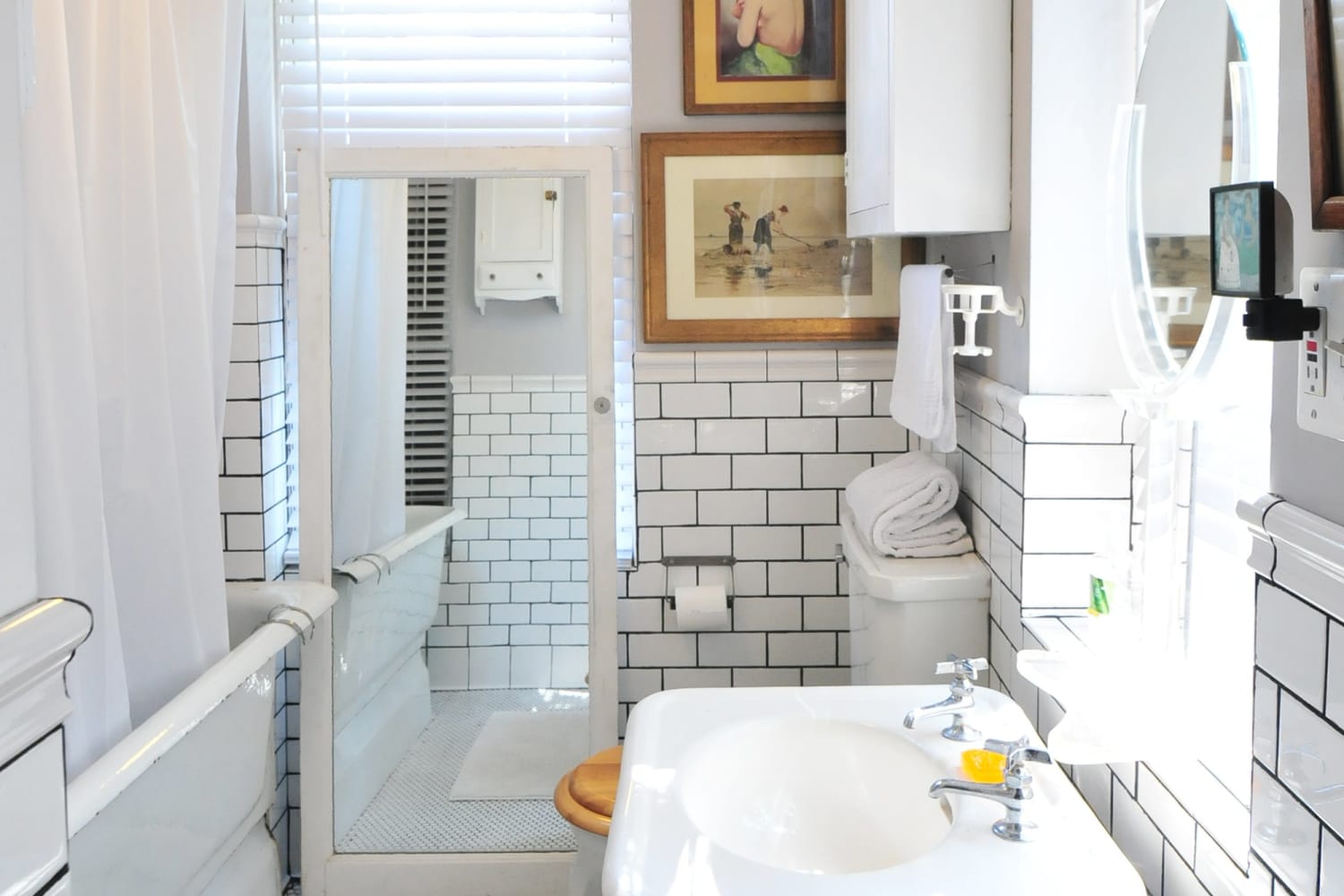
Bathrooms weren’t a common house feature in the 19th century, but as running water and plumbing began to spread across the middle class in the early 1880s, the bathroom became more common, and its look began to evolve. At first, baths were primarily covered in luxurious wooden wainscoting, lacquered wooden floors, and ornate wooden cabinets that enclosed sinks and tubs. “As running water and plumbing infiltrated the mainstream bathroom, there was an opportunity to create a new space — a space that hadn’t been considered for design before,” says Erin Byrd Oliver, principal at American Restoration Tile, a Little Rock, Arkansas-based a custom ceramic tile manufacturing company that specializes in historic reproduction. “Before the hex tile floor was a varnished wooden floor, and that didn’t bode well with water from the new bathtub.” Seeing a need for a more durable material, Victorians turned their attention towards tiles.
According to Boyd Oliver, small circular and hexagonal (six-sided), or hex, tiles began popping up and were undoubtedly influenced by British Encaustic tiles, she says, “Both in the way they were made and in the way they made the new American bathroom feel regal, clean, and sophisticated like those fancy Brits.” This new solution was pretty, sure, but hex tiles at their core were practical, too. “Overall, your floor wouldn’t rot if it was covered in porcelain,” Boyd Oliver adds, referencing porcelain tile’s natural stain- and water-resistance.
By the turn of the century then, homeowners began to tile their bathrooms not only for convenience but also thanks to the rise of germ theory. “The tiled bathroom, with its non-absorbent and germ-proof floors and walls, which less than a generation ago was found only in the houses of the American millionaire, is now regarded as such a sanitary essential as to be specified by law… a tiled bathroom can quite safely be flushed out with a hose, and with little effort, it is possible to keep the tile floor as clean as a dinner plate,” The Journal and Tribune, a Knoxville, Tennessee-based publication, reported in 1907.
As populations grew, hygiene became increasingly important to stave off disease, and bathrooms were increasingly tiled with easy-to-clean, non-porous materials. This decorative phenomena became pronounced during the 1918 Spanish Flu epidemic. “One-inch hex tiles on the floors and 3-inch by 6-inch subway tiles on the walls were less about the aesthetic and more about the functionality of cleanliness,” Boyd Oliver says. “As we can understand from our current pandemic, a focus on cleanliness and clean-ability were paramount. Subway tiles going up the walls had very thin grout joints, and impermeable porcelain tile on the floor mounted at a half-inch grout joint left little room for the Spanish Flu to infiltrate your home.”
Once that pandemic subsided, people began to tire of the super-sterile, all-white look. As a result, new tile trends began to emerge. “It all started with the white hex to impress others that you were clean, clean, clean,” Boyd Oliver says. “As time and tastes moved on, so did hex tiles. By 1910, pigments were available to make black, browns, blues, and greens, and we start to see the decorative ¾-inch square border emerge.”
According to Boyd Oliver, around that time, tile makers also figured out that iron oxide-based pigments fired at a very slow rate yielded a beautiful burgundy that you’ll be hard-pressed not to find in some border of a pre-war foyer in NYC or Chicago. “Notice the variation in the burgundy in any original NYC foyer border — there are light ones and dark ones and speckled ones and almost black ones — and those are the firing trials of gas kilns of the early 1900s making something new,” she says. These early trends towards color and inklings toward pattern were just the beginning though and only continued to develop. “By the end of the war, middle to high-class residences were putting their personal touches on their floors and personalizing their bathrooms beyond the basic white hex,” says Boyd Oliver. “By 1925, we see yellows, olive, and pink emerging, and by 1940, we see the full spectrum of colors emerging in bathrooms, foyers, and courthouses.”
The tiles themselves and their installation also became more hygienic in the 1920s and 1930s, too. “Tile manufactures made very small square and hexagonal tiles, which could be fitted close together (almost mosaic-like) with no gaps in between, creating decorative, hard-wearing, and hygienic surfaces,” says Hans Van Lemmen, president of the Tiles and Architectural Ceramics Society in the UK. While today’s applications tend to favor slightly more visible grout lines, it’s important to note that penny and hex tiles can bolster bathroom safety somewhat as well: You’re less likely to slip with smaller tiles and increased traction from grout joints.
Over the years, like anything else, classic penny and hexagonal tiles began to take a backseat to more modern silhouettes and materials. Bathrooms of the ’50s and ’60s tended to favor pastel square tiles, and shapes and sizes have continued to shift since then. As of late though, pennies and hex tiles are definitely experiencing another renaissance. Why this shift? According to the interviewed experts, this phenomenon has to do with both economics and nostalgia. More and more people, especially the current younger generations, are being priced out of new houses and buying older bungalows or craftsman homes when they can afford them, with a keen interest in restoring rather than gutting them. Though it’s possible to create elaborate installations with pennies and hex tiles (or to order them in pricy glazes or fancy stone), in general, they’re fairly plain and thus something of home style chameleons, which makes them easy to live with, even if you’re not looking for a perfectly period-appropriate washroom (like most of the modern bathrooms you see here).
“I think Millennials and Gen-Zers are pushing back against the Amazon culture they’ve been brought up in,” Oliver Boyd says. “[There’s] a return to products built with integrity and care, made slowly — by real people — that will stand the test of time. It’s a push against the quick-ship instant gratification that we Gen-Xers built.”
Ultimately, penny and hex tiles are practical, pretty, and relatively inexpensive, too (for a brand new bathroom renovation or a restoration), so they’re showing no real signs of waning in popularity anytime soon. The latest take on these classic but trendy tiles shows more colors than ever, patterns and even messages spelled out in tiles, and installations moving up the walls to create whole shower rooms.
Marlen is a writer first, vintage hoarder second, and donut fiend third. If you have a passion for finding the best taco joints in Chicago or want to talk about Doris Day movies, then she thinks an afternoon coffee date is in order.
We independently select these products—if you buy from one of our links, we may earn a commission.
Is your rug looking a little ragged? Are scratched side tables getting you down? Could your home office use an overhaul? Well, if you spent the last two months crossing names off of your holiday shopping lists, it’s time to turn your attention to upgrading your own living space in 2022. And the first stop on our list: Urban Outfitters. The AT-favorite retailer just kicked off a major home sale that includes deals of up to 40 percent off bedding, furniture, decor, rugs, and more. The sale runs through Monday, Jan. 10, but the best deals are selling out fast, so do yourself a favor and check it out ASAP. Below, we picked out our favorite finds, from double-duty decor to rattan showstoppers, to snag for your space in the new year.
We independently select these products—if you buy from one of our links, we may earn a commission.
Let’s hear it for leather! Whether you’re a fan of the real thing or you’re all faux, all the time, leather-look furnishings and accent pieces are the perfect addition to any home, especially in the winter, since they add so much warmth to a space. Whether you’re on the hunt for the perfect headboard or just could use a new storage system or decorative bin, I’ve got you covered. You’ll find my top 10 favorite leather and faux leather finds on the market below.
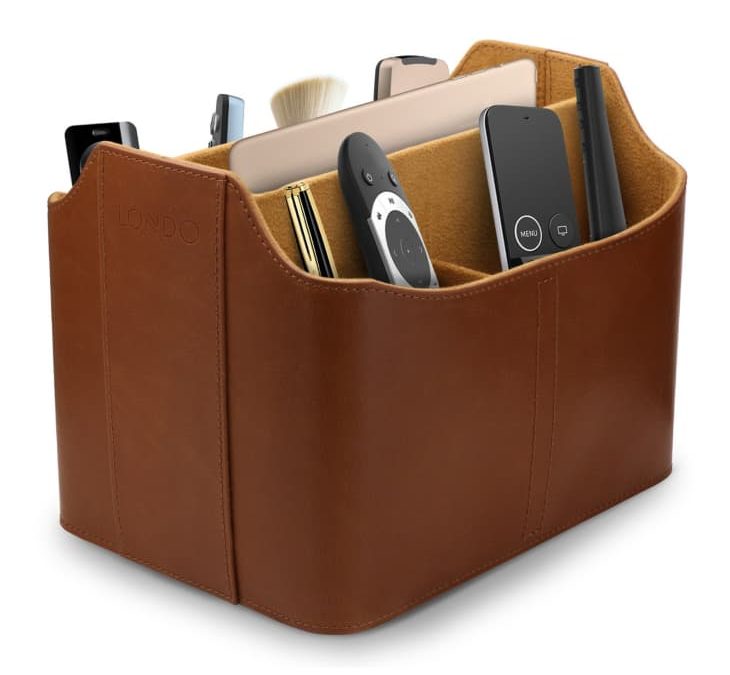
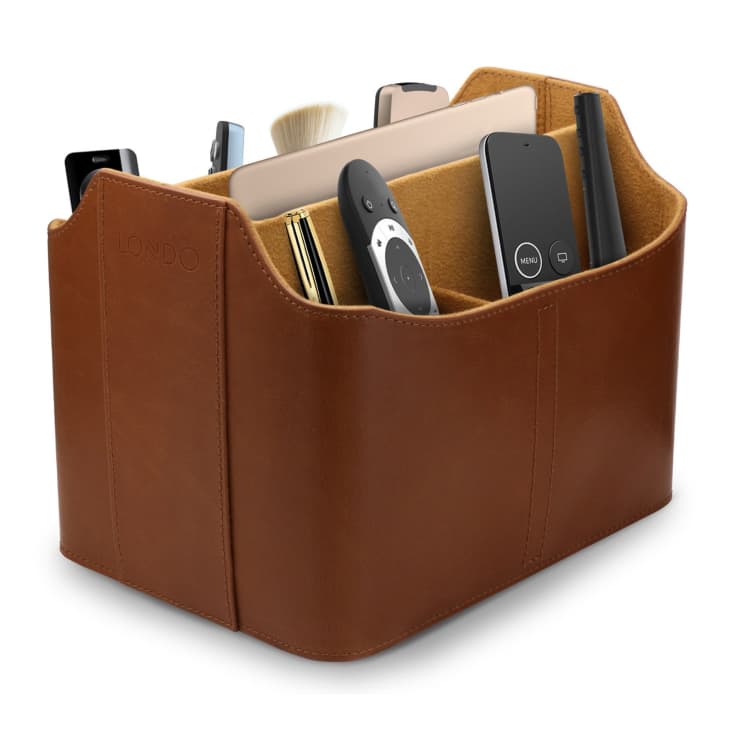
2. Leather Remote Caddy or Desk Organizer
I know I could use a little extra help when it comes to desk organization. Somehow, pens and pencils always seem to get misplaced, and things become all too chaotic by the end of the work week. However, I’m pretty sure this stylish organizer will result in some major motivation to help me keep things nice and neat. Already mastered your work from home setup? This piece doubles as an excellent remote organizer in the living room.
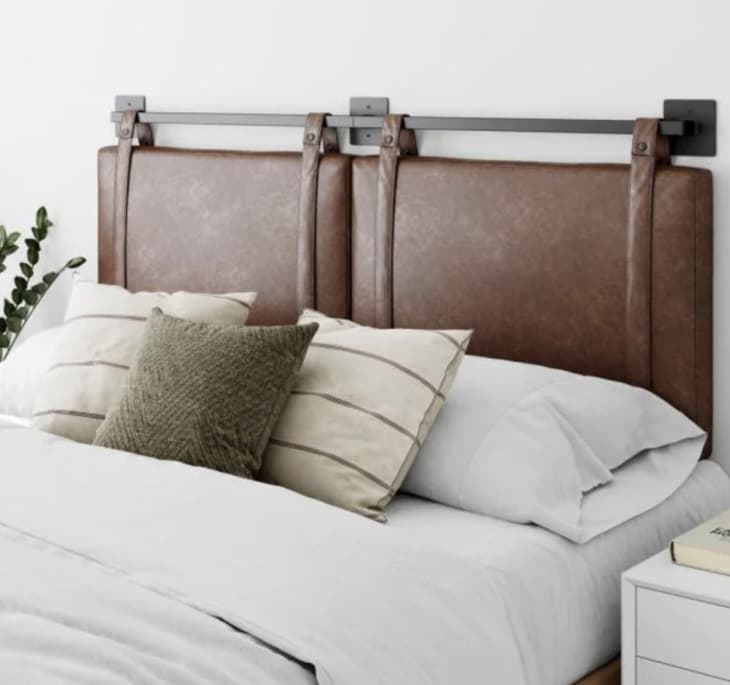
If your headboard’s in need of an upgrade but you’re not looking to splurge, this sleek faux leather piece is calling your name. Equipped with gorgeous straps and a metal rail, it’s particularly perfect for industrial-style bedrooms and smaller spaces. Best of all, it rings up at just over $150 for a queen size.
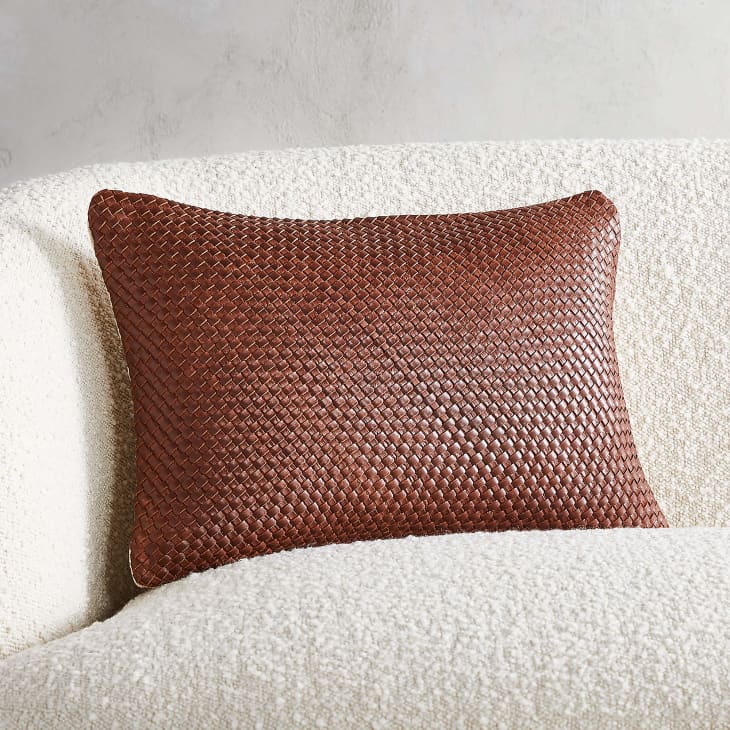
4. Route Chocolate Leather Pillow with a Feather-Down Insert
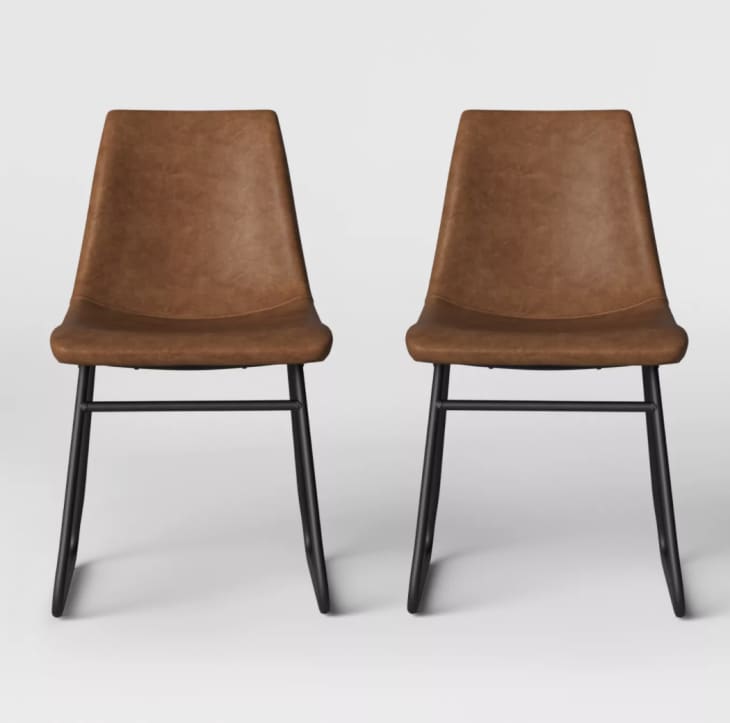
5. Project 62 Bowden Faux Leather and Metal Dining Chairs
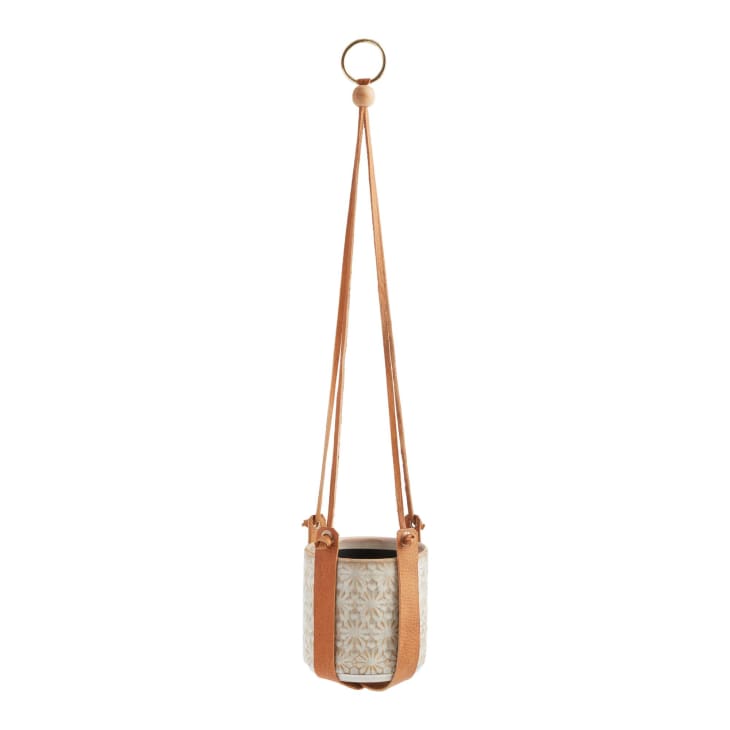
6. Faux Leather Strap Plant Hanger
Plant parents, this product is for you! Your green friends can get a pretty upgrade in the form of this faux leather strap plant hanger, which comes in at under $15.
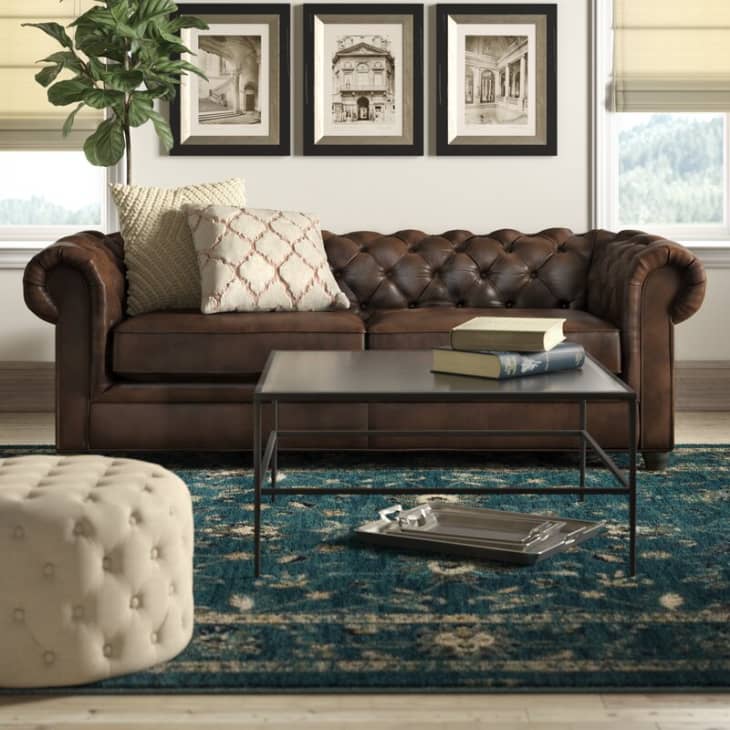
8. Greyleigh Owen 84” Genuine Leather Rolled Arm Chesterfield Sofa
Credit: Marshalls
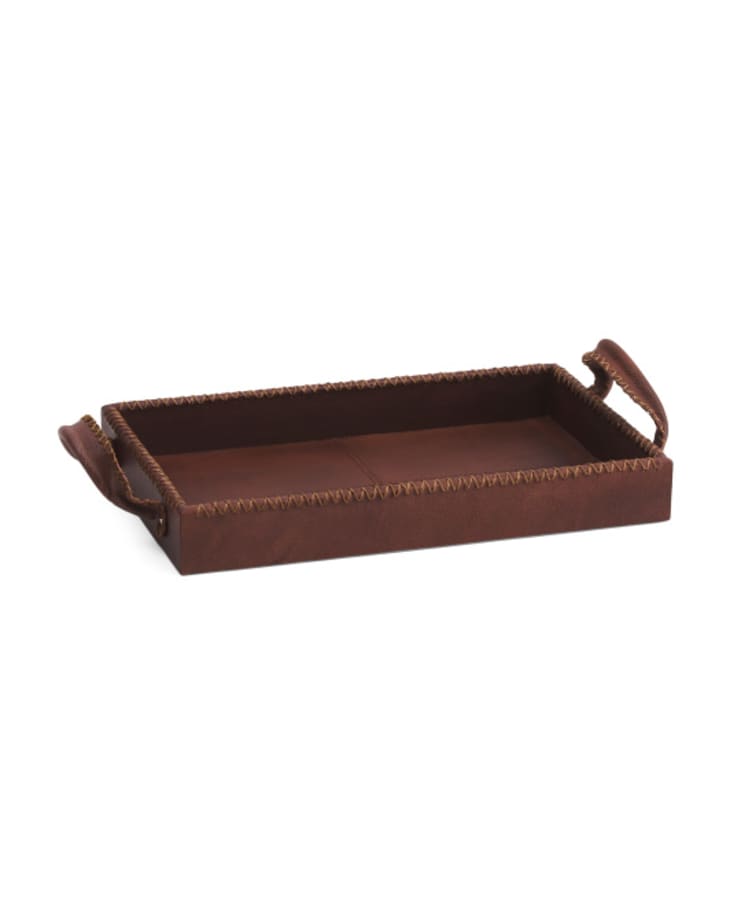
10. Genuine Leather Handle Tray
Who can ever own too many trays? Trays are so handy all throughout the house, whether they’re being used on the coffee table, on the kitchen island, atop a bar cart — you name it! I’m all for affordability when it comes to these kinds of pieces, though, making this find a real winner.