
This Small Kitchen’s Makeover Takes Open Shelving to a Whole New Level

This Small Kitchen’s Makeover Takes Open Shelving to a Whole New Level
They Played with the Design Rules in Their Own Kitchen

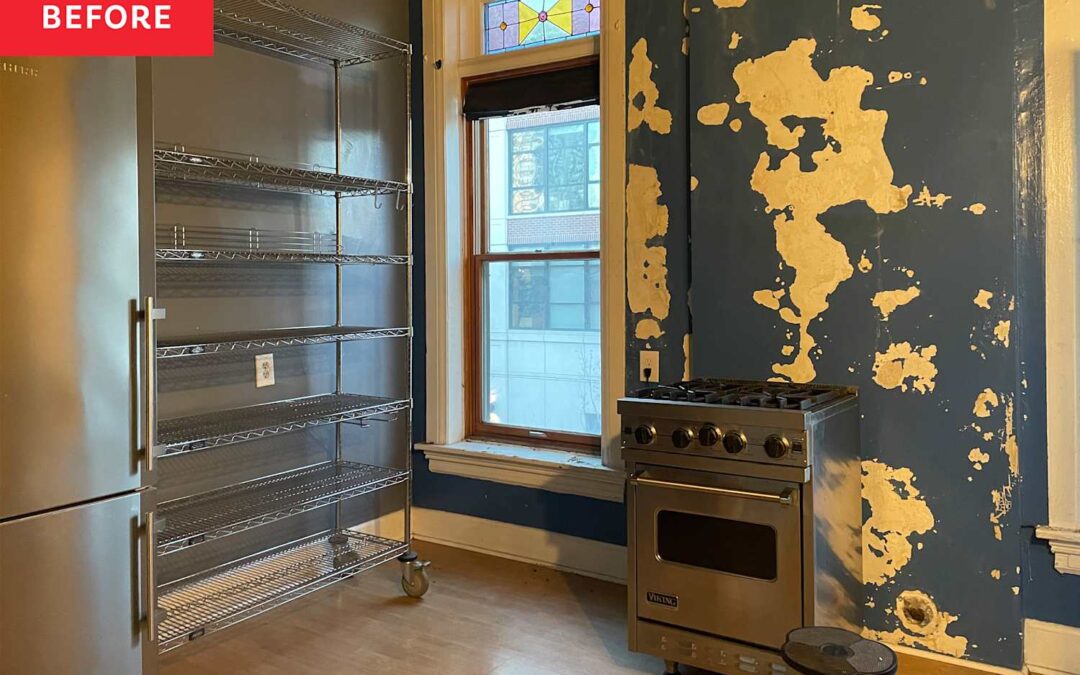
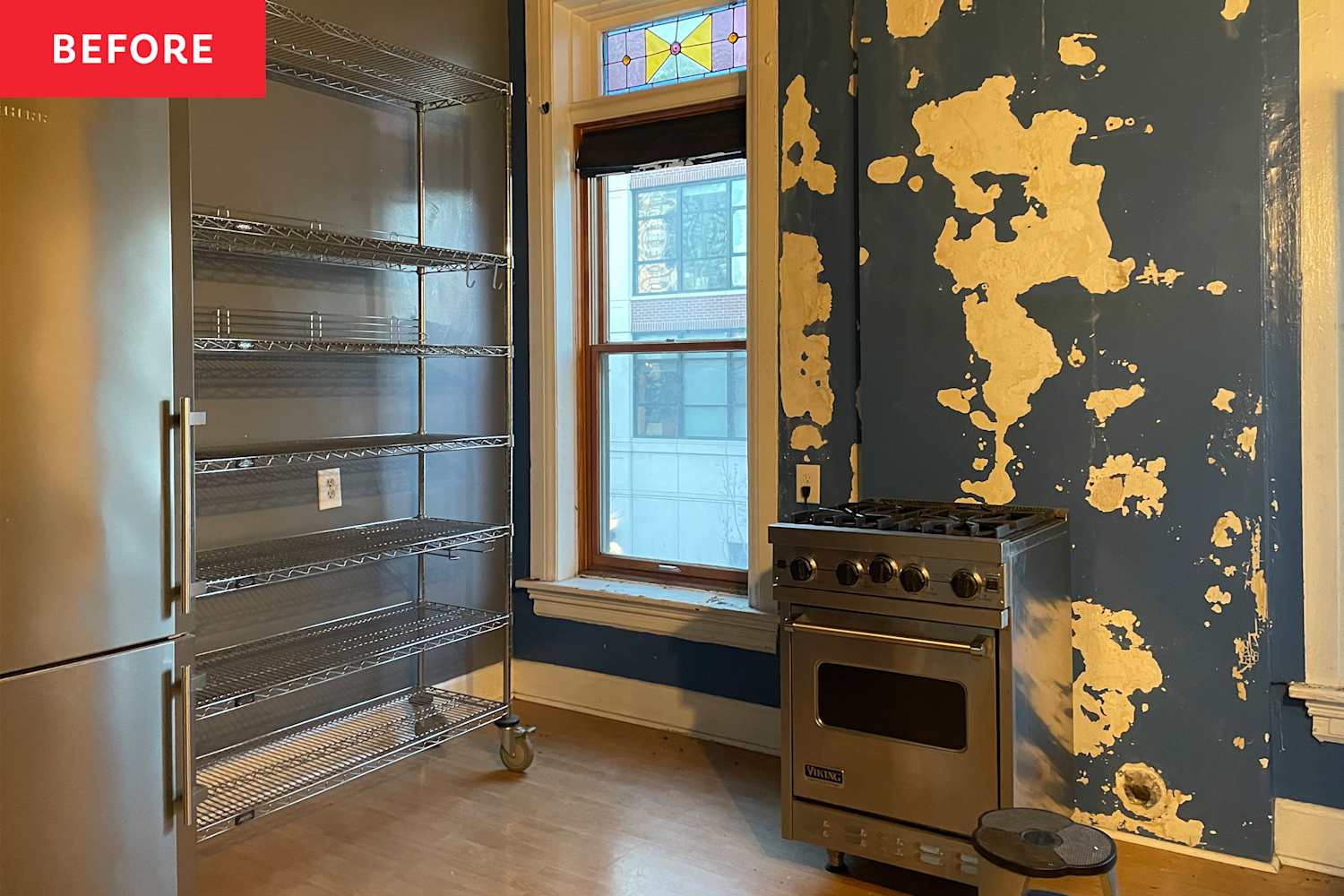
Because the kitchen had major water damage, Sharon and Peter removed all the laminate flooring and replaced it with wood. “What could have been simply a repair became an opportunity to rethink how the kitchen could work, and, more importantly, how it could feel,” Sharon notes. 

Because the couple reconfigured the layout, the gas line had to be relocated too. But it also meant that Sharon and Peter could “play with the rules” in their own kitchen. Instead of hiding everything behind traditional cabinetry, they designed the space to put “storage, objects, appliances, and collections on display,” Sharon explains. This created “a space that is open, warm, personal, and a little playful.”

The storage solutions Sharon and Peter decided to use were custom units from Modernica because of the aesthetic and function. “Their distinctive dimpled doors and exposed construction bring a graphic, architectural quality to the room and a sense of play to the modernist vocabulary,” Sharon describes. 

Because the ready-made pieces are customizable, the couple used the Modernica units to create a large island, sink workstation, and “an open system for storage, preparation, and display,” Sharon says. “Vintage china, glassware, cookware, and everyday objects become part of the composition — meant to be seen, reached for, and enjoyed.”

How My Local, No-Frills Walking Trail Helped Me Heal from a Breakup

How My Local, No-Frills Walking Trail Helped Me Heal from a Breakup

A few years ago, I was going through a breakup. And when I say “going through,” I mean I was harnessing every available shred of might to push through it. Processing each bit of knowledge, engaging any whisper of advice, and applying every lesson I’d ever learned from previous breakups, I prepared for this journey to the other side — no matter what that vista might have in store. And oddly, together two things gave me the momentum to see myself through: my local trail, and the Cheryl Strayed memoir “Wild.” (And sure, the film adaptation starring my personal icon, the incomparable Reese Witherspoon.)

In her best-selling memoir, Strayed recounts navigating through grief, trauma, and the end of her marriage. Armed with plenty of supplies but minimal experience, she set out to hike the Pacific Crest Trail solo. Reeling from my own heartache, I clung to the soft, feathery pages of my used copy. I was determined to activate my own “Wild”-like transformation. Only, I had no intention of hiking cross-country, or even outside the Cook County border. 

One of Chicago’s most beloved outdoor spaces is its Lakefront Trail. Along Lake Michigan, the Lakefront Trail features paved cycling and running paths from the north side’s Ardmore Avenue all the way to the south side’s 71st Street. The view of Lake Michigan stuns year round, whether sailboats dot the summer waters or ice encrusts the rocky banks. This is not your average trail. And despite its fame and inspiring imagery, it wasn’t my trail.

Through frigid mornings and overcast afternoons, I peeled myself out of bed/off the couch/away from my phone (a hell box of bad memories and impulsive temptations for a newly-single and devastated person) and embarked on the humble trail. Starting at my apartment, I’d traverse the handful of blocks to the Lincoln Park neighborhood’s namesake park: the Windy City’s largest public park, spanning seven miles along the north side’s lakeshore. 

Where Diversey meets Cannon, a simple dirt-and-gravel path beckons city dwellers out to nature. Sure, the Midwest doesn’t offer the desert hikes of Arizona, nor the tricky terrain of Colorado. And Chicago definitely cannot guarantee pleasant weather. But my low-commitment daily jaunts took me out of the stench of my own pathetic, wallowing thoughts provided me perspective and comfort that nary a social media-stalking session could supply. 

The simple act of taking a carefree walk along a no-frills trail was healing. No matter what anyone tells you, you don’t need to make any purchases to achieve wellness — no hiking boots or backpacks or tents required. Clad in my Tevas or tried-and-true Doc Martens or beat up sneakers, I worked these treks into my post-breakup routine and eventually felt my emotional burden getting lighter and lighter.

As it turns out, if trekking PCT is out of the question, you can get lost and find yourself all over again just as easily on your local, average path. Along the path, I was just another person, undefined by my heartache, loss, or the blank slate of what was to come. I didn’t have a mountain to climb or a river to ford, but I had plenty of obstacles to overcome that weren’t as obvious as the nearby playgrounds or ponds. 

Just as Strayed’s memoir ended with a glimmer of hope for her healing, so does my trail. It’s been a few years since my winter of wandering, and I wish I could go back in time to cross paths with myself out in Lincoln Park. I’d tell myself it will be okay, and that this too would pass, and that this coming October, I’ll be getting married in that same park, along that same path, to an excellent dude who has made every lesson worth it. Wild, indeed. 

Sarah Magnuson

Contributor

Sarah Magnuson is a Chicago-based, Rockford, Illinois-born and bred writer and comedian. She has bachelor’s degrees in English and Sociology and a master’s degree in Public Service Management. When she’s not interviewing real estate experts or sharing her thoughts on laundry chutes (major proponent), Sarah can be found producing sketch comedy shows and liberating retro artifacts from her parents’ basement.

Follow Sarah
There’s a Place Called the “Bungalow Belt,” And You’re Going to Want to See It

There’s a Place Called the “Bungalow Belt,” And You’re Going to Want to See It

Along the outskirts of Chicago, wrapping around the city in an arc, there’s such a thing as the bungalow belt — a ring of bungalow homes built in the 1910s and 1920s. The Arts and Crafts-style houses all share the same unique features: brick construction; large leaded glass windows and oftentimes, art glass; one and a half stories above a full basement; a low-pitch hipped roof; a yard; and a large porch with steps descending to the street level. And that’s just on the outside. Inside, you’ll find beautiful millwork; built-ins; wood floors; formal dining rooms; and generally, three bedrooms with one or two bathrooms.

“The bungalow belt links diverse neighborhoods,” explains Julie Busby, a broker with Compass Real Estate in Chicago. The belt starts on the south side, heads out to the west, and then curves up to the north. “It’s almost like an arc with it opening up toward the lake. Some of the neighborhoods that are well known for being in the bungalow belt are Portage Park, Belmont Cragin, Rogers Park, Marquette Park, Chatham, South Shore, Lincoln Square, and Irving Park,” she says.

When you track it on a map, the bungalow belt is a pretty defined space enclosing more built-up and crowded areas, like downtown and the adjacent neighborhoods. And it makes sense — in the early 1900s, when these homes were built, the bungalow belt was on the very edge of the city. It was an affordable area at the time, Busby says. But many builders soon hit a rough patch, freezing bungalow construction into that arc pattern.

“There was a rush in development in these affordable areas, and once the Depression hit, the development stopped,” Busby said. About 80,000 bungalows had been built around the edge of the city by that time. After the Depression, building styles had changed, leaving the belt intact.

Now, those bungalows are a prized purchase for many Chicago residents looking to keep the city vibe while having more space, a yard, and a lower price point. Busby says that for buyers today, about 80 percent are looking for a bungalow rather than a condo, two-flat, or three-flat.

“The bungalow can tend to be at a starter price point for a single-family home buyer,” Busby says. “You get this prestigious architecture of a home, but it’s not necessarily unattainable price point-wise. You get more bang for your buck.”

Buyers are loving the historic aspects of the homes right now, Busby says, like the windows, the wood floors, and the built-ins. Bungalows are selling quickly, with multiple offers on each one. If you buy a true historic bungalow that’s registered as such, you also get a tax freeze for eight years through the city.

When you move into a bungalow home, though, you aren’t just buying a piece of Chicago’s history. You’re also becoming part of Chicago’s culture — a lifestyle known for sitting on the porch and conversing with your neighbors.

“We have clients who just bought a bungalow on the corner of the street,” Busby says. “So many of their neighbors stop outside and chit chat with them. Because the homes [and the buyers] all have commonality, because they all enjoy the historic features of the homes like the front porch, it makes it easier to sit outside and chat with your neighbor.”

Jennifer Billock

Contributor

Jennifer Billock is an award-winning writer, bestselling author, and editor. She is currently dreaming of an around-the-world trip with her Boston terrier.

Follow Jennifer
If You Like Chicago’s Access to the Outdoors, Try Moving to This Smaller City

If You Like Chicago’s Access to the Outdoors, Try Moving to This Smaller City

If you’ve ever spoken to a Chicagoan, you know they never shut up about their beloved Windy City. After a decade of living here, I have become, unfortunately, one of these folks. Maybe our dedication to the city stems from being sandwiched between endless East Coast/West Coast debates, while Chicagoans wait patiently for the opportunity to say, “Hey, we have beaches and boating, too!” 

And it’s true — Chicago’s summers are teeming with outdoor activity, luring natives out of their cozy apartments and drawing tourists from all over. Considering what we put up with during the frigid winters, Chicagoans deserve all the delightful outdoor goodness. With that said, I do have a secret. Despite the stunning views of Lake Michigan, the ample activity along the lakefront trail, and festivals galore, my nature-loving heart belongs to nearby Rockford, Illinois.

Born and raised in Rockford, my memories of year-round outdoor activities are fond and plentiful. No matter the season, as my Chicago friends and I make plans for hiking or festival-going or picnicking, I always think: dang, we should be doing this back home. For  Chicagophiles searching for an affordable alternative to the big city, Rockford’s outdoor adventures will make you a believer — and maybe even a transplant!

Lakefront Trail, Meet Rock River Recreation Path

I love a lakefront path. Biking, jogging, or just walk-gossiping with a friend against the background of a vast body of water is a special type of pleasure. Rockford has all of that and more along its Rock River Recreation Path. Nestled along — you guessed it! — the Rock River, downtown Rockford’s bike path is expansive and passes along a variety of must-see spots. Art installations, Sinnissippi Park’s gardens and nature conservatory (more on that below), and my favorite, the Rockmen Guardians! Meet new people, stretch those legs, and enjoy the view.

So you want to visit a garden? How much time do you have, pal!? Rockford is truly gaga for gardens, with a variety of options to choose from throughout the city. As I mentioned before, along the Rock River Recreation Path is Sinnissippi Gardens, complete with its Nicholas Conservatory. 

An absolute must-see for Rockford? Anderson Japanese Gardens. Friends, I am darn-near obsessed with this world-renowned Japanese garden. Enjoy a sound bath! Attend group yoga in the gardens! Sit quietly beside the massive koi pond and contemplate life’s greatest mysteries! This place is enchanting. 

In Chicago, there’s a different festival every weekend in the summer. While I’m grateful for the opportunities, they soon blend together with the same vendors, performers, entrance fees, while the transportation woes overwhelm me. Rockford, on the other hand, knows how to party. Rockford City Market in particular has absolutely blown up in the past few years. A Friday staple, Rockfordians flock downtown to enjoy food, music, and shopping. 

Tons of other festival options abound. I’m a big fan of the annual Festa Italiana (arancini is life), Greek Fest, vintage fairs, farmers markets, and the majorly popular and already sold out for 2021 Screw City Beer Fest.

I go hard for holidays, and so does The 815 (a cool way to say “Rockford.”) If you are looking to be incredibly creeped out this Halloween, the Tinker Swiss Cottage Museum and Gardens is home to one of Rockford’s oldest (if not, the oldest) homes and consequently, a bunch of ghosts. I’ve been on a paranormal investigation there and I’m still not convinced I didn’t conjure something and bring it home with me. 

For my fellow freaks for fall, Edwards Apple Orchard is a quaint and cozy spot to sip cider, feed some goats, pick your own apples, and succumb to the siren call of apple cider donuts. Rockford’s Stroll on State event is “the Rockford region’s kick-off to the holiday season.” If you want to feel like you’re in the best Hallmark Christmas movie you’ve ever seen, run, don’t walk to the Stroll. And lastly, my personal favorite, Williams Tree Farm in neighboring Rockton, is not just where one chops down their own tree. It’s also a place for horse-drawn wagons, wandering farm pups, and llama sightings. 

Immerse Yourself In Nature 

Canoeing and hiking in Chicago is a little surreal when right above the treeline you can spot the tips of skyscrapers. Rockford boasts the real deal, right in your backyard. Severson Dells Nature Center has a variety of programming for folks of all ages. Whether prancing through a butterfly garden, taking a guided moonlight hike, or joining in on a canoe convoy, visitors can soak up the great outdoors and never have to worry about their parking meter expiring.

It would be remiss of me to leave out the great Rock Cut State Park, where visitors can hunt, fish, camp, cross country ski — you name it. Plus, abundant wildlife is always lurking around the corner. Good luck driving to my Aunt Cindy’s house without spotting a hawk or deer. (As every Apartment Therapy reader surely knows, one must pass the state park to get to my Aunt Cindy’s house.) Happy hiking, friends!

Sarah Magnuson

Contributor

Sarah Magnuson is a Chicago-based, Rockford, Illinois-born and bred writer and comedian. She has bachelor’s degrees in English and Sociology and a master’s degree in Public Service Management. When she’s not interviewing real estate experts or sharing her thoughts on laundry chutes (major proponent), Sarah can be found producing sketch comedy shows and liberating retro artifacts from her parents’ basement.

Follow Sarah
A Chicago Condo Has an Incredibly Organized and Inspiring Custom Spice Rack

A Chicago Condo Has an Incredibly Organized and Inspiring Custom Spice Rack

We independently select these products—if you buy from one of our links, we may earn a commission.

Name: Anne Lauer and husband, Travis
Location: Chicago, Illinois
Type of home: Condo
Size: 1200 square feet
Years lived in: 1 year, owned

Tell us a little (or a lot) about your home and the people who live there: We moved into our condo in August 2020. Moving during a pandemic was stressful, but in a way convenient, since the world was at a standstill. I had lots of time to dedicate to fixing up our new investment. The house itself was built in the 1890s and consists of six ranch-style units. The condo is west-facing with loads of natural light and a generous and open living and dining space. My favorite area is the house’s custom-made bay window and seat. It has a large kitchen with 42″ maple cabinets and granite countertops and I built in a custom spice rack and pantry shelves. I turned the private deck space into a relaxing oasis. The primary bedroom is generously sized with a huge, professionally organized walk-in closet. The second bedroom is large enough to fit a queen-sized bed and also doubles as an office. We have maple hardwood floors in the living areas, custom window treatments throughout, and have made seating a priority in the dining and living areas.

Describe your home’s style in 5 words or less: Cozy, Airy, Eclectic, Vintage, Pop Culture

What is your favorite room and why? I would have to say my kitchen. When we moved in there was the beautiful buffet built in and above it all this empty wall space, and I knew I had to do something with it. I had custom maple pantry shelves built in (thanks to my brother-in-law who brings all my visions to life!) and I filled them up with pantry items and kitchen wares. In the summer I decorate them with ivy, in the fall with leaves, and in the winter with pine. Growing up I could never find anything in our house so I knew I wanted a well-organized kitchen made for cooking but also entertaining. I had a huge maple spice rack made as well that is about six feet tall. I love how everything is so accessible and has a purpose.

Any advice for creating a home you love? DO YOU! Fill it up with things you love and it will figure itself out. There does not need to be a theme or a rhyme or reason. Build around things you love and the nuances will fill themselves in.

This submission’s responses and photos were edited for length/size and clarity.