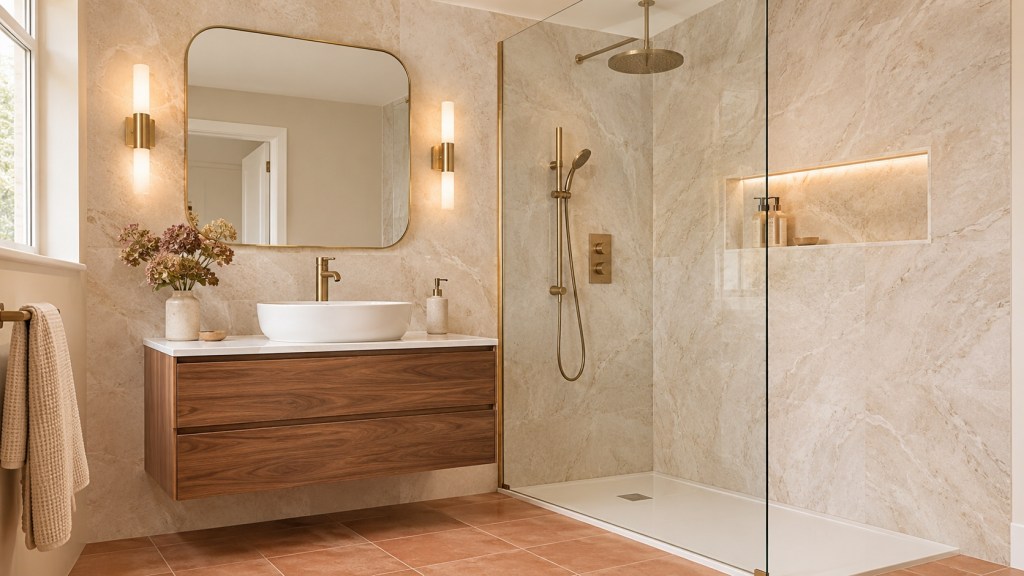
Wall panelling has gone from budget alternative to mainstream choice in UK bathrooms, and the marketing around it is one-sided. Panels are better at some things and worse at others.
Table of Contents
Know what you’re buying
“Waterproof panel” covers three products. PVC is fully waterproof, light and cheap, but feels like plastic. SPC uses a stone-polymer core — heavier, more convincing underhand, more expensive. Moisture-resistant MDF is the decorative stuff: fluted, ribbed, tongue and groove. It handles humidity and splashes, not direct shower spray. That distinction causes more problems than anything else in bathroom wall panels.
Time
Panels win decisively. Tiling means prepare, tank, set out, cut, fix, cure, grout, cure, seal — three to five days with the room unusable. Panelling is usually one day. If you have one bathroom, that’s the whole argument.
Cost
Panels cost more per square metre as a material but far less to fit, with less waste. The simpler and squarer the room, the better they look. Lots of corners, reveals and cuts around fittings erodes the labour saving.
Where tiles still win
Crack a tile and you replace a tile; damage a panel and you may be removing several boards. Good porcelain also won’t date the way a printed marble effect can.
Where panels win
No grout to discolour or harbour mould. A continuous surface wipes clean in minutes. And panels on battens run straight over a wall that isn’t true, which can save a replastering job in an older house.
Before you order
Ask whether the product is rated for inside a shower enclosure — “water-resistant” is not the same answer as “waterproof”. Check how the boards join, check there’s no existing damp behind them, since panelling traps it rather than fixing it, and see a sample in your own bathroom light rather than under showroom lighting.
For most bathrooms being refreshed rather than rebuilt, panels make sense in the wet areas and wherever speed matters. Specify the zone first, then choose the look. Suppliers including Panels by Sofia publish zone suitability per range, which makes that first question easy to answer before ordering.
If there is one type of material I’m seeing in every Christmas shop this year, it’s natural, woven material – and if you’re looking to create a Nancy Meyers-esque Christmas this year, interior design experts have revealed how to embrace the trend.
Considering last year was all about going as bold as you possibly can, it is perhaps a little surprising that this year’s Christmas trends have followed a more traditional route. This autumn we’ve already seen wicker lamps emerge as a surprise star, and this is now continuing into the festive season.
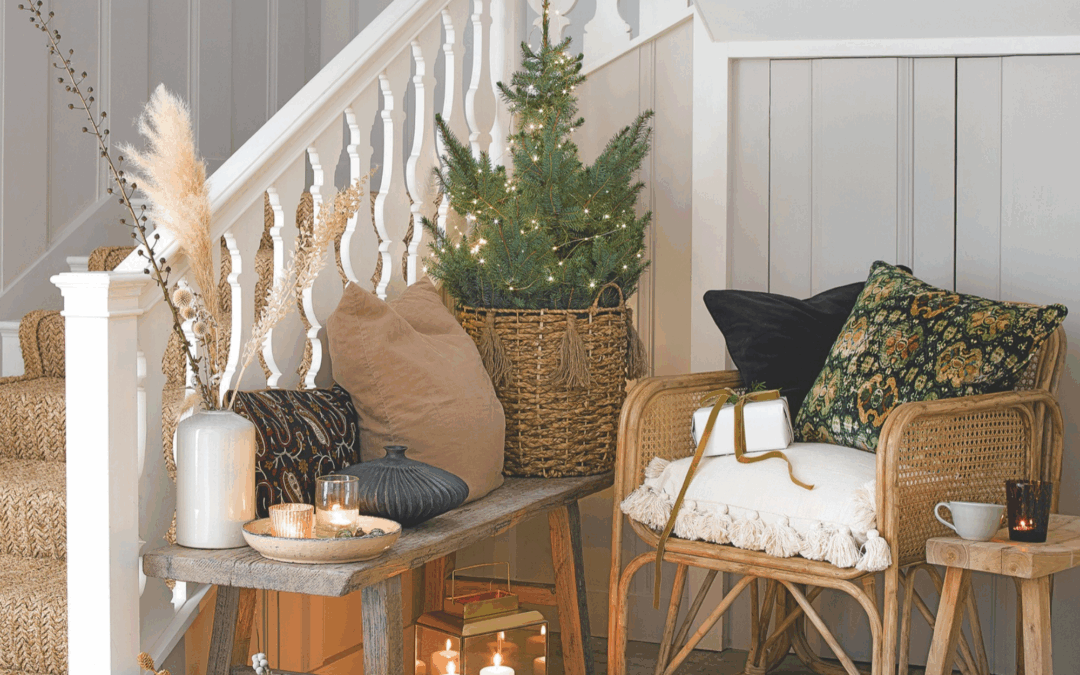
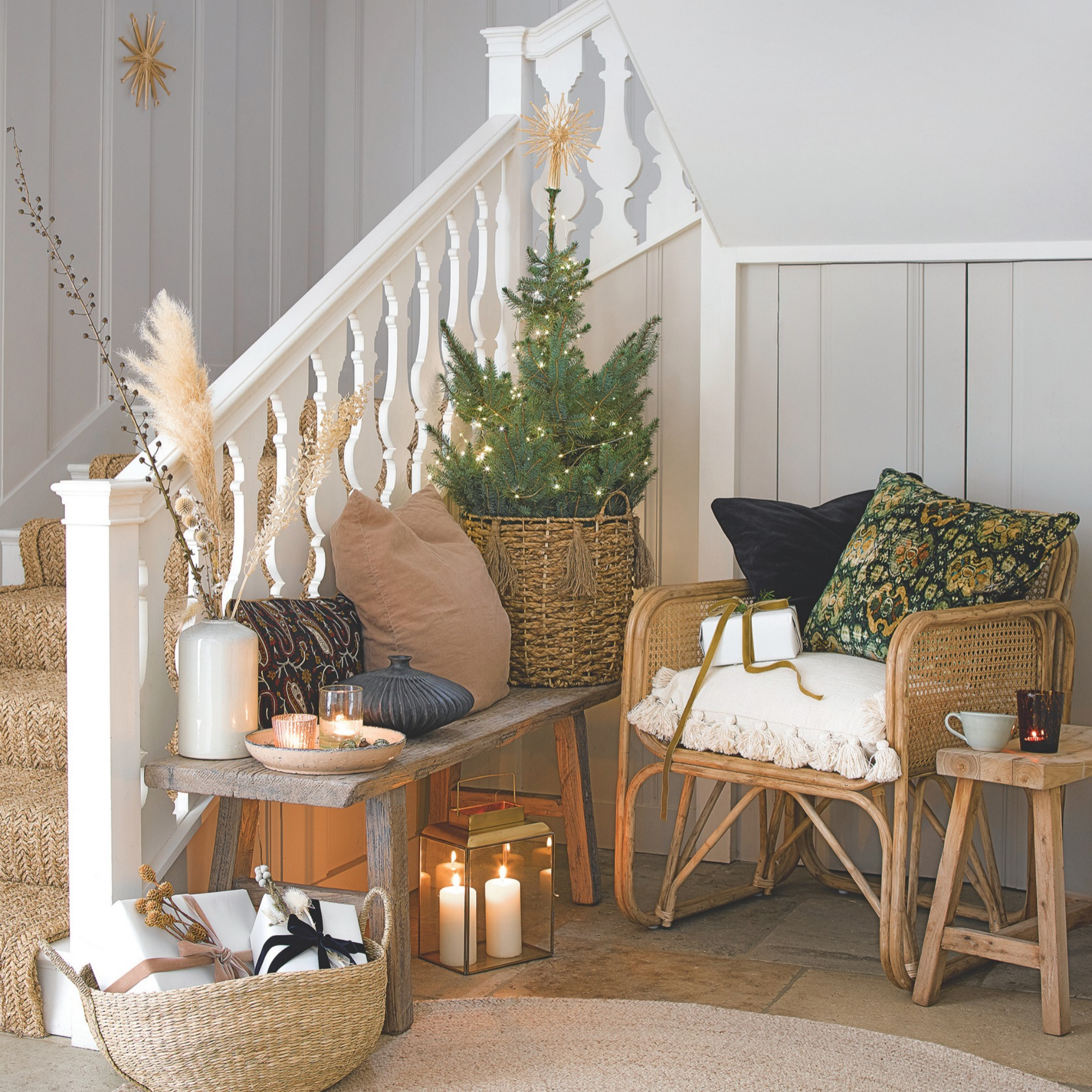
Woven decor is a nostalgic material that is wonderful for creating a lived-in, cosy look. Here’s how you can use it as a Christmas decorating idea.
Latest Videos FromIdeal Home
Why are woven materials trending?
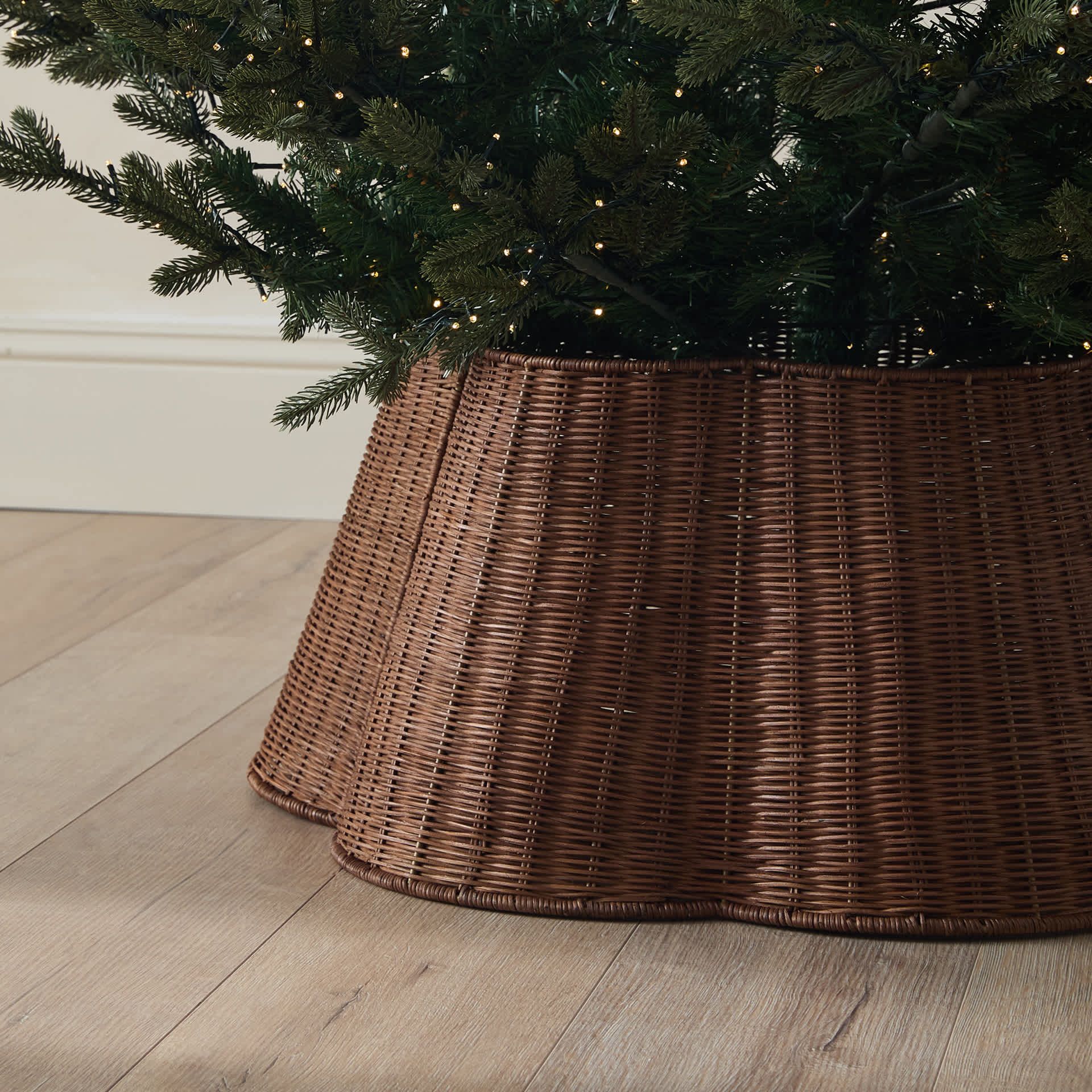
Perhaps it is Olivia Coleman’s offbeat new film, Wicker, about to hit cinemas, or simply natural materials have been a big home decor trend this year, but wicker, rattan and other woven decor have been inescapable recently. For example, the first to catch my eye was M&S’s Scallop Rattan Tree Skirt (£35), followed by the brand’s collection of rattan Christmas Tree decorations ( my favourite being the 2ft Rattan Tree, £30).
(Image credit: Future PLC/ Maxwell Attenborough)
‘There’s a growing desire to create homes that feel relaxed, cosy and connected to nature – andChristmas décor is an extension of that. Natural materials such as wicker, wood and woven fibres bring texture and a sense of warmth that can sometimes be missing from more traditional, glitter-heavy decorations,’ says Jess Power, interior design blogger at MFI.
‘The rise in popularity of natural Christmas décor ties in with the wider trend for rustic, nature-inspired interiors. We want our homes to feel timeless, calming and lived-in, so natural materials like wicker and wood are an obvious choice. It makes sense that this would then carry over to festive décor.’
How to style woven material
I’d say that woven materials like rattan and wicker work best paired with stripped-back styles such as a neutral colour scheme.
Sign up to our newsletter for style inspiration, real homes, project and garden advice and shopping know-how
(Image credit: Future PLC/ Simon Brown)
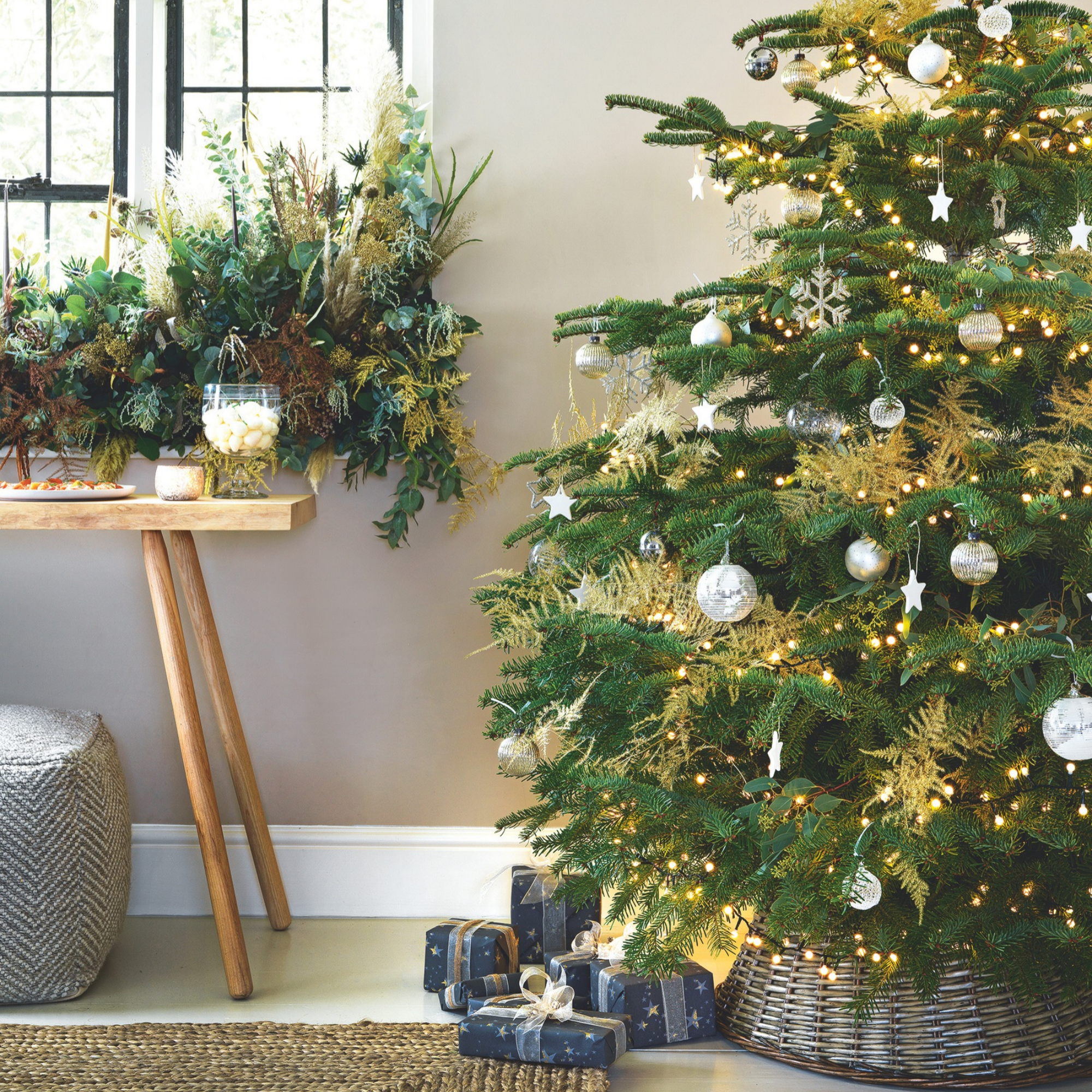
‘I’d let the natural texture do most of the work and add a little bit of contrast. So on your tree you could mix woven stars or bells with deep red velvet ribbon and a few glass or brass ornaments so the wicker stands out,’ says Stuart Murray, founder of Retrovintage.
‘A large woven star can also work above a mantel or leaning on a shelf with a simple garland and warm white lights. Then I’d also recommend varying the scale too. One oversized wicker decoration will usually have more impact than covering every surface with lots of tiny woven pieces.
‘If the room already has rattan baskets or timber furniture, don’t worry about matching the exact tone. Slight differences in colour make natural materials feel much richer. I’d keep the overall arrangement fairly loose, because wicker looks best when it feels relaxed and tactile rather than arranged too perfectly.’
Shope the trend
M&S
2ft Rattan Tree
M&S
Scallop Rattan Tree Skirt
Dunelm
Hanging Rattan Christmas Bells
nkuku
Sempala Wicker Baubles – Natural – (set of 3) – Set of 3 / Natural
Lights4Fun
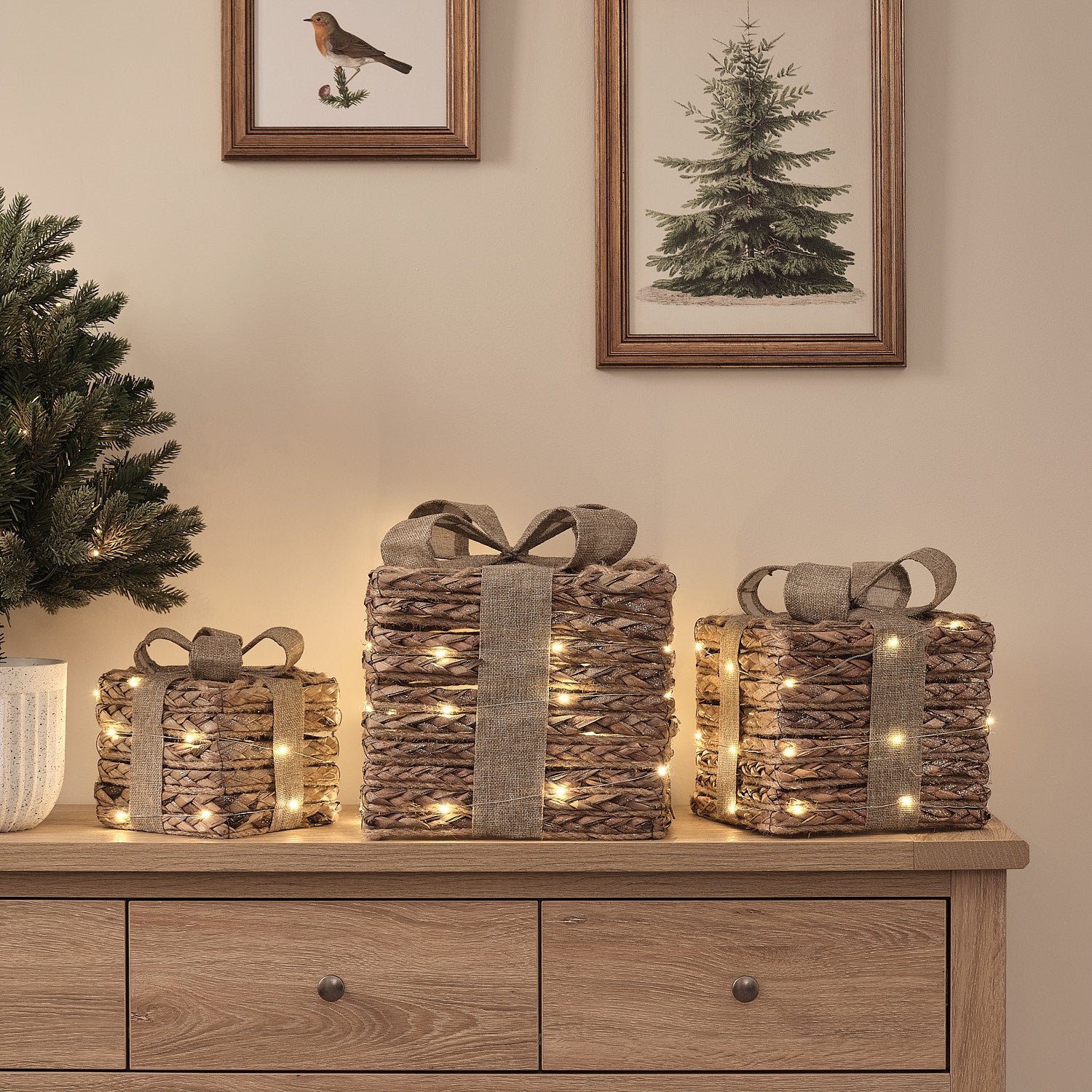
Set of 3 Micro Led Jute Presents
nkuku
Katana Cane Tree Topper – Natural – One Size / Natural
If you want your home to feel effortlessly festive and cosy, woven Christmas decor is the way forward.
Luxury furniture usually arrives with a warning label only the rich can read, the price that promises comfort and delivers a stiff bench you fear sitting on, yet luxury sectionals and loveseats flip that deal by pairing real materials with a seat you can actually live on through a long evening.
I have watched readers of this blog buy the pretty thing and regret the hard thing within a month of delivery. Luxury should mean the piece feels as good as it looks when the lights go down and the family lands on it. A sectional that wraps the room and a loveseat that tucks into the corner can both be indulgent and usable at once. That balance is what I look for when I spec pieces for a real home rather than a showroom floor. The goal is a room that feels generous without performing for anyone who walks in through the door.
Table of Contents
Luxury Is a Feeling, Not a Price Tag
Luxury is a feeling you get when you sink in, not a number on a receipt you hide from your partner. I define it as comfort that holds up after the new wears off and the ordinary days begin to stack. A truly luxurious sofa invites you to stay, then rewards the stay with support that does not quit by the late hour. The market confuses expense with indulgence, and the result is a room that looks rich and feels like a waiting room you cannot relax in. I push clients toward pieces that feel hand made even when they are not, because the touch of the material tells the truth faster than the label does. Real luxury is a frame that does not creak, a cushion that returns, and a fabric that ages instead of failing by spring.
Sectionals That Wrap Without Swallowing
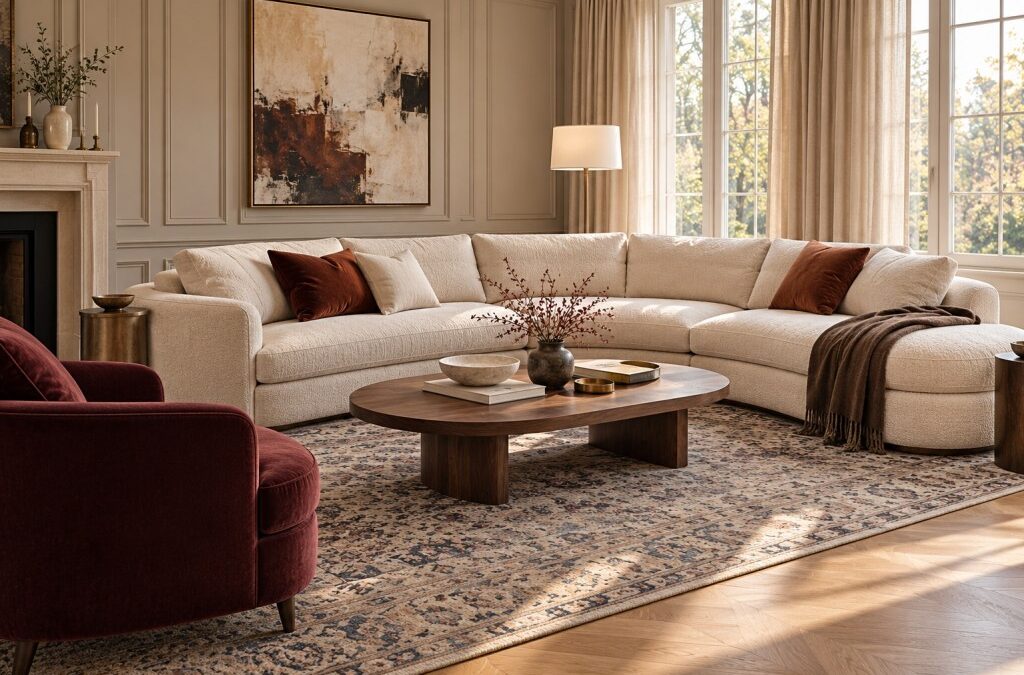
A sectional should wrap the room without swallowing it, and that line is where most buyers go wrong in the plan. I like an L that claims the corner and frees the middle for the path the family walks through the day. The long arm becomes the lounge, the short arm becomes the lean, and the room keeps its open center for the dog or the kid. A monolithic sectional that stretches wall to wall closes the space and makes even a large room feel boxed by the furniture in it. I measure the walkway first and the seating second, because traffic decides whether the piece feels generous or greedy in the corner. Pick a depth that lets people stretch without crowding the coffee table across the rug.
The Loveseat Still Earns Its Corner
The loveseat still earns its corner, even in a room that already has a big piece doing the heavy lifting by the window. I tuck it under a reading light or angle it toward the fire so it becomes a second conversation zone the main sofa cannot offer on its own. A matching pair reads as a set you bought on a deal, while a contrasting loveseat reads as a choice you made with intent for the room. I use it to fill a niche the sectional leaves empty, turning dead floor into a seat two people actually use. The scale keeps it from competing with the larger piece for attention across the space. Either way, give it a job and a light, and it stops being the spare you apologise for when friends arrive to sit and stay for the evening meal you cooked.
Material Quality You Can Feel
Material quality is something you can feel the moment you press the cushion with your hand on the showroom floor. I look for a frame of kiln dried hardwood that does not shift when you lift one end to test it for weight. The suspension should spring back, not sag into a hammock by the third month of use in the home. Foam that is too soft feels like a deal and acts like a mistake once the family settles in for a film. I prefer a dense core wrapped in a softer layer, because that blend supports the body and still welcomes the sprawl you want on a lazy Sunday. The fabric should read as rich and clean without a plastic sheen under the lamp. Real materials cost more up front and pay you back every evening you sit without thinking about the frame beneath the seat.
Color and Texture for a Warm Room
Color and texture set the warmth of the room, and together they decide whether luxury reads as inviting or as a museum you cannot touch. I lean into tactile fabrics, a velvet that catches the light, a boucle that begs a hand, a leather that tells the story of the years. These materials feel expensive because they are honest about the touch they offer through the day. I keep the palette warm rather than showy, because a calm room feels richer than a loud one when the sun goes down. A textured neutral with one deep accent pillow does more than a full set of matched prints ever will. The goal is a space that wraps you the moment you sit, not one that impresses you from the door and forgets you by the couch.
Scale That Fits the Floor Plan
Scale fits the floor plan, and no amount of taste survives a piece that breaks the room it sits in. I map the sofa and loveseat against the rug before I buy, because the rug is the frame the eye reads first when it enters. A sectional that overruns the rug looks lost, while one that floats just inside the edge looks placed with care by someone who measured. The loveseat should sit in proportion to the wall behind it, not dwarf the art or the window above on the same plane. I leave a clear path of at least a foot around the seats so the room stays walkable through the busiest part of the day. Good scale is forgiving, it lets the other decor stay simple because the furniture is already doing the talking.
Shop for the Evenings, Not the Photos
Shop for the evenings you actually live, not the photos you wish you could post on a weekend you host. A luxury piece earns its keep at eight at night, when the room is dim and the family is spread across the seats with nowhere else to be. I ask clients to imagine the Tuesday, the regular night, the long one after work that asks too much of everyone at once. Will the sectional still feel like a reward then, or a thing you dust and resent by the door. The loveseat should be the spot you read in, not the spot you stack the laundry on through the week. Buy for the life that repeats, and the pretty shot takes care of itself when the light is right for it.
Luxury that you can actually sit on is the only kind worth the money, because the room should reward you at the end of the day and not just impress a guest at the door. Choose the feel first, the look second, and the piece will earn its place every evening you come home to it after the long commute.
Jamie Oliver is back – this time with a new book (and an accompanying TV show!) with a simple aim: showing you how to cook balanced, tasty meals at home in 20 minutes flat.
And if you thought that the famed British chef’s foray into the world of the best air fryers last year with his book Easy Air Fryer (£13 via Amazon) was a flash in the pan, then think again. He’s been turning to his trusty air fryer in his new book to cut down cooking times, proving that one of these ultra-convenient appliances is the way to go in the long term if you’re time-poor but committed to eating well.
Here’s how he’s been using his air fryer (and pressure cooker too!) to get his meals under that all-important 20 minute mark.
Jamie Oliver
20 Minute Meals: Real Fast Food
<aside data-article-category="all-rooms" data-block-layout="horizontal" data-block-type="featured-product" data-editorial-currency="GBP" data-editorial-price="15" data-editorial-was-price="30" data-hawk-json="{"product":{"variants":{"Default":{"image":{"copyright":"","height":500,"id":"dJnJKBGYxWV6LXj2kBsXfJ","mimeType":"image\/jpeg","mos":"https:\/\/cdn.mos.cms.futurecdn.net\/dJnJKBGYxWV6LXj2kBsXfJ.jpg","role":"","width":385,"credit":"Michael Joseph","alt":"20 Minute Meals: Real Fast Food","caption":""},"strapline":"
He's managed it in 15 and 30 minutes and now Jamie's turning his attention to the golden 20 minute mark with these 120 recipes to ease the pressure on dinnertimes.","brand":"Jamie Oliver","name":"20 Minute Meals: Real Fast Food","urlStyle":"","retailer":"","layout":"horizontal","linkText":"","noFollow":false,"noAffiliateTracking":false,"promoLabel":"","price":30,"salePrice":15,"currency":"GBP","linkLayout":"text","sponsored":false,"hawkProductNameMatchedCode":"","review":{"cons":[],"id":"","name":"","pros":[],"rating":0,"strapline":"","url":""},"id":"","externalId":"696a51a955cd27b84c56014c7f22a9ae9d096ad7","lastCheckedPriceDate":"","link":{"url":"https:\/\/target.georiot.com\/Proxy.ashx?tsid=107653&GR_URL=https%3A%2F%2Famazon.co.uk%2F20-Minute-Meals-Real-Fast%2Fdp%2F0241657857%2Fref%3Dasc_df_0241657857%3Ftag%3Dftr-idealhome-gb-21%26ascsubtag%3Dhawk-custom-tracking-21","merchantName":"Amazon UK","merchantId":1027,"merchantNetwork":"Amazonuk","merchantUrl":"amazon.co.uk"}}}}}” data-link=”https://target.georiot.com/Proxy.ashx?tsid=107653&GR_URL=https%3A%2F%2Famazon.co.uk%2F20-Minute-Meals-Real-Fast%2Fdp%2F0241657857%2Fref%3Dasc_df_0241657857%3Ftag%3Dftr-idealhome-gb-21%26ascsubtag%3Dhawk-custom-tracking-21″ data-link-merchant=”Amazon UK” data-merchant-id=”1027″ data-merchant-name=”Amazon UK” data-merchant-network=”Amazonuk” data-merchant-url=”amazon.co.uk” data-model-brand=”Jamie Oliver” data-model-name=”Jamie Oliver 20 Minute Meals: Real Fast Food” data-name=”Horizontal Product Block merchantlink widget” data-render-type=”fte” data-show-fallback=”button” data-widget-type=”merchantlink” class=”ecom-root”>
He’s managed it in 15 and 30 minutes and now Jamie’s turning his attention to the golden 20 minute mark with these 120 recipes to ease the pressure on dinnertimes.
The star recipe I’ve found so far in the new book is Jamie’s ‘Air Fryer Arancini’ which, in Jamie’s words, relies heavily on getting the cooking process going as quickly as possible. For this, there’s no better appliance for Jamie to call on than that of his trusty air fryer. That’s no surprise given how much faster they are to preheat, as well as cook in general, versus a standard oven.
The air fryer that Jamie used in his TV show, the Tefal Easy Fry Dual Air Fryer & Grill (£147.99 via Amazon), is one that we’ve tested here at Ideal Home. And one of the things our expert Home Economist liked most about it during her review was that it didn’t even need a preheat setting to beat her oven on cooking times.
(Image credit: David Lotfus)
In the recipe, which also features helpings of courgette, the speedy cooking time is achieved thanks to the arancini spending just 15 minutes in the air fryer which is significantly less than the usual baking time in an oven.
As well as using an air fryer to cut down cooking times, Jamie also employs the use of a pressure cooker to whip up a bolognese in under twenty minutes. The pressurised element of something like an Instant Pot can often make people anxious to use them but just like an air fryer, they’re a genius buy if you’re all about cutting down on food prep time.
Sign up to our newsletter for style inspiration, real homes, project and garden advice and shopping know-how
(Image credit: David Lotfus)
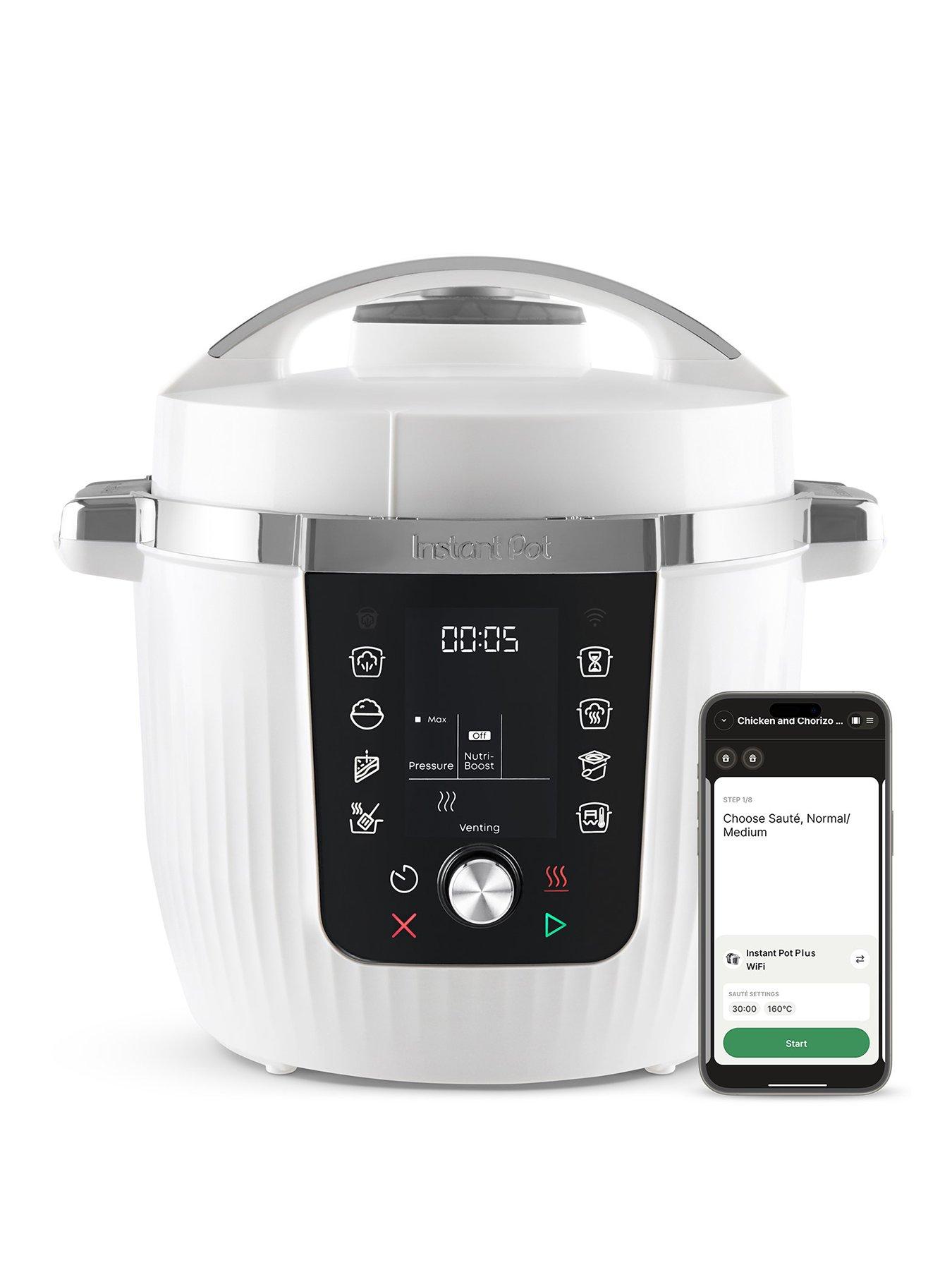
In the recipe Jamie uses his pressure cooker on high heat to cook his mince and veg in 10 minutes flat, leaving him plenty of time to get on with other parts of the meal unobstructed. When our reviewer Helen tried the Instant Pot Pro (which is rated as the bestmulticooker in our guide) she also used the high pressure setting to cook a lentil curry in quick time, proving how handy these appliances are for cutting down the actual time of cooking.
Cook your midweek meals up to 70% faster with this clever multicooker. It's kitted out with 10 different ways to cook including a slow cooker function. ","brand":"Instant Pot","name":"Pro 5.7l Multi-Cooker Coconut White","urlStyle":"","retailer":"","layout":"horizontal","linkText":"","noFollow":false,"noAffiliateTracking":false,"promoLabel":"TOP-RATED PRESSURE COOKER ","price":199,"salePrice":null,"currency":"GBP","linkLayout":"text","sponsored":false,"hawkProductNameMatchedCode":"","review":{"cons":[],"id":"","name":"","pros":[],"rating":0,"strapline":"","url":""},"id":"","externalId":"5e7a5d0edcce81e9f898bbf7a64cef5c1ff46f90","lastCheckedPriceDate":"","link":{"url":"https:\/\/www.awin1.com\/awclick.php?awinmid=3090&awinaffid=103504&clickref=hawk-custom-tracking&p=https%3A%2F%2Fwww.very.co.uk%2Finstant-pot-pro-57l-multi-cooker-coconut-white%2F1601314809.prd","merchantName":"very.co.uk","merchantId":1465,"merchantNetwork":"AW","merchantUrl":"very.co.uk"}}}}}” data-link=”https://www.awin1.com/awclick.php?awinmid=3090&awinaffid=103504&clickref=hawk-custom-tracking&p=https%3A%2F%2Fwww.very.co.uk%2Finstant-pot-pro-57l-multi-cooker-coconut-white%2F1601314809.prd” data-link-merchant=”very.co.uk” data-merchant-id=”1465″ data-merchant-name=”very.co.uk” data-merchant-network=”AW” data-merchant-url=”very.co.uk” data-model-brand=”Instant Pot” data-model-name=”Instant Pot Pro 5.7l Multi-Cooker Coconut White” data-name=”Horizontal Product Block merchantlink widget” data-render-type=”fte” data-show-fallback=”button” data-widget-type=”merchantlink” class=”ecom-root”>
Cook your midweek meals up to 70% faster with this clever multicooker. It’s kitted out with 10 different ways to cook including a slow cooker function.
If you want more inspiration on how to whip up tasty, healthy meals for the whole family this autumn then tune into Jamie’s 20 Minute Meals on Mondays at 8pm on Channel 4. He’ll be cooking recipes from his new book in one unedited shot to make sure they’re actually timely for you to make at home!
If there was any uncertainty about whether display cabinets were making a comeback in 2026, let Michael Sheen’s be an example that this dated trend is perfectly suited to a modern home.
You’ve probably been keeping up to date with Michael Sheen via his stint on the hit BBC show Celebrity Traitors, but I’ve also taken the opportunity to have a nosey around his social media for home decor tidbits, and I have to say his kitchen storage ideas are impressive.
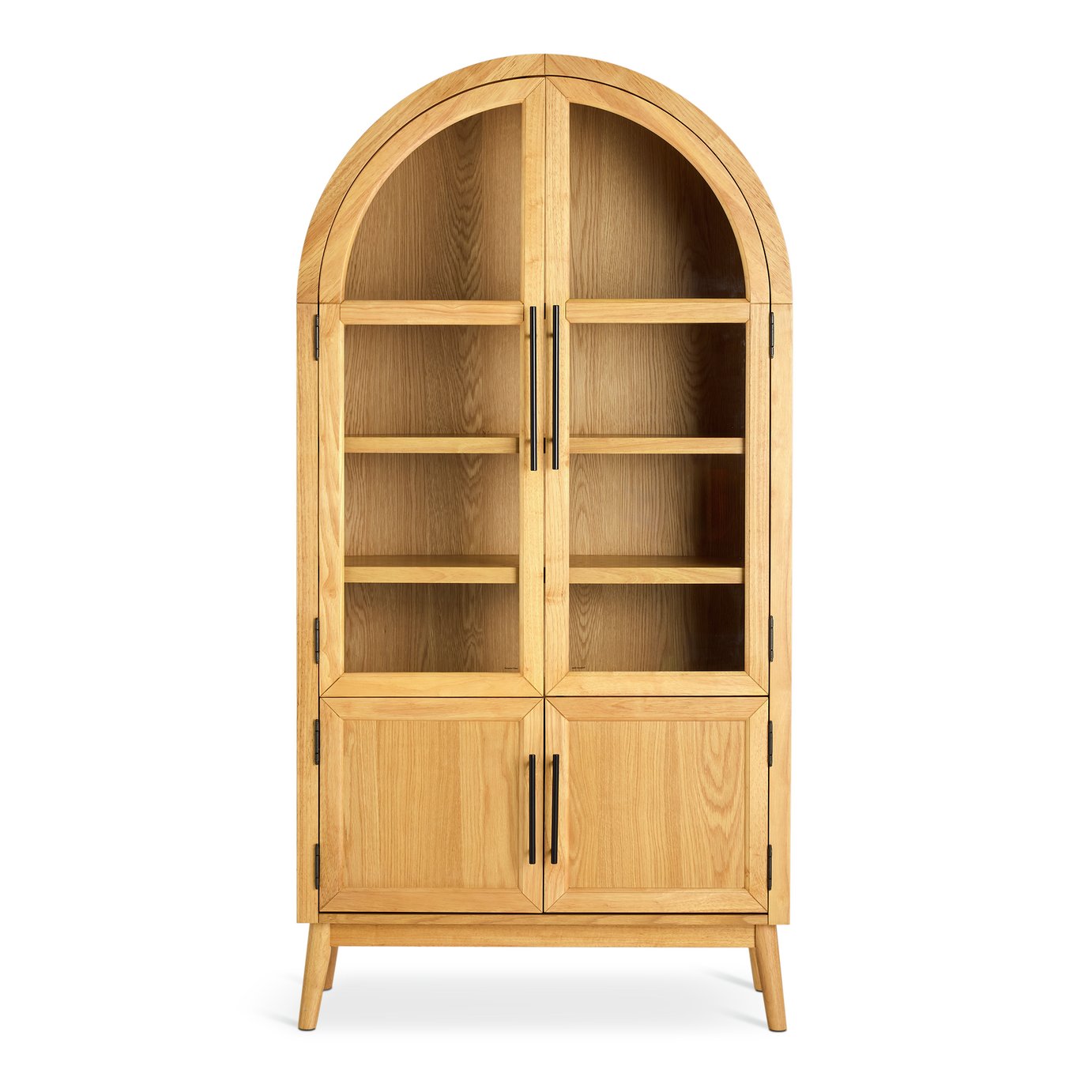
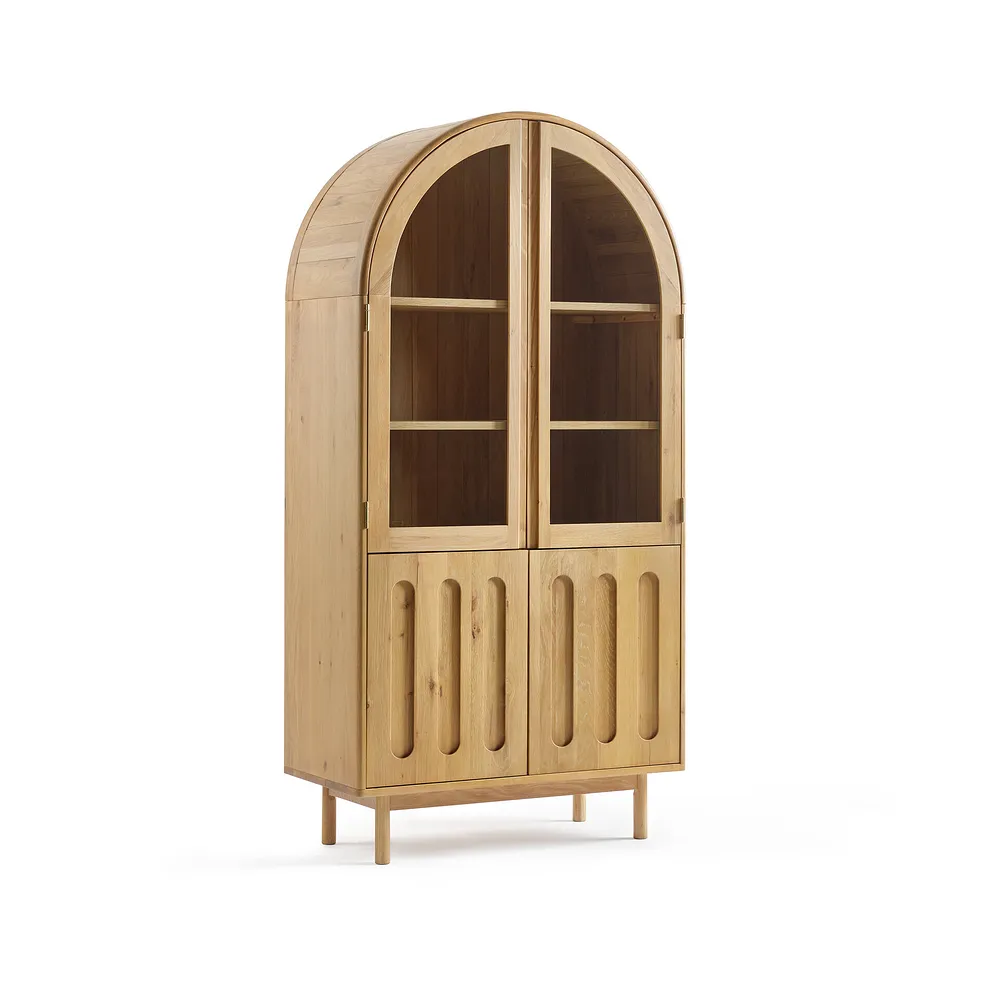
In a snap celebrating Mother’s Day on Instagram, what immediately jumped out to the Ideal Home team was Michael’s gorgeous arched wood display cabinets at the back of the room. I was immediately reminded of Anthropology’s cult Fern Ash Wood Marble Top Storage Cabinet (£2,498) or the more affordable Habitat Collins Arched 4 Door Display Cabinet (£370). Although I must note that Michaels is most likely vintage.
While these types of display cabinets have typically been associated with the kitchen ideas of our grandparents, nostalgic decor has been having a major comeback across the interiors world for the past few years. Not to mention, curved display cabinets are an excellent way to add some architectural interest to a kitchen – especially if you’re a renter.
‘There’s a real misconception that all traditional furniture looks dated, but this isn’t the case at all. Michael Sheen’s display cabinet is a perfect example of this. It’s got all the elements of a traditional cabinet, but with a few modern twists,’ comments Chloe Barrow, head of creative Interiors at Laura James.
‘Right now curved furniture is trending everywhere. We’re seeing it in sofas, coffee tables, and even architecturally in doorways. The way Sheen’s cabinet curves adds a brilliant modern design element to an otherwise traditional piece. Simultaneously, the wooden framing is classic. It’s a great fit for a country home or for anyone who loves the ever-popular farmhouse style, and it’s definitely making its comeback.’
Sign up to our newsletter for style inspiration, real homes, project and garden advice and shopping know-how
(Image credit: Future PLC/ Kirsty Noble)
And Michael’s cabinet in particular works because it helps soften his kitchen-dining space, adding depth and drawing in the eye.
‘I love the arched top; it gives the cabinet an almost architectural presence, like a built-in alcove, and softens all the straight lines in the room. I also like the rich, warm wood tone against the light, neutral walls – it anchors that corner of the room and adds depth. It’s also the right size for where it is; big enough not to be engulfed in the space and still be a statement piece, but it doesn’t project out and dominate the room,’ says Laura Rich, interior designer at Furniturebox.
‘It’s classic and antique-looking, and being used to display glasses, it will reflect the light beautifully.’
How to style a glass display cabinet
An important thing to note about a glass display cabinet is that its inside will be on show (unless you opt for fluted glass), so it’s important that you keep it organised. Luckily, there are many ways to organise a kitchen cupboard – even if it is one you’ll have on display.
(Image credit: Future PLC/ David Giles)
‘Styling them properly is key, otherwise you’ll end up with chaotic cabinets on show for all your guests. I always recommend using the rule of three. For example, you might want to pop a tall wine bottle at the back and have two spirit bottles in front of various lower heights. This is going to be really pleasing to the eye, instead of shoving everything in wherever it fits as you might normally,’ says Chloe.
Laura agrees, pointing out that an open display cabinet should also be used to display items you actually want on show. In Michaels’s case this is his glassware, which works perfectly in the context of a kitchen.
‘I prefer glass-fronted cabinets to store things that I’d be happy to have on show in the house – like Michael Sheen’s glasses. It’s then aesthetic and practical, keeping things dust-free and organised, but it also turns everyday objects into something worth looking at,’ she says.
‘Glassware, bar bottles, ceramics or inherited trinkets belong in a glass-fronted cabinet. The items need to be considered to ensure the cabinet becomes a curated display. Don’t cram everything in together, though, leave a bit of breathing space on each shelf, group items by colour or height, and mix the practical with a few personal pieces.’
Shop the trend
Anthropologie
Fern Ash Wood Marble Top Storage Cabinet
Habitat
Habitat Collins Arched 4 Door Display Cabinet – Oak
Oak Furnitureland
Belgrave Solid Natural Oak Display Cabinet
Michael Sheen’s curved glass display cabinet proves that a typically ‘dated’ trend can work in modern spaces. Let this be your sign to proudly display your glassware.
There’s something wonderfully inviting about climbing into a freshly made bed, especially when the duvet feels just right. Soft enough to settle around you, warm enough to keep out the chill and light enough to move beneath comfortably, good bedding can make an everyday bedroom feel rather special.
Choosing a new duvet, however, can be surprisingly complicated. Between tog ratings, filling percentages, seasonal combinations and promises of hotel-style luxury, it’s easy to become distracted by the packaging.
The best approach is to start with how you sleep. A hot sleeper in a well-insulated flat will need something quite different from someone who feels the cold in a draughty bedroom. Your preferred weight, washing arrangements and budget matter too.
Understanding those preferences is an important first step towards finding bedding you’ll enjoy using. This guide explains how to compare different duvets, make sense of the labels and choose a comfortable option for your home.
Table of Contents
Quick Answer: How Do You Choose the Right Duvet?
Choose a duvet by considering its warmth, filling, size, construction and care requirements. Start with a tog rating suited to your bedroom and sleeping habits, then compare fillings for their feel, weight and practicality. Check the actual measurements rather than relying on size names, and make sure you can wash and dry it as instructed.
The right duvet cover also makes a difference: it should fit properly, feel pleasant against your skin and work with the warmth of the duvet underneath.
Start With What Your Current Bedding Gets Wrong
Before buying anything, consider what you would change about your existing duvet.
Do you wake up too warm? Does the filling collect at the foot of the bed? Are you constantly pulling the covers back from your partner? Perhaps the insulation is fine, but the duvet feels heavy or makes an irritating rustling sound whenever you move.
These observations give you a useful shopping brief. If the label is still readable, check its tog rating and composition. Knowing that your current 10.5 tog duvet feels too warm is more helpful than assuming you need another one because that rating seems popular.
Look at the rest of your bed as well. A thick mattress topper, brushed cotton sheets, heavy nightwear and a bedspread all contribute to warmth. Changing your duvet filling might improve the feel, but it won’t necessarily solve overheating caused by several insulating layers.
Understand Tog Ratings Before Choosing Warmth
A tog rating measures thermal resistance: how effectively a duvet resists heat passing through it. A higher tog indicates greater insulation.
It doesn’t describe quality or tell you the actual weight of the duvet. Different fillings can provide similar insulation while feeling noticeably different to lift and sleep beneath. John Lewis’s buying guidance distinguishes duvet warmth from weight for this reason.
For adult bedding, these ranges offer a useful starting point:
Tog rating
Typical use
1–4.5 tog
Warm bedrooms, summer months or people who sleep hot
7–10.5 tog
Moderate warmth in milder conditions
12–13.5 tog
Colder bedrooms or people who feel the cold
15 tog and above
Particularly high insulation where needed
Treat these as guidelines rather than rules. A winter duvet that feels comfortable in an older country house could be far too warm in a modern apartment.
Likewise, don’t assume that the highest tog represents the best purchase. You’re choosing an appropriate level of insulation, not trying to achieve the highest score.
Match Your Duvet to Your Bedroom and Body Temperature
Think about how your bedroom feels several hours after you get into bed. Does it remain warm, or become noticeably colder once the heating goes off?
A simple room thermometer can help you understand those conditions. You don’t need to track every change; you’re looking for a general picture of the environment you sleep in.
Your own comfort matters just as much. A warm sleeper may prefer a lightweight duvet throughout much of the year, while someone who regularly feels chilly might want a warmer duvet even during spring.
People often describe this as choosing bedding to regulate body temperature. In practice, a duvet mainly affects the warmth and moisture around you by altering how readily heat and moisture can escape. It cannot guarantee a particular temperature or prevent overheating in every situation.
If you experience night sweats, avoid assuming that a product labelled “cooling” will solve the problem. Look closely at its insulation, casing and care requirements, and consider how your other bedding layers affect comfort.
Compare the Variety of Fill Options
The fill type affects a duvet’s weight, drape, loft, care and cost. There’s a variety of fill options available, and the most expensive isn’t automatically the most comfortable.
Down: Light, Lofty and Insulating
Down consists of the soft clusters beneath the outer feathers of ducks and geese. These clusters trap air, allowing a duvet to provide warmth with relatively little weight.
A high-down-content duvet can feel like a light cloud settling over the bed. It’s a great choice if you enjoy a plump appearance but dislike a heavy covering.
Read the percentages carefully. A product described as a down duvet may also contain feathers, and the balance affects its feel. You’ll see labels such as white goose down, duck down and various geographical descriptions. These details identify aspects of the filling, but none should be treated as a complete quality assessment.
Marketing phrases such as “best superior down” are less useful than a clear specification. Look for the down percentage, sourcing information, construction and care instructions.
Some products also give a fill power figure, describing the volume occupied by a given weight of down under specified test conditions. Higher fill power indicates greater loft, but it doesn’t replace the tog rating. Comparisons are most useful when the measurement standards match.
Feather and Down: A More Substantial Feel
Feather-and-down blends generally feel heavier and less airy than duvets with a high proportion of down. They can suit people who enjoy a substantial covering that settles around the body.
Because feathers have quills, the casing needs to keep them contained. Check reviews for repeated reports of feathers escaping, although occasional comments should be considered alongside the overall picture.
Sound matters too. Some tightly woven shells rustle when moved. If you’re sensitive to noise, handle a sample in a shop where possible.
Wool: A Flatter Drape
Wool duvets usually have a flatter profile than lofty down designs. They tend to lie closer to the body rather than creating a deeply puffed-up bed.
Wool can absorb and release moisture vapour, which helps explain its popularity in bedding designed around temperature comfort. However, its performance still depends on the whole product, including its weight and casing.
Some manufacturers use seasonal categories or tog-equivalent ranges. Read those descriptions carefully: “medium warmth” isn’t necessarily identical across brands.
Also check the care label before buying. A washable wool duvet and one requiring specialist cleaning involve quite different routines.
Synthetic Fillings: Practical and Accessible
Synthetic fillings commonly include polyester hollowfibre and microfibre. Hollowfibre often creates a springy, relatively bulky duvet, while finer microfibre fillings can feel softer.
If you’re comparing international product listings, you may see the spellings natural fibers and synthetic fibers. In UK descriptions, these are normally written as natural fibres and synthetic fibres; the spelling itself tells you nothing about quality.
A synthetic alternative can be particularly practical if you prioritise affordability, frequent washing or avoiding animal-derived fillings. However, check the whole composition if you want a product free from animal materials.
Synthetic materials vary considerably, so don’t assume all polyester-filled duvets will feel alike. The amount of filling, fibre structure, casing and stitching all influence the finished product.
Silk and Other Specialist Fillings
Silk-filled duvets often have a smooth, slim profile with a close drape. They may appeal if you dislike bulky bedding, although cleaning requirements can be more demanding.
You’ll also encounter products described as bamboo, eucalyptus or plant-based. Read the actual fibre composition: these descriptions can refer to regenerated cellulose fibres, such as viscose or lyocell, sometimes blended with polyester.
Natural materials aren’t automatically better for every sleeper, and plant-derived branding doesn’t explain how a duvet will perform. Focus on the properties that matter to you.
Examine the Casing and Construction
The filling receives most of the attention, but its outer shell has an important job. It contains the filling, influences how the duvet drapes and contributes to its feel and sound.
You may see the casing described as ticking. This refers to the fabric enclosing the filling. Where a product mentions multiple layers of ticking, check what those layers are intended to do and whether they affect weight, softness or care.
Construction helps keep the filling distributed. A stitched-through duvet has seams sewn through both outer layers to divide the filling into sections. A box-wall, or baffle-box, design uses internal fabric walls to create compartments with room for loft.
Neither term alone guarantees a good product. Quality duvets should have construction suited to their filling, secure seams and a reasonably even distribution of insulation. Look for clear specifications rather than relying solely on claims about premium materials.
Choose the Right Size for Comfortable Coverage
Buying the right size involves more than matching the name on the duvet to the name on your mattress.
Common UK dimensions include:
Duvet size
Common dimensions
Single
135 × 200cm
Double
200 × 200cm
King
225 × 220cm
Super king
260 × 220cm
These are common measurements, but standard sizes vary between brands and countries. Always check the centimetres on the duvet and cover.
This is especially important when shopping from overseas. A California king mattress designation doesn’t translate directly into one universal duvet size, and American duvet and comforter measurements may differ substantially from UK ranges.
Sizing up can give couples more coverage. A king-size duvet on a double bed, for example, provides more fabric around each sleeper. However, consider the practical consequences. Will it trail on the floor? Can you manage it when changing the cover? Will it fit your washing arrangements?
Find the Right Duvet Cover
Once you’ve chosen the duvet, take a little time over its cover. This is the fabric you’ll handle every night, and it can noticeably alter the overall feel of the bed.
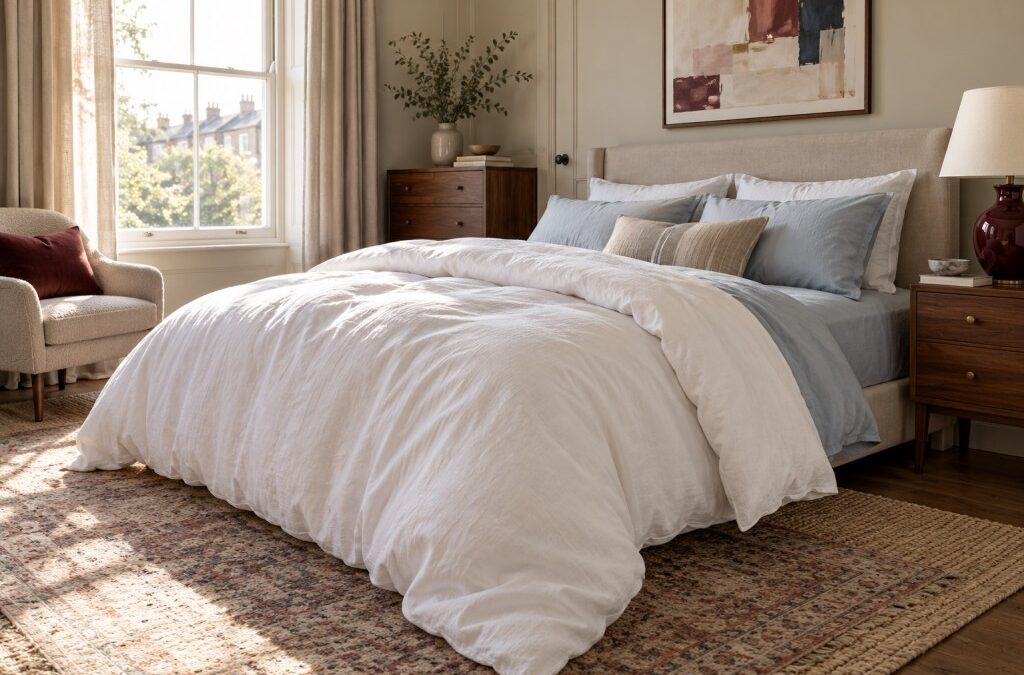
A cotton duvet cover is a familiar option, with finishes ranging from crisp percale to smoother sateen. Linen has a more textured feel, while brushed cotton adds cosiness.
Don’t assume that a high thread count automatically means better bedding. Fibre quality, yarn, weave and finishing all matter. Choose the texture you enjoy rather than chasing the largest number on the label.
For a good fit, the cover should closely match the duvet’s dimensions. Too much spare fabric can feel untidy, while a cover that’s too small may compress the filling. Check fastenings, too. Corner ties can help secure a duvet with corresponding loops, reducing movement inside the cover.
When browsing duvet cover sets and bed linen, confirm what’s included. The photographs may show cushions, extra pillowcases and throws that are sold separately.
Do You Need a Top Sheet?
A top sheet sits between you and the duvet, creating another washable layer. Some people enjoy the smooth feel and find it useful for keeping the duvet cover fresher between washes. Others dislike becoming tangled in an extra sheet and prefer a removable duvet cover on its own.
It’s a matter of preference, but remember that every additional type of bedding can affect warmth and how freely you move. If you tend to overheat, consider the combined effect of the sheet, duvet, cover and any decorative layers. You may find that simplifying the bed improves comfort more than changing one material.
Decide Between Seasonal and All-Seasons Duvets
You have three main options: one duvet throughout the year, separate seasonal duvets, or a combination set.
One duvet is simple and requires less storage, but it needs to suit your room reasonably well across the seasons.
Separate summer and winter duvets allow a bigger change in insulation. Store the unused one somewhere clean and dry, following any guidance about compression.
An all-seasons set typically includes two duvets that can be used separately or fastened together. Check the manufacturer’s stated warmth for the combined arrangement.
Also consider handling. Two joined layers may feel bulkier than a single duvet, and their fastenings need to keep everything aligned.
Consider Different Duvets for Each Partner
Sharing a bed doesn’t mean you need identical bedding. Separate duvets allow each person to choose their preferred warmth, weight and filling. They can also end arguments about who has pulled the covers across the bed. Matching covers keep the arrangement looking coordinated, even when the duvets underneath are different.
Alternatively, look for a split-warmth design with different insulation levels on each side. Check how it’s arranged and whether it suits your usual sleeping positions.
For couples with very different preferences, this can be more comfortable than a compromise that leaves one person cold and the other too warm.
Treat Allergy Claims With Care
Terms such as “hypoallergenic”, “anti-allergy” and “dust-mite resistant” can describe different features. Look for an explanation of the claim. Does it refer to a treatment, the casing, a particular filling or independent assessment?
For house dust mite allergy, cleaning arrangements and suitable barrier covers are relevant considerations. Allergy UK advises that washing at 60°C or above kills dust mites and discusses protective bedding covers. Choose products compatible with the cleaning routine you need, and always follow their care labels.
A synthetic filling alone doesn’t make bedding free from allergens. If you have a known allergy to a particular material, use that specific information when selecting a product.
Check Washing and Drying Before Buying
“Machine washable” doesn’t necessarily mean suitable for your washing machine. Check the recommended drum capacity, wash temperature and drying method. A duvet needs room to move during washing; forcing it into a small drum can prevent effective cleaning and rinsing.
Drying is equally important. The filling must dry thoroughly before use or storage, using a method appropriate to the material. If specialist cleaning is required, check whether local professional cleaners can handle the product and what the service costs. Ask about the exact filling rather than assuming every duvet can be treated alike.
Coverless duvets offer another approach. They simplify bed-making, but require washing the whole duvet instead of removing a cover. That convenience depends on your laundry facilities.
Spend on Comfort You’ll Notice
Before paying more, identify what you’re hoping to improve. Would lower weight make the biggest difference? Do you need easier washing, extra coverage or more transparent sourcing?
A luxury filling isn’t necessarily good value if its care requirements don’t fit your household. Equally, paying more for durable construction or a feel you particularly enjoy may be worthwhile.
Check returns policies before purchase, especially when buying online. Bedding may have restrictions once opened, while sleep trials can come with specific conditions.
Whether a retailer calls its product a duvet or an insert, choosing the right duvet insert comes down to the same practical questions: does it fit, feel comfortable and suit your routine?
Choose for the Way You Actually Sleep
A beautiful bed is lovely, but comfort is personal. The duvet that looks impressively plump in a photograph might feel too bulky for you, while a simpler option could provide exactly the covering you need.
Start with your current frustrations, then work through warmth, filling, size and care. Pay attention to the cover and other bedding layers as well.
No purchase can promise a restful night’s sleep every night, but choosing thoughtfully can remove common sources of discomfort—and make getting into bed something to look forward to.