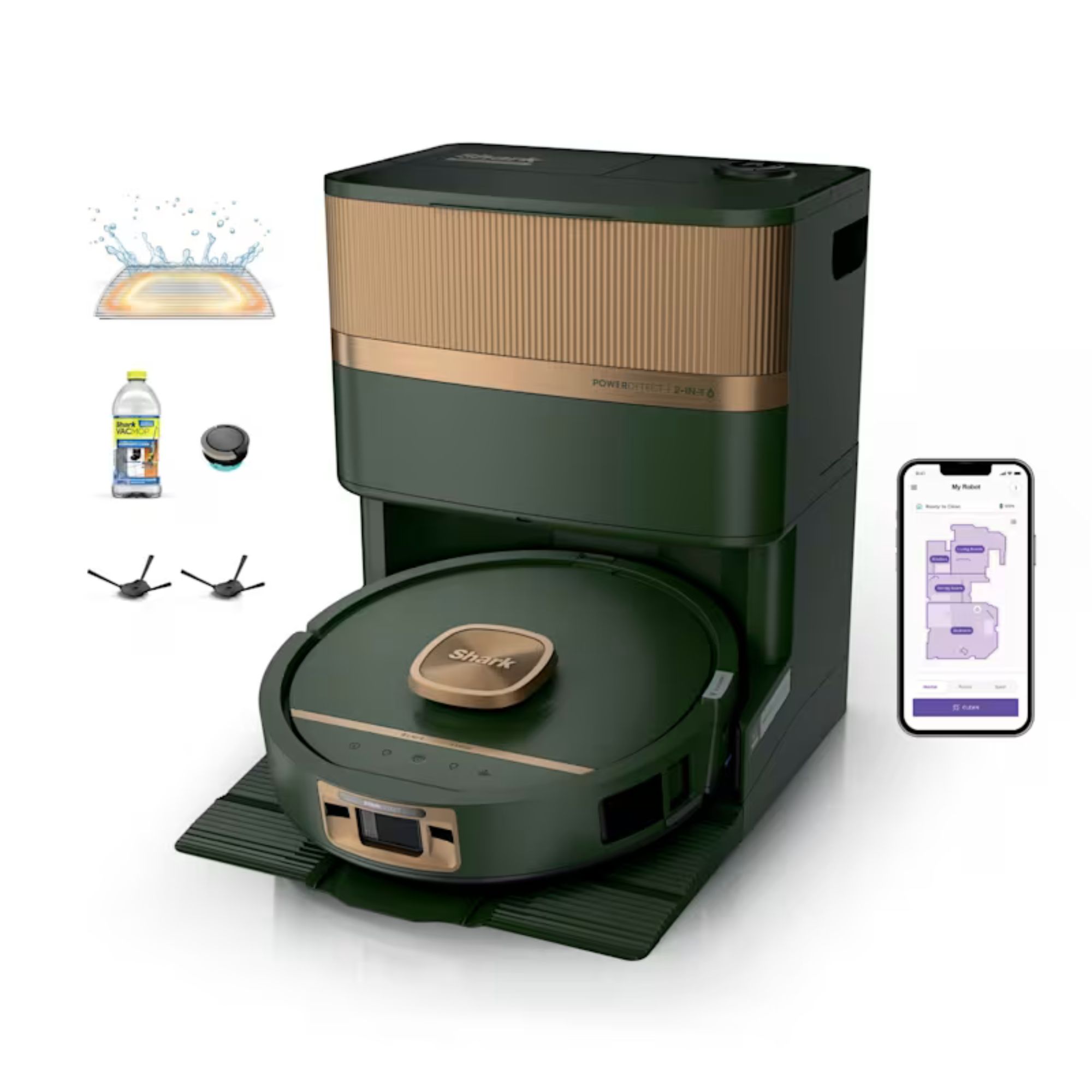
Shark has just dropped four ‘Luxe’ colourways of its uber-popular PowerDetect UV Reveal Robot Vacuum (£1039.99 at Shark). And as the proud owner of the OG black colourway, I must admit that I’m a little jealous of this chic, aesthetic upgrade.
This handy, hands-free model has already staked its claim in my best robot vacuum cleaner guide thanks to its impressive suction power, squeaky-clean mopping ability, and the ridiculously smart UV Reveal technology that uncovers hidden stains on your floors. But while I’ve used it every day since testing it, the black colourway has always been a bit… meh.
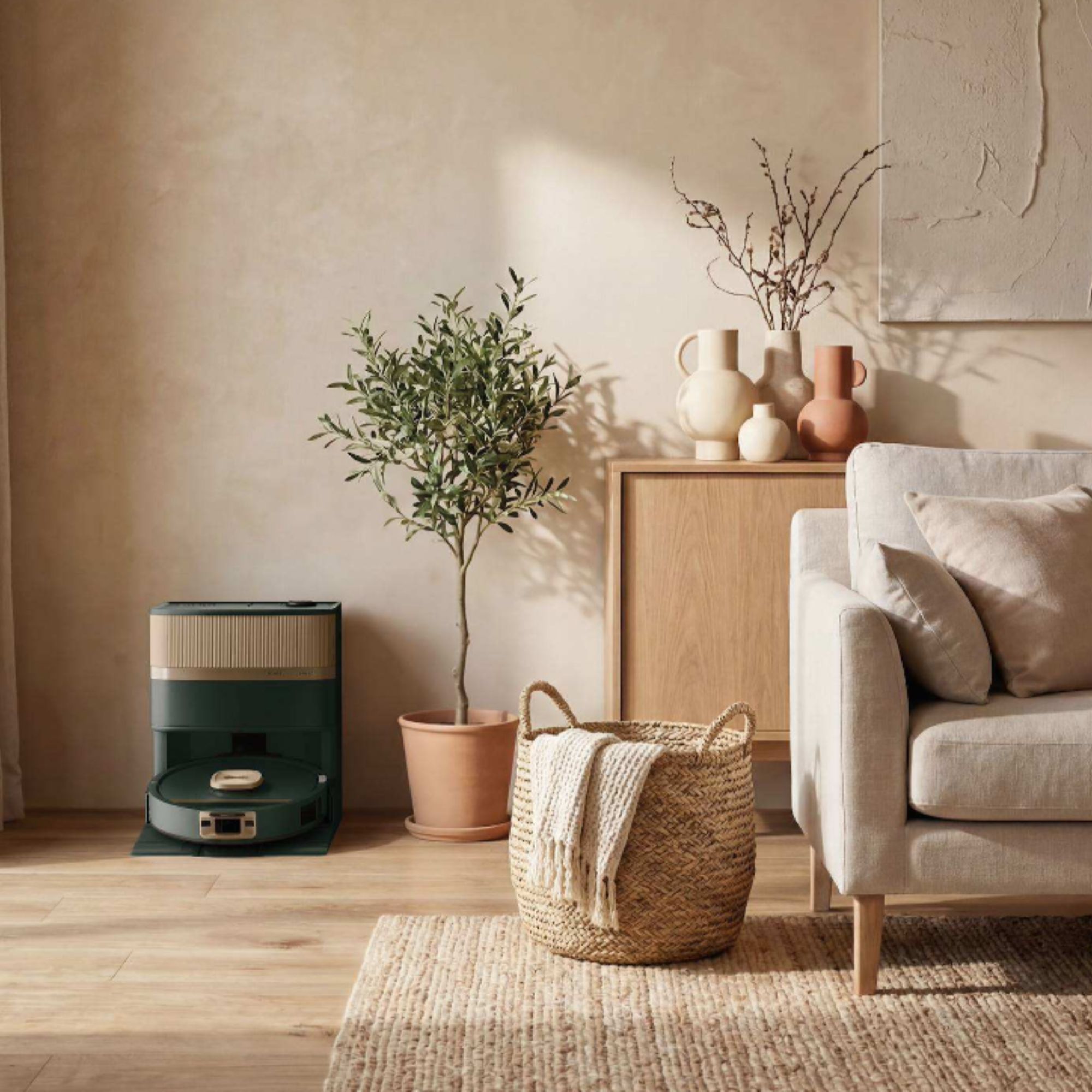
These four new colourways are designed to fight back against the traditional black-and-white appliance trend, though. They will work with your home decor and will suit those who want their appliances to be a showpiece in their home – and I think they clean up very nicely.
This ‘Evergreen’ colour is just one of the four new colourways, but you can toggle through on the Shark website if another one takes your fancy. ","brand":"Shark","name":"PowerDetect Luxe UV Reveal 2-In-1 Vac & Mop Robot Vacuum \u2013 Evergreen","urlStyle":"","retailer":"","layout":"horizontal","linkText":"","noFollow":true,"noAffiliateTracking":false,"promoLabel":"","price":1039.99,"salePrice":null,"currency":"GBP","linkLayout":"text","sponsored":false,"hawkProductNameMatchedCode":"","review":{"cons":[],"id":"","name":"","pros":[],"rating":0,"strapline":"","url":""},"id":"","externalId":"f448b1f660d834ff45b261554141149fd58d640d","lastCheckedPriceDate":"","link":{"url":"https:\/\/www.awin1.com\/awclick.php?awinmid=8059&awinaffid=103504&clickref=hawk-custom-tracking&p=https%3A%2F%2Fwww.sharkninja.co.uk%2Fshark-powerdetect-uv-reveal-2-in-1-vac-mop-robot-vacuum%2FRV3026XEUKGN.html%3Fdwvar_RV3026XEUKGN_color%3D556157","merchantName":"SharkNinja UK","merchantId":13520,"merchantNetwork":"AW","merchantUrl":"sharkninja.co.uk"}}}}}” data-link=”https://www.awin1.com/awclick.php?awinmid=8059&awinaffid=103504&clickref=hawk-custom-tracking&p=https%3A%2F%2Fwww.sharkninja.co.uk%2Fshark-powerdetect-uv-reveal-2-in-1-vac-mop-robot-vacuum%2FRV3026XEUKGN.html%3Fdwvar_RV3026XEUKGN_color%3D556157″ data-link-merchant=”SharkNinja UK” data-merchant-id=”13520″ data-merchant-name=”SharkNinja UK” data-merchant-network=”AW” data-merchant-url=”sharkninja.co.uk” data-model-brand=”Shark” data-model-name=”Shark PowerDetect Luxe UV Reveal 2-In-1 Vac & Mop Robot Vacuum – Evergreen” data-name=”Horizontal Product Block merchantlink widget” data-render-type=”fte” data-show-fallback=”button” data-widget-type=”merchantlink” class=”ecom-root”>
This ‘Evergreen’ colour is just one of the four new colourways, but you can toggle through on the Shark website if another one takes your fancy.
Adding Evergreen, Espresso, Dove, and Deep Harbour colourways to the roster, Shark has broken away from the ‘ugly’ and ‘boring’ home appliances we’re used to. And luxurious upgrades like this are something I’ve rarely seen in my time as Ideal Home’s Certified Expert in Vacuums. Most of the time, robot vacuums are an addition to the home, rather than a well-thought-out inclusion.
And while I gave the PowerDetect UV Reveal Robot Vacuum an almost perfect 4.5-star review for its mess-busting performance, one of my biggest niggles was that the black colourway was a magnet for dust and dirt. As a lover of colourful, chic home decor, it was also impossible to tuck in the corner without it sticking out like a sore thumb.
However, the brand describes this new Luxe Collection as ‘Elevated design meets exceptional performance – now in a premium finish crafted to live beautifully in your home.’
(Image credit: Future PLC/Lauren Bradbury)
This is a smart move on Shark’s part, as it’s difficult to hide a robot vacuum cleaner at the best of times. But it’s even harder when a robot vacuum clashes so much with your interior decor. So, offering customers the chance to choose a colour that forms part of their interior decor opens up a whole new world of cleaning capabilities – without compromising on style.
Sign up to our newsletter for style inspiration, real homes, project and garden advice and shopping know-how
And the good news is that Shark has used an existing robot vacuum cleaner to experiment with this new ‘Luxe’ look, instead of launching an entirely new model. This means that expert vacuum testers like myself have already tested its cleaning power and rated it pretty positively, and customers have already had their chance to independently review it, too.
The bad news is that those people (like me) who already own the black or white colourway are now stuck with these monochromatic colours. Plus, the ‘Luxe’ colourways also come at a premium price and will set you back an extra £40, taking the price point over £1,000.
(Image credit: Shark)
This means it’s really an investment piece rather than a throwaway purchase, but one of the things I’ve learned while testing robot vacuum cleaners is that if you buy cheap, you often buy twice. Premium models typically offer more in terms of functionalities, quality, and overall cleaning power, and the Shark PowerDetect UV Reveal Robot Vacuum is one of them.
Just be warned that every appliance has limitations, and Shark robot vacuums famously offer a very basic app with basic floor mapping. Personally, I find the app to be refreshingly simple compared to overly complicated competitors, but the brand does cut out customers who want to clean both levels of their homes by not offering multi-floor mapping. Even luxurious colourways can’t make up for that.
But even if a robot vacuum doesn’t work for your home, Shark also has ‘Luxe’ colourways in their cordless Shark PowerDetect Speed Vacuum Cleaner, too. I gave this full-size vacuum cleaner an impressive 5-star review – and the new colourways are slightly different, so may suit your home better.
My vote is that ‘Espresso’ will be the ‘it’ colour of the year….
Everyone knows and loves IKEA’s BILLY Bookcase. The simple yet versatile buy is a cult classic for good reason. But did you know there are other versions of this fan-favourite available, including a clever design that has a foldable desk stashed inside it?
If you had no idea that you didn’t need an IKEA hack to turn your BILLY Bookcase into a desk, don’t worry. I’ll be the first to admit that I didn’t realise quite how extensive IKEA’s BILLY series is, until I stumbled across the BILLY Bookcase with a foldable table while searching for clever ways to create the perfect workspace at home.
(Image credit: Future PLC / Maddie Balcombe)
At the start of the year, I relocated to move in with my partner. With the relocation came a lot more days spent working from home, as travelling to my office is now not as accessible as it once was.
Latest Videos FromIdeal Home
It’s just the two of us at home, so we have the luxury of using the spare bedroom as a dedicated home office space. This meant my ‘WFH’ set up used to be a dream – I had my own productive space, with the ability to shut the door on my working environment once the day was done.
However, when my partner recently accepted a new remote-based job, we suddenly found ourselves scrambling for a solution that meant we would both be able to comfortably work from home, without compromising our style.
Given that I spend all day reading and writing about home decor and clever storage solutions for small spaces, I really didn’t want our new desk to always be on show. And I wanted to avoid (as much as possible) turning existing living areas into makeshift offices.
So, rather than settling on the obvious – like both trying to cram into the existing office room, or setting up our screens on the kitchen table – we stumbled across the multifunctional buy from IKEA that has levelled up our work from home days.
Sign up to our newsletter for style inspiration, real homes, project and garden advice and shopping know-how
(Image credit: Future PLC / Maddie Balcombe)
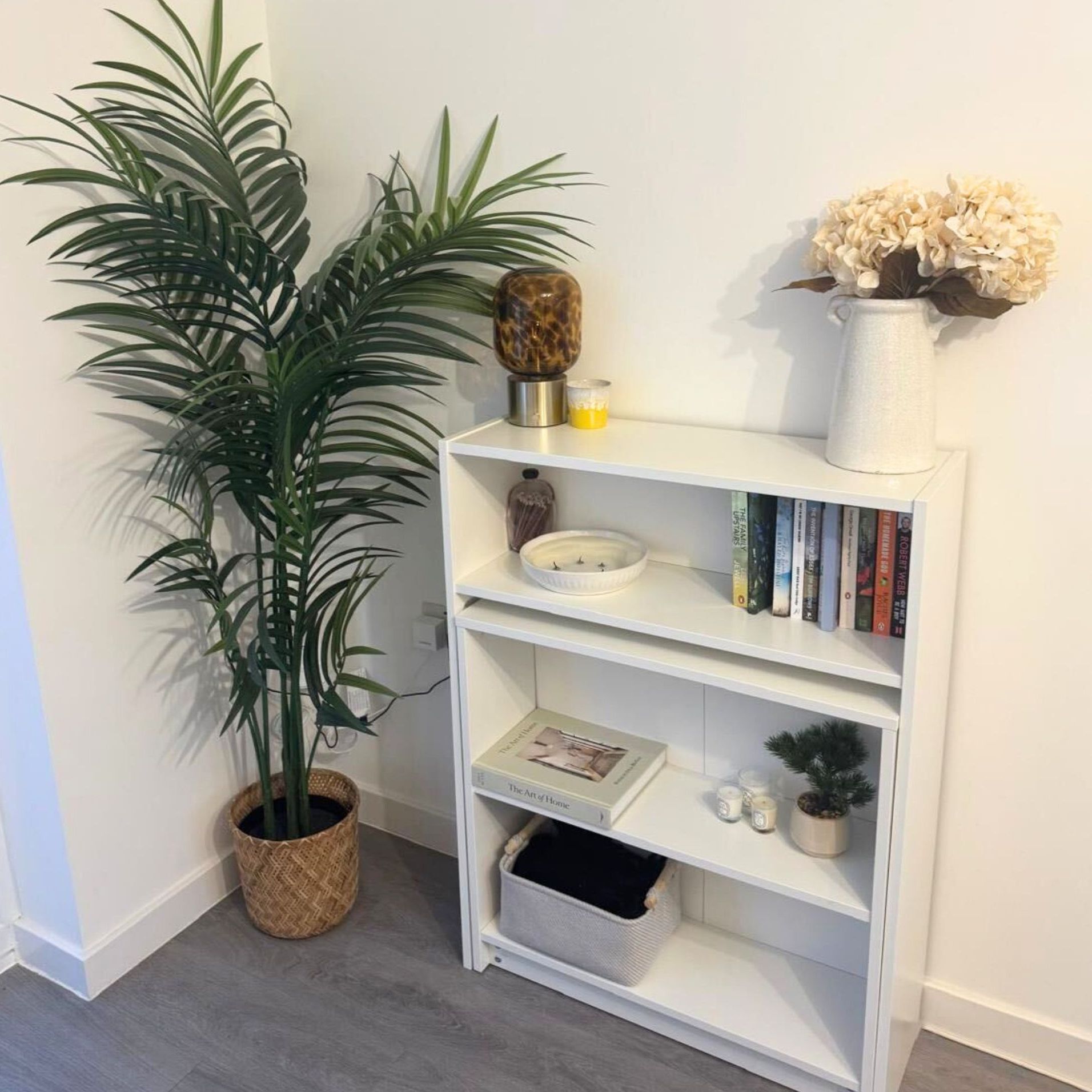
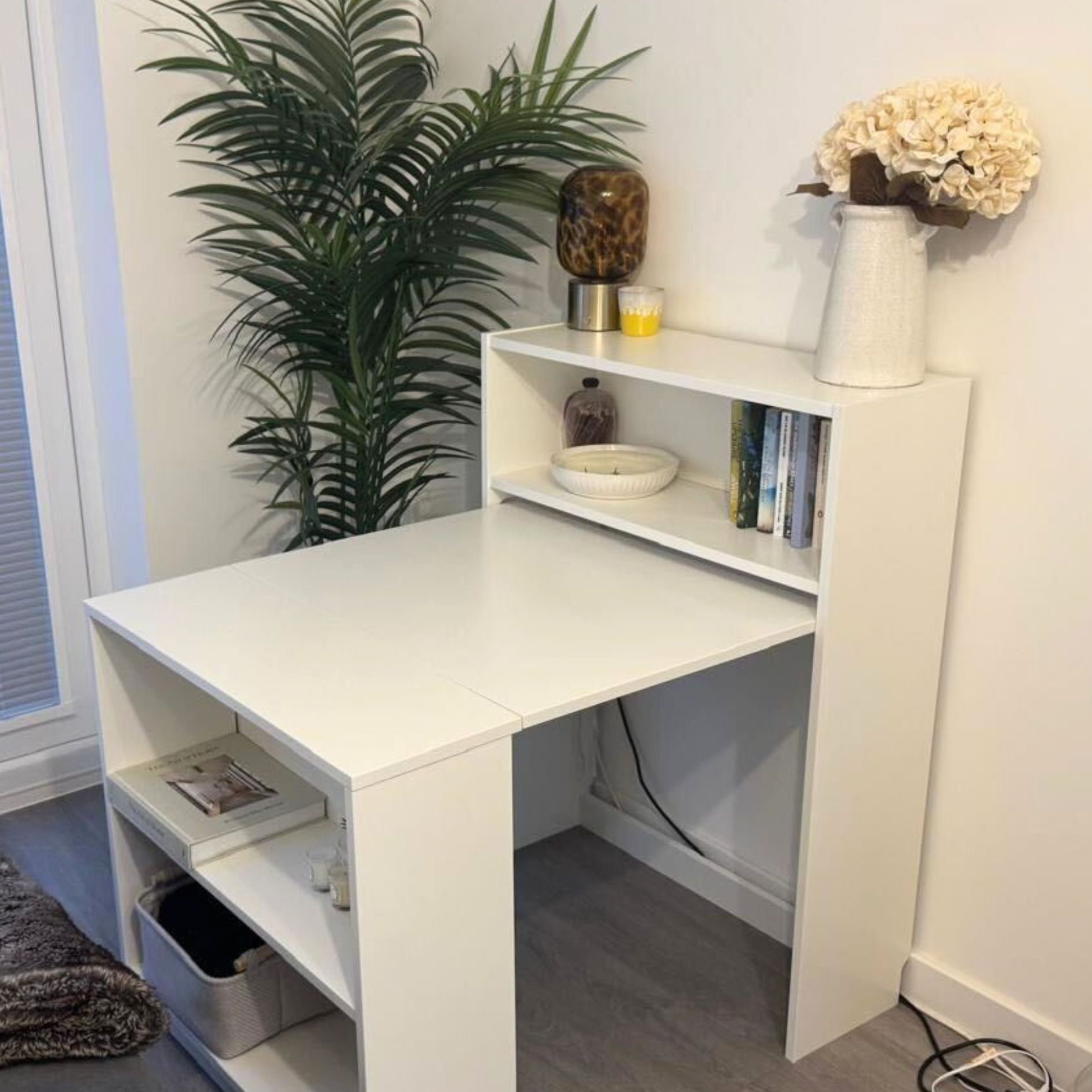
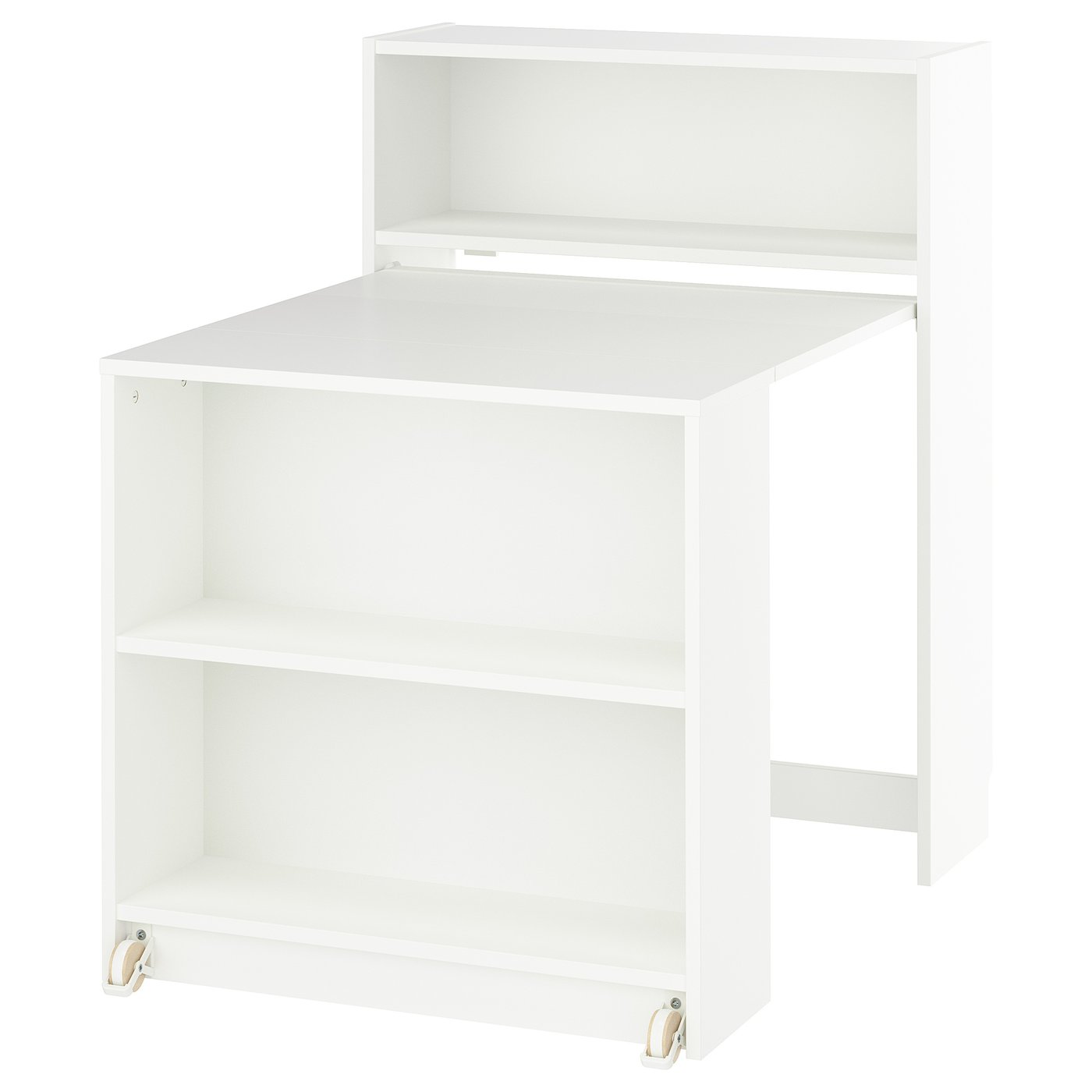
On first glance, this version of the BILLY bookcase looks just like a slightly smaller version of the original. But, with a simple pull of the bottom two drawers, it quickly transforms from a handy storage unit to a spacious desk. This means I can enjoy the pleasure of a comfortable workspace, without the need to always have a desk set up.
The three shelves on the unit are deep and durable enough to house a number of knick-knacks – from books and candles, to blankets and flowers. I have my bookcase set up in the corner of my living room, and it’s filled what was an empty space with homely decor and visual interest.
Then, when the working day begins, the drawers extend out into a desk that is plenty big enough for my day-to-day tasks. The gap for a chair is roomy enough for a proper office chair – although I use one similar to this from IKEA, because it’s easier to store out of sight and just as comfortable. Plus, there is plenty of space to run an extension lead underneath for access to any wires, chargers or cables you might need.
IKEA
Billy Bookcase With Foldable Table – White 80×33/112×106 Cm
The BILLY desk comes equipped with wheels, to make the transition from shelving to workspace as seamless as possible. On the IKEA site, you’ll see the wheels facing outwards. However, we assembled ours with the wheels on the other side. This means that when the desk is folded away, the wheels disappear with it, so you’d never know it’s anything more than just a bookshelf. And the best part is, the desk still pulls out without any trouble at all.
There are still many ways that I want to transform my BILLY desk. For instance, I need to find a clever way to hide the wires in my home office, and I’m on the hunt for a bold print to hang above the unit. But, on the whole it’s done the hard work for me and completely upgraded the way my partner and I can work from home.
And, it’s not just limited to home workspace environments either. This variation of the BILLY would work well with children’s small bedroom ideas, or as a craft table for hobby enthusiasts. No matter how you use and style it, it’s a hidden gem that I just can’t get enough of.
Smart work from home accessories
Streamline your WFH set up even further with these smart buys.
Stackers
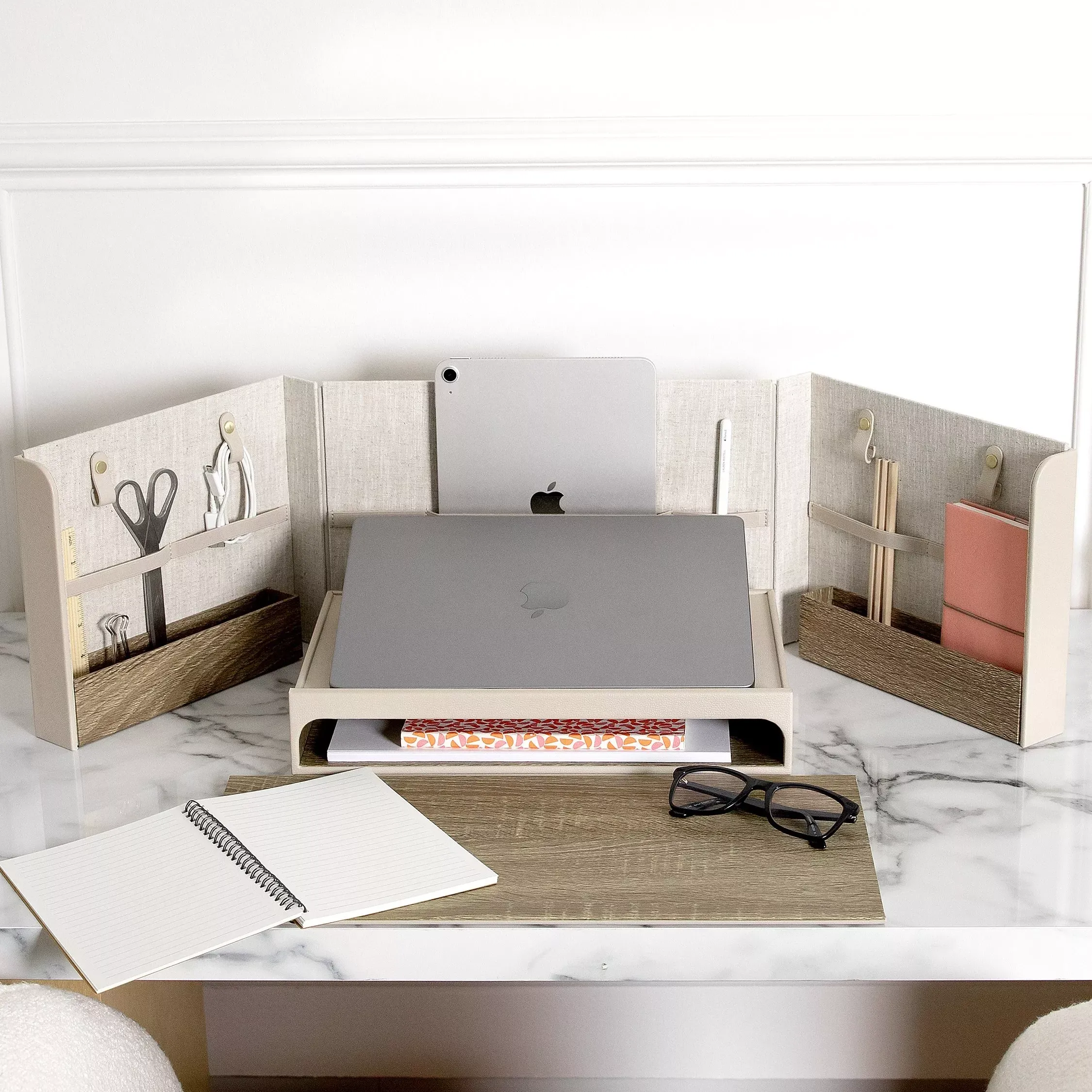
Stackers Desk in a Box
<aside data-article-category="all-rooms" data-block-layout="hero" data-block-type="featured-product" data-editorial-currency="GBP" data-editorial-price="120" data-hawk-json="{"product":{"variants":{"Default":{"image":{"copyright":"","height":3000,"id":"nzGdCA5A6yUdmbtLEmxnTd","mimeType":"image\/webp","mos":"https:\/\/cdn.mos.cms.futurecdn.net\/v2\/t:383,l:0,cw:2250,ch:2250,q:80\/nzGdCA5A6yUdmbtLEmxnTd.webp","role":"","width":2250,"credit":"Stackers","alt":"Stackers Desk in a Box","caption":"","crop":{"label":"1:1","left":0,"top":383,"cropWidth":2250,"cropHeight":2250}},"strapline":"
This desk in a box has compartments for all your desk supplies, and then folds up into a pretty box to pop on a shelf at the end of the day. ","brand":"Stackers","name":"Stackers Desk in a Box","urlStyle":"","retailer":"","layout":"hero","linkText":"","noFollow":true,"noAffiliateTracking":false,"promoLabel":"","price":120,"salePrice":null,"currency":"GBP","linkLayout":"text","sponsored":false,"hawkProductNameMatchedCode":"","review":{"cons":[],"id":"","name":"","pros":[],"rating":0,"strapline":"","url":""},"id":"","externalId":"2078b5e578fad2b138989954a977dbecd7bff853","lastCheckedPriceDate":"","link":{"url":"https:\/\/john-lewis-and-partners.pxf.io\/c\/221109\/871855\/12148?subId1=hawk-custom-tracking&sharedId=hawk-prefix&u=https%3A%2F%2Fwww.johnlewis.com%2Fstackers-desk-in-a-box%2Fp112039062","merchantName":"John Lewis","merchantId":179552,"merchantNetwork":"ImpactRad","merchantUrl":"johnlewis.com"}}}}}” data-link=”https://john-lewis-and-partners.pxf.io/c/221109/871855/12148?subId1=hawk-custom-tracking&sharedId=hawk-prefix&u=https%3A%2F%2Fwww.johnlewis.com%2Fstackers-desk-in-a-box%2Fp112039062″ data-link-merchant=”John Lewis” data-merchant-id=”179552″ data-merchant-name=”John Lewis” data-merchant-network=”ImpactRad” data-merchant-url=”johnlewis.com” data-model-brand=”Stackers” data-model-name=”Stackers Stackers Desk in a Box” data-name=”Product Block merchantlink widget” data-render-type=”fte” data-show-fallback=”button” data-widget-type=”merchantlink” class=”ecom-root”>
This desk in a box has compartments for all your desk supplies, and then folds up into a pretty box to pop on a shelf at the end of the day.
<aside data-article-category="all-rooms" data-block-layout="horizontal" data-block-type="featured-product" data-hawk-json="{"product":{"variants":{"Default":{"image":{"copyright":"","height":2000,"id":"UEREX7ubi3tLNsS4pTdJrQ","mimeType":"image\/jpeg","mos":"https:\/\/cdn.mos.cms.futurecdn.net\/UEREX7ubi3tLNsS4pTdJrQ.jpg","role":"","width":2000,"credit":"Future PLC","alt":"Ideal Home logo on white background","caption":""},"strapline":"
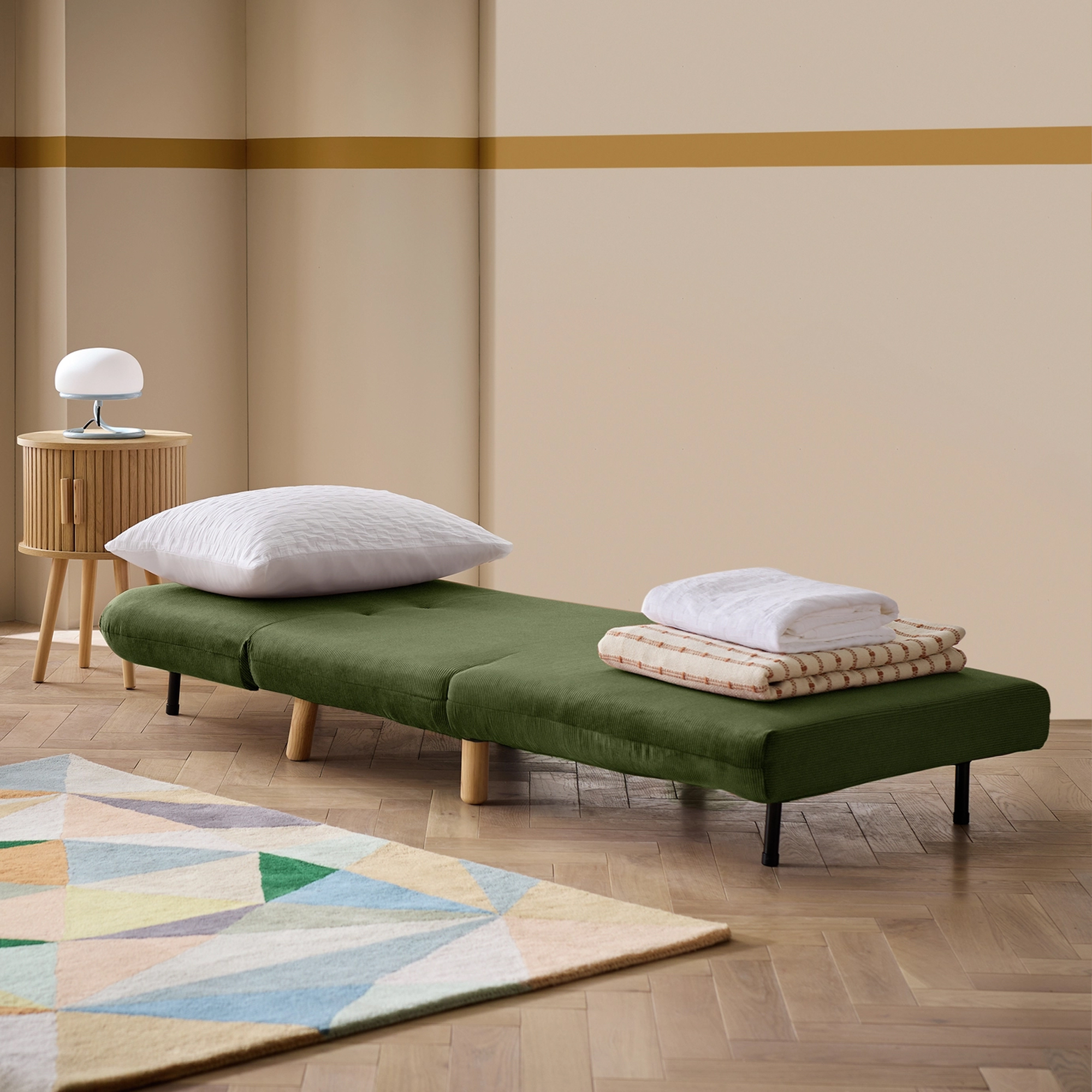
I’m calling it. Habitat has just launched a new £230 chair bed, and I think this on-trend design will become an instant bestseller.
As Ideal Home’s Sleep Editor, I’ve spent the last five years testing some of the best chair beds on the market, and, if you’re looking for a space-saving overnight hosting solution, this affordable design is definitely one to have on your radar.
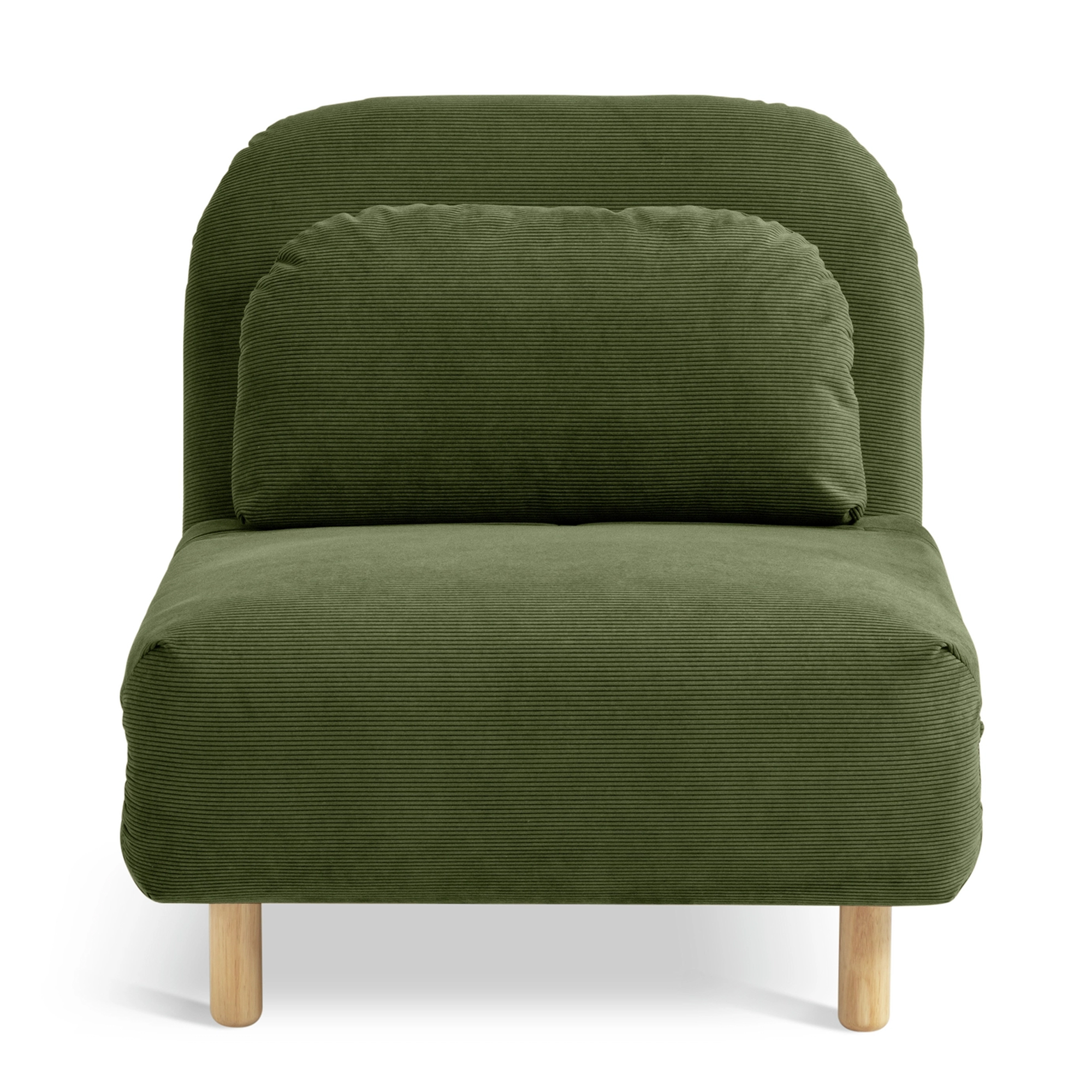
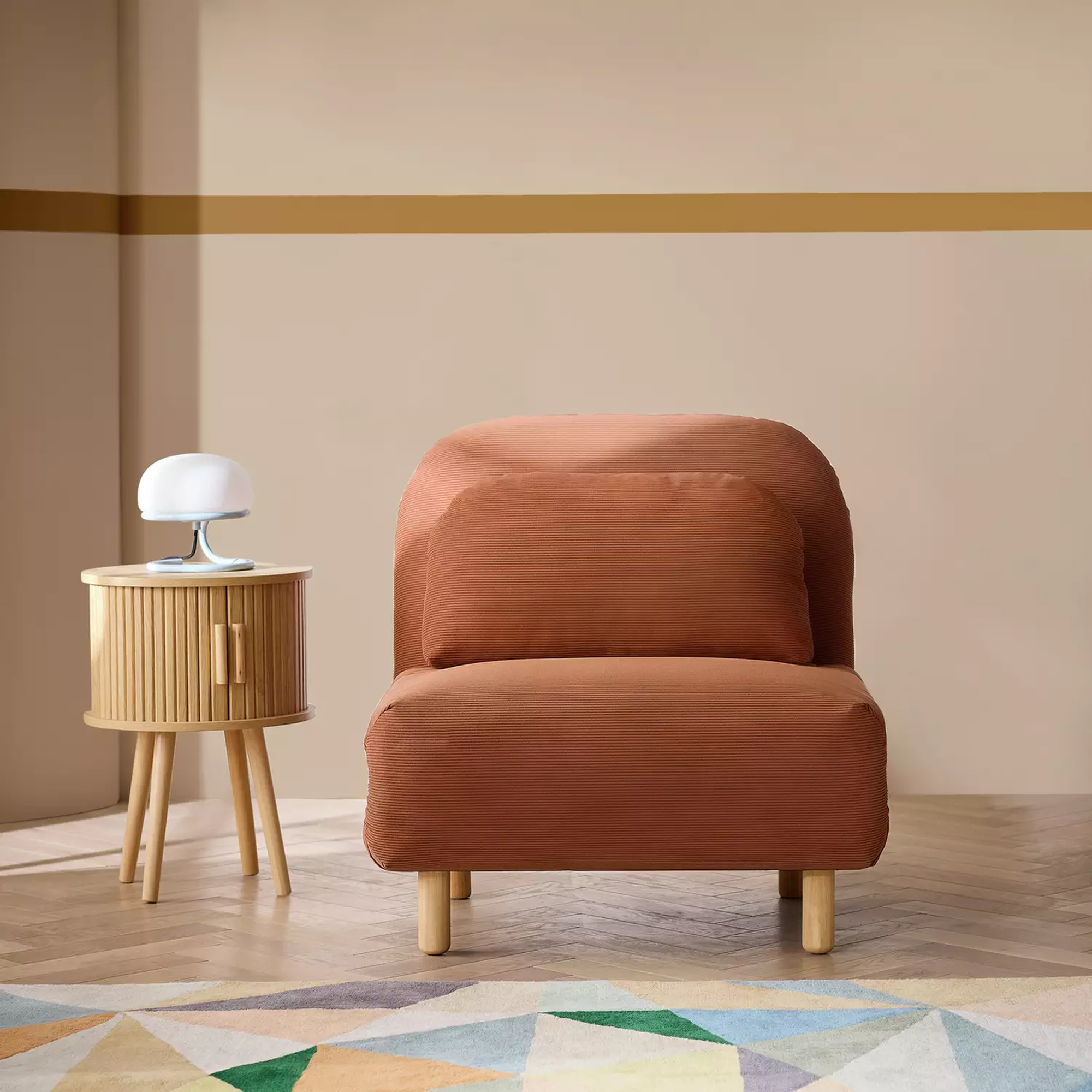
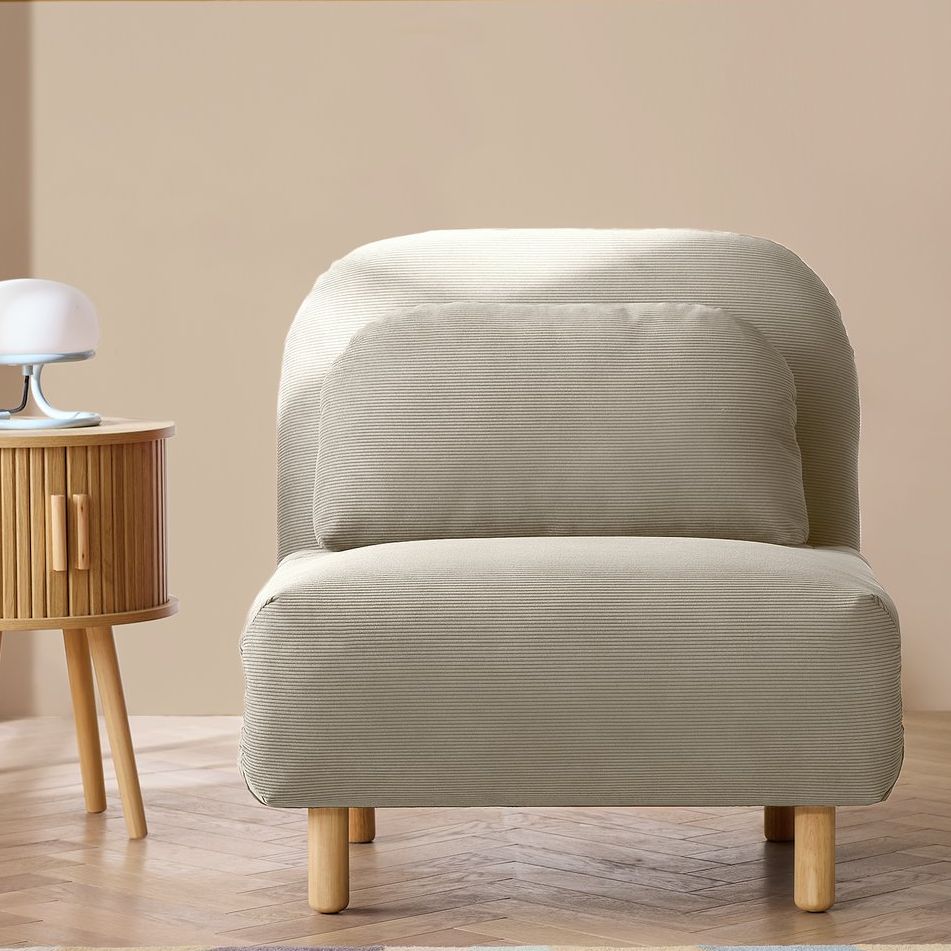
Habitat’s budget-friendly Benji chair bed comes in four colourways: green, rust, natural, and blue.","brand":"Habitat","name":"Benji Single Compact Fabric Chairbed","urlStyle":"","retailer":"","layout":"horizontal","linkText":"","noFollow":true,"noAffiliateTracking":false,"promoLabel":"","price":230,"salePrice":null,"currency":"GBP","linkLayout":"text","sponsored":false,"hawkProductNameMatchedCode":"","review":{"cons":[],"id":"","name":"","pros":[],"rating":0,"strapline":"","url":""},"id":"","externalId":"a18e8bca48e1d1e0d1d66964d5392860d56303e7","lastCheckedPriceDate":"","link":{"url":"https:\/\/www.anrdoezrs.net\/click-100624752-17323430?sid=hawk-custom-tracking&url=https:\/\/www.habitat.co.uk\/product\/8181873?clickSR=slp:term:benji:9:8:1","merchantName":"Habitat UK","merchantId":209252,"merchantNetwork":"CJ","merchantUrl":"habitat.co.uk"}}}}}” data-link=”https://www.anrdoezrs.net/click-100624752-17323430?sid=hawk-custom-tracking&url=https://www.habitat.co.uk/product/8181873?clickSR=slp:term:benji:9:8:1″ data-link-merchant=”Habitat UK” data-merchant-id=”209252″ data-merchant-name=”Habitat UK” data-merchant-network=”CJ” data-merchant-url=”habitat.co.uk” data-model-brand=”Habitat” data-model-name=”Habitat Benji Single Compact Fabric Chairbed” data-name=”Horizontal Product Block merchantlink widget” data-only-fallback-offers=”true” data-render-type=”fte” data-show-fallback=”button” data-widget-type=”merchantlink” class=”hawk-root”>
Habitat’s budget-friendly Benji chair bed comes in four colourways: green, rust, natural, and blue.
Habitat already makes one of the best value chair beds you can shop. The brand’s super-popular Roma Chair Bed has been a bestseller for years, and with prices starting from under £200 for the single sleeper, it’s easy to see why.
However, the new Benji chair bed adds something new to the mix: namely, some designer curves.
Its rounded backrest nails one of this year’s biggest furniture trends, and makes it even more of a style statement in the home.
(Image credit: Habitat)
According to interior experts, as we move into the last half of 2026 and start looking towards 2027, boxy furniture is falling out of fashion and being replaced by more organic designs.
Sign up to our newsletter for style inspiration, real homes, project and garden advice and shopping know-how
As Shelley Cochrane, buyer at Furniture Village, explains, this new look is all about ’rounded edges, curved designs and organic shapes.’
Plus, as Shelley explains, those organic shapes are perfect for a piece of furniture where relaxation is ultimately the name of the game.
‘Curves are gentler and less rigid than straight lines,’ says Shelley, ‘and rounded edges create a soft and inviting atmosphere.’
(Image credit: Habitat)
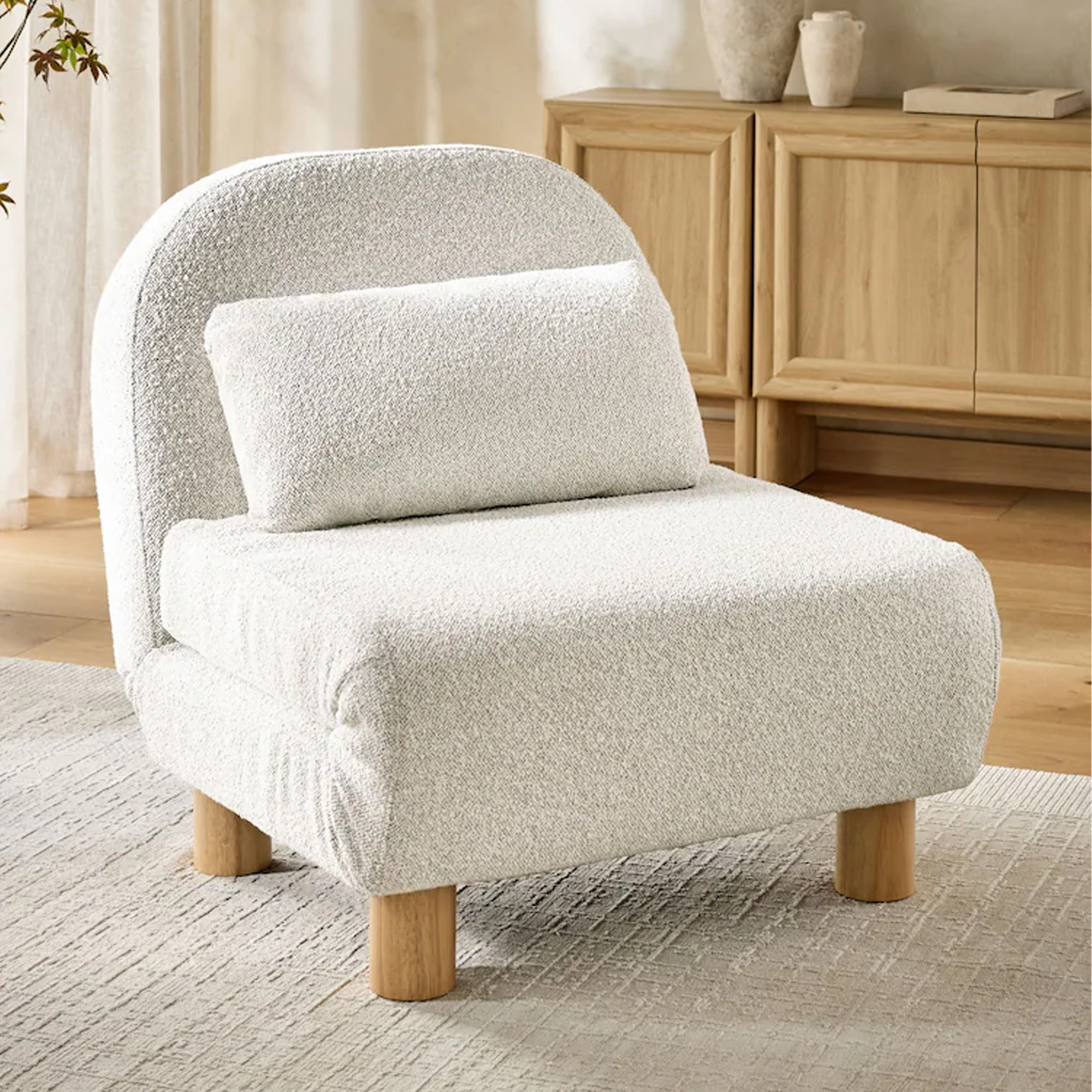
Habitat isn’t the first brand to bring designer curves to the high street: the recently launched Next Palma Chair Bed offers a similar curvaceous design.
However, Habitat is now the brand that does it most affordably. The Next Palma Chair Bed currently costs £375, whereas Habitat’s Benji Chair Bed has launched at a *very* affordable £230.
That’s nearly a £150 price difference, which I think means the Habitat Benji will quickly become a bestseller among those looking for a compact overnight guest bed.
At \u00a3230, Habitat’s Benji chair bed is nearly \u00a3150 cheaper than Next’s similarly curved design, and it comes in more colour options. ","brand":"Habitat","name":"Benji Single Fabric Chairbed","urlStyle":"","retailer":"","layout":"versus","linkText":"","noFollow":true,"noAffiliateTracking":false,"promoLabel":"","price":230,"salePrice":null,"currency":"GBP","linkLayout":"text","sponsored":false,"hawkProductNameMatchedCode":"","review":{"cons":[],"id":"","name":"","pros":[],"rating":0,"strapline":"","url":""},"id":"","externalId":"d2bf768d05af06187609dd4ce139a86bfa2b2c00","lastCheckedPriceDate":"","link":{"url":"https:\/\/www.anrdoezrs.net\/click-100624752-17323430?sid=hawk-custom-tracking&url=https:\/\/www.habitat.co.uk\/product\/8445124?clickSR=slp:term:benji:6:8:1","merchantName":"Habitat UK","merchantId":209252,"merchantNetwork":"CJ","merchantUrl":"habitat.co.uk"}}}}}” data-link=”https://www.anrdoezrs.net/click-100624752-17323430?sid=hawk-custom-tracking&url=https://www.habitat.co.uk/product/8445124?clickSR=slp:term:benji:6:8:1″ data-link-merchant=”Habitat UK” data-merchant-id=”209252″ data-merchant-name=”Habitat UK” data-merchant-network=”CJ” data-merchant-url=”habitat.co.uk” data-model-brand=”Habitat” data-model-name=”Habitat Benji Single Fabric Chairbed” data-name=”Product Block merchantlink widget” data-only-fallback-offers=”true” data-render-type=”fte” data-show-fallback=”button” data-widget-type=”merchantlink” class=”hawk-root”>
At £230, Habitat’s Benji chair bed is nearly £150 cheaper than Next’s similarly curved design, and it comes in more colour options.
That said, Next’s tactile boucle upholstery is a nice alternative to the jumbo cord fabric used on Habitat’s Benji chair bed.","brand":"Next","name":"Palma Single Sofa Bed","urlStyle":"","retailer":"","layout":"versus","linkText":"","noFollow":true,"noAffiliateTracking":false,"promoLabel":"","price":375,"salePrice":null,"currency":"GBP","linkLayout":"text","sponsored":false,"hawkProductNameMatchedCode":"","review":{"cons":[],"id":"","name":"","pros":[],"rating":0,"strapline":"","url":""},"id":"","lastCheckedPriceDate":"","link":{"url":"https:\/\/click.linksynergy.com\/deeplink?id=kXQk6%2AivFEQ&mid=53096&u1=hawk-custom-tracking&murl=https%3A%2F%2Fwww.next.co.uk%2Fstyle%2Fsu356332%2Ff66253","merchantName":"Next UK","merchantId":491232,"merchantNetwork":"LSfutureusLlc","merchantUrl":"next.co.uk"}}}}}” data-link=”https://click.linksynergy.com/deeplink?id=kXQk6%2AivFEQ&mid=53096&u1=hawk-custom-tracking&murl=https%3A%2F%2Fwww.next.co.uk%2Fstyle%2Fsu356332%2Ff66253″ data-link-merchant=”Next UK” data-merchant-id=”491232″ data-merchant-name=”Next UK” data-merchant-network=”LSfutureusLlc” data-merchant-url=”next.co.uk” data-model-brand=”Next” data-model-name=”Next Palma Single Sofa Bed” data-name=”Product Block merchantlink widget” data-only-fallback-offers=”true” data-render-type=”fte” data-show-fallback=”button” data-widget-type=”merchantlink” class=”hawk-root”>
That said, Next’s tactile boucle upholstery is a nice alternative to the jumbo cord fabric used on Habitat’s Benji chair bed.
And of course, these two curved chair beds aren’t the only options worth having on your radar.
If you’re happy with straighter edges, it’s also well worth considering these three alternative buys.
Shop alternatives
John Lewis
Chair Bed
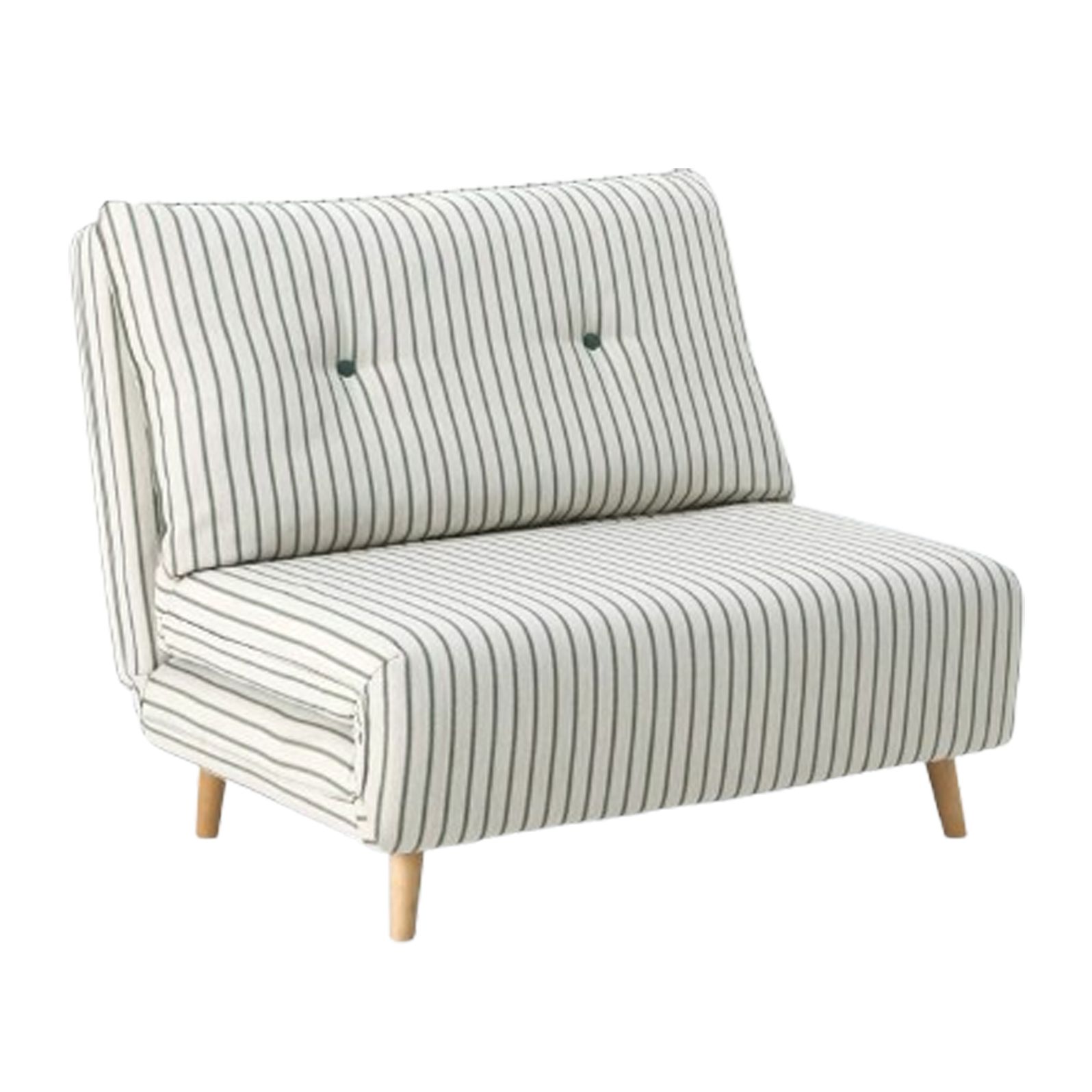
<aside data-article-category="all-rooms" data-block-layout="hero" data-block-type="featured-product" data-editorial-currency="GBP" data-editorial-price="349" data-hawk-json="{"product":{"variants":{"Default":{"image":{"copyright":"","height":2000,"id":"v5tRRMgGnrUzNQdXaAvDM4","mimeType":"image\/jpeg","mos":"https:\/\/cdn.mos.cms.futurecdn.net\/v2\/t:187,l:201,cw:1596,ch:1596,q:80\/v5tRRMgGnrUzNQdXaAvDM4.jpg","role":"","width":2000,"credit":"John Lewis","alt":"John Lewis, Chair Bed – Green Stripe","caption":"","crop":{"label":"1:1","left":201,"top":187,"cropWidth":1596,"cropHeight":1596,"quality":80}},"strapline":"
Personally, I also love the clean-lined simplicity of this pinstriped chair bed from John Lewis.","brand":"John Lewis","name":"Chair Bed","urlStyle":"","retailer":"","layout":"hero","linkText":"","noFollow":true,"noAffiliateTracking":false,"promoLabel":"","price":349,"salePrice":null,"currency":"GBP","linkLayout":"text","sponsored":false,"hawkProductNameMatchedCode":"","review":{"cons":[],"id":"","name":"","pros":[],"rating":0,"strapline":"","url":""},"id":"","externalId":"b3ffbcb1c285f59d142e8dee104a640b4aaa2794","lastCheckedPriceDate":"","link":{"url":"https:\/\/john-lewis-and-partners.pxf.io\/c\/221109\/871855\/12148?subId1=hawk-custom-tracking&sharedId=hawk-prefix&u=https%3A%2F%2Fwww.johnlewis.com%2Fjohn-lewis-chair-bed-green-stripe%2Fp114036264","merchantName":"John Lewis","merchantId":179552,"merchantNetwork":"ImpactRad","merchantUrl":"johnlewis.com"}}}}}” data-link=”https://john-lewis-and-partners.pxf.io/c/221109/871855/12148?subId1=hawk-custom-tracking&sharedId=hawk-prefix&u=https%3A%2F%2Fwww.johnlewis.com%2Fjohn-lewis-chair-bed-green-stripe%2Fp114036264″ data-link-merchant=”John Lewis” data-merchant-id=”179552″ data-merchant-name=”John Lewis” data-merchant-network=”ImpactRad” data-merchant-url=”johnlewis.com” data-model-brand=”John Lewis” data-model-name=”John Lewis Chair Bed” data-name=”Product Block merchantlink widget” data-only-fallback-offers=”true” data-render-type=”fte” data-show-fallback=”button” data-widget-type=”merchantlink” class=”hawk-root”>
Personally, I also love the clean-lined simplicity of this pinstriped chair bed from John Lewis.
Habitat
Roma Small Double Velvet Chairbed
<aside data-article-category="all-rooms" data-block-layout="hero" data-block-type="featured-product" data-editorial-currency="GBP" data-editorial-price="320" data-hawk-json="{"product":{"variants":{"Default":{"image":{"copyright":"","height":2000,"id":"g2bmJRbBhdhYjNnhN3zjrM","mimeType":"image\/jpeg","mos":"https:\/\/cdn.mos.cms.futurecdn.net\/v2\/t:163,l:139,cw:1705,ch:1705,q:80\/g2bmJRbBhdhYjNnhN3zjrM.jpg","role":"","width":2000,"credit":"Habitat","alt":"Habitat, Roma Small Double Velvet Chairbed","caption":"","crop":{"label":"1:1","left":139,"top":163,"cropWidth":1705,"cropHeight":1705,"quality":80}},"strapline":"
Habitat’s bestselling Roma chair bed is stylish, compact, and now available in a wide range of upholstery options.","brand":"Habitat","name":"Roma Small Double Velvet Chairbed","urlStyle":"","retailer":"","layout":"hero","linkText":"","noFollow":true,"noAffiliateTracking":false,"promoLabel":"","price":320,"salePrice":null,"currency":"GBP","linkLayout":"text","sponsored":false,"hawkProductNameMatchedCode":"","review":{"cons":[],"id":"","name":"","pros":[],"rating":0,"strapline":"","url":""},"id":"","externalId":"3a696f506b51594b971b2e8daa0097612122f828","lastCheckedPriceDate":"","link":{"url":"https:\/\/www.anrdoezrs.net\/click-100624752-17323430?sid=hawk-custom-tracking&url=https:\/\/www.habitat.co.uk\/product\/8487412?clickPR=plp:14:16","merchantName":"Habitat UK","merchantId":209252,"merchantNetwork":"CJ","merchantUrl":"habitat.co.uk"}}}}}” data-link=”https://www.anrdoezrs.net/click-100624752-17323430?sid=hawk-custom-tracking&url=https://www.habitat.co.uk/product/8487412?clickPR=plp:14:16″ data-link-merchant=”Habitat UK” data-merchant-id=”209252″ data-merchant-name=”Habitat UK” data-merchant-network=”CJ” data-merchant-url=”habitat.co.uk” data-model-brand=”Habitat” data-model-name=”Habitat Roma Small Double Velvet Chairbed” data-name=”Product Block merchantlink widget” data-only-fallback-offers=”true” data-render-type=”fte” data-show-fallback=”button” data-widget-type=”merchantlink” class=”hawk-root”>
Habitat’s bestselling Roma chair bed is stylish, compact, and now available in a wide range of upholstery options.
For a more classic look, this Furniture Village chair bed is a good timeless option.","brand":"Furniture Village","name":"Tabitha Snuggler Sofa Bed","urlStyle":"","retailer":"","layout":"hero","linkText":"","noFollow":true,"noAffiliateTracking":false,"promoLabel":"","price":1495,"salePrice":null,"currency":"GBP","linkLayout":"text","sponsored":false,"hawkProductNameMatchedCode":"","review":{"cons":[],"id":"","name":"","pros":[],"rating":0,"strapline":"","url":""},"id":"","externalId":"05f590d80ba0bb7b4065fb53ab763f44dc2dc3e3","lastCheckedPriceDate":"","link":{"url":"https:\/\/clk.tradedoubler.com\/click?p=346429&a=2384881&epi=hawk-custom-tracking&url=https%3A%2F%2Fwww.furniturevillage.co.uk%2Ftabitha-snuggler-sofa-bed%2FZFRSP000000000054813.html","merchantName":"Furniture Village","merchantId":445032,"merchantNetwork":"TD","merchantUrl":"furniturevillage.co.uk"}}}}}” data-link=”https://clk.tradedoubler.com/click?p=346429&a=2384881&epi=hawk-custom-tracking&url=https%3A%2F%2Fwww.furniturevillage.co.uk%2Ftabitha-snuggler-sofa-bed%2FZFRSP000000000054813.html” data-link-merchant=”Furniture Village” data-merchant-id=”445032″ data-merchant-name=”Furniture Village” data-merchant-network=”TD” data-merchant-url=”furniturevillage.co.uk” data-model-brand=”Furniture Village” data-model-name=”Furniture Village Tabitha Snuggler Sofa Bed” data-name=”Product Block merchantlink widget” data-only-fallback-offers=”true” data-render-type=”fte” data-show-fallback=”button” data-widget-type=”merchantlink” class=”hawk-root”>
For a more classic look, this Furniture Village chair bed is a good timeless option.
It’s not just your outdoor plants that may have been struggling with the hot weather this summer. Your indoor plants may be suffering, too. And if this is the case in your household, don’t worry, as plant experts have revealed five heat-proof houseplants that will happily flourish in a hot south-facing window.
In my experience, the best houseplants can really make a house feel like a home. So it really is heartbreaking when they shrivel up and die. Your favourite plants dying doesn’t necessarily mean you’re a bad plant parent, but if your home is particularly hot and stuffy during summer, you may be choosing the wrong species.
As the UK experiences a record-breaking, hot summer, experts are recommending these five houseplants that thrive in warm, sunny spots.
Latest Videos FromIdeal Home
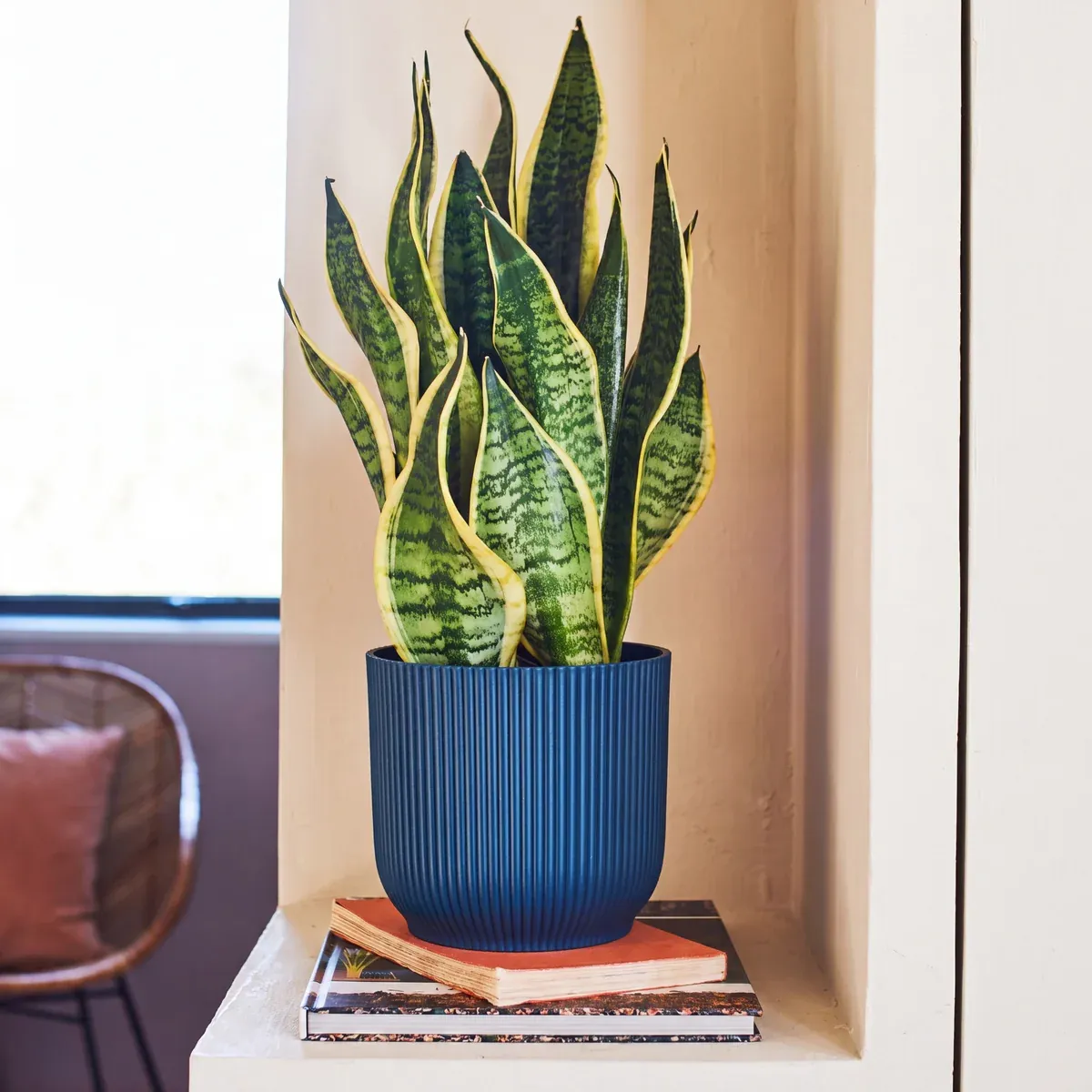
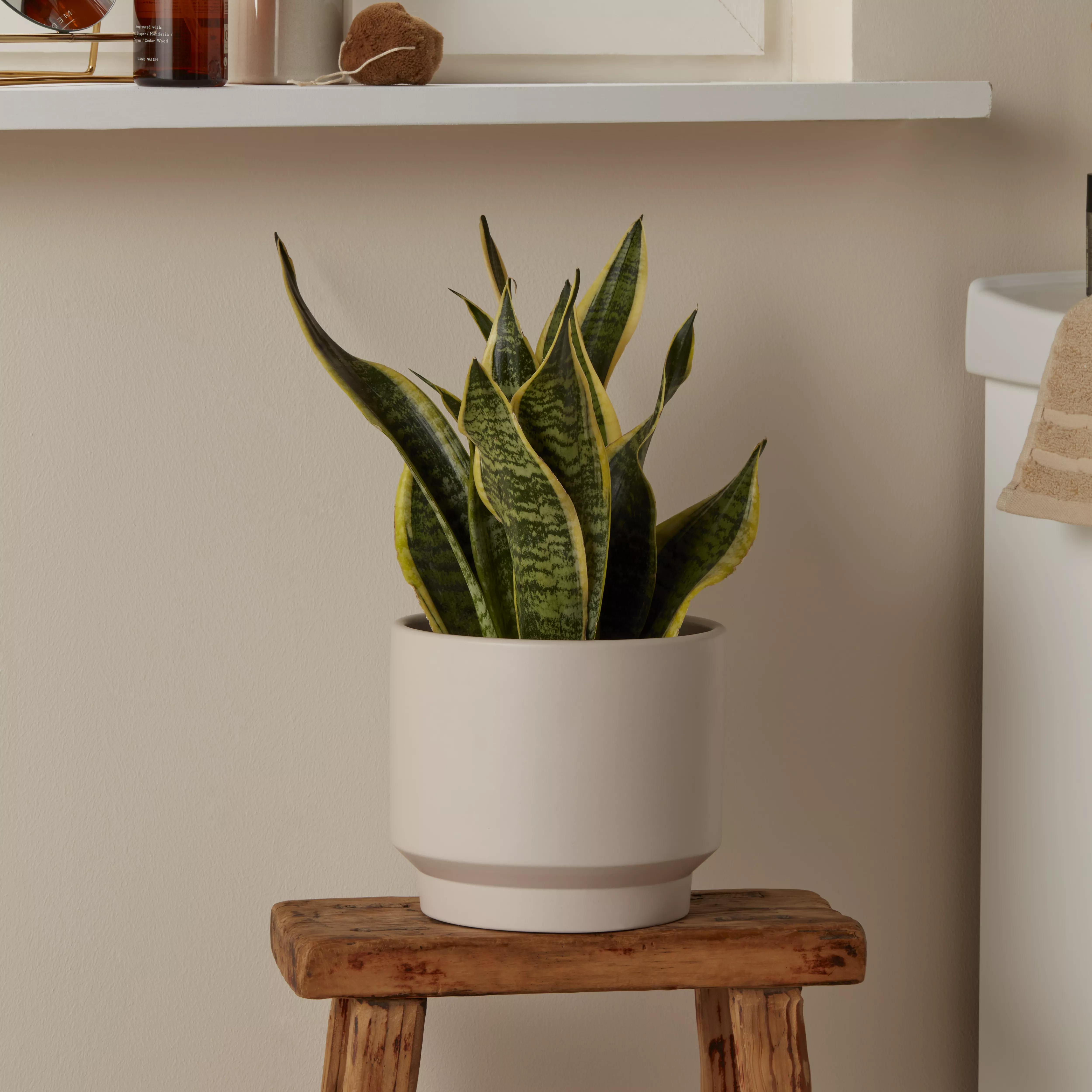
1. Snake plant
(Image credit: Future PLC/Kasia Fiszer)
Snake plants are widely regarded as an ‘unkillable houseplant’, which always bodes well when hunting for houseplants that can withstand high temperatures. Plus, this air-purifying plant is also great at getting rid of dust, too!
‘Originating from arid African climates, snake plants are perfect for hot, south-facing rooms as they not only thrive in warm temperatures, but they store water in their thick leaves, which makes them able to cope well in intense heat and dry air. This also makes them very drought-tolerant, with you usually only needing to water them every two or three weeks during the summer. However, in extreme weather the frequency will need to increase to every one or two weeks, always remembering to check the moisture level in the soil first and only water when it is dry,’ says Lucie Bradley, gardens and greenhouse expert at Easy Garden Irrigation.
‘If you do have continuous, intense sunlight entering your room and your snake plant is on the windowsill, its leaves could be scorched, so if you can move it back from the windowsill or add a sheer curtain, this would prevent any sun damage.’
Beards & Daisies
Snake Plant
B&Q
Verve Assorted Snake Plant in Terracotta Plastic Grow Pot
Patch Plants
Sansevieria Zeylanica, 20-30cm
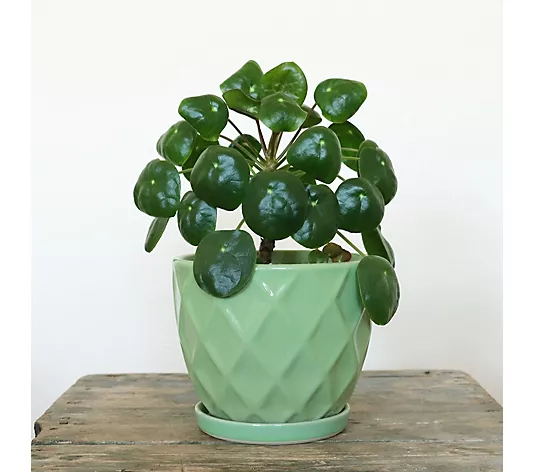
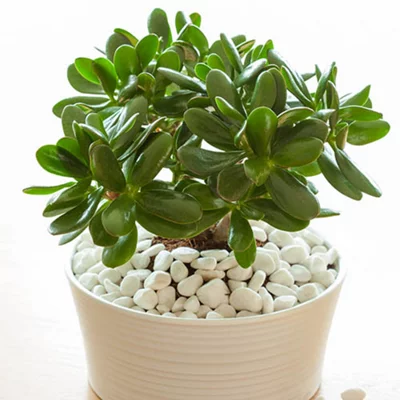
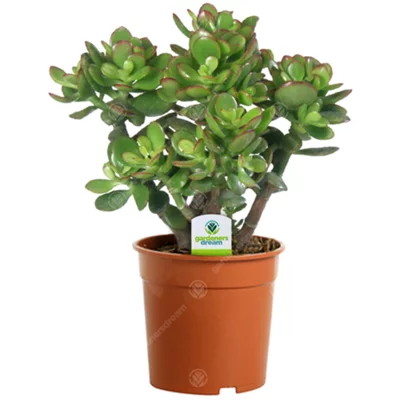
2. Jade plant
(Image credit: Future PLC / David Giles)
Also known as a money plant, according to Feng Shui, a Jade plant can help welcome wealth and prosperity into your home – provided you know where to place this lucky houseplant!
Sign up to our newsletter for style inspiration, real homes, project and garden advice and shopping know-how
‘The Jade plant is one of the most tolerant when it comes to sun in the home. It thrives in sunlight, can sit in direct sun and tolerates dry indoor air. They require little maintenance and only need watering when the soil is completely dry,’ says Chris Bonnett, founder of GardeningExpress.
QVC
YouGarden Chinese Money Plant in 12cm pot
B&Q
Crassula Ovata in a 12cm Pot
B&Q
Jade plant
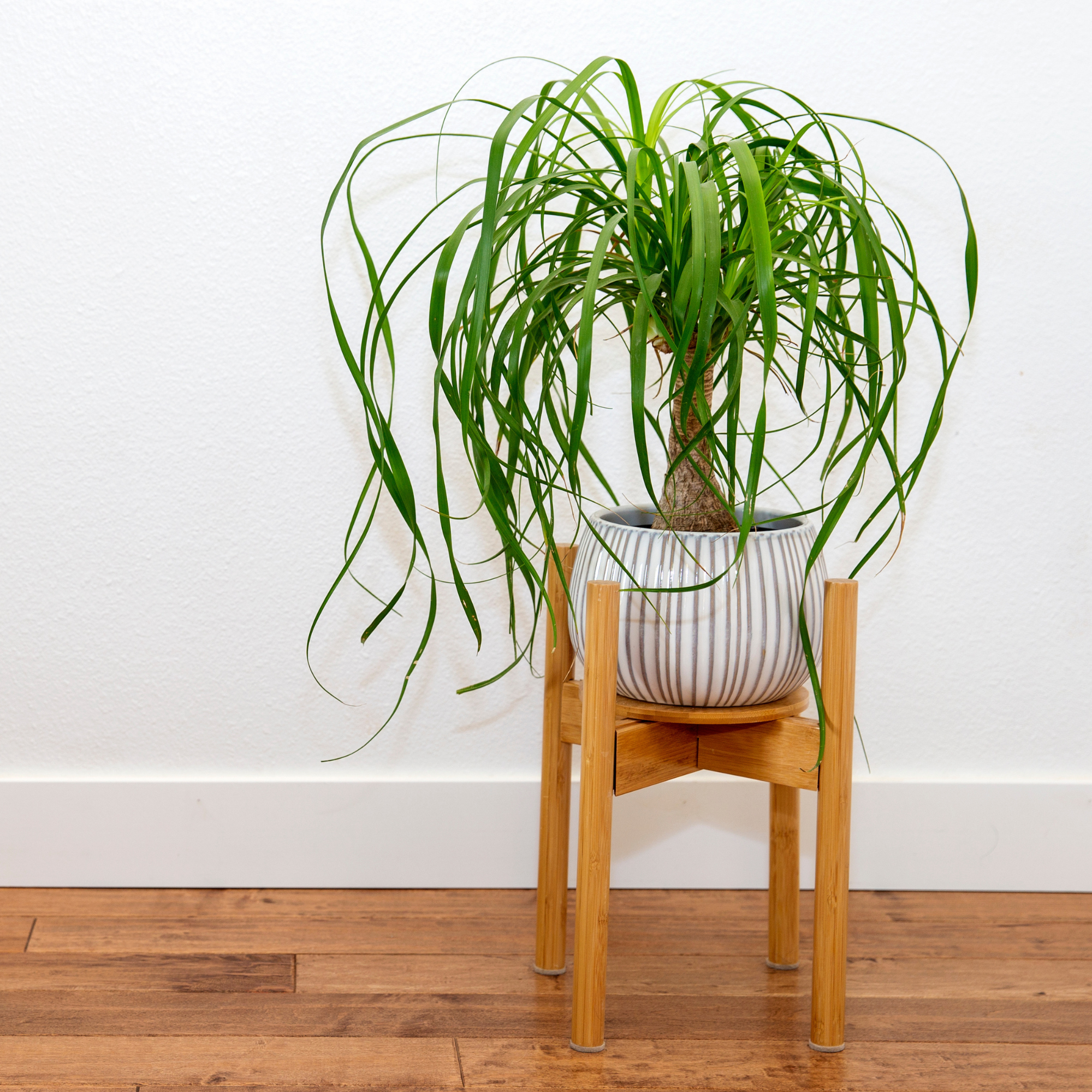
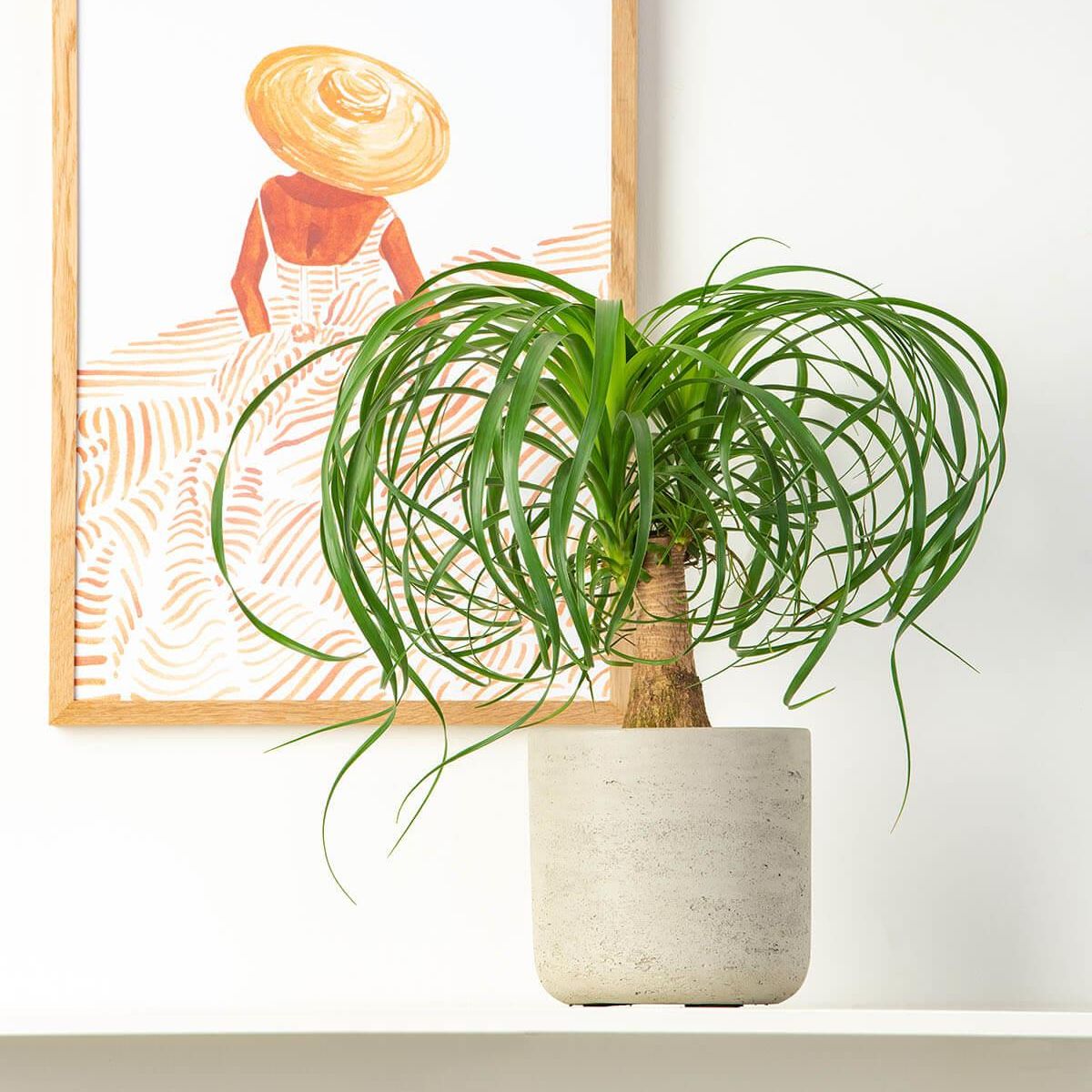
3. Ponytail palm
(Image credit: Getty Images/ Yobab)
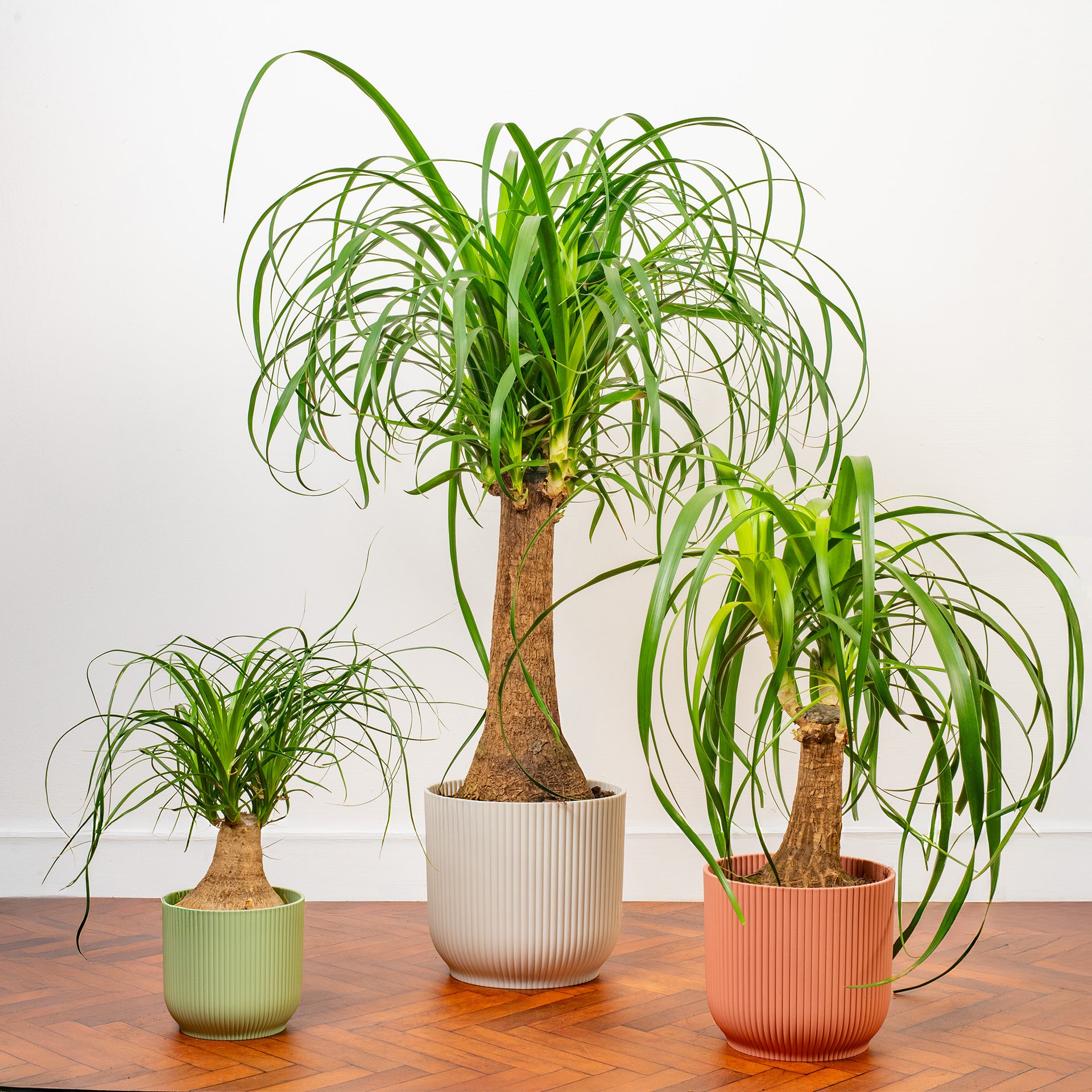
Ponytail palms can go weeks without being watered, making them one of the best houseplants for forgetful plant parents. Plus, its streaming green leaves and thick trunk make a visually stunning display, too.
‘Originating from eastern Mexico has meant the Ponytail Palm has evolved so that it can cope in intense heat and long periods of drought. Its bulbous base acts as a built-in water reservoir, meaning it only needs watering once a month during the summer months, whilst its narrow, curling leaves have developed so that it loses very little water through evaporation or transpiration,’ explains Lucie.
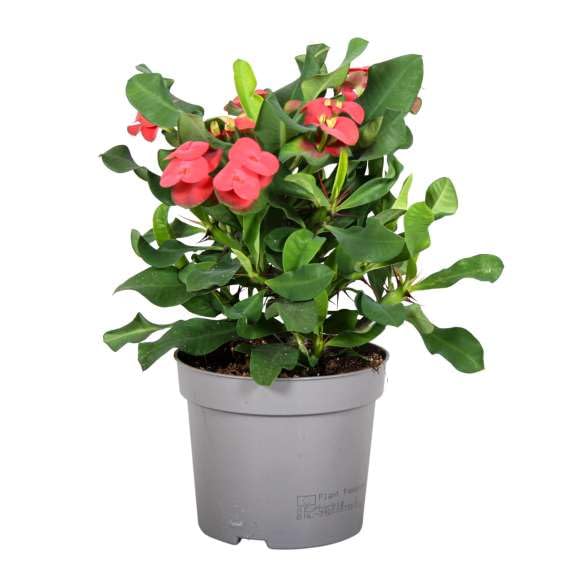
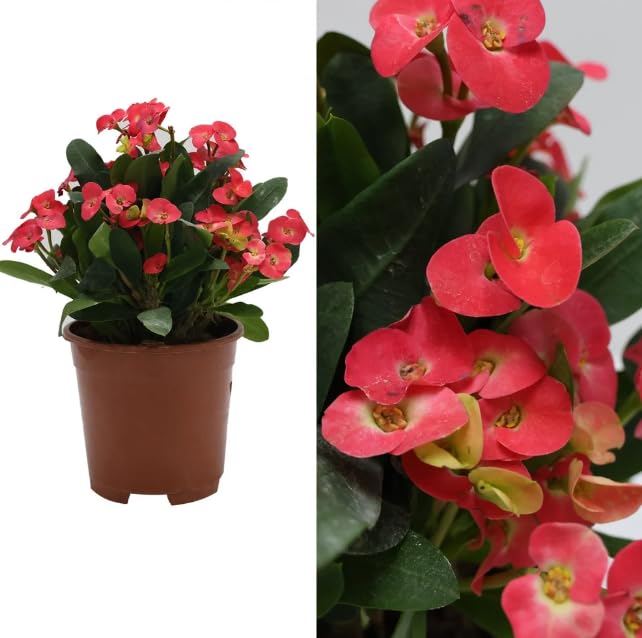
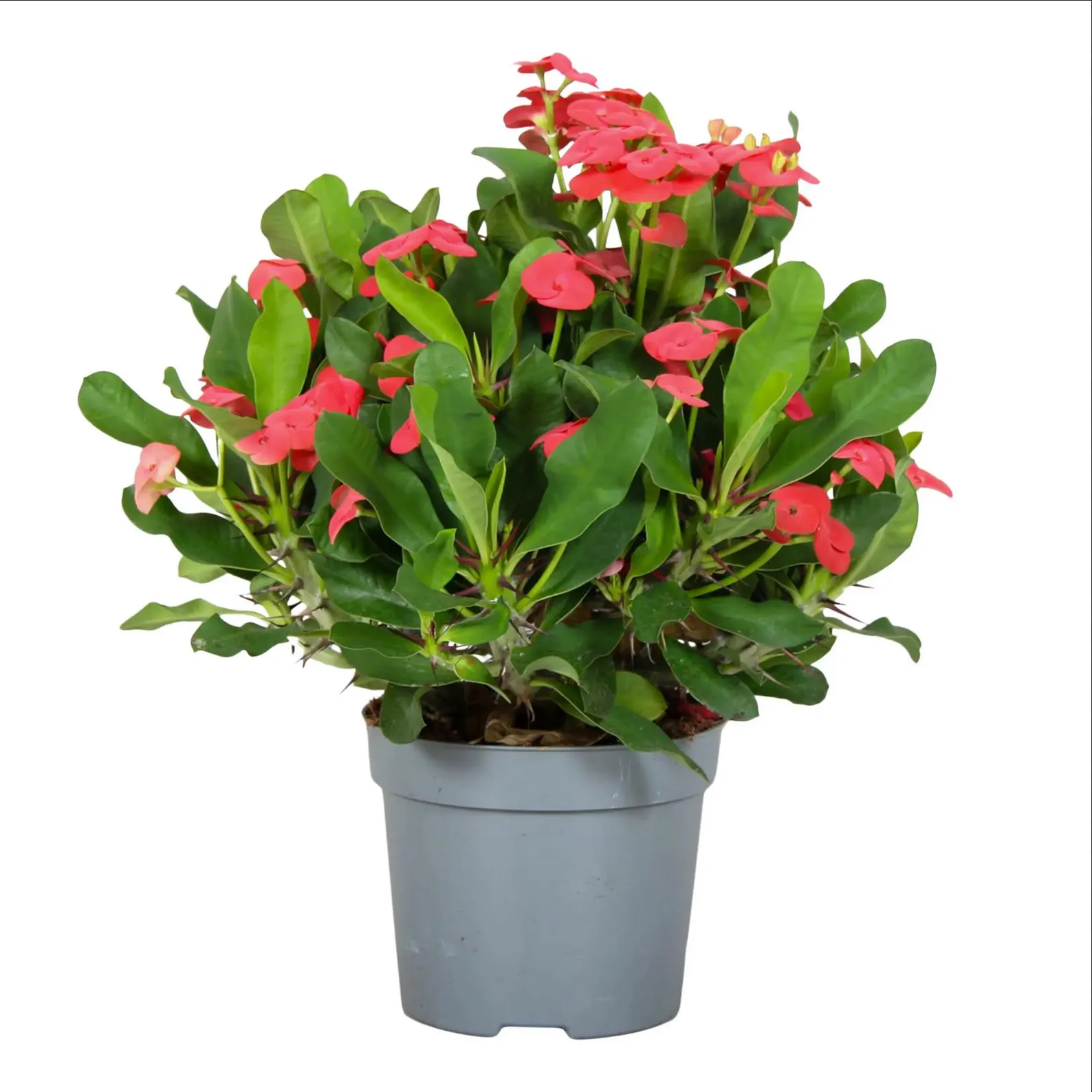
A crown of thorns is an excellent hardy houseplant that blooms all year round if given the correct care. It can be grown indoors and outdoors. Originally from Madagascar, a crown of thorns plant produces stunning red, pink or white flowers. It is toxic to dogs, so not suitable for households that have pets.
‘If given enough light, this houseplant can bloom for most of the year as long as it has enough light. It loves warm and sunny conditions and can produce clusters of colourful flowers continuously when it receives four to six hours of sunlight a day. Avoid overwatering and allow the soil to dry out between watering,’ says Chris.
CAMBRIDGE BEE
Euphorbia Milii Cardinal Red Flower- Crown of Thorns Succulent House Plant
C.B. Plants
Euphorbia Milii Cardinal Red Big Flower- Crown of Thorns Succulent House Plant
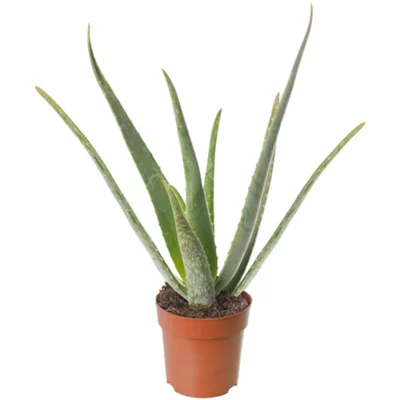
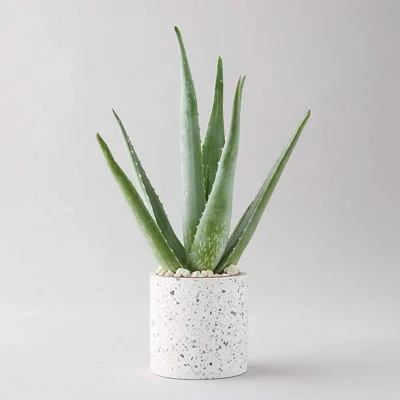
‘Aloe Vera has adapted to thrive in high heat and intense light, so this combined with its ability to store lots of water, makes it an exceptionally low-maintenance plant that is perfect for positioning in a hot, south-facing room in your house. It will thrive where it gets plenty of natural sunlight and only needs to be watered when the top 5cm of soil is dry, which usually occurs every 14 to 21 days during the summer months,’ says Lucie.
‘The only thing to be mindful of is if your plant is consistently in extreme heat, when temperatures are consistently above 29 degrees celcius, you should stop feeding your Aloe Vera as extreme heat will slow its growth. In addition, you may need to move the plant further away from direct light and ensure it is in a well-ventilated area.’
B&Q
Aloe Vera (30-40cm Height Including Pot)
B&Q
2 X Aloe Vera Plants 25-30cm
B&Q
Aloe Vera Plant in 12cm Pot
Do you have any of these heat-loving houseplants in your home?
Choosing the right paint colour can completely transform a north-facing sitting room.
These rooms are often unfairly labelled as cold, dark or difficult to decorate, but the reality is far more encouraging. North-facing rooms have a unique quality of light that, when paired with the right colours, can create elegant, calming and incredibly cosy interiors.
The secret is understanding how natural light affects colour. North-facing rooms receive cool, indirect daylight for most of the day, meaning paint colours often look different from how they appear in the showroom or on a paint chart. A crisp white can suddenly look blue, while a fashionable grey may seem flat and lifeless.
Fortunately, there are plenty of beautiful colours that work brilliantly in north-facing spaces. Warm whites, sophisticated greiges, earthy greens and soft neutral shades can all help create a sitting room that feels welcoming whatever the weather outside.
Whether you’re decorating a period cottage, a Victorian terrace or a contemporary new-build, these are the best paint colors to choose for a north-facing sitting room.
Quick Answer
The best colours for a north-facing sitting room are those with warm undertones, which help balance the naturally cool, indirect daylight. Warm whites, creams, greige, taupe, mushroom, warm beige, sage green, olive green and terracotta all create a brighter, more welcoming space without feeling cold.
Avoid stark brilliant white and cool blue-greys, which can make a north-facing room appear flat or icy. Before committing to a colour, test large paint samples in different areas of the room and view them throughout the day, as north-facing light can dramatically change how paint colours appear.
Unlike south-facing rooms, which receive warm, direct sunlight throughout much of the day, north-facing rooms are lit mainly by indirect daylight. This light remains fairly constant from morning until evening but naturally contains cooler light with blue tones.
As a result:
White paint can appear icy rather than fresh.
Grey shades often look darker than expected.
Blues become noticeably cooler.
Greens with blue undertones may lose their warmth.
Colours generally appear more muted than they do elsewhere in the house.
This doesn’t mean you should avoid colour altogether. Instead, choose shades with warm undertones that balance the cool light and bring comfort to the room.
How to Choose the Right Colour
Interior designers often follow three simple rules when decorating north-facing rooms.
Choose Warm Undertones
The undertone is the hidden colour beneath the main paint shade. Two paints may both be described as beige, but one could contain cool grey pigments while the other includes warm yellow, red or brown undertones.
It’s these warmer undertones that help prevent a room from feeling cold.
Don’t Be Afraid of Colour
Many homeowners assume that white is the safest choice for a dark room.
Ironically, brilliant white or bright white often has the opposite effect in a north-facing space, making the room feel colder. Soft neutrals or muted earthy colours usually create a much more welcoming atmosphere.
Always Test Before You Buy
Paint looks different in every home.
When you’re choosing the right paint color, purchase tester pots and paint large sample boards first, rather than applying small patches directly to the wall. Move them around the room and look at them during the morning, afternoon and evening before making your final decision.
The Best Colours for a North-Facing Sitting Room
1. Warm White
North-facing sitting room decorated in warm white
Warm white is often the safest and most versatile choice for a north facing room.
Unlike brilliant white, warm whites contain subtle cream, beige or yellow undertones that soften the cool natural light. They reflect available daylight while still creating an inviting atmosphere.
Warm white also provides an excellent backdrop for artwork, natural wood furniture and colourful accessories, making it suitable for almost every decorating style.
Pair warm white walls with:
Oak or walnut furniture
Brass lighting
Linen curtains
Wool rugs
Soft beige upholstery
The result is bright without ever feeling clinical.
2. Cream
Victorian living room decorated in a cream colour palette
Cream has enjoyed a major revival in recent years, particularly as homeowners move away from stark minimalist interiors in favour of warmer, more comfortable spaces.
Modern cream shades are far more sophisticated than the yellow-heavy creams popular decades ago. Today’s versions feel elegant and timeless while helping bounce light around the room.
Cream works especially well in a north facing living room in:
Transitional designs that combine classic and contemporary elements
Layer cream walls with natural textures such as linen, bouclé and woven baskets for a beautifully relaxed look.
3. Greige
Greige colour scheme
Greige remains one of the most popular neutral colours for contemporary homes.
As the name suggests, greige combines the colours grey and beige, offering the sophistication of grey with the warmth of beige. In north facing spaces, this balance makes all the difference.
Choose warm greige with obvious beige or taupe undertones rather than cooler versions that lean heavily towards blue.
Greige pairs beautifully with:
Black accents
Pale oak flooring
White trim
Stone fireplaces
Soft green accessories
It’s a particularly good choice if you want a modern interior without the chilliness associated with many grey schemes.
4. Warm Beige
Warm beige decor
Beige has firmly re-established itself as one of the most fashionable decorating colours.
Far removed from the bland beige interiors of the past, today’s warm beiges create calm, layered spaces full of natural warmth.
They work particularly well because they reflect available light while maintaining softness and depth.
Warm beige complements a wide range of decorating styles, from Scandinavian minimalism to contemporary rustic interiors.
Try pairing warm beige with:
The overall effect is understated yet welcoming.
5. Taupe
Soft taupe living room
Taupe sits somewhere between brown and grey, making it one of the most versatile colours for a north-facing living room.
Its warm earthy base has the right undertones to help offset the cool natural light, while its subtle sophistication works beautifully in both traditional and modern homes.
Taupe also creates an excellent backdrop for artwork and colourful furnishings because it never competes for attention.
It’s especially effective in larger sitting rooms where you want to create a relaxed, cocooning atmosphere.
6. Mushroom
Mushroom colour palette
Mushroom has become one of the defining paint colours of contemporary interiors.
Neither grey nor beige, the color palette of mushroom offers an elegant middle ground that feels luxurious without being overpowering.
Its earthy undertones help soften northern light while introducing a sense of depth that plain white walls often lack, making it a good option for a room that faces north.
Mushroom works particularly well used alongside:
White oak furniture
Walnut coffee tables
Linen upholstery
Textured wool throws
Matte black accessories
The result feels calm, refined and effortlessly modern.
7. Sage Green
Sage green living room decor
If you’d like to introduce more colour while maintaining a peaceful atmosphere, sage green is an excellent choice.
Unlike cooler mint or blue-greens, sage has warm grey and earthy undertones that complement north-facing light surprisingly well.
It brings a subtle connection to nature, works beautifully with natural materials and has become a popular interior design colour choice in recent years.
Pair sage green with:
Cream sofas
Oak furniture
Botanical artwork
Woven baskets
Warm white woodwork
When painted in sage green, a sitting room will feel fresh without becoming cold. For more inspiration, check out our Sage Green Decorating Guide.
8. Olive Green
Olive green living room
Olive green is richer and deeper than sage, making it ideal for creating a cosy retreat.
Its earthy yellow undertones balance the cool northern light, giving the room warmth and character.
Olive green works particularly well in:
Larger sitting rooms
Period properties
Homes with high ceilings
Rooms featuring fireplaces
Combine it with brass lighting, walnut furniture and soft cream textiles for an elegant, timeless scheme.
9. Terracotta
Terracotta immediately introduces warmth to any room.
Inspired by Mediterranean homes and natural clay, this earthy shade creates an inviting atmosphere that feels comfortable throughout the year.
You don’t necessarily need to paint every wall.
Terracotta makes a stunning feature wall behind a fireplace or sofa while pairing beautifully with:
Cream
Warm white
Natural oak
Leather furniture
Black accents
It is particularly effective if your sitting room receives very little natural light.
10. Soft Clay and Dusty Peach
Soft clay and dusty peach colour scheme
Soft clay and muted peach tones have become increasingly popular as homeowners embrace warmer, more organic colour palettes.
Modern versions are subtle rather than sugary, adding warmth without dominating the room.
These are some of the best colors to use as they reflect the available light surprisingly well and pair beautifully with natural textures such as linen, timber and woven fibres.
For anyone looking for an alternative to beige or cream, they provide an excellent middle ground between neutral and colour.
Colours to Avoid
While almost any colour can work when styled correctly, some shades are naturally less suited to north-facing sitting rooms.
Brilliant White
Pure white often reflects the cool northern light, causing walls to appear blue or icy.
If you love white interiors, choose a warm white with creamy undertones instead.
Cool Grey
Grey remains fashionable, but cooler versions containing blue pigments can leave a room feeling noticeably colder.
Replacing them with greige or mushroom often creates a softer, more welcoming result.
Pale Ice Blue
Although beautiful in sun-filled rooms, pale or light blue tends to exaggerate the coolness of north-facing light.
If you love blue, choose richer shades with warmer undertones such as navy or teal and use them as accent colours rather than across every wall.
Blue-Greens
Some green paints lean heavily towards blue.
These can lose their warmth in north-facing rooms, making them appear dull or washed out.
Instead, look for olive, sage or moss-inspired greens, which have a warm base tone.
Beautiful Colour Combinations
Sometimes it’s the combination of colours rather than the wall colour alone that creates a welcoming room.
Warm White + Sage Green + Oak
Fresh, calming and ideal for Scandinavian-inspired interiors.
Greige + Walnut + Brass
A sophisticated contemporary scheme that feels warm rather than minimalist.
Cream + Olive Green + Natural Linen
Perfect for traditional homes and country-inspired interiors.
Taupe + Rust + Cream
Rich, layered and wonderfully cosy during autumn and winter.
Mushroom + Black + White Oak
Elegant and understated, with just enough contrast to create visual interest.
Terracotta + Warm White + Leather
A timeless palette inspired by Mediterranean interiors that feels welcoming throughout the year.
How to Test Paint Colours Properly
Even the best paint colour can disappoint in your living space if it’s chosen from a tiny paint sample.
Instead:
Buy tester pots of your favourite colours.
Paint large sample boards rather than the wall itself.
Move the boards around the room.
View them in natural daylight and after dark with your normal lighting.
Compare them alongside your flooring, sofa and curtains.
You’ll often discover that your favourite colour in the shop looks completely different once it’s in your home.
Designer Tips for Decorating North-Facing Rooms
Professional interior designers often rely on a few simple tricks to make north-facing rooms feel warmer.
Here are some designer paint hacks to use when decorating a north facing room with limited light:
Choose warm whites for ceilings and woodwork instead of brilliant white.
Stick to paint colours with yellow, beige, brown or red undertones.
Introduce natural wood through furniture and shelving to reinforce a touch of warmth in the room.
Layer different neutral shades rather than relying on a single colour throughout the room.
Add extra warmth through textiles in colours such as oatmeal, rust, terracotta or olive green.
Avoid making decisions based solely on online paint colours, as every screen displays colour differently.
Small changes in undertone can make a remarkable difference to the finished room.
Best Paint Colours for a North-Facing Sitting Room
Paint Colour
Why It Works
Best Paired With
Overall Warmth
Warm White
Reflects available light while avoiding a cold, clinical feel.
Oak furniture, linen fabrics, brass accessories
★★★★★
Cream
Creates an inviting, traditional or contemporary backdrop with plenty of warmth.
Natural wood, soft greens, terracotta accents
★★★★★
Greige
Combines the sophistication of grey with the warmth of beige.
Black accents, walnut furniture, textured rugs
★★★★☆
Soft Taupe
Adds subtle depth without making the room feel dark.
Cream upholstery, warm metallics, woven baskets
★★★★★
Warm Beige
Brightens the room while creating a relaxed, cosy atmosphere.
White trim, oak flooring, olive green accessories
★★★★★
Sage Green
Brings nature indoors and softens cool northern light.
Light oak, cream sofas, botanical prints
★★★★☆
Olive Green
Rich and earthy, adding warmth and depth to larger sitting rooms.
Brass lighting, leather furniture, walnut wood
★★★★☆
Terracotta
Instantly warms a room and creates a welcoming, cocooning feel.
Cream textiles, natural timber, black accents
★★★★★
Dusty Peach
Reflects light beautifully while introducing subtle warmth.
Soft whites, light wood furniture, woven textures
★★★★★
Mushroom
A sophisticated neutral that works particularly well in modern interiors.
Charcoal accents, oak, linen curtains
★★★★☆
Colours to Use Carefully
Colour
Why It Can Be Difficult in a North-Facing Room
Brilliant White
Often appears blue or icy in cool natural light.
Blue-Grey
Can make the room feel noticeably colder.
Pale Ice Blue
Enhances the coolness of northern daylight.
Cool Silver Grey
May appear flat and lifeless, especially during winter.
Bright Pure Grey
Lacks warmth unless balanced with timber and layered lighting.
Final Thoughts
Choosing the right paint colour can completely transform a north-facing sitting room.
These rooms are often unfairly labelled as cold, dark or difficult to decorate, but the reality is far more encouraging. North-facing rooms have a unique quality of light that, when paired with the right colours, can create elegant, calming and incredibly cosy interiors.
The secret is understanding how natural light affects colour. North-facing rooms receive cool, indirect daylight for most of the day, meaning paint colours often look different from how they appear in the showroom or on a paint chart. A crisp white can suddenly look blue, while a fashionable grey may seem flat and lifeless.
Fortunately, there are plenty of beautiful colours that work brilliantly in north-facing spaces. Warm whites, sophisticated greiges, earthy greens and soft neutral shades can all help create a sitting room that feels welcoming whatever the weather outside.
Whether you’re decorating a period cottage, a Victorian terrace or a contemporary new-build, these are the best colours to choose for a north-facing sitting room.
Frequently Asked Questions
What is the best paint colour for a north-facing sitting room?
The best paint colours are those with warm undertones that help counteract the naturally cool light. Warm whites, soft creams, greige, taupe, warm beige and earthy greens are all excellent choices. These shades reflect available daylight while making the room feel brighter and more welcoming.
Should I avoid white paint in a north-facing room?
Not necessarily. The key is choosing the right white. Brilliant or pure white can look cold and slightly blue in north-facing light, whereas warm whites with creamy, ivory or beige undertones create a much softer and more inviting appearance.
Why does my grey sitting room feel cold?
Many popular grey paints contain blue undertones that become more noticeable in north-facing rooms. Switching to a warmer greige or taupe can make a dramatic difference without moving away from a contemporary neutral colour scheme.
Can I use dark colours in a north-facing sitting room?
Yes. Rich colours such as olive green, chocolate brown, deep terracotta or warm navy can create an intimate, cosy atmosphere, particularly in larger sitting rooms. Balance darker walls with layered lighting, lighter soft furnishings and natural wood to prevent the space from feeling enclosed.
What colour sofa works best in a north-facing sitting room?
Cream, oatmeal, warm beige, camel, caramel leather, olive green and soft taupe sofas all work particularly well. These colours complement warm wall shades while helping the room feel comfortable and inviting.
What lighting should I use in a north-facing sitting room?
Aim for multiple layers of warm lighting rather than relying on a single ceiling fitting. Combine ceiling lights, table lamps, floor lamps and wall lights fitted with warm white LED bulbs (around 2700K) to create a cosy atmosphere throughout the day and evening.
Which flooring is best for a north-facing room?
Natural wood flooring such as oak or walnut adds instant warmth. If replacing flooring isn’t practical, a large wool rug in cream, oatmeal or warm beige can make the room feel considerably cosier while also reflecting more light.
Are north-facing sitting rooms always dark?
No. Although they receive less direct sunlight than south-facing rooms, they benefit from soft, even daylight throughout the day. With the right paint colours, lighting and furnishings, a north-facing sitting room can feel bright, elegant and welcoming all year round.
Should I paint the ceiling white?
A warm white ceiling usually works best. Using the same warm white on both the ceiling and woodwork creates a seamless look and avoids introducing cooler tones that could make the room feel less inviting.
What accent colours work well in a north-facing sitting room?
Warm accent colours help balance the cool natural light. Consider rust, terracotta, mustard, burnt orange, olive green, forest green, burgundy, cinnamon and chocolate brown. These shades add depth, warmth and character without overpowering the space.