
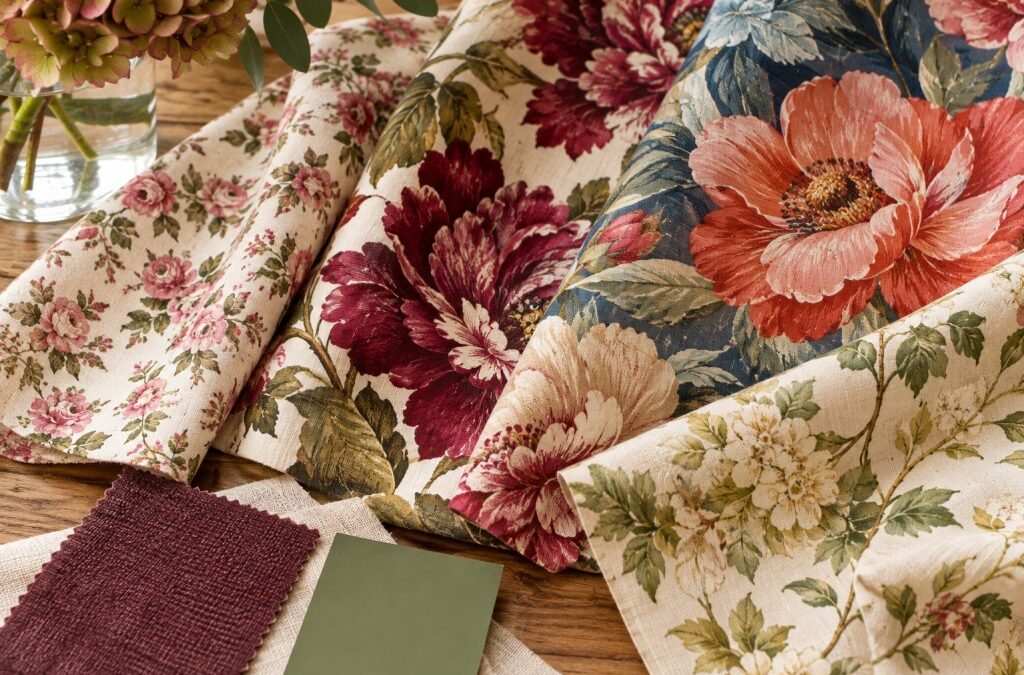
For years, chintz was a decorating style that many people associated with rather old-fashioned interiors. Think matching floral curtains and sofas, frilly cushions, heavily patterned wallpaper and rooms overflowing with decorative details. But floral prints are enjoying a fresh lease of life, and chintz is finding its way back into contemporary homes.
The difference is in how it’s being used. Rather than covering every available surface in matching roses, modern interiors are embracing floral patterns in more imaginative ways. A statement floral sofa might sit alongside a sleek coffee table, traditional botanical curtains could bring warmth to a minimalist bedroom, or a vintage floral armchair might become the focal point of an otherwise contemporary living room. It’s a look that celebrates colour, pattern and personality, while still leaving plenty of room for modern design.
Whether you’re drawn to delicate vintage florals or bold, oversized blooms, here’s how to make chintz work beautifully in a modern interior without making your home feel stuck in the past.
Quick Answer: How Do You Use Chintz In A Modern Interior?
Chintz is making a comeback, but modern interiors are giving traditional floral prints a fresh twist. The easiest way to use chintz in a contemporary home is to choose one statement piece, such as a floral sofa, armchair, wallpaper or curtains, and balance it with simple furniture, plain surfaces and modern accessories. Look for oversized botanical patterns, unexpected colour combinations and designs that mix traditional charm with contemporary style. For a cohesive look, pick two or three colours from the floral print and repeat them subtly throughout the room. The result is a colourful, characterful interior that feels fresh rather than old-fashioned.
What Is Chintz, and Why Is It Making a Comeback?

Chintz is traditionally a printed cotton fabric, often featuring colourful floral or botanical patterns and sometimes finished with a distinctive glazed surface. Originating in India, where beautifully patterned cotton textiles were produced and traded for centuries, chintz became highly fashionable in Europe and was eventually embraced by British interior design.
It became particularly associated with English country house decorating, where floral curtains, upholstered furniture and matching accessories created comfortable, richly decorated rooms. By the late 20th century, however, chintz had developed a rather fussy reputation. The fashion for matching floral upholstery, wallpaper, curtains and bedspreads eventually gave way to cleaner lines, neutral colours and more minimalist interiors.
Now, the appeal of decorative fabrics is being rediscovered. Part of the attraction is a growing appreciation for interiors that feel personal rather than perfectly coordinated. Vintage furniture, traditional craftsmanship, nostalgic patterns and expressive colour combinations all offer alternatives to the pared-back schemes that have dominated decorating for so long. Chintz fits naturally into this approach. Floral patterns introduce softness, movement and visual interest, while their connection with traditional interiors can give contemporary rooms a sense of character and history.
It’s worth remembering that not every floral fabric is technically chintz. The word ‘chintz’ originally refers to a particular type of printed cotton, rather than simply any fabric featuring flowers. However, in contemporary decorating, it’s often used more loosely to describe the romantic, decorative character of traditional floral textiles. The modern chintz look draws inspiration from that heritage without necessarily reproducing it exactly.
The Fabric and Wallpaper Brands Bringing Chintz Back
One of the clearest signs of chintz’s renewed appeal is the number of established fabric and wallpaper companies revisiting traditional floral designs. Rather than simply reproducing familiar country house patterns, designers are experimenting with new colourways, different scales and fresh interpretations of historic prints.
Colefax and Fowler, a name long associated with classic English decorating, continues to champion floral chintz. Its Chantilly fabric features delicate hydrangeas and vivid green foliage, while the brand’s Autumn 2026 Pendine collection explores botanical designs, decorative prints and richly textured fabrics inspired by English textile traditions.
GP & J Baker has collaborated with designer Kit Kemp on a collection that brings a more playful approach to traditional textiles. Its Marigold design reimagines a classic damask as a modern chintz, with vibrant colourways that make it suitable for expressive contemporary interiors.
Meanwhile, Morris & Co has been exploring its extraordinary design heritage. Its collaboration with The Huntington, The Unfinished Works, transforms previously unfinished William Morris designs into new wallpapers and fabrics, demonstrating how historic botanical patterns can continue to evolve.
For something more dramatic, House of Hackney has reinterpreted William Morris designs through a collaboration with contemporary designers. Its updated Compton and Foliage patterns use distinctive colours and new interpretations of traditional motifs, including richly coloured wallpaper and velvet fabric.
Soane Britain offers another interesting example with its Dianthus Chintz, a detailed botanical pattern inspired by an eighteenth-century textile. Available as both fabric and wallpaper, it illustrates how historical designs can be adapted for today’s interiors.
Contemporary brands are embracing the wider floral revival, too. Harlequin’s 2026 Zamora collection combines florals, stripes and other decorative patterns across fabrics and wallpapers, drawing on traditional textile techniques but interpreting them through a contemporary lens.
Together, these collections suggest that the return of chintz isn’t simply about nostalgia. It’s part of a wider interest in expressive interiors, decorative craftsmanship and patterns with a story behind them. And while many of these designer fabrics and wallpapers are at the luxury end of the market, their ideas can provide inspiration for decorating at all price points.
How to Make Chintz Look Modern Rather Than Old-Fashioned
The secret to decorating successfully with chintz is contrast. Traditional floral chintz patterns become much more interesting when they’re combined with contemporary shapes, unexpected colours and simpler surrounding surfaces.
Here are five ways to achieve the balance in your home decor.
1. Start With One Statement Floral

One of the easiest ways to introduce chintz into a modern room is to choose a single statement piece.
A generously proportioned armchair upholstered in a colourful floral fabric can look striking against plain walls. Alternatively, a patterned sofa can become the centrepiece of a living room furnished with contemporary tables, simple lighting and understated accessories.
The important thing is to allow the floral pattern to take centre stage. If your sofa is covered in a bold botanical print, you probably don’t need matching curtains, floral wallpaper and several more patterned cushions. Instead, choose a few colours from the fabric and repeat them through smaller accessories.
A deep green leaf in the upholstery might inspire an olive-coloured cushion, while a muted pink flower could be picked up in a ceramic vase or piece of artwork. This creates a room that feels considered rather than overly coordinated.
2. Pair Traditional Florals With Contemporary Furniture

Combining different design periods is one of the most effective ways to give chintz a fresh appearance.
Imagine a traditional floral armchair positioned beside a slim black metal floor lamp and a simple oak side table. Or a vintage-inspired floral sofa paired with a sculptural contemporary coffee table. The contrast between decorative fabric and modern furniture creates visual interest.
Clean-lined pieces are particularly useful because they balance the detail of floral patterns. Natural wood, glass, stone and brushed metal can all work well alongside traditional textiles.
You don’t need to replace existing furniture to achieve this effect, either. An inherited chair with floral upholstery might look surprisingly contemporary when moved into a room with simple shelving, modern lighting and uncluttered surfaces.
3. Choose an Unexpected Colour Palette

Traditional chintz often brings to mind pink roses, pale green leaves and cream backgrounds. Although these combinations can still look lovely, modern floral decorating offers a much wider range of possibilities.
Look for prints featuring deep burgundy, rich chocolate brown, mustard yellow, olive green, navy blue or vibrant colors like coral.
Darker backgrounds can make traditional floral patterns feel particularly dramatic. A large-scale floral print featuring dusty pink flowers against a deep blue background, for example, could look beautiful on an accent chair in a contemporary living room. Alternatively, try a softer combination of sage green, raspberry and warm white for a relaxed bedroom.
Rather than choosing your paint colour first, consider finding a floral fabric you love and building the room’s palette around it.
4. Mix Florals With Stripes, Checks and Geometric Prints

Mixing patterns can make chintz feel much less traditional, particularly when florals are combined with simple stripes or checks. The trick is to vary the scale of the designs.
If you’re using a big floral chintz pattern on an armchair, try adding a small checked cushion or a narrow striped throw. The different patterns will complement one another without competing for attention. Keeping at least one colour consistent across the fabrics also helps tie everything together. For example, a floral cushion featuring burgundy roses and olive leaves could work alongside a burgundy-and-cream striped cushion and a plain olive velvet cushion. The result feels layered and interesting, but still harmonious.
You can experiment with several patterns in the same room, although it’s worth introducing them gradually and seeing how they work together before adding more. For more inspiration, see our guide to layering cushions and throws on a sofa.
5. Give Floral Prints Room to Breathe

One of the biggest differences between traditional chintz-heavy interiors and contemporary floral decorating is the amount of visual space surrounding the patterns. You don’t have to fill every corner with decorative details.
Plain painted walls, uncluttered flooring and simple furniture can provide a welcome contrast to patterned fabrics. That doesn’t mean everything else has to be white or beige. Rich blocks of colour can work beautifully with chintz, particularly when they pick up tones from the floral design. A floral sofa against a deep green wall, for instance, could feel sophisticated and enveloping, while a patterned armchair in a pale blue room might create a lighter, fresher effect.
The aim isn’t necessarily to use less colour, but to create a thoughtful balance between patterned and plain surfaces.
8 Stylish Ways to Use Chintz in a Contemporary Home
You don’t need to commit to an entire floral decorating scheme to enjoy this look. Chintz can work in almost any room, whether you’re planning a complete redesign or simply introducing a few new accessories.
1. Make a Statement With a Floral Sofa

A floral sofa is a confident decorating choice, but it can also be a surprisingly versatile one. Rather than choosing a delicate, densely patterned design, consider a contemporary sofa upholstered in a larger-scale floral fabric.
Oversized flowers, expressive botanical prints and unusual colour combinations can all help create a more modern appearance. Keep the surrounding furniture relatively simple. A low wooden coffee table, plain rug and contemporary lighting will allow the sofa to become the main feature. For cushions and throw pillows, choose plain fabrics in colours drawn from the upholstery rather than adding several more competing floral designs.
Before investing in a patterned sofa, it’s also worth thinking about longevity. Choose a print you genuinely love rather than one that simply feels fashionable, and check that the fabric is suitable for everyday upholstery.
2. Introduce a Floral Accent Chair

If a sofa with large florals feels like too much of a commitment, an accent chair is an excellent alternative.
A single upholstered armchair can introduce colour and pattern without dominating the room. Vintage chairs are particularly interesting because they combine traditional shapes with decorative fabrics. An old wingback chair, for example, could be reupholstered in a contemporary floral print and positioned in a modern reading corner. Or, choose a chair with a simple, contemporary frame and a more traditional floral fabric.
This contrast between old and new is what makes the look feel fresh.
3. Use Floral Wallpaper in an Unexpected Way

Floral wallpaper has long been associated with traditional interiors, but contemporary designs can be wonderfully bold and expressive. Large botanical motifs, painterly flowers and richly coloured backgrounds are particularly effective in modern homes.
Instead of automatically creating a feature wall behind the sofa, consider using floral wallpaper somewhere less expected. A downstairs toilet can be an ideal place to experiment with a dramatic design. Floral wallpaper can also transform a hallway, brighten a home office or bring character to an alcove. For a more immersive look, wallpaper all four walls and introduce contemporary furniture and lighting to balance the pattern.
If you’re nervous about making the room feel too busy, choose a design with plenty of background space between the flowers, or use wallpaper above painted panelling. If you’re looking for something a little different from a conventional feature wall, there are plenty of creative ways to use wallpaper, from decorating alcoves to adding pattern above painted panelling.
4. Bring Back Floral Curtains

Floral curtains can instantly soften a contemporary room, particularly one with plain walls and simple furniture.
Full-length curtains featuring a traditional botanical print can add warmth and movement to a living room or bedroom without requiring any major changes to the space. For a modern look, choose a simple curtain heading and avoid overly elaborate pelmets, swags or heavy decorative trims. The fabric itself can provide all the interest you need. Larger floral patterns can look particularly effective on full-length curtains because there’s enough fabric to appreciate the complete design.
If you’re decorating a small room, a lighter background or more open botanical pattern can introduce colour without making the window area feel too visually heavy.
Remember to consider how the curtains will look both open and closed, and whether the fabric requires a lining to protect it from sunlight.
5. Add Chintz Through Cushions and Soft Furnishings

Cushions are probably the simplest way to experiment with chintz and bring new life into a room.
A pair of floral cushions can transform a plain sofa, while a patterned upholstered footstool can introduce a more substantial decorative element. Try mixing a floral cushion with plain velvet, textured linen or a subtle stripe. For example, a muted blue sofa could be styled with a large floral cushion featuring burgundy, blue and cream, a smaller striped cushion and a plain cream throw. The combination adds personality without making the sofa feel overcrowded.
Other options include floral lampshades, upholstered benches, fabric-covered storage boxes and decorative seat pads. These smaller additions are particularly useful if you enjoy changing your interior accessories with the seasons.
6. Create a Contemporary Floral Bedroom

Bedrooms are naturally suited to floral fabrics because they benefit from softness, texture and a sense of comfort.
A floral upholstered headboard can make a beautiful focal point, especially when paired with plain bedding and simple bedside furniture. Alternatively, introduce floral curtains or a patterned duvet cover while keeping the rest of the room relatively restrained.
If you love the romantic appeal of traditional chintz, try combining it with contemporary elements such as a slim wooden bed frame, simple wall lights or modern bedside tables. Avoid matching every textile too precisely. A floral headboard doesn’t necessarily need matching curtains and bedding. Instead, choose coordinating colours and different textures to create a more relaxed, collected appearance.
7. Introduce Florals Into the Dining Room

Chintz isn’t just for living rooms and bedrooms. Floral fabrics can also bring warmth and character to dining spaces, particularly when combined with contemporary furniture.
A colourful floral tablecloth can instantly change the atmosphere of a dining room, especially when styled with simple ceramic plates, modern glassware and understated table accessories. For something more permanent, consider upholstered dining chair seats or a floral fabric covering for a built-in dining bench. These smaller areas of pattern can work particularly well with plain wooden tables and contemporary pendant lighting.
If you’re using floral fabrics around food and drinks, choose materials that are practical to clean. Removable seat covers and washable table linens are often sensible choices.
8. Experiment With Chintz in Small Spaces

You might assume that bold floral patterns are best reserved for large rooms, but they can be surprisingly effective in compact spaces.
A small downstairs toilet covered in dramatic floral wallpaper can feel playful and full of character. A window seat upholstered in a colourful botanical fabric can turn an overlooked corner into a welcoming reading spot. Even a narrow hallway could benefit from a floral upholstered bench or a patterned lampshade. The key is to make the pattern feel intentional. Rather than introducing lots of unrelated decorative elements, choose one strong floral feature and build the surrounding scheme around it.
Small spaces can be excellent places to experiment because you don’t necessarily need large quantities of fabric or wallpaper to make an impact. A bathroom can be a wonderful place to experiment with a dramatic floral design, although it’s important to choose materials suited to the conditions. Our guide to using wallpaper in bathrooms explains what to consider in rooms where moisture and condensation may be an issue.
Modern Chintz Colour Combinations Worth Trying

Choosing the right colours can make all the difference between a floral interior that feels contemporary and one that looks overly traditional. Here are five combinations worth considering.
Burgundy, Blush Pink and Cream

This combination feels romantic without being excessively sweet. Look for floral prints featuring rich burgundy flowers, softer pink details and a warm cream background. Pair them with dark wood furniture, simple brass lighting and plain upholstery for a sophisticated effect.
It’s particularly effective in bedrooms and living rooms where you want a warm, welcoming atmosphere.
Olive Green, Dusty Pink and Natural Oak

Olive green and dusty pink make a lovely combination for a contemporary country-inspired interior. Choose floral fabrics with leafy green details and muted pink flowers, then introduce natural oak furniture and warm neutral walls. Linen, wool and handmade ceramics can help create a relaxed, comfortable feel.
This palette works especially well in living rooms, bedrooms and reading corners.
Deep Blue, Coral and Ivory

For something fresher and more unexpected, try combining deep blue with coral and ivory. A floral armchair featuring coral flowers against a navy background could look striking in a room with pale walls and contemporary wooden furniture. Introduce small touches of coral through cushions or accessories, but allow the blue to provide the stronger visual anchor.
The result is colourful without necessarily feeling overly feminine or traditional.
Chocolate Brown, Ochre and Pale Blue

Brown is an interesting alternative to the lighter backgrounds commonly associated with floral fabrics. A botanical print featuring ochre flowers and pale blue details against a chocolate background can create a warm, slightly retro feel. Combine it with walnut furniture, simple lighting and pale blue or warm white walls.
This palette could be particularly effective in a home office, snug or cosy living room.
Sage Green, Raspberry and Warm White

Sage green provides a soft, restful background for stronger floral colours. Try a fabric featuring raspberry-coloured flowers and muted green leaves, paired with warm white walls and simple wooden furniture. The raspberry adds energy while the sage keeps the scheme feeling calm.
It’s a particularly appealing combination for bedrooms, but could also work beautifully in a sitting room.
Can You Mix Chintz With Other Interior Design Styles?
One of the reasons floral prints are so versatile is that they can work with several different decorating styles. You don’t have to live in a country cottage or own antique furniture to enjoy them.
Chintz and Minimalism

At first glance, chintz and minimalism might seem like unlikely partners. However, a single decorative piece can look particularly effective in an otherwise restrained room.
Imagine a simple living room with pale walls, an oak floor, a contemporary sofa and one beautifully upholstered floral armchair. The floral fabric introduces warmth and personality without overwhelming the space. This approach is ideal if you appreciate clean lines but want your home to feel a little less stark.
Chintz and Modern Country Style

Traditional floral fabrics fit naturally into modern country interiors. The trick is to combine them with simpler furniture and natural materials rather than relying too heavily on nostalgic decorative details.
Try floral curtains alongside painted cabinetry, linen upholstery, wooden flooring and contemporary lighting. A few vintage accessories can add charm, but there’s no need to fill every surface with ornaments. The result should feel relaxed and welcoming rather than like a carefully recreated period interior. Explore more ideas for achieving a classic English country cottage look with a contemporary twist.
Chintz and Maximalism

If you love colour and pattern, chintz can become an important part of a maximalist decorating scheme. Layer floral upholstery with striped cushions, patterned wallpaper, colourful artwork and decorative accessories.
However, successful maximalism still benefits from some consistency. Repeating particular colours, varying pattern scales and including occasional plain surfaces can help the room feel cohesive. Rather than adding patterns simply because they’re colourful, choose designs that work together and reflect your personal taste.
You can also explore how maximalist decorating works in small spaces without making a room feel unnecessarily cluttered.
Chintz and Vintage Interiors

Floral textiles are a natural companion to vintage furniture, but they don’t have to make a room look dated.
A second-hand piece of furniture, like a floral chair, could sit alongside a contemporary sofa, while vintage botanical curtains might be paired with modern furniture and lighting. Mixing different periods creates a more individual appearance than furnishing an entire room in one historical style.
It’s also a useful approach if you enjoy buying second-hand furniture or incorporating inherited pieces into your home.
The New Chintz Versus the 1980s Look: What’s Changed?

The biggest difference between traditional chintz-heavy decorating and today’s interpretation is the way patterns are combined.
In many interiors associated with the 1980s, matching was a central feature. The same floral fabric might appear on sofas, curtains, cushions and upholstered accessories, often accompanied by similarly decorative wallpaper.
Contemporary floral decorating tends to be more selective.
| Traditional chintz-heavy interiors | Modern chintz interiors |
|---|---|
| Matching floral curtains and upholstery | One statement floral mixed with complementary fabrics |
| Small, densely repeated patterns | A mixture of large-scale and smaller floral designs |
| Elaborate decorative furniture | Traditional fabrics with clean-lined furniture |
| Coordinated pastel colour schemes | Unexpected colours and stronger contrasts |
| Layers of decorative accessories | A more edited selection of objects |
| Floral patterns across many surfaces | A balance of patterned and plain areas |
Of course, there’s nothing inherently wrong with traditional decorating or matching fabrics. In the right setting, a fully coordinated floral scheme can be beautiful. The difference is that modern chintz offers more flexibility. You can enjoy the decorative appeal of floral textiles without committing to an entirely traditional interior.
Common Mistakes to Avoid When Decorating With Chintz

Floral prints can bring wonderful character into a home, but a few common decorating mistakes are worth avoiding.
Matching everything too closely. Unless you’re deliberately creating a fully coordinated scheme, try mixing floral fabrics with plain colours, stripes or different textures. This usually creates a more relaxed appearance.
Choosing too many competing patterns. Several bold floral designs can work together, but they need a connection. Look for shared colours or complementary pattern scales.
Ignoring the size of the print. A tiny floral repeat can have a very different effect from an oversized botanical design. Consider the proportions of the furniture and the size of the room before choosing.
Assuming florals must be pastel. Deep greens, blues, burgundy and earthy tones can give traditional patterns a much more contemporary character.
Overlooking practicality. If you’re using chintz for upholstery, check the fabric’s durability, cleaning requirements and suitability for the intended use. Some decorative cotton fabrics are better suited to curtains or cushions than heavily used seating.
Following the trend too literally. A floral fabric should be something you enjoy looking at every day. Don’t feel obliged to introduce chintz simply because it’s fashionable.
How to Introduce Chintz Without Redecorating

You don’t need a large budget or a complete room makeover to experiment with floral prints. In fact, starting small can be a good way to discover which colours and patterns work best in your home.
One of the easiest options is to replace a couple of existing cushion covers with floral designs. Choose colours that already appear elsewhere in the room, or use the cushions to introduce a new accent colour. A floral lampshade is another simple update. It can bring pattern into a bedroom, hallway or living room without changing the furniture.
If you enjoy creative projects, consider covering a dining chair seat or making a fabric-covered noticeboard from a favourite floral textile. Framing a piece of vintage fabric can also be an attractive way to enjoy a decorative pattern without using it for upholstery.
Second-hand shops, vintage fairs and online marketplaces are worth exploring for floral chairs, curtains and smaller decorative pieces. Sometimes a single vintage find can inspire an entire colour scheme.
There’s no reason to avoid combining different floral prints, provided you vary their scale and repeat a few coordinating colours. Our guide to mixing patterns in interior design offers more practical advice on creating a layered look that feels balanced rather than busy.
Before buying fabric for a project, check the width, pattern repeat and any care instructions. Large floral patterns may require extra material to position the design attractively, especially when making curtains or covering furniture. The beauty of this approach is that you can introduce chintz gradually, rather than changing everything at once.
Frequently Asked Questions About Chintz Interiors
Is chintz old-fashioned?
Chintz has strong associations with traditional interiors, but it doesn’t have to look old-fashioned. Combining floral fabrics with contemporary furniture, fresh colour combinations and simpler accessories can give them a completely different appearance.
What’s the difference between chintz and a floral print?
Chintz traditionally refers to a printed cotton fabric, often with floral or botanical designs and sometimes a glazed finish. A floral print is a broader term describing any pattern featuring flowers, regardless of the material or printing technique.
Can you use chintz in a small living room?
Yes. A floral armchair, patterned curtains or a few decorative cushions can introduce colour and interest without overwhelming a small room. If you choose a particularly bold print, balance it with simpler surrounding surfaces.
What colours go well with floral chintz?
The easiest approach is to select colours already present in the fabric. Olive green, burgundy, navy blue, blush pink, ochre and warm neutrals can all work beautifully, depending on the pattern.
Can chintz work in a minimalist home?
Absolutely. A single floral piece can provide an attractive contrast to minimalist furniture and uncluttered surroundings. A statement armchair, upholstered bench or pair of patterned cushions may be all you need.
Does chintz have to be expensive?
Not necessarily. Although specialist upholstery fabrics and designer textiles can be costly, you can experiment with floral prints through affordable cushion covers, second-hand furniture, vintage fabrics and smaller DIY projects. Look for good-quality materials that suit their intended use.
Final Thoughts: Florals With a Fresh Perspective

The return of chintz fabric, wallpaper and home decor is a reminder that decorating doesn’t always have to be restrained, neutral or perfectly coordinated.
Floral prints can bring warmth, colour and a welcome sense of individuality into contemporary homes. They can soften minimalist spaces, add character to modern country interiors and create striking contrasts with clean-lined furniture. The key is to use them in a way that feels right for your home.
You might fall in love with a dramatic floral sofa, prefer the subtle charm of botanical curtains or simply enjoy adding a few colourful cushions to an existing room.
There’s no need to recreate a traditional country house or cover every surface in matching roses. Modern chintz is about taking the best elements of decorative floral design and giving them a fresh perspective. Choose patterns you love, combine them with pieces that reflect your personal style and don’t be afraid to experiment with colour.
After all, a home with a little personality is often far more interesting than one that follows every decorating rule.
Related
<!–
–>