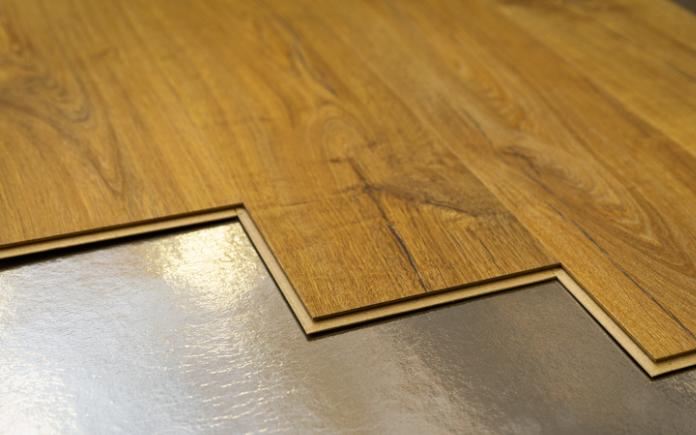
It’s possible to install laminate flooring without removing baseboards.
Laminate flooring is a cost-friendly way to update the look of your floors, but when installing it, you have to take into account the space it needs against baseboards.
This type of flooring floats on top of the floor’s surface, so over time, it will expand and contract with changes in temperatures. Before installing it, you need to leave a quarter-inch gap between the floorboards and the wall.
Normally in a remodeling situation, you don’t have the opportunity to put laminating flooring down before installing baseboards because you’re just removing the floor and utilizing the same baseboards.
You don’t have to remove baseboards to install laminate flooring. All you need to do is purchase some molding to cover the gap between the flooring and the baseboards. You have two options to choose from.
Shoe molding is a thin strip of molding that finishes out the look of baseboards and will cover the gap needed to let the laminate floorboards breathe. You can also use quarter-round molding if you want a more curved piece to top off that gap, but it will not be as flush to the baseboard as shoe molding.
Whichever molding you choose, be sure to paint or stain it before you install it.
If you want brand new baseboards along with your new laminate flooring, install the flooring before the baseboards. Just as you do with the molding, paint or stain the baseboards first and then install. This will give them plenty of time to dry while you install the laminate flooring. Once the baseboards are dry, you can now install them along the wall over the quarter-inch gap.
Skip to [21:22]for the full segment on the Today’s Homeowner Podcast.
Also on this episode:
Best Base for a Plastic Shed
Get Granite Countertops with the Sticker Shock
A Caller’s Trick for Painting Doors
Best New Product
This Fast-Drying Paint is Scuff-Resistant and Stain Repelling. Learn more>>
Simple Solutions
Easy, Accurate Inside Measurements — Taking inside measurements with a measuring tape requires bending the tape and then making an educated — but not always accurate — guess at the distance between the two surfaces. Here’s an easy, accurate way to take inside measurements:
Use a binder clip to clamp a credit card to the tape.
Take the measurement and slide the card up against the inside surface.
Straighten out the tape measure and read the dimension where the tape crosses the edge of the credit card.
Q: I want to expand my master bathroom. On the other side of the bathroom wall is a half-bath, so I’d like to combine the two spaces to make one large master bath. Is that advisable and, if so, how difficult a project is this?
A: When combining a master bath and half-bath, keep your resale value in mind. While a nice master bathroom is a great selling point, losing a bathroom will drive that resale value down, so talk with a real estate agent before you start anything. Get a design from an interior designer or architect to show what the renovation floor plan would look like, and consult with a contractor to take a look to get some prices. You don’t want to end up with an awkward floorplan just so you have a nice master bathroom. One nice thing about this situation is the plumbing is already there, so you probably won’t need to run new plumbing. Get a preliminary plan and price. If it looks good and you feel good about it and you won’t hurt your resale value, go ahead.
Other Products and Links Mentioned
Further Reading
Ask a Question! (Podcast)
Ask a question and we could answer it on the “Today’s Homeowner Podcast!” We also may use it on our nationally syndicated radio broadcast or on todayshomeowner.com.
Gutter guards protect your home’s gutters from damaging leaves, pine needles, twigs and other clogging debris. They also reduce the number of times you need to clean your gutters each year while preventing debris and water runoff from damaging your home’s foundation.
If you notice large debris falling around your home or just want a preventative maintenance measure, gutter guards may be a good option. Keep reading to learn more about gutter guards and the best options available for your home.
Today’s Homeowner works with an independent reviews team to create evidence-based research that helps our readers make informed decisions. The reviews are always independent. For transparency, we may be compensated if you purchase through a link.
Types of Gutter Guards
Gutter guards are made with a variety of materials to fit the budget, gutter style and individual needs of homeowners. Here are the benefits and drawbacks of some of the most common types of gutter guards.
Screen gutter guards consist of large holes or slits that filter debris from passing water. Because most screen models are installed under the row of shingles closest to your gutters, they are usually inexpensive and easy to install. While screen gutter guards are user-friendly, they’re typically less effective than other models and can be dislodged by high winds.
Micro-mesh guards are similar to gutter screens, though they have extremely small holes to filter even the smallest debris. They’re typically made of stainless steel and are installed by slipping under the bottom row of your roof shingles, snapping on top of your gutter or fastening to the board below your roofline.
Many micro-mesh gutter guards, including those from LeafFilter Gutter Protection, combine micro-mesh with other layers like screen guards. As such, these models typically require professional installation.
Brush gutter guards resemble large pipe cleaners that rest inside your gutter tubes. As water and debris travel down your roof, this type of guard prevents leaves, twigs and other large debris from entering. While inexpensive and simple to install, these guards aren’t very effective at preventing smaller debris from entering your gutters.
Foam gutter covers are similar to brush gutter guards. They’re inexpensive and easy to install. Usually offered as a triangular block of foam, these models wedge inside your gutter’s structure to keep out large debris. Foam guards can be cut to fit your gutter’s size and don’t need screws or nails for installation. However, these guards become saturated quickly in areas with high precipitation, which can cause your gutters to overflow and mold to form.
Reverse-curve gutter guards allow water to flow over the top of your gutter and around a curve before dropping inside. This helps large leaves and other debris pass over your gutters, eliminating the risk of clogs. While effective, reverse-curve models are difficult to install and have a large profile that can be seen from ground level.
Factors to Consider When Choosing the Best Gutter Guards
In addition to the type of gutter guard, here’s a list of other factors to consider before making a gutter guard purchase.
Material
Here’s an overview of common materials used in gutter guards:
Stainless steel—Stainless steel is used in many professional-grade gutter guards. It’s commonly found in micro-mesh and reverse-curve gutter guards and is one of the most durable options, standing up to rain and other weather elements. While stainless-steel gutter guards are long-lasting, they’re typically more expensive than other models.
Aluminum—Aluminum is a go-to gutter guard material for homeowners who are looking to balance longevity and affordability. Similar to stainless steel, aluminum is used in many professional micro-mesh and reverse-curve models.
Plastic—Plastic is regularly used as a component in many gutter guard models. It can be used for bristles in brush guards and in the frame for reverse-curve guards.
Foam—Only used in foam gutter guards, this material is an affordable and temporary option for protecting your gutter system. While effective at filtering out large debris, foam is susceptible to deterioration and mold growth over time.
Warranty
Many professionally installed gutter guards include warranties that last multiple years. However, it’s important to look into your roof warranty before purchasing a gutter guard. Some gutter guard models are installed underneath your bottom row of roof shingles, which can void your roof’s warranty. DIY gutter guards, such as brush and foam guards, don’t usually come with warranties because they’re a semi-permanent solution to protecting your roof’s gutters.
Installation
Most gutter guard systems require intensive installation procedures and are best left to professionals, particularly if you have a steep roof or a multi-story home. However, if you’re looking for a temporary gutter guard for a small area around your home, DIY installation is manageable. For example, foam and brush gutter guards typically require simple tools and minimal hardware.
Visibility
Depending on the gutter guard you select, its structure may be visible from the ground. As such, you may want to consider purchasing a model with various color options that you can match to the color of your home. These models include micro-mesh, screen and reverse-curve gutter guards, which are almost always visible from the street. Foam and brush gutter guards usually rest completely within the walls of your gutter and are shielded from outside view.
Size
Gutters usually come in four-, five- or six-inch widths and require a gutter guard with a similar size to effectively protect against debris. If you’re purchasing a foam or brush guard, you’ll need to measure your gutter from its inside edge to its outside edge to ensure you purchase the right size. However, if you opt for a micro-mesh or reverse-curve gutter guard, a professional gutter installation service will handle the measurement process for you.
Top 5 Gutter Guards for Your Home
Based on our in-depth research and analysis of gutter guard providers on the market, we found that the following five companies offer the best gutter guards:
LeafFilter Gutter Protection
As one of the largest gutter protection companies in the nation, LeafFilter Gutter Protection has served more than 800,000 homeowners. The company uses a patented guard technology that latches onto your existing guttering to filter out pine needles, shingle grit, seed pods and more. LeafFilter stands by its product with a lifetime warranty, giving you peace of mind that your gutter guards are protected.
Benefits
LeafFilter’s gutter guards consist of a three-piece system that supports the weight of your existing gutters and prevents large debris from clogging their tubes.
The system starts with structural hangers, which fasten onto your home and secure your gutters.
Next, an anti-warp and weather-resistant uPVC frame is installed along your gutter, providing extra support and filtration.
Lastly, the gutter guard system is topped with a stainless-steel micro-mesh that filters out fine debris as small as 275 microns.
These three pieces work together to draw water in and push debris away. This gutter system also has an angled pitch that sheds large debris and prevents damage from heavy sticks, twigs and pests.
Pricing
LeafFilter gutter guards cost about $22–$28 per linear foot. For example, if you own a single-story home with 150 linear feet of gutters, you can expect to pay between $3,300 and $4,200.
HomeCraft Gutter Protection started as a father-son business operating out of a small warehouse. It’s since grown into a quality gutter guard provider that serves 10 states across the South and Midwest. The company offers free estimates and protects you with its lifetime transferable warranty.
Benefits
Homecraft uses a three-part gutter guard system that creates a high-quality and effective product.
The gutter guards start with reinforced hidden hangers that attach to your home’s fascia boards, locking the gutters in for added safety.
A powder-coated aluminum frame is layered on top and holds the system’s micro-mesh screen.
The screen has a unique diamond structure that elevates debris and allows water to pass through.
Pricing
While HomeCraft Gutter Protection doesn’t provide prices online, the cost of gutter guard installation is affected by a variety of factors, including your gutter’s linear footage and condition. HomeCraft services Alabama, Colorado, Florida, Georgia, Indiana, Kentucky, North Carolina, South Carolina, Tennessee and Texas.
All American Gutter Protection has more than 50 years of experience and serves 13 states across the country. The company offers competitive pricing and extends discounts to seniors and active or retired military personnel.
Benefits
All American Gutter Protection uses a high-quality guard with an aluminum body and stainless-steel screen.
The anti-warp body provides a strong foundation for the screen, which filters leaves, pine needles, dirt, twigs and other debris.
Its effective design ensures that only rainwater reaches your gutters, reducing the number of times you need to clean them.
Other benefits of All American Gutter Protection include:
Rustproof guards
Lifetime warranty
More than 30 color options
Pricing
While the cost of your gutter guard system depends on a variety of factors, including your home’s square footage, All American Gutter Protection suggests budgeting $15–$20 per linear foot. This means that if your home has 200 linear feet of gutters, you can expect to pay between $3,000 and $4,000.
Mastershield has more than 20 years of experience in the gutter guard industry and uses patented micro-mesh technology in its gutter guards. The company also incorporates recycled materials throughout its gutter guard system and uses HydroVortex technology that keeps your system effective against rain and debris.
Benefits
Matershield’s stainless-steel micro-mesh has pure copper wires woven throughout, which collect water and attack destructive oils and organisms flowing through your gutter system.
In addition to its traditional gutter protection system, the company offers a heated model that works to melt damaging snow and ice dams collected near the edges of your roof. Heated gutter guards are especially helpful to homeowners living in the country’s snowbelt, which experiences extreme freezes that can harm gutters.
Mastershield offers a heated model that works to melt damaging snow and ice dams collected near the edges of your roof.
If your Mastershield gutter guard system clogs, the company will replace the system or issue you a full refund with its warranty.
Should a potential clog damage your home, the company will even refund your insurance deductible up to $1,500.
Pricing
On average, a Mastershield gutter guard system costs $19–$21 per linear foot. This cost is influenced by a number of factors, including the condition of your gutters and your selection of a traditional or heated system. Luckily, the company offers free project consultations to help you get a better understanding of the cost and scope of the project.
Amerimax is a manufacturer of rain-carrying systems, offering an array of products direct to consumers and professional contractors. The company specializes in DIY gutter guard systems that fit most standard gutters.
Benefits
Amerimax’s most popular gutter guard options include its Metal Lock-In Gutter Guard, Hoover Dam Gutter Guard and Titan Gutter Guard. Below is an overview of all three models:
Metal Lock-In Gutter Guard: This simple gutter guard has a fine mesh pattern that keeps out large debris. The system is compatible with most traditional K-style gutters and has a pre-notched design that eliminates gaps in coverage. The Metal Lock-In Gutter Guard is made of powder-coated steel and is protected by a 10-year warranty.
Hoover Dam Gutter Guard: Compatible with four-, five- or six-inch metal K-style gutters, this system has an innovative design that collects heavy rainfall while shielding your gutters from leaves, twigs and other debris. It’s made of powder-coated steel and is installed under your first row of shingles. Additionally, this system comes with a 15-year limited warranty.
Titan Gutter Guard: The Titan Gutter Guard is made of high-quality aluminum and filters both large and small debris. This gutter guard has a low profile and two-step installation process that conforms to your roof line. It also comes with a 20-year performance warranty, one of Amerimax’s most comprehensive.
Pricing
Amerimax’s gutter guards vary in price based on design and linear footage purchased. View the chart below to learn more about the cost of Amerimax’s popular gutter guard options.
Product
Cost per linear foot
Hoover Dam Gutter Guard
$1.66
Metal Lock-In Gutter Guard
$1.28
Titan Gutter Guard
$1.33
Our Conclusion
If you’re looking for the best option to protect your gutters, we recommend HomeCraft. This experienced gutter guard provider offers free estimates and boasts an impressive lifetime transferable warranty. HomeCraft’s unique three-part gutter guard system makes it both a high-quality and effective product.
Frequently Asked Questions About Gutter Guards
Do gutter guards work?
While gutter guards don’t completely eliminate the need to clean your gutters, they do significantly decrease the number of times you have to climb a ladder to do it. Additionally, gutter guards prevent total blockages, which can cause foundation damage, structural issues and mold and mildew.
Are gutter guards worth the money?
While the cost of installing gutter guards can add up, it’s important to consider the impact of clogged gutters. Blocked gutters can lead to costly problems like roof leaks, insect infestations and foundation damage. In addition to preventing damage, gutter guards can reduce the number of times you need to clean your gutters each year. This prevents you from spending a lot of money on gutter cleaning services or having to climb a ladder to do the cleaning yourself.
How much do gutter guards cost?
The cost of gutter guards varies depending on a number of factors, including the type of installation, the material used and the linear footage of your roof. In general, DIY gutter guards range in price from $1–$3 per linear foot, while professionally installed models cost $15–$28 per linear foot.
How We Chose the Top Gutter Guard Companies
Today’s Homeowner aims to offer our readers well-researched, objective reviews. In that effort, we have created a detailed research process that uses a weighted scoring system to rate each company we review objectively.
This approach to scoring allows us to be objective in our findings and back up our claims. Our rating system for gutter guard companies is based on a 100-point scale based on the following factors:
Years of Experience (25): How long has the company gained industry experience, knowledge, and customer relations?
Reputation (25): Besides its experience, what sort of reputation does the company have from previous or existing customers on popular reviews sites like the Better Business Bureau (BBB)? Does it feature accreditation from the website?
Licenses (35): Does the company hold the proper licenses and insurance to perform the services it claims to offer?
Guarantee (15): Does the company stand by its work and offer a service guarantee or not?
Gutters divert rainwater away from your home, helping prevent foundation erosion, shingle rot and other costly damages. When taking in water, your gutters can collect leaves, twigs and other debris that can clog your system and prevent proper drainage.
Gutter guards, or leaf guards, help prevent debris from clogging your system and reduce the number of times you need to clean them out. Read on to learn more about gutter guards and their installation costs.
Today’s Homeowner works with an independent reviews team to create evidence-based research that helps our readers make informed decisions. The reviews are always independent. For transparency, we may be compensated if you purchase through a link.
How Much Does Gutter Guard Installation Cost?
Most gutter guards are priced by the linear foot. Below is a breakdown of the benefits and drawbacks of each gutter guard as well as their installation costs.
Gutter guard type
Gutter guard pricing
Installation cost*
Total cost to install**
Micro-mesh
$2–$4
$2.50–$3.75
$900–$1,550
Foam
$2–$3.25
DIY
$400–$650
Brush
$3–$4.25
DIY
$600–$850
Reverse-curve or gutter helmets
$3.50–$6.50
$2.25–$12
$1,150–$4,300
Plastic screen
$0.40–$1
DIY
$80–$200
*Cost per linear foot **Based on 200 linear feet of gutters, which is the gutter length of the average home
While the cost of professional installation was included for gutter guards that typically require it, most systems can be installed on your own if you have the proper expertise. However, if you have minimal experience climbing your roof and maintaining your gutters, it’s best to leave gutter guard installation to the professionals.
To get the best price for your gutter guard system, request quotes from multiple companies to compare pricing.
What Are Gutter Guards?
Gutter guards, also known as gutter helmets or gutter screens, are devices that prevent debris from entering your gutters. There are a variety of gutter guards available, from DIY brush and foam gutter guards to professionally installed micro-mesh systems. No matter the style, every gutter guard is designed to reduce the amount of debris that enters your gutters.
Some of the most popular gutter guards use micro-mesh screens that filter even the smallest debris, such as shingle grit. These systems usually consist of three parts and work to filter damaging debris while supporting your current gutter system.
Types of Gutter Guards
Type
Pros
Cons
Micro-mesh
Highly effective and typically made of stainless steel for added durability
Expensive and typically installed underneath the bottom row of shingles, which can void your roof’s warranty
Foam
Affordable guard that wedges between the sides of your gutter to prevent large debris from entering
Can become saturated, growing mold and mildew
Brush
Very affordable and simple to install
Allows small debris to flow into gutters
Reverse-curve
Forces large debris to flow over gutters
Expensive and has a large profile that can be seen from ground level
Plastic screen
Affordable and easy to install
Can become dislodged in high winds
Factors That Impact the Cost of Your Gutter Guard Installation
The cost of gutter guard installation will vary depending on a variety of factors, including your location, the condition of your gutters and more. Below are some factors to consider before installing your gutter guards.
Roof type: Much of the difficulty during gutter guard installation is tied to the shape, slope and size of your roof. For example, if your roof is steep or hard to access, your installation cost will reflect the added difficulty.
Type of gutter guard: The gutter guard you select will impact the overall cost, with DIY foam guards being less expensive than reverse-curve or micro-mesh gutter guards.
Obstacles: Many homes are surrounded by obstacles that drag out the installation process. For example, if your roof is surrounded by heavy foliage or large trees, it may take longer to install your gutter guard, increasing the cost of the system.
Gutter condition: Many gutter guards can’t be installed if your system is damaged or corroded. As a result, your gutter guard company may have to repair or replace sections of your gutters, increasing the overall cost.
Labor rates: The local labor rates will vary based on your location. For example, some jurisdictions require higher labor rates by law. As a result, the labor cost of your gutter guard system may be impacted based on your location.
Climate: If you live in an area that experiences heavy snowfall or ice, you may need to purchase a heavy-duty gutter guard or a system with an included heating element. These special features will increase the overall cost of your system.
Benefits of Installing Gutter Guards
Below are a few benefits of gutter guards:
Cuts down on time and money spent cleaning and maintaining gutters
Helps prevent birds, mice, mosquitoes and other pests from breeding inside your gutters
Reduces the amount of standing water inside your gutters, minimizing the risk of ice dams and other winter hazards
Prevents premature gutter corrosion caused by leaves, pine needles and other debris accumulations
Improves the overall water flow within your gutters
Reduces the risk of a fire by preventing falling embers from igniting accumulated debris
It’s important to note that while gutter guards limit the risk of blockages, no device will be 100% effective in preventing all debris from entering your gutters. Therefore, you’ll still need to clean your gutters from time to time, though the frequency will decrease.
Frequently Asked Questions
What are the different types of gutter guards?
The five main types of gutter guards are screen, micro-mesh, brush, foam and reverse-curve gutter guards. Research each type before making a purchase to select the best gutter guard for your home.
What are gutter guards made of?
Gutter guards are made with a variety of materials and vary based on the type you purchase. The three most common materials used in gutter guards are aluminum, plastic and foam.
How often do I have to clean gutters with gutter guards?
Gutters with gutter guards need to be cleaned about once every two years. This is significantly less than traditional gutters, which need to be cleaned about twice per year.
What are the best gutter guard companies?
LeafFilter Gutter Protection is one of the best gutter guard companies, offering its three-piece system to 43 states across the country. Other top gutter guard companies include All American Gutter Protection and HomeCraft Gutter Protection, which both protect your gutters with an efficient micro-mesh screen.
What are some other gutter services?
Many gutter guard providers offer additional services, such as gutter cleanings, repairs and replacements. Contact your local gutter guard provider to ask about its related services.
Our Recommendations
Choosing the best gutter guard for your home can depend on your home’s size, gutter type, and your personal preference. While LeafFilter and HomeCraft are our top two picks for homeowners in their service areas, we recommend comparing a few quotes based on your specific home.
LeafFilter Gutter Protection
LeafFilter Gutter Protection has served more than 800,000 customers in 43 states across the country. The company installs an effective three-piece gutter guard system that filters pine needles, shingle grit, seed pods and other debris as small as 275 microns. Additionally, LeafFilter offers homeowners a lifetime warranty, giving them peace of mind that their investment is protected.
Starting as a father-son business operating out of a small garage, HomeCraft Gutter Protection brings quality gutter protection services to homeowners across the South and Midwest. The provider installs a three-piece gutter guard system that uses a unique diamond micro-mesh to elevate debris for increased filtration.
Unfortunately, Texas cities experience the most foundation problems. In Houston, the humid subtropical climate causes slab foundation to crack and crawl spaces to develop mold and mildew. Add that to the city’s soil-rich clay, and you get incredible potential for a damaged foundation.
If you’re a Houston homeowner noticing signs of foundation issues, such as cracks in drywall, sloping floors or moisture damage, you may need to have your foundation repaired. Foundation repairs are costly and difficult to navigate. That is why we created this detailed guide for foundation repair in Houston. This guide will help you learn about the top foundation repair companies in the city, as well as their services, cost and financing options.
Today’s Homeowner works with an independent reviews team to create evidence-based research that helps our readers make informed decisions. The reviews are always independent. For transparency, we may be compensated if you purchase through a link.
Olshan has provided foundation repair services across the U.S. since 1933. The company has been recognized by the State of Texas, and it provides certified structural technicians for each job. Olshan combines its expertise with the most innovative foundation technologies to provide one of the most comprehensive selection of foundation solutions.
Cost and Financing Options
Olshan states that its foundation repair services cost from $3,000 to $7,500 on average. Foundation repair is costly, which is why Olshan provides flexible financing solutions for its services.
Olshan works with customers to create payment plans that feature no payments and no interest for 12 months. Customers can receive rates as low as 0% and payments as low as $125 per month. All these options are subject to credit approval.
Customer Reviews
I called Olshan for a free estimate after I noticed cracks in my house. [The inspector] was both professional and friendly! He did a thorough inspection and explained what was happening. He then discussed the various options available and suggested the best route to take.
– Dayna L. on Google Reviews
2. Ram Jack
Ram Jack is another large foundation repair company that features a branch in Houston. Since 1975, the company has grown to 24 franchises and 32 dealerships that offer residential and commercial foundation services. Ram Jack offers some of the best financing options for foundation repair in Houston.
Cost and Financing Options
Similar to other foundation repair companies, your overall cost with Ram Jack will depend on the severity of the repair, length of evaluation, and services required. The company states that the average cost for pier and beam repairs runs from $1,000 to $3,000 for piers that are six to eight feet apart. Piers that focus on a single corner can cost between $3,500 to $5,000.
Ram Jack offers some of the best financing options for these costly repairs. Learn about its financing options below:
Same-As-Cash Option: This option has no interest and no payments for the first 12 months. EnerBank USA provides loans with approved credit, and the repayment window ranges from 24 to 132 months. If paid within a year, interest can be waived.
Reduced Interest Loan Option: Ram Jack also offers a five-year reduced interest loan. Also through EnerBank USA, this loan has 6.99% APR, and its repayment window ranges from 60 to 120 months. Payment begins 30 days after the loan closes.
Customer Reviews
Out of the 9 estimates I received, they were the most honest and didn’t try to sell more than what I needed for my house. Very professional and I would recommend them 100%. They cleaned up so well I couldn’t even tell they had been there once they were finished.
– Lisa P. on Google Reviews
3. Two Brothers Foundation Repair
Specializing in both residential and commercial services, Two Brother Foundation Repair has offered foundation repairs services and free structural foundation assessments for homeowners in the Houston, Texas, area since 2015. The company provides detailed proposals of its findings and repair recommendations for services such as pressed-pilings and poured concrete pier replacement. We found Two Brothers Foundation Repair’s transferable lifetime warranty on its foundation repairs to be especially impressive.
Cost and Financing Options
Two Brothers Foundation Repair offers a couple of financing options, all subject to credit approval, through GreenSky, with shorter repayment windows:
No Interest Option: Customers can avoid interest on their loan and if the full amount is paid within 12 months.
Reduced Interest Loan Option: The company offers a reduced interest rate of 6.99% for 60 months.
Customer Reviews
From the initial contact to finishing the foundation repair, every member of the company was courteous and professional. The repair persons actually performing the service made the repair pleasurable by making sure it didn’t interfere with our normal living at home.
– Livingston H. on Google Reviews
4. Structured Foundation Repairs Houston
If you are a real estate agent or looking to purchase a home in the Houston area, Structured Foundation Repairs is a great choice for you. The company started in 2003 to serve real estate and mortgage professionals throughout North Texas, but now provides its services to the general public. Structured Foundation Repairs’ background makes it a great choice for home buyers with services geared towards new construction and real estate transactions.
Cost and Financing Options
You can expect Structured Foundation Repairs services to cost somewhere around $4,765, the average cost of foundation repair in Houston The company states that it will work as an easy financing option with you whenever you purchase its services. It does not feature any standing options online.
Customer Reviews
I used this business to evaluate whether I needed any foundation work. They were prompt and very courteous. The evaluation was extremely detailed. He preformed level tests through out the house and inspected the pier and beam structure.
– V. Rogers on Google Reviews
5. Dawson Foundation Repair
Dawson Foundation Repair has offered foundation repair services for all types of concrete slabs through Houston since 1984. The company provides free, detailed estimates on slab settlement to use its bell bottom piers, which feature a large, fat bottom to provide stable support despite unstable soil. Dawson offers a collection of online resources to explain common foundation problems in Houston to allow customers to better understand their foundation problems and possible solutions.
Cost and Financing Options
Dawson states on its website that the cost of a pier installation ranges from $600 to $800. The company also includes a Lifetime Service Agreement to every homeowner, which acts as a warranty for its services. It does not share any information about financing options online, but typically financial firms and banks help provide loans on costly home repairs.
Customer Reviews
Dawson was very thorough and professional. We appreciate all the information they provided on their process, and we have great assurance that Dawson’s work will stand the test of time. Dawson was highly sensitive to the fact that we have 3 young kids. They took the necessary steps to ensure our home was safe and clean and they also completed their work on time.
– Randy K. on Google Reviews
Final Thoughts
There are plenty of options for foundation repair in Houston, but if you want the most comprehensive and well-rounded provider, then we recommend Olshan as the Best Overall in Houston. If the up-front cost of a repair is your primary concern and you need financing for your foundation repair, we suggest you look into Ram Jack.
Compare Top Foundation Repair Companies in Houston
Company
Olshan
Ram Jack
Two Brothers Foundation Repair
Structured Foundation Repair
Dawson Foundation Repair
Best for
Overall
Financing
Warranty
Home Buyers
Pier Installation
BBB Rating
A+
A+
A+
A+
A+
Average Cost
$3,000-$7,500
$1,000-$5,000
$4,764 (Houston Average)
$4,764 (Houston Average)
$600-$800 (Single Pier)
Lifetime Warranty?
Yes
Yes
Yes
Yes
Yes
Average Cost of Foundation Repair in Houston
There are various factors that impact the overall cost of foundation repair in Houston. You can expect the overall cost to range from $3,000 to $7,000. The amount of damage, the findings of a structural assessment, the need for slabjacking and the overall resale value all have an impact on your foundation repair cost. Below is a brief survey of the average cost of popular foundation repair services in the Houston area:
Pier and Beam Services: $4,000–$6,500
Basement Waterproofing: $2,500–$7,000
Concrete Crack Filling: $220–$700
Slope/Concrete Stabilization: $3,500–$11,500
Signs of Foundation Problems
There are some common noticable signs of your home having foundation issues. These include:
Exterior Cracks: These cracks are typically large and have a zigzag pattern. Sometimes they are referred to as “staircase cracks”, because they resemble the outline of a staircase. This is especially common in brick-and-mortar exteriors.
Interior Sheetrock Cracks: If you notice large cracks on your sheetrock that line interior walls, zigzag, or cause wallpaper to fall off, then you are most likely having an issue with the foundation below.
Sloping Floors: Another sign of foundation issues are uneven floors that slope to one side. Doors that are out of square also indicate a problem with the foundation below. Pay attention if the gradient of your floor is more than one or two inches every 15 feet.
Bouncing Floors: If your floors are bouncy, it is a sign that you might have rotten wood in your home’s foundation.
Door Frame/Window Frame Separation From Brick: This is a severe sign that you are experiencing foundation issues. If you notice a door frame or window frame being separate from brick, seek immediate help.
Foundation Services You May Need in Houston
Houston experiences a variety of factors that impact what foundation repair services you might need. Read over some of the major causes for foundation services in Houston here:
Soil: Houston’s soil is largely clay-based. This soil is absorbent and soaks up large amounts of water. This causes the soil under your foundation to swell and adds pressure on a concrete slab foundation. This leads to settlement and cracking.
Drought: Droughts are common around Houston, and they create the opposite effect that clay soil does. Droughts create soil shrinkage and depletion of the water table. This creates gaps between your foundation and the soil leading to shifts in settlement.
Watering Program: Many Houston residents are aware of soaking their foundation to counteract the effects of a drought on it. However, improper use of a watering program can actually cause foundation issues. Check to make sure the soil is pulling away from your foundation before you soak your foundation.
Foundation Repair Terminology
Foundation repair is a complicated field that features many different terms and ideas you may not be familiar with from day-to-day home maintenance. Below are some major terms you will come across as you research foundation repair companies that you need to know.
Downspout Extensions: These are extensions installed on your gutters. They allow rainwater to be moved further away from your home’s foundation.
Foam Injection: Polyurethane foams in liquid form injected into concrete cracks to fill them. The foam expands to lift the slab back up.
Hydrostatic Pressure Test: This test allows pressure vessels such as pipelines, plumbing, gas cylinders, boilers and fuel tanks to be tested for structural integrity and possible leaks.
Interior Water Discharge System: This refers to a system, such as a sump pump, that redirects water leaking into your foundation back out and away from it. It often funnels the water into other exterior drainage systems.
Mudjacking: This refers to when concrete is raised by pumping mud or other material under it through drilled holes.
Piers: Piers are large beams that are installed vertically beneath a home’s foundation. They are typically used when settlement occurs. They are raised by using a hydraulic machine, and they position the foundation at its proper level. Popular options include push piers, which are used for smaller homes with concrete slab foundations, and helical piers, which are used for large homes or projects and feature a screw-like design.
Pilings: These are heavy stakes or posts installed to support the foundations of a superstructure. Piers are a type of piling.
Surface Drain Installation: This service has a foundation repair company install a drain in your crawl space or basement that funnel any leaks into an exterior drainage system.
Surface Glue Down: This refers to when a company uses an adhesive sealant that stops excess moisture from getting inside your home’s basement or crawl space.
Foundation Repair in Houston FAQ
Can you fix foundation problems yourself?
If you have a crawl space foundation, and you notice settlement occurring towards the center of your home then you can possibly fix the problem yourself. If you have a slab foundation that is sinking or notice issues on the exterior or interior of your home, then we highly recommend you seek professional help immediately.
Will homeowners insurance cover foundation problems?
You can possibly get foundation repairs covered through your homeowners insurance if it is covered in your policy. We recommend you look into our top picks for homeowners insurance to learn which providers offer foundation coverage in their policies.
Is it safe to live in a house with foundation problems?
It takes many years for a house to develop foundation problems that make it uninhabitable. We recommend that you seek help with any foundation issues as soon as you notice any signs of a problem.
Will foundation repair ruin my landscaping?
Many foundation repair customers are concerned that a company might ruin their landscaping. This most often occurs when a home requires its foundation to be lifted with the use of piers. The repair company must drill down into the soil around your home, removing any plants in the way, to properly install these devices that raise your home’s foundation and provide long-term support.
Be sure to discuss with the company you are considering how they handle other exterior components of a home and what limitations might be placed on their warranties.
How We Chose the Top Foundation Repair Companies
Today’s Homeowner works to provide our readers with well-researched, unbiased reviews. We have created a detailed research process that uses a weighted scoring system to objectively rate each company we review. We also believe in being transparent about our process and scoring in order to back-up our conclusions. Our rating system for foundation repair is based on a 100-point scale based on the following factors:
Service Options (48): Does the company offer a comprehensive selection of foundation solutions, including waterproofing, concrete lifting, slope stabilization, leaning chimney repairs, and more?
Payment Options (10): What financing options does the company provide for its customers? Can customers receive financing options such as same-as-cash and a reduced-interest rate?
Trustworthiness (10): Has the company garnered a solid reputation for its services? What rating does the company have on the Better Business Bureau? Does it feature an accreditation on the Better Business Bureau?
Warranty Options (20): Does the company provide a substantial warranty on its services? Does it offer a lifetime warranty or only exterior and interior underpin warranties?
Additional benefits (12): What additional benefits can customers receive from the company, including commercial services, online blogs, online videos, an online booking process, and eco-friendly options?
Though Seattle features many scenic vistas, its wet weather patterns and deep, poorly drained organic soils can spell structural issues. These foundation issues can range from mold in your basement to foundation settlement. If your Seattle home has slab cracks, uneven flooring or cracks in its brickwork or concrete, you may be in need of foundation repair.
Foundation repair is a complicated and costly process, but there are plenty of companies in the Seattle area that can help. We created this detailed guide for foundation repair in Seattle to help you obtain a more clear understanding of what goes into the foundation repair process. This guide will help you in your research for the best foundation repair companies in Seattle as we compare each company’s services, financing options and average pricing.
Today’s Homeowner works with an independent reviews team to create evidence-based research that helps our readers make informed decisions. The reviews are always independent. For transparency, we may be compensated if you purchase through a link.
TerraFirma Foundation Systems is our top pick for foundation repair services in the Seattle area. Founded in 2005 by sixth-generation Oregonian Ryan Beckly, TerraFirma understands the problems with foundations in the Pacific Northwest region. The company offers one of the most comprehensive selections of foundation repair and basement waterproofing services in Seattle. It also features a unique and useful online portal for customers to make payments through.
Cost and Financing Options
TerraFirma does not provide online sample pricing. You can most likely expect the company’s services to cost around $3,307–$5,646, the average price of foundation repair in Seattle.
TerraFirma does provide financing options through both EnerBankUSA and MoreHouse Finance. Learn about possible financing options below:
Same-As-Cash Option: This option has no interest and no payments for the first 12 months. The repayment window ranges from 24 to 132 months. If paid within a year, interest can be waived.*
Reduced Interest Loan Option: This is a five-year reduced-interest loan. This loan has 6.99% APR, and its repayment window ranges from 60 to 120 months. Payment begins 30 days after the loan closes.*
Customer Reviews
I had two estimates. TerraFirma was much cheaper but more than that they moved fast, were clean, professional. The inspector gave them high marks and I have a house that is earthquake secure to magnitude 8 give or take.
– Carmen G. on Google Reviews
2. Ram Jack
Ram Jack has offered foundation repair solutions to residential and commercial customers since 1975 across the entire United States. The company’s branch in SeaTac, Washington, serves clients in Seattle. Ram Jack is an excellent option if you are in need of piling services. The company boasts a wide variety of piling options including eco-friendly driven piles.
Cost and Financing Options
Ram Jack states on its website that its average cost for pier-and-beam repairs runs from $1,000 to $3,000 for piers that are six-to-eight feet apart. Piers that focus on a single corner or closer together can cost between $3,500 and $5,000. Your price can vary greatly depending on the extent of foundation damage and the services you opt for.
Similar to TerraFirma, Ram Jack offers financing options through EnerBank USA. Read over the company’s financing options below:
Same-As-Cash Option: Ram Jack provides loans with a repayment window ranging from 24 to 132 months. Interest can be waived if the loan is paid off in a year. This option has no interest and no payments for the first 12 months.*
Reduced-Interest Loan Option: Ram Jack also offers a five-year reduced interest loan. This loan has 6.99% APR, and its repayment window ranges from 60 to 120 months. Repayment begins 30 days after the loan closes. *
Customer Reviews
I recently had the outer wall of my foundation lifted and the floor leveled throughout my house. … [The Ram Jack technicians] were all very professional and did not leave until I was 100% happy with the job. They were on time every day and very respectful of my dogs, children, home and time. Personally I was very anxious for weeks beforehand, but once I met the crew I was put at ease.
– Grace R. on Google Reviews
3. Seattle Foundation Repair
Seattle Foundation Repair is a local company with more than 50 years in the construction industry. It focuses on bringing the latest technology available to help with steel push piers and helical piers, waterproofing and concrete lifting and leveling. We find the company’s waterproofing offerings— services like epoxy and urethane injection and targeted drain tile installation—particularly impressive.
Cost and Financing Options
You should expect service with Seattle Foundation Repair ro run around $3,307–$5,646. The company partners with Enhancify to offer comprehensive financing solutions.
some options you can receive with approved credit through Seattle Foundation Repair include 0% and 5.99% APR, one- to seven-year terms, funding available within one business day and loans as high as $100,000.
Customer Reviews
Most impressive to me was the fact that [the Seattle Foundation Repair crew] came when they said they would, worked hard, did an excellent job, kept me informed, and cleaned up the area each day after work was completed. Also, they took pictures to show me the areas under the house that they had repaired, and carefully answered any questions I had.
– Pam J. on Google Reviews
4. R&R Foundation Specialist, LLC
Based out of Everett, Washington, R&R Foundation Specialist provides industry-standard foundation repair services. The company has working relationships with local structural engineers to provide accurate, detailed and free foundation elevations. R&R Foundation Specialist also has more comprehensive commercial solutions than other companies on this list.
Cost and Financing Options
The overall cost of R&R Foundation Specialist will most likely range between $3,307–$5,646 for residential services. Commercial service may be more costly depending on the size of the property. R&R Foundation Specialist partners with 1st Security Bank to provide financing options.
Through 1st Security Bank, the company will help create a construction loan with you. Based on your approved credit, you will receive a payment plan that takes into consideration your specific financial needs.
Customer Reviews
When we noticed a crack running across our garage ceiling and down our chimney, we scheduled a time with R&R to come check it out and see if we had a foundation problem. [The inspector] was right on time, thorough in his inspection, and completely professional.
– Sam R. on Google Reviews
5. Matvey Foundation Repair
Founded in 1997, Matvey Foundation Repair is an excellent option for a foundation repair company that helps with real estate evaluations and repairs. The company recognizes the value in saving old foundations and the structural elements of buildings. Matvey provides a user-friendly experience online through its personal blog and videos, and the company is used to walking customers through the real estate process when it comes to structural foundation evaluations.
Cost and Financing Options
Though the company does not feature sample pricing online, Matvey Foundation Reapir’s service will most likely range between $3,307–$5,646. The company does feature a partnership with Hearth to provide financing options.
To receive financing with Matvey Foundation Repair, you enter some brief information on Hearth’s website to generate a tailored loan and payment plan. Based on your approved credit, you can receive loan amounts up to $100,000, funding within three days, no prepayment penalties and no home equity requirement.
Customer Reviews
Very responsive and professional. I had to have extra supports installed under my porch and a new drainage system for rainwater. Both completed within the time frame we had discussed and the price range we had budgeted for.
– Angelo V. on Google Reviews
* All loans and financing subject to credit approval
Final Thoughts
There are many foundation repair companies throughout the Seattle area, and we recommend you get quote information from multiple providers before deciding which one is right for your specific needs.
If you want the most comprehensive and all-inclusive foundation repair experience, we recommend you look into TerraFirma Foundation Systems as we named it Best Overall in Seattle. Ram Jack comes in at a close second, as it provides some of the best piles services in the region.
Compare Top Foundation Repair Companies in Seattle
Company
TerraFirma
Ram Jack
Seattle Foundation Repair
R&R Foundation Specialist, LLC
Matvey Foundation Repair
Best for
Overall
Pile Systems
Waterproofing
Commercial Services
Real Estate Evaluations
BBB Rating
A+
A+
A+
A+
A+
Average Cost
$3,307–$5,646 (Seattle Average)
$1,000–$5,000
$3,307–$5,646 (Seattle Average)
$3,307–$5,646 (Seattle Average)
$3,307–$5,646 (Seattle Average)
Lifetime Warranty?
No
Yes
No
No
No
Average Cost of Foundation Repair in Seattle
Many different factors have an impact on the overall cost of a foundation repair project in Seattle. The average overall cost for foundation repair in Seattle ranges from $3,307 to $5,646.
The overall severity of the damage, the need for slabjacking, the need for additional materials or services and the total resale value impact your overall cost for foundation repair. Check out some of the average costs of popular foundation repair services in Seattle here:
Pier-and-Beam Services: $4,000–$6,500
Basement Waterproofing: $2,500–$7,000
Concrete Crack Filling: $220–$700
Slope/Concrete Stabilization: $3,500–$11,500
Signs of Foundation Problems
There are common, noticable signs of foundation issues across all types of homes. Here are some of the most common indicators:
Exterior Cracks: These cracks are usually large and have a zigzag pattern. Sometimes they are called “staircase cracks” as they resemble the outline of a staircase. This is especially common on brick-and-mortar exteriors.
Interior Sheetrock Cracks: If you notice large cracks on your drywall that line almost the entire wall, zigzag or cause wallpaper to fall off, then you are most likely having an issue with the foundation below.
Sloping Floors: Uneven floors that slope to one side are another sign of major foundation settlement. Pay attention if the gradient of your floor is more than one or two inches every 15 feet.
Bouncing Floors: If you notice that your floors are bouncy, then it is a sign that you might have rotten wood in your home’s foundation. This is common with crawl space foundations.
Door Frame/Window Frame Separation From Brick: This is a severe sign that you are experiencing foundation issues. If you notice a door frame or window frame being separated from brick, seek immediate help. Doors that are out of square are another sign.
Foundation Services You May Need in Seattle
Most homes in the Seattle area have crawl space or basement foundations. Though these foundations can provide certain benefits, such as conversion to additional livable spaces, they are susceptible to issues posed by Seattle’s wet climate and poorly back-filled soil. Learn about some of the most common causes of foundation problems in Seattle here:
Wet Weather Patterns: Seattle is known for its rainy climate. This causes soil to become soft and expand. When soil moves like this, it may cause foundation shifting and leaks in your basement. When water gets into your basement or crawl space, waterproofing services may be required due to mold and mildew growth.
Soil: Seattle features deep, yet poorly drained organic soils. This is due to herbaceous and woody deposits in depressions in river valleys and glacial till plains near the Emerald City. This soil puts a lot of pressure on basement walls and often causes them to bow.
Plants and Other Vegetation: Trees, bushes and other plants expand their roots in search of water. Trees can push roots against and through your foundation, and other plants will suck moisture away from the soil near the foundation, leaving it sitting in an over-dry zone. These either cause foundation settlement or possible cracking.
Foundation Repair Terminology
Foundation repair is a complicated field that features many different terms and ideas you may not be familiar with from day-to-day home maintenance. Below are some major terms you will come across as you research foundation repair companies that you need to know.
Carbon Fiber Wall Reinforcement: This high-tech woven material is added to your bowing walls. The material becomes incredibly strong and rigid once infused with an epoxy resin.
Downspout Extensions: These are extensions installed on your gutters. They allow rainwater to be moved further away from your home’s foundation.
Epoxy And Urethane Injection: This service has a company use polyurethane in an injection process. This fills the voids underneath in an eco-friendly manner and lifts the settling foundation.
Mudjacking: This refers to when concrete is raised by pumping mud or other material under it through drilled holes. It is often also called slabjacking.
Piers: Piers are large beams that are installed vertically beneath a home’s foundation. They are typically used when settlement occurs. They are raised by using a hydraulic machine, and they position the foundation at its proper level.
Pilings: These are heavy stakes or posts installed to support the foundations of a superstructure. Piers are a type of piling.
Slab Foundation: This is a type of foundation that consists of 4”–6″ thick concrete that the home rests on. This concrete slab is often placed on a layer of sand for drainage and to act as a cushion. A home built on a slab foundation does not feature a crawl space.
Soil Nails: These products help treat unstable natural soil slopes. Think of them as similar to piers but they are installed horizontally instead of vertically. They are often used to help create retaining walls.
Surface Drain Installation: This service has a foundation repair company install a drain in your crawl space or basement that funnels any leaks into an exterior drainage system.
Underpinning: This term refers to when a solid foundation is laid to support or strengthen a home’s foundation. Piers are typically used during underpinning.
Foundation Repair in Seattle FAQ
What happens if you don’t fix foundation problems?
There can be many negative outcomes to not fixing foundation problems. Major ones include the development of mold and mildew, as well as complete foundation failure and walls collapsing.
Do most older homes have foundation problems?
This depends on if the owner took proper care of the home’s foundation. Most older homes have undergone some kind of foundation problem at some point, though.
Will homeowners insurance cover foundation problems?
Foundation repairs are possibly covered through homeowners insurance if it is covered in your policy.
How We Chose the Top Foundation Repair Companies
Today’s Homeowner works to provide our readers with well-researched, unbiased reviews. We have created a detailed research process that uses a weighted scoring system to objectively rate each company we review. We also believe in being transparent about our process and scoring in order to back-up our conclusions. Our rating system for foundation repair is based on a 100-point scale based on the following factors:
Service Options (48): Does the company offer a comprehensive selection of foundation solutions, including waterproofing, concrete lifting, slope stabilization, leaning chimney repairs and more?
Payment Options (10): What financing options does the company provide for its customers? Can customers receive financing options such as same-as-cash and a reduced-interest rate?
Trustworthiness (10): Has the company garnered a solid reputation for its services? What rating does the company have on the Better Business Bureau? Does it feature accreditation from the Better Business Bureau?
Warranty Options (20): Does the company provide a substantial warranty on its services? Does it offer a lifetime warranty or only exterior and interior underpin warranties?
Additional benefits (12): What additional benefits can customers receive from the company, including commercial services, online blogs, online videos, an online booking process and eco-friendly options?
Though Denver boasts fairly mild winters, the Mile High City resides in a semi-arid climate. This climate, when paired with the Colorado’s common basement foundations, causes foundation issues ranging from cracked walls, bowing walls, uneven floors, mold and mildew.
If you are noticing any of these problems in your Denver home, we suggest you start looking for a foundation repair company to remedy the problem before it becomes dangerous. Foundation repairs are a costly and complicated matter. That is why we created this detailed guide for foundation repair in Denver, examining each top company’s services, average cost and financing options
Today’s Homeowner works with an independent reviews team to create evidence-based research that helps our readers make informed decisions. The reviews are always independent. For transparency, we may be compensated if you purchase through a link.
Since 1933, Olshan has provided reputable foundation repair services across the United States. The company is familiar with a wide variety of foundation types found in Denver, namely basements and crawl spaces.
Olshan provides certified structural technicians and combines their expertise with innovative foundation technologies to provide a comprehensive selection of foundation solutions in the Denver and Colorado Springs area.
Cost and Financing Options
Olshan states that its average cost for foundation repair services ranges from $3,000 to $7,500. Because foundation repair is costly, Olshan provides flexible financing solutions for its services.
Some payment plans feature no payments and no interest for 12 months. Other plans provide rates as low as 0% and payments as low as $125 per month. All these options are subject to credit approval.
Customer Reviews
Had them come out and assess a garage foundation issue. After having 2 companies take a look for 30 seconds and recommend thousands of dollars in repair, Olshan took the time to look at everything, explain in layman’s terms that nothing was actually wrong and to not spend the money.
– Michael H. on Google Reviews
2. Peak Structural
Peak Structural was founded in 2002 by Paul and Lisa Sutton in a rented garage. The company has grown to be one of the largest foundation repair companies in the Pikes Peak, Colorado, region and the greater Denver area.
It features reputable customer service with high customer review scores and more than 85 customer service professionals. Peak Structural is the only locally-founded company on this list that provides a transferable, lifetime warranty on its services.
Cost and Financing Options
Peak Structural does not share its pricing online, but you can expect its service to cost around the average price for foundation repairs in Denver, $3,100–$5,236. The company partners with GreenSky to provide easy financing options.
The company’s flexible payment plan options include short-term financing with no interest and no payments for six months with same-as-cash options. Other plans can include low interest rates of 6.99% for 60 months. All plans are subject to credit approval.
Customer Reviews
[Peak Structural] piered our house to reverse some settling. They were efficient, informative, and highly skilled. It was extremely difficult and arduous and they did an exemplary job!
– John W. on Google Reviews
3. Ram Jack
Because foundation repair is so costly, you may want to prioritize financing options over anything else. For customers concerned about budget, we recommend Ram Jack.
Ram Jack is a nationwide foundation repair company. Since 1975, the company has grown to 24 franchises and 32 dealerships that offer comprehensive residential and commercial foundation services, including a branch in Centennial, Colorado.
Cost and Financing Options
Ram Jack states that the average cost for pier-and-beam repairs runs from $1,000 to $3,000 for piers that are six to eight feet apart. Piers that focus on a single corner costs between $3,500 to $5,000. Ram Jack offers some of the best financing options in Denver due to its partnership with EnerBank USA. Read over its financing options here:
Same-As-Cash Option: This option has no interest and no payments for the first 12 months. The repayment window ranges from 24 to 132 months. If paid within a year, interest can be waived.
Reduced Interest Loan Option: Ram Jack also offers a five-year reduced interest loan. This loan has 6.99% APR, and its repayment window ranges from 60 to 120 months. Payment begins 30 days after the loan closes.
Customer Reviews
The work on our project was completed in about 2 days originally scheduled for 4 days. The crew that worked on our foundation were very professional and explained each situation in detail.
– Gary C. on Google Reviews
4. Liftech Corporation
This Denver business provides foundation repair and concrete leveling services all across the Colorado Front Range. Liftech Corporation is fully licensed and insured for foundation and concrete services.
If you are looking to have some new concrete constructions completed, Liftech provides new concrete services for driveways, garage floors, basement floors, porches, patios, walkways and more.
Cost and Financing Options
Though the company does not provide sample pricing online, you can expect a project with Liftech to run from $3,100 to $5,236. Liftech does provide comprehensive financing options through a partnership with Hearth.
Through Hearth, Liftech customers receive custom payment plans. Major highlights include loan amounts as large as $100,000, acquiring funding within 1-3 days, no prepayment penalties and no home equity required.
Customer Reviews
The crew that provided the service was great. Started as soon as they arrived and provided me information on the service as soon as I arrived. Very pleased with the results. The lifted areas (patio landing and sidewalk) look great and there is no longer the trip hazard that existed.
– Vincent B. on Google Reviews
5. Complete Basement Systems
Complete Basement Systems was founded in 1999, and it has become a subsidiary of Groundworks. This relationship allows Complete Basement Systems to provide skilled and trained technicians and structural engineers with many years of experience.
Despite being backed by one of the largest networks of reputable technicians, Complete Basement Systems provides a family-oriented and operated approach to crawl space repair, basement waterproofing and foundation repair.
Cost and Financing Options
Complete Basement Systems’ services will range somewhere around the average cost of foundation repair in Denver, $3,355–$5,742. Thanks to its relationship with Groundworks, the company provides custom financing solutions.
Through a variety of financing partners, Complete Basement Systems creates customized payment plans based on your specific financing needs. Some highlights include unsecured financing for services over $1,000, same-as-cash options, no prepayment penalties and no hidden fees or closing costs.
Customer Reviews
Whole process was hassle free and simple from the inspection/estimate to the installation. Installation crew was professional, timely, and took great care in protecting our property. We are happy with our newly enclosed basement.
– Matthew G. on Google Reviews
Final Thoughts
If you want the most comprehensive and overall well-rounded foundation repair service in Denver, we recommend Olshan as the Best Overall. If you are concerned about receiving personable and caring service with your foundation repair, we recommend Peak Structural for the Best Customer Service in Denver.
Compare Top Foundation Repair Companies in Denver
Company
Olshan
Peak Structural
Ram Jack
Lifetech Corporation
Complete Basement Systems
Best for
Overall
Customer Service
Financing
New Constructions
Experienced Technicians
BBB Rating
A+
A+
A+
A+
A+
Average Cost
$3,000-$7,500
$3,100-$5,236 (Denver Average)
$1,000-$5,000
$3,100-$5,236 (Denver Average)
$3,100-$5,236 (Denver Average)
Lifetime Warranty?
Yes
Yes
Yes
No
No
Average Cost of Foundation Repair in Denver
Various factors impact the overall cost of a foundation repair project in Denver. The average cost of foundation repair in Denver tends to range from $3,100 to $5,236.
Keep in mind that the amount of foundation damage, the need for slabjacking, the need for additional materials or services and the overall resale value influence your total cost. Check out the average costs of popular foundation repair services in Denver here:
Pier-and-Beam Services: $4,000–$6,500
Basement Waterproofing: $2,500–$7,000
Concrete Crack Filling: $220–$700
Slope/Concrete Stabilization: $3,500–$11,500
Signs of Foundation Problems
There are some noticeable signs that indicate foundation issues. Below are some of the most common ones:
Exterior Cracks: These cracks are typically large and have a zigzag pattern. Sometimes they are referred to as “staircase cracks” as they resemble the outline of a staircase. This is especially common on brick-and-mortar exteriors.
Interior Sheetrock Cracks: If you notice large cracks on your drywall that line almost the entire wall, zigzag, or cause wallpaper to fall off, then you are most likely having an issue with the foundation below.
Sloping Floors: Another sign of foundation issues are uneven floors that slope to one side. Doors that are out of square also indicate a problem with the foundation beneath. Pay attention if the gradient of your floor is more than one or two inches every 15 feet.
Bouncing Floors: If you notice that your floors are bouncy, then it is a sign that you might have rotten wood in your home’s foundation.
Door Frame/Window Frame Separation From Brick: This is a severe sign that you are experiencing foundation issues. If you notice a door frame or window frame being separate from brick, seek immediate help.
Foundation Services You May Need in Denver
Denver features mainly a basement and crawl space foundations. These foundations are great for Denver’s soil, but they are susceptible to wet conditions and hydrostatic pressure (pressure from water in soil).
Read over some of the main causes for foundation problems in the Denver area here:
Poor Soil Compaction: Improper soil compaction during construction creates voids below your property that your home sinks into over time. Helical and push pier systems are the most common solution to this issue.
Hydrostatic Pressure: This refers to when the moisture present in soil causes the soil to swell and add pressure to your foundation’s walls. This causes bowing walls. A common and inexpensive solution to this issue is wall anchors.
Wet Weather Patterns: When Denver experiences rain and snow, it can possibly leak into your basement or crawl space. This causes mold and mildew to develop and overall poor air quality in your home. There are a variety of solutions for this problem that include crawl space encapsulation and vapor barriers.
Foundation Repair Terminology
Foundation repair is a complicated field that features many different terms and ideas you may not be familiar with from day-to-day home maintenance. Below are some major terms you will come across as you research foundation repair companies that you need to know.
Downspout Extensions: These are extensions installed on your gutters. They allow rainwater to be moved further away from your home’s foundation.
Hydrostatic Pressure Test: This test allows pressure vessels such as pipelines, plumbing, gas cylinders, boilers and fuel tanks to be tested for structural integrity and possible leaks.
Interior Water Discharge System: This refers to a solution or system to deal with water in your foundation. Some popular solutions include sump pumps and flooring drain installations.
Mudjacking: This refers to when concrete is raised by pumping mud or other material under it through drilled holes. This is also called slabjacking.
Negative-side Sealant: This refers to the material used to create a vapor barrier in a basement or crawl space. It helps prevent moisture from traveling through and passing into the air.
Piers: Piers are large beams that are installed vertically beneath a home’s foundation. They are typically used when settlement occurs. They are raised by using a hydraulic machine, and they position the foundation at its proper level.
Surface Drain Installation: This service has a foundation repair company install a drain in your crawl space or basement to funnel leaks into an exterior drainage system.
Surface Glue Down: This refers to when a company uses an adhesive sealant that stops excess moisture from getting inside your home’s basement or crawl space.
Foundation Repair in Denver FAQ
Will foundation repair ruin my landscaping?
A major pain point for many customers is that a company might ruin their landscaping. This typically occurs when a home requires its foundation to be lifted with the use of piers. The repair company must drill down into the soil around your home, removing any plants in the way, to properly install these devices that raise your home’s foundation and provide long-term support.
Be sure to discuss with the company you are considering how they handle other exterior components of a home and what limitations might be placed on their warranties.
How do I sell my house with foundation problems?
If you want to sell a home with known foundation problems, you will have to get a structural engineer to compile a report, which typically costs around $500. That report will be shared with the buyer during the closing period. Any known foundation issues must be disclosed to the buyer in writing.
How much does it cost to lift a house and replace an entire foundation?
Lifting a house and replacing the entire foundation runs on average between $20,000 and $100,000. The overall cost of this project depends on the size of the home and type of foundation.
How We Chose the Top Foundation Repair Companies
Today’s Homeowner works to provide our readers with well-researched, unbiased reviews. We have created a detailed research process that uses a weighted scoring system to objectively rate each company we review. We also believe in being transparent about our process and scoring in order to back-up our conclusions. Our rating system for foundation repair is based on a 100-point scale based on the following factors:
Service Options (48): Does the company offer a comprehensive selection of foundation solutions, including waterproofing, concrete lifting, slope stabilization, leaning chimney repairs and more?
Payment Options (10): What financing options does the company provide for its customers? Can customers receive financing options such as same-as-cash and a reduced-interest rate?
Trustworthiness (10): Has the company garnered a solid reputation for its services? What rating does the company have on the Better Business Bureau? Does it feature an accreditation on the Better Business Bureau?
Warranty Options (20): Does the company provide a substantial warranty on its services? Does it offer a lifetime warranty or only exterior and interior underpin warranties?
Additional benefits (12): What additional benefits can customers receive from the company, including commercial services, online blogs, online videos, an online booking process and eco-friendly options?