Don’t forget to replace your heating and cooling system’s air filters every 30 to 90 days. (American Standard HVAC)
When the season transitions to the colder months, it’s important to maintain your heating, ventilation and air conditioning system.
Just as you want your HVAC system to keep you cool during the summer, you’ll need to make sure your unit is ready to heat your home during the winter, too.
A combination of the following do-it-yourself and professional maintenance tasks will ensure the system is ready for any season. Read on to learn more.
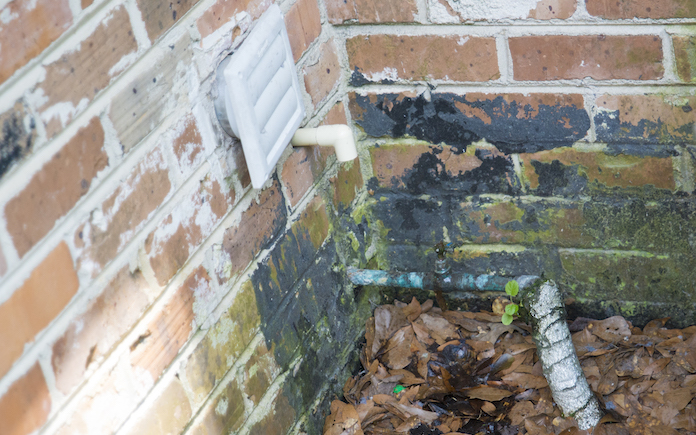
Water dripping from an A/C drain line creates the perfect environment for mold and mildew. (3 Echoes Content Studio)
Remove Unwanted Moisture
Condensation can lead to unwanted moisture on your HVAC system’s ducts, coils, drain lines, and pans in the summer, especially if you live in a humid area.
If this moisture isn’t removed, it can lead to the growth of mold and mildew, not to mention damage to your home’s A/C unit. If left uncleaned, it can even lead to sickness from airborne bacteria.
To combat this:
Clean pans and drain lines from your A/C unit. Water collects in these areas, attracting mold and mildew as well as insects and animals.
Inspect ducts. If your ducts are inadequately insulated, you may see condensation forming outside the ductwork during the summer when humidity is high and the air conditioner is running. Poor insulation cannot only increase your utility bill but also causes excess moisture that can lead to mold. Insulating ductwork is a little more complex, so you should definitely hire an HVAC technician for the job.
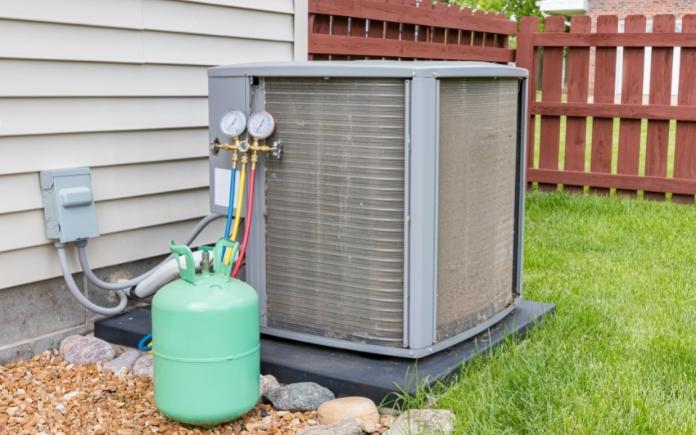
Call an HVAC professional to check the outdoor unit’s refrigerant levels. (JJ Gouin, Getty Images)
Monitor Refrigerant Levels
Your A/C unit has probably been working overtime during the summer, so it might be low on refrigerant.
This chemical changes from liquid to gas and back to liquid inside your A/C to cool your home. If you’re low on refrigerant, your unit will only circulate warm air.
Having the right amount of refrigerant makes air from your vents colder, reduces energy bills and makes your AC work better.
Call an HVAC professional, like an American Standard Customer Care specialist, to check it at the end of the season so you won’t be in for a rude awakening when summer rolls around next year.
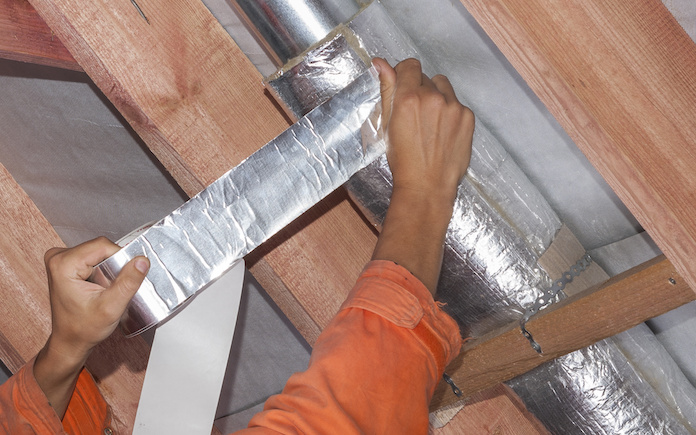
Use metallic foil tape that’s specifically made for ductwork repairs to seal leaks. (Adobe Stock)
Seal Any Leaks
As the heat of summer wears off, go into the attic and check your ductwork for leaks.
Feel along the ducts for air leaks while your air conditioner is running. Also, look for discolored insulation or rusty ducts that could indicate a leak.
Pay particular attention to the joints in pipes and where runs of ducts meet in case a pipe has become disconnected.
Repair any leaks using duct mastic or metallic duct tape rather than standard cloth tape. You can also have an HVAC professional run a pressurized test of the system to check for leaks.
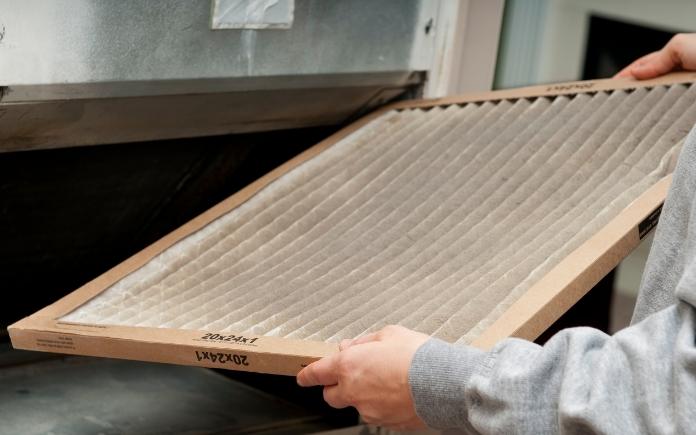
You should change your heating and cooling system’s filter about every 30 to 90 days. (mcphillips007, Getty Images Signature)
Change Air Filter
Your HVAC system’s air filter needs to be changed about every 30 to 90 days, so the start of fall is the perfect time to do it.
Regularly changing the air filter is critical for its longevity, but it also helps your system work more efficiently. The purpose of the air filter is to trap unwanted allergens, dust and particles and prevent them from getting into the air you breathe in your home, so when the filter is dirty, your air will also become dirty.
Changing the filter on your air cleaner may also help save on energy costs.
Here’s how to do it:
Buy a new filter. Check your owner’s manual before buying a filter — using the right filter is essential; otherwise, you run the risk of potentially damaging your system.
Turn off the unit. Be sure the unit is completely off before attempting to change the filter. If you’re unsure of how to turn it off, turn the breaker off in your electric breaker box.
Remove the old filter. Most filters are located on the right side of the system and are easy to slide out. However, some filters may be found internally in your home’s vents. Call an HVAC professional if you think may have these internal vents as they need to be replaced by a professional.
Insert new filter. Once you’ve removed the old filter, simply slide the new filter into place. Use the arrows on the filter as an indicator for which side should face in or out.
Make sure your furnace’s pilot light works before winter arrives. (Adobe Stock)
Prepare Your HVAC Unit for the Cold Season
Now that your A/C unit is ready for next summer, take these steps to ensure you stay warm during cooler months:
Clean the area around your outdoor unit and place a vinyl cover over it.
Conduct a sound and visual inspection. Turn on your furnace and/or heating system, and check for anything unusual. This may include sounds like rattling or bumping, as well as anything that looks out of place.
Program/calibrate your thermostat. This will ensure that your heating system runs accurately and correctly.
Inspect your blower assembly. Fans and motors can gunk up after not being touched or used for a while. You may have to clean these parts off or even replace them if necessary.
Check insulation. Insulation in your home’s walls or attic may need some attention, which will help keep your home warm in the winter and reduce energy costs. Also, you may want to check duct insulation as well.
Check your pilot light. This is a continuously burning flame in gas-powered heating systems that is used as an ignition source for heat. If your pilot light has been extinguished, your heating system will not work properly.
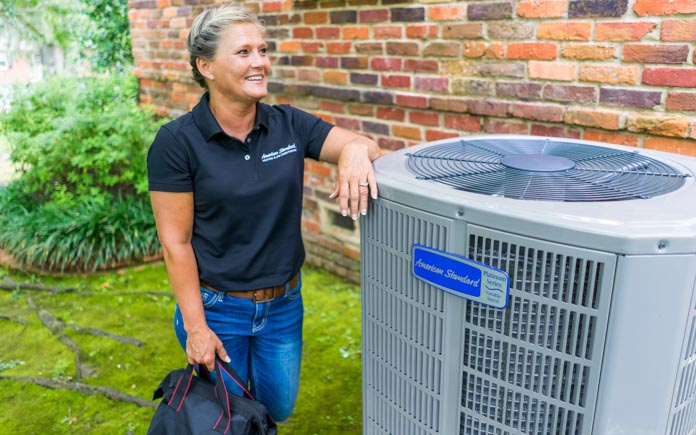
An HVAC professional can ensure your system is in good working order during any season. (American Standard)
When in Doubt, Call an HVAC Tech
A trained professional should inspect your home’s heating and cooling systems at least once a year. HVAC technicians have a much deeper understanding of these systems’ inner workings than the typical DIY homeowner.
Homeowners can do minor A/C unit maintenance, but only HVAC technicians can run tests and check for poisonous gases, such as carbon monoxide, inside a home.
We’re bringing an ’80s-style kitchen into this decade with a special two-part episode.
Homeowners Lloyd and Aimee Meyers and their two kids love their home, but they want to make some updates to their kitchen.
We’re happy to help this family with a renovation that’s inexpensive, at just $1,200 in materials, but will leave a big impact!
This article covers part one of the project.
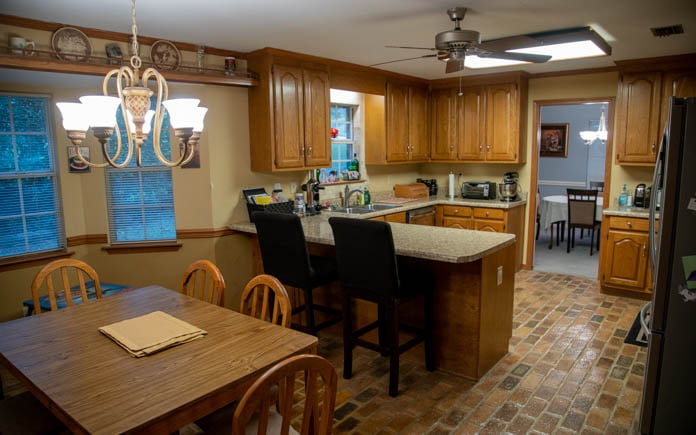
Lloyd and Aimee are looking to make several updates to their 80s style kitchen.
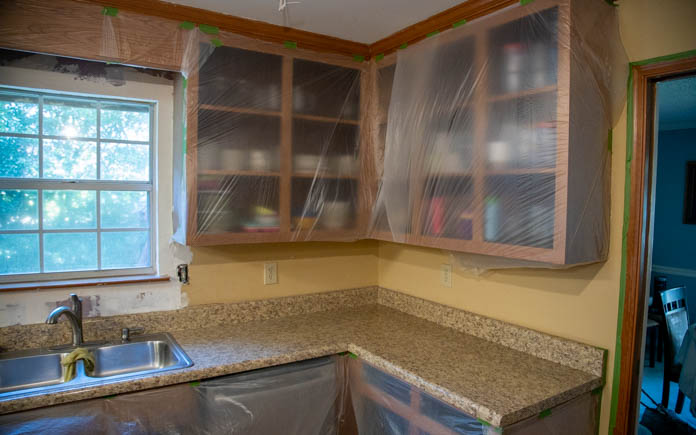
Preparing the Space
We begin by removing the galley rail above the windows in the dining area. It currently serves as a display shelf for decorative china, but modern homes don’t include this feature and it makes the room feel crowded.
The ceramic backsplash only protects the area behind the sink, so we will replace it with a subway tile backsplash that covers everything behind all the countertops. This consistent look will enhance the kitchen’s overall design.
We will replace the unsightly chandelier above the dining table, move the ceiling fan to a more functional location because Aimee cooks a lot, and remove the long fluorescent light above the work area.
Even the ceiling gets an update because this one has “popcorn,” or texture, that’s no longer in style. (Lloyd already removed some of the popcorn before we arrived.)
When removing a popcorn ceiling, I prefer using a metal scraper. The pros often sand off the scraper’s corners so the edges are rounded, which prevents damage.
After removing the galley rail and chair rail, we begin patching any holes with the joint compound.
Once we’ve removed everything, we use joint compound to cover any holes we found and install new drywall in place of the sink’s backsplash.
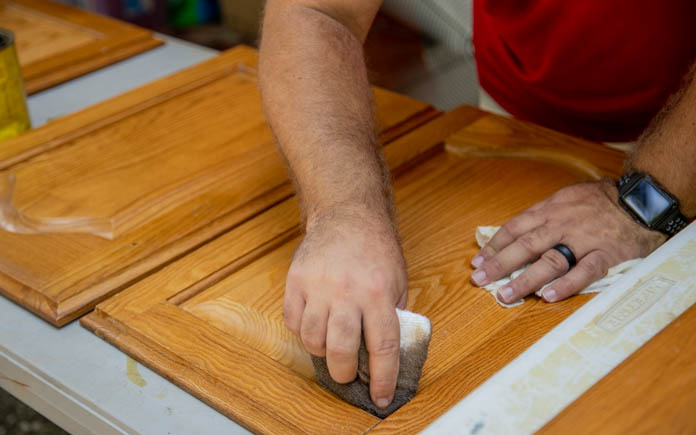
We removed the kitchen cabinets’ doors to give them an upgrade.
Touching Up the Cabinets
Painting wood cabinets is on-trend, but Lloyd and Aimee like their cabinets — they just want to freshen them up.
So, instead of replacing or painting the cabinets, we’re giving them a facelift. That just means taking the doors off the boxes, cleaning them, repairing any scratches and applying a fresh coat of polyurethane before installing new hardware.
Many homeowners paint their wood cabinets white, but if you want to keep the grain, just refinish them.
We will complete this project in episode two, but when all is said and done, the cabinets will look new and the hardware will complement them nicely!
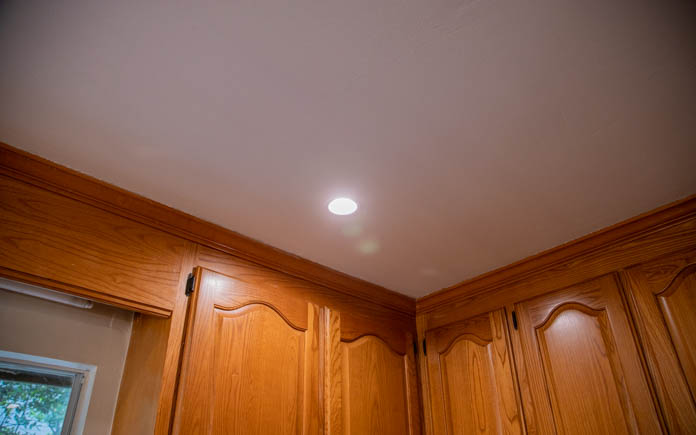
With a little know-how, canless recessed lights are easy to install.
Installing Canless Recessed Lighting
This kitchen had massive light fixtures that were dated, unattractive, and didn’t fit the space. We’re adding new light fixtures, including canless recessed lighting that will accent the room and add ambiance.
The LED lights we will install, from Commercial Electric, are small and don’t put out much heat, so they’re energy-efficient and attractive (a win-win).
This page contains affiliate links. If you purchase a product from these links, we will earn a small commission at no additional cost to you.
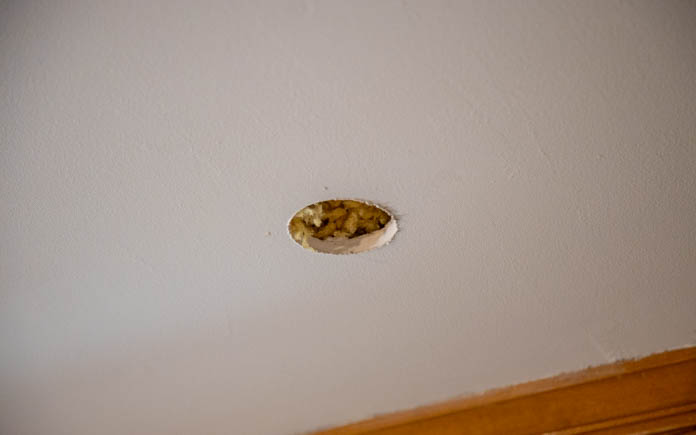
Installation is easy — all you have to do is cut a small hole in the ceiling with a hole saw, attach the wires to the junction box and push them up into the ceiling!
Ryobi cordless tools make do-it-yourself home improvement easier, but oftentimes, new homeowners don’t have the right ones when they need them.
And, buying a new tool for each new project can seriously cut into the savings of doing it yourself.
Here’s where the RYOBI ONE+ 18V Cordless 6-Tool Combo Kit can save the day (or project). It includes most of the power tools needed for repair and improvement projects around the house.
This page contains affiliate links. If you purchase a product from these links, we will earn a small commission at no additional cost to you.
This kit includes all the tools you need to start any home improvement project. (The Home Depot)
The kit includes a drill/driver with a powerful motor that provides up to 515 in./lbs. of torque.
Need a little extra torque? This kit’s got you covered with an impact driver with up to 1,800 in./lbs. of torque for tougher jobs.
You also get two types of saws: A 5.5-inch circular saw is handy for making the finished cuts you need to handle, and a reciprocating saw for rougher cuts. In just one charge, the circular saw can make over 215 cuts, and the reciprocating saw can make over 145 cuts. Plus, the easy-release blade lever on the reciprocating saw makes for quick blade changes.
No combo tool kit is complete without one of the handiest tools you can have in your workshop: a multi-tool. This fast-cutting tool with 20,000 max OPM is perfect for cutting and sanding in tight spots.
Rounding out this six-piece tool kit is an LED flashlight with over 280 lumens of light output.
All of these tools come with an 18V 4.0 Ah Lithium-Ion Battery, 18V 1.5 Ah Lithium-Ion Battery and 18V Charger.
The kit comes with a Ryobi One+ 18V 4.0 Ah Lithium-Ion Battery (The Home Depot)
You don’t need to run up and down the aisles to find the extra parts you need to start using these Ryobi cordless tools. The RYOBI ONE+ 18V Cordless 6-Tool Combo Kit includes the accessories you need to get you started:
18T carbide blade
Hex wrench
Reciprocating saw blade
Hex key
Flush cut blade
Plunge cut blade
6-inch wood blade
Sanding pad
5 pieces of sandpaper
Tool bag
Plus, all the tools included operate on the same battery system, and there are dozens more that are compatible. Any Ryobi 18V ONE+ product works with the batteries included.
Watch the video to learn all about this Best New Product!
In Hour 1, learn how to extend your washing machine’s lifespan, remove white stains from brick, drain standing water from your yard and more.
How to Make Your Washer Last Longer
Regular maintenance can keep your washer running longer.(stevepb/pixabay)
The average lifespan of a washing machine is only 10-15 years — about the same as a goldfish!
Here are some tips from Consumer Reports to make your washing machine last as long as possible:
Make sure it’s level and it stays level. Your washing machine’s drum can spin very fast, and all that vibration can wear out parts and loosen fasteners. Use a level and adjust the feet. Check it once a year to make sure it’s level. Vibration can knock it off level.
Don’t overdo the detergent. Too much detergent can make the washer work harder and sometimes trigger an extra rinse cycle, which extends the wash time, wastes energy, and ultimately reduces the washer’s lifespan.
Clean the dispenser drawer. Clean it on a regular basis. Detergent can build up in there and create extra suds, again making the washer work harder.
Inspect the water hoses. If you have rubber lines, replace them with braided stainless steel.
Removing White Stains From Brick
There are multiple ways to remove these stucco stains from this brick home. (Tim Patton)
Tim Patton’s 25-year-old home in Alabama has a brick facade with white stucco wraps around the front windows. Over the years the white from the stucco has gradually stained the red brick below & around the windows.
Power washing has not removed the white stain. He asks, “Can you recommend a product and method for removing the white stain from the brick?”
Bricks that are not sealed are very porous, so stains tend to stick on them forever.
First, try scrubbing the spots with TSP or CLR, Calcium, Lime Rust Remover. Be sure to test it in a small spot first.
If those don’t work, upgrade to a brick and stone cleaner like Rutland Brick & Stone Cleaner. Spray it on and scrub it with a soft-bristle brush.
Once you do remove the stains, seal the bricks and apply a couple of coats of paint to the stucco to lessen the likelihood of any further staining. This will keep the stucco cleaner and prevent it from depositing any residue.
Solution for Standing Water
Standing water can be a breeding ground for bugs. (MarieTDebs, Getty Images)
Jimmy Crocket built his house in Missouri three years ago, and beautifully landscaped his yard, However, he didn’t realize that when it rains, the water from his next-door neighbor’s yard drains into his, creating almost a pond around one of his planters.
He asks, “How do I drain standing water that drains into my yard from my neighbor’s yard?”
If you have a lot of surface water and water that piles up all at once, a lot of time French drains won’t take care of that sufficiently and you need some type of surface drain.
Install a trench drain system with some fiberglass basins. Direct them to the closest place gravity-wise that you can move the water. You can paint the basins to match your landscaping so they won’t be as noticeable.
I have a similar problem at my home, and I’m doing a combination of a French drain and trench drain to catch the surface water and also get down lower with the trench. I’ll dig it about 16 inches wide and 16 inches deep, fill it with gravel, and place a perforated pipe with a membrane around it (sock pipe) so it doesn’t fill up. And on top of that will be the trench drain.
That way, the water will drop into that pipe and move underground to another area.
Go to the tool rental center and get a Ditch Witch or a termite machine (miniature backhoe) to help you dig the trenches. Lay a piece of plastic down to place the dirt onto so clearing it off the grass is easier once you’re done.
As always, call 811 before you dig in your yard.
Hour 2
In Hour 2, hear tips for removing a tub from a bathroom, an easy fix for a desilvering mirror, and more.
Removing a Tub From a Bathroom
In most remodels, a tub can’t be removed in one piece. (Garrett Aitken, Getty Images Pro)
A caller is getting ready to remodel her bathroom, and taking the bathtub out is going to be a problem. She’s not sure if it’s a cast-iron or an enameled-steel tub. I was wondering if we needed to saw it in two or what we should do. Thanks
One way you can tell if a tub is iron or steel is to give it a good thump on the inside wall. If it sounds like a steel drum, then it’s steel. A cast iron will sound like a thud because it’s thick and hard.
For some of the thin metal tubs, you’re able to break out around the top flange and disconnect the drain and work that out of there. But in so many bathrooms, there’s not enough room to tilt them up without tearing out a wall.
It’s hard to get a tub in and it’s hard to get a tub out, so breaking it up will make removing it a lot easier.
You can use a reciprocating saw with a metal blade to cut the tub in half. Many times with cast iron tubs, it’s basically just putting on a face shield and long-sleeve shirt and going at it with a sledgehammer. Once it starts to break in the center, then you can more easily break it up into small pieces.
Before you take the sledgehammer to it, cover it with a quilted moving pad so shards don’t fly everywhere. First hit the middle on the outside then work your way up to the top then toward the inside. You’re creating a crack up and over down the middle, and you might be able to get it out in two big pieces.
Fix for a Desilvering Mirror
Rough edges around a mirror can be distracting. Hide them with some trim. (3 Echoes Content Studio)
Karen Dewing in Florida has three wall-sized mirrors in her master bath that have lost some of the “mirroring” close to the edges.
She asks, “Is there any way to repair or cover these areas? The damaged spots are about 1-by-3 inches long, and I’d hate to have to replace such large mirrors just for some small areas around the outside.”
Desilvering is usually a result of moisture seeping in around the edges and causing the mirror reflection to flake off.
Use construction adhesive to attach prepainted trim boards around the mirrors to create a picture frame. This gives it a great look while also concealing the desilvering spots. Give a little more life out of those mirrors.
The silver backing doesn’t last forever. The older the mirror is the more likely it will happen. You’ll also get some spotting and
Although you’re reducing the mirror space, it’s still a better solution than removing the mirror and replacing it.
Best New Products
Coolaroo’s cordless outdoor roll-up blinds for your patio are the safe solution for providing shade. Learn more >>
Simple Solutions
Most modern cabinet doors have self-closing hinges, but over time, the small leaf spring inside the hinge can break, and then the door won’t stay closed. (Kurhan, Getty Images)
Quick Fix for a Broken Self-Closing Hinge — Most modern cabinet doors have self-closing hinges. But over time, the small leaf spring inside the hinge can break, and then the door won’t stay closed.
Here’s a quick fix:
Hold the door closed with an inexpensive roller catch.
Mount the roller mechanism inside the cabinet and attach the latch to the door.
Use to remove stubborn odors from couches and other upholstery. (itsarasak thithuekthak, Getty Images)
Baking Soda Couch Cleaner — Here’s how to remove stubborn odors from couches and other upholstery:
Sprinkle a generous amount of baking soda onto the fabric.
Wait 20-30 minutes
Vacuum using the upholstery brush.
The baking soda will absorb odors and even loosen up some surface stains.
Outdoor roll-up blinds for your patio solve the problem of late afternoon and early-morning sun glare.
No matter where you build your patio (or porch or pergola), the sun is bound to blast that space at some time in the day.
Finding attractive blinds to block or filter the sun has always been a challenge. Some shades block too much of the outside view while others let too much light shine through.
Plus, the cords on blinds can easily become entangled, becoming a danger to children and pets.
Coolaroo’s new outdoor roll-up blinds for your patio are the safe solution for this shade problem.
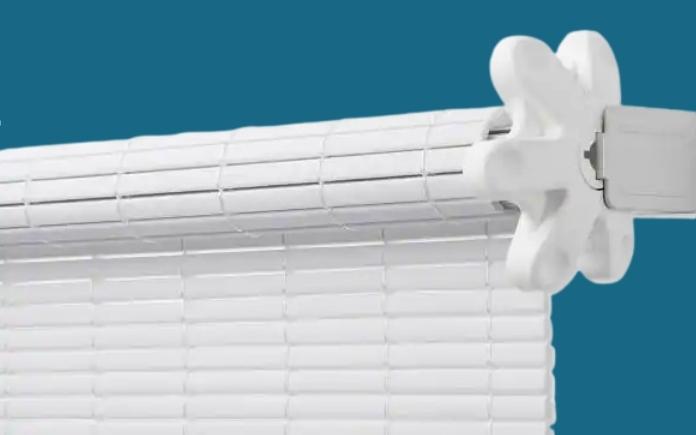
The unique wheel operation that allows you to easily adjust the height of your shade to control your privacy and comfort. (The Home Depot)
This page contains affiliate links. If you purchase a product from these links, we will earn a small commission at no additional cost to you.
This wheel design eliminates any dangling cords, making these outdoor roll-up blinds for your patio certified “Best for Kids” by the Window Covering Safety Council.
Products that qualify for “Best for Kids” either have no cords, no operating cords, or inner cords that can’t create a potential wrap-around hazard. To be certified, manufacturers must meet the program’s specifications and have their products tested in a third-party laboratory.
This week, I’m chatting with painting expert Brian Santos, a.k.a the “Wall Wizard.”
Brian is a fourth-generation painting contractor, author of best-selling home improvement books, and has toured for more than 25 years with his “Wizard Workshops” that empower audiences with simple tips, tricks, and techniques for successful home improvement projects.
He has shared his expertise on national TV, including “Good Morning America,” “Today,” and HGTV’s “Smart Solutions,” as well as on TLC and the Discovery Channel.
Brian is also the Director of Education for Fresh Coat Painters, the only role of this kind within any painting or home improvement franchise.
Brian was brought on to the Fresh Coat Painters team to educate and share his knowledge of the industry and business ownership within the industry to new and established franchise owners.
Less is more when using spray paint — apply two thin coats of paint instead of one heavy coat. (blueclue, Getty Images Signature)
Best Spray Painting Techniques
What are some of the tips you’ve learned over the years when working with spray paint?
Brian: The best spray painting tip I can give is to read the instructions. I know it’s a lot of information in tiny print, but it’s the key to your project’s success. Here are a few more tips:
Prepare properly. Don’t spray in the sun, clean the surface correctly, and make sure you hold the can correctly at the right angle.
Shake the can. It takes 30 seconds to two minutes to get the rattle inside to start moving. This is critical for thoroughly mixing the materials and aerosols so the paint sprays correctly.
Use a spray paint handle. It snaps over the top of the can, and when you pull the trigger, it’s like a gun. It depresses the spray nozzle and puts out the material correctly.
Apply two thin coats of paint instead of one heavy coat. This prevents any runs and drips, and also allows the chemicals to evaporate enough to allow the second coat to bond correctly.
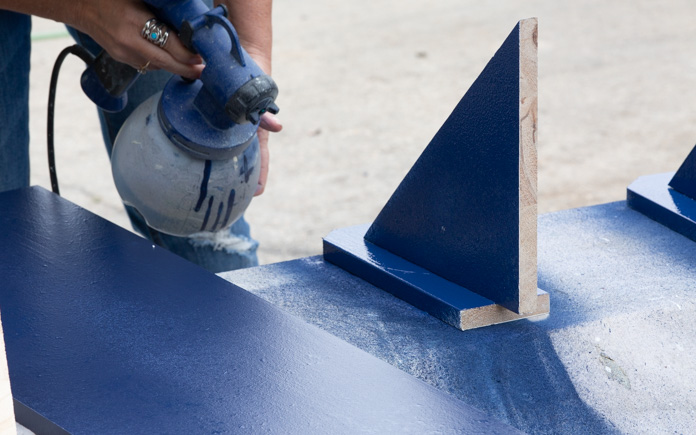
High-volume low-pressure paint sprayers apply a smooth and even coat. (3 Echoes Content Studio)
High-Volume Low-Pressure Sprayers
Tell us more about high volume low pressure (HVLP) sprayers and some of the applications they work well in.
Brian: I love these things — HVLP sprayers are almost like airbrushes. What they’re designed to do is atomize the material and you can control the flow and pressure.
The best one I can recommend is the Wagner Flexio 3000 HVLP Paint Sprayer*, which is available at Home Depot. It has a trigger and a dial for you to adjust the pressure, plus it has a corded and cordless option.
*This is an affiliate link. If you purchase this product, we will earn a small commission at no additional cost to you.
For the DIYer, this is probably one of the best tools you can have, but you have to maintain it and clean it regularly.
Here’s a tip for cleaning it: Put about three drops of fabric softener per quart of water in the sprayer and flush it out. This helps clean the sprayer between coats and lubricates the inside.
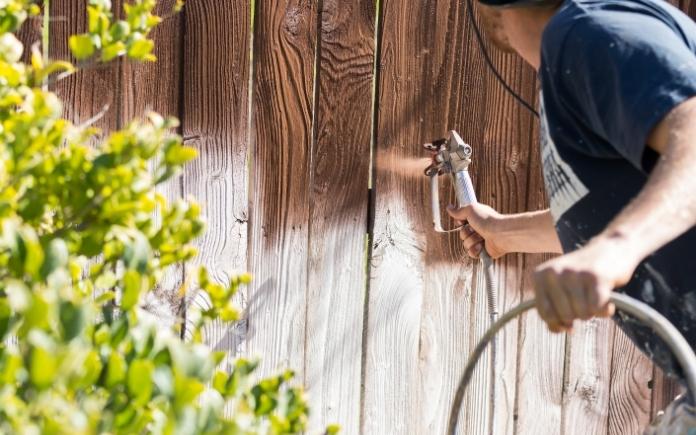
Airless paint sprayers speed up painting larger projects like fences. (Andy Dean Photography)
Painting a Fence With an Airless Paint Sprayer
What do you recommend for painting a fence?
Brian: An airless paint sprayer is great for painting a fence. You can typically find them at any tool rental center, and what I like about renting them is that they are maintained. Plus, if you were to go out and buy this, it would cost you anywhere from $500-$1,200.
When renting one, be sure to get one that has enough volume flow for your project. And while you’re at the tool rental center, ask an employee for a demonstration so you can see how to properly operate it.
Like I said before, always read the instructions and make sure the sprayer is primed correctly.
Properly clean the fence before painting. Use a garden hose and a cleaner to remove any algae, grease, grime and oxidation. The paint is only as good as the surface it’s bonding to.
You don’t need to use any primer because fence stains are designed to penetrate into wood fiber. There are also clear coatings, semi-transparent stains and solid stains that homogenize to even out any irregularities.
The important thing is to keep moving and backbrush along the way. Spray the paint or stain on, then have someone go with a brush behind it and work that paint or stain into the surface. This will make sure the paint or stain bonds correctly.
Brian: Replacing kitchen cabinets can cost you up to $20,000, so painting is definitely cost-effective.
A paint job is only as good as the surface you’re preparing, so first, ask yourself if you want to see the grain in your cabinets or not. All woods have a grain, and if the surface isn’t prepped currently, that grain will show through. If you don’t want to see any grain, call a professional to do the job.
For the DIYer who wants to do a little refreshing, here are the standard operating procedures on how to do it:
Clean the surface of the cabinets. Wet sand the cabinets with a Scotch Brite pad and an alkaline cleaner called Simple Green HD. This will break down the grease and lightly sand the surface at the same time, eliminating a lot of dust.
Degrease the surface of the cabinets after cleaning. Rinse the surface with 91-proof rubbing alcohol. Rubbing alcohol is a natural degreaser and deglosser. It evaporates and forces out the moisture that might be in the wood. This will create a sterile surface that’s ready for primer.
Prime the cabinets. The type of primer to use depends on if it’s a lacquer-coated or painted surface. Take a drawer face or part of the cabinet to a paint store and ask the professional to see what type of surface it is, and they can recommend what type of primer to use. Apply two thin coats of primer and lightly sand between each coat with 300-grit sandpaper.
Spackle and caulk between the two coats or primer. If you have floating cabinets, do not caulk between the floating panels. The wood needs to expand and contract with the normal humidity in the house, so caulking can cause the cabinets to crack.
Lastly, apply two even coats of paint to the cabinets.
To protect hardware on cabinets, use rubber cement. After painting, you can peel it off.
If you need to reset hardware, particularly hand pulls, use Bondo, not wood filler. If you slam the cabinet, the wood filler plug could pop out.
Protect surfaces around your painting area to prevent damaging spills. (travellinglight, Getty Images)
Common Mistakes
What is the biggest mistake homeowners make when tackling any paint project?
Brian: Not preparing a surface correctly. And also, not protecting other surfaces. It’s amazing how the paint will splatter if you’re spray painting, or dust will waft through the house.
Create a containment system, and make sure to put a new filter in the HVAC system after you’re done to lessen dust spreading throughout the house. The more you can contain and control, the better result.
Also, clean between steps. That’s where a lot of dust and debris can get into a paint project and the results are not as good as they could be.
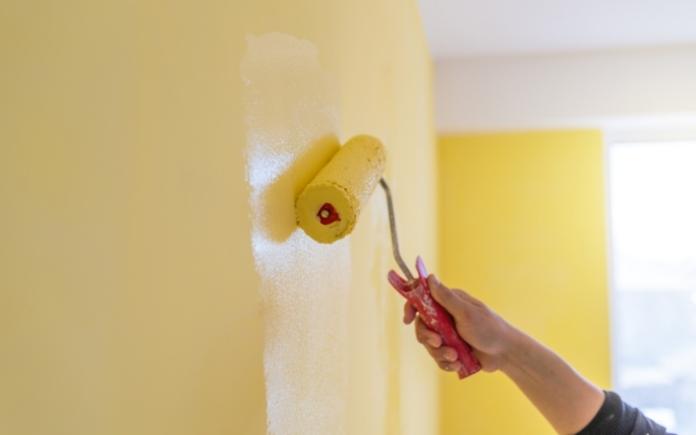
If you’re painting with a roller, the last stroke you do should be in the same direction, so you get the proper sheen and the right effect with the color. (cavanimages via Canva)
Brian’s Advice
“Wizards Work Wet:” It’s critical to do the entire surface while materials are wet. Have someone cutting in as another person is rolling paint to keep that wet edge so the color is consistent.
Also, if you’re painting with a roller, the last stroke you do should be in the same direction, so you get the proper sheen and the right effect with the color.