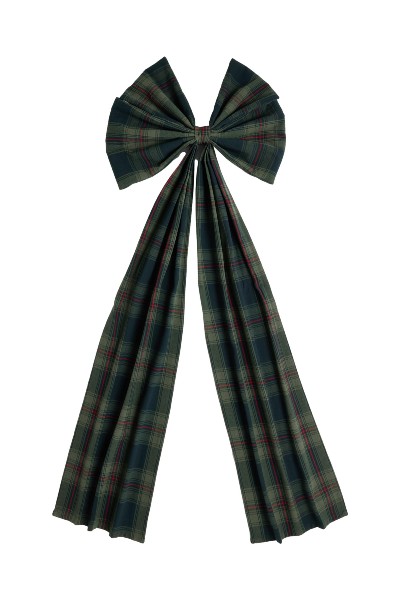
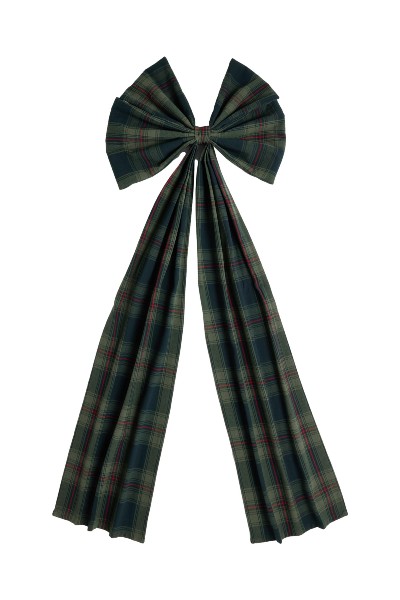
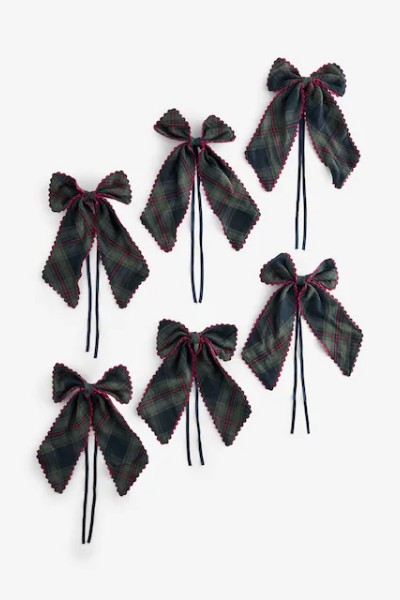
It seems that we have yet another bow-crazy Christmas on our hands as bow decorations of all sizes, colours, materials and even patterns are popping up everywhere. And Next just launched the latest iteration of the Christmas bow trend that I predict will become everybody’s next obsession – the Tartan Check Extra Large Bow Tree Topper, selling for £22.
<aside data-article-category="all-rooms" data-block-layout="horizontal" data-block-type="featured-product" data-hawk-json="{"product":{"variants":{"Default":{"image":{"copyright":"","height":600,"id":"VfGmqvpQM9cDduobvvFfNY","mimeType":"image\/jpeg","mos":"https:\/\/cdn.mos.cms.futurecdn.net\/VfGmqvpQM9cDduobvvFfNY.jpg","role":"","width":400,"credit":"Next","alt":"Next Navy Tartan Check Extra Large Bow Tree Topper","caption":""},"strapline":"
Aside from the timeless tartan check pattern and the generous size, I also love that the bow is made from pure cotton.","brand":"Next","name":"Navy Tartan Check Extra Large Bow Tree Topper","urlStyle":"","retailer":"","layout":"horizontal","noFollow":true,"noAffiliateTracking":false,"promoLabel":"","price":null,"salePrice":null,"currency":null,"linkLayout":"button","sponsored":false,"hawkProductNameMatchedCode":"","review":{"cons":[],"id":"","name":"","pros":[],"rating":0,"strapline":"","url":""},"id":"","lastCheckedPriceDate":"","link":{"url":"https:\/\/click.linksynergy.com\/deeplink?id=kXQk6%2AivFEQ&mid=53096&u1=hawk-custom-tracking&murl=https%3A%2F%2Fwww.next.co.uk%2Fstyle%2Fsv060223%2Fv63525","linkText":"\u00a322 at Next","merchantName":"Next UK","merchantId":491232,"merchantNetwork":"LSfutureusLlc","merchantUrl":"next.co.uk"}}}}}” data-link=”https://click.linksynergy.com/deeplink?id=kXQk6%2AivFEQ&mid=53096&u1=hawk-custom-tracking&murl=https%3A%2F%2Fwww.next.co.uk%2Fstyle%2Fsv060223%2Fv63525″ data-link-merchant=”Next UK” data-link-text=”£22 at Next” data-merchant-id=”491232″ data-merchant-name=”Next UK” data-merchant-network=”LSfutureusLlc” data-merchant-url=”next.co.uk” data-model-brand=”Next” data-model-name=”Next Navy Tartan Check Extra Large Bow Tree Topper” data-name=”Horizontal Product Block merchantlink widget” data-render-type=”fte” data-show-fallback=”button” data-widget-type=”merchantlink” class=”ecom-root”>
Aside from the timeless tartan check pattern and the generous size, I also love that the bow is made from pure cotton.
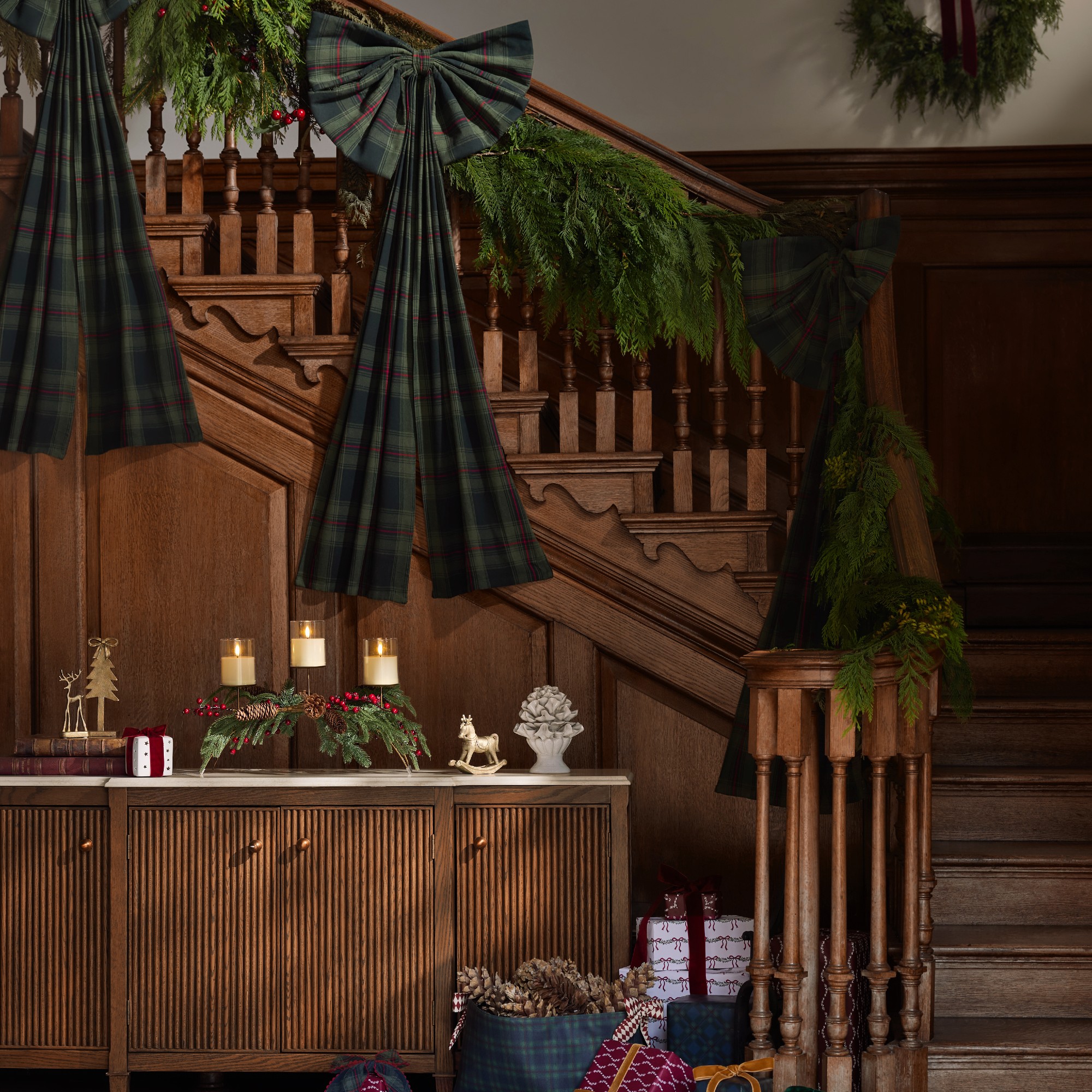
Last week, I got to see the large tartan Christmas bow IRL at Next’s Christmas press preview. And in opinion, it’s only a matter of time before it goes viral.
Latest Videos FromIdeal Home
Shoppers are still loving extra-large Christmas bows as they did last year so the design’s large size will make it extremely desirable – as will the trad-inspired tartan check pattern combining shades of navy blue, dark green and a hint of red. And Next is going big on this festive trend as an entire room was styled with coordinating tartan Christmas buys.
(Image credit: Next)
According to Pinterest UK, searches for ‘tartan pattern’ increased by 100% this month as this motif is not only perfect for Christmas but also for the autumn months and cosy season. And that’s one of the biggest perks of this Next bow decoration – it won’t look out of place if you put it up now since it has a very autumnal charm that will seamlessly carry you through all the way to Christmas.
Last year, the ‘Ralph Lauren Christmas’ trend exploded on social media. And this year, it’s back and set to be even bigger than in 2025 as Google searches for ‘Ralph Lauren Christmas’ increased by over 5000% this September compared to the same time last year, and by 600% compared to last month.
(Image credit: Next)
The Ralph Lauren Christmas aesthetic is defined by traditional Americana style to which heritage patterns like tartan are central. So naturally, the Next tartan bow is right on trend – as are all the other tartan-adorned pieces of Christmas decor from the Next festive range.
Sign up to our newsletter for style inspiration, real homes, project and garden advice and shopping know-how
Complete your tartan Christmas scheme
Next
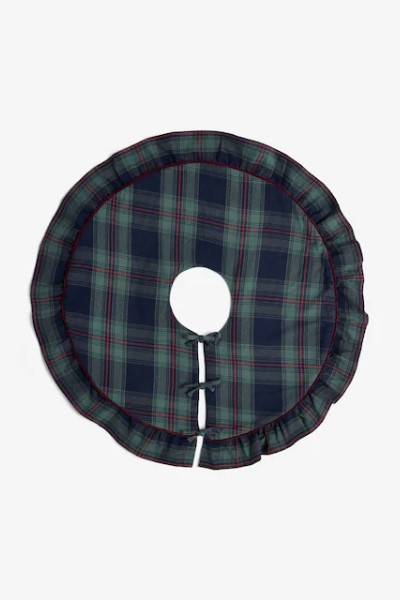
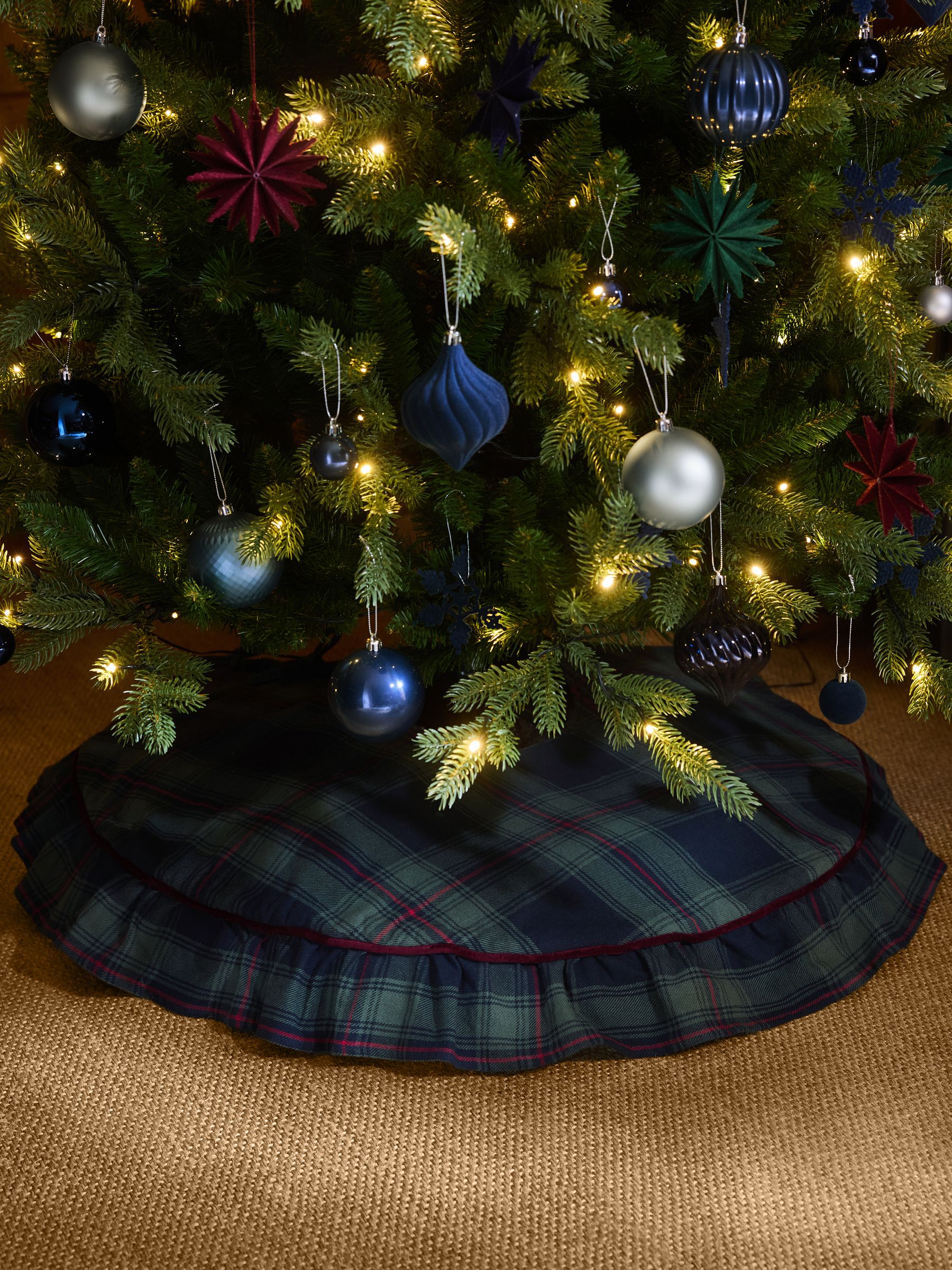
Navy Tartan Check Scalloped Edge Tree Skirt
<aside data-article-category="all-rooms" data-block-layout="hero" data-block-type="featured-product" data-hawk-json="{"product":{"variants":{"Default":{"image":{"copyright":"","height":600,"id":"zwtBxmEwCGN8McDLqAHWKY","mimeType":"image\/jpeg","mos":"https:\/\/cdn.mos.cms.futurecdn.net\/zwtBxmEwCGN8McDLqAHWKY.jpg","role":"","width":400,"credit":"Next","alt":"Next Navy Tartan Check Scalloped Edge Tree Skirt","caption":""},"strapline":"
The ruffled trim adds a very soft and pretty spin on the traditional tartan pattern that this chic tree skirt is adorned with.","brand":"Next","name":"Navy Tartan Check Scalloped Edge Tree Skirt","urlStyle":"","retailer":"","layout":"hero","noFollow":true,"noAffiliateTracking":false,"promoLabel":"","price":null,"salePrice":null,"currency":null,"linkLayout":"button","sponsored":false,"hawkProductNameMatchedCode":"","review":{"cons":[],"id":"","name":"","pros":[],"rating":0,"strapline":"","url":""},"id":"","lastCheckedPriceDate":"","link":{"url":"https:\/\/click.linksynergy.com\/deeplink?id=kXQk6%2AivFEQ&mid=53096&u1=hawk-custom-tracking&murl=https%3A%2F%2Fwww.next.co.uk%2Fstyle%2Fsv060235%2Fy42434","linkText":"\u00a322 at Next","merchantName":"Next UK","merchantId":491232,"merchantNetwork":"LSfutureusLlc","merchantUrl":"next.co.uk"}}}}}” data-link=”https://click.linksynergy.com/deeplink?id=kXQk6%2AivFEQ&mid=53096&u1=hawk-custom-tracking&murl=https%3A%2F%2Fwww.next.co.uk%2Fstyle%2Fsv060235%2Fy42434″ data-link-merchant=”Next UK” data-link-text=”£22 at Next” data-merchant-id=”491232″ data-merchant-name=”Next UK” data-merchant-network=”LSfutureusLlc” data-merchant-url=”next.co.uk” data-model-brand=”Next” data-model-name=”Next Navy Tartan Check Scalloped Edge Tree Skirt” data-name=”Product Block merchantlink widget” data-render-type=”fte” data-show-fallback=”button” data-widget-type=”merchantlink” class=”ecom-root”>
The ruffled trim adds a very soft and pretty spin on the traditional tartan pattern that this chic tree skirt is adorned with.
Next
Navy Tartan Bow Christmas Baubles, Set of 6
<aside data-article-category="all-rooms" data-block-layout="hero" data-block-type="featured-product" data-hawk-json="{"product":{"variants":{"Default":{"image":{"copyright":"","height":600,"id":"qds5zqntTYLDyUkakWSAKY","mimeType":"image\/jpeg","mos":"https:\/\/cdn.mos.cms.futurecdn.net\/qds5zqntTYLDyUkakWSAKY.jpg","role":"","width":400,"credit":"Next","alt":"Next Set of 6 Navy Tartan Bow Christmas Baubles","caption":""},"strapline":"
You can either add these little bows to your XL tartan bow. Or if the large version is too much for you, this is a more discreet alternative.","brand":"Next","name":"Navy Tartan Bow Christmas Baubles, Set of 6","urlStyle":"","retailer":"","layout":"hero","noFollow":true,"noAffiliateTracking":false,"promoLabel":"","price":null,"salePrice":null,"currency":null,"linkLayout":"button","sponsored":false,"hawkProductNameMatchedCode":"","review":{"cons":[],"id":"","name":"","pros":[],"rating":0,"strapline":"","url":""},"id":"","lastCheckedPriceDate":"","link":{"url":"https:\/\/click.linksynergy.com\/deeplink?id=kXQk6%2AivFEQ&mid=53096&u1=hawk-custom-tracking&murl=https%3A%2F%2Fwww.next.co.uk%2Fstyle%2Fsv024172%2Fg86283","linkText":"\u00a316 at Next","merchantName":"Next UK","merchantId":491232,"merchantNetwork":"LSfutureusLlc","merchantUrl":"next.co.uk"}}}}}” data-link=”https://click.linksynergy.com/deeplink?id=kXQk6%2AivFEQ&mid=53096&u1=hawk-custom-tracking&murl=https%3A%2F%2Fwww.next.co.uk%2Fstyle%2Fsv024172%2Fg86283″ data-link-merchant=”Next UK” data-link-text=”£16 at Next” data-merchant-id=”491232″ data-merchant-name=”Next UK” data-merchant-network=”LSfutureusLlc” data-merchant-url=”next.co.uk” data-model-brand=”Next” data-model-name=”Next Navy Tartan Bow Christmas Baubles, Set of 6″ data-name=”Product Block merchantlink widget” data-render-type=”fte” data-show-fallback=”button” data-widget-type=”merchantlink” class=”ecom-root”>
You can either add these little bows to your XL tartan bow. Or if the large version is too much for you, this is a more discreet alternative.
Next
Navy Tartan Stocking
<aside data-article-category="all-rooms" data-block-layout="hero" data-block-type="featured-product" data-hawk-json="{"product":{"variants":{"Default":{"image":{"copyright":"","height":600,"id":"5SFrXpY7J5ceCJayvHqmJY","mimeType":"image\/jpeg","mos":"https:\/\/cdn.mos.cms.futurecdn.net\/5SFrXpY7J5ceCJayvHqmJY.jpg","role":"","width":400,"credit":"Next","alt":"Next Navy Tartan Stocking","caption":""},"strapline":"
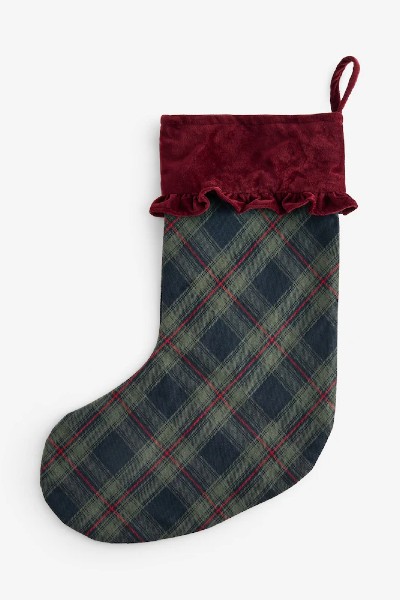
I'm seeing lots of pretty and chic Christmas stockings this year. And this is one of the best I've come across, softened by the ruffled red velvet trim. ","brand":"Next","name":"Navy Tartan Stocking","urlStyle":"","retailer":"","layout":"hero","noFollow":true,"noAffiliateTracking":false,"promoLabel":"","price":null,"salePrice":null,"currency":null,"linkLayout":"button","sponsored":false,"hawkProductNameMatchedCode":"","review":{"cons":[],"id":"","name":"","pros":[],"rating":0,"strapline":"","url":""},"id":"","lastCheckedPriceDate":"","link":{"url":"https:\/\/click.linksynergy.com\/deeplink?id=kXQk6%2AivFEQ&mid=53096&u1=hawk-custom-tracking&murl=https%3A%2F%2Fwww.next.co.uk%2Fstyle%2Fsv031820%2Fv63309","linkText":"\u00a312 at Next","merchantName":"Next UK","merchantId":491232,"merchantNetwork":"LSfutureusLlc","merchantUrl":"next.co.uk"}}}}}” data-link=”https://click.linksynergy.com/deeplink?id=kXQk6%2AivFEQ&mid=53096&u1=hawk-custom-tracking&murl=https%3A%2F%2Fwww.next.co.uk%2Fstyle%2Fsv031820%2Fv63309″ data-link-merchant=”Next UK” data-link-text=”£12 at Next” data-merchant-id=”491232″ data-merchant-name=”Next UK” data-merchant-network=”LSfutureusLlc” data-merchant-url=”next.co.uk” data-model-brand=”Next” data-model-name=”Next Navy Tartan Stocking” data-name=”Product Block merchantlink widget” data-render-type=”fte” data-show-fallback=”button” data-widget-type=”merchantlink” class=”ecom-root”>
I’m seeing lots of pretty and chic Christmas stockings this year. And this is one of the best I’ve come across, softened by the ruffled red velvet trim.
Are you going to be snapping up one of these for your own home?
You might already recognise Next’s gingerbread house tree skirt, which sold out in September 2025 almost instantly after launch. This year, it’s back and joined by two extra festive designs to give your Christmas decorating ideas a stylish edge.
While I appreciate it is still September as I write, experience tells me that Next’s Christmas tree skirts become popular very quickly – so read on if you want to stay ahead of the trends.
Latest Videos FromIdeal Home
Next
Red Festive Light Up Wooden Tree Skirt
Next
House Scene Light Up Wooden Tree Skirt – Size One
If you have one of the best artificial Christmas trees, no matter how realistic the foliage looks, the plastic base can look a little unsightly. This is where a tree skirt comes in handy. Concealing the base, the skirt becomes a key part of your decor and can add a sophisticated look (such as Habitat’s seagrass skirt) or even a playful look (try M&S’s tinsel skirts) to the overall feel of your decor. If you want something traditional, yet eye-catching, Next’s skirts are perfect for you.
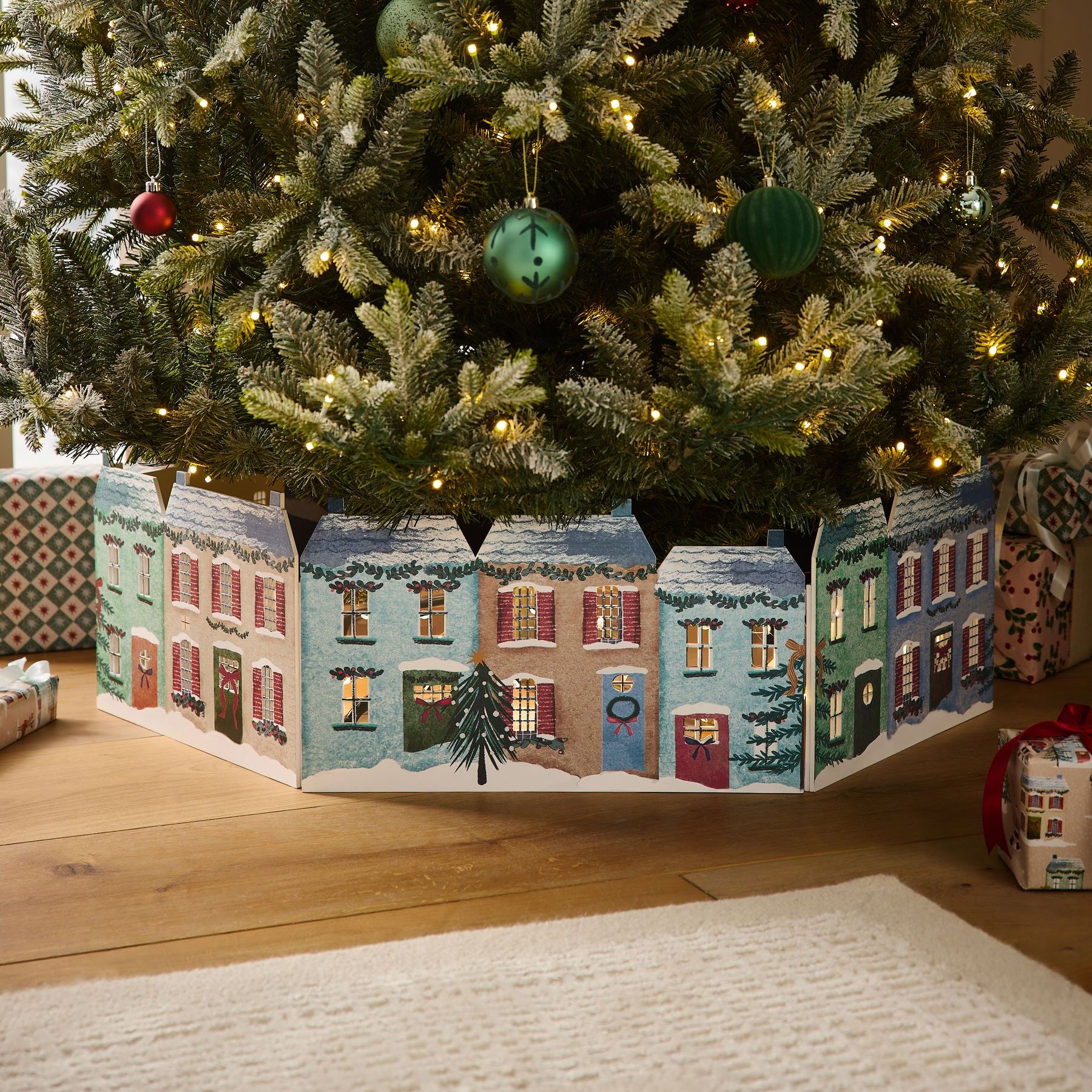
First, I’d like to discuss the House Scene tree skirt which depicts a snowy street, complete with a painted Christmas tree, minute wreaths and garlands, all adorning pretty pastel-coloured houses. Just like the gingerbread skirt, there are twinkling LED lights poking through the house windows.
(Image credit: Next)
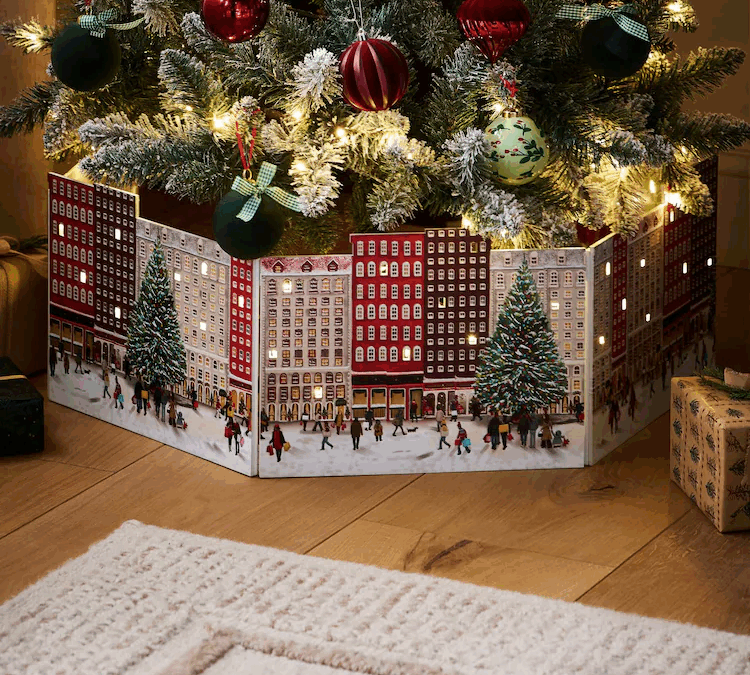
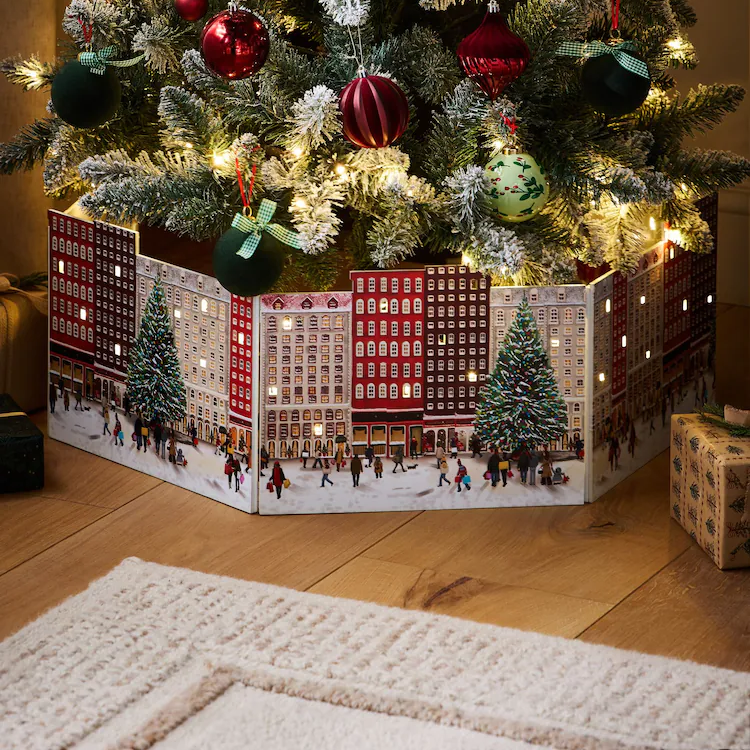
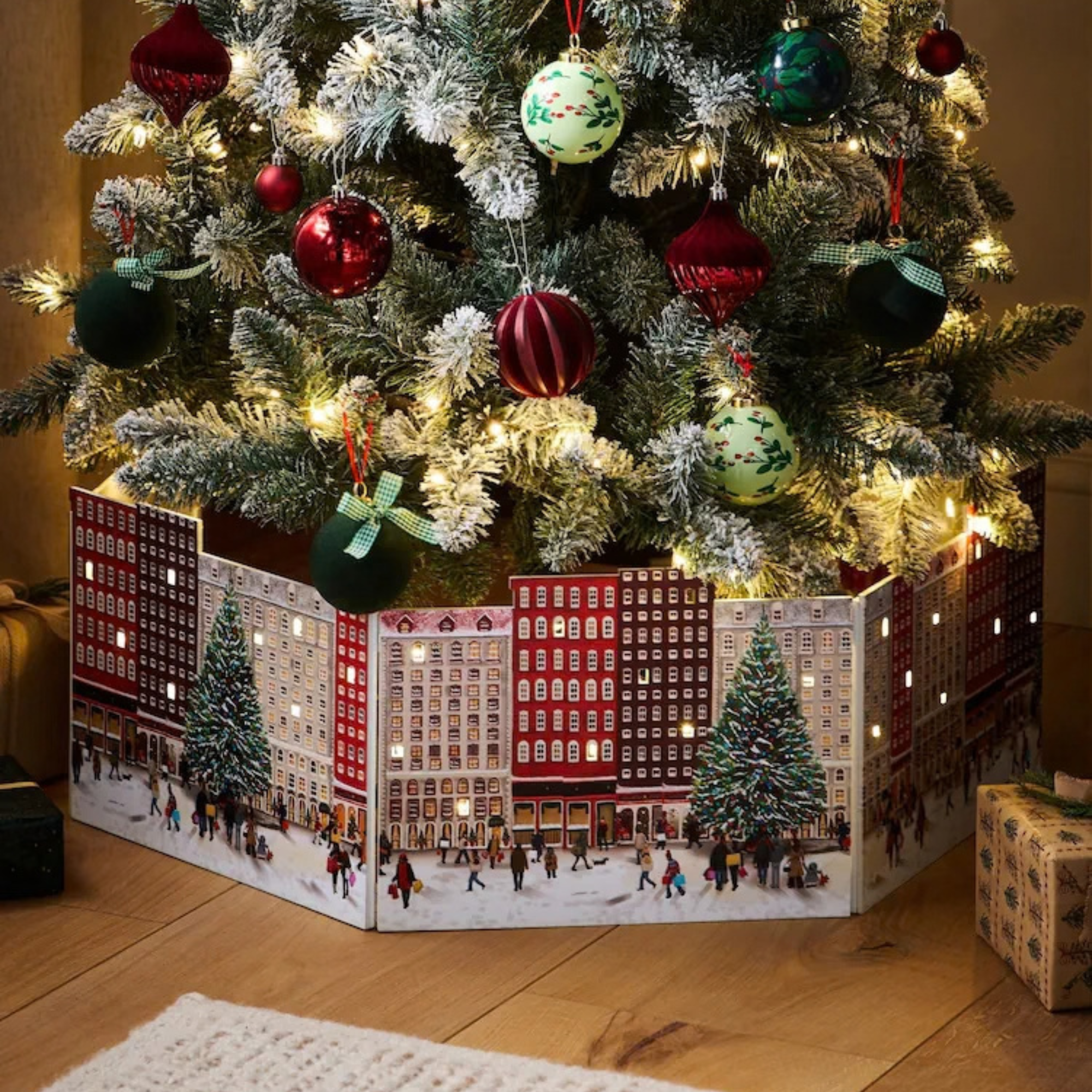
Similarly, the Red Festive tree skirt also depicts a snowy, festive scene. Although this piece of decor is a closer depiction of town life, rather than the village scene shown on the house skirt. This skirt is beautifully detailed, showing Christmas shoppers making their way down a snowy street. It reminds me of M&S’s stunning light-up candles which have become iconic for their festive interpretations of famous cities. The LED lights on this skirt can be seen poking through the windows of high-rise buildings.
Where you prefer a cityscape, more rustic scenery or a playful gingerbread display, what makes these tree skirts a worthy investment, is that they provide an extra layer of lighting to your decor. While one would expect the tree itself to be covered with twinkling lights, a light-up skirt provides that extra level of ambient glow that will make your Christmas decorations look even more magical.
Sign up to our newsletter for style inspiration, real homes, project and garden advice and shopping know-how
And these aren’t the only tree skirts that have caught my eye at Next this year. Here are a few more stylish designs that will take your decor to the next level.
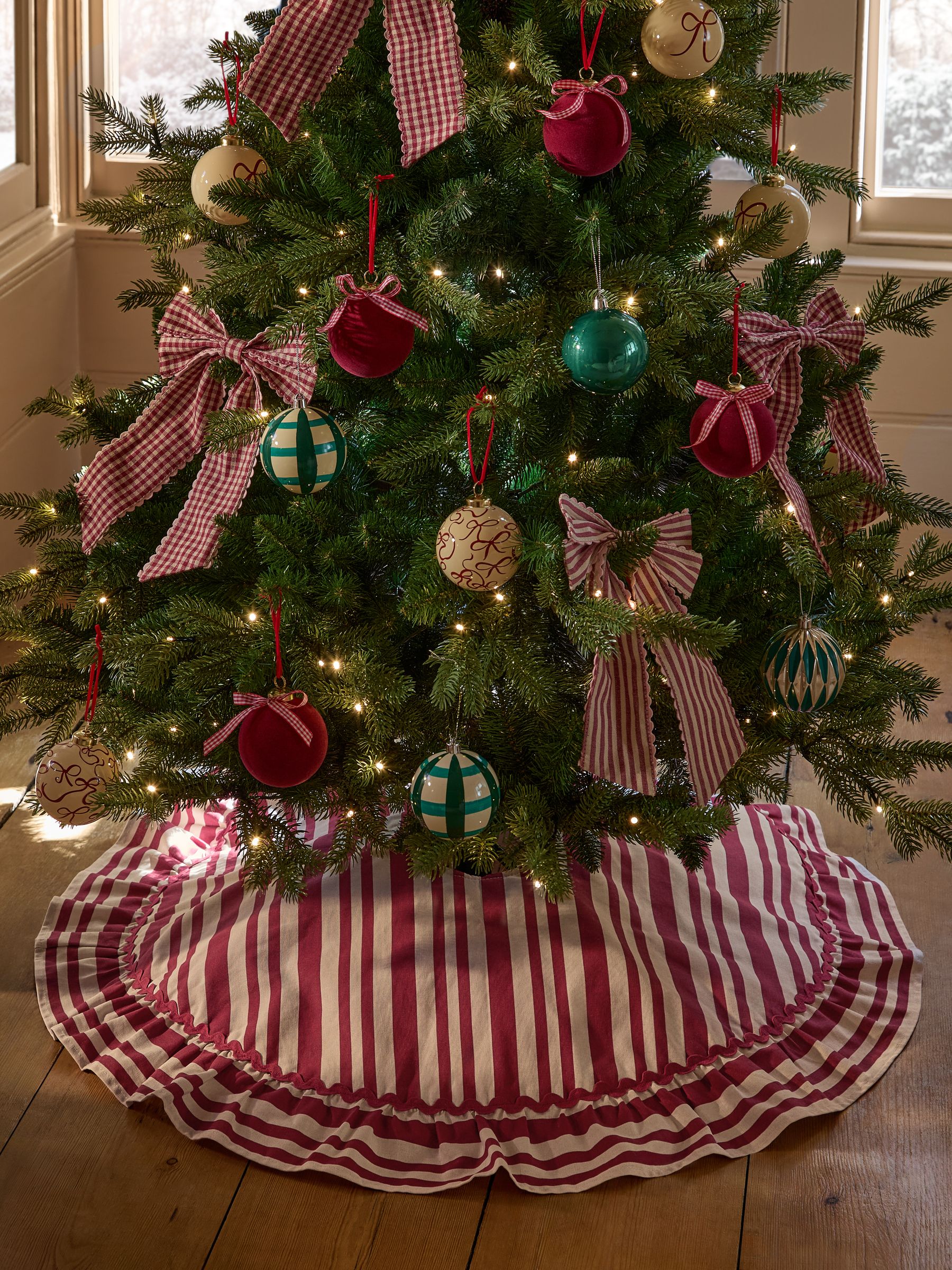
The bold, candy-style stripe of this tree skirt will stand out amongst your Christmas decor, yet maintains an overall traditional look.","brand":"Next","name":"Red Stripe Frill Edge Tree Skirt – Size One","urlStyle":"","retailer":"","layout":"hero","linkText":"","noFollow":true,"noAffiliateTracking":false,"promoLabel":"","price":22,"salePrice":null,"currency":"GBP","linkLayout":"text","sponsored":false,"hawkProductNameMatchedCode":"","review":{"cons":[],"id":"","name":"","pros":[],"rating":0,"strapline":"","url":""},"id":"","externalId":"ad5c4a7fbbe0839c52abf86efaebe7224373f737","lastCheckedPriceDate":"","link":{"url":"https:\/\/click.linksynergy.com\/deeplink?id=kXQk6%2AivFEQ&mid=53096&u1=hawk-custom-tracking&murl=https%3A%2F%2Fwww.next.co.uk%2Fstyle%2Fsv060212%2Fg97397","merchantName":"Next UK","merchantId":491232,"merchantNetwork":"LSfutureusLlc","merchantUrl":"next.co.uk"}}}}}” data-link=”https://click.linksynergy.com/deeplink?id=kXQk6%2AivFEQ&mid=53096&u1=hawk-custom-tracking&murl=https%3A%2F%2Fwww.next.co.uk%2Fstyle%2Fsv060212%2Fg97397″ data-link-merchant=”Next UK” data-merchant-id=”491232″ data-merchant-name=”Next UK” data-merchant-network=”LSfutureusLlc” data-merchant-url=”next.co.uk” data-model-brand=”Next” data-model-name=”Next Red Stripe Frill Edge Tree Skirt – Size One” data-name=”Product Block merchantlink widget” data-render-type=”fte” data-show-fallback=”button” data-widget-type=”merchantlink” class=”ecom-root”>
The bold, candy-style stripe of this tree skirt will stand out amongst your Christmas decor, yet maintains an overall traditional look.
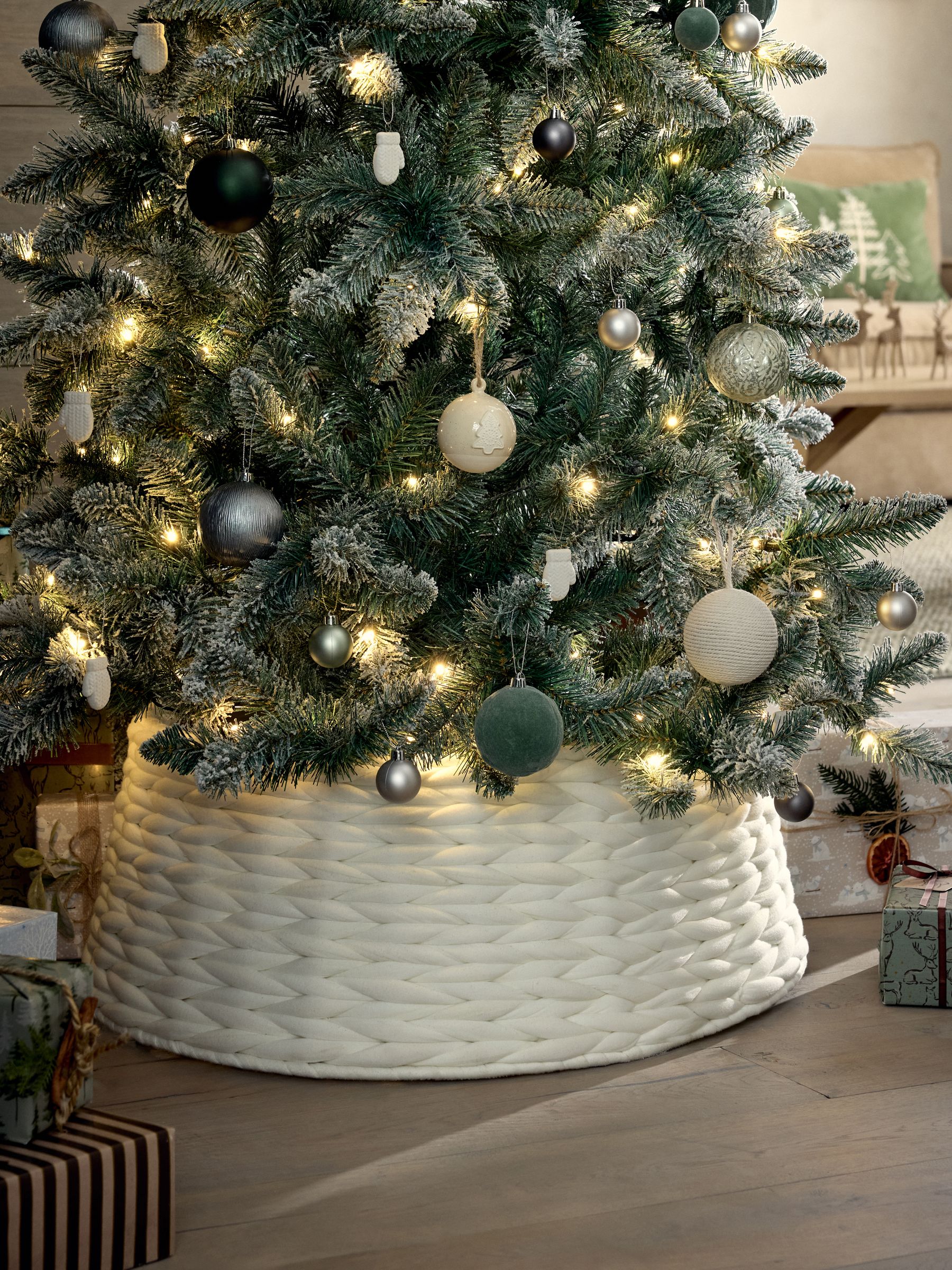
The stunning skirt lets texture do all the talking. It has the good looks of your favourite winter sweater, and wont take away from your decorations.","brand":"Next","name":"White Chunky Knit Tree Skirt – Size One","urlStyle":"","retailer":"","layout":"hero","linkText":"","noFollow":true,"noAffiliateTracking":false,"promoLabel":"","price":45,"salePrice":null,"currency":"GBP","linkLayout":"text","sponsored":false,"hawkProductNameMatchedCode":"","review":{"cons":[],"id":"","name":"","pros":[],"rating":0,"strapline":"","url":""},"id":"","externalId":"92667f9f0354e4db5b4d3b9d3f2264d191f68594","lastCheckedPriceDate":"","link":{"url":"https:\/\/click.linksynergy.com\/deeplink?id=kXQk6%2AivFEQ&mid=53096&u1=hawk-custom-tracking&murl=https%3A%2F%2Fwww.next.co.uk%2Fstyle%2Fsv060230%2Fy40808","merchantName":"Next UK","merchantId":491232,"merchantNetwork":"LSfutureusLlc","merchantUrl":"next.co.uk"}}}}}” data-link=”https://click.linksynergy.com/deeplink?id=kXQk6%2AivFEQ&mid=53096&u1=hawk-custom-tracking&murl=https%3A%2F%2Fwww.next.co.uk%2Fstyle%2Fsv060230%2Fy40808″ data-link-merchant=”Next UK” data-merchant-id=”491232″ data-merchant-name=”Next UK” data-merchant-network=”LSfutureusLlc” data-merchant-url=”next.co.uk” data-model-brand=”Next” data-model-name=”Next White Chunky Knit Tree Skirt – Size One” data-name=”Product Block merchantlink widget” data-render-type=”fte” data-show-fallback=”button” data-widget-type=”merchantlink” class=”ecom-root”>
The stunning skirt lets texture do all the talking. It has the good looks of your favourite winter sweater, and wont take away from your decorations.
Next
Navy Tartan Check Scalloped Edge Tree Skirt – Size One
If you want a classic, country Christmas, always choose tartan. The frilled edge makes this one look so stylish.","brand":"Next","name":"Navy Tartan Check Scalloped Edge Tree Skirt – Size One","urlStyle":"","retailer":"","layout":"hero","linkText":"","noFollow":true,"noAffiliateTracking":false,"promoLabel":"","price":22,"salePrice":null,"currency":"GBP","linkLayout":"text","sponsored":false,"hawkProductNameMatchedCode":"","review":{"cons":[],"id":"","name":"","pros":[],"rating":0,"strapline":"","url":""},"id":"","externalId":"fa45d261a710a2c7a5270f6d890fca3060555e82","lastCheckedPriceDate":"","link":{"url":"https:\/\/click.linksynergy.com\/deeplink?id=kXQk6%2AivFEQ&mid=53096&u1=hawk-custom-tracking&murl=https%3A%2F%2Fwww.next.co.uk%2Fstyle%2Fsv060235%2Fy42434","merchantName":"Next UK","merchantId":491232,"merchantNetwork":"LSfutureusLlc","merchantUrl":"next.co.uk"}}}}}” data-link=”https://click.linksynergy.com/deeplink?id=kXQk6%2AivFEQ&mid=53096&u1=hawk-custom-tracking&murl=https%3A%2F%2Fwww.next.co.uk%2Fstyle%2Fsv060235%2Fy42434″ data-link-merchant=”Next UK” data-merchant-id=”491232″ data-merchant-name=”Next UK” data-merchant-network=”LSfutureusLlc” data-merchant-url=”next.co.uk” data-model-brand=”Next” data-model-name=”Next Navy Tartan Check Scalloped Edge Tree Skirt – Size One” data-name=”Product Block merchantlink widget” data-render-type=”fte” data-show-fallback=”button” data-widget-type=”merchantlink” class=”ecom-root”>
If you want a classic, country Christmas, always choose tartan. The frilled edge makes this one look so stylish.
An LED tree skirt can help give your Christmas decor a cosy edge. And no one is doing it better than Next right now.
I’m a huge fan of autumn. I love the changing leaves, the slight chill in the air, and long dog walks with a hot coffee in hand. But one thing I hate? Muddy shoes cluttering my hallway. That’s why I’ve been on the hunt for a shoe rack to get ahead of the mess, and the new Lakeland Multi Shoe Rack (£29.99 at Lakeland) fits the bill perfectly.
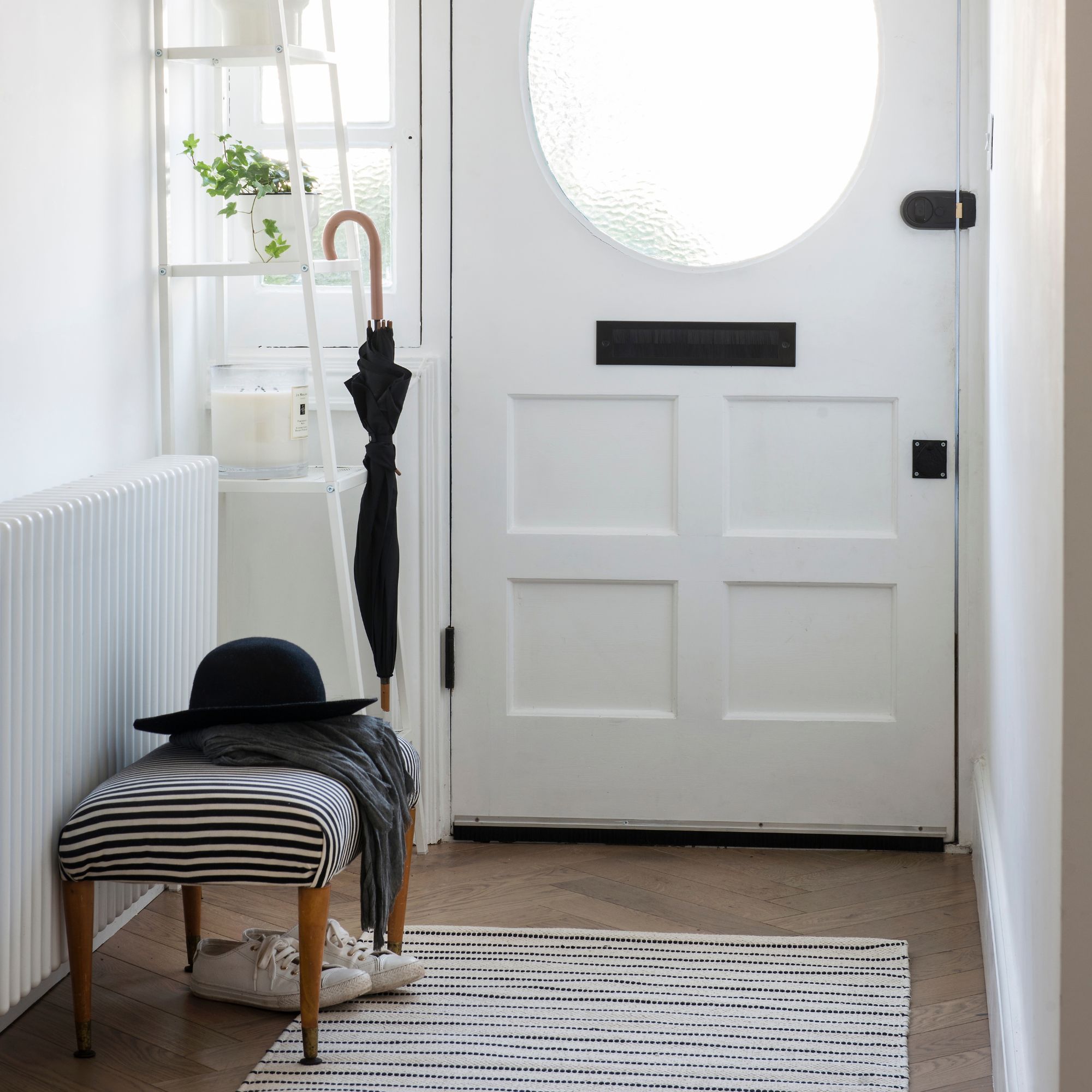
I’m currently on a mission to follow in the footsteps of people with consistently tidy hallways, and I’ve known my entryway has been missing some proper shoe storage for a while now. My husband and I have got into the bad habit of leaving our wet, muddy shoes on the doormat inside the house, and that makes our tiny space look even more cluttered.
But without a lot of space – or budget – to buy a huge shoe cabinet, I’ve had to look for a more effective shoe storage idea for small spaces, and this new Lakeland drop is both space-savvy and affordable.
Latest Videos FromIdeal Home
Lakeland
Multi Shoe Rack
<aside data-article-category="house-manual" data-block-layout="horizontal" data-block-type="featured-product" data-editorial-currency="GBP" data-editorial-price="29.99" data-hawk-json="{"product":{"variants":{"Default":{"image":{"copyright":"","height":1500,"id":"VmBzi4curWX6dRwQAvko9M","mimeType":"image\/jpeg","mos":"https:\/\/cdn.mos.cms.futurecdn.net\/VmBzi4curWX6dRwQAvko9M.jpg","role":"","width":1500,"credit":"Lakeland","alt":"Lakeland Multi Shoe Rack","caption":""},"strapline":"
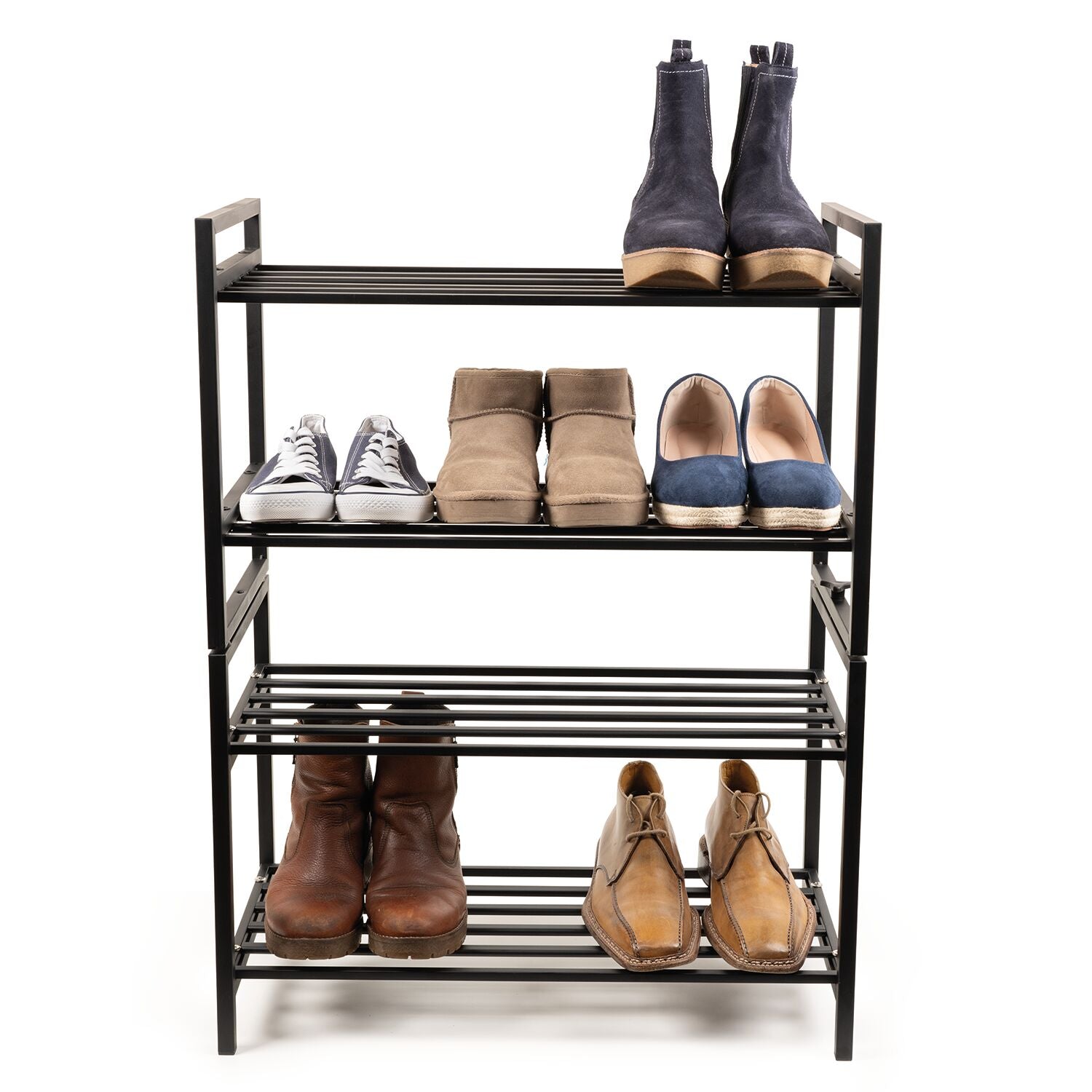
The foldable design means you can configure this as a 2-tier or 4-tier shoe rack, which is pretty impressive!","brand":"Lakeland","name":"Multi Shoe Rack","urlStyle":"","retailer":"","layout":"horizontal","linkText":"","noFollow":true,"noAffiliateTracking":false,"promoLabel":"","price":29.99,"salePrice":null,"currency":"GBP","linkLayout":"text","sponsored":false,"hawkProductNameMatchedCode":"","review":{"cons":[],"id":"","name":"","pros":[],"rating":0,"strapline":"","url":""},"id":"","externalId":"c0d4c950301cd6f7782b0dfbc86332c12448360d","lastCheckedPriceDate":"","link":{"url":"https:\/\/www.awin1.com\/awclick.php?awinmid=1751&awinaffid=103504&clickref=hawk-custom-tracking&p=https%3A%2F%2Fwww.lakeland.co.uk%2Fproducts%2Flakeland-multi-shoe-rack","merchantName":"Lakeland","merchantId":2595,"merchantNetwork":"AW","merchantUrl":"lakeland.co.uk"}}}}}” data-link=”https://www.awin1.com/awclick.php?awinmid=1751&awinaffid=103504&clickref=hawk-custom-tracking&p=https%3A%2F%2Fwww.lakeland.co.uk%2Fproducts%2Flakeland-multi-shoe-rack” data-link-merchant=”Lakeland” data-merchant-id=”2595″ data-merchant-name=”Lakeland” data-merchant-network=”AW” data-merchant-url=”lakeland.co.uk” data-model-brand=”Lakeland” data-model-name=”Lakeland Multi Shoe Rack” data-name=”Horizontal Product Block merchantlink widget” data-render-type=”fte” data-show-fallback=”button” data-widget-type=”merchantlink” class=”ecom-root”>
The foldable design means you can configure this as a 2-tier or 4-tier shoe rack, which is pretty impressive!
When I spotted this shoe rack, I knew it wouldn’t be a conscious design addition to my hallway. After all, it’s not the most aesthetic shoe rack I’ve ever come across – but pretty shoe storage often comes at a much heftier price.
But this Lakeland alternative is practical and affordable, and sometimes that’s all you need to transform your hallway from a cluttered, muddy mess into something to be proud of. Especially since this £30 solution fits 8 to twelve pairs of shoes and can be configured to suit your space.
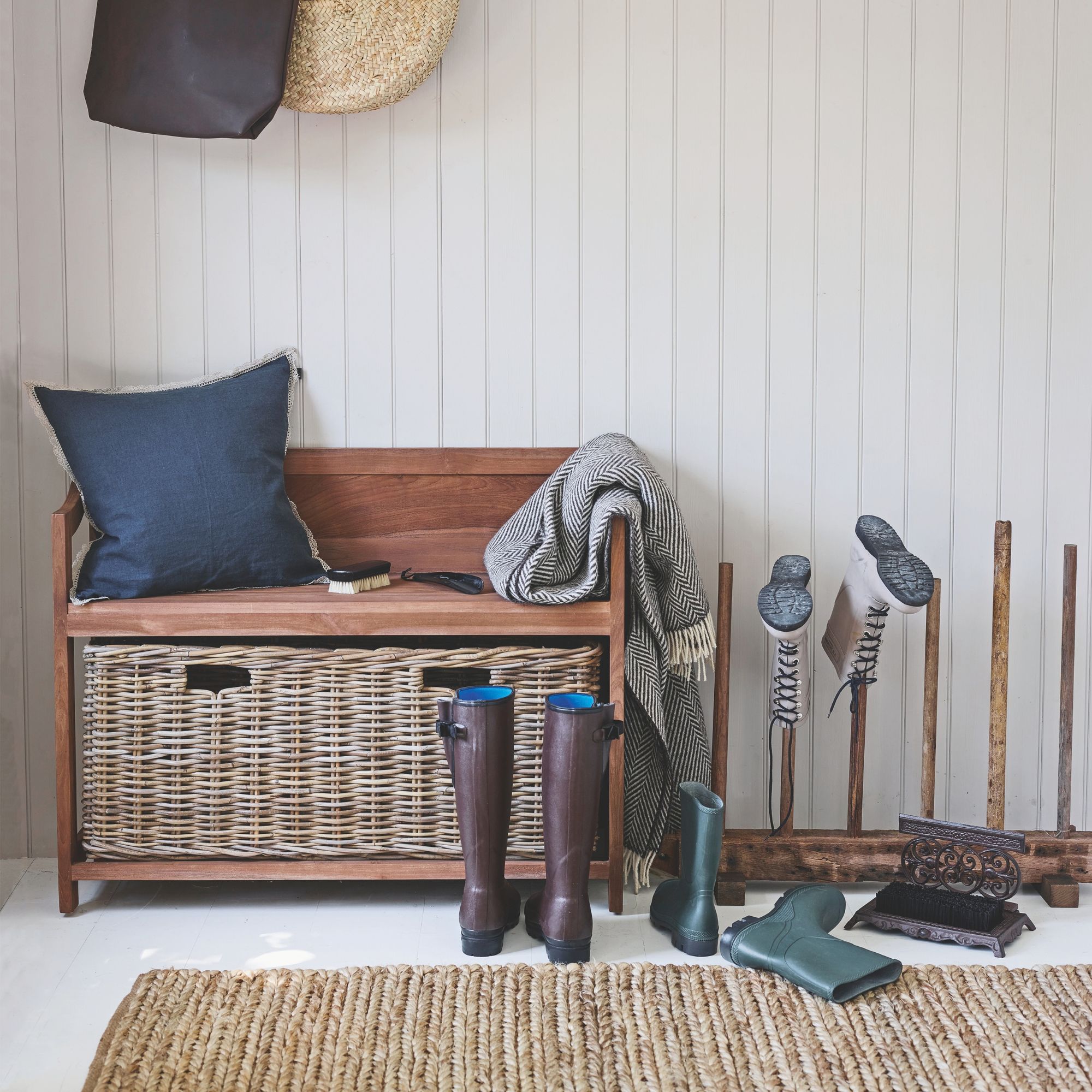
(Image credit: Future PLC/Colin Poole)
Yes, with a clever design feature that I’ve never seen before, this shoe rack can be assembled in two different ways. You can use it in a longer, wider two-tier formation, or fold it into a taller, narrower 4-tier formation.
This means that you can fit it around the other items already taking up space in your hallway, from coat racks and console tables to more permanent features like radiators.
Sign up to our newsletter for style inspiration, real homes, project and garden advice and shopping know-how
For example, I know the 4-tier formation would be better in my house because the radiator limits the available wall space, and I know from speaking to experts that utilising vertical space is key in smaller spaces.
(Image credit: Future PLC)
But having the option to switch it up also lets you use this shoe rack in other rooms and areas of your home. You could add another to your under-the-stairs cupboard, or opt for the lower-slung configuration at the bottom of your wardrobe to organise the shoes you wear regularly but don’t use enough to keep downstairs by the door.
With muddy season already underway, the wipe-clean material also means that you can simply wipe away the grime your shoes leave behind, keeping your hallway spotless.
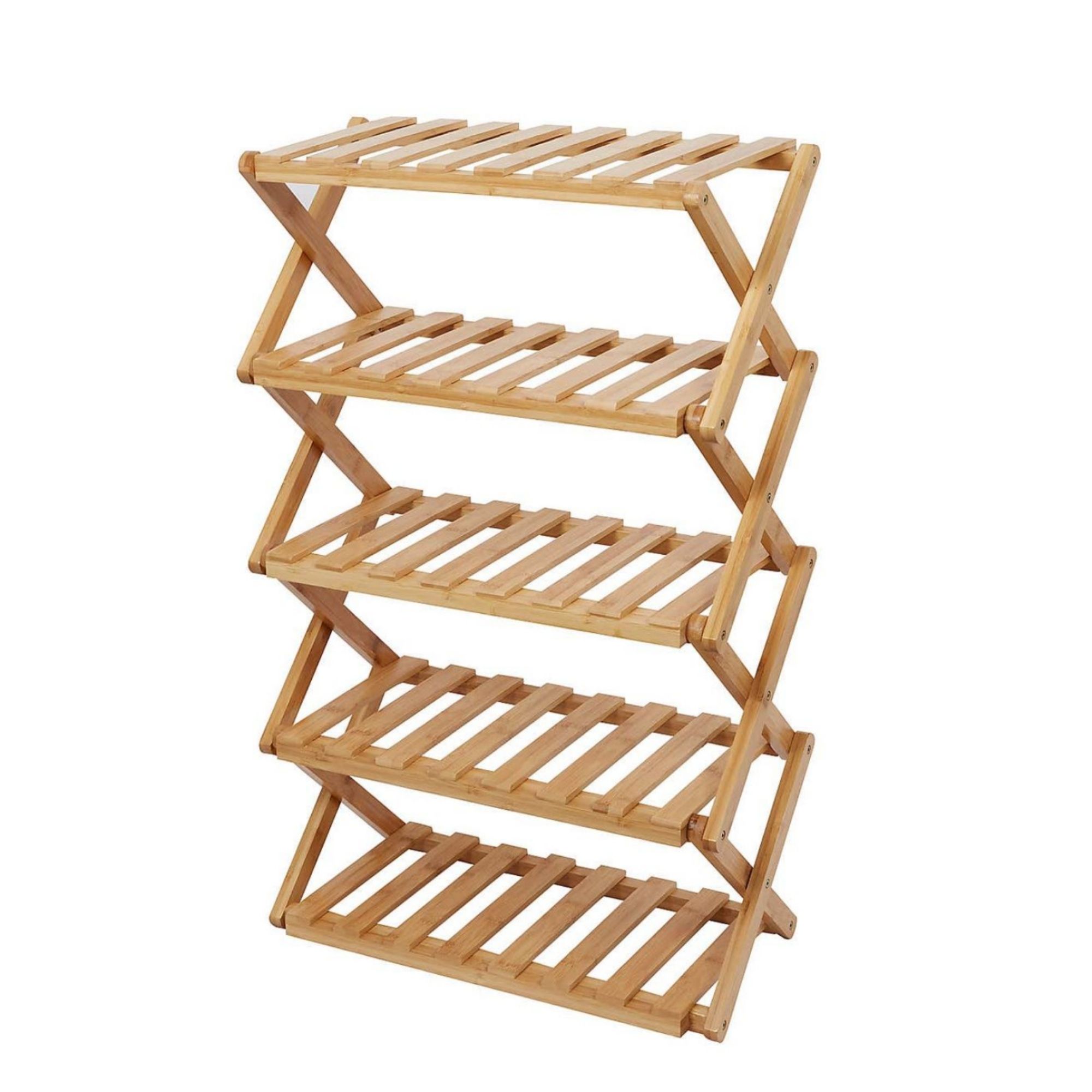
This shoe rack doesn't fold the same way, but it's still an ideal space-saver, since you can fold it down when you're not using it. When you do need it, there are 5 shelves to make use of. ","brand":"Dunelm","name":"Bamboo Folding Shoe Rack","urlStyle":"","retailer":"","layout":"hero","linkText":"","noFollow":true,"noAffiliateTracking":false,"promoLabel":"","price":35,"salePrice":null,"currency":"GBP","linkLayout":"text","sponsored":false,"hawkProductNameMatchedCode":"","review":{"cons":[],"id":"","name":"","pros":[],"rating":0,"strapline":"","url":""},"id":"","externalId":"0d776bd702eabbe9e14e31ea94a61b147447a54a","lastCheckedPriceDate":"","link":{"url":"https:\/\/www.prf.hn\/click\/camref:1011l5dAX6\/pubref:hawk-custom-tracking\/destination:https%3A%2F%2Fwww.dunelm.com%2Fproduct%2Fbamboo-folding-shoe-rack-1000213203","merchantName":"Dunelm","merchantId":579677,"merchantNetwork":"PHG","merchantUrl":"dunelm.com"}}}}}” data-link=”https://www.prf.hn/click/camref:1011l5dAX6/pubref:hawk-custom-tracking/destination:https%3A%2F%2Fwww.dunelm.com%2Fproduct%2Fbamboo-folding-shoe-rack-1000213203″ data-link-merchant=”Dunelm” data-merchant-id=”579677″ data-merchant-name=”Dunelm” data-merchant-network=”PHG” data-merchant-url=”dunelm.com” data-model-brand=”Dunelm” data-model-name=”Dunelm Bamboo Folding Shoe Rack” data-name=”Product Block merchantlink widget” data-render-type=”fte” data-show-fallback=”button” data-widget-type=”merchantlink” class=”ecom-root”>
This shoe rack doesn’t fold the same way, but it’s still an ideal space-saver, since you can fold it down when you’re not using it. When you do need it, there are 5 shelves to make use of.
Altdnmaf
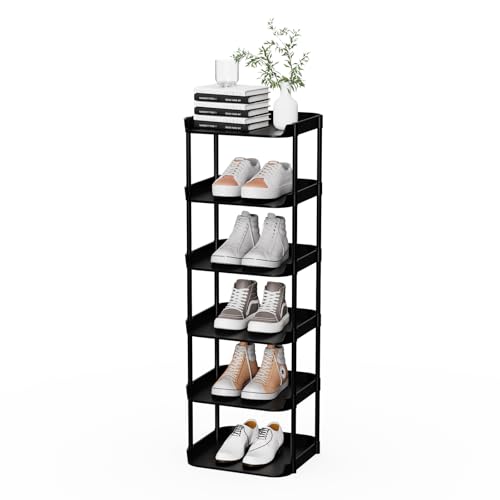
6 Tier Narrow Shoe Storage Rack
<aside data-article-category="house-manual" data-block-layout="hero" data-block-type="featured-product" data-editorial-currency="GBP" data-editorial-price="15.99" data-hawk-json="{"product":{"variants":{"Default":{"image":{"copyright":"","height":500,"id":"MTAUxeHfEbfABRsVdBQB2c","mimeType":"image\/jpeg","mos":"https:\/\/cdn.mos.cms.futurecdn.net\/MTAUxeHfEbfABRsVdBQB2c.jpg","role":"","width":500,"credit":"Altdnmaf","alt":"Altdnmaf 6 Tier Narrow Shoe Storage Rack, Compact Single Shoerack Stand for Slim Space, Stackable Tall Thin Show Tower, Vertical Plastic Shelves, for Hallways, Kitchens, Bedrooms Tidy Organizer, Black","caption":""},"strapline":"
This budget-friendly shoe rack will fit in the corner of your hallway and offer storage for your most-used shoes. You can even use the top for flowers, candles or a tray to keep your keys safe. ","brand":"Altdnmaf","name":"6 Tier Narrow Shoe Storage Rack","urlStyle":"","retailer":"","layout":"hero","linkText":"","noFollow":true,"noAffiliateTracking":false,"promoLabel":"","price":15.99,"salePrice":null,"currency":"GBP","linkLayout":"text","sponsored":false,"hawkProductNameMatchedCode":"","review":{"cons":[],"id":"","name":"","pros":[],"rating":0,"strapline":"","url":""},"id":"","externalId":"cee877cab9cfd3bfe5e65192cbef91c31047c199","lastCheckedPriceDate":"","link":{"url":"https:\/\/target.georiot.com\/Proxy.ashx?tsid=107653&GR_URL=https%3A%2F%2Famazon.co.uk%2FAltdnmaf-Shoerack-Stackable-Vertical-Organizer%2Fdp%2FB0F7LBB549%2F%3Fth%3D1%26tag%3Dftr-idealhome-gb-21%26ascsubtag%3Dhawk-custom-tracking-21","merchantName":"Amazon UK","merchantId":1027,"merchantNetwork":"Amazonuk","merchantUrl":"amazon.co.uk"}}}}}” data-link=”https://target.georiot.com/Proxy.ashx?tsid=107653&GR_URL=https%3A%2F%2Famazon.co.uk%2FAltdnmaf-Shoerack-Stackable-Vertical-Organizer%2Fdp%2FB0F7LBB549%2F%3Fth%3D1%26tag%3Dftr-idealhome-gb-21%26ascsubtag%3Dhawk-custom-tracking-21″ data-link-merchant=”Amazon UK” data-merchant-id=”1027″ data-merchant-name=”Amazon UK” data-merchant-network=”Amazonuk” data-merchant-url=”amazon.co.uk” data-model-brand=”Altdnmaf” data-model-name=”Altdnmaf 6 Tier Narrow Shoe Storage Rack” data-name=”Product Block merchantlink widget” data-render-type=”fte” data-show-fallback=”button” data-widget-type=”merchantlink” class=”ecom-root”>
This budget-friendly shoe rack will fit in the corner of your hallway and offer storage for your most-used shoes. You can even use the top for flowers, candles or a tray to keep your keys safe.
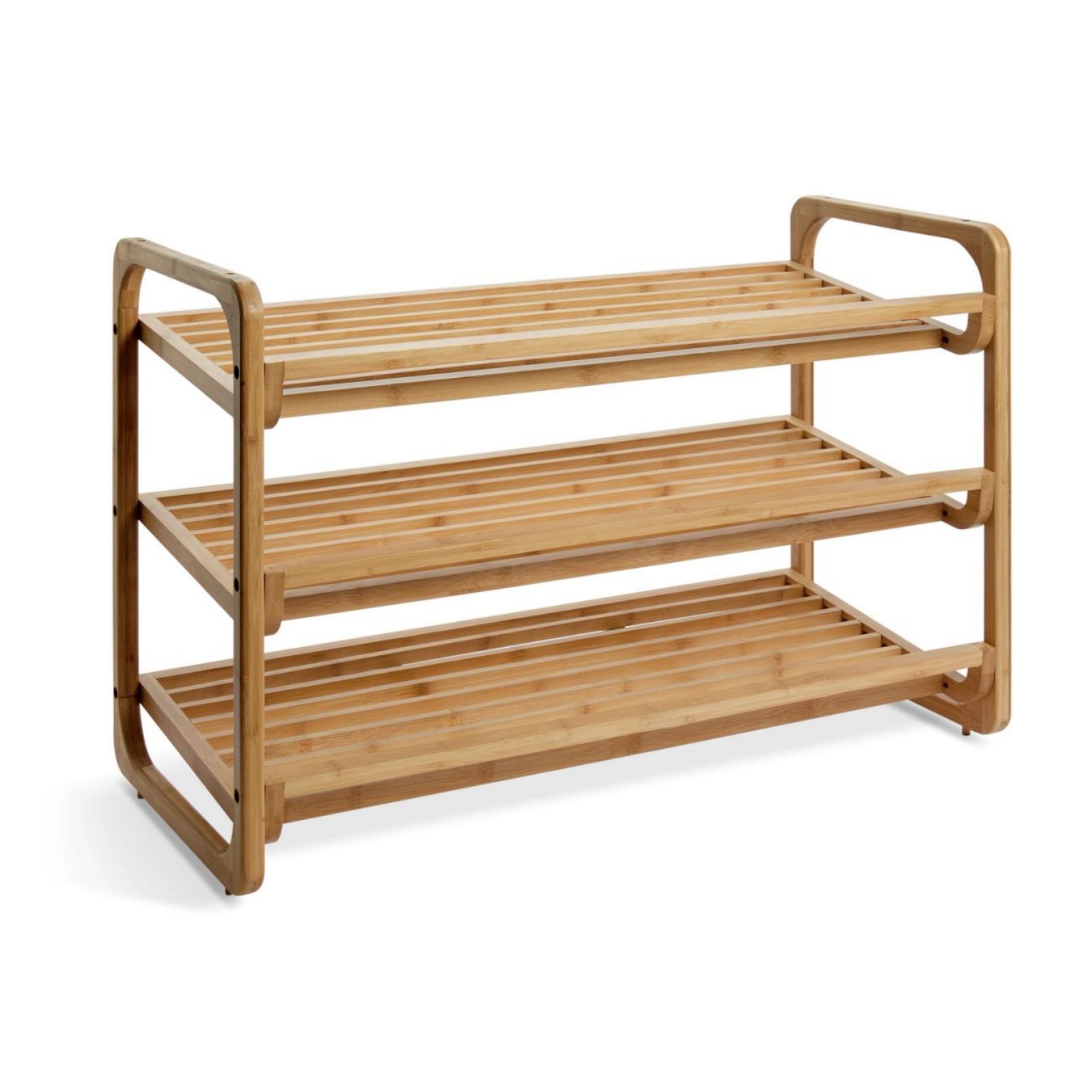
This shoe rack is slightly pricier, but still very affordable – and it'll make much more of a statement in your hallway thanks to the natural bamboo shelves.","brand":"Habitat","name":"Belem 3 Shelf Shoe Storage Rack – Natural","urlStyle":"","retailer":"","layout":"hero","linkText":"","noFollow":true,"noAffiliateTracking":false,"promoLabel":"","price":42,"salePrice":null,"currency":"GBP","linkLayout":"text","sponsored":false,"hawkProductNameMatchedCode":"","review":{"cons":[],"id":"","name":"","pros":[],"rating":0,"strapline":"","url":""},"id":"","externalId":"635449f610d0303ce7f968110eeaed5f4e22906f","lastCheckedPriceDate":"","link":{"url":"https:\/\/www.anrdoezrs.net\/click-100624752-17337832?sid=hawk-custom-tracking&url=https:\/\/www.habitat.co.uk\/product\/7228940","merchantName":"Habitat UK","merchantId":209252,"merchantNetwork":"CJ","merchantUrl":"habitat.co.uk"}}}}}” data-link=”https://www.anrdoezrs.net/click-100624752-17337832?sid=hawk-custom-tracking&url=https://www.habitat.co.uk/product/7228940″ data-link-merchant=”Habitat UK” data-merchant-id=”209252″ data-merchant-name=”Habitat UK” data-merchant-network=”CJ” data-merchant-url=”habitat.co.uk” data-model-brand=”Habitat” data-model-name=”Habitat Belem 3 Shelf Shoe Storage Rack – Natural” data-name=”Product Block merchantlink widget” data-render-type=”fte” data-show-fallback=”button” data-widget-type=”merchantlink” class=”ecom-root”>
This shoe rack is slightly pricier, but still very affordable – and it’ll make much more of a statement in your hallway thanks to the natural bamboo shelves.
I’m definitely snapping up Lakeland’s new £30 shoe rack to get ahead of the mess this autumn.
Interior design experts are advocating for us to apply the Japanese practice of ikigai to homes to ensure our spaces are places that add small pleasures to our lives.
Ikigai is more than just a home decor trend. With ‘Iki’ translating to ‘life’ and ‘Gai’ meaning ‘worth’ or ‘value’, it literally means ‘that which makes life worth living.’ And interior experts say that this principle can be applied to how we spend time at home and to our home decor.
‘The concept dates back to the Heian period, between 794 and 1185, when it appeared in poetry and court diaries as a way to describe moments of deep personal satisfaction. Rather than a single overarching goal, ikigai is really about the daily realisation that life is worth living in the present moment,’ explains Gini Lin, founder of Airy Fragrances.
Latest Videos FromIdeal Home
‘It is found in small domestic pleasures: the first sip of warm tea in the morning, the way afternoon sunlight hits a wooden floor, or the satisfying feeling of preparing a simple meal. It is less about what you achieve and more about how present you are in the small rituals that make up your day.’
How to apply ikigai to our homes
Considering ikigai centres on finding meaning in everyday life, it is perhaps natural that this principle lends itself well to our home lives. It’s a useful practice to follow if you’re looking for ways to make your home feel happier.
(Image credit: Future PLC/ Paul Raeside)
‘The home is where ikigai is most naturally expressed, and most consistently overlooked. We spend enormous energy designing homes that look considered, but far less on making them feel considered. The two are not the same,’ says Gini.
‘It starts with one question about every object and every ritual in your space: does this add meaning to my day? It doesn’t photograph well, nor is it on trend, but it gives me something when I am actually living inside it. A chair placed to catch morning light. A surface cleared of everything except what belongs to one activity. A scent so tied to a particular room that walking into it feels like arriving somewhere.
Sign up to our newsletter for style inspiration, real homes, project and garden advice and shopping know-how
‘In Japan, this way of thinking about domestic space has been practised for centuries, built into the genkan entrance that separates the noise of the outside world from the calm of home, the single seasonal flower changed with the months, the ritual of removing shoes before crossing the threshold. The home is not a backdrop to life. It is where life is actually lived.’
What does ikigai look like in practice?
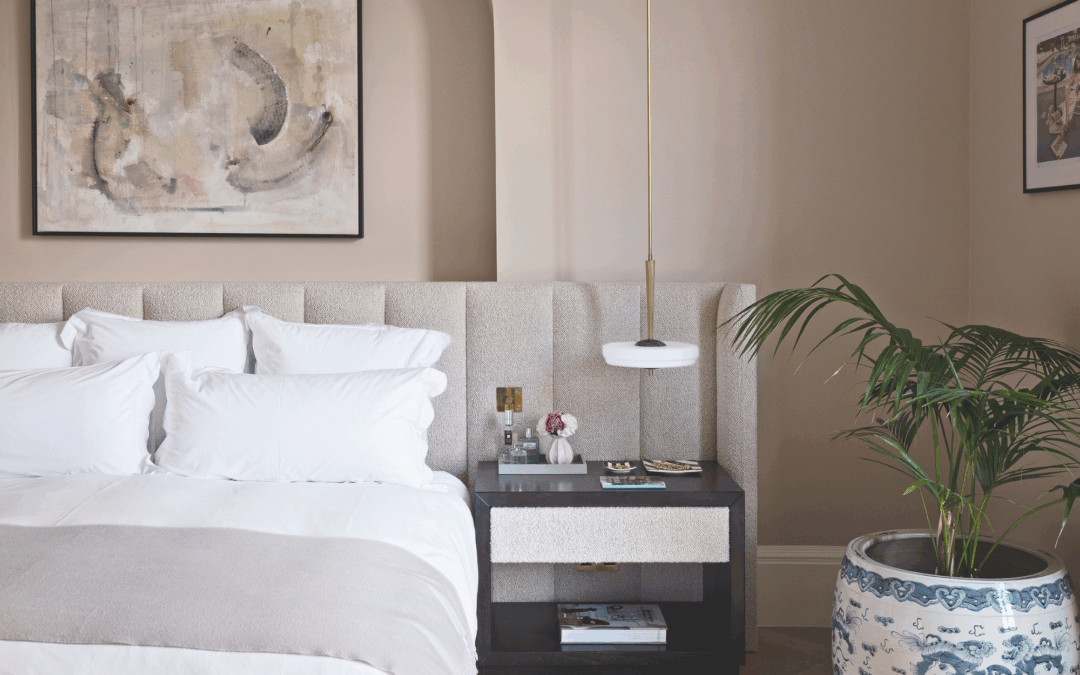
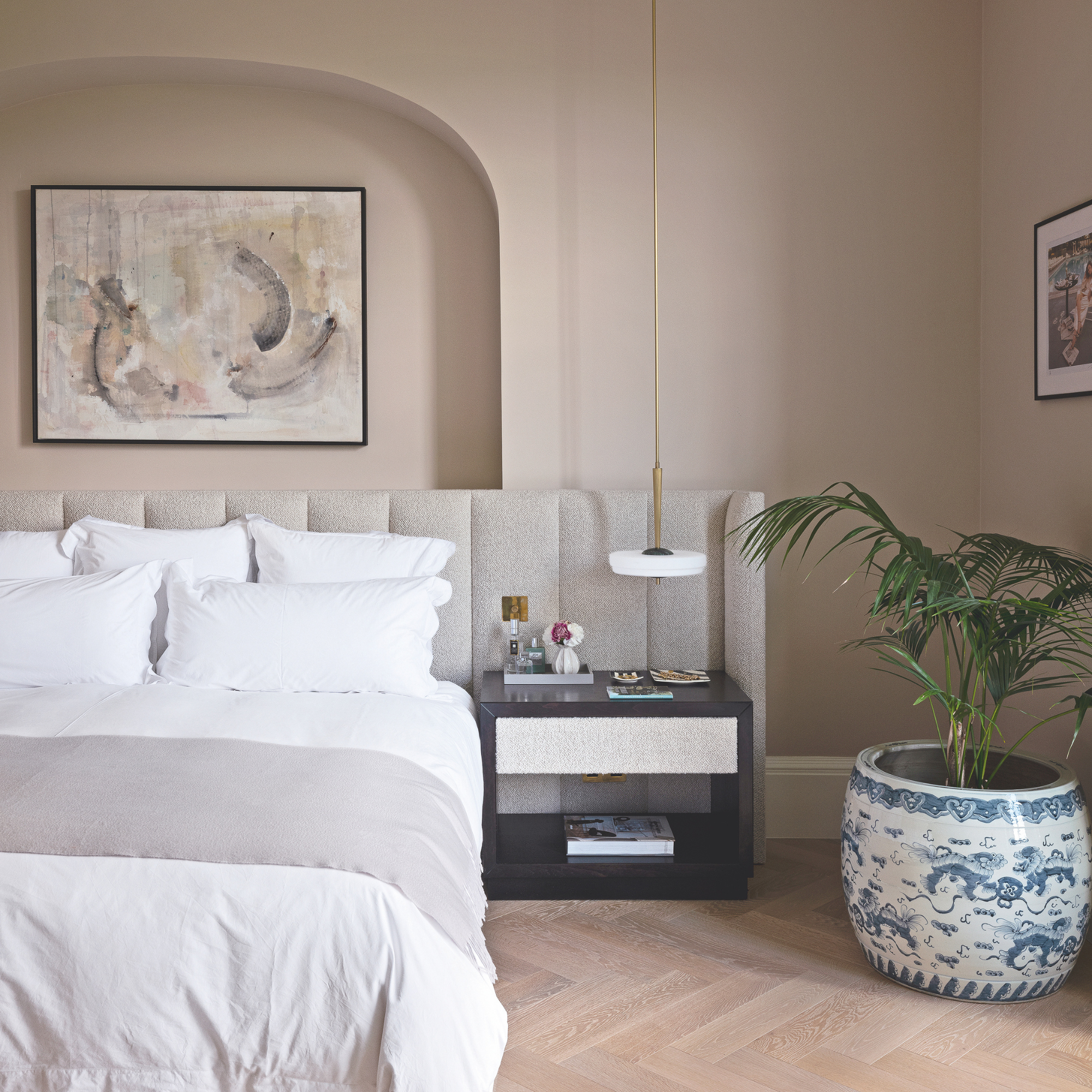
In practice, ikigai can be as simple as appreciating your favourite candle scent or reed diffuser in your bedroom, opting for specific materials that feel good on your skin, such as linen bedding.
‘For me, it comes back to creating spaces that feel comfortable, welcoming and personal. I like rooms to have a sense of character rather than feeling too perfect, and I think surrounding yourself with colours, patterns and textures that you enjoy can make a real difference to how you feel at home,’ says Debbie Leigh, design manager at ILIV.
‘I also think there is something to be said for creating small spaces or moments that encourage you to slow down, whether that is sitting down with a cup of coffee, reading for a while or simply enjoying the natural light coming into a room.’
Gini’s approach would be to start with the five senses, which ensures you don’t only address things in your home which you can physically see.
(Image credit: Future PLC/Davide Lovatti)
‘Scent is one of the most direct routes to the limbic system, the part of the brain that processes memory and emotion. It arrives before rational thought, which means it shapes how a space feels before you have consciously registered anything about it. A room with its own scent has its own identity. It becomes somewhere specific, somewhere that belongs to you. That is a form of ikigai built into the architecture of a space,’ she says.
‘I would also introduce objects that invite you to slow down: a hand-thrown ceramic cup you love the feeling of holding, a decorative glass piece that catches the light in a particular way, a reed diffuser that makes you feel good the moment you walk in. These sensory anchors create a pause between the pace of the outside world and the pace of being home.
‘Personally I am a minimalist, and I think that instinct is deeply connected to ikigai. When a home is full of things that have stopped earning their place, the mind has nowhere to settle. Removing the unnecessary is not about aesthetics. It is about clarity.
‘A clear surface, a corner left empty, soft warm light rather than harsh overhead brightness: these create the conditions for the atmosphere of a room to actually be felt. Japanese spatial philosophy calls this yutori, breathing room. You cannot notice the small meaningful moments of daily life if there is too much competing for your attention. Yutori is what makes noticing possible.’
Is this a good philosophy to live by?
For our experts, ikigai is a good practice to live by simply because it doesn’t ask too much of us. All we must do is appreciate that the simple things make life worth living.
(Image credit: Future PLC/James Merrell)
‘I like the idea that there doesn’t have to be one big source of happiness or purpose. It can be found in the small things that make everyday life feel good. The same can be true of our homes. They don’t need to be perfect or follow every new trend. They should make sense for the people who live in them and support the things that bring them pleasure, comfort and connection,’ says Debbie.
And Gini agrees, stating: ‘For the home specifically, this is a profound reframe. The home stops being a place where you recover from your life so you can go back and live it again tomorrow. It becomes the place where your life is actually happening. Every small ritual, every considered object, every scent that makes a room feel like yours: these are not decorations. They are the thing itself.’
How I practice ikigai
M&S
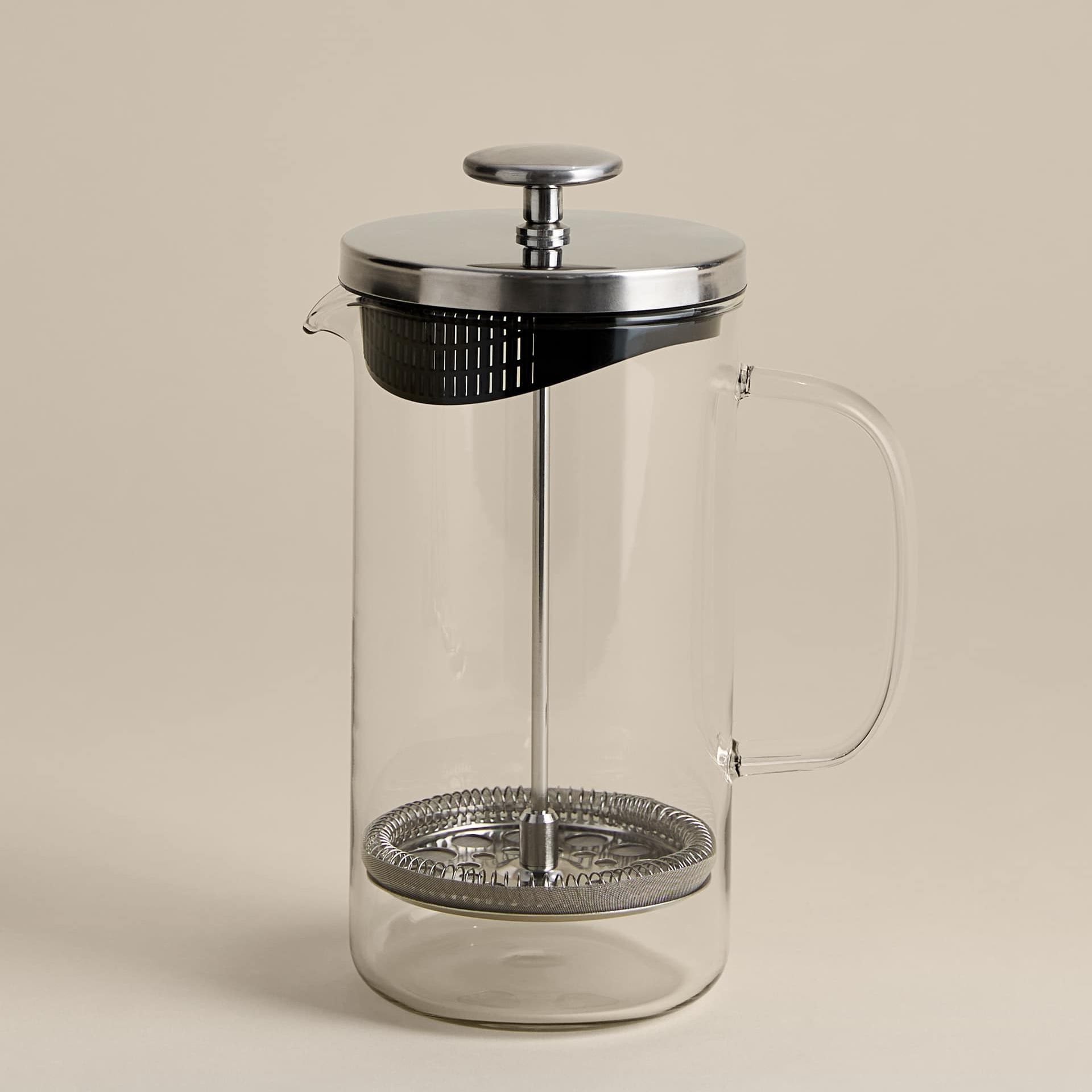
Glass 8 Cup Cafetiere
<aside data-article-category="all-rooms" data-block-layout="hero" data-block-type="featured-product" data-editorial-currency="GBP" data-editorial-price="15" data-hawk-json="{"product":{"variants":{"Default":{"image":{"copyright":"","height":2496,"id":"NjjaXfCouSK696eCiLQmWm","mimeType":"image\/jpeg","mos":"https:\/\/cdn.mos.cms.futurecdn.net\/v2\/t:303,l:0,cw:1920,ch:1920,q:80\/NjjaXfCouSK696eCiLQmWm.jpg","role":"","width":1920,"credit":"M&S","alt":"Glass 8 Cup Cafetiere","caption":"","crop":{"label":"1:1","left":0,"top":303,"cropWidth":1920,"cropHeight":1920,"quality":80}},"strapline":"
There's nothing that makes me happy than a quality black coffee, sipped in bed with my book on a Sunday morning. It's this weekend ritual that always makes me appreciative of my life.","brand":"M&S","name":"Glass 8 Cup Cafetiere","urlStyle":"","retailer":"","layout":"hero","linkText":"","noFollow":true,"noAffiliateTracking":false,"promoLabel":"","price":15,"salePrice":null,"currency":"GBP","linkLayout":"text","sponsored":false,"hawkProductNameMatchedCode":"","review":{"cons":[],"id":"","name":"","pros":[],"rating":0,"strapline":"","url":""},"id":"","externalId":"350dfecdc4758df4fb8e592edb1e15a6c53c3453","lastCheckedPriceDate":"","link":{"url":"https:\/\/www.awin1.com\/awclick.php?awinmid=1402&awinaffid=103504&clickref=hawk-custom-tracking&p=https%3A%2F%2Fwww.marksandspencer.com%2Fglass-8-cup-cafetiere%2Fp%2Fhbp60780556","merchantName":"Marks and Spencer UK","merchantId":1042,"merchantNetwork":"AW","merchantUrl":"marksandspencer.com"}}}}}” data-link=”https://www.awin1.com/awclick.php?awinmid=1402&awinaffid=103504&clickref=hawk-custom-tracking&p=https%3A%2F%2Fwww.marksandspencer.com%2Fglass-8-cup-cafetiere%2Fp%2Fhbp60780556″ data-link-merchant=”Marks and Spencer UK” data-merchant-id=”1042″ data-merchant-name=”Marks and Spencer UK” data-merchant-network=”AW” data-merchant-url=”marksandspencer.com” data-model-brand=”M&S” data-model-name=”M&S Glass 8 Cup Cafetiere” data-name=”Product Block merchantlink widget” data-render-type=”fte” data-show-fallback=”button” data-widget-type=”merchantlink” class=”ecom-root”>
There’s nothing that makes me happy than a quality black coffee, sipped in bed with my book on a Sunday morning. It’s this weekend ritual that always makes me appreciative of my life.
Dunelm
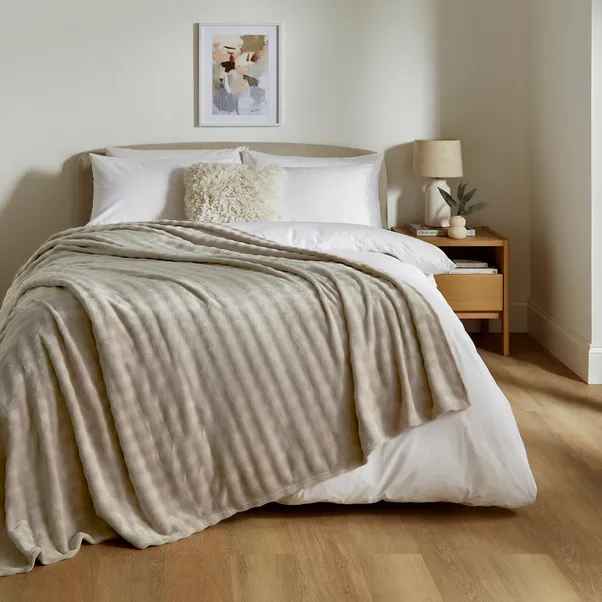
Supersize Bubble Family Fleece Throw 240cm X 280cm
<aside data-article-category="all-rooms" data-block-layout="hero" data-block-type="featured-product" data-editorial-currency="GBP" data-editorial-price="24" data-hawk-json="{"product":{"variants":{"Default":{"image":{"copyright":"","height":602,"id":"vfjn6mgW5utj4TgcMfoVG9","mimeType":"image\/png","mos":"https:\/\/cdn.mos.cms.futurecdn.net\/vfjn6mgW5utj4TgcMfoVG9.png","role":"","width":602,"credit":"Dunelm","alt":"Supersize Bubble Family Fleece Throw 240cm X 280cm","caption":""},"strapline":"
Equally, there's nothing better than snuggling down under a blanket when the weather is vile outdoors. I can vouch that this blanket is super soft and cosy, and right now \u00a32 of proceeds go to Age UK.","brand":"Dunelm","name":"Supersize Bubble Family Fleece Throw 240cm X 280cm","urlStyle":"","retailer":"","layout":"hero","linkText":"","noFollow":true,"noAffiliateTracking":false,"promoLabel":"","price":24,"salePrice":null,"currency":"GBP","linkLayout":"text","sponsored":false,"hawkProductNameMatchedCode":"","review":{"cons":[],"id":"","name":"","pros":[],"rating":0,"strapline":"","url":""},"id":"","externalId":"e6ef0b767c15159c800e24c2c3f3c1239d1082f3","lastCheckedPriceDate":"","link":{"url":"https:\/\/www.prf.hn\/click\/camref:1011l5dAX6\/pubref:hawk-custom-tracking\/destination:https%3A%2F%2Fwww.dunelm.com%2Fproduct%2Fsupersize-bubble-fleece-throw-240cm-x-280cm-1000270447%3F","merchantName":"Dunelm","merchantId":579677,"merchantNetwork":"PHG","merchantUrl":"dunelm.com"}}}}}” data-link=”https://www.prf.hn/click/camref:1011l5dAX6/pubref:hawk-custom-tracking/destination:https%3A%2F%2Fwww.dunelm.com%2Fproduct%2Fsupersize-bubble-fleece-throw-240cm-x-280cm-1000270447%3F” data-link-merchant=”Dunelm” data-merchant-id=”579677″ data-merchant-name=”Dunelm” data-merchant-network=”PHG” data-merchant-url=”dunelm.com” data-model-brand=”Dunelm” data-model-name=”Dunelm Supersize Bubble Family Fleece Throw 240cm X 280cm” data-name=”Product Block merchantlink widget” data-render-type=”fte” data-show-fallback=”button” data-widget-type=”merchantlink” class=”ecom-root”>
Equally, there’s nothing better than snuggling down under a blanket when the weather is vile outdoors. I can vouch that this blanket is super soft and cosy, and right now £2 of proceeds go to Age UK.
The White Company
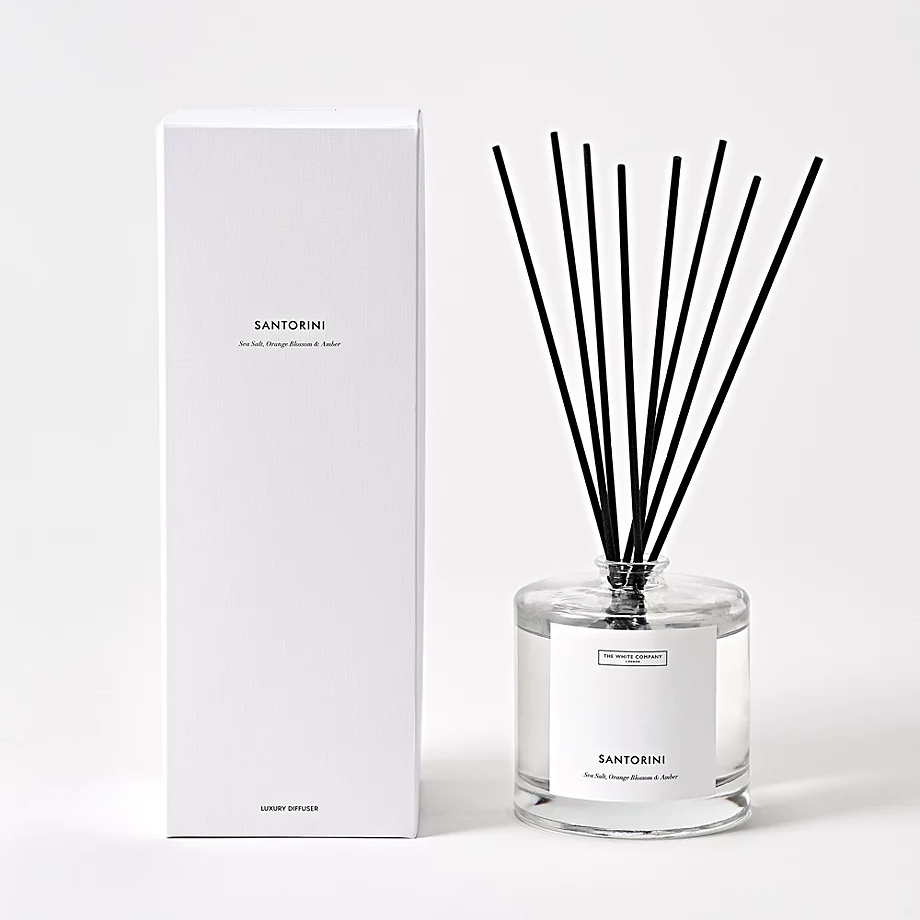
Santorini Luxury Diffuser
<aside data-article-category="all-rooms" data-block-layout="hero" data-block-type="featured-product" data-editorial-currency="GBP" data-editorial-merchant-name="Was £40, now £32 at The White Company" data-hawk-json="{"product":{"variants":{"Default":{"image":{"copyright":"","height":1178,"id":"99So3Mm5Ztwjr8XiicLesP","mimeType":"image\/png","mos":"https:\/\/cdn.mos.cms.futurecdn.net\/v2\/t:206,l:0,cw:920,ch:920,q:80\/99So3Mm5Ztwjr8XiicLesP.png","role":"","width":920,"credit":"The White Company","alt":"The White Company, Santorini Luxury Diffuser","caption":"","crop":{"label":"1:1","left":0,"top":206,"cropWidth":920,"cropHeight":920,"quality":80}},"strapline":"
There’s nothing I love more than a snoop around a celebrity home, and the latest to catch my eye is comedian, writer and actor Joanne McNally, whose recent house-moving video on Instagram revealed her brilliant technique of using pink to anchor her maximalist decor.
Those with stylish homes will know that having a ‘red thread’ running throughout your space ties your home together coherently for a finished look that feels as considered as it is stylish. Examples include Victoria Beckham, who has pops of pistachio green tying her home’s interiors together.
Now you can add Joanne to your list of celebrity inspiration. Her gorgeous, maximalist home decor is neatly tied together by a repeated pink colourway. Here’s how you can do it, according to interior design experts.
Latest Videos FromIdeal Home
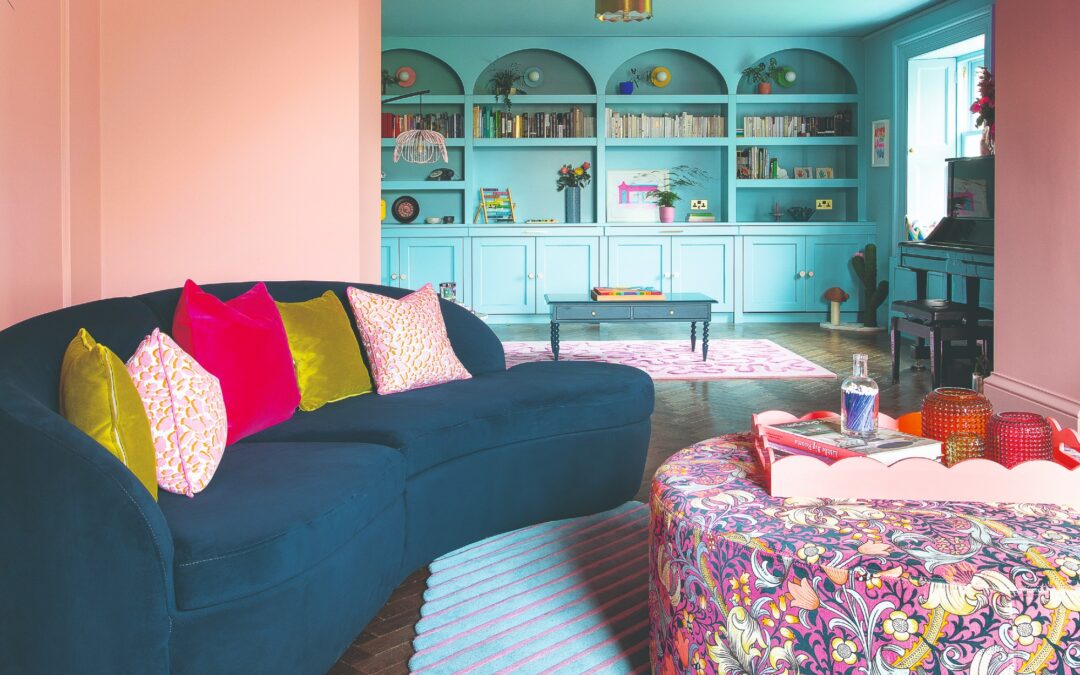
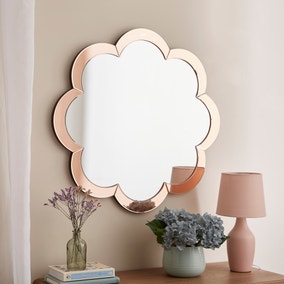
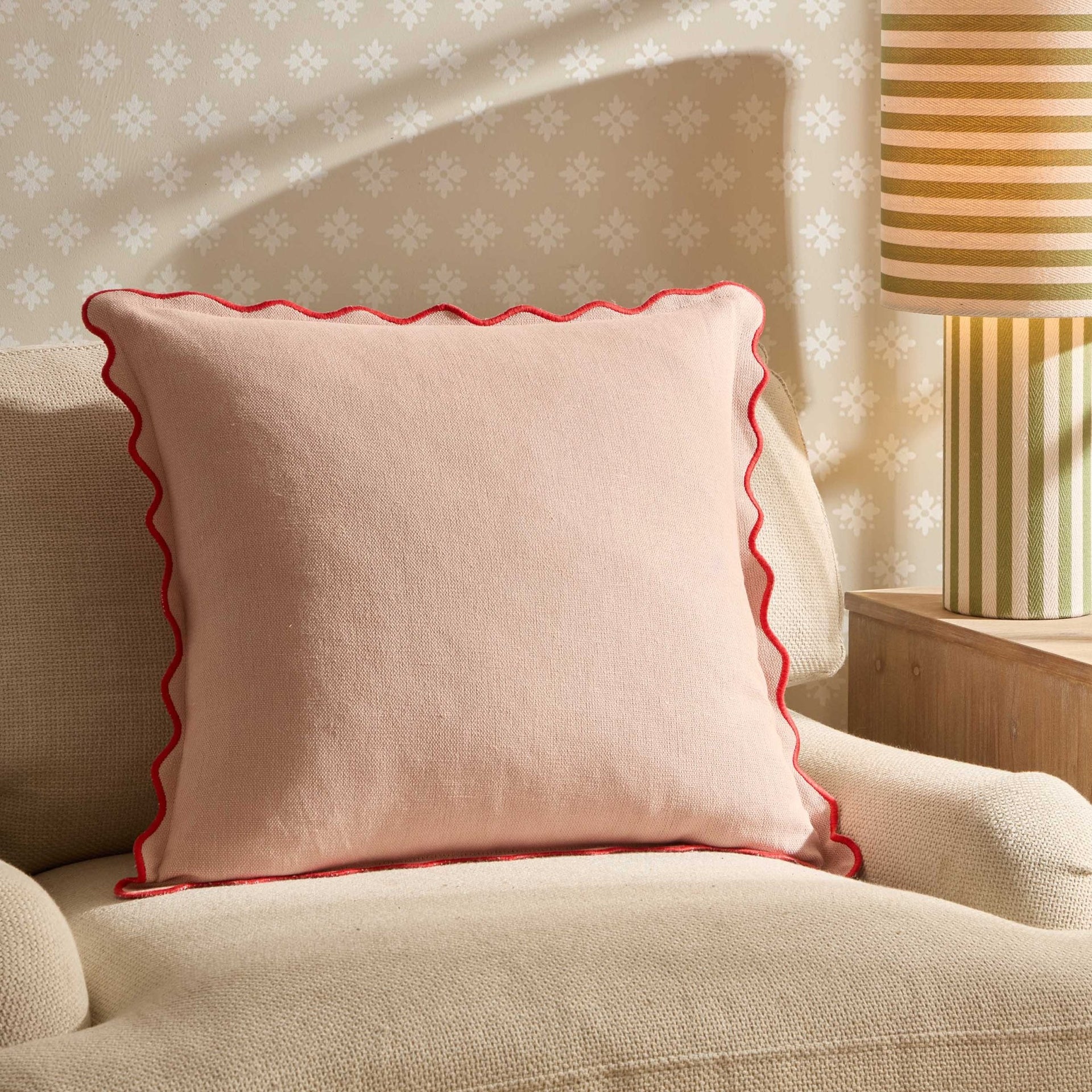
In a recent Instagram post, Joanne vlogged her recent move into her home and amongst all the packing and subsequent unpacking, I noticed that pink featured heavily amongst her homeware. She had a pink rug, chairs, mirror, storage unit, lighting and artwork, too. While there’s no doubt pinks proved a colour trend with staying power, what Joanne’s use of pink does is give her home a considered, finished look.
‘Joanne’s pink home accents are a great way for her to inject her personality and personal brand into her home. Pink is such a naturally uplifting colour, helping to keep a space feeling fun, positive and full of character,’ comments Natalie Evans, founder and CEO of home styling and staging company Little Barn Door.
‘Using a ‘red thread’ colour throughout a property is a great way to make a bold choice feel cohesive. People often assume that if they introduce a strong colour, they need to use it heavily from room to room. In reality, following a simple 5% rule and repeating small touches of the same colour throughout can maintain personality and connection without the scheme feeling overwhelming.’
(Image credit: Future PLC/Douglas Gibb)
A red thread can be anything from a paint shade, material or pattern. Joanne’s use of pink works so well because it matches the bold, characterful nature of her interior design.
Sign up to our newsletter for style inspiration, real homes, project and garden advice and shopping know-how
‘When you have lots of shapes, colours and individual pieces competing for attention, a recurring colour gives the eye something familiar to find. Pink provides that connection while still allowing each piece to have its own personality,’ says Kunal Trehan, interior designer and founder of Touched Interiors.
‘Joanne uses pink with real confidence. It feels playful and personal, especially alongside her sculptural furniture, colourful art and unexpected accessories. I love that she hasn’t treated pink as something that has to be delicate; it can hold its own among much bolder pieces.’
How to get the look
‘Choose a colour you genuinely love, then repeat it in different ways: perhaps a chair in one room, a detail in an artwork in another, and a lamp or cushion elsewhere. Vary the scale and the shade, and let the rest of your home evolve around it. The aim is a sense of connection, not a matching set,’ is Kunal’s advice.
(Image credit: Future PLC/Siobhan Doran)
When considering the best accent colour for your home, consider the palettes that genuinely make you happy. Do you have a favourite colour you wouldn’t mind seeing in every room? That makes a great red thread. If you want to reflect a bolder, playful home pink is a great choice, meanwhile a soft green can be used to evoke a sense of calm.
‘It’s also a clever way to embrace a bolder colour without making a huge commitment. Accessories and smaller decorative pieces are relatively easy to change, so if Joanne’s tastes or trends evolve in the future, the overall look can easily evolve with them,’ adds Natalie.
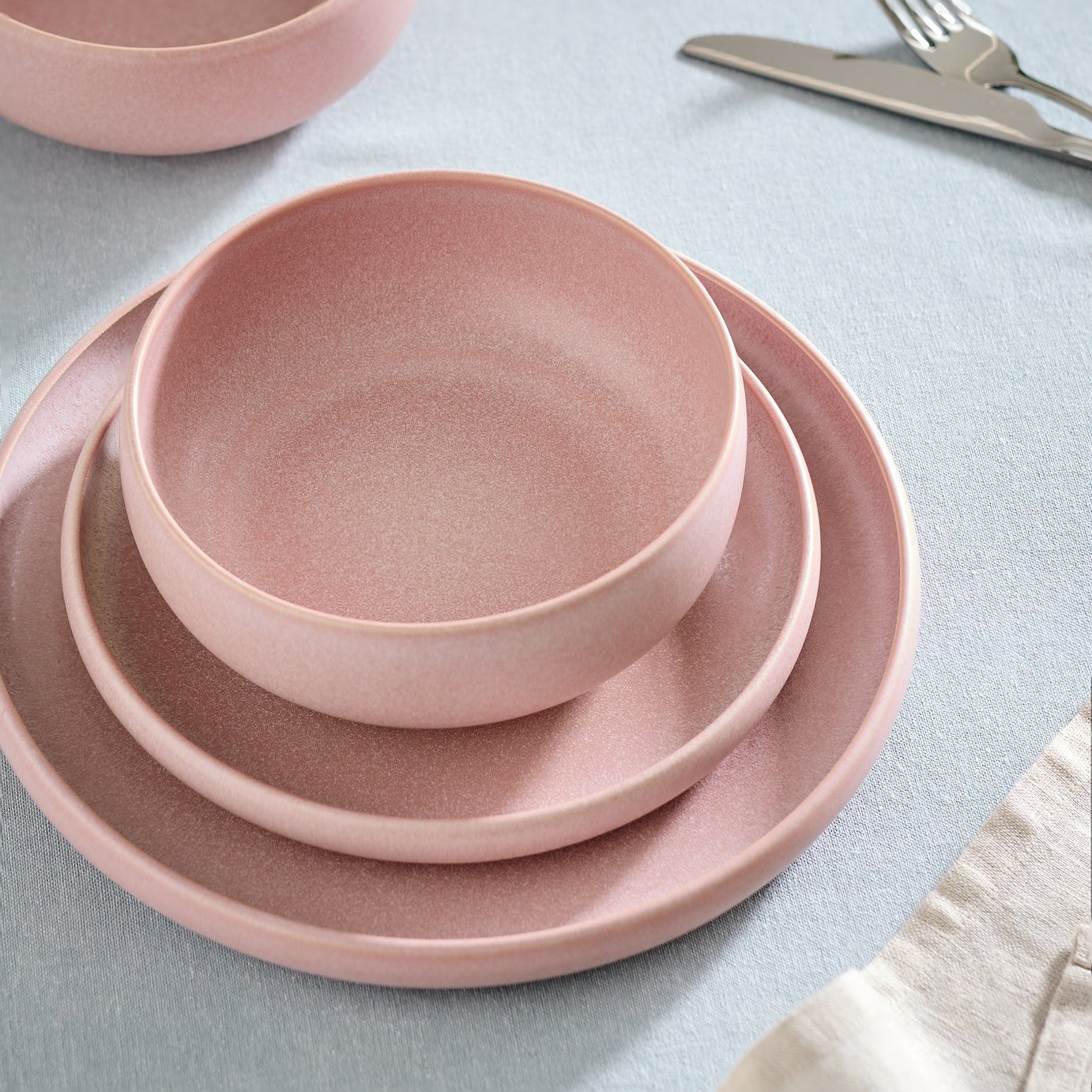
Habitat 12 Piece Reactive Stoneware Dinner Set – Pink
John ohn Lewis
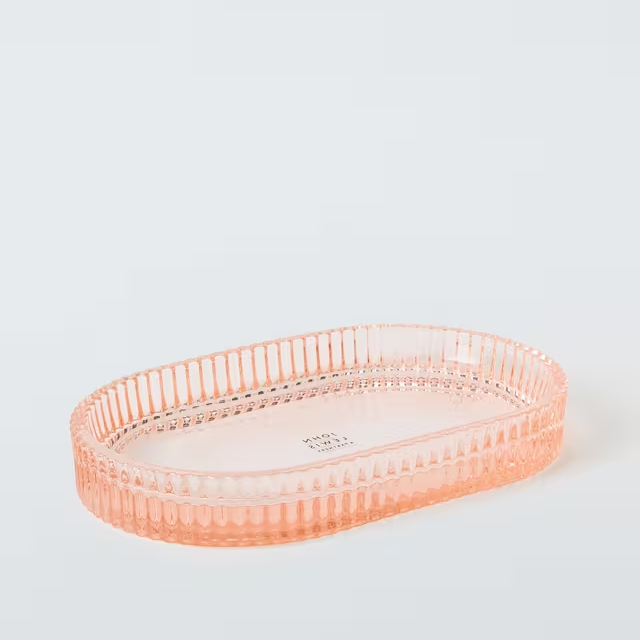
John Lewis Fluted Glass Bathroom Tray, Clear
&klevering
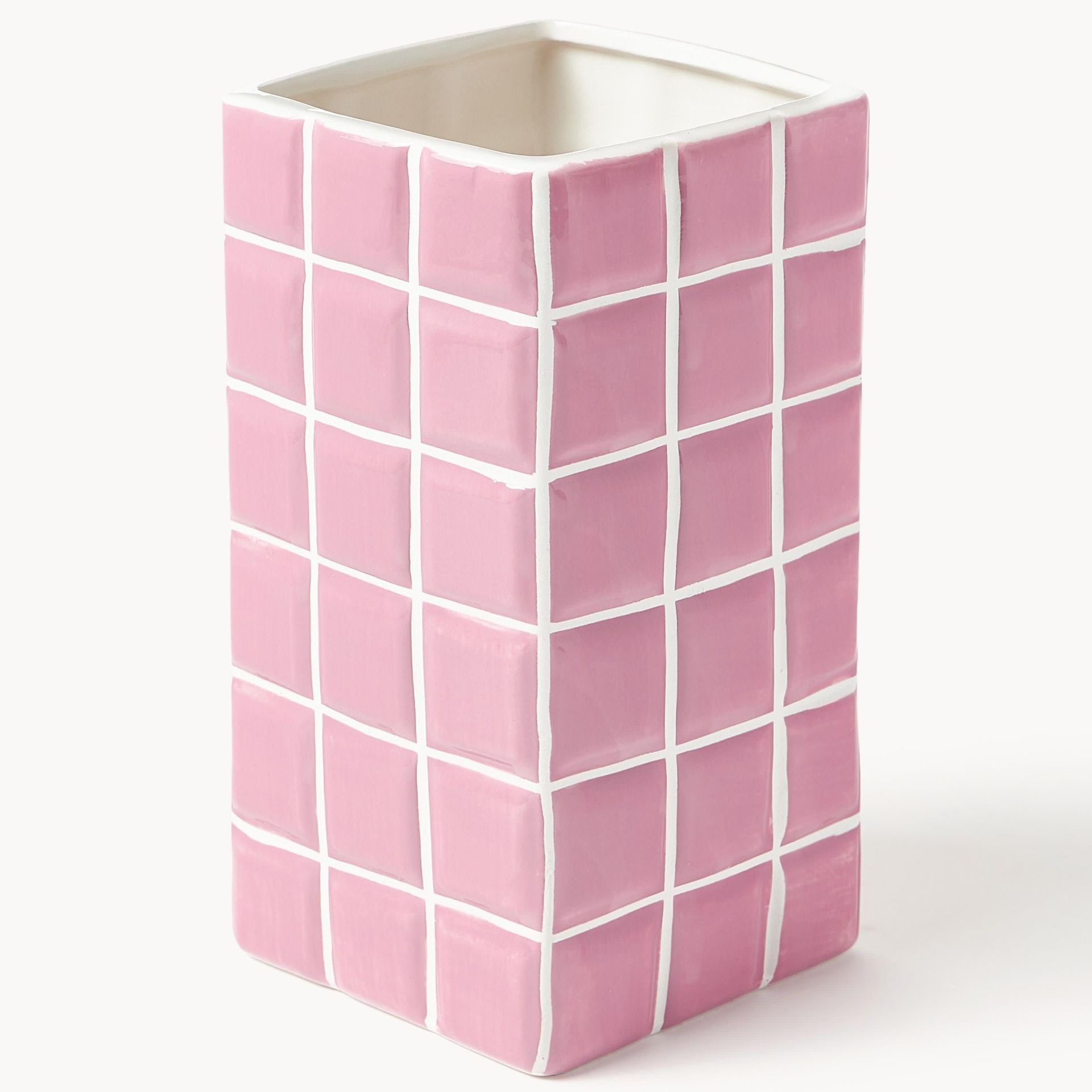
Design Vase Tile, H 21 Cm
If you love maximalist decor, but aren’t sure how to make sure it flowers in your home, opting for your own ‘red thread’ can help tie it all toether. It’s up to you which colour you choose.
If you have recently simplified your home office, you probably noticed how wonderfully calm it is. Clear surfaces, neutral colors, and fewer visual distractions create a space that is easy to settle into. However, while it may feel and look great, you might start to feel like something is missing after a few days. The room may start to feel a little too flat.
Adding more decoration may seem like a sensible solution, but you don’t want to do that as it can quickly disrupt the sense of calm. Instead of filling the room with too many objects, patterns, and finishes, it’s best to introduce interest through a few deliberate points of contrast. In this guide, we’ll explain how to introduce visual depth through a few deliberate contrasts, without filling every empty space.
Table of Contents
Start with One Textured Focal Point
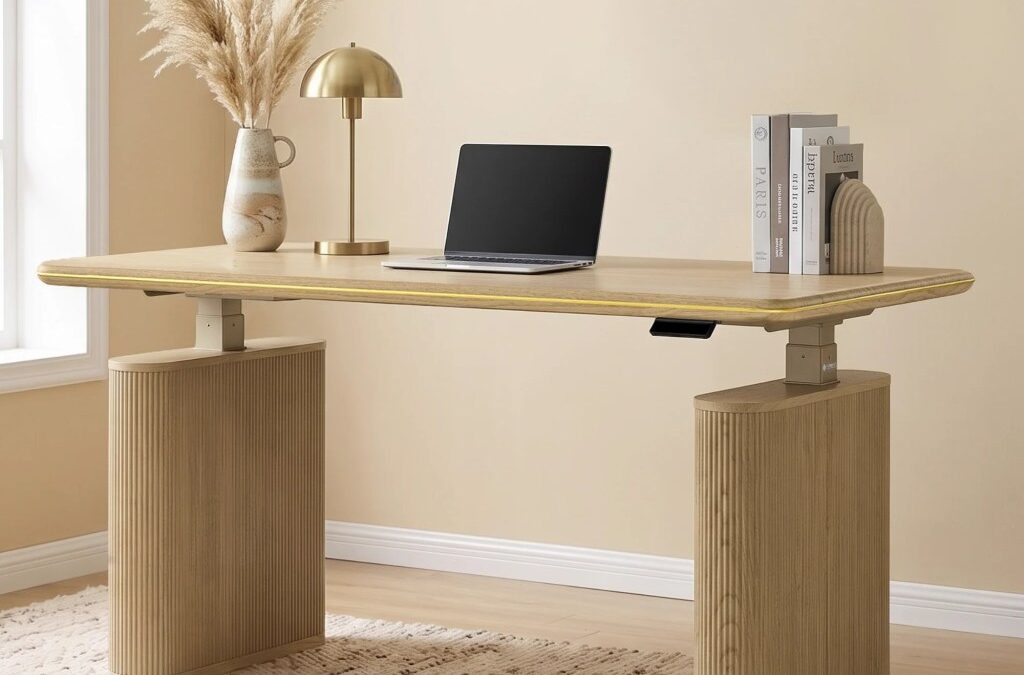
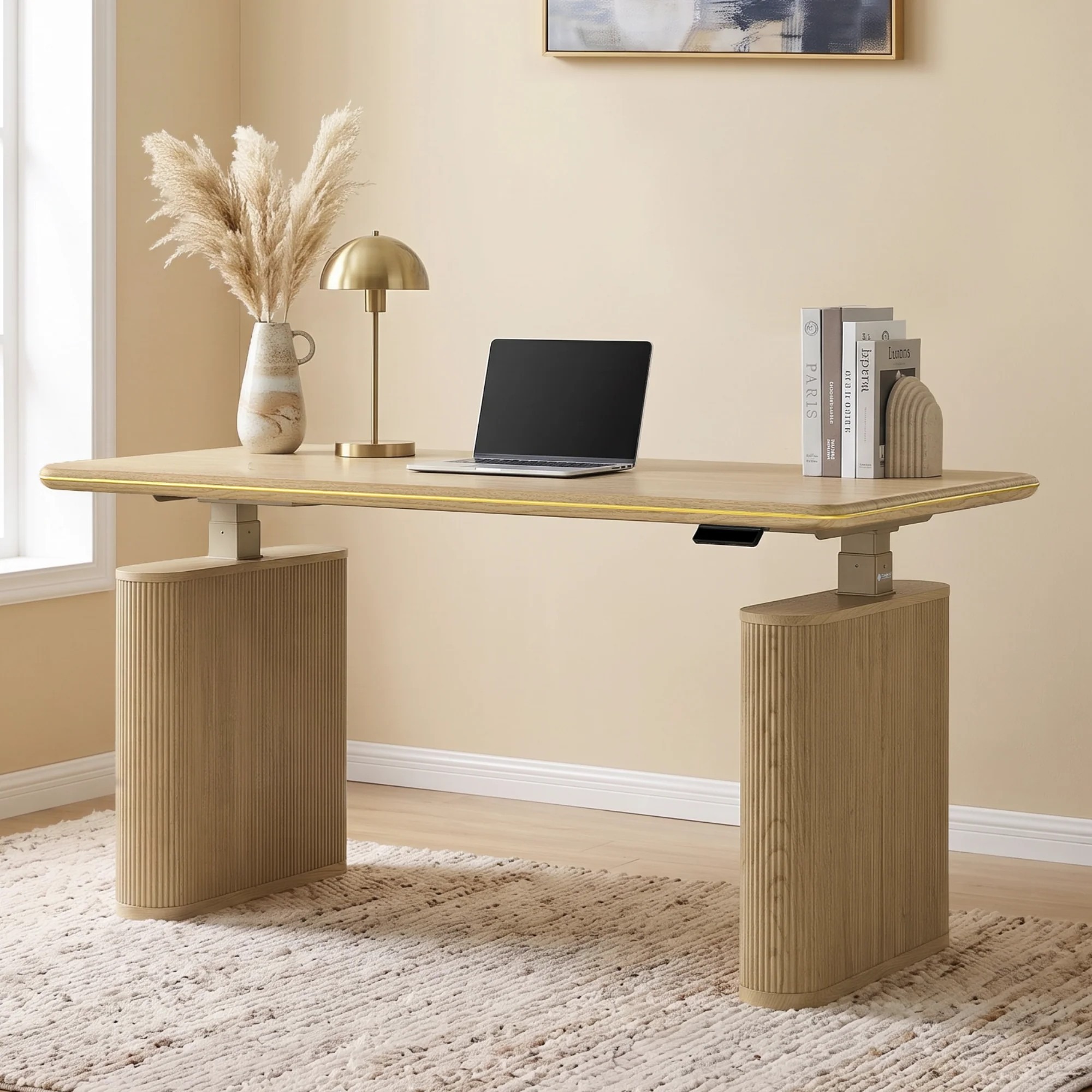
When your home office feels visibly plain, a statement piece can become a main point of interest without creating too much distraction. For instance, you can add the Opal Aurelia fluted standing desk by Eureka Ergonomic as your focal point. Its fluted detailing creates a repeated vertical rhythm, while the rounded outline gives the overall form a softer appearance. Against a neutral backdrop, these details can add character without introducing a bold color.
The key is to let the texture breathe. Rather than surrounding it with more statement pieces, allow the desk to become one clear visual anchor.
Contrast Texture with Something Smooth
Sometimes it might be tempting to repeat an interesting finish. A fluted desk might lead to another ribbed accessory, a patterned storage box, or a heavily textured lamp. While it can work sometimes, repeating the same visual language can make the room feel busier than intended.
You may choose to place the Aurelia beside something smooth, such as a simple lamp with a clean shade to create contrast. The smooth surface gives the eye somewhere to rest, making the fluting more noticeable without making it feel excessive. The same principle applies to the desktop. You want to keep accessories relatively simple, allowing the desk’s vertical texture to remain visible.
Let a Woven Textile Echo the Wood Tone
A low-pile woven throw draped over a nearby chair can loosely echo the natural oak finish and its visible grain without matching it exactly. A similar warm tone helps the textile feel connected to the desk, while slight differences keep the room from looking overly coordinated. The weave also introduces a softer texture against the desk’s structured fluting, giving the space another layer of contrast without adding visual clutter.
Pause Before You Add Anything Else
It can be tempting to keep going with another textured object: perhaps add a patterned rug or a gallery wall. However, you want to pause at this point. The desk’s fluted base already carries visual weight, so the surrounding space benefits from staying open rather than feeling filled. An uncluttered desktop does the same on a smaller scale, allowing the wood grain and fluting to remain visible without competing with a collection of accessories.
The desk’s hidden cable management and accessible height adjustment also support an orderly look without demanding attention. These practical details work best when they stay in the background.
Endnote
Walk back into your home office, and the difference isn’t dramatic, and that’s the point. The walls are the same neutral, and the layout hasn’t changed. What’s different is a handful of deliberate contrasts. A calm room doesn’t need more objects; it needs a few textures that work well together.